
Lotus silk feels like a secret you can touch. In Siem Reap, Lotus Silk Farm strings together three real crafts (paper, yarn, bracelet) with a boat ride on the lotus lake and a quiet tea pause at the end. I like how hands-on the making is, and I like that the experience stays tied to the plant, not just the souvenirs.
I also appreciate the “why this matters” part: lotus silk is treated here as a nearly lost Khmer technique, with UNESCO recognition for preserving textile heritage. The one thing to plan for is time—what’s marketed as a short outing often runs closer to about 4 hours from pickup to drop-off in practice.
If you’re staying in central Siem Reap, the setup is easy: the shuttle meets at Biolab Café, and the group is kept small (up to 30). Just go in with the right mindset: you’ll learn, you’ll make, and you’ll leave with something you personally created.
In This Review
- Key moments worth knowing before you go
- Lotus silk in plain terms: why this farm is different
- Getting to the farm from Biolab Café, and how long it really takes
- The 30-minute production tour: turning lotus stems into fiber
- The boat ride over the lotus fields: learning symbolism while you float
- Workshop hour: make lotus stem paper, fiber yarn, and a seed bracelet
- 1) Lotus stem paper
- 2) Fiber yarn
- 3) Seed bracelet
- Tea ceremony and garden time: the calm reset
- The cultural boutique: shopping without losing your focus
- Price and value: what $40 really covers
- Who this tour fits best (and who should be cautious)
- Final call: should you book Lotus Silk Farm in Siem Reap?
- FAQ
- How long is the Lotus Silk Farm experience?
- Where do I meet the shuttle?
- What time departures are available?
- Is hotel pickup included?
- What language is the guide?
- What is included in the price?
- Do you take a boat ride in the lotus fields?
- What do I make during the workshop?
- Is tea included?
- What is the cancellation policy?
Key moments worth knowing before you go
- Lotus-to-luxury fibers, explained simply: you see how lotus stems become usable fiber for textiles.
- A wooden boat ride on the lotus lake: you’ll glide through the fields and learn lotus symbolism.
- You create three keepsakes: lotus stem paper, fiber yarn, and a seed bracelet—made on-site.
- A circular economy, not a waste lecture: different parts of the plant become paper, jewelry, tea, and other items.
- A fresh lotus bouquet plus tea: you get a bouquet and a lotus tea stop with homemade biscuits.
- Small group size: capped at 30 travelers, with a bilingual guide (English/French available).
Lotus silk in plain terms: why this farm is different
Lotus silk is not regular silk. It’s a textile made from lotus stems, and it’s rare enough that it’s described here as one of the world’s rarest textiles. The point isn’t to impress you with fancy words—it’s to show you that this fabric has roots in Khmer craft knowledge, and that the technique is being protected.
What I like is that the farm frames lotus silk as a living process. You’re not only shown finished cloth; you see how the stems are treated and how the plant’s different parts can be used. That “100% utilization” idea matters because it turns lotus cultivation into something that’s meant to be complete—rather than wasteful.
There’s also a social piece to it. The model here centers on supporting women artisans through textile heritage preservation (150 women are mentioned), rather than doing craft as stage-managed performance. When a place connects the craft to the people and the livelihoods, you feel it more than you hear it.
Getting to the farm from Biolab Café, and how long it really takes
Your meeting point is Biolab Café near Wat Bo Village in downtown Siem Reap. The shuttle is an air-conditioned vehicle, and it runs from the garden area in front of the café/restaurant.
Departures are scheduled at 8:30 AM, 10:00 AM, 12:00 PM, and 2:00 PM. The van arrives about 5 minutes early, so don’t treat it like a bus that always waits forever.
Here’s the key practical note: this experience often feels longer than the stated 2 hours 30 minutes because the full loop includes the production tour, boat ride, workshops, and tea before you’re back at the meeting point. In other words, plan your day like it’s closer to about 4 hours door-to-door.
Also note what isn’t included: hotel pickup and drop-off. You’ll meet at Biolab Café and ride in that shared shuttle. For central hotels, that’s usually fine. If you’re way out of town, you may need extra taxi time to reach the meeting point.
The 30-minute production tour: turning lotus stems into fiber
The first stop is the production segment, about 30 minutes, where you learn how artisans extract fibers from lotus stems. This is where the day stops being romantic and starts being practical, in a good way.
You’ll also be taught the circular economy idea: 100% lotus utilization. The stems don’t just become fiber; seeds are used for jewelry, stems can become paper, flowers go into tea, and other uses are tied to different parts of the plant. Even if you’re not taking home every product, the system shows you that this is agriculture plus craft—one whole loop.
What to watch for: the steps are taught as tradition, not as factory speed. Don’t rush past the explanations. If something clicks for you, ask what part is most difficult, because that’s often where the craft identity lives.
The boat ride over the lotus fields: learning symbolism while you float
Next comes the 30-minute boat journey. You’ll ride a wooden boat through the lotus fields, moving past blooming plants while learning lotus symbolism in Buddhism—especially its meaning as a revered flower tied to purity and transformation.
There’s also a hands-on touch here: you’ll see flower folding. That’s one of those small cultural details that makes the experience feel less like a generic nature activity and more like craft culture with a spiritual backbone.
One concrete perk: you receive a fresh lotus bouquet. It’s not just a gift bag moment. Having something living in your hands after being taught about the flower’s meaning makes the whole day feel more coherent.
Practical comfort note: you’re on the water for a short stretch, so dress for warm weather and bring a light layer if you’re sensitive to AC afterward. And yes, you’ll likely get photos—just don’t treat it like the whole point. The learning is the reason to be there.
Workshop hour: make lotus stem paper, fiber yarn, and a seed bracelet
The heart of the experience is the 1-hour artisan workshop, where you create three pieces using traditional methods. This is where the day earns its price tag.
1) Lotus stem paper
You’ll take lotus stems and transform them into handmade paper. This part is great if you like crafts that show visible results quickly. You can hold what you made, and you’ll understand how “paper from plant” is more than a school project here.
2) Fiber yarn
Then comes the fiber yarn segment, where you learn how lotus fibers are spun using traditional techniques. This is the tactile piece. If you enjoy hands-on work and don’t mind concentrating, you’ll likely have the best time here.
3) Seed bracelet
Finally, you design a seed bracelet using seeds and beads. This tends to be the most immediately gratifying piece because it becomes wearable right away. It also fits the circular economy theme: you’re using lotus parts that aren’t meant for textiles.
A couple of small realities to keep in mind:
- The workshop is designed for a group, so you won’t get a private masterclass.
- Some people can feel a bit rushed if they want slower, deeper follow-through on every step.
If you want the full process clarity, ask questions while you’re working. Adults learn best when they’re allowed to stop and point.
Tea ceremony and garden time: the calm reset
After the crafts, you’ll have a tea ceremony for about 15 minutes, including lotus tea plus homemade biscuits. It’s a short pause, but it’s a smart one. You’ll likely be warm from outdoor sections, and the tea gives you a clean landing before you head back.
This part also reinforces the plant-to-product theme. Flowers used for tea makes the earlier explanations feel more “real” and less like a diagram on a wall.
The cultural boutique: shopping without losing your focus
There’s a cultural boutique where you can browse lotus silk textiles, jewelry, and artisan creations. You’re not required to buy anything, but it’s worth looking because you’ll recognize the materials and methods you just learned.
If you do buy something, go in with your new context:
- You now know lotus silk is tied to stems and fiber extraction.
- You understand the circular uses (seeds, stems, flowers).
That makes purchases more meaningful and less like buying pretty objects with no story.
Also, personal purchases are not included in the tour price. So if you’re on a tight budget, you can enjoy the learning without feeling pressured.
Price and value: what $40 really covers
At $40 per person, the best value part isn’t the boat alone or the tea alone. It’s the bundle: bilingual guide, round-trip shuttle from Biolab Café, production tour, boat ride, tea with homemade biscuits, a fresh lotus bouquet, and the workshop pieces you create.
This is the kind of tour where the cost makes sense because the day ends with tangible products, not just photos. If you compare it to paying for a boat activity plus a separate class plus entrance fees, it adds up faster than you’d expect.
The real “cost” is time. You’re committing a chunk of your day. If you’re only in Siem Reap for a very short window, choose a time slot that won’t wreck your other plans.
Who this tour fits best (and who should be cautious)
This works well for you if:
- you want a hands-on craft experience that results in items you keep
- you like learning how sustainable practices connect to real manufacturing steps
- you enjoy cultural context, not just sightseeing
It’s also a good match if you’re the type who likes small-group settings. With a max group size of 30, you’re less likely to feel lost in a giant crowd.
Be a little cautious if:
- you need strict schedule accuracy (since the day can feel longer than 2.5 hours once you count pickup and return)
- you’re expecting a fully guided, step-by-step production tour of every single process detail after the main workshop (the format is structured for a group and time limits)
- you specifically want the boat segment as the main event: the tour is designed to include it, but it’s smart to be clear during check-in that you’re taking the full package that includes the boat.
Final call: should you book Lotus Silk Farm in Siem Reap?
If you want an authentic cultural craft day with real making time, book it. I especially like that the experience ties the lotus flower to fiber extraction, circular use, and Buddhist symbolism—and then gives you three keepsakes you made with your own hands.
I’d only skip it if your schedule is extremely tight or if you dislike group-paced workshops. Otherwise, $40 is a fair price for what you do and what you take home, and it’s one of the more thoughtful craft experiences around Siem Reap.
FAQ
How long is the Lotus Silk Farm experience?
The activity is scheduled for about 2 hours 30 minutes, though the day can feel closer to about 4 hours from pickup to drop-off once you include the full sequence and return.
Where do I meet the shuttle?
You meet at Biolab Café (Wat Bo Village area). The activity ends back at the meeting point.
What time departures are available?
Departures from Biolab Café are set for 8:30 AM, 10:00 AM, 12:00 PM, and 2:00 PM.
Is hotel pickup included?
No. There is no hotel pickup or drop-off. You’ll use the central shuttle meeting point at Biolab Café.
What language is the guide?
The guide is bilingual, with English and French available.
What is included in the price?
The price includes the bilingual guide, air-conditioned round-trip shuttle from Biolab Café, tea (with homemade biscuits), a fresh lotus bouquet, and all fees and taxes.
Do you take a boat ride in the lotus fields?
Yes. The itinerary includes a 30-minute boat journey through the lotus fields.
What do I make during the workshop?
You make three items: lotus stem paper, fiber yarn, and a seed bracelet.
Is tea included?
Yes. A tea ceremony is included, featuring lotus tea and homemade biscuits.
What is the cancellation policy?
You can cancel for free up to 24 hours before the experience starts for a full refund. If you cancel less than 24 hours before, the amount paid is not refunded.
Siem Reap Countryside & Village Tours, compared.
 ★ 4.9From Siem Reap: Kampong Phluk Floating Village Tour by BoatFrom $206,979 reviews
 ★ 5.0Kampong Phluk Floating Village Tour by BoatFrom $201,020 reviews
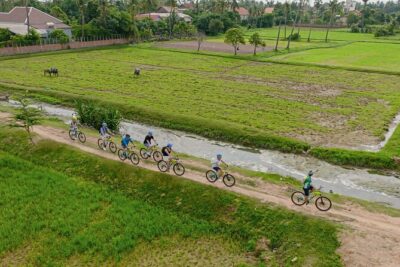 ★ 5.0Siem Reap Countryside Bike Tour / E-Bike or Tuk TukFrom $35935 reviews
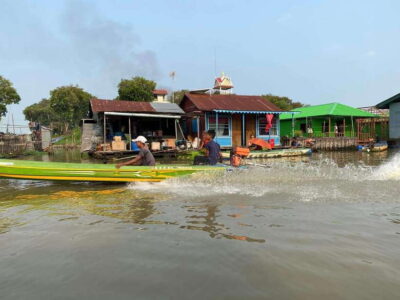 ★ 4.4Tonle Sap, Kampong Phluk & Floating Village TourFrom $17397 reviews
 ★ 5.0Siem Reap Countryside Quad Biking TourFrom $45322 reviews
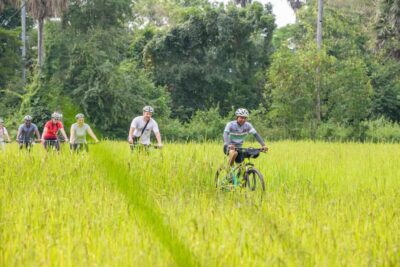 ★ 4.9Guided Countryside Bike TourFrom $35294 reviews
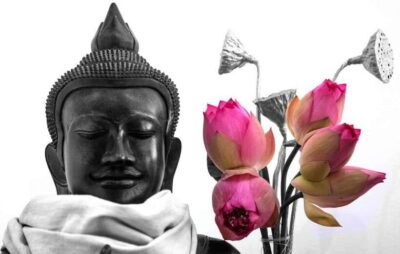 ★ 4.7Siem Reap Lotus Silk Farm Discovery tour & Lake experienceFrom $20291 reviews
 ★ 4.7Siem Reap Quad Bike Countryside TourFrom $33283 reviews
Browse the lists this tour appears in