
Three temples, two days, no headaches. This private tour strings together Angkor Wat and the Angkor Thom highlights, then pushes out to Koh Ker and Beng Mealea, with your transport handled and a guide along both days.
I especially liked two things: the cold drinking water your guide provides (a real lifesaver in the heat), and the freedom to set your own pace without wrestling with tuk-tuk or motorcycle logistics. The main thing to factor in is temple-pass budgeting, since the tour price does not include those fees.
In This Review
- Key things to know
- Price and what you’re really paying for
- A smooth start in Siem Reap (and why meeting points matter)
- Day 1: Angkor Wat, Ta Prohm, and Bayon with a guide who explains
- Angkor Wat: the biggest name for a reason
- Ta Prohm: Tomb Raider fame, plus the jungle doing its own work
- Bayon and Angkor Thom: the Khmer capital wall-to-wall
- Day 2: Koh Ker and Beng Mealea (where the crowds thin out)
- Koh Ker: the strange pyramid that feels different from everything else
- Beng Mealea: how Angkor-style design looks when time takes over
- Guide style and pacing: why private can feel more relaxed
- Temple pass costs and dress code: plan once, enjoy twice
- What to bring for two days of Khmer ruins
- Who should book this tour
- Should you book this 2-Day Angkor Wat, Koh Ker & Beng Mealea tour?
- FAQ
- What does the 2-day tour include?
- What sites are covered over the two days?
- Is this tour private?
- Are temple passes included in the tour price?
- How much are the temple passes?
- Are meals included?
- What is the dress code for the temples?
- Where is the meeting point?
- Is cancellation free?
Key things to know
- Transport is organized end-to-end, so you won’t spend your day booking taxis or motorcycles.
- A guide comes with you both days, with explanations at each stop.
- Bring extra cash for Temple Passes (separate fees apply for Koh Ker and Beng Mealea).
- Dress code matters: cover shoulders and knees to enter the temples.
- Koh Ker feels quieter, because it’s less crowded than the main Angkor circuit.
- Cold water is included, so you can focus on temples instead of hunting for drinks.
Other ways to walk the great temple
- Angkor Wat Sunrise or Sunset Tour with Guide from Siem Reap★ 5.0 · 12,109 reviews
- Siem Reap: Angkor Wat: Small-Group Sunrise or Sunset Tour★ 5.0 · 9,444 reviews
- Siem Reap: Angkor Wat 2-Day Tour with Sunrise and Sunset★ 4.9 · 4,429 reviews
- Siem Reap: Full-Day Angkor Wat Guided Tour with Sunset★ 4.9 · 3,803 reviews
Price and what you’re really paying for
At $147.44 per person for about two days, this tour isn’t aiming to be the cheapest way to do Angkor. It’s priced for one big thing: removing the hassle. You’re paying for a guide, suitable group transport, and the convenience of getting from site to site without figuring out rides on your own.
Temple passes are the biggest extra cost. The tour notes a 1-day Temple Pass at $37 per person, plus Koh Ker = $10 per person and Beng Mealea = $5 per person. If you’re doing all stops on this route, you should plan on roughly $52 in temple fees on top of the tour price. Food and drinks are not included either, so budget for meals separately.
If you’re the type who wants your day to run smoothly—meeting point, tickets, movement between ruins all handled—you’ll likely feel like this is good value.
A smooth start in Siem Reap (and why meeting points matter)
One of the underrated wins here is the simple logistics in Siem Reap. The start point is set in Siem Reap, and the tour promises an easy-to-find meeting location, which is huge when you’re tired after travel or you’re juggling a new city.
Because this is a private tour (just your group), you’re not doing the “herding cats” thing that happens on larger group schedules. You also get a guide who can keep everything moving while still giving you time at the ruins.
Day 1: Angkor Wat, Ta Prohm, and Bayon with a guide who explains
Day 1 is built around the core “Angkor greatest hits,” but it doesn’t feel like a checklist sprint. You start at Angkor Wat, then go to Ta Prohm, and finish with Bayon inside Angkor Thom.
The value of having a guide here isn’t just facts. It’s context that helps you read what you’re seeing. My favorite part of this style of touring is how the explanations make the stones feel less like random ruins and more like a working city of belief and power.
Angkor Wat: the biggest name for a reason
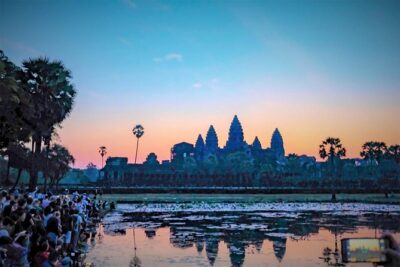
Angkor Wat is the temple most people come to Siem Reap for, and with over 2 million visitors per year, it’s easy to see why. It’s also the largest temple built during the Khmer empire, so even if you’ve seen photos already, being there in person is the real comparison test.
On a guided route, Angkor Wat works best when you’re not rushing. You’ll want time to notice the temple’s scale and the way the design pulls your eye across the complex. Crowds are part of the experience here, so go with patience and take advantage of your guide’s ability to help you focus on what to look for.
Possible drawback: with Angkor Wat’s popularity, some parts can feel busy. If you’re the type who gets irritated by crowds, you’ll likely feel that most here, not on Day 2.
Deeper into the jungle temple
Ta Prohm: Tomb Raider fame, plus the jungle doing its own work
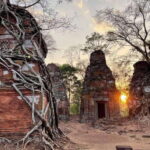
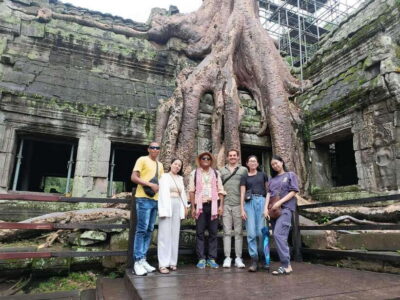
After Angkor Wat, Ta Prohm—often called the Tomb Raider temple—is a big change of mood. The tour notes it’s the temple that appeared in the Tomb Raider film starring Angelina Jolie, so even non-movie fans recognize the look.
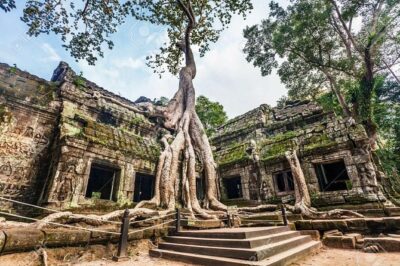
The real magic is how the site has been left to the elements, with jungle growth threading through the building. That mix of stone and roots changes the feeling of the ruins. Instead of looking like a neatly preserved monument, Ta Prohm feels like time has continued its slow work right on top of history.
Practical tip: keep your camera ready, but also slow down. Ta Prohm rewards looking from different angles, especially where roots and doorways frame the view.
Bayon and Angkor Thom: the Khmer capital wall-to-wall
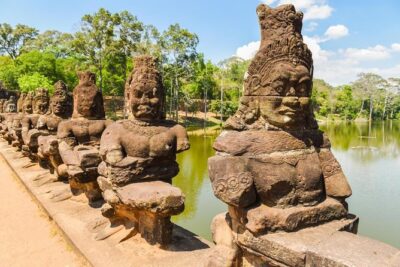
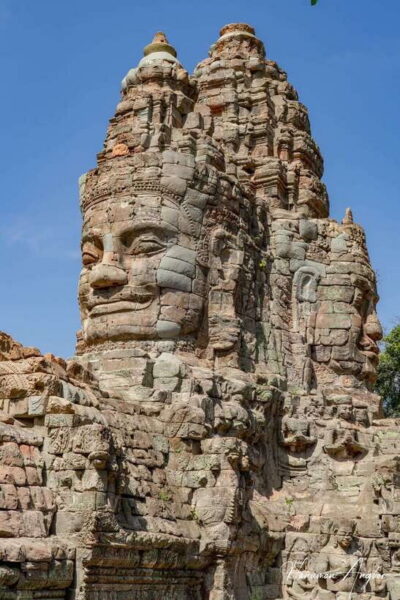
Next you’re moving into Angkor Thom, the ancient walled city that was the heart of the Khmer Empire for centuries. Bayon sits right in the middle of it, and it’s known for the famous faces on its towers.
The guide explains that the faces are said to be the king or represent the gods looking down on the people. Even if you don’t know Khmer symbolism offhand, Bayon becomes easier to understand once you see it as a statement to the people inside the city walls.
This is also one of the best stops for a “pause and take it in” moment. Your guide can help point out what’s going on visually so you don’t just walk past faces and carvings without noticing how the design organizes the space.
Day 2: Koh Ker and Beng Mealea (where the crowds thin out)
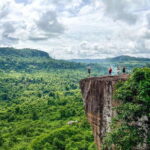
Day 2 is where this tour shifts from the famous Angkor circuit to the more adventurous edges. You go to Koh Ker—a seven-tiered, pyramid-styled temple—and then on to Beng Mealea, a sprawling ruin connected to an ancient highway system.
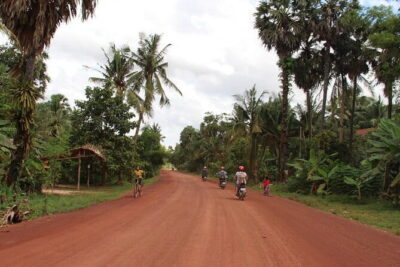
The biggest practical win on Day 2 is crowd control. Koh Ker’s location in dense jungle means you don’t get waves of people the way you do at the headline temples.
Koh Ker: the strange pyramid that feels different from everything else
Koh Ker is described as an amazing seven-tiered pyramid-style temple, and the standout point is how it doesn’t look like the other Khmer temples you’ll see around Angkor. Some experts even speculate that the Khmer may have had outside help—possibly even extraterrestrial—because the structure feels unlike the typical patterns.
I’d treat that as speculation, not settled history, but it’s still a great way to spark curiosity. When a temple visually breaks the mold, your brain leans in.
The tour includes a few hours exploring Koh Ker and the surrounding area. That time matters. The best way to enjoy Koh Ker is to give yourself room to roam around the pyramid and look for how the ruins sit within the jungle setting.
Possible drawback: because it’s less tour-slick than Angkor Wat, parts of the experience depend more on your comfort level with walking through uneven ground and exploring at your own pace. If you’re steady on your feet, you’ll likely love this.
Beng Mealea: how Angkor-style design looks when time takes over
Finally, Beng Mealea. This is a large temple and—per the tour notes—was once located on an ancient highway connecting the main Angkor temples to Preah Khan.
Today you’ll see stunning ruins designed to look like Angkor Wat, but in a very different state. Instead of the polished wow-factor you might expect at the main site, Beng Mealea offers the thrill of wandering through broken stone and wide open spaces. The scale can feel wild: it’s big, but it also makes you appreciate just how massive Angkor Wat really is.
If you like ruins that feel less curated, Beng Mealea is the kind of place where you can get lost in the details—doorways, collapsed blocks, and the way the design repeats itself even when the structure is partially gone.
Guide style and pacing: why private can feel more relaxed
One of the best reasons to choose this setup is that it stays private while still using a guide. You get transport suited to your group size, plus your guide stays with you both days.
That guide adds two big benefits:
- You understand what you’re seeing. The tour description emphasizes in-depth explanations, and the review feedback backs up that the guide showed real curiosity about the unknowns of the past.
- You can go at your own pace. This matters on ruins. Some days you’ll want slow walking and photos. Other times you’ll want to cut ahead to get your next view.
Cold drinking water being included might sound like a small detail, but on temple days it changes how you feel. You’re less likely to drift into fatigue, and you can stay focused on the stones instead of the next drink stop.
Temple pass costs and dress code: plan once, enjoy twice
Here’s the part that trips up first-timers: the temple fees aren’t bundled into the tour price. The information you’re given is straightforward:
- Temple Pass (1-day): $37 per person
- Koh Ker: $10 per person
- Beng Mealea: $5 per person
That means you should bring extra cash (or be ready to pay as your organizer directs) and not assume the tour price covers it all.
Dress code is also not optional. You must cover shoulders and knees to enter the temples. Plan for lightweight, breathable clothes that still meet the requirement. If you’re traveling with limited luggage, a light scarf or layer that covers shoulders is an easy fix.
What to bring for two days of Khmer ruins
This tour includes water, but you still want to come prepared. Based on the realities of Angkor Archaeological Park and the jungle-set Koh Ker, I’d pack for heat and walking.
Bring:
- A small day bag with your temple-pass money and any tickets you’re instructed to use (the tour mentions mobile ticket availability)
- A refillable water bottle even if water is provided, in case you want extras
- Comfortable shoes for uneven stone and dirt paths
- Light clothing that covers shoulders and knees
- Sunscreen and sun protection (Day 2 is in dense jungle, but you still get sun exposure)
Who should book this tour
This is a strong match if you:
- Want a guided Angkor experience without arranging every ride yourself
- Are short on time in Siem Reap and want Angkor Wat plus the Koh Ker and Beng Mealea detour
- Prefer a private pace over group rush-and-repeat
It may be less ideal if you:
- Want total freedom to roam independently and aren’t interested in paying for a guide and transport
- Feel irritated by crowds at the most famous sites (Angkor Wat is the busiest stop on this plan)
Should you book this 2-Day Angkor Wat, Koh Ker & Beng Mealea tour?
Yes, you should consider booking if your priority is smooth logistics, an expert guide who can explain what you’re seeing, and a route that goes beyond the Angkor headline trio. You’ll get two full days of temples with transport handled, plus included cold water, and Day 2’s Koh Ker and Beng Mealea give you a calmer, more exploratory mood than the main circuit.
If you’re price-sensitive, add those temple-pass fees into your budget before you decide. Once you do, the tour’s value becomes clear: you’re paying for the “how do I get there and what am I looking at?” part, not just for access to ruins.
FAQ
What does the 2-day tour include?
It includes a tour guide, cold drinking water, and suitable transport for the group size.
What sites are covered over the two days?
You’ll visit Angkor Wat, Ta Prohm, and Bayon on Day 1, then Koh Ker and Beng Mealea on Day 2.
Is this tour private?
Yes. It’s a private tour/activity, so only your group participates.
Are temple passes included in the tour price?
No. The Temple Pass is not included, and the tour provides separate costs for the 1-day pass plus Koh Ker and Beng Mealea fees.
How much are the temple passes?
The tour lists: 1-day Temple Pass $37 per person, Koh Ker $10 per person, and Beng Mealea $5 per person.
Are meals included?
No. Food and drinks are not included.
What is the dress code for the temples?
You must cover your shoulders and knees to enter the temples.
Where is the meeting point?
The tour starts in Siem Reap, with the meeting point located in Siem Reap Province, and it’s described as easy to find.
Is cancellation free?
Yes, free cancellation is available. You can cancel up to 24 hours in advance for a full refund.
The Pyramid at Koh Ker
- Koh Ker Temple Group & Beng Mealea Full-Day Join-in Tour
★ 5.0 · 710 reviews - From Siem Reap: Koh Ker and Beng Mealea Temples Tour
★ 4.9 · 293 reviews - Preah Vihear: Full-Day Preah Vihear and Koh Ker Temple Tour
★ 4.9 · 263 reviews - Full-Day Preah Vihear, Koh Ker and Beng Mealea Private Tour
★ 4.4 · 101 reviews - Preah Vihear temple – Koh Ker & Other temple with Small Group
★ 5.0 · 96 reviews
Into the Jungle at Beng Mealea
- Siem Reap: Kulen Mountain, Beng Mealea and Tonle Sap Tour
★ 5.0 · 1,483 reviews - Kulen Mountain with Beng Mealea and Tonle Sap Small Group Tour
★ 5.0 · 780 reviews - Koh Ker Temple Group & Beng Mealea Full-Day Join-in Tour
★ 5.0 · 710 reviews - From Siem Reap: Koh Ker and Beng Mealea Temples Tour
★ 4.9 · 293 reviews - Banteay Srei, Kulen Waterfall & Beng Mealea Exploration
★ 5.0 · 185 reviews
Angkor Wat, a Few More Ways In
- Angkor Wat Sunrise or Sunset Tour with Guide from Siem Reap
★ 5.0 · 12,109 reviews - Siem Reap: Angkor Wat: Small-Group Sunrise or Sunset Tour
★ 5.0 · 9,444 reviews - Siem Reap: Angkor Wat 2-Day Tour with Sunrise and Sunset
★ 4.9 · 4,429 reviews - Siem Reap: Full-Day Angkor Wat Guided Tour with Sunset
★ 4.9 · 3,803 reviews - Angkor Wat Sunrise tour with Small – Group and Guide tours
★ 5.0 · 3,655 reviews
Just Added: Fresh Siem Reap Tour Reviews

Angkor Wat Temple Tours, compared.
 ★ 5.0Angkor Wat Sunrise or Sunset Tour with Guide from Siem ReapFrom $1812,109 reviews
 ★ 5.0Angkor Wat: Small-Group Sunrise or Sunset TourFrom $159,444 reviews
 ★ 4.9Angkor Wat 2-Day Tour with Sunrise and SunsetFrom $344,429 reviews
 ★ 4.9Full-Day Angkor Wat Guided Tour with SunsetFrom $153,803 reviews
 ★ 5.0Angkor Wat Sunrise tour with Small – Group and Guide toursFrom $143,655 reviews
 ★ 5.0Angkor Wat Highlights and Sunrise Guided Tour from Siem ReapFrom $233,213 reviews
 ★ 5.0Angkor Wat Sunset Small Group Tour with Lunch IncludedFrom $203,059 reviews
 ★ 5.0Full-Day Angkor Wat Sunrise Private Tour with Guide from Siem ReapFrom $602,920 reviews
Browse the lists this tour appears in