
Reviewed · ANGKOR WAT TEMPLE TOURS
Siem Reap: Angkor Wat 2-Day Tour with Sunrise and Sunset
Angkor looks unreal at sunrise. This 2-day Angkor tour strings together the top sights with the right timing, plus an English guide to explain what you’re actually seeing. I love that you start early to beat the worst heat and crowds, and I also love the way the day closes with a sunset finish that feels like the grand finale of the whole complex. One consideration: both days are long and hot, with lots of walking and steps, so it’s not the best match if you’re older or mobility-limited.
You’ll get a smart mix of the big-name temples and the kind of stops that make Angkor click. I like that you don’t just snap photos—you get the Khmer empire context for Angkor Wat, Ta Prohm, Bayon, and more. The small-group morning also tends to keep you away from the densest lines at the first viewpoints. The main drawback is simple: you still need to manage your own temple pass, and meals aren’t included, so plan around real break times.
In This Review
- Key highlights to look for
- Why this Angkor Wat 2-Day plan feels like the best use of a temple pass
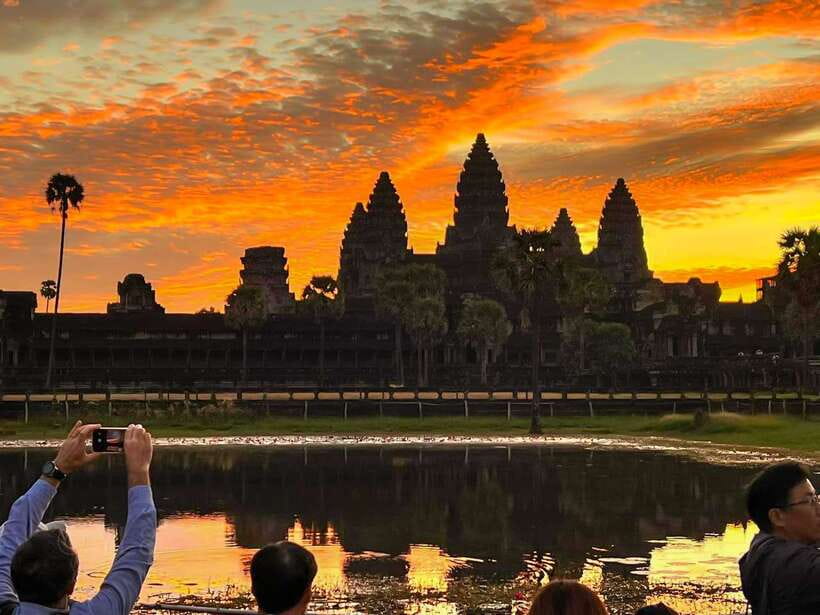
- Day 1 (4:30am–1:00pm): Sunrise over Angkor Wat, then the morning crowd gap
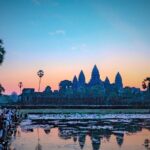
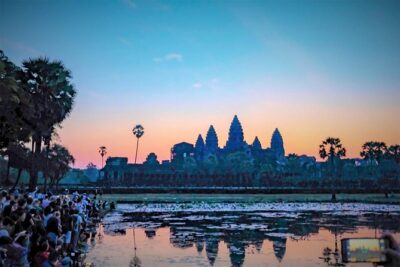
- Angkor Wat at sunrise: the main event, but with real meaning
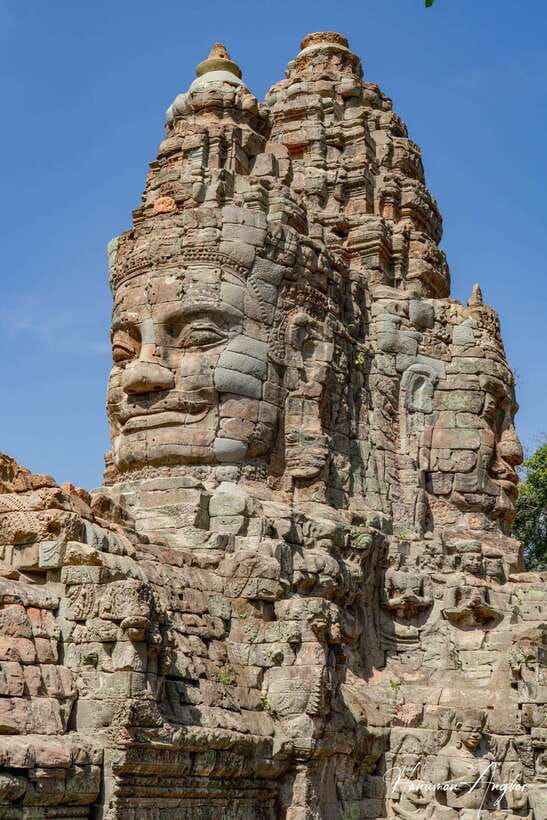
- Day 1 stops: Ta Prohm, Bayon (smiling faces), Ta Keo, and the South Gate
- Day 2 (10:30am–7:00pm): the bigger loop, quieter temples, then sunset time
- Day 2 temple circuit: Preah Khan, Neak Pean, Ta Som, East Mebon, Pre Rup, Phnom Bakheang
- What $34 really buys you: guides, transport, and included temple time
- Temple pass reality check (so you’re not stuck at the gate)
- Clothes, comfort, and the stuff that keeps the day enjoyable
- What it’s like with the guides: more story, better photo spots, fewer random “what am I looking at?”
- Who should book this sunrise-to-sunset Angkor plan
- Should you book this 2-day Angkor Wat tour with sunrise and sunset?
Key highlights to look for

- Sunrise timing (day 1): early access vibe over Angkor Wat, before the bulk of tour groups land.
- Two different loops, two different moods: classic highlights first, then a second day with more spread-out stops.
- Proper temple interpretation: you’ll hear what each monument represents and why it was built.
- Comfort basics included: cold bottled water and wipe towels, plus AC minibus transport.
- A guide who hunts viewpoints: guides like Sary, Sayon, Sok, Sam, and Pheap are repeatedly praised for spotting good photo angles.
Other ways to walk the great temple
- Angkor Wat Sunrise or Sunset Tour with Guide from Siem Reap★ 5.0 · 12,109 reviews
- Siem Reap: Angkor Wat: Small-Group Sunrise or Sunset Tour★ 5.0 · 9,444 reviews
- Siem Reap: Angkor Wat 2-Day Tour with Sunrise and Sunset★ 4.9 · 4,429 reviews
- Siem Reap: Full-Day Angkor Wat Guided Tour with Sunset★ 4.9 · 3,803 reviews
Why this Angkor Wat 2-Day plan feels like the best use of a temple pass
If you’re in Siem Reap for more than a couple days, Angkor can turn into a blur. This tour is built to turn your time into a storyline: morning awe, midday temple walking, then a second loop that keeps you seeing new shapes, new carvings, and new symbolism.
The big value here is the format. You get two separate days—Day 1 is a small tour anchored by a sunrise start, and Day 2 is a larger loop that ends with either a sunset-style payoff—so you’re not just “doing temples.” You’re learning how the Khmer rulers thought, built, worshipped, and reused spaces across generations.
The other practical win is pacing. Angkor is physically demanding. This tour acknowledges that by using an air-conditioned minibus between temple zones and adding water and wipe towels during the day. You still need to expect heat and stairs, but at least you’re not spending the whole day baking without breaks.
Day 1 (4:30am–1:00pm): Sunrise over Angkor Wat, then the morning crowd gap
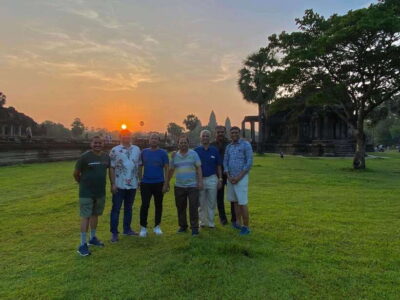
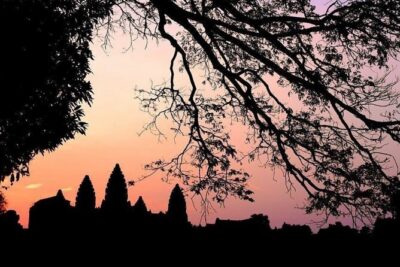
Day 1 begins early, around 4:30am, with a small-group sunrise plan. The payoff is that Angkor Wat often feels different before the sun really climbs—soft light on stone, cooler conditions, and fewer people hovering shoulder-to-shoulder at the main viewpoints. Even if the sunrise itself is clouded one day, the temple still looks powerful in the early hours, and you’ll still get the best part: seeing the site before it turns into a traffic jam.
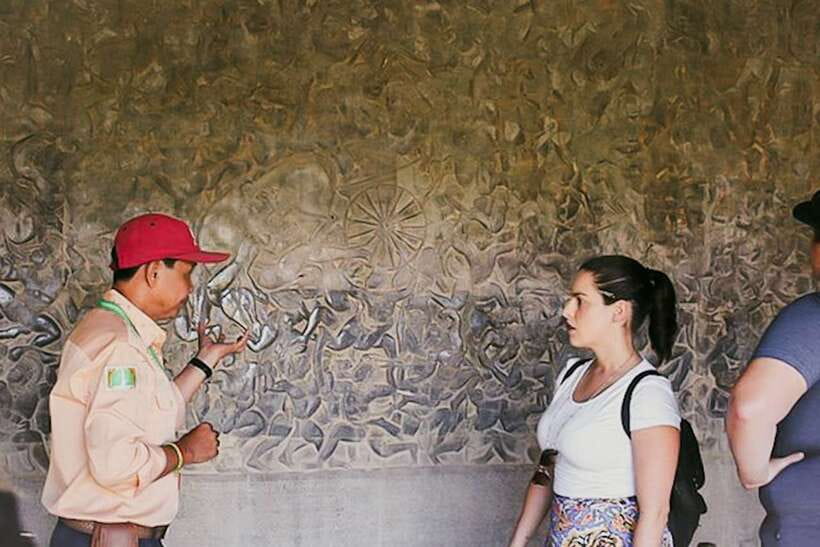
Then the day flows forward into cooler morning walking, with time at multiple temple stops. This is where having an English-speaking guide matters. Without context, many ruins look like “cool rocks.” With the right explanations, you start noticing the intent behind the layout—what faces where, what’s aligned where, and what stories are being carved into the stone.
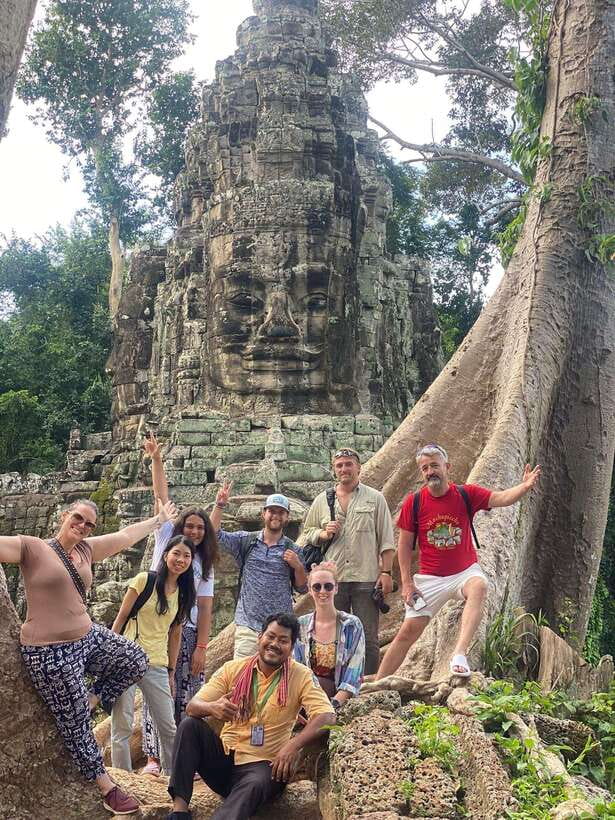
Guides such as Sayon and Sary get extra praise for guiding people to strong photo spots and for answering questions on the spot. That’s a big deal when you’re up early. You don’t want the morning to feel like a rush; you want it to feel like you’re watching history wake up.
Angkor Wat at sunrise: the main event, but with real meaning
Angkor Wat is the headline because it’s the anchor of the whole Angkor narrative. This tour sets you up to see it at the best time of day and then helps you “read” the temple rather than just look at it.
What I’d watch for: the way the temple’s design guides your movement. Your guide can point out the kinds of symbolism and temple storytelling that are hard to catch on your own, especially when you’re standing in a bright, noisy crowd.
Day 1 stops: Ta Prohm, Bayon (smiling faces), Ta Keo, and the South Gate
After Angkor Wat, Day 1 shifts into temples that feel more textured—stone, roots, carvings, and big emotional visuals.
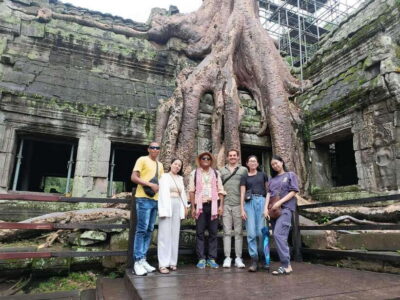
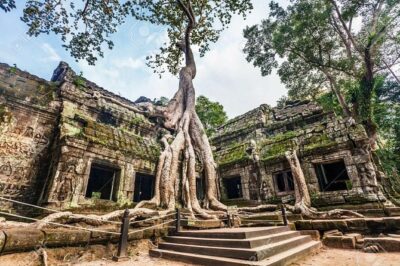
Ta Prohm is a standout for many people because it’s famous for jungle growth over the ruins. It’s not just about the look. You’ll also hear why this temple became known worldwide and how it fits into the bigger Angkor picture. If you like film locations or you’ve seen the temple in popular culture, Ta Prohm is a place where that recognition turns into real appreciation for the stonework beneath the roots.
Next comes Bayon, often described for its large smiling faces. This stop helps you understand Angkor’s religious shifts and political choices because Bayon is tied to a specific ruler’s era and the way the state temple functioned. Your guide can also explain how Bayon fits into Angkor Thom as a whole, so you don’t treat it like a single photo spot—you treat it like a chapter.
Then you’ll walk up to Ta Keo, a mountain temple built in the 10th century. This is one of those places where you feel time in your legs: the climb makes the structure’s height and design feel deliberate. If you’re prone to knee or foot pain, take it slow. The stairs add up across two days.
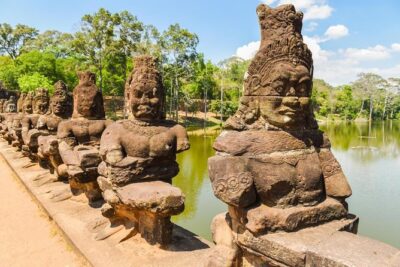
Finally, Day 1 closes at the South Gate of Angkor Thom, including the famous bridge scenes with gods and demons holding a seven-headed naga. This is one of those moments where the decoration isn’t just decoration. It’s myth translated into stone, and it’s an emotional way to end a sunrise day.
Chasing the light? More dawn and dusk runs


Day 2 (10:30am–7:00pm): the bigger loop, quieter temples, then sunset time
Day 2 starts later, around 10:30am, which sounds nice until you remember the midday heat. The reason it still works is that the tour is designed to keep you moving efficiently across the complex, with AC transport between zones and scheduled breaks.
The second day is often described as the surprise star. When you’ve already seen the biggest names on Day 1, Day 2 can feel more relaxing, with more chances to look carefully at carvings, doorways, and architectural details. That difference in “how you experience it” is exactly why two-day plans often beat one-day sprints.
And the endpoint matters. A sunset stop gives you a second emotional reset—different light, different energy, and a satisfying close rather than a tired stumble back to town.
Day 2 temple circuit: Preah Khan, Neak Pean, Ta Som, East Mebon, Pre Rup, Phnom Bakheang
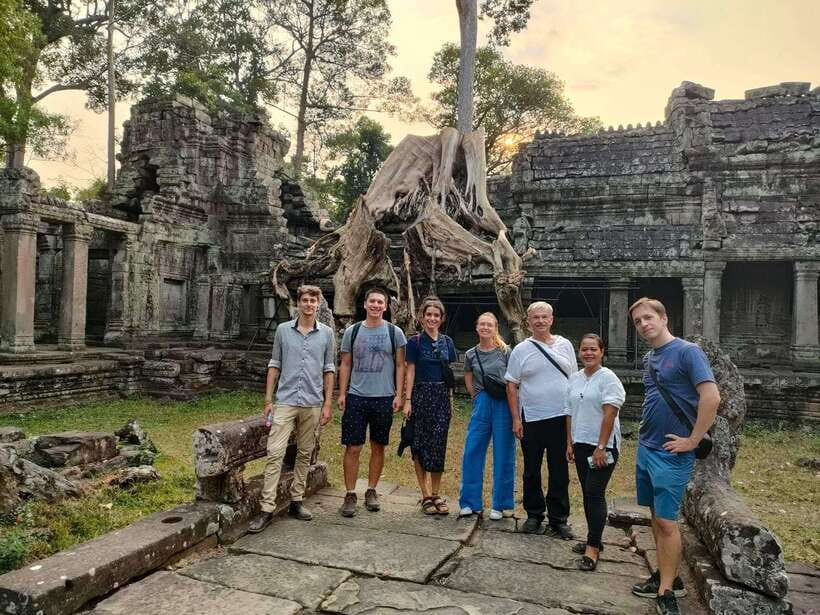
Day 2 focuses on a loop of major temples and meaningful monuments. Here’s what each stop brings, and what you should pay attention to.
Preah Khan is one of the largest temples on the loop. You’ll hear how it was built by the ruler’s generation and how it functioned in relation to earlier family or state narratives. This is the kind of site where the scale can overwhelm you—so ask your guide what to look for first. It’s easier when you know what the big “why” is.
Neak Pean is tied to water use in the Angkor period. You’re looking at a temple tied to bathing and ideas of health from that era. If you like understanding how everyday life and belief connected, this stop is a strong one. Even if water looks calm, the point is that this was designed as a purposeful place, not a random pool beside ruins.
Ta Som brings a different kind of visual drama. The temple is associated with a big tree over the east gate and a collection of sculpted dancers with long hair. This is a great place to slow down, because the carvings are dense and easy to miss when you’re rushing between attractions.
East Mebon relates to ancestors and its reservoir setting. Built in the 10th century, it used to sit in the middle of a reservoir. That detail matters because it changes how you imagine the temple’s original scene. Instead of thinking “ruins in dry grass,” you start thinking “temple once reflected and surrounded.”
Pre Rup is built by a king for himself and often mistaken for a crematorium because of the stone structure shape. The teaching point here is Hindu meditation and full-moon symbolism. If you’ve ever wondered why people built these layered platforms, Pre Rup helps you see how rituals and architecture could blend.
Phnom Bakheang is the hilltop finish with 33 towers representing the heavens. The idea is about life on earth and life beyond—spelled out in architecture. This is also a physical stop. You’ll want comfortable shoes and a steady pace.
What $34 really buys you: guides, transport, and included temple time
At $34 per person for two days, the value isn’t just the temples. It’s the combination: hotel pickup and drop-off, an air-conditioned minibus, an English-speaking guide, plus water and wipe towels during the day.
Most days you’ll be moving between temple clusters, and the AC ride is not a luxury here—it’s the difference between enjoying your second day and feeling fried by lunchtime. That’s why transport quality keeps showing up in strong feedback. Cold water bottles and towel refresh moments also help you keep your energy for the late-day walking.
What’s not included is equally important:
- You need to buy the Angkor Archaeological Park entry ticket yourself (or reserve through the official government site).
- Meals aren’t included.
So build your plan around break times. The tour includes occasional rest and food breaks as the day progresses, but you’ll still want your own strategy for lunch or snacks.
Temple pass reality check (so you’re not stuck at the gate)
The tour doesn’t include the temple pass. You’ll need to purchase it yourself, either online through https://www.angkorenterprise.gov.kh/ or at the ticket office after your guide picks you up. This is normal in Angkor, but it’s worth sorting in advance so your day starts smoothly.
Clothes, comfort, and the stuff that keeps the day enjoyable
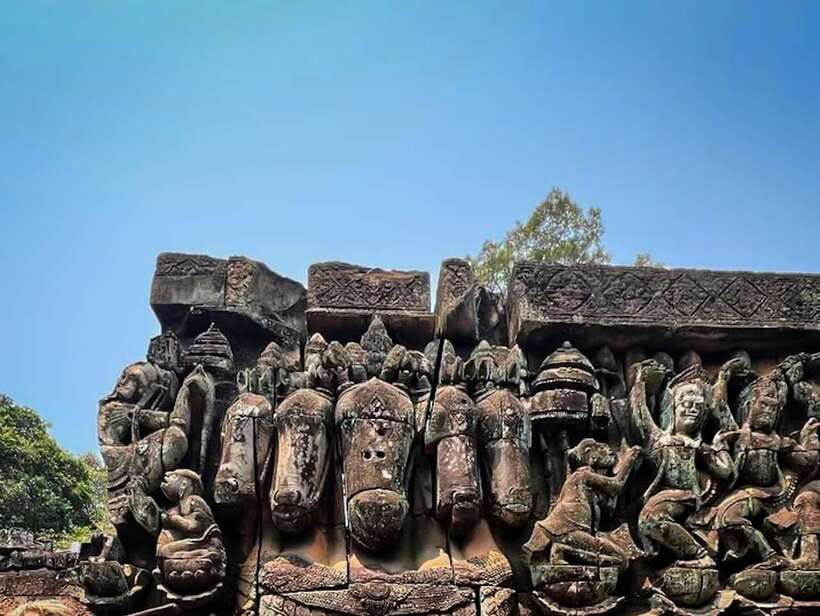
This tour is very clear about dress. You shouldn’t wear shorts, short skirts, or sleeveless shirts. Plan for hot sun and bright stone, then add sunscreen and sunglasses.
Wear comfortable clothes and shoes you trust on uneven ground. You’ll climb at places like Ta Keo and walk enough that your feet will notice if you’re in the wrong footwear.
Also, alcohol and drugs aren’t allowed. It’s an easy rule, but it matters because the tour schedule can be long.
On the comfort side, the included chilled bottled water and wipe towel are genuinely helpful after each stop. And the guides—people like Sok, Sam, Vone, and Pheap—are often praised for keeping groups moving with good timing so you spend more time looking and less time waiting.
One more practical note: the activity information says it’s wheelchair accessible, but it also says it’s not suitable for wheelchair users and people over 70. If you’re in that situation, I’d treat the stairs and walking demands as the deciding factor and contact the provider to confirm what can realistically be adapted.
What it’s like with the guides: more story, better photo spots, fewer random “what am I looking at?”
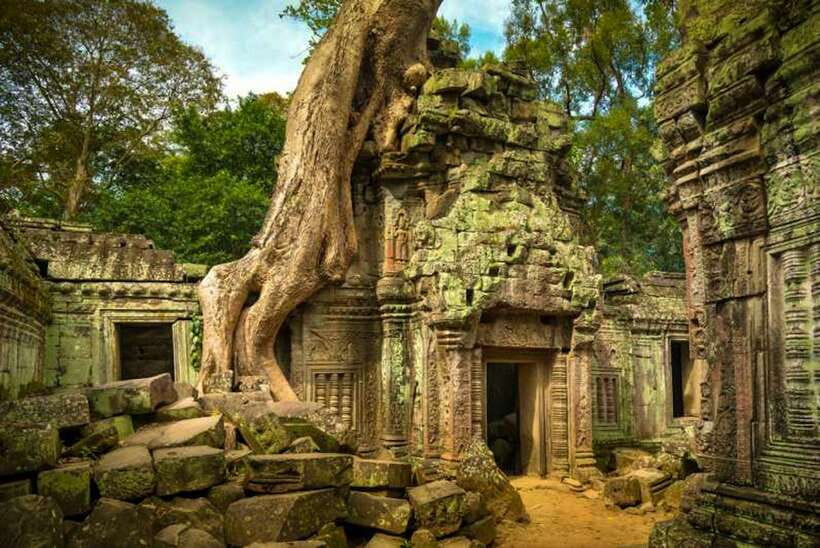
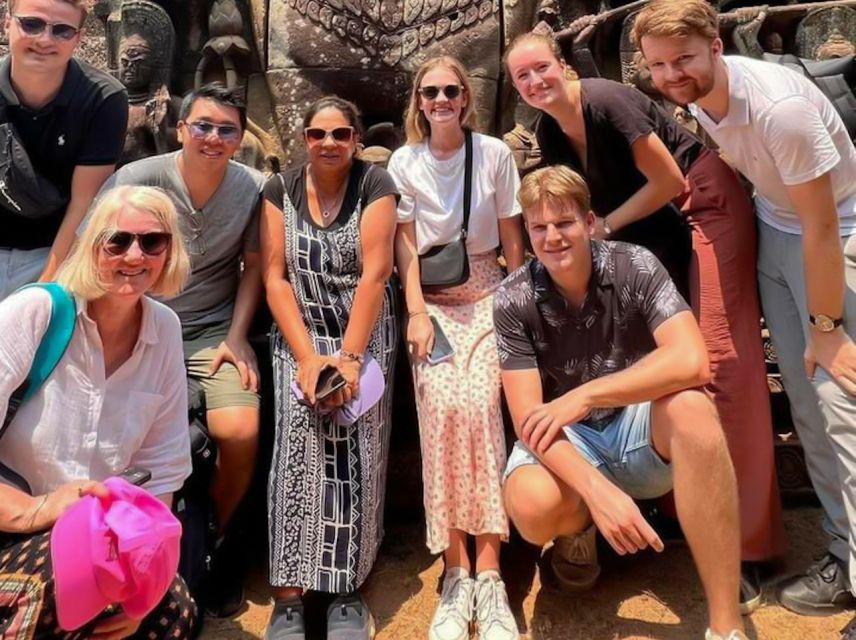
A big reason this tour gets such strong praise is the guiding style. Many guides are named in feedback: Sary, Sayon, Sok, Sam, Vone, and Pheap (Pip). Across those guides, a pattern shows up—explaining what you’re seeing, not just where to stand.
You’ll hear myth and symbolism tied to specific structures. You’ll also get practical help with viewpoints and photo timing. One recurring theme: guides help you find spots that are a little farther from the densest crush, which makes Angkor feel like a place you can actually enjoy.
And yes, it can be funny. Multiple guides are described as entertaining, which sounds like a small thing until you realize how long two temple days are. A light tone helps you keep energy when the heat is doing its work.
Who should book this sunrise-to-sunset Angkor plan
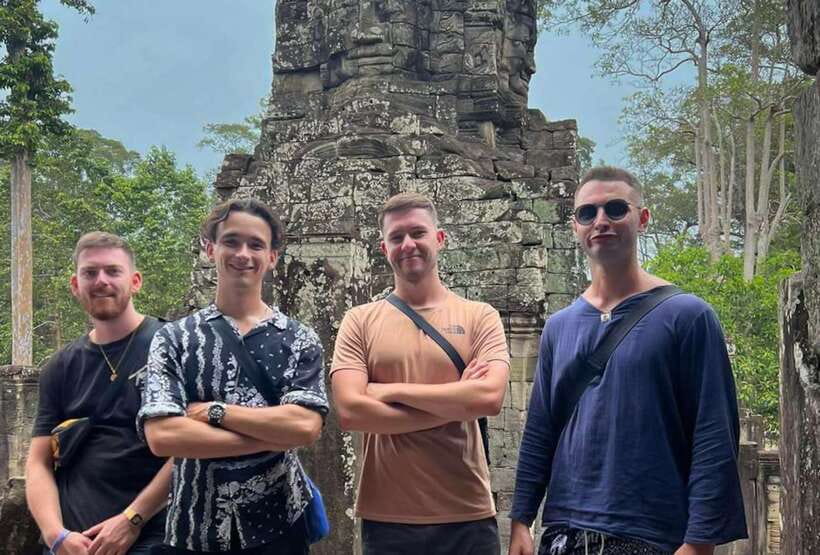
This tour is a great fit if:
- You want to see the main temple highlights without spending time piecing together logistics.
- You like learning what you’re seeing, especially the connections between rulers, religion, and temple design.
- You want a sunrise start on Day 1 and a second-day loop that keeps things from feeling repetitive.
It may not be the best fit if:
- You hate early mornings. Day 1 starts at 4:30am.
- You have limited mobility or knee/foot issues that make climbing harder. There’s plenty of walking and some steep temple steps.
- You’re traveling with a very small or fragile schedule. This is a full two-day commitment.
Should you book this 2-day Angkor Wat tour with sunrise and sunset?
I’d book it if your goal is to maximize value and context in a short window. For $34, you’re getting real guide help, AC transport, and a two-day plan designed around the most photogenic times of day. You also get a smooth rhythm: sunrise morning for the big wow, then a second loop that adds variety and meaning.
Skip it only if you’re looking for a slow, independent day with zero early starts. And if you’re relying on a wheelchair or you’re over 70, don’t assume it will feel comfortable—this one involves enough walking and stairs that you should confirm options before committing.
If you want the “best of Angkor” experience with guidance and timing doing the heavy lifting, this is a strong pick. Just remember: you bring the energy, you purchase your temple pass, and you dress for sun and stone.
More Temple Circuits Around Siem Reap
- Angkor Wat Sunrise or Sunset Tour with Guide from Siem Reap
★ 5.0 · 12,109 reviews - Siem Reap: Angkor Wat: Small-Group Sunrise or Sunset Tour
★ 5.0 · 9,444 reviews - Siem Reap: Full-Day Angkor Wat Guided Tour with Sunset
★ 4.9 · 3,803 reviews - Angkor Wat Sunrise tour with Small – Group and Guide tours
★ 5.0 · 3,655 reviews - Angkor Wat Highlights and Sunrise Guided Tour from Siem Reap
★ 5.0 · 3,213 reviews
Dawn and Dusk Over Angkor
- Angkor Wat Sunrise or Sunset Tour with Guide from Siem Reap
★ 5.0 · 12,109 reviews - Siem Reap: Angkor Wat: Small-Group Sunrise or Sunset Tour
★ 5.0 · 9,444 reviews - Sunset tour of Kampong Phluk stilts home village on the Tonle Sap
★ 5.0 · 4,865 reviews - Siem Reap: Full-Day Angkor Wat Guided Tour with Sunset
★ 4.9 · 3,803 reviews - Angkor Wat Sunrise tour with Small – Group and Guide tours
★ 5.0 · 3,655 reviews
Angkor Wat, a Few More Ways In
- Angkor Wat Sunrise or Sunset Tour with Guide from Siem Reap
★ 5.0 · 12,109 reviews - Siem Reap: Angkor Wat: Small-Group Sunrise or Sunset Tour
★ 5.0 · 9,444 reviews - Siem Reap: Full-Day Angkor Wat Guided Tour with Sunset
★ 4.9 · 3,803 reviews - Angkor Wat Sunrise tour with Small – Group and Guide tours
★ 5.0 · 3,655 reviews - Angkor Wat Highlights and Sunrise Guided Tour from Siem Reap
★ 5.0 · 3,213 reviews
Just Added: Fresh Siem Reap Tour Reviews


Angkor Wat Temple Tours, compared.
 ★ 5.0Angkor Wat Sunrise or Sunset Tour with Guide from Siem ReapFrom $1812,109 reviews
 ★ 5.0Angkor Wat: Small-Group Sunrise or Sunset TourFrom $159,444 reviews
 ★ 4.9Full-Day Angkor Wat Guided Tour with SunsetFrom $153,803 reviews
 ★ 5.0Angkor Wat Sunrise tour with Small – Group and Guide toursFrom $143,655 reviews
 ★ 5.0Angkor Wat Highlights and Sunrise Guided Tour from Siem ReapFrom $233,213 reviews
 ★ 5.0Angkor Wat Sunset Small Group Tour with Lunch IncludedFrom $203,059 reviews
 ★ 5.0Full-Day Angkor Wat Sunrise Private Tour with Guide from Siem ReapFrom $602,920 reviews
 ★ 5.0Angkor Wat Sunrise & 3 Main Temples with Breakfast – Small GroupFrom $152,857 reviews
Browse the lists this tour appears in