
Reviewed · ANGKOR WAT TEMPLE TOURS
Angkor Wat Sunrise or Sunset Tour with Guide from Siem Reap
Start with sunrise, then you earn the temples. This is an 8-hour, small-group Angkor Wat tour (max 13) that strings together the big UNESCO hits with an English-speaking guide and early-morning timing. I like that the day is built around getting you into the temples when it’s cooler and calmer.
Two more things I really like: you get practical comfort—an air-conditioned ride plus cold water and cold towels—and your guide brings the temples to life with stories, humor, and context (guides such as Mr. T, Indiana Jones/Chanthy, David, and Sen show up in past groups). One consideration before you go: the $18 tour price does not include the $37 Angkor Wat admission, so your real total is higher once you add the ticket.
In This Review
- Key highlights in plain terms
- The timing game: sunrise vs sunset in Angkor Wat
- Small-group setup in Siem Reap: what max 13 actually changes
- Stop 1: Angkor Wat (the 3-hour showpiece)
- Stop 2: Angkor Thom, South Gate, Bayon, and Baphuon (2 hours)
- Stop 3: Ta Prohm, the jungle temple (2 hours)
- Stop 4: Banteay Kdei (1 hour) and the end-of-route feel
- Guide style that makes the temples click
- Transport, food breaks, and what an 8-hour day feels like
- Price and value: $18 tour fee plus the $37 Angkor ticket
- What to pack so you enjoy every stop
- Who this Angkor Wat sunrise/sunset tour suits (and who should rethink)
- Should you book this Angkor Wat sunrise or sunset tour?
- FAQ
- What time does the sunrise tour pickup start in Siem Reap?
- How long is the tour?
- Which temples are included in the route?
- Is the Angkor Wat entrance fee included in the $18 price?
- Is this a small group tour?
- Does the tour include hotel pickup and drop-off?
- What’s included in the tour price?
- What’s the cancellation policy?
- Are children allowed?
Key highlights in plain terms
- Early pickup for sunrise means you’re already moving before the crowds fully wake up
- Max 13 people keeps questions easy and photo stops from feeling like cattle lines
- Big-name sights in one route: Angkor Wat, Bayon/Baphuon area, Ta Prohm, and Banteay Kdei
- Comfort that matters: AC vehicle, cold water, and cold towels on the move
- Guide-led timing: some guides aim for quieter photo spots and smoother pacing
Other ways to walk the great temple
- Angkor Wat Sunrise or Sunset Tour with Guide from Siem Reap★ 5.0 · 12,109 reviews
- Siem Reap: Angkor Wat: Small-Group Sunrise or Sunset Tour★ 5.0 · 9,444 reviews
- Siem Reap: Angkor Wat 2-Day Tour with Sunrise and Sunset★ 4.9 · 4,429 reviews
- Siem Reap: Full-Day Angkor Wat Guided Tour with Sunset★ 4.9 · 3,803 reviews
The timing game: sunrise vs sunset in Angkor Wat
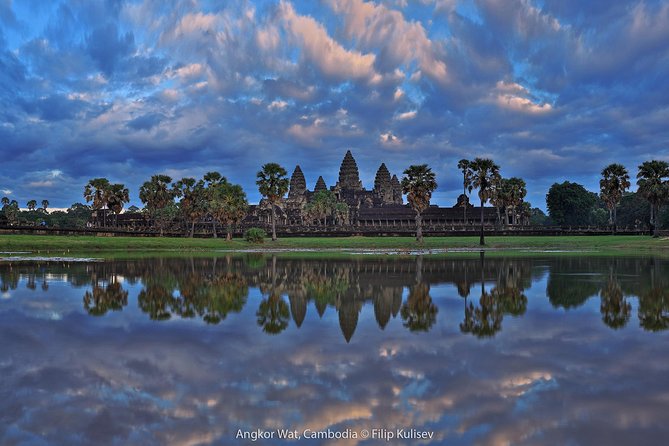
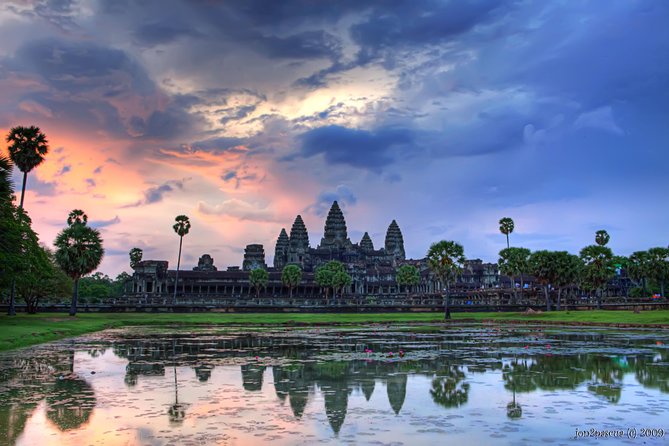
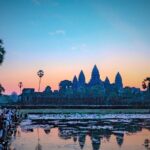
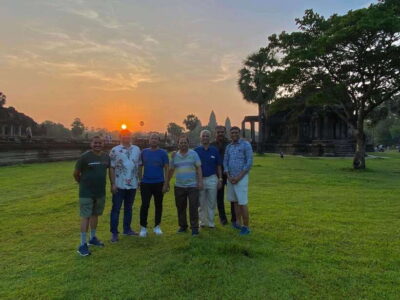
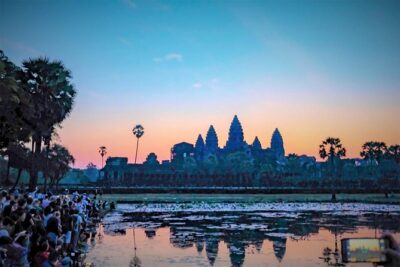
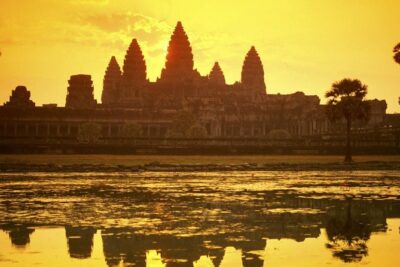
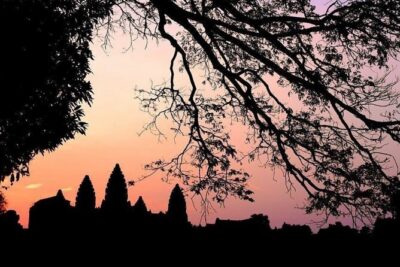
Angkor Wat is famous for a reason, but the real magic is the light. On a sunrise option, you’re collected from your hotel between 4:15 and 4:40 am, so you can get to the temple complex while the sky is still doing its slow reveal. That early departure also comes with a bonus: the weather is often more forgiving for walking and standing around with your camera.
If you choose the sunset version, the tour is still built around the same idea—arriving at the key hour and then moving through the complex while the light shifts and the day cools down. The exact pickup time for sunset isn’t listed in your details, but the structure stays similar: temple time, guided context, and then the rest of the circuit.
Either way, sunrise or sunset tours work best when you’re ready for “structured wandering.” You’ll have guide-led stops, and you’ll also get moments to explore on your own—just not unlimited time. Think of it as a guided route that tries to protect your best photo windows.
Small-group setup in Siem Reap: what max 13 actually changes
On paper, “small group” sounds like marketing. In practice, max 13 travelers changes the feel of the morning. It’s easier to hear the guide without craning your neck. It’s also easier to pause when you want that one extra photo, rather than rushing because the bus is waiting on a long line of people.
You’ll be in an air-conditioned vehicle, which matters because Siem Reap days can warm up fast, even when you start early. A lot of the comfort here is about little things done consistently: cold water and cold towels show up at stops. That’s not just nice—it helps you stay alert when you’re moving between stone temples, courtyards, and shaded ruins.
You also get an English tour guide, and many of the praised guides keep the talk moving: Mr. T is often singled out for stories that can be funny and thoughtful at the same time, while guides like Indiana Jones/Chanthy (yes, the nickname gets mentioned a lot) are described as energetic, attentive, and well-timed with explanations.
Stop 1: Angkor Wat (the 3-hour showpiece)
Angkor Wat is the reason most people come to Siem Reap. This tour gives you about 3 hours at Stop 1, which is the sweet spot for sunrise or sunset viewing plus a guided orientation. You won’t just stare at the silhouette from one spot. You’ll get the background so the carvings and layout start making sense, not just looking impressive.
What makes that 3-hour block valuable is that Angkor Wat isn’t one quick photo stop. The temple’s geometry, terraces, and symbolism reward slow looking. A good guide helps you notice what you might otherwise miss—details tied to Khmer religious life and the way the site was designed to communicate power and belief.
Practical note: the Angkor Wat admission ticket is not included in the $18 price. The listed fee is $37 per person, and the ticket covers temple admission. Reviews also stress remembering to get your Angkor ticket ahead of time, because you don’t want your morning held up at the wrong moment.
If you’re planning your photos, arrive with a realistic expectation. Clouds can happen. Even so, the ambiance can still feel special, especially when the group is managed well and the guide keeps you moving efficiently.
Stop 2: Angkor Thom, South Gate, Bayon, and Baphuon (2 hours)
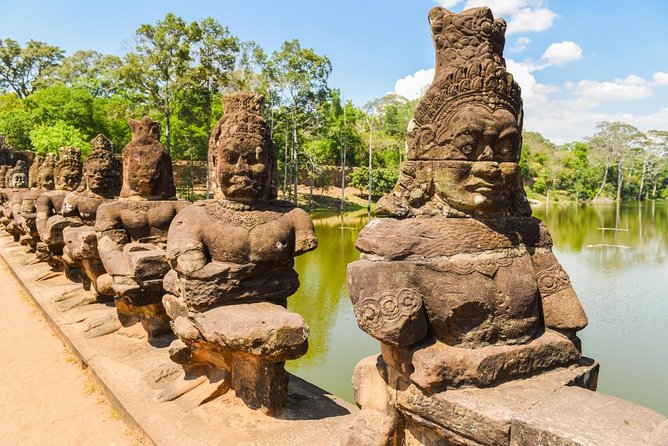
After Angkor Wat, the route shifts toward Angkor Thom, entering through the grand expanse of the South Gate. This is a smart follow-up because it changes the mood. Angkor Wat often feels monumental and “designed.” Angkor Thom hits you as busy stone city energy—thicker walls, doorways, and the feeling that you’re stepping into a different chapter of the complex.
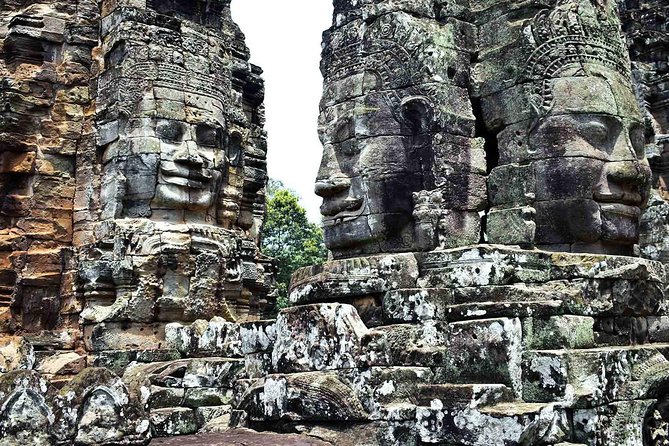
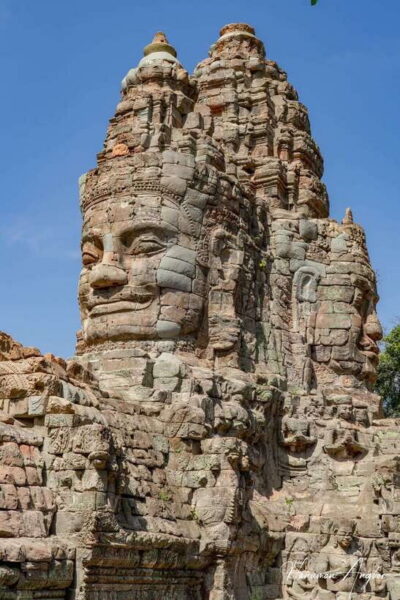
This stop includes time at Bayon and Baphuon (not just the gate). Bayon is the face-tower temple—those sculpted expressions are instantly recognizable. A strong guide helps you go beyond “cool faces” and connect them to what was happening here historically and religiously. The best tours also point out how people interpret the site through Hindu and Buddhist layers, which can help you understand why parts look like they do.
For pacing, you get about 2 hours at this stop. That’s usually enough for the major sights plus short moments to step aside, regroup, and take photos without sprinting. It’s also where a good guide’s timing matters, because the walkways can be crowded later in the morning.
Chasing the light? More dawn and dusk runs

Stop 3: Ta Prohm, the jungle temple (2 hours)
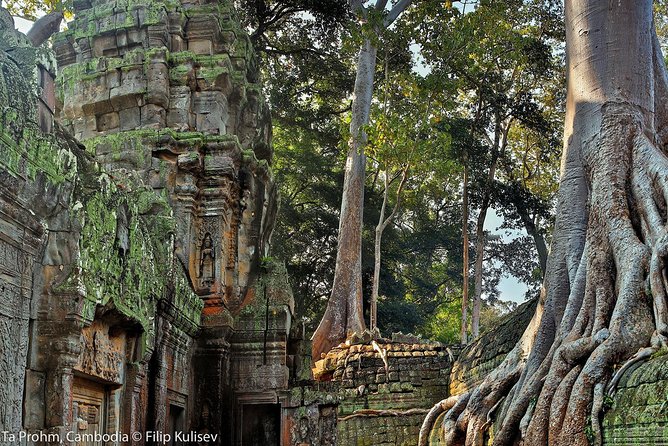
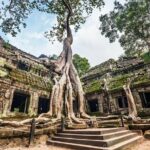
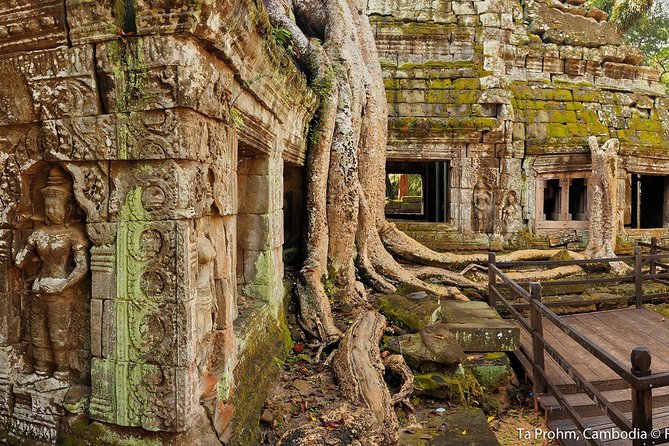
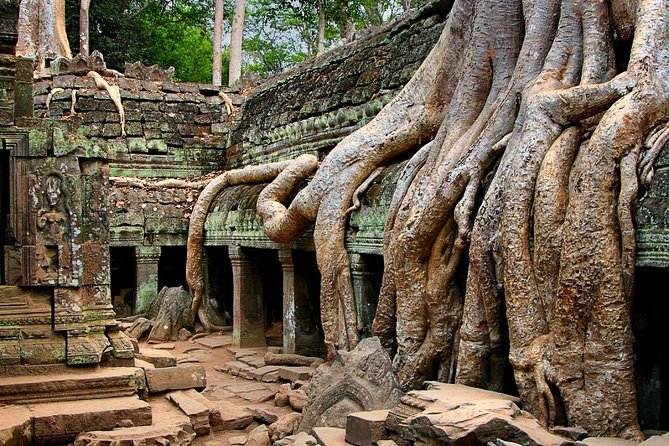
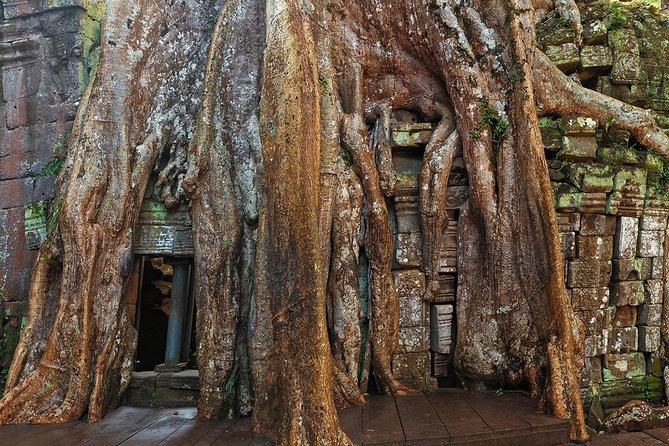
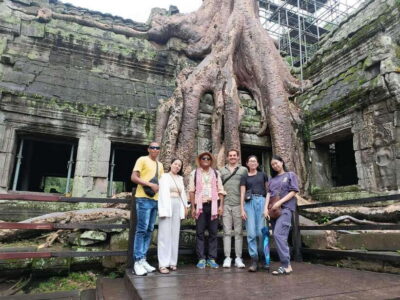
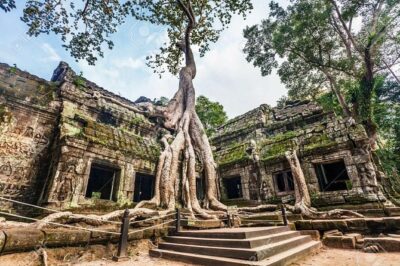
Then you hit Ta Prohm, the “jungle temple” often called the “tree temple.” This is the stop where the ruins feel most alive. Large roots wrap around stones and structures, and the whole place seems half-swallowed by the forest. The ruins aren’t staged like a museum set—they look like time is still working on them.
You get about 2 hours here, which is helpful because Ta Prohm isn’t just one view. You’ll have to walk, stop, look upward, and watch how the light changes through the trees. That’s also one of the best times to slow down and take photos, since the textures and angles are dramatic.
A common complaint at popular temples is feeling rushed. The people who rate this tour highly often mention that the guide manages time and gets the group into better photo spots rather than only the busiest corners. That means you’re more likely to get shots that look like you found the temple in the middle of a quiet day—even if it’s not that quiet.
One downside to any Ta Prohm visit: walking on uneven stone. Wear shoes you trust, and expect to spend at least part of the time on your feet.
Stop 4: Banteay Kdei (1 hour) and the end-of-route feel
The last stop is Banteay Kdei, a temple associated with King Jayavarman VII, built during the later years of the 12th century. This is a good choice to end with because it feels a bit less frantic than the biggest crowd magnets, while still giving you real temple depth.
You only get about 1 hour here, so it’s not the place for total exploration. But for many people, that’s exactly right. After Angkor Wat, Bayon/Baphuon, and Ta Prohm, one hour can feel like a breather rather than a final marathon.
Finishing with Banteay Kdei also helps you see variety. If Angkor Wat is the polished icon and Bayon is the face-tower moment, Banteay Kdei gives you a different texture of ruins—another layer of what this region’s temple building accomplished over time.
Guide style that makes the temples click
The tour’s “secret sauce” is the guide. Across the praised experiences, the common thread is storytelling that stays connected to what you’re looking at. Mr. T is described as weaving in jokes with historical context, sometimes with sobering moments too, leaving people with a deeper understanding of resilience in Khmer society.
Indiana Jones (often mentioned as Chanthy) gets praised for being fun and attentive while still explaining temple history clearly. Guides like David and Sen are also described as managing group time well and giving enough information without turning the day into a lecture.
You can also tell a tour is organized when the group doesn’t feel constantly herded. Many of the positive comments mention that guides pick good times and locations for photos and help the group keep moving at a human pace. When cold water and towels show up consistently, it’s easier to stay focused on the temples instead of just surviving the day.
If you’re the type who likes history but also wants the day to stay light, this is a good fit.
Transport, food breaks, and what an 8-hour day feels like
This is listed as an 8-hour tour (approx.). That doesn’t mean you’re sitting still for 8 hours. Between the temple blocks and the driving time across the Angkor region, your body will do work.
There’s time allocated for each temple—3 hours at Angkor Wat, then 2 hours Bayon/Baphuon area, then 2 hours Ta Prohm, and 1 hour Banteay Kdei. In practice, expect more walking than you might think from the temple names alone. You’ll go up and down, step through doorways, and spend time standing in view-heavy spots.
Food: your details don’t guarantee a particular meal, but some guided days include a break after the first two temples and lunch is described as self paid at a local restaurant. That’s a common reality for Angkor tours, so I suggest you treat lunch like part of your planning, not an afterthought.
Also: start thinking about water early. Even with cold water provided, bring a little extra if you tend to drink fast, and keep sunscreen and a hat in your day bag.
Price and value: $18 tour fee plus the $37 Angkor ticket
Let’s do the math you actually care about. The tour price is $18 per person, and the Angkor Wat entrance ticket costs $37 per person and covers temple admission. That puts the likely total around $55 per person, assuming you buy the standard admission.
So is it good value? For me, yes—because the $18 isn’t meant to cover the temple access. You’re paying for an English guide, air-conditioned transport, the small-group size, and the time structure that strings multiple UNESCO sites into one day without forcing you to plan every connection yourself.
Where you should be sharp: don’t budget only the tour price. Also, if you can, get your Angkor ticket sorted ahead of time. That reduces stress during the most time-sensitive part of the day—sunrise or sunset viewing.
If you’re comparing options, look at whether other tours include the guided route across Angkor Thom and Ta Prohm in the same window. One-day, multi-temple tours are what most visitors want, and this one tries to deliver four major stops in one organized outing.
What to pack so you enjoy every stop
You’re walking on stone, climbing some steps, and standing around for photos. Here’s the practical kit that matches this itinerary:
- Comfortable walking shoes with grip
- A hat and sunscreen for Ta Prohm and the open courtyards
- Light rain protection, just in case weather flips
- A small day bag so you can keep essentials close
- A layer for sunrise if you feel cold early morning
The tour provides cold water and cold towels, which helps a lot. Still, don’t treat that as your only hydration plan. Early starts can trick you into forgetting how thirsty you are until you notice a headache.
And for the camera: if you want sunset/sunrise shots, bring the basics—clean lens, spare batteries, and a strap so you’re not juggling your gear while stepping over uneven surfaces.
Who this Angkor Wat sunrise/sunset tour suits (and who should rethink)
This tour makes the most sense if you want:
- Small-group pacing instead of a huge crowd experience
- A route that hits the major sights—Angkor Wat, Bayon area, Ta Prohm, and Banteay Kdei
- An English guide who explains what you’re seeing
- Comfort touches like AC transport and cold towels
It may not be ideal if you:
- Want full freedom to linger at one temple for hours without schedule
- Prefer self-guided temple exploring where you skip structured stops
- Are chasing only the single best sunrise view and nothing else
For most first-timers, though, this is a solid way to get oriented fast and see a lot while still feeling like you had guidance.
Should you book this Angkor Wat sunrise or sunset tour?
I’d book it if you want a well-run, small-group day that covers the core Angkor experiences in one go, with an English guide who can tell the stories behind the stones. The combination of timed sightseeing, comfort (cold water and towels), and a route that balances the heavy hitters makes it a practical choice for an 8-hour window.
But if you’re price-sensitive, don’t forget the $37 Angkor Wat admission. And if you’re not a fan of early starts (for sunrise), choose the sunset option if you can align it with your energy levels.
If you go, plan for the “real” day: wear good shoes, expect walking, and don’t treat the ticket fee as an optional add-on. Get the admission sorted ahead of time, and you’ll spend your energy where it matters—on the temples and the light that makes Angkor Wat feel almost unreal.
FAQ
What time does the sunrise tour pickup start in Siem Reap?
For the sunrise option, pickup from your hotel is between 4:15 and 4:40 am.
How long is the tour?
The tour runs about 8 hours (approx.).
Which temples are included in the route?
You visit Angkor Wat, the South Gate of Angkor Thom with Bayon and Baphuon, Ta Prohm, and Banteay Kdei.
Is the Angkor Wat entrance fee included in the $18 price?
No. The Angkor Wat admission is $37 per person and is not included in the tour price. The ticket covers temple admission.
Is this a small group tour?
Yes. The tour has a maximum of 13 travelers.
Does the tour include hotel pickup and drop-off?
Pickup is offered, and the tour ends back at the meeting point. You should provide your hotel details if pickup is requested.
What’s included in the tour price?
An air-conditioned vehicle, an English tour guide, and cold water with cold towels.
What’s the cancellation policy?
You can cancel for free up to 24 hours in advance for a full refund.
Are children allowed?
Children must be accompanied by an adult. Most travelers can participate.
More Temple Circuits Around Siem Reap
- Siem Reap: Angkor Wat: Small-Group Sunrise or Sunset Tour
★ 5.0 · 9,444 reviews - Siem Reap: Angkor Wat 2-Day Tour with Sunrise and Sunset
★ 4.9 · 4,429 reviews - Siem Reap: Full-Day Angkor Wat Guided Tour with Sunset
★ 4.9 · 3,803 reviews - Angkor Wat Sunrise tour with Small – Group and Guide tours
★ 5.0 · 3,655 reviews - Angkor Wat Highlights and Sunrise Guided Tour from Siem Reap
★ 5.0 · 3,213 reviews
Dawn and Dusk Over Angkor
- Siem Reap: Angkor Wat: Small-Group Sunrise or Sunset Tour
★ 5.0 · 9,444 reviews - Sunset tour of Kampong Phluk stilts home village on the Tonle Sap
★ 5.0 · 4,865 reviews - Siem Reap: Angkor Wat 2-Day Tour with Sunrise and Sunset
★ 4.9 · 4,429 reviews - Siem Reap: Full-Day Angkor Wat Guided Tour with Sunset
★ 4.9 · 3,803 reviews - Angkor Wat Sunrise tour with Small – Group and Guide tours
★ 5.0 · 3,655 reviews
Angkor Wat, a Few More Ways In
- Siem Reap: Angkor Wat: Small-Group Sunrise or Sunset Tour
★ 5.0 · 9,444 reviews - Siem Reap: Angkor Wat 2-Day Tour with Sunrise and Sunset
★ 4.9 · 4,429 reviews - Siem Reap: Full-Day Angkor Wat Guided Tour with Sunset
★ 4.9 · 3,803 reviews - Angkor Wat Sunrise tour with Small – Group and Guide tours
★ 5.0 · 3,655 reviews - Angkor Wat Highlights and Sunrise Guided Tour from Siem Reap
★ 5.0 · 3,213 reviews
Just Added: Fresh Siem Reap Tour Reviews

Angkor Wat Temple Tours, compared.
 ★ 5.0Angkor Wat: Small-Group Sunrise or Sunset TourFrom $159,444 reviews
 ★ 4.9Angkor Wat 2-Day Tour with Sunrise and SunsetFrom $344,429 reviews
 ★ 4.9Full-Day Angkor Wat Guided Tour with SunsetFrom $153,803 reviews
 ★ 5.0Angkor Wat Sunrise tour with Small – Group and Guide toursFrom $143,655 reviews
 ★ 5.0Angkor Wat Highlights and Sunrise Guided Tour from Siem ReapFrom $233,213 reviews
 ★ 5.0Angkor Wat Sunset Small Group Tour with Lunch IncludedFrom $203,059 reviews
 ★ 5.0Full-Day Angkor Wat Sunrise Private Tour with Guide from Siem ReapFrom $602,920 reviews
 ★ 5.0Angkor Wat Sunrise & 3 Main Temples with Breakfast – Small GroupFrom $152,857 reviews