
Reviewed · ANGKOR WAT TEMPLE TOURS
2-Day Angkor Wat, Kulen Mountain, Beng Mealea and Tonle Sap
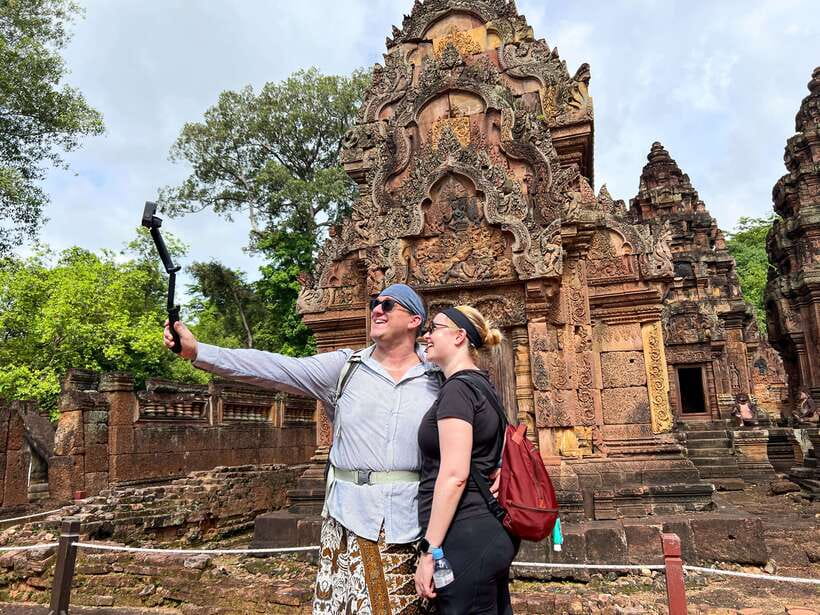
Angkor at dawn is pure drama. This two-day loop is built around the Angkor Wat sunrise moment, then stacks major hits like Ta Prohm, Bayon, Phnom Kulen, Beng Mealea, and a Tonle Sap boat—all with hotel pickup and a tight small-group size. If you’re lucky enough to get guides like Mr. Sam or Seila, the storytelling can make the stones feel less like sightseeing and more like a living puzzle.
What I really like is the way the day is paced for heat and crowds: you’re up early, move through the big sites fast, and keep getting simple perks like cold towels and cool water after long walks. I also like the food rhythm—Day 1 includes breakfast, and Day 2 includes a picnic with grilled chicken plus seasonal fruit, not just another stop where you buy something and vanish.
One consideration: early starts are non-negotiable, and the schedule is full. Also, because this is centered on sacred temples, I’d take it seriously if a guide’s humor ever drifts into disrespect; in one past case, a traveler reported insensitive religious jokes—so if that matters to you, it’s wise to set a respectful tone from the beginning.
In This Review
- Key Things You’ll Appreciate Most
- Why Angkor Wat Sunrise Changes Everything
- Day 1: Angkor Wat, Angkor Thom, and Ta Prohm Without Wasting Motion
- The Palm Cake Stop and Preah Dak Village: A Breather With Real Local Flavor
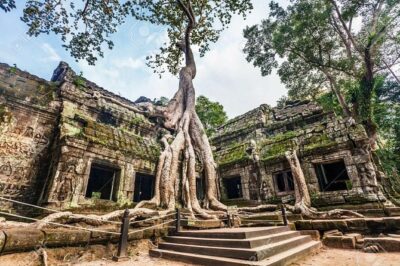
- Ta Prohm: The Jungle Temple That Looks Like It’s Still Breathing
- Day 2 on Phnom Kulen: Waterfalls, Reclining Buddha, and 1000 Lingas
- Beng Mealea: When the Jungle Makes the Ruins Feel Mysterious
- Kampong Phluk on Tonle Sap: Floating Life by Boat
- Passes, Real Cost, and What You’re Actually Paying For
- Small-Group Comfort, Timing, and the Guides Behind the Scenes
- What to Pack (So Your Feet and Skin Don’t File Complaints)
- Who Should Book This Two-Day Angkor + Kulen + Beng Mealea + Tonle Sap Tour
- Should You Book This Tour?
- FAQ
- What time do you pick up for the Angkor Wat sunrise?
- Is breakfast included?
- What food is included on Day 2?
- What passes do I need to pay for separately?
- How many people are in the group?
- Is the tour guide English-speaking?
- What comfort items are provided during the tour?
- Are there any clothing or alcohol rules?
- Can I cancel for a full refund?
- Is reserve and pay later available?
Key Things You’ll Appreciate Most
- Angkor Wat sunrise with early pickup and time to walk and photograph
- Angkor Thom and Bayon faces plus key terraces like the Elephant and Leper King
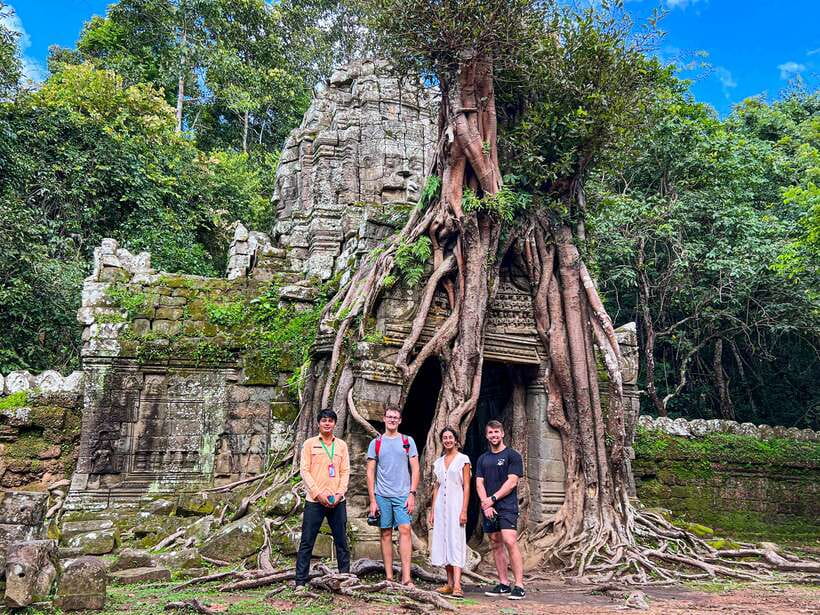
- Ta Prohm and Beng Mealea—temples where roots and stone share the spotlight
- Phnom Kulen highlights: waterfalls, reclining Buddha, and the River of Thousand Linga
- Tonle Sap boat ride to Kampong Phluk and daily life on stilts
- Small-group comfort with A/C transport, cool water, and cold towels
Other ways to walk the great temple
- Angkor Wat Sunrise or Sunset Tour with Guide from Siem Reap★ 5.0 · 12,109 reviews
- Siem Reap: Angkor Wat: Small-Group Sunrise or Sunset Tour★ 5.0 · 9,444 reviews
- Siem Reap: Angkor Wat 2-Day Tour with Sunrise and Sunset★ 4.9 · 4,429 reviews
- Siem Reap: Full-Day Angkor Wat Guided Tour with Sunset★ 4.9 · 3,803 reviews
Why Angkor Wat Sunrise Changes Everything
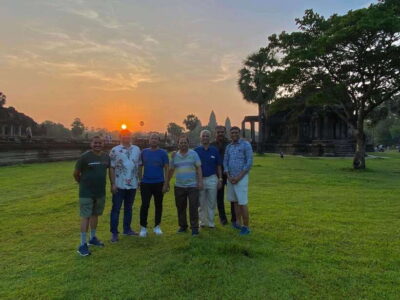
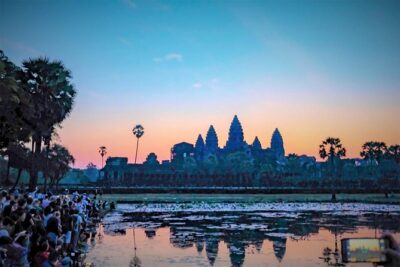
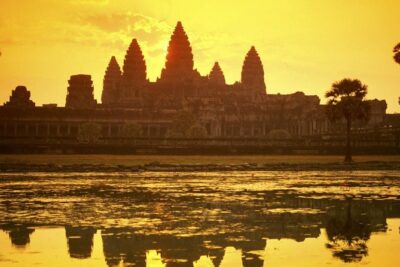
The whole trip is shaped around a simple idea: see Angkor when it’s still calm. Day 1 pickup is typically between 4:30 am and 5:00 am, which means you get to Angkor Wat early enough to actually enjoy the light and the architecture without spending the day shoulder-to-shoulder.
I like the way this puts your mind in the right gear. At sunrise, Angkor Wat feels less like a photo stop and more like a landmark you understand by looking slowly. You’ll spend about 1 hour 30 minutes walking and seeing the entire temple building area, with extra photo time built in before the biggest crowd waves.
You also get a practical rhythm that helps on a day this long: after the peak moment, you’re not just dropped at the next ruin and told good luck. Breakfast and food stops keep the energy steady, and the guide’s explanations help connect what you’re seeing to why it looks the way it does.
Day 1: Angkor Wat, Angkor Thom, and Ta Prohm Without Wasting Motion
Day 1 starts with Angkor Wat sunrise, and then continues through the core temples that most people come to Siem Reap for. After sunrise, plan on real walking. Angkor Wat’s layout is big, and even with a guide, you’ll want good shoes and patience for stairs, uneven ground, and the sun when it finally arrives.
Angkor Wat itself is the anchor. The goal isn’t to sprint. You’ll be given enough time to experience the temple building area as a whole and take photos before the scene gets busier. If you care about photography, this is the part where you get the most payoff—sunlight, long shadows, and that wide view over the towers.
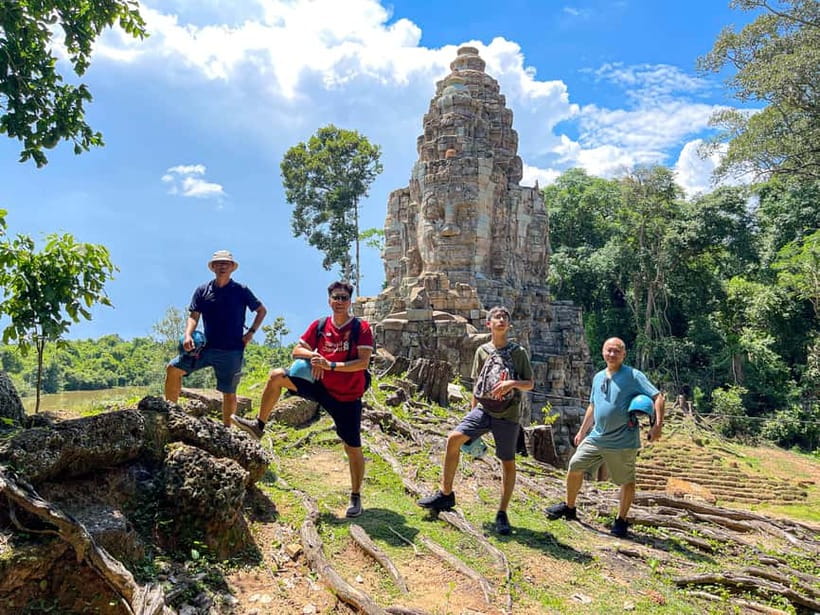
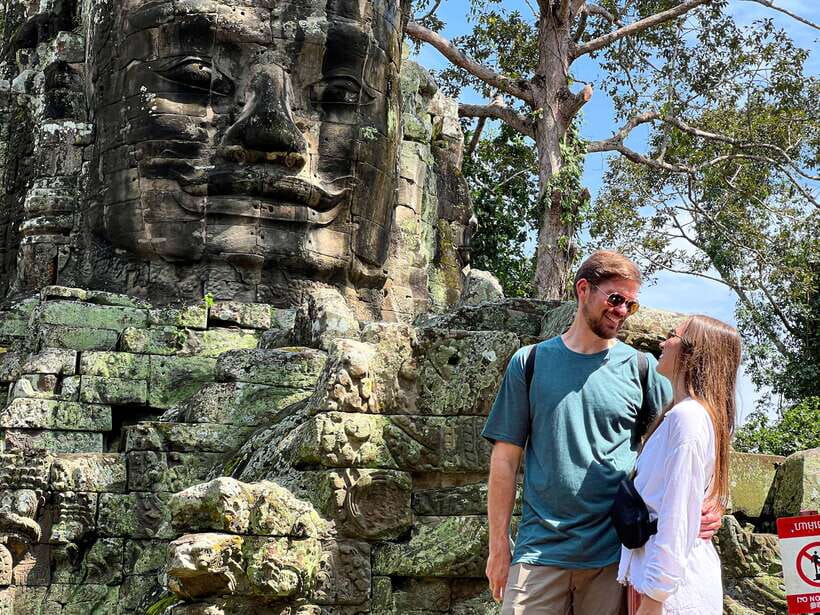
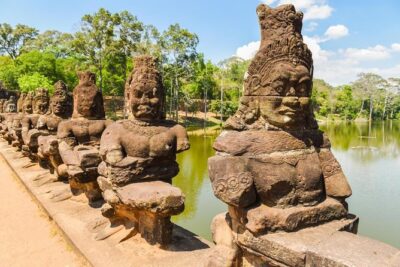
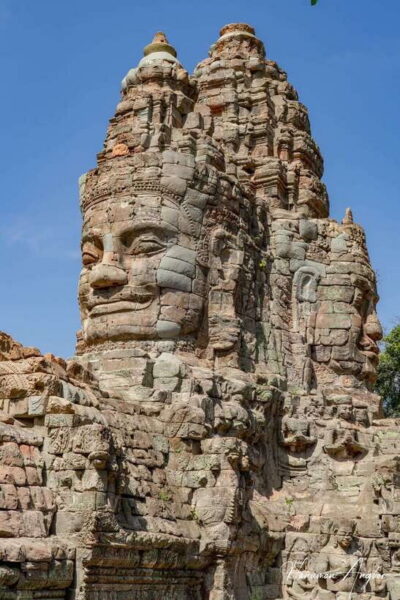
After Angkor Wat, you move into Angkor Thom through the South Gate, which is where the day shifts from grand symmetry to a more chaotic, lived-in feel. You’ll see the Bayon and Baphoun temples with their 54 towers and 216 faces of Avalokiteshvara. That face-count detail matters. Once you notice the repeated expressions and angles, Bayon becomes a game of perspective rather than a single viewpoint.
Then come the terraces, and these are genuinely useful stops because they explain how the Khmer kings showed power and public life. You’ll visit the Terrace of the Elephant and the Terrace of the Leper King, described as a royal viewing platform tied to the king’s audience hall. Even if you don’t remember every detail later, you’ll leave with a clearer sense that these weren’t random monuments. They were built for ceremonies, display, and storytelling.
The Palm Cake Stop and Preah Dak Village: A Breather With Real Local Flavor
Between major temples, this tour inserts a calmer, more human scale moment. After breakfast, you’ll head to Preah Dak village near the countryside community of the Angkor temples, including a stop to taste traditional palm cake.
I like stops like this for two reasons. First, you get a short reset from heat, stone, and crowds. Second, it gives you a tiny window into how people live around the temples—not just how the temples look.
It’s also the kind of stop where your guide can add meaning fast. If you ask questions, this is often where you’ll get quick answers that make the larger story click. Even basic details, like what palm cake is and why it’s made, can turn a 10-minute snack into something memorable.
Ta Prohm: The Jungle Temple That Looks Like It’s Still Breathing
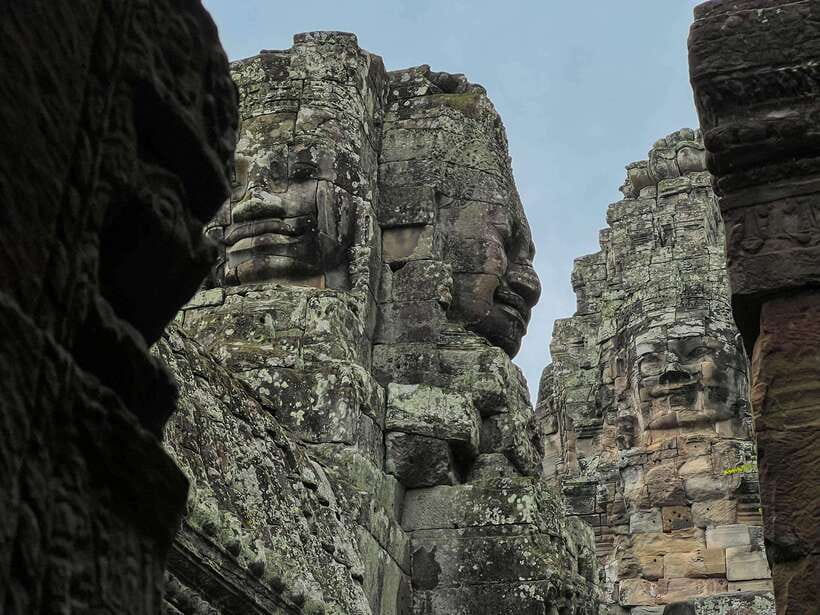
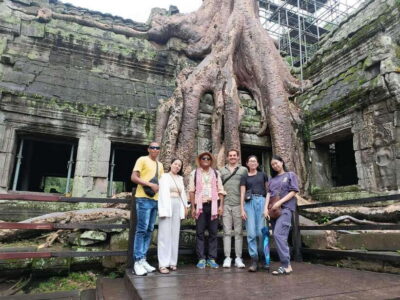
After the morning’s bigger sites, the tour heads to Ta Prohm, the jungle temple left partly in its original state and overtaken by roots. The effect is immediate. Trees don’t just decorate the ruins here. They’re part of the structure’s silhouette, and you can see roots wrapping around stone like the temple is slowly being re-grown.
This is one of those stops that’s hard to recreate with photos alone. The scale and the texture are the point: thick roots, hanging moss, and the strange mix of calm and wildness. With a guide, you’re not only looking at decoration; you’re being pointed toward what the designers intended versus what time has added.
If you’re sensitive to heat, Ta Prohm also matters because it’s a shade-and-shadow temple compared with full open courtyards. You’ll still sweat, but it’s often more bearable than the no-cover stretches.
Deeper into the jungle temple
Day 2 on Phnom Kulen: Waterfalls, Reclining Buddha, and 1000 Lingas
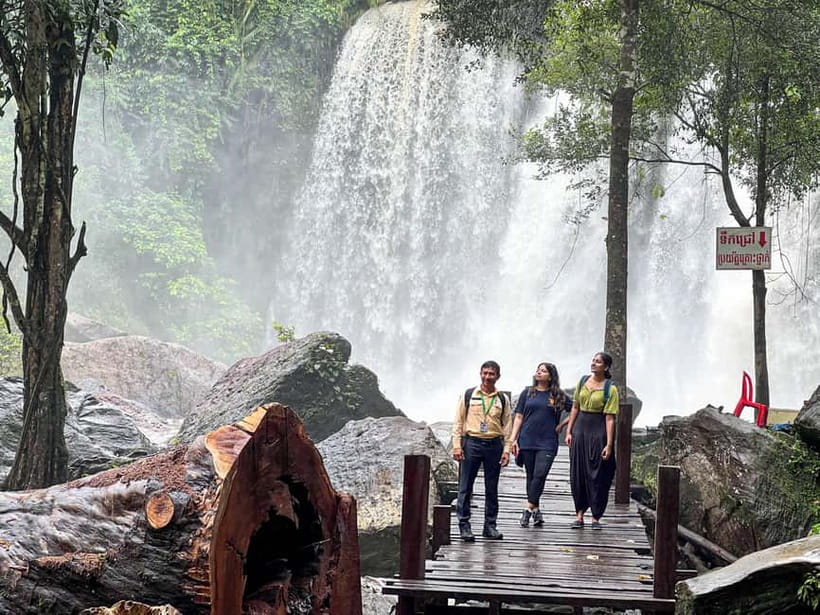
Day 2 starts with another hotel pickup in Siem Reap and then shifts gears from city-temple stonework to nature-and-spiritual sites at Phnom Kulen. You’ll drive about 1 hour through rice paddies before reaching the hilltop, guided by a local. That drive isn’t just transport. It helps you reset your brain from Angkor’s dense architecture to Cambodia’s wider visual rhythm.
Once you’re there, the highlights are stacked tightly:
- Amazing Cliff of Poeng Ta Kho for big views
- Waterfalls (the day’s energy peak for many people)
- A reclining Buddha sculpture
- The River of Thousand Linga from 802 AD
The River of Thousand Linga is a standout because it sounds like a myth until you see what the site represents. It’s a long, textured reminder that Khmer religious practice wasn’t one single monument. It stretched across water, landscape, and sacred icon systems.
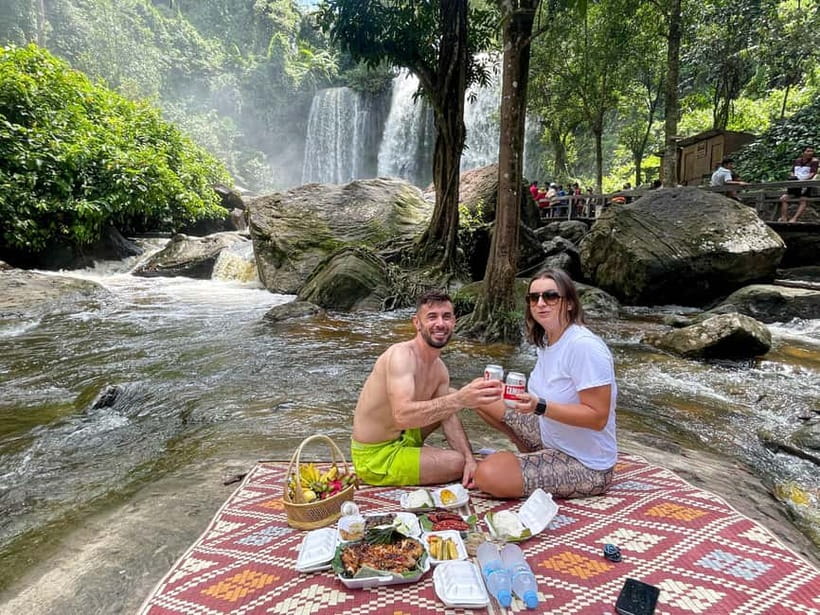
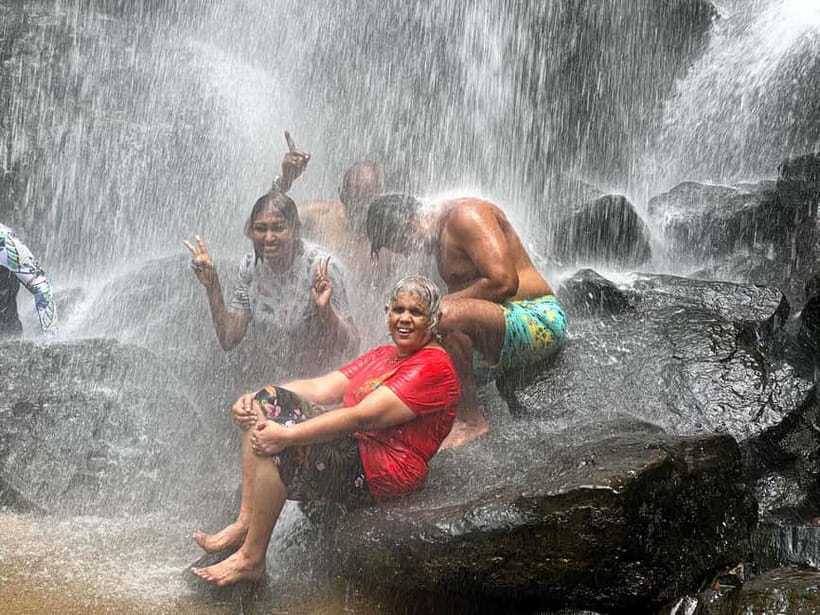
Then comes the part that turns the trip from viewing to doing: a nearby waterfall picnic stop with grilled chicken and seasonal fruits, plus time to swim at the waterfalls. This is also why you should bring the right gear. If you want to swim, closed-toe shoes and insect repellent matter, but so does packing swim-ready basics in a practical way.
Beng Mealea: When the Jungle Makes the Ruins Feel Mysterious
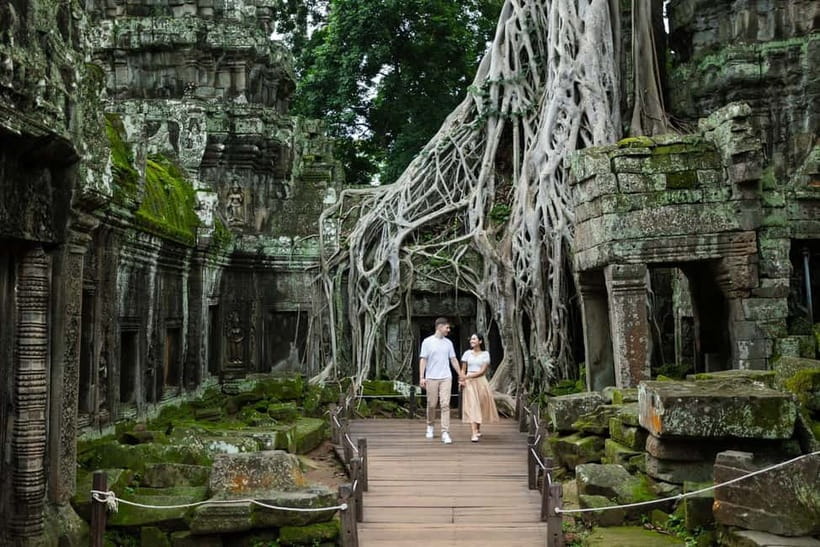
After lunch, you head deeper into rainforest to explore Beng Mealea, described as a 12th-century jungle ruin overgrown with about 300 years of vegetation—trees, lianas, and moss.
This is the “less polished, more wild” cousin of Ta Prohm. Where Ta Prohm often feels like a famous stage set, Beng Mealea feels like the forest decided to keep the secret. The paths can feel more uneven and adventurous, so good footwear really pays off.
I also like Beng Mealea because it changes your mental picture of Angkor. After you’ve seen the world-famous temples managed for visitors, Beng Mealea adds contrast. It shows how Khmer stone can look when it’s not maintained for crowds—how time can take over while preserving enough shape to still read like a temple complex.
Kampong Phluk on Tonle Sap: Floating Life by Boat
Tonle Sap is where the trip becomes about everyday survival and community, not just architecture. You’ll take a boat to Kampong Phluk, a floating village where families depend on fishing and live in colorful houses on stilts.
This part is valuable because it’s not a staged cultural show. On the boat, you’ll see mangrove scenery and flooded water patterns—and you’ll understand why the village exists where it does. The boat ride also travels through mangrove forest habitat where you might see wildlife, including crab-eating macaques.
One practical note: because this is a water-and-boat component, light and timing can matter. In at least some recent experiences, the visit was timed around better light conditions, which can make the stilt houses and mangroves look especially good. If you care about photography, ask your guide what timing you’ll get that day.
Passes, Real Cost, and What You’re Actually Paying For
The listed tour price is $69 per person for 2 days, but the temple and lake access passes are separate. Here’s the reality check on your total budget based on the provided fees:
- Angkor pass: $37 per pax
- Kulen Mountain pass: $20 per person
- Beng Mealea pass: $10 per person, or a valid Angkor pass
- Tonle Sap lake pass with boat ride: $15 per person
So your grand total is roughly $141–$151 per person depending on whether Beng Mealea is covered by your Angkor pass, plus any soft drinks and personal purchases. That’s not a small add-on, but it’s also why the tour is set up the way it is: you’re paying for guides, transport (including A/C), and the structured flow between dispersed sites.
What makes the value feel real is the combination: sunrise at Angkor Wat, major temple circuits over Day 1, then Phnom Kulen + Beng Mealea + Tonle Sap on Day 2. If you tried to DIY all of that, you’d spend a lot of time coordinating drivers, tickets, and timing—especially for sunrise.
Small-Group Comfort, Timing, and the Guides Behind the Scenes
This runs as a small group capped at 14 participants, which helps. Big groups can turn temples into traffic. A smaller group usually means better pacing at each stop and less time waiting while everyone catches up.
Transport is part of the comfort story too. You’ll ride in an A/C van or minibus, and you’re provided with cool bottled water and towels. Those simple items matter most during the hottest temple hours and the longer walking segments.
Guide quality is also a huge piece of the experience. Recent guides included Mr. Sam, Seila, Mr. Kim, and others, and the common theme was clear explanations and careful timing. In a couple of cases, guides also helped with photo timing and photo angles at major viewpoints.
Still, I’ll be honest about fit. One traveler shared discomfort with a guide’s insensitive jokes about religion, which is the one thing that can ruin an otherwise great day at sacred sites. If your personal comfort level around humor is strict, it’s smart to set a respectful boundary early and speak up if anything crosses it.
What to Pack (So Your Feet and Skin Don’t File Complaints)
This is a practical day: temples, jungle paths, stairs, sun, and boat time. Bring:
- Comfortable clothes you can move in
- Closed-toe shoes
- Sunscreen, hat, and sunglasses
- Insect repellent
- Camera (and a power bank)
- A plan for water and sweat
Also note the tour rules: alcohol and drugs aren’t allowed, and you shouldn’t wear sleeveless shirts. Temples are where you’ll be closest to local customs, so dressing respectfully keeps things smooth.
Who Should Book This Two-Day Angkor + Kulen + Beng Mealea + Tonle Sap Tour
This works best for you if:
- You want maximum highlights in 2 days without getting overwhelmed by planning
- You care about early-morning Angkor Wat (the sunrise part isn’t optional here)
- You like variety: big temples, jungle ruins, waterfalls, and a lake boat into daily life
You might think twice if:
- You hate very early starts and long walking days
- You prefer a slower, more leisurely pace with fewer stops
- You’re extremely sensitive to how guides communicate on religious topics (set expectations early)
Should You Book This Tour?
Yes, I’d book it if you want the classic Angkor set plus the “bonus” natural and village experiences, and you want them stitched together by a guide with A/C transport, cold towels, and real meal stops. The value makes sense once you add up what you’d pay in tickets and private transport if you tried to assemble it yourself.
I’d choose this over random day trips if sunrise and jungle ruins are your top priorities, because the pacing is built around those priorities. And if you care about respectful guide communication, it’s worth being direct from the start.
FAQ
What time do you pick up for the Angkor Wat sunrise?
Pickup for Day 1 happens before sunrise, typically between 4:30 am and 5:00 am.
Is breakfast included?
Yes. Day 1 includes breakfast at a local family restaurant.
What food is included on Day 2?
Day 2 includes a picnic lunch nearby a waterfall, with grilled chicken and seasonal fruits.
What passes do I need to pay for separately?
You’ll need an Angkor pass ($37), a Kulen Mountain pass ($20), and a Beng Mealea pass ($10) unless your Angkor pass covers it. Tonle Sap lake access with the boat ride is $15.
How many people are in the group?
The tour is a small group limited to 14 participants.
Is the tour guide English-speaking?
Yes, the guide is an English-speaking professional.
What comfort items are provided during the tour?
You get hotel pickup and drop-off, air-conditioned transport, and cool bottled water plus towels.
Are there any clothing or alcohol rules?
Alcohol and drugs are not allowed, and sleeveless shirts aren’t allowed.
Can I cancel for a full refund?
Yes. You can cancel up to 24 hours in advance for a full refund.
Is reserve and pay later available?
Yes. You can reserve now and pay later.
More Temple Circuits Around Siem Reap
- Angkor Wat Sunrise or Sunset Tour with Guide from Siem Reap
★ 5.0 · 12,109 reviews - Siem Reap: Angkor Wat: Small-Group Sunrise or Sunset Tour
★ 5.0 · 9,444 reviews - Siem Reap: Angkor Wat 2-Day Tour with Sunrise and Sunset
★ 4.9 · 4,429 reviews - Siem Reap: Full-Day Angkor Wat Guided Tour with Sunset
★ 4.9 · 3,803 reviews - Angkor Wat Sunrise tour with Small – Group and Guide tours
★ 5.0 · 3,655 reviews
Into the Jungle at Beng Mealea
- Siem Reap: Kulen Mountain, Beng Mealea and Tonle Sap Tour
★ 5.0 · 1,483 reviews - Kulen Mountain with Beng Mealea and Tonle Sap Small Group Tour
★ 5.0 · 780 reviews - Koh Ker Temple Group & Beng Mealea Full-Day Join-in Tour
★ 5.0 · 710 reviews - From Siem Reap: Koh Ker and Beng Mealea Temples Tour
★ 4.9 · 293 reviews - Banteay Srei, Kulen Waterfall & Beng Mealea Exploration
★ 5.0 · 185 reviews
Angkor Wat, a Few More Ways In
- Angkor Wat Sunrise or Sunset Tour with Guide from Siem Reap
★ 5.0 · 12,109 reviews - Siem Reap: Angkor Wat: Small-Group Sunrise or Sunset Tour
★ 5.0 · 9,444 reviews - Siem Reap: Angkor Wat 2-Day Tour with Sunrise and Sunset
★ 4.9 · 4,429 reviews - Siem Reap: Full-Day Angkor Wat Guided Tour with Sunset
★ 4.9 · 3,803 reviews - Angkor Wat Sunrise tour with Small – Group and Guide tours
★ 5.0 · 3,655 reviews
Just Added: Fresh Siem Reap Tour Reviews

Angkor Wat Temple Tours, compared.
 ★ 5.0Angkor Wat Sunrise or Sunset Tour with Guide from Siem ReapFrom $1812,109 reviews
 ★ 5.0Angkor Wat: Small-Group Sunrise or Sunset TourFrom $159,444 reviews
 ★ 4.9Angkor Wat 2-Day Tour with Sunrise and SunsetFrom $344,429 reviews
 ★ 4.9Full-Day Angkor Wat Guided Tour with SunsetFrom $153,803 reviews
 ★ 5.0Angkor Wat Sunrise tour with Small – Group and Guide toursFrom $143,655 reviews
 ★ 5.0Angkor Wat Highlights and Sunrise Guided Tour from Siem ReapFrom $233,213 reviews
 ★ 5.0Angkor Wat Sunset Small Group Tour with Lunch IncludedFrom $203,059 reviews
 ★ 5.0Full-Day Angkor Wat Sunrise Private Tour with Guide from Siem ReapFrom $602,920 reviews
Browse the lists this tour appears in