
Reviewed · ANGKOR WAT TEMPLE TOURS
2-Day Angkor Wat with Temples On Small Circle & Kulen Waterfall
Angkor is big, but this plan keeps it focused and scenic. You get a full Small Circuit day with the best-known ruins, then you hit Phnom Kulen National Park for the riverbed carvings and the famous reclining Buddha.
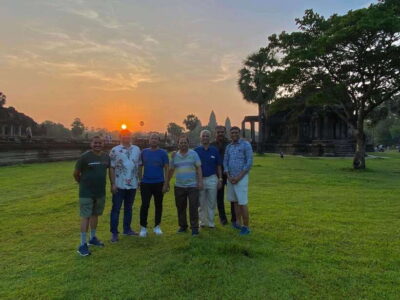
I really liked two things: the chance to see both Angkor Wat sunrise and Phnom Bakheng sunset without scrambling on your own, and the way guide Chhay made the temples make sense with clear, friendly explanations (and yes, he was happy to help with photos when you’re solo).
One consideration: it starts early on both days, and the Kulen drive is long (more than 60 km from Angkor Park). If you hate mornings or quick fatigue, this may feel like a lot.
In This Review
- Key highlights worth planning for
- The smart way to do Angkor Park in 2 days
- Price and value check: what you really pay
- Day 1 on the Small Circuit: Angkor Thom to Phnom Bakheng
- Angkor Wat first: start early and build context
- Ta Prohm: the movie-ruins moment (with serious tree roots)
- Ta Nei: a smaller, calmer temple break
- Victory Gate, then Bayon: the faces that follow you
- Baphuon and Phimeanakas: Hindu layers in an Angkor city
- Terrace of the Elephants and Terrace of the Leper King: carvings with a story
- Phnom Bakheng sunset: classic view, optional wait
- Day 2: Angkor Wat sunrise, then Kulen’s reclining Buddha and riverbed carvings
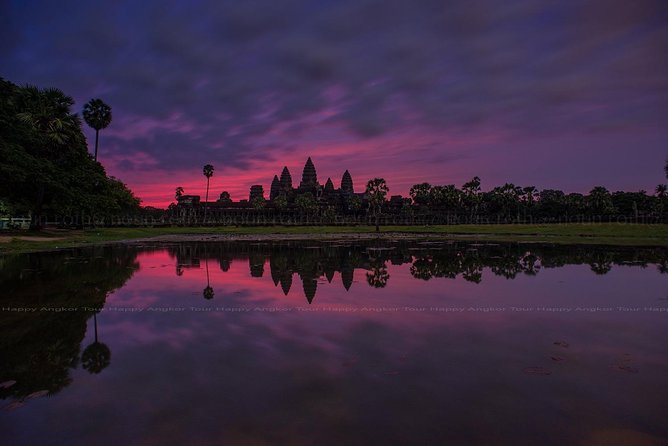
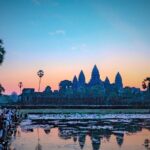
- Sunrise at Angkor Wat: why the early start pays off
- Phnom Kulen National Park: 1000 Lingas and the reclining Buddha
- Banteay Srei (Lady Temple): pink sandstone detail you can actually appreciate
- Banteay Samre and Pre Rup: finishing with a strong closing set
- Chhay and the guide factor: what makes this tour feel easy
- Getting the most out of the long days (without getting cranky)
- Who this tour suits best
- Should you book this 2-Day Angkor Wat + Kulen tour?
- FAQ
- What time are the hotel pick-ups?
- Are Angkor temple tickets included?
- How much is the Phnom Kulen National Park entry?
- Is there lunch included?
- Is this tour private or shared?
- Do you get water and help during the day?
Key highlights worth planning for
- Angkor Wat at dawn: early pick-up means better light and fewer stress moments.
- Ta Prohm’s tree roots: you’ll see the famous entanglement up close on the Small Circuit.
- Quiet-time option at Ta Nei: smaller, less restored, and usually a calmer stop.
- Sunset from Phnom Bakheng: a classic viewpoint, with the option to skip waiting.
- Kulen’s 1000 Lingas: a different kind of Angkor-era artwork carved into the riverbed.
- Pink sandstone Banteay Srei: detailed, small-scale temple beauty that feels more personal.
Other ways to walk the great temple
- Angkor Wat Sunrise or Sunset Tour with Guide from Siem Reap★ 5.0 · 12,109 reviews
- Siem Reap: Angkor Wat: Small-Group Sunrise or Sunset Tour★ 5.0 · 9,444 reviews
- Siem Reap: Angkor Wat 2-Day Tour with Sunrise and Sunset★ 4.9 · 4,429 reviews
- Siem Reap: Full-Day Angkor Wat Guided Tour with Sunset★ 4.9 · 3,803 reviews
The smart way to do Angkor Park in 2 days
This tour is built for travelers who want “the must-sees” without trying to patch together a bunch of tuk-tuk rides and ticket lines. The focus stays on the major temples people come to see, then it expands beyond the park to Phnom Kulen, which is where many visitors feel the trip turns from sightseeing into story.
You also get a smooth flow: hotel pick-up, an English-speaking licensed guide, water and wet towels, and a private A/C vehicle with driver. For Angkor, that matters. You’re going to spend hours on the move over dusty roads, so having air-conditioning and a driver who knows where to park helps keep your energy for the ruins.
And because it’s a private tour, the pacing is steadier than the big group bus style. You’re not racing a herd. You can ask questions. You can stop for photos without feeling like you’re slowing everyone down.
Price and value check: what you really pay
The tour price is $181.75 per person for 2 days. That sounds straightforward—until you add temple and park entry.
Here’s the key breakdown based on what’s listed as not included:
- Angkor + All Temples pass: $62 per person
- Phnom Kulen National Park fee: $20 per person
- Lunch: about $5 per person (depends on the menu)
So you should plan around $263.75 total per person, plus drinks or anything you choose to buy besides lunch. That’s not cheap, but the value is in the structure: two mornings handled for sunrise, a sunset climb, a long day trip to Kulen, and a licensed guide who’s there the whole time.
If you’re comparing against cheaper options, watch for the hidden costs: days get longer and you lose flexibility if you’re doing it with no guide, plus sunrise at Angkor often forces you into extra logistics. Here, those hard parts are built in.
Also, the tour offers a mobile ticket option, which can make entry smoother when you’re juggling early hours.
Day 1 on the Small Circuit: Angkor Thom to Phnom Bakheng
Day 1 is the classic “walk the ruins, then earn the view” rhythm. You start with Angkor Wat in the morning, then move through the Small Circuit temples around Angkor Thom, finishing with the hilltop sunset.
Angkor Wat first: start early and build context
Your guide meets you at your hotel around 8:00am and you’ll stop along the way to buy the required pass for temple entry. The big win here is that you’re not arriving mid-day under harsh light and maximum crowds.
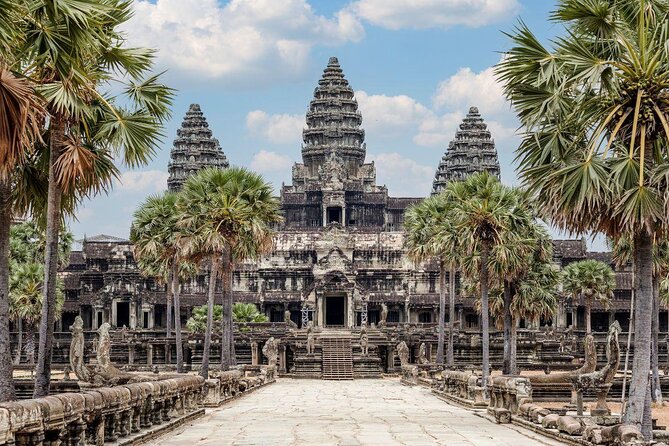
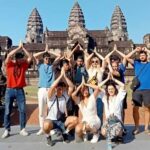
Angkor Wat is the anchor site. Even if you’ve seen photos, being there in person is different because of scale and details—carved stone, the layout, the way the causeways shape movement. Your guide’s explanations help you connect what you’re seeing to the Khmer story instead of treating it like a photo wall.
More temple circuits, set side by side
Ta Prohm: the movie-ruins moment (with serious tree roots)
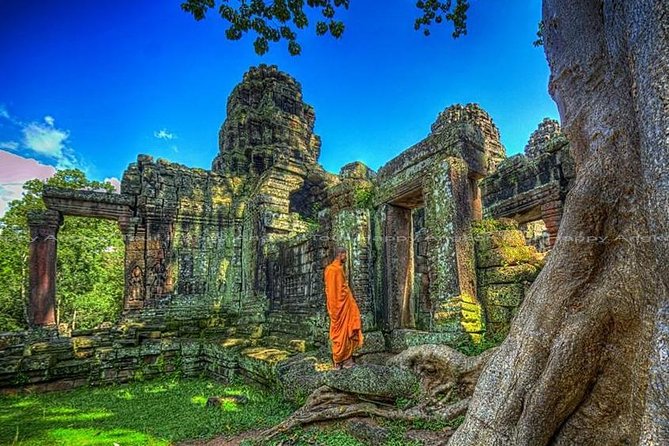
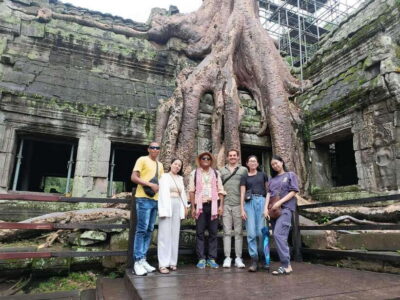
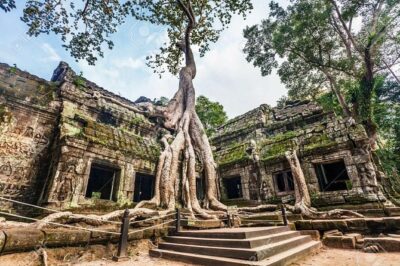
Next is Ta Prohm, famous for those gigantic tree roots draped over the stone. This stop is one of the most visually dramatic on the route, and it’s also the most fun for photos because the composition looks unreal even when you’re standing right in front of it.
One practical note: this isn’t a “quick look” temple. Plan enough time to walk slowly. The roots change shape depending on where you stand, so rushing ruins the effect.
Ta Nei: a smaller, calmer temple break
After the big impact of Ta Prohm, Ta Nei works like a breather. It’s smaller, with less restoration, and it’s surrounded by big trees. If you want a moment away from the thick crowds that gather at the headline sites, this is the kind of stop that makes a 2-day tour feel balanced.
Victory Gate, then Bayon: the faces that follow you
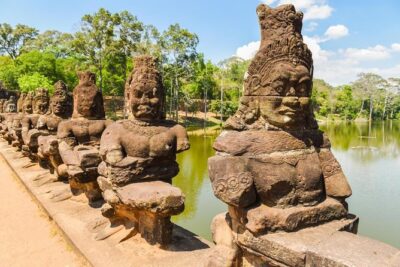
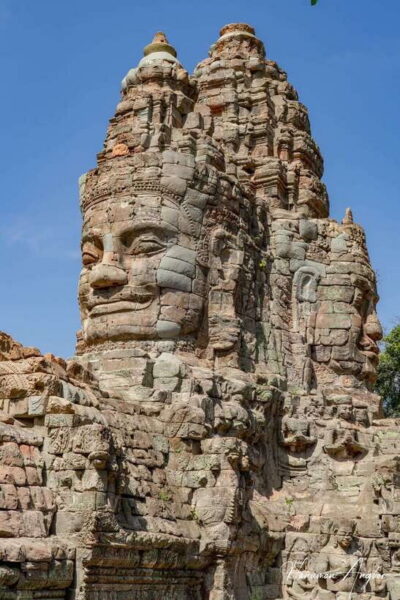
You’ll stop at Victory Gate on the east side of Angkor Thom, then continue to Bayon Temple. Bayon is the place with the famous towers—each tower with multiple faces. The effect is that you feel watched from every direction as you walk the temple corridors.
This is also a good stop to slow down and let your guide explain how the faces relate to the temple’s meaning. When you understand what you’re looking at, Bayon stops being just “cool carvings” and becomes a place with a point.
Baphuon and Phimeanakas: Hindu layers in an Angkor city
Next up: Baphuon, a Hindu temple built before Angkor Wat in the 11th century, and you’ll also see a reclining Buddha behind it that dates later (built in the 16th century). This mix of periods is part of what makes Angkor feel layered rather than frozen in time.
Then you move to Phimeanakas, a pyramid Hindu temple from the 10th century located at the center of the old royal palace area. It sits with the Royal Enclosure Wall, so you get a better sense of how this was once a royal complex.
Terrace of the Elephants and Terrace of the Leper King: carvings with a story
You’ll also pass by two terraces:
- Terrace of the Elephants, described as a platform kings used to view victorious returning armies, with elephant carvings on the walls.
- Terrace of the Leper King, another platform nearby, on the north side.
These aren’t the biggest “wow” structures, but they’re the spots that reward attention. Even when you’re tired, the carvings keep pulling you in because they connect architecture to real life—war, ritual, power.
Phnom Bakheng sunset: classic view, optional wait
The day ends at Phnom Bakheng for sunset. You’ll climb up the hill for the view. There’s a built-in flexibility here: if you don’t want to wait for sunset, you can skip the waiting and still catch the temple setting.
This last stop is why day 1 works. You get daylight temple time, then you wrap with golden-hour atmosphere. That contrast is one of the reasons Angkor feels unforgettable.
Day 2: Angkor Wat sunrise, then Kulen’s reclining Buddha and riverbed carvings
Day 2 is the early one. Your pick-up is around 5:00am so you can watch sunrise at Angkor Wat. Then after breakfast, you head out to Phnom Kulen.
It’s a long day, but it avoids the common problem of doing everything only inside the Angkor park. Kulen is different: nature, elevation, and carvings that don’t look like the usual Angkor temple surfaces.
Sunrise at Angkor Wat: why the early start pays off
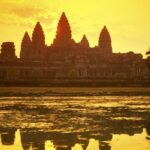
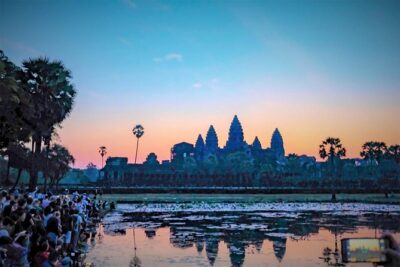
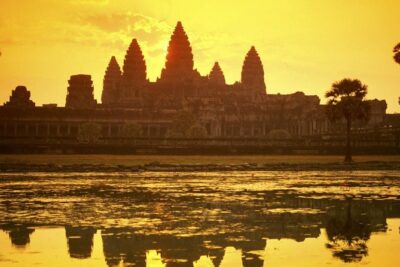
Watching sunrise at Angkor Wat is the kind of moment that’s hard to recreate later in the day. Light changes the stone color and shadows, and you’re seeing the site at its most cinematic hour.
You’ll be short on sleep, yes. But if you can handle early mornings, you’ll feel like you earned the rest of the day.
Phnom Kulen National Park: 1000 Lingas and the reclining Buddha
Phnom Kulen National Park is more than 60 km from Angkor Park, so the travel time matters. Once you arrive, you’ll be focusing on sacred landscape rather than a single main temple.
Here are the highlights:
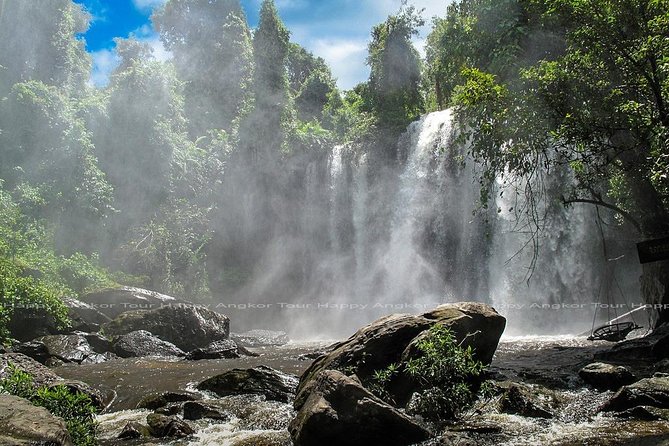
- Riverbed carvings of Lingas, often described as the 1000 Lingas. This is where you see sculptures connected to Shiva, carved into the natural rock area.
- A Big Reclining Buddha built from large stone.
- A waterfall scene tied to the park experience.
This part of the tour is where your brain gets a break from “temple only.” You get a physical sense of the terrain the Khmer world considered meaningful.
Banteay Srei (Lady Temple): pink sandstone detail you can actually appreciate
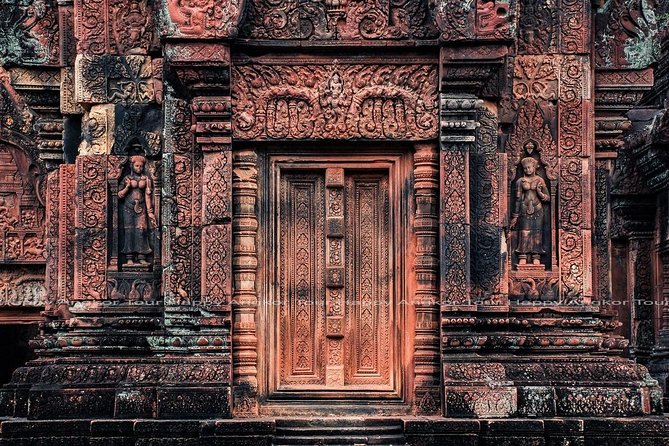
After lunch, the afternoon shifts back into temple mode with Banteay Srei—the pink sandstone temple often called the Lady Temple.
This is built in the 10th century and dedicated to a Hindu trinity, with an explanation that it was built by King Rajendravarman II and focuses mainly on Shiva. Even if you’re not deep into temple theology, you can feel the craft here. Pink sandstone temples tend to look delicate, and when the stone catches light, carvings show up more clearly.
The big practical advantage: it’s a smaller-feeling temple compared to the giants, so you can take time without it becoming a marathon.
Banteay Samre and Pre Rup: finishing with a strong closing set
You’ll also see:
- Banteay Samre, a Hindu temple built in the 12th century. The architecture is described as not having obvious features that clearly match what people expect, but it’s believed to follow a similar model to Angkor Wat.
- Pre Rup, built in the late 10th century, dedicated to Hindu gods. It’s connected to funeral practices in Khmer belief (as explained during the visit).
By the end of these stops, you’ve gone from sunrise to sacred water-carving terrain to pink-stone detail. It’s a satisfying arc.
Chhay and the guide factor: what makes this tour feel easy
One of the strongest signals from the experience is that the guide makes the temples readable.
Chhay is mentioned as informative and friendly, with a clear ability to explain interesting facts about the sites. He’s also noted for helping with photos, which matters more than people think. When you’re solo, you don’t want to be stuck asking strangers repeatedly at key photo angles.
Because this tour is private and the guide stays with you all day, you’re not left to figure out what to look for. You get context on what you’re seeing—especially helpful for:
- Bayon’s face towers and how they’re arranged
- Hindu layers within the Angkor complex
- Kulen’s Lingas as a different sacred landscape concept than typical temple façades
Getting the most out of the long days (without getting cranky)
This tour is physically doable for most visitors, but you should plan your expectations around its structure.
- Early starts are real: 8:00am on day 1 and about 5:00am on day 2.
- Heat and walking add up: even with A/C in the vehicle, you’ll be outside at temples, climbing stairs, and standing for viewpoints.
- Parking and road tolls are handled, which keeps your day smoother and less chaotic.
What I’d do to keep it enjoyable: bring sun protection and stay hydrated. You’ll have cool drinking water and wet towels, which helps, but you’ll still want to pace yourself at each stop. If you’re the type who charges through photos in 30 seconds, you might feel rushed. This is better when you let yourself slow down.
Also, since sunset at Phnom Bakheng includes a waiting component, decide ahead of time if you want the full golden-hour experience or if you’d rather move on sooner.
Who this tour suits best
This tour fits you if:
- you want Angkor Wat plus Small Circuit highlights without building a plan from scratch
- you want sunrise and sunset (not just one)
- you care about seeing Kulen’s nature-and-carving contrast
- you prefer a private setup and an English guide
It might not fit you as well if:
- you hate very early mornings
- you want a relaxed, slow pace with lots of free time
- you’d rather spend your time only within Angkor Park and skip the long drive to Kulen
Should you book this 2-Day Angkor Wat + Kulen tour?
I’d book it if you want the most classic Angkor moments packed into 2 days, plus Kulen’s different kind of wow. The pricing makes sense when you add the reality of entry fees and see that the tour handles the hard scheduling pieces—sunrise timing, a full temple set, and the far drive to Phnom Kulen.
If you’re comparing options, the biggest deciding factor should be guide quality and pacing. When you get a guide who explains well (like Chhay) and helps with photos, the temples feel less like a list and more like a story you can follow.
FAQ
What time are the hotel pick-ups?
Day 1 pick-up is around 8:00am. Day 2 pick-up is around 5:00am for the sunrise.
Are Angkor temple tickets included?
No. The Angkor + all temples pass costs $62 per person and is not included.
How much is the Phnom Kulen National Park entry?
Phnom Kulen National Park entry is $20 per person and is not included.
Is there lunch included?
Meals are not included. Lunch is listed as depending on the menu, at about $5 per person.
Is this tour private or shared?
It’s private—only your group participates.
Do you get water and help during the day?
Yes. The tour includes cool drinking water and wet towels, plus pickup and drop-off at your hotel.
Kulen Mountain and the Falls
- Kulen Waterfall Join-in Tour (local Picnic lunch)
★ 5.0 · 2,434 reviews - Kulen Mountain: Small-Group Tour and Picnic lunch
★ 4.9 · 1,802 reviews - Siem Reap: Kulen Mountain, Beng Mealea and Tonle Sap Tour
★ 5.0 · 1,483 reviews - Phnom Kulen Waterfall & the Sacred 1000 Lingas (with Lunch)
★ 4.8 · 974 reviews - Kulen Mountain with Beng Mealea and Tonle Sap Small Group Tour
★ 5.0 · 780 reviews
More Temple Circuits Around Siem Reap
- Angkor Wat Sunrise or Sunset Tour with Guide from Siem Reap
★ 5.0 · 12,109 reviews - Siem Reap: Angkor Wat: Small-Group Sunrise or Sunset Tour
★ 5.0 · 9,444 reviews - Siem Reap: Angkor Wat 2-Day Tour with Sunrise and Sunset
★ 4.9 · 4,429 reviews - Siem Reap: Full-Day Angkor Wat Guided Tour with Sunset
★ 4.9 · 3,803 reviews - Angkor Wat Sunrise tour with Small – Group and Guide tours
★ 5.0 · 3,655 reviews
Angkor Wat, a Few More Ways In
- Angkor Wat Sunrise or Sunset Tour with Guide from Siem Reap
★ 5.0 · 12,109 reviews - Siem Reap: Angkor Wat: Small-Group Sunrise or Sunset Tour
★ 5.0 · 9,444 reviews - Siem Reap: Angkor Wat 2-Day Tour with Sunrise and Sunset
★ 4.9 · 4,429 reviews - Siem Reap: Full-Day Angkor Wat Guided Tour with Sunset
★ 4.9 · 3,803 reviews - Angkor Wat Sunrise tour with Small – Group and Guide tours
★ 5.0 · 3,655 reviews
Just Added: Fresh Siem Reap Tour Reviews

Angkor Wat Temple Tours, compared.
 ★ 5.0Angkor Wat Sunrise or Sunset Tour with Guide from Siem ReapFrom $1812,109 reviews
 ★ 5.0Angkor Wat: Small-Group Sunrise or Sunset TourFrom $159,444 reviews
 ★ 4.9Angkor Wat 2-Day Tour with Sunrise and SunsetFrom $344,429 reviews
 ★ 4.9Full-Day Angkor Wat Guided Tour with SunsetFrom $153,803 reviews
 ★ 5.0Angkor Wat Sunrise tour with Small – Group and Guide toursFrom $143,655 reviews
 ★ 5.0Angkor Wat Highlights and Sunrise Guided Tour from Siem ReapFrom $233,213 reviews
 ★ 5.0Angkor Wat Sunset Small Group Tour with Lunch IncludedFrom $203,059 reviews
 ★ 5.0Full-Day Angkor Wat Sunrise Private Tour with Guide from Siem ReapFrom $602,920 reviews
Browse the lists this tour appears in