
Reviewed · ANGKOR TEMPLE TOURS
2-Day Discover Angkor Temples, Kulen Mountain & Tonle Sap
Two days, two worlds, one early alarm. This 2-day trip ties together Phnom Kulen’s nature and spiritual sights with the classic Angkor morning—starting with sunrise at Angkor Wat. You get the big icons and the countryside in one plan, which is exactly how Siem Reap rewards people with limited time.
I especially like two parts: the Kampong Phluk flooded-village boat ride through a mangrove forest around Tonle Sap, and the full Angkor Day 2 circuit that includes Bayon and Ta Prohm after the dawn moment. The timing also feels efficient because the tour feeds you into the key spots without making you micromanage rides all day.
One thing to think about: you’ll pay several key site passes on top of the $125 base price. Between the Phnom Kulen pass, Tonle Sap pass with the boat cruise, and the Angkor pass, the total adds up fast—so budget for it before you book.
In This Review
- Key highlights worth planning for
- What this 2-day Siem Reap plan really delivers
- Phnom Kulen National Park: Cambodia’s waterfall and sacred stops
- Stop-by-stop: what to expect
- The one consideration at Kulen
- Kampong Phluk floating village: boat time on Tonle Sap’s flooded world
- Best time: when nature cooperates
- What you do during the visit
- Quick reality check on Tonle Sap time
- Day 2 at Angkor: sunrise first, then the full Angkor Thom loop
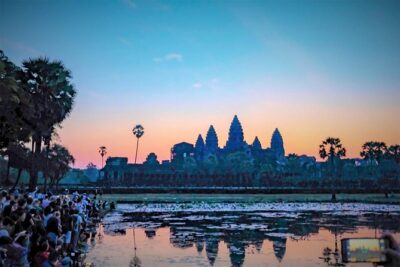
- Angkor Wat at sunrise: why the timing matters
- Then: Angkor Thom South Gate to Ta Prohm
- The main drawback on Day 2
- Price and value: what $125 covers, and what you’ll add on
- The human side: guides, drivers, and the pace that keeps you smiling
- Who this tour fits best (and who should reconsider)
- Should you book this 2-day Angkor and Tonle Sap tour?
- FAQ
- What is the tour price?
- How long is the tour?
- Does the tour include pickup from your hotel?
- Is the Angkor pass included?
- What other passes are not included?
- Does the tour include a boat ride?
- What time does the Angkor Wat sunrise day start?
- What is the best time to visit Kampong Phluk?
- What happens if weather is bad or you need to cancel?
Key highlights worth planning for
- 4:40 am pickup for Angkor Wat sunrise so you can start with the light, not the crowds
- Phnom Kulen’s largest Cambodian waterfall plus the Reclining Buddha and the River of 1000 Shiva lingas
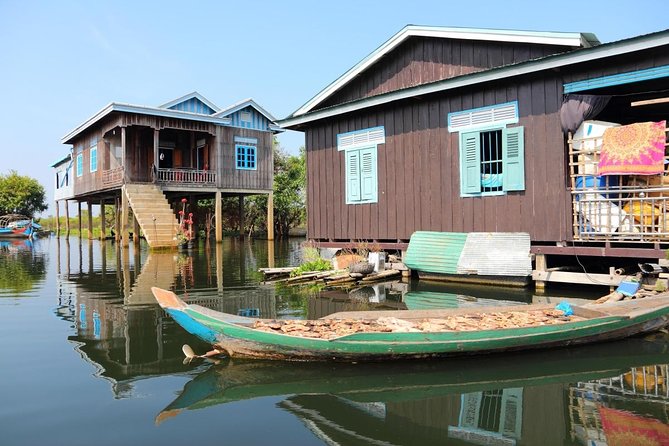
- Kampong Phluk boat through flooded mangroves with stilt houses and wildlife around the Tonle Sap floodplain
- Angkor Thom core temples in one morning: South Gate, Bayon, and multiple terraces
- A/C private vehicle with water and towels to keep you sane on hot temple days
More temple circuits, set side by side
- Angkor Wat Sunrise or Sunset Tour with Guide from Siem Reap★ 5.0 · 12,109 reviews
- Siem Reap: Angkor Wat: Small-Group Sunrise or Sunset Tour★ 5.0 · 9,444 reviews
- Siem Reap: Angkor Wat 2-Day Tour with Sunrise and Sunset★ 4.9 · 4,429 reviews
- Siem Reap: Full-Day Angkor Wat Guided Tour with Sunset★ 4.9 · 3,803 reviews
What this 2-day Siem Reap plan really delivers
This tour is built for travelers who want a mix, not a checklist. You’ll go from the mountain massif at Phnom Kulen to the Tonle Sap floodplain, then back to Angkor for a long, temple-heavy morning. If you like your trips to feel like stories—water falls into lakes, lakes feed forests, forests lead back to stone—this sequence makes sense.
The setup is also practical. You’re picked up from your hotel area, and you travel in a private air-conditioned vehicle with a driver who’s been through the operator’s vaccinated safety requirements. During the day, you get cool water and towels, which sounds small until you’re standing in temple heat with sweat turning your camera strap into a slip-and-slide.
Still, this is an active schedule. You’re doing multiple stops with fairly short time blocks, so you’ll want to move with purpose. Bring good walking shoes and a water plan (the tour provides water, but you’ll still want to pace yourself).
Phnom Kulen National Park: Cambodia’s waterfall and sacred stops
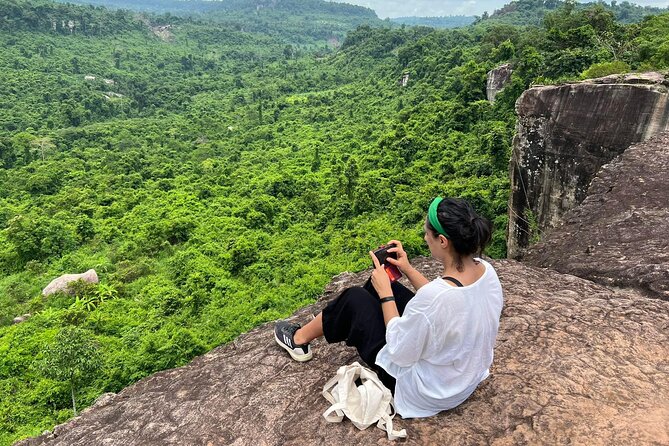
Phnom Kulen National Park is the spiritual-and-natural “reset” day. Located in the Phnom Kulen mountain massif in Siem Reap Province, it’s a protected area established in 1993, covering a large chunk of the region. For your tour, the focus is on three big landmarks: the largest waterfall in Cambodia, a Reclining Buddha, and the River of 1000 Shiva lingas.
Stop-by-stop: what to expect
- The big waterfall
This is the anchor sight. The tour gives you about 2 hours here, which is enough time to see it and take photos without feeling rushed. The ticket for the Phnom Kulen pass is separate, so plan to pay that before you’re standing at the gate.
- Reclining Buddha
This is one of those iconic Cambodia scenes that feels instantly recognizable once you’re there. It also adds variety after the walk toward the falls. Don’t underestimate how quickly the day can get warm—stay hydrated and keep your pace steady.
- River of 1000 Shiva lingas
This is the mind-left-field stop in the best way. You’re not just seeing temple architecture—you’re seeing a sacred river area tied to Shiva worship, with the “1000” theme. Expect it to feel more “spiritual site” than “museum stop,” and take a few minutes to look slowly rather than just snapping and moving on.
The one consideration at Kulen
The Phnom Kulen mountain pass is not included, listed at $20 per person. So the real cost of the “nature day” isn’t just your tour price; it’s your tour price plus the park pass on arrival. If you’re cost-sensitive, add these add-ons to your mental budget from the start.
Back out on the lake, more stilted villages
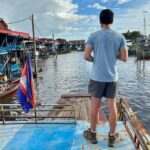
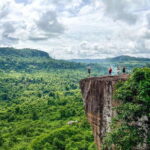
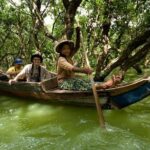
Kampong Phluk floating village: boat time on Tonle Sap’s flooded world
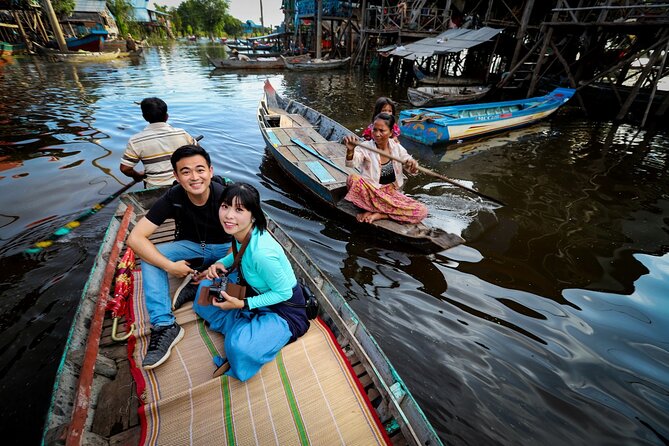
Day 1 shifts from mountain to water. Kampong Phluk sits about 16 km southeast of Siem Reap, on the Tonle Sap floodplain. The tour takes you through the countryside to the floating stilt-house community and includes a boat tour, which is the whole point of going here.
Kampong Phluk matters because it shows how people live with the lake’s seasonal rhythm. Tonle Sap is seasonally inundated, and that floodplain isn’t a backdrop—it’s the environment. The flooded mangrove forest surrounds the area, and wildlife is part of the experience, including crab-eating macaques. The community is also described as about 3,000 people living in the stilted villages.
Best time: when nature cooperates
The tour specifically notes the best time to tour Kampong Phluk is August to March. If your trip fits those months, you’re more likely to see the floodplain at full character. If you’re traveling outside that window, you may still go, but water levels and conditions can change, so be flexible with expectations.
What you do during the visit
You’ll visit the cluster of stilted houses and then head toward a Buddhist monastery on an artificial island before returning to Siem Reap. The total stop time is about 1 hour, which is enough for the main sight and a calm look at how the community is arranged—without dragging your whole day into the boat for hours.
Quick reality check on Tonle Sap time
You also stop at Tonle Sap Lake itself for about 10 minutes. That’s more of a brief “point and look” moment than a full exploration. The deeper immersion is the boat through the flooded forest at Kampong Phluk.
Day 2 at Angkor: sunrise first, then the full Angkor Thom loop
Angkor Day 2 is the big show. The day starts early in a very specific way: you’re asked to have your hotel pack your breakfast, and the pickup is scheduled for 4:40 am. Before you even step into the temples, you’ll buy the Angkor pass (priced at $37 for an adult), which gives you access for the temple circuit you’re doing that day.
Angkor Wat at sunrise: why the timing matters
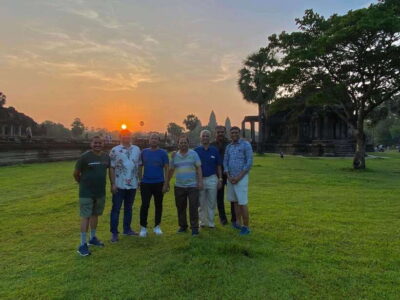
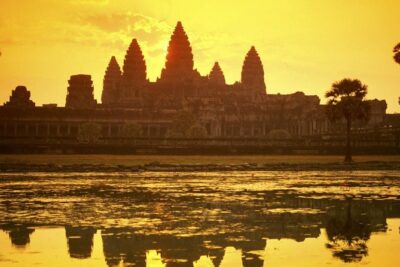
The tour has you at Angkor Wat for sunrise and then continues with additional discovery time. The total time at Angkor Wat is listed as 1 hour 30 minutes, split between the dawn viewing and walking around afterward. Sunrise is the main reason to start so early: the light is softer, the air often feels a bit cooler, and the temple becomes less like a photo backdrop and more like a real monument you can study.
Then: Angkor Thom South Gate to Ta Prohm
After Angkor Wat, you move through the heart of Angkor Thom and surrounding temple areas. Here’s how the stops work for your brain and your feet.
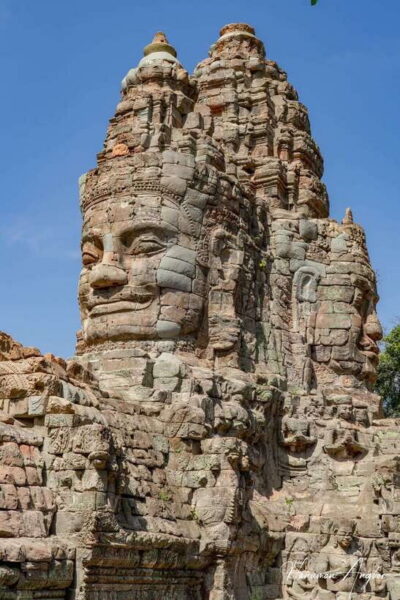
- Angkor Thom South Gate (about 15 minutes)
Short stop, high impact. This sets the tone. You’re stepping into the former royal-city space and getting your bearings before you enter the major temple compounds.
- Bayon Temple (about 45 minutes)
This is the face temple stop. Bayon is richly decorated and is known for the smiling faces associated with Jayavarman VII’s era. You’ll want time here to look up, then step back to see how the layout works. At 45 minutes, you have room to do more than rush through.
- Terrace of the Elephants (about 15 minutes)
A quick but useful cultural stop. The terrace was used as a platform for viewing returning victorious armies. Even if you don’t go deep on carvings, the terrace size and position help you understand why rulers needed monumental stages.
- Terrace of the Leper King (about 10 minutes)
Another short stop with a specific myth attached to its modern name. The tour notes that the name comes from a 15th-century sculpture discovered at the site, depicting the Hindu god Yama. Think of this as a fast “symbolic stop” that adds texture to the walk.
- Baphuon Temple (about 30 minutes)
A temple-mountain style site dedicated to Shiva. This helps balance the Buddhist-majority mood of parts of the circuit. It’s also a good pause point between the busier gates and the later Ta Prohm visit.
- Lunch break near Angkor Wat (about 1 hour)
You’ll stop for lunch at a local restaurant nearby. The data doesn’t say meals are included, so treat lunch as something you’ll likely pay for yourself. Still, the pause is valuable because you’re about to move back into temple mode.
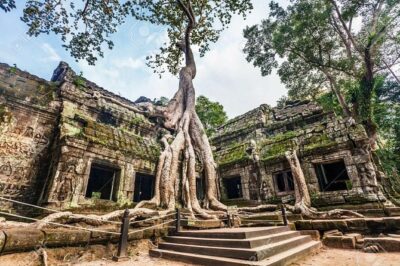
- Ta Prohm Temple (about 1 hour)
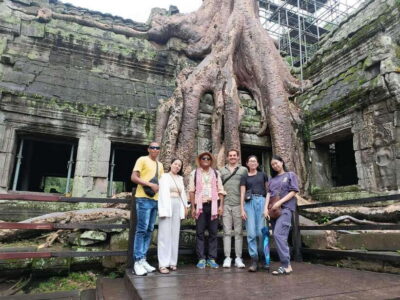
The Tomb Raider temple stop. Ta Prohm is often the place people remember most from Angkor because it’s dramatic and very different from the more “neatly restored” feeling you might see elsewhere. Plan to slow down and let it soak in during your 1-hour visit.
The main drawback on Day 2
The sunrise start means sleep loss, and the day is temple-dense. You’ll be tired if you’re not used to early starts. On the plus side, that’s also why the day feels efficient.
Price and value: what $125 covers, and what you’ll add on
On paper, the tour is $125 per person for about two days, with private transport and an official English speaking guide plus an experienced driver. That base price is paying for the human and the logistics: pick-up, a private air-conditioned vehicle, and comfort touches like cool water and towels.
But the big value math is that several core entrance costs are separate:
- Phnom Kulen mountain pass: $20 per person
- Tonle Sap pass with boat cruise: $20 per person
- Angkor pass (one day): $37 per person
Those three alone total $77 per person in listed pass fees. So a realistic planning total is around $202 per person before any personal spending like snacks or whatever you choose for lunch.
If that makes you hesitate, here’s the value perspective: you’re not just doing Angkor. You’re pairing Angkor with Kulen and the Tonle Sap floodplain boat ride. For many people, that combination is the difference between a trip that feels like only temples and a trip that feels like Cambodia in two very different ecosystems.
Also, this is a private tour with only your group. That makes it easier to work around your own pace and photo style. One driver and one guide won’t disappear into a sea of strangers.
The human side: guides, drivers, and the pace that keeps you smiling
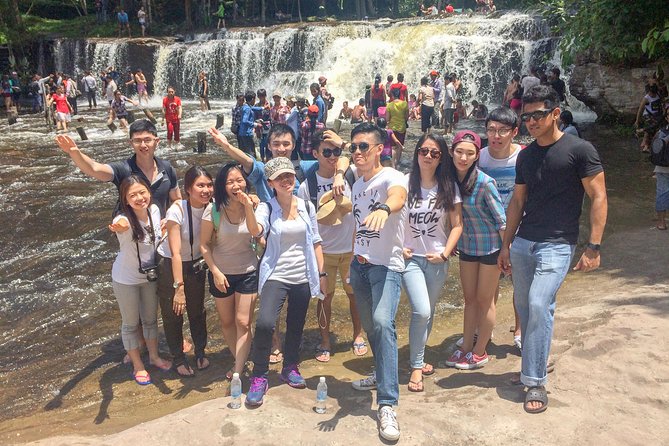
The tour includes an official English speaking guide and an experienced driver, both described as vaccinated. That’s not just a safety checkbox; it usually translates into fewer hassles. You’re more likely to have clear explanations, smoother transfers between sites, and someone who can keep the schedule from turning into chaos.
There’s also a strong theme in the operator’s past service: friendly, helpful teamwork and good communication around what to look for. In the feedback tied to this service, drivers such as Mr Handsome are mentioned alongside guides including Mr Sayon, Mr Raksa, and Mr David. People appreciated the guidance and even got photography tips, which is useful when you’re trying to capture stone faces and sacred rivers without turning your camera into a frustration device.
If you’re the type who wants context while walking, you’ll appreciate a guided rhythm. If you’re mostly chasing photos, it still helps because you’re less likely to waste time guessing where to stand.
Who this tour fits best (and who should reconsider)
This tour fits well if you:
- want sunrise Angkor Wat plus the main Angkor Thom stops in one morning
- care about pairing temples with the Tonle Sap flooded forest experience
- prefer private transport so you can keep moving without negotiating rides
It might be less ideal if you:
- hate early wake-ups (the 4:40 am pickup is real)
- dislike paying multiple site passes on top of the headline price
- want unhurried time at every single Angkor stop (here, some stops are short by design)
For families, it can work if everyone is okay with walking and heat management. The tour states most travelers can participate, so you’re not signing up for a sports marathon in the fine print.
Should you book this 2-day Angkor and Tonle Sap tour?
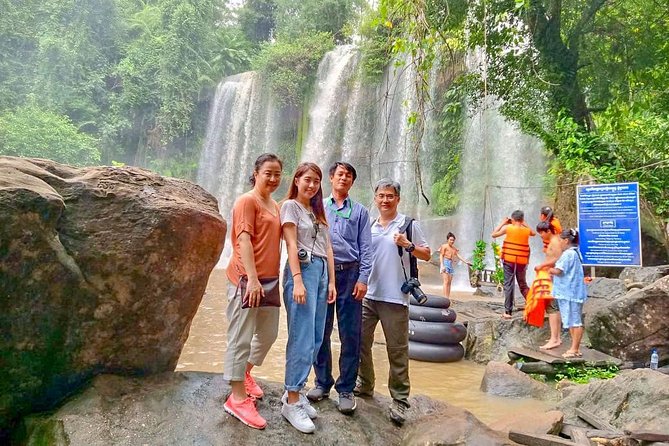
I’d book it if your goal is balance: Angkor’s famous temples plus the watery “Cambodia life” feeling around Tonle Sap and Kulen. The early Angkor start and the boat day give your trip variety, not repetition. You’re also getting private transport with water and towels, which saves energy for the important part: looking closely at the places you came to see.
I’d think twice if you don’t want add-on entrance fees or if you’re very sensitive to early mornings. Do the math up front, plan for the pass costs, and commit to being awake for sunrise.
If you can do that, this is a strong way to spend two days in Siem Reap: sunrise in stone, then water and forests, then back again.
FAQ
What is the tour price?
The price is $125.00 per person for the 2-day experience.
How long is the tour?
It’s listed as about 2 days.
Does the tour include pickup from your hotel?
Yes. Pickup is offered, and the tour is described as a private experience.
Is the Angkor pass included?
No. The Angkor pass (one day) is not included and is listed at $37 for an adult.
What other passes are not included?
The Phnom Kulen mountain pass is listed at $20 per person, and the Tonle Sap lake pass with a boat cruise is listed at $20 per person. Travel insurance is also not included.
Does the tour include a boat ride?
Yes. The Kampong Phluk stop includes a boat tour, and the Tonle Sap pass with the boat cruise is listed as not included.
What time does the Angkor Wat sunrise day start?
You’ll be picked up at 4:40 am, and you’re asked to have your hotel pack your breakfast.
What is the best time to visit Kampong Phluk?
The tour notes the best time for the Kampong Phluk community tour is August to March.
What happens if weather is bad or you need to cancel?
Cancellation is free up to 24 hours in advance for a full refund. The experience requires good weather; if it’s canceled due to poor weather, you’ll be offered a different date or a full refund. It can also be canceled if a minimum number of travelers isn’t met, with the same options.
Kulen Mountain and the Falls
- Kulen Waterfall Join-in Tour (local Picnic lunch)
★ 5.0 · 2,434 reviews - Kulen Mountain: Small-Group Tour and Picnic lunch
★ 4.9 · 1,802 reviews - Siem Reap: Kulen Mountain, Beng Mealea and Tonle Sap Tour
★ 5.0 · 1,483 reviews - Phnom Kulen Waterfall & the Sacred 1000 Lingas (with Lunch)
★ 4.8 · 974 reviews - Kulen Mountain with Beng Mealea and Tonle Sap Small Group Tour
★ 5.0 · 780 reviews
Out on Tonle Sap
- From Siem Reap: Kampong Phluk Floating Village Tour by Boat
★ 4.9 · 6,979 reviews - Sunset tour of Kampong Phluk stilts home village on the Tonle Sap
★ 5.0 · 4,865 reviews - Kompong Phluk Floating Village Half-Day Tour ( Morning / Sunset )
★ 5.0 · 1,494 reviews - Siem Reap: Kulen Mountain, Beng Mealea and Tonle Sap Tour
★ 5.0 · 1,483 reviews - Tonle Sap Lake & Kampong Phluk Village Half-Day Tour
★ 5.0 · 1,045 reviews
More Temple Circuits Around Siem Reap
- Angkor Wat Sunrise or Sunset Tour with Guide from Siem Reap
★ 5.0 · 12,109 reviews - Siem Reap: Angkor Wat: Small-Group Sunrise or Sunset Tour
★ 5.0 · 9,444 reviews - Siem Reap: Angkor Wat 2-Day Tour with Sunrise and Sunset
★ 4.9 · 4,429 reviews - Siem Reap: Full-Day Angkor Wat Guided Tour with Sunset
★ 4.9 · 3,803 reviews - Angkor Wat Sunrise tour with Small – Group and Guide tours
★ 5.0 · 3,655 reviews
Just Added: Fresh Siem Reap Tour Reviews

Angkor Temple Tours, compared.
 ★ 5.0Angkor Wat Sunrise or Sunset Tour with Guide from Siem ReapFrom $1812,109 reviews
 ★ 5.0Angkor Wat: Small-Group Sunrise or Sunset TourFrom $159,444 reviews
 ★ 4.9Angkor Wat 2-Day Tour with Sunrise and SunsetFrom $344,429 reviews
 ★ 4.9Full-Day Angkor Wat Guided Tour with SunsetFrom $153,803 reviews
 ★ 5.0Angkor Wat Sunrise tour with Small – Group and Guide toursFrom $143,655 reviews
 ★ 5.0Angkor Wat Highlights and Sunrise Guided Tour from Siem ReapFrom $233,213 reviews
 ★ 5.0Angkor Wat Sunset Small Group Tour with Lunch IncludedFrom $203,059 reviews
 ★ 5.0Full-Day Angkor Wat Sunrise Private Tour with Guide from Siem ReapFrom $602,920 reviews
Browse the lists this tour appears in