
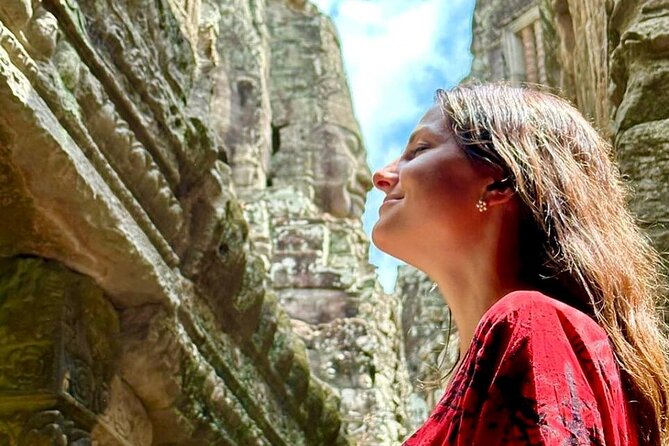
Reviewed · ANGKOR WAT TEMPLE TOURS
2 Days Angkor Wat Sunrise and Sunset Private Tour
A two-day Angkor plan can feel intense, but this one is built for the right hours. You get golden-time Angkor Wat and an evening payoff at Phnom Bakheng, plus a full hit list of classic temples around Angkor Thom and the smaller circuit. I like that it’s a private setup with an English-speaking guide who keeps you moving without turning the day into a sprint. One thing to plan for: temple entrance fees and meals aren’t included, so your final cost will be higher than the tour price on the booking page.
On Day 1, you’ll work your way through Angkor Wat’s dramatic setting and the Khmer core of Angkor Thom—South Gate, Bayon, Ta Prohm, Ta Nei, and the Terrace of the Elephants. On Day 2, you shift to the smaller-temple circuit vibe—Banteay Srei, Preah Khan, Neak Pean, Ta Som, Eastern Mebon—before ending at Phnom Bakheng for sunset views. The tour also offers hotel pickup and drop-off in Siem Reap, plus bottled water, which sounds small until the heat kicks in.
I also took note of one specific detail from a past booking: a guide named Tann was praised for being well prepared and consistently delivering strong service. That matters here because the big value of Angkor isn’t just seeing temples—it’s how smoothly you get to the places at the right times and how much context you get while you’re there.
In This Review
- Key points to know before you go
- Golden hours are the whole reason this tour works
- Day 1: Angkor Wat into Angkor Thom’s big hitters
- Angkor Wat: the main event first thing
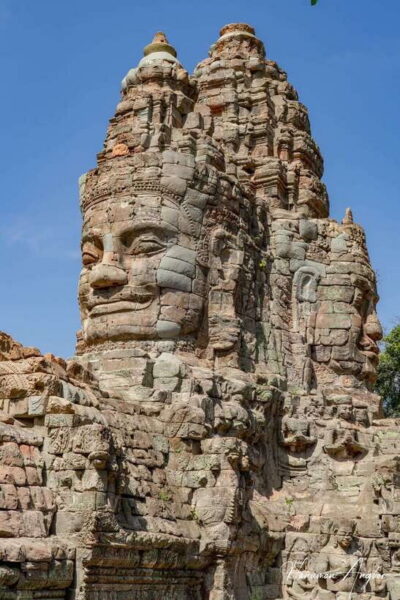
- Angkor Thom South Gate: a dramatic entry point
- Bayon Temple: faces you can’t stop looking at
- Ta Prohm: stones and jungle attitude
- Ta Nei and the Terrace of the Elephants: shorter stops with payoff
- Day 2: smaller-circuit temples plus a sunset finale at Phnom Bakheng
- Banteay Srei: a more delicate, Shiva-focused temple
- Preah Khan and Neak Pean: temple-city and water-cult connections
- Ta Som and Eastern Mebon: smaller stops that keep the day interesting
- Phnom Bakheng at sunset: the last climb payoff
- Price, tickets, and what you’ll actually budget
- Logistics that matter: dress code, drones, and tickets
- Dress code: plan for shoulders and knees
- Tickets: mobile ticket and last-minute sunrise purchase
- Drones: ask APSARA, don’t assume
- The guide experience: why private helps (and how to use it)
- What this two-day plan is best for
- Should you book this 2 Days Angkor Wat sunrise and sunset private tour?
- FAQ
- What is the total duration of the tour?
- How much does the tour cost?
- Is hotel pickup and drop-off included?
- What’s included in the price?
- What isn’t included?
- Do I need the Angkor pass, and how much is it?
- Is there a dress code?
- Can I buy the temple entrance fee the day of the tour?
- Are drones allowed at the temples?
- What’s the cancellation policy?
Key points to know before you go
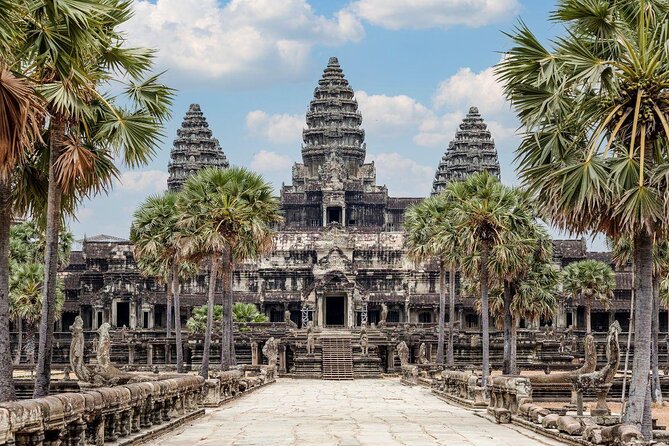
- Sunrise at Angkor Wat + sunset at Phnom Bakheng gives you the two best lighting windows instead of choosing only one
- Private format means your pace and stops can fit your group better than a shared bus tour
- Major temples plus the small-circuit mix so you don’t just do the headline sites
- Hotel pickup, A/C vehicle, bottled water helps a lot on long temple days
- You’ll want the Angkor pass in advance (or buy it just before sunrise the day of)
Other ways to walk the great temple
- Angkor Wat Sunrise or Sunset Tour with Guide from Siem Reap★ 5.0 · 12,109 reviews
- Siem Reap: Angkor Wat: Small-Group Sunrise or Sunset Tour★ 5.0 · 9,444 reviews
- Siem Reap: Angkor Wat 2-Day Tour with Sunrise and Sunset★ 4.9 · 4,429 reviews
- Siem Reap: Full-Day Angkor Wat Guided Tour with Sunset★ 4.9 · 3,803 reviews
Golden hours are the whole reason this tour works
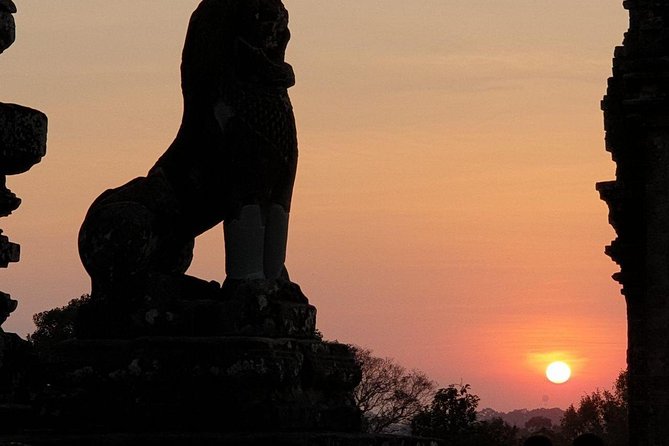
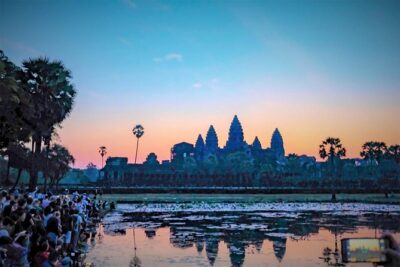
Angkor is popular for a reason, but time of day changes everything. This tour is designed around two moments that most people struggle to organize on their own: early light at Angkor Wat and the evening climb/view at Phnom Bakheng.
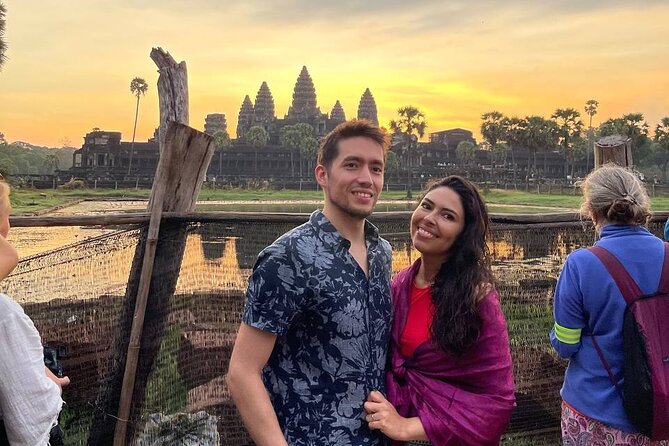
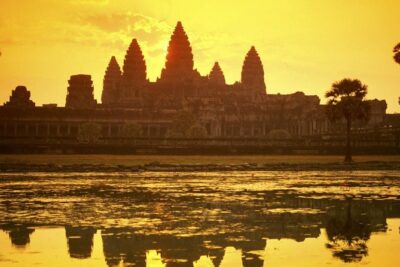
Angkor Wat at sunrise is special because you’re catching the temple when the air is cooler and the crowds are still settling in. You’ll also be able to take in the main silhouette and moat reflections without fighting full-day heat. Then, the Phnom Bakheng sunset finale gives you a different kind of satisfaction—more viewpoint-style, more atmosphere, and a nice contrast to the flat-calm geometry of Angkor Wat.
And there’s a practical perk too: you’re going early enough that you can plan your morning food. The tour recommends a breakfast pack from your hotel (if your room includes breakfast) so you can eat after sunrise.
Day 1: Angkor Wat into Angkor Thom’s big hitters
Day 1 reads like your Khmer greatest-hits album. It also makes sense for avoiding decision fatigue. Instead of choosing between “do the big circuit” or “do the smaller circuit,” you get both the headline powerhouse and the dense Angkor Thom cluster.
Angkor Wat: the main event first thing
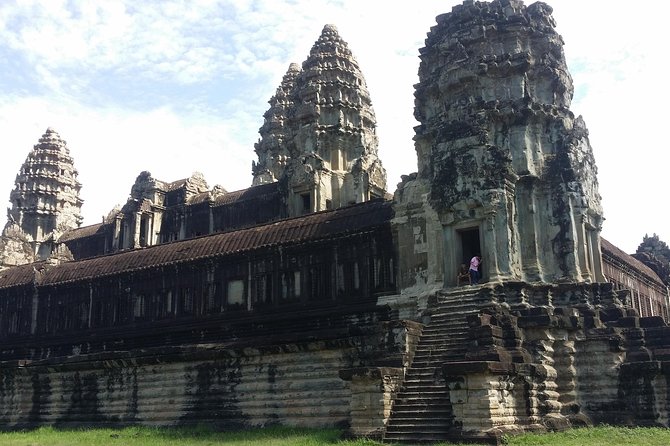
You’ll start at Angkor Wat, the huge Hindu temple complex and one of the most recognizable monuments in the world. It’s large—over 160 hectares—so two hours is a reasonable window to get key viewpoints and details without feeling lost.
What I like about putting Angkor Wat first is that it anchors your brain. Once you understand the layout and the stonework language here, the rest of the day makes more sense. You’re also in better shape to appreciate the carvings and symmetry when you’re not arriving mid-morning in full sun.
Practical note: entrance fee isn’t included. The temples’ entrance fee is handled through the 3Days Angkor Pass ($62 per person), and the info says you can purchase on the day just before sunrise. It also notes visa cards are accepted for entrance fees.
Angkor Thom South Gate: a dramatic entry point
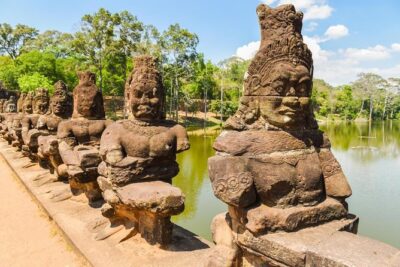
Next up is Angkor Thom South Gate. This is where you get the sense of “capital city scale.” It’s not just one photo angle; it’s a threshold moment. You’ll have only about 15 minutes here, so I’d treat this stop like an orientation stop: find your bearings, then move on.
Chasing the light? More dawn and dusk runs

Bayon Temple: faces you can’t stop looking at
Then comes Bayon Temple, the richly decorated temple tied to Jayavarman VII’s state temple. The big visual hook is the face towers, but the real value of a guided stop is context: why it was built, who it served, and what you’re seeing as you walk through.
You’ll get around an hour here, which is enough time to look up, move through key areas, and not feel rushed out the moment the light shifts.
Ta Prohm: stones and jungle attitude
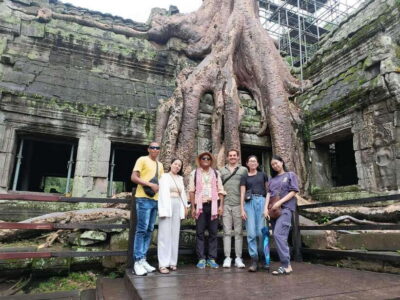
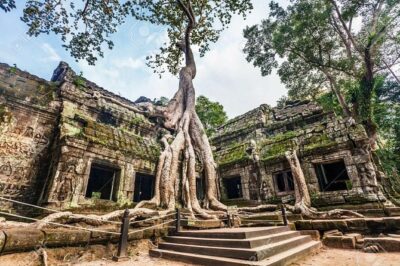
Ta Prohm is next, with its famous overgrowth and “lost-in-time” feeling. Even when you’ve seen it in photos, being there changes it. The roots and collapsed stone are impressive in person, but you’ll also want a guide to point out what’s preserved versus what’s restoration-driven.
You’ll have about an hour. That’s plenty if you focus on walking paths and the main clusters, not chasing every single root line like it’s a scavenger hunt.
Ta Nei and the Terrace of the Elephants: shorter stops with payoff
You’ll also visit Ta Nei (around 40 minutes). It’s a late 12th-century stone temple dedicated to Buddha, near the East Baray area. This is one of those stops that can feel less famous on a map, but it’s valuable because it breaks up the day and gives your eyes a breather from the biggest visual hits.
Then there’s the Terrace of the Elephants (about 15 minutes). It’s in Angkor Thom and often gets skipped because people prioritize longer “star stops.” Don’t skip the terrace if you can help it—this is where you see ceremonial architecture details that connect the city’s power to daily monument life.
Day 2: smaller-circuit temples plus a sunset finale at Phnom Bakheng
Day 2 is where the tour adds variety. Instead of only repeating the densest area, you travel through temples that are more spread out and often less crowded than the headline core.
Banteay Srei: a more delicate, Shiva-focused temple
You start the morning with Banteay Srei (about two hours). It’s a 10th-century temple dedicated to Shiva. People often love it because it feels more intricate than the heavier, massive-feeling monuments on the main circuit.
A longer window helps here. The details matter, and two hours lets you slow down enough to actually notice the carvings.
Preah Khan and Neak Pean: temple-city and water-cult connections
After that, Preah Khan (about one hour) is your next major stop. Built in the 12th century for King Jayavarman VII to honor his father, it sits northeast of Angkor Thom and near Jayatataka baray. The context makes it easier to understand why the site feels like a complex rather than a single temple.
Then comes Neak Pean (about 30 minutes). It’s described as an artificial island with a Buddhist temple on a circular island in Jayatataka Baray, associated with Preah Khan. Even without a long stay, it’s a memorable change of scene: you’re moving from architectural density to a water-and-island setup that feels symbolic.
Ta Som and Eastern Mebon: smaller stops that keep the day interesting
You’ll have Ta Som (about 35 minutes) next. It’s a small temple from the end of the 12th century, dedicated by the King to the husband of his family deity tradition (the text truncates, but the point is it’s tied to Jayavarman VII’s period). This kind of stop is great when you want fewer crowds and less “big headline” pressure.
Then you’ll visit Eastern Mebon (about 40 minutes), a 10th-century temple on what was an artificial island at the center of the now-dry reservoir. That “then vs now” contrast is one of the reasons these temples stick with people—you can sense how landscapes shaped ritual life, even when the water is gone.
Phnom Bakheng at sunset: the last climb payoff
Day 2 ends at Phnom Bakheng (about one hour). This is the sunset anchor. Phnom Bakheng is a Hindu and Buddhist temple mountain form, dedicated to Shiva and built at the end of the 9th century.
If you care about views, this is the reason to book a tour instead of DIY-ing randomly. The payoff is the combination of altitude, timing, and getting a workable plan for where to stand. The details provided don’t promise a specific viewing platform spot, but you’ll have a full hour on site to take photos, watch the light change, and soak in the vibe.
Price, tickets, and what you’ll actually budget
The tour price is $134 per person for 2 days. That includes a lot of the stuff that usually causes “hidden hassle” on Angkor days: hotel pickup and drop-off, an A/C vehicle, a professional English-speaking guide, bottled water, and the temple time arrangement.
But you should budget for two extra cost buckets:
1) Temple entrance fee (Angkor pass): listed as $62 per person for the 3Days Angkor Pass.
2) Meals: breakfast and lunch aren’t included.
Tipping is also recommended for guide and driver, but the amount isn’t specified in the data. I’d plan to set aside a tip amount so it doesn’t feel awkward at the end.
Overall, I see good value here if you want a guide-led route that hits sunrise and sunset without you babysitting timing. If you’re the kind of traveler who prefers total freedom and has the whole logistics puzzle handled, you might spend less on your own. If you want the smoother route and the golden-hour coordination, this price looks reasonable.
Logistics that matter: dress code, drones, and tickets
Dress code: plan for shoulders and knees
The dress code is clear: wear respectful clothing with shoulders and knees covered. The info adds that a real dress scarf is required and that some scarves aren’t accepted. Bring something you trust—not a last-minute substitute.
This matters because one problem at Angkor ruins your day. You don’t want to waste a precious early morning solving a clothes issue at the entrance.
Tickets: mobile ticket and last-minute sunrise purchase
The tour notes mobile ticket support and says temple entrance fees accept visa cards and can be purchased on the day of the tour just before sunrise. That’s helpful if your schedule shifts.
Still, early mornings are tricky. If you can, have your pass sorted ahead of time so you’re not rushing in the dark.
Drones: ask APSARA, don’t assume
Flying a drone at the temples isn’t allowed, and the info says you can ask permission from APSARA. If drones are your thing, treat that as a permissions process, not an easy workaround.
The guide experience: why private helps (and how to use it)
This is a private tour, meaning it’s only your group. That’s not just comfort; it changes how well you can handle the tempo.
The biggest advantage is flexibility for your questions. Angkor can feel like a puzzle with missing pieces. With a guide, you can ask what temple style you’re seeing, why certain areas are connected, and what’s worth your time when you’re walking short windows at each stop.
Also, the name Tann showed up in a top rating note: excellent preparation and consistently strong service across the two-day plan. That’s the kind of detail that signals you’re not getting a rushed script.
Even so, you’ll get more out of your guide if you show up with a plan: tell your guide what matters most to you—architecture, religious meanings, photography, or just a smooth route with good timing.
What this two-day plan is best for
This tour fits best if you:
- Want sunrise and sunset without trying to solve viewing logistics on your own
- Prefer a structured route that covers classic Angkor Thom sights and adds the smaller circuit temples
- Value an English-speaking guide and a comfortable A/C vehicle for transit time
It’s also a solid choice if you’re short on time in Siem Reap and want the biggest temple returns in two days, not five.
Should you book this 2 Days Angkor Wat sunrise and sunset private tour?
I’d say book it if your top priority is timing. Golden-hour Angkor Wat and the sunset finish at Phnom Bakheng are the two things most people underestimate when they plan independently. A guided, private setup is a practical way to protect those moments.
Skip it—or rethink it—if you’re allergic to planning or if you strongly prefer to wander freely without a set route. Since meals and the Angkor pass are not included, and you’ll want to follow a dress code and handle early timing, this works best when you’re comfortable committing to the schedule.
If you want a smooth, high-value Angkor hit in two days, this one is built for that.
FAQ
What is the total duration of the tour?
The tour duration is listed as approximately 2 days.
How much does the tour cost?
The price is $134 per person.
Is hotel pickup and drop-off included?
Yes. Free pickup and drop-off at city hotels are included.
What’s included in the price?
Included items are a professional English-speaking tour guide, transportation by air-conditioned vehicle, sightseeing as specified, free pickup and drop-off at city hotels, and bottled water.
What isn’t included?
Breakfast, lunch, drinks, guide and driver tipping (recommended), travel insurance, and the temple entrance fee are not included.
Do I need the Angkor pass, and how much is it?
Yes. The listed entrance fee is a 3Days Angkor Pass for $62 per person.
Is there a dress code?
Yes. You’ll need respectful dress that covers your shoulders and knees. The info also specifies a real dress scarf is required and that some scarves may not be accepted.
Can I buy the temple entrance fee the day of the tour?
Yes. The information says temple entrance fees can be purchased on the day of the tour just before sunrise, and visa cards are accepted.
Are drones allowed at the temples?
No. Flying drones at the temples is not allowed, but you can ask permission from APSARA.
What’s the cancellation policy?
You can cancel for a full refund up to 24 hours in advance. If you cancel less than 24 hours before the start time, the amount paid isn’t refunded.
More Temple Circuits Around Siem Reap
- Angkor Wat Sunrise or Sunset Tour with Guide from Siem Reap
★ 5.0 · 12,109 reviews - Siem Reap: Angkor Wat: Small-Group Sunrise or Sunset Tour
★ 5.0 · 9,444 reviews - Siem Reap: Angkor Wat 2-Day Tour with Sunrise and Sunset
★ 4.9 · 4,429 reviews - Siem Reap: Full-Day Angkor Wat Guided Tour with Sunset
★ 4.9 · 3,803 reviews - Angkor Wat Sunrise tour with Small – Group and Guide tours
★ 5.0 · 3,655 reviews
Dawn and Dusk Over Angkor
- Angkor Wat Sunrise or Sunset Tour with Guide from Siem Reap
★ 5.0 · 12,109 reviews - Siem Reap: Angkor Wat: Small-Group Sunrise or Sunset Tour
★ 5.0 · 9,444 reviews - Sunset tour of Kampong Phluk stilts home village on the Tonle Sap
★ 5.0 · 4,865 reviews - Siem Reap: Angkor Wat 2-Day Tour with Sunrise and Sunset
★ 4.9 · 4,429 reviews - Siem Reap: Full-Day Angkor Wat Guided Tour with Sunset
★ 4.9 · 3,803 reviews
Angkor Wat, a Few More Ways In
- Angkor Wat Sunrise or Sunset Tour with Guide from Siem Reap
★ 5.0 · 12,109 reviews - Siem Reap: Angkor Wat: Small-Group Sunrise or Sunset Tour
★ 5.0 · 9,444 reviews - Siem Reap: Angkor Wat 2-Day Tour with Sunrise and Sunset
★ 4.9 · 4,429 reviews - Siem Reap: Full-Day Angkor Wat Guided Tour with Sunset
★ 4.9 · 3,803 reviews - Angkor Wat Sunrise tour with Small – Group and Guide tours
★ 5.0 · 3,655 reviews
Just Added: Fresh Siem Reap Tour Reviews

Angkor Wat Temple Tours, compared.
 ★ 5.0Angkor Wat Sunrise or Sunset Tour with Guide from Siem ReapFrom $1812,109 reviews
 ★ 5.0Angkor Wat: Small-Group Sunrise or Sunset TourFrom $159,444 reviews
 ★ 4.9Angkor Wat 2-Day Tour with Sunrise and SunsetFrom $344,429 reviews
 ★ 4.9Full-Day Angkor Wat Guided Tour with SunsetFrom $153,803 reviews
 ★ 5.0Angkor Wat Sunrise tour with Small – Group and Guide toursFrom $143,655 reviews
 ★ 5.0Angkor Wat Highlights and Sunrise Guided Tour from Siem ReapFrom $233,213 reviews
 ★ 5.0Angkor Wat Sunset Small Group Tour with Lunch IncludedFrom $203,059 reviews
 ★ 5.0Full-Day Angkor Wat Sunrise Private Tour with Guide from Siem ReapFrom $602,920 reviews
Browse the lists this tour appears in