
Reviewed · ANGKOR WAT TEMPLE TOURS
3-Day Angkor Wat Tour with Kulen Mountain & Floating Village
Early mornings change everything here. This 3-day Angkor Wat tour pairs a pre-crowd sunrise with standout temples (Small and Grand circuit) and adds Kulen Mountain plus a boat ride to Kampong Phluk. I especially like the tight guiding—when I’ve seen it done well, it turns ruins into stories—and the small group feel with A/C private transport. One thing to consider: you’ll start very early, so if you hate mornings, Day 1 can feel like a system shock.
You also get practical touches that matter in the heat—cool water and towels during the drive stops, plus bottled basics included. The itinerary is temple-heavy, with one slower jungle day mixed in, so it’s best if you actually want variety, not just nonstop sightseeing.
In This Review
- Key points before you go
- Angkor Wat sunrise: what that 4:30–5:00 am start really buys you
- Day 1: Angkor Wat before the crowds, plus Ta Prohm’s roots and Bayon’s faces
- The breakfast stop is part of the experience, not filler
- Temples you’ll hit on Day 1
- Day 1 drawback to watch for
- Day 2: Siem Reap countryside temples, Banteay Srei carvings, and the Landmine Museum
- Morning: countryside outside the Angkor core
- Temples outside the city center: why this route feels different
- Lunch: one meal included, ordered from a menu
- Afternoon: Banteay Srei and the Landmine Museum
- Day 2 drawback to watch for
- Day 3: Kulen National Park waterfalls and River of Thousand Linga, then Beng Mealea and Kampong Phluk
- Morning drive: rural villages and rice paddies on the way
- Kulen Mountain highlights you’ll actually be aiming for
- Lunch at a local restaurant, then Beng Mealea
- The Kampong Phluk boat ride: Tonle Sap life at water level
- Day 3 pacing note
- Price and what to budget beyond the $139
- Comfort, group size, and how the guide actually matters
- Who should book this 3-day Angkor Wat + Kulen + Floating Village tour
- Should you book it
- FAQ
- What time do they pick me up for Angkor Wat sunrise?
- Is breakfast included on the tour?
- What tickets are not included in the $139 price?
- What’s included for meals during the 3 days?
- How big is the group?
- What should I bring and wear?
Key points before you go
- Pre-dawn pickup (about 4:30–5:00 am) so you can watch Angkor Wat wake up before the biggest crowds
- Sunrise + early temple time: about 1 hour 30 minutes inside Angkor Wat before peak congestion
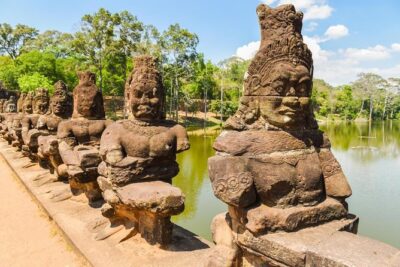
- Two circuit temple days: Small circuit charm, then Grand circuit icons like Bayon and the Victory Gate
- Kulen Mountain highlights: reclining Buddha and the River of Thousand Linga (with an 802 AD link noted in the plan)
- Tonle Sap at Kampong Phluk: boat ride over to lake life, where houses sit on poles for rainy-season water
- Budget reality: the $139 price does not include the Angkor pass, Kulen NP entry, or the Tonle Sap boat ticket
Other ways to walk the great temple
- Angkor Wat Sunrise or Sunset Tour with Guide from Siem Reap★ 5.0 · 12,109 reviews
- Siem Reap: Angkor Wat: Small-Group Sunrise or Sunset Tour★ 5.0 · 9,444 reviews
- Siem Reap: Angkor Wat 2-Day Tour with Sunrise and Sunset★ 4.9 · 4,429 reviews
- Siem Reap: Full-Day Angkor Wat Guided Tour with Sunset★ 4.9 · 3,803 reviews
Angkor Wat sunrise: what that 4:30–5:00 am start really buys you
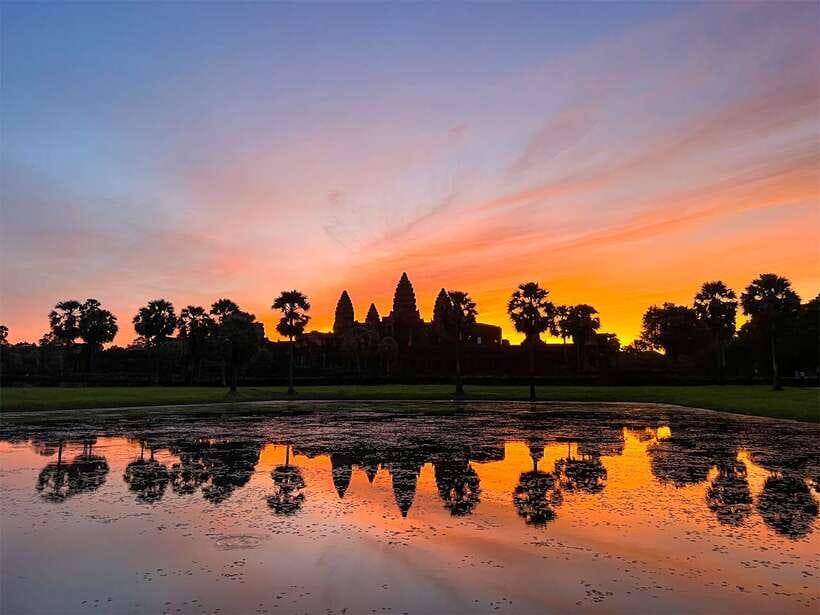
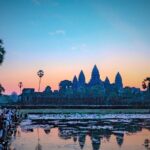
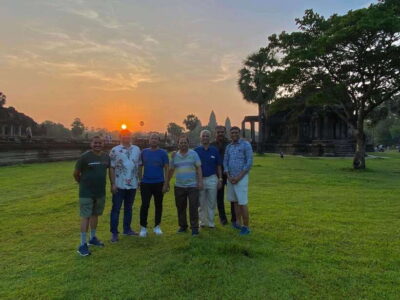
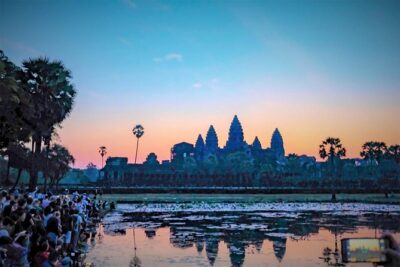
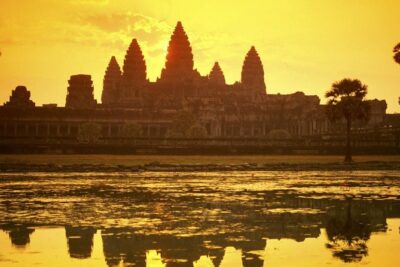
This tour is built around one simple idea: see Angkor Wat when the light is still soft and the crowds aren’t yet in full force. Your hotel pickup happens before sunrise, typically between 4:30 and 5:00 am, so expect a travel day that starts like a mission briefing.
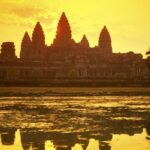
Once you arrive, you’ll watch the sunrise over the temple. The plan includes about 1 hour 30 minutes to explore Angkor Wat thoroughly soon after sunrise. That timing matters. It’s the difference between trying to get photos through shoulders and actually taking your time inside the main complex.
Dress for early cold-then-hot weather. You’ll be in the open for the sky show, then moving into warm temple stone. Bring sunglasses and a hat, and keep insect repellent handy even early—Cambodia doesn’t wait for the sun.
Day 1: Angkor Wat before the crowds, plus Ta Prohm’s roots and Bayon’s faces
Day 1 is the classic “start big” approach, but with smart order. After the sunrise, you get early access time inside Angkor Wat, then a breakfast stop in the village area before you move on to the rest of the core sights.
The breakfast stop is part of the experience, not filler
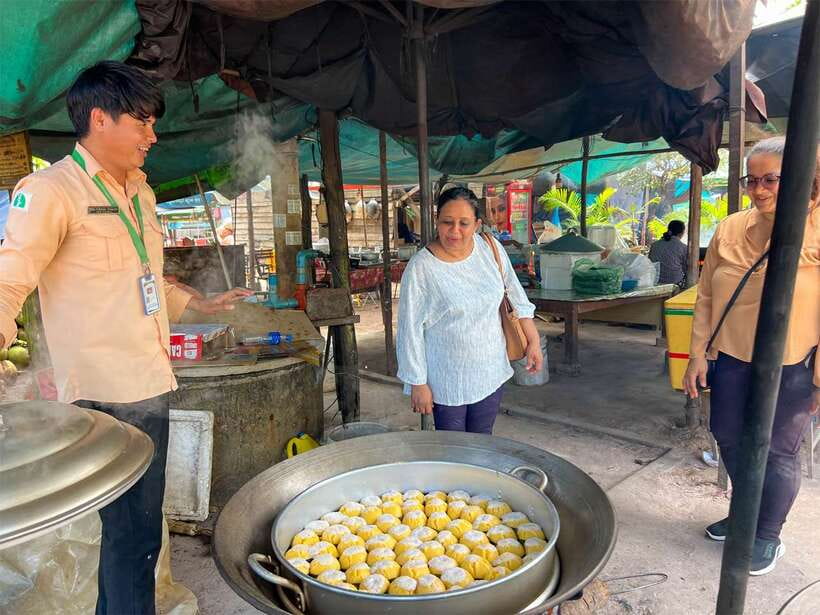
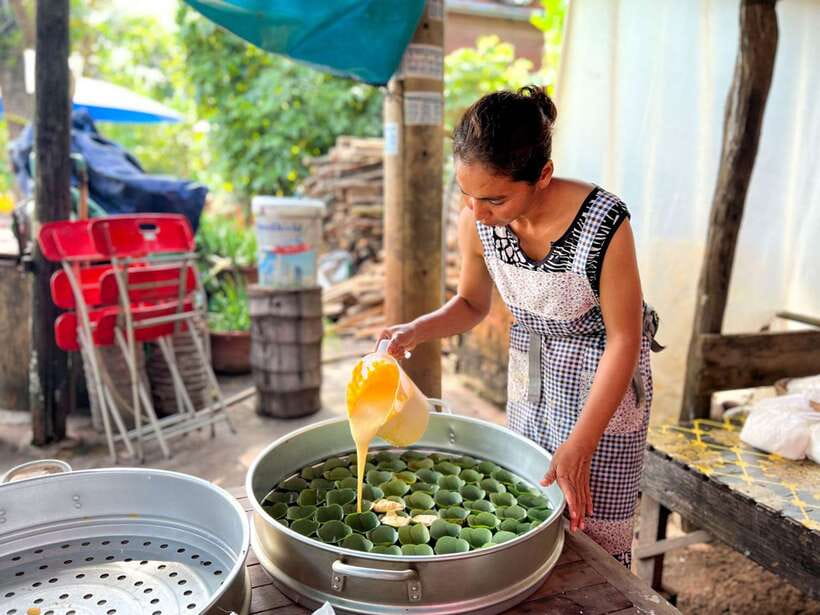
After sunrise, the plan includes a village breakfast with local flavors. You might see Khmer noodle soup and desserts like palm cake and steamed rice dumplings with palm sugar. This is one of those small itinerary choices that makes the day feel more human—you’re not just driving temple to temple in a heat haze.
The tour also includes time at a local market before continuing temple visits. That’s valuable because it gives you a quick taste of daily life and textures beyond the tourist zone.
Temples you’ll hit on Day 1
The rest of Day 1 is focused on iconic visuals and mood. You’ll visit:
- Pre Run temple (on the plan before the jungle stop)
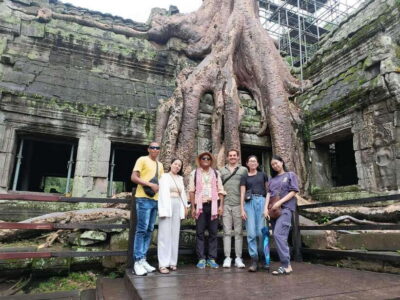
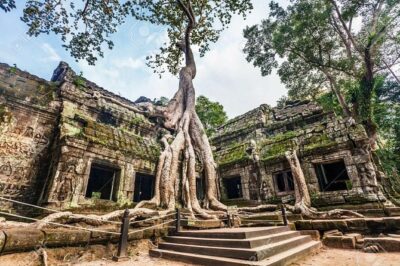
- Ta Prohm, described as partly left in its original state with huge roots and overgrowth. It’s not “perfectly restored,” and that’s the point: it looks lived-in by nature.
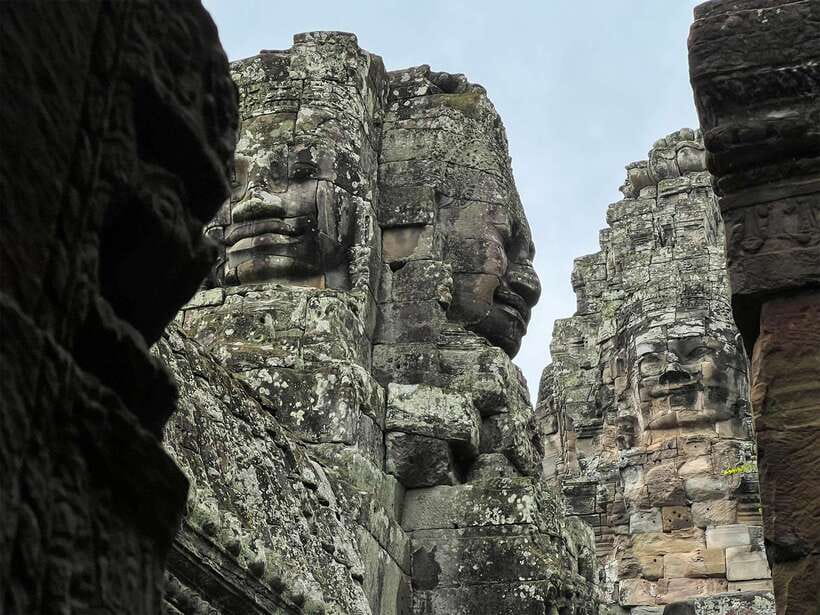
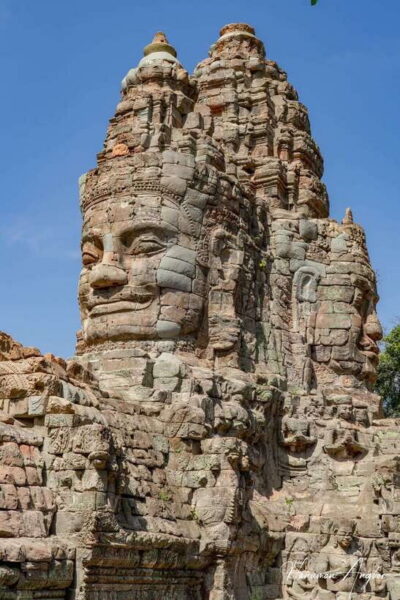
- Bayon, the smiling face temple of Angkor Thom
- The Victory Gate of Angkor Thom
Here’s how I think about this set: it’s a shift from “pure monument” to “ruin as ecosystem.” Angkor Wat early feels formal and cinematic. Ta Prohm feels like the past was interrupted mid-breath—then nature took over.
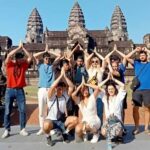
More temple circuits, set side by side
Day 1 drawback to watch for
Your pace is strong. You’re doing sunrise, then multiple temples, then breakfast and market time. If you’re prone to early-day fatigue, plan for sore legs and bring a serious bottle of water habit. (You’ll receive cool water and towels during the tour, but you still need your own comfort routines.)
Day 2: Siem Reap countryside temples, Banteay Srei carvings, and the Landmine Museum
Day 2 starts later—leave at 8:00 am after breakfast—and shifts from “temple icon marathon” to a more varied mix: rural life, outside-city temples, a highly detailed small temple, and a sobering museum stop.
Morning: countryside outside the Angkor core
You’ll head outside the city center with a local guide to experience rural Siem Reap life and culture. The plan specifically frames this as seeing everyday routines in countryside villages and getting views like rice paddies.
This is where I like the tour’s balance. After Day 1’s concentrated Angkor intensity, Day 2 gives your brain a reset. You’re not only seeing stone; you’re seeing people and how the region actually lives.
Temples outside the city center: why this route feels different
The itinerary includes several “outside Angkor” temples that don’t always get the same peak attention as the headline sites. You’ll visit:
- Preah Khan
- Neak Pean
- Ta Som
- East Mebon
These stops help you understand the temple-building thinking across the wider region. The feel can be more relaxed than the busiest complexes, and that gives you more space to look closely at layout and stone work.
Lunch: one meal included, ordered from a menu
Lunch is included, and you order individual dishes from a menu. That’s a good setup because it lets you choose what your stomach will tolerate after a full morning of heat and walking. Just remember that only this lunch is covered—food and soft drinks later are not included.
Afternoon: Banteay Srei and the Landmine Museum
The second half of Day 2 focuses on two very different experiences.
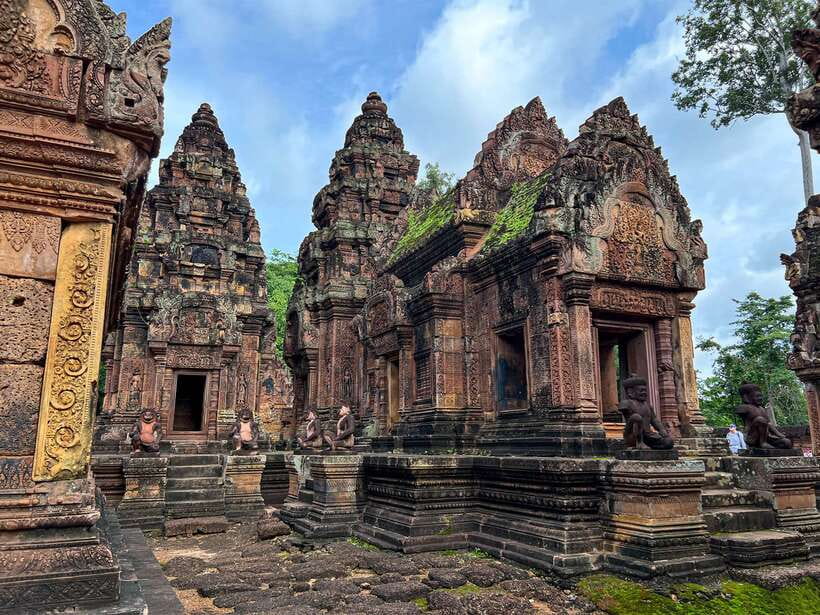
Banteay Srei is described as intricately carved and especially well-preserved, with the plan noting its reputation for the finest, most skillfully crafted reliefs. This is one of those temples that rewards slower looking. It’s smaller than the giants, so you can stand back, then step in, then step back again and catch different layers of detail.
Then comes the Cambodian Landmine Museum. It’s not a “pretty” stop, but it adds real context. If you go in expecting only ruins, it can jar you. If you go in ready to learn, it makes the whole trip feel more grounded.
Day 2 drawback to watch for
Expect a long walking day with several separate sites. You’ll want shoes you can trust on uneven paths and stone. Also, this is a day where your water habits matter; take sips often, not only when you get tired.
Day 3: Kulen National Park waterfalls and River of Thousand Linga, then Beng Mealea and Kampong Phluk
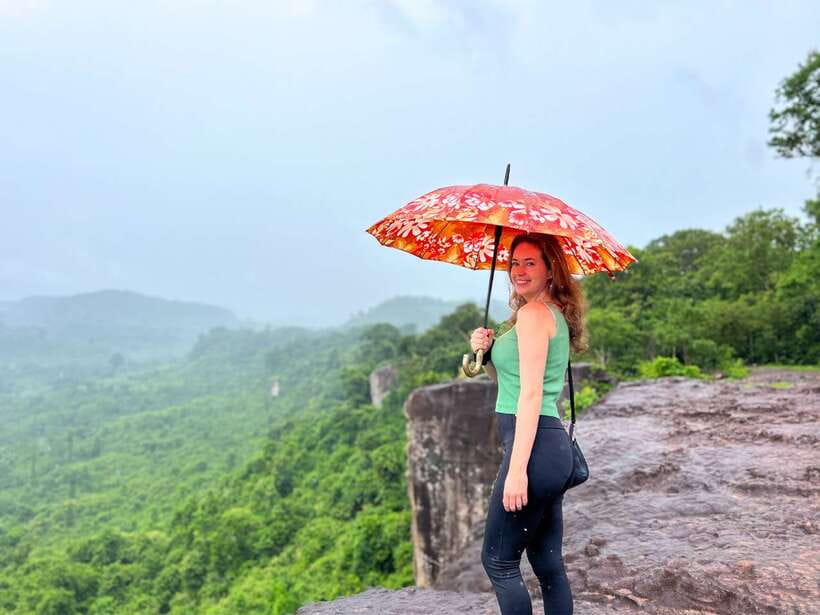
Day 3 is the “wide variety” day. You start with Phnom Kulen National Park (about 1 hour drive from Siem Reap area), then you get a jungle temple, and finally you end with the boat-to-village part that many people remember most.
Morning drive: rural villages and rice paddies on the way
The transfer includes passing through rural Cambodian villages where you can observe everyday life and landscapes like rice paddies. This is the kind of travel time that feels less like commuting and more like seeing how far your trip really reaches beyond the main tourist corridor.
Kulen Mountain highlights you’ll actually be aiming for
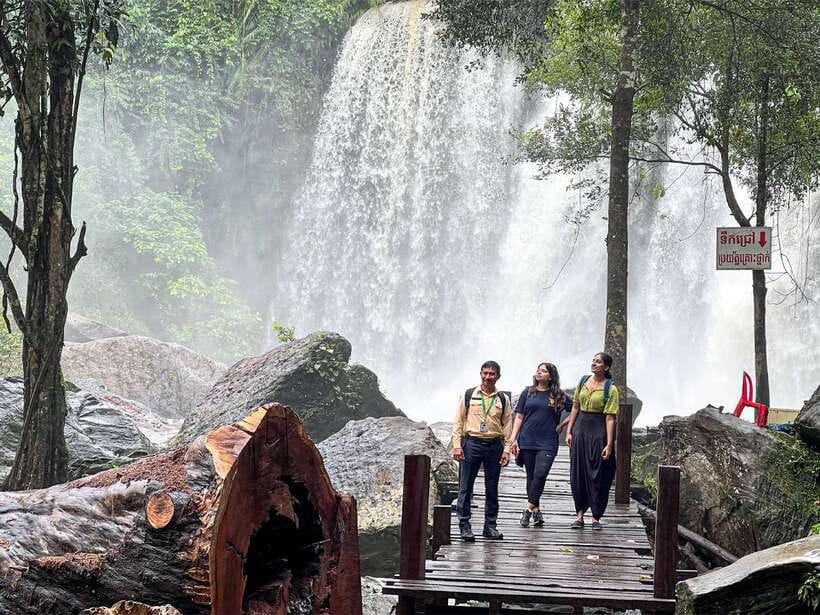
Inside Phnom Kulen National Park, your guide takes you to major stops, including:
- The largest and most beautiful waterfalls (as stated in the plan)
- A reclining Buddha sculpture
- The River of Thousand Linga, constructed in 802 AD (noted in the itinerary)
These are not just random photo points. The reclining Buddha and the linga river ties the sacred geography to the Khmer Empire’s early story—so Kulen ends up feeling like more than a nature day. It’s the “birthplace” concept in the tour’s theme.
Practical tip: waterfalls can mean slick rocks. If the path looks damp, slow down. And if you get mosquito-prone, insect repellent matters more here than you might expect.
Lunch at a local restaurant, then Beng Mealea
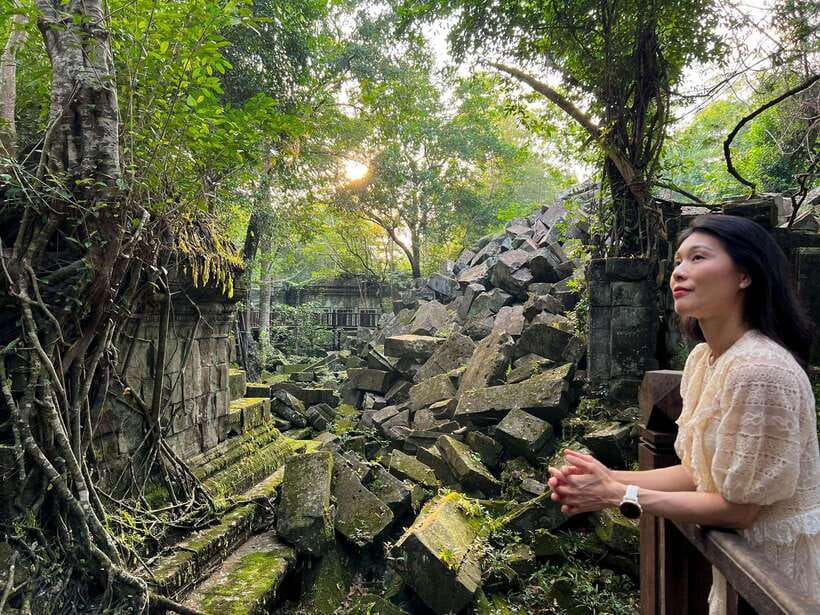
After morning stops, you have lunch at a local restaurant. Then you head to Beng Melea, described as a 12th-century temple heavily overgrown with vegetation, trees, lianas, and mosses, and surrounded by rainforest for over 300 years (as stated).
Beng Melea is where the trip’s tone shifts again. Angkor temples are grand and engineered for visitors. Beng Melea feels like the jungle kept its own schedule. When the temple is not fully restored, many people feel a stronger sense of discovery because the scene doesn’t look polished.
The Kampong Phluk boat ride: Tonle Sap life at water level
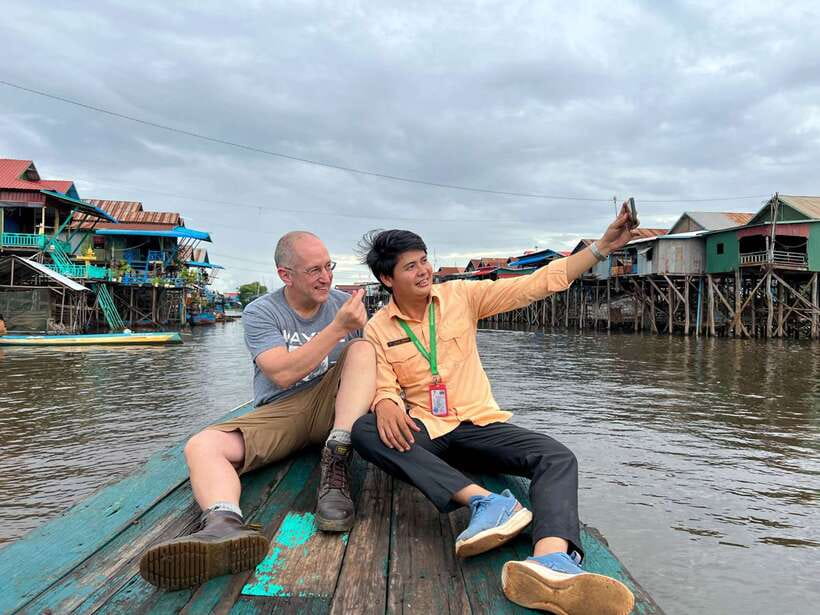
In the afternoon you take a boat from the ferry to Kampong Phluk on Tonle Sap lake. This is a powerful close-up look at lake living.
The plan emphasizes how families earn income primarily from fishing. Many families live on the lake shore in brightly colored houses on long poles, and the description notes that high water levels aren’t a problem during the rainy season.
If you want one reason this part is worth the trip, it’s that it’s not only about scenery. It shows a working relationship between people and a seasonal environment.
Day 3 pacing note
One balance point from your experience: Day 3 can feel slower than the first two for some people, because you’ve got drive time, waterfall stops, the longer travel to Beng Melea, and then boat time. If you love nonstop temple hopping, you might feel the distribution of time. If you like variety, Day 3 is where the trip becomes memorable.
Price and what to budget beyond the $139
The advertised price is $139 per person for 3 days. That covers the parts that cost real money: a professional English-speaking guide, private A/C transportation (car or minivan), and hotel pickup and drop off, plus cool water and towels during the tour.
But you’ll also need to plan for tickets and fees you bring separately:
- Angkor Pass (3 days): $62 per pax
- Tonle Sap lake ticket with private boat cruise: $15 per pax
- Phnom Kulen National Park admission: $20 per pax
That’s $97 in add-ons already, before counting meals outside what’s included. The tour includes breakfast in the village on Day 1 and one lunch with local food on Day 2, but food and soft drinks other times are not included.
So the real value question becomes: do you want a guided, time-managed route with early access, rural context, and transportation? If yes, this price can make sense because you’re paying for coordination. If you’re the type who wants total freedom and don’t care about early starts, you might compare alternatives on your own.
Comfort, group size, and how the guide actually matters
This tour is limited to 10 participants. That’s small enough for smoother movement between stops, especially during temple crowds and ticket checks. You also get private transportation, which means less time herding people and more time waiting on your schedule.
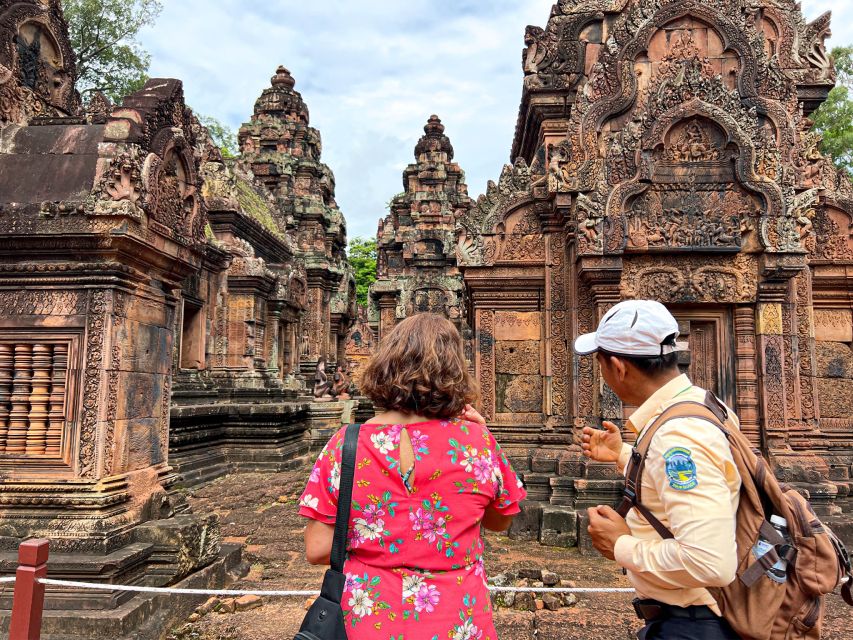
Guide quality is a big deal on Angkor trips because there’s so much to notice and so many small timing tricks. In the experience notes you provided, guides like Mr Sam, Phanne, Kamsan, Sa, Ho, Seila, and Moni are repeatedly described as attentive and patient. You’ll also see drivers mentioned for safety and comfort touches like having drinks and cool face cloths ready after temple visits.
If you’re lucky enough to get that kind of team, the tour feels low-stress even when the days are long. If you’re not, you’ll still see the major sights, but you may not get the same story behind them.
What to bring helps you match their pace: sunglasses, hat, insect repellent, and sunscreen. Also follow the dress rule: no short skirts or sleeveless shirts. You’ll thank yourself at every gate.
Who should book this 3-day Angkor Wat + Kulen + Floating Village tour
I’d aim this tour at you if:
- You want early sunrise at Angkor Wat, not a late-day compromise
- You’re happy with a guided route that hits both Small circuit and Grand circuit temple highlights
- You want more than temples, with rural Siem Reap time, Kulen’s sacred stops, and lake life at Kampong Phluk
- You like history with context, including a stop like the Cambodian Landmine Museum
I might hesitate if:
- You strongly dislike very early mornings
- You want only one type of activity (only temples, only nature, or only local food)
- You prefer fewer stops and more “wandering time” without structure
Should you book it
Book it if you want a smart, full 3 days that covers the big icons and also gives you the “Cambodia beyond the postcard” feeling—rural countryside, jungle-overgrown ruins, and lake living from the water.
I’d only skip it if the early pickup and temple-heavy pace sounds exhausting rather than exciting. If you’re ready for long days, bring your sun protection, and plan your extra budget for the Angkor pass, Kulen NP admission, and the Tonle Sap boat ticket, this tour is a strong way to get your first Angkor trip right.
FAQ
What time do they pick me up for Angkor Wat sunrise?
Pickup is included and happens before sunrise, typically between 4:30 am and 5:00 am, and you should wait in the hotel lobby about 10 minutes before the scheduled pickup.
Is breakfast included on the tour?
Yes. Day 1 includes breakfast in the village after the sunrise and morning activities.
What tickets are not included in the $139 price?
You’ll need to pay separately for the Angkor pass (3 days) at $62 per person, the Tonle Sap lake ticket with private boat cruise at $15 per person, and Phnom Kulen National Park admission at $20 per person.
What’s included for meals during the 3 days?
Day 1 includes breakfast in the village, and Day 2 includes one lunch with local food. Food and soft drinks other than those are not included.
How big is the group?
The tour is a small group limited to 10 participants.
What should I bring and wear?
Bring sunglasses, a hat, insect repellent, and sunscreen. Avoid short skirts and sleeveless shirts, since those are not allowed.
Out on Tonle Sap
- From Siem Reap: Kampong Phluk Floating Village Tour by Boat
★ 4.9 · 6,979 reviews - Sunset tour of Kampong Phluk stilts home village on the Tonle Sap
★ 5.0 · 4,865 reviews - Kompong Phluk Floating Village Half-Day Tour ( Morning / Sunset )
★ 5.0 · 1,494 reviews - Siem Reap: Kulen Mountain, Beng Mealea and Tonle Sap Tour
★ 5.0 · 1,483 reviews - Tonle Sap Lake & Kampong Phluk Village Half-Day Tour
★ 5.0 · 1,045 reviews
More Temple Circuits Around Siem Reap
- Angkor Wat Sunrise or Sunset Tour with Guide from Siem Reap
★ 5.0 · 12,109 reviews - Siem Reap: Angkor Wat: Small-Group Sunrise or Sunset Tour
★ 5.0 · 9,444 reviews - Siem Reap: Angkor Wat 2-Day Tour with Sunrise and Sunset
★ 4.9 · 4,429 reviews - Siem Reap: Full-Day Angkor Wat Guided Tour with Sunset
★ 4.9 · 3,803 reviews - Angkor Wat Sunrise tour with Small – Group and Guide tours
★ 5.0 · 3,655 reviews
Angkor Wat, a Few More Ways In
- Angkor Wat Sunrise or Sunset Tour with Guide from Siem Reap
★ 5.0 · 12,109 reviews - Siem Reap: Angkor Wat: Small-Group Sunrise or Sunset Tour
★ 5.0 · 9,444 reviews - Siem Reap: Angkor Wat 2-Day Tour with Sunrise and Sunset
★ 4.9 · 4,429 reviews - Siem Reap: Full-Day Angkor Wat Guided Tour with Sunset
★ 4.9 · 3,803 reviews - Angkor Wat Sunrise tour with Small – Group and Guide tours
★ 5.0 · 3,655 reviews
Just Added: Fresh Siem Reap Tour Reviews

Angkor Wat Temple Tours, compared.
 ★ 5.0Angkor Wat Sunrise or Sunset Tour with Guide from Siem ReapFrom $1812,109 reviews
 ★ 5.0Angkor Wat: Small-Group Sunrise or Sunset TourFrom $159,444 reviews
 ★ 4.9Angkor Wat 2-Day Tour with Sunrise and SunsetFrom $344,429 reviews
 ★ 4.9Full-Day Angkor Wat Guided Tour with SunsetFrom $153,803 reviews
 ★ 5.0Angkor Wat Sunrise tour with Small – Group and Guide toursFrom $143,655 reviews
 ★ 5.0Angkor Wat Highlights and Sunrise Guided Tour from Siem ReapFrom $233,213 reviews
 ★ 5.0Angkor Wat Sunset Small Group Tour with Lunch IncludedFrom $203,059 reviews
 ★ 5.0Full-Day Angkor Wat Sunrise Private Tour with Guide from Siem ReapFrom $602,920 reviews
Browse the lists this tour appears in