
Reviewed · ANGKOR SUNRISE & SUNSET TOURS
5 Days | Angkor Sunrise & Preah Vihear Explorers
Sunrise at Angkor is a whole mood. This 5-day route strings together Angkor Wat at dawn and the cliffside shock of Preah Vihear, plus everyday Cambodian culture beyond temples. You’ll also ride long distances with an English guide who helps the sights make sense, not just look impressive.
Two things I really like are the way the schedule balances big-name temples with quieter stops, and the inclusion of Monk’s water blessings and the Tonle Sap floating village. The other standout is your guide experience: reviews specifically praise Mr. Hok for being funny, dedicated, and great at explaining what you’re seeing (and even snapping photos).
One possible drawback: you’ll have very early starts (including pickup before 5 a.m.), and several key tickets are not included, so your final day-by-day spend may creep up.
In This Review
- Key highlights worth your attention
- Angkor Wat at dawn: making the sunrise count
- Your Angkor circuit: South Gate, Bayon faces, Ta Nei trees
- Ta Prohm and the Tomb Raider effect (without losing the plot)
- Lady Temple to Preah Khan: carvings that repay time
- Ta Som, Neak Pean, and the “medical pools” idea
- Phnom Kulen National Park: waterfalls and the sacred river story
- Beng Mealea: remote jungle ruins in their original disorder
- Preah Vihear: early departure, cliffside drama, border views
- Koh Ker: the Khmer capital that feels far from Siem Reap
- Killing Fields and Angkor National Museum: history with no scenery cover
- Chong Kneas floating village and Wat Bo water blessings
- Optional Phare Cambodian Circus: story, dance, and humor with purpose
- Price and logistics: where the real costs show up
- Who this tour fits best
- Should you book this 5-day Angkor Sunrise & Preah Vihear route?
- FAQ
- What’s the tour price?
- How long is the experience?
- Does the tour include hotel pickup?
- What is included in the price?
- What tickets are not included?
- Is the sunrise tour included?
- How long is the Tonle Sap floating village visit?
- Is the Monk’s Water Blessing ceremony included?
- Can I get a full refund if I cancel?
Key highlights worth your attention
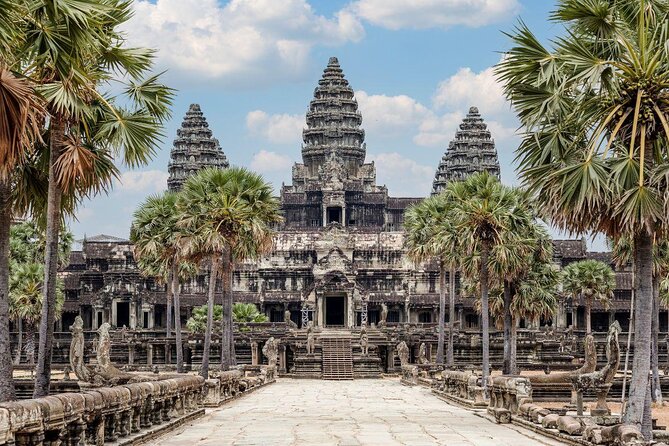
- Angkor Wat sunrise timing with guidance on where to stand near the reflecting pool
- Jungle-temple variety like Ta Nei and Ta Prohm, not just the postcard hits
- Phnom Kulen sacred sites plus the “river of a thousand lingas” area
- Preah Vihear + Koh Ker combo for contrast: border-cliff drama and a remote capital
- Real-life Tonle Sap time with a Chong Kneas floating village visit
- A guided Monk’s Water Blessing for safe travel and good fortune
Chasing the light? More dawn and dusk runs
- Angkor Wat Sunrise or Sunset Tour with Guide from Siem Reap★ 5.0 · 12,109 reviews
- Siem Reap: Angkor Wat: Small-Group Sunrise or Sunset Tour★ 5.0 · 9,444 reviews
- Sunset tour of Kampong Phluk stilts home village on the Tonle Sap★ 5.0 · 4,865 reviews
- Siem Reap: Angkor Wat 2-Day Tour with Sunrise and Sunset★ 4.9 · 4,429 reviews
Angkor Wat at dawn: making the sunrise count
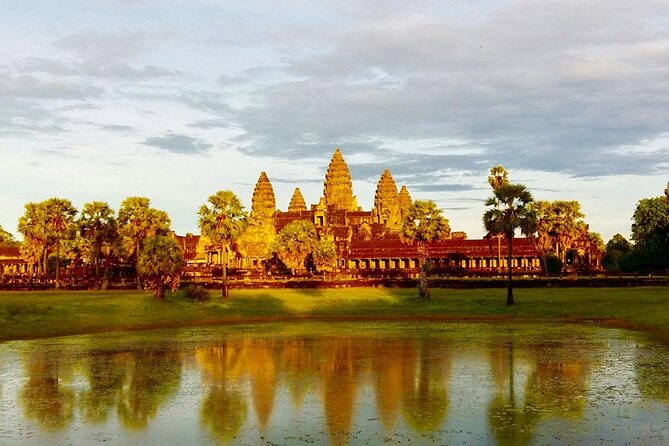
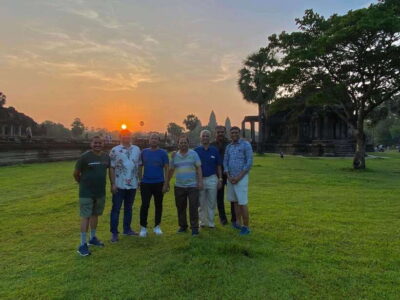
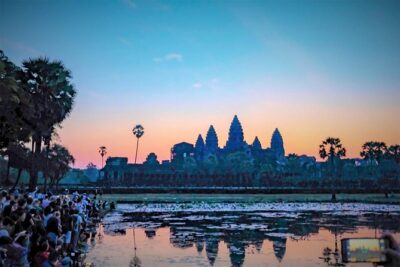
The centerpiece here is the early Angkor Wat sunrise start. Pickup runs at 4:30 a.m., which sounds brutal until you remember the temples are best before tour buses wake up. You’re also told where to position yourself: aim for the reflecting pool area in front of the main temple for that classic mirror effect and sky colors.
What you’ll actually experience is atmosphere. Angkor Wat isn’t just “a big temple.” At sunrise, the stone shifts from gray to warm, and the scale feels even more intense when the complex is still quiet. And because you’re with an English guide, you’re not stuck trying to guess what you’re looking at or where to go next.
A small practical point: you’ll be standing around for sunrise. Wear shoes you can walk in all morning, and bring something light for the pre-dawn cool. Cold water and towels are included, which helps when you’ve been up since before most of Siem Reap.
Your Angkor circuit: South Gate, Bayon faces, Ta Nei trees
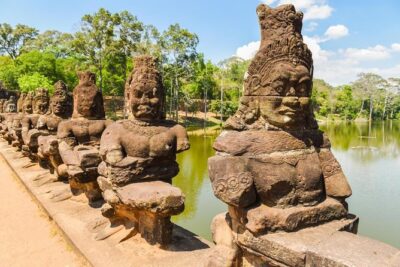
After day-one temple passes get handled, the classic Angkor City entry happens at Angkor Thom South Gate. The big visual here is the bridge flanked by 54 statues of gods and 54 statues of demons, each gripping a Naga. It’s a dramatic way to understand the “good vs. evil” theme the Khmer artists encoded into the entrance.
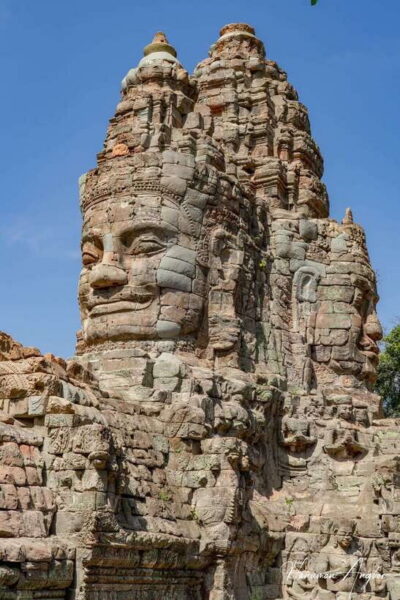
Then you move to Bayon Temple, famous for its stone faces and for wall scenes that connect Hindu and Buddhist traditions. The guide’s job is to translate those bas-reliefs into plain language: what’s being shown, why it mattered, and how Khmer rulers blended beliefs during different periods.
A smart change of pace comes with Ta Nei, which many people overlook because it’s not as famous as the mega sites. It’s described as deeper in the jungle, and that matters. The air feels different there, with more birds and leaves, and fewer crowds. It also pairs well with Ta Prohm later, because both lean into nature and ruin together.
Ta Prohm and the Tomb Raider effect (without losing the plot)
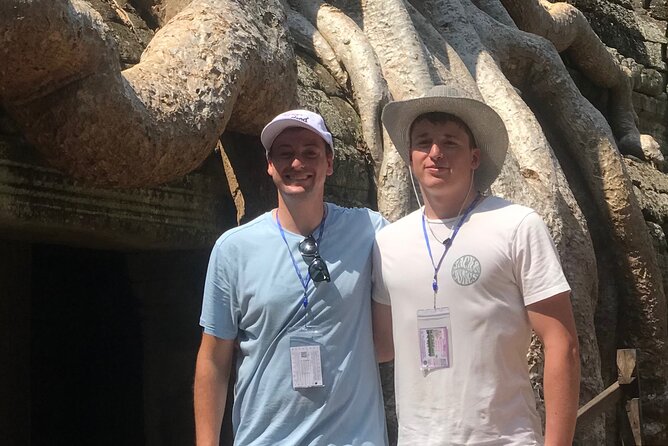
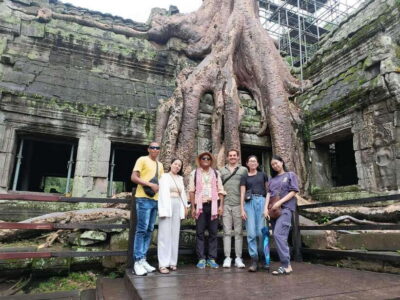
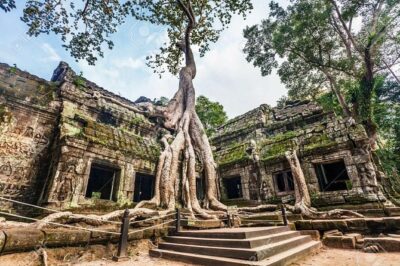
No Angkor tour feels complete without Ta Prohm. The reason is obvious: the temple’s big trees and roots are literally fused to the stone structures. It’s the sort of scene you can’t fully understand until you’re walking through it and seeing how the roots spread.
You might have seen Ta Prohm in films, but what you’ll get here is the on-the-ground context—how the temple was dedicated, when it was built, and what the carvings and layout were meant to communicate. That’s where having a guide who explains clearly makes a difference.
Timing also matters. If you hit it in the right order, you get better viewing and you don’t feel like you’re just getting rushed past the most famous angles. The schedule keeps you moving, but not in a way that feels like a sprint.
Lady Temple to Preah Khan: carvings that repay time
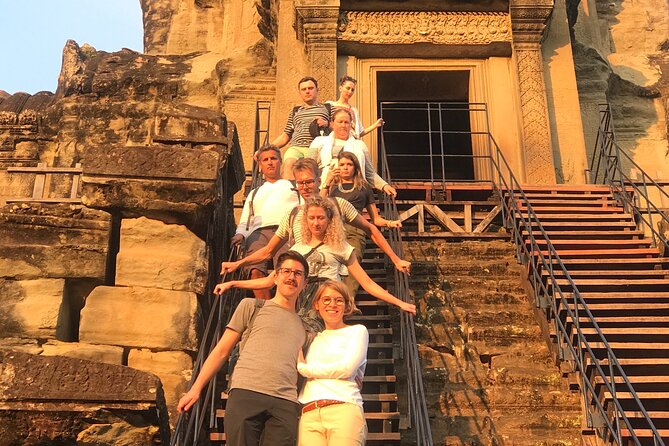
Day two starts at 4:30 a.m. for sunrise, then the route shifts into temples that feel more “readable” if you slow down and look at details. Banteay Srei is the first major stop, known as the Lady Temple. It’s built from pink sandstone, and that color is part of why the carvings survive so well. You get a strong dose of intricate stonework here—so much so that many visitors treat it as a must in Cambodia.
Next is Preah Khan, which is huge and well preserved in parts. It’s dedicated to King Jayavarman VII’s father in religious form, and the site also functioned as a royal school and a center for fine arts and culture in its time. That blend of learning and worship gives you a better sense of what Angkor was beyond tourist selfies.
Up to the cliff-top sanctuary
Ta Som, Neak Pean, and the “medical pools” idea
Ta Som keeps the theme of stone meeting nature. Its East Gate is framed by intertwined roots, and walking through that gate gives you a small moment where the ruin feels alive rather than just collapsed. You’ll also get historical context for why this temple was built and what it honored.
Then comes Neak Pean, and it’s a surprise in the best way. The meaning of the name points to entwined serpents, and the design ties to ancient Hindu ideas about balancing elements through bathing. The layout includes four interconnected pools representing Water, Earth, Fire, and Wind, all linked by stone conduits to a central tank. Even if you’re not trying to “balance elements,” it’s fascinating to see how Khmer architects turned spiritual theory into a physical space.
After so much walking, the tour offers a practical decompression option: Bodia Spa Pub Street. It’s not part of the temples, but the time is. One hour and a half gives you a reset after long morning heat and stone steps.
Phnom Kulen National Park: waterfalls and the sacred river story
On day three you leave Siem Reap early for Phnom Kulen, a sacred mountain tied to the Khmer Empire’s origin story. The name is given as the Lychee Mountain, and the park is described as a national park and historical archaeological area. This isn’t just a viewpoint day. You’re headed for the holy waterfall areas, the reclining Buddha, the sacred river with “thousand lingas,” and spots like Srash Damrei and the Bat Cave.
Here’s why this works on a 5-day itinerary: Angkor is about monumental architecture. Phnom Kulen is about sacred landscape—water, rock, and pilgrimage routes. The “river of a thousand lingas” concept is one of those things that makes you slow down and respect the place as more than a photo stop.
The drive is part of the deal. If you don’t love long road time, this day may feel like it moves fast. But the payoff is a different emotional register from temple bricks.
Beng Mealea: remote jungle ruins in their original disorder
After Phnom Kulen, the plan continues to Prasat Beng Mealea, described as a remote jungle temple. What makes it different from many Angkor-area temples is that it’s presented as still in an original ruined condition, not fully “cleaned up” for a polished tourist experience.
It’s about 66 km by road from Siem Reap, and it’s also noted as having reopened to visitors after land mines were cleared. That detail matters because it frames the site as both adventurous and responsible—go carefully and watch your footing around unstable stones and galleries.
There’s even an Indiana Jones vibe in the description: piles of falling stones, dark corridors, and a strong sense of “untouched by restoration.” The best mindset is simple: treat it like walking through history that hasn’t been tidied for you.
Preah Vihear: early departure, cliffside drama, border views
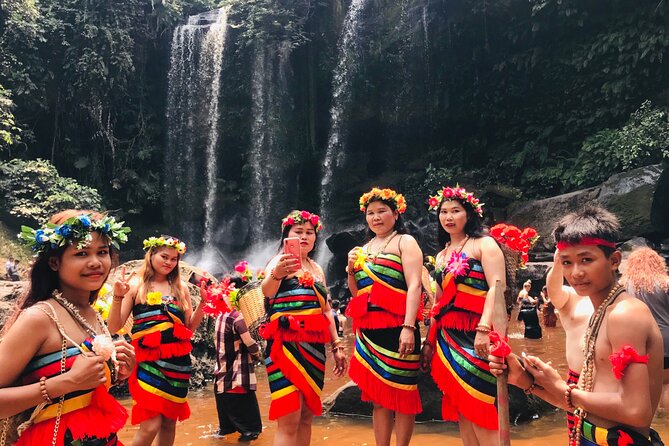
Day four is where the tour’s ambition becomes obvious. Pickup is at 5:30 a.m., and you’re advised to ask your hotel for breakfast boxes. Early mornings are the price of seeing Preah Vihear properly, because the drive and setup time are real.
Before you reach the temple, there’s a stop in Anlong Veng for breakfast and refreshments. You also visit Ta Mok’s House, tied to the last stronghold capital city of the Khmer Rouge Army before 1998, and the site is now available for tourists to see.
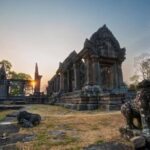
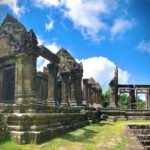
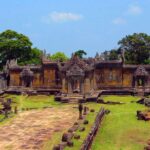
Then you go to Preah Vihear Temple, built on the Dangrek Mountain Range close to the Thailand border. The key point here isn’t only architecture; it’s the setting. You’re on a mountain that looks across the border, and the view described includes the Thai army visible from the Cambodian side. That political geography gives Preah Vihear a heavier tone than many other temple days.
Expect a mix of walking on uneven terrain and long look-down/scan-the-horizon moments. Bring layers, and keep your water bottle handy.
Koh Ker: the Khmer capital that feels far from Siem Reap
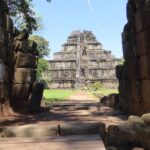
After Preah Vihear, you continue to Koh Ker Temple, with a lunch break at a local restaurant near the park. Once you arrive, you’re stepping into the ancient capital of the Khmer Empire under King Jayavarman IV, who ruled from 921 to 944 and relocated the court from Angkor to Koh Ker.
This is the contrast day. Angkor Wat and Angkor Thom feel concentrated and iconic. Koh Ker feels more “out there,” and the tour explains why: it was a court relocation, so you’re seeing the reach of Khmer power beyond the usual tourist core.
If you like temples but also like history that explains the whys—not just the where—Koh Ker tends to land well. And because it’s paired with Preah Vihear, you leave day four with a sense of how the Khmer world could look both strategic and ceremonial.
Killing Fields and Angkor National Museum: history with no scenery cover
On day five, the tour turns from stone and myth to Cambodia’s modern trauma. You start at Wat Thmey Killing Fields, described as the place where Khmer Rouge victims’ skulls are placed. The tour provides context for the period 1975 to 1979, including the Pol Pot genocide government and an estimate of about 3 million deaths. It also notes there are about 386 killing field sites across Cambodia and that Wat Thmei was originally a primary school turned into a prison for interrogation and torture.
This part of the day is not a “quick photo stop.” It’s a reflective visit. Wear respectful clothing, and give yourself a moment to absorb what you’re seeing before you rush off to the next site. The guide’s role matters here too, because you need a clear explanation of what it was and what the site represents.
Then you head to Angkor National Museum. The value is that you see Khmer artifacts in a museum setting when you can’t access many original pieces on-site. The tour also mentions the conservation system: some originals are kept at the Angkor Conservation Center, Phnom Penh National Museum, and elsewhere, while the museum in Siem Reap holds many items safely. If you love carvings and want to understand craftsmanship without climbing temple stairs, this museum stop is a real payoff.
Chong Kneas floating village and Wat Bo water blessings
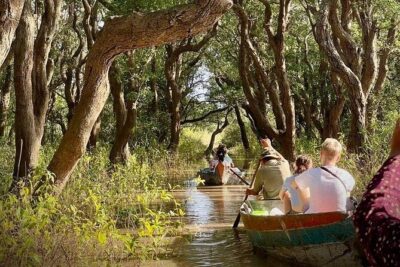
Next is Tonle Sap Great Lake time, including a tour for about 90 minutes at Chong Kneas Floating Village. The tour frames it as local life: fishermen and family routines, floating houses, and the day-to-day relationship with the large freshwater lake.
One important practical note from the included/excluded info: boat trip and lake entrance fees are listed as not included. So you may pay those separately while still getting the guided 90-minute experience. It’s still worth it, especially if you want a break from temple architecture and a chance to see how people live around one of Cambodia’s defining water systems.
After the lake, you get Wat Bo Temple and the Monk’s Water Blessing ceremony. The point of the ritual is safe travel and good fortune, and it’s framed as a Cambodian Buddhist tradition that many locals practice. What makes this stop valuable is that it’s not an optional cultural add-on that you have to hunt down on your own. You’re guided to the right time and set up for the ceremony.
Optional Phare Cambodian Circus: story, dance, and humor with purpose
In the evening, you have the optional stop at Phare, The Cambodian Circus. The show runs typically 8:00 PM to 9:00 PM, and you’re advised to arrive at least half an hour early. It’s described as Cambodian acrobat talent plus storytelling and live music, sometimes touching on folklore and contemporary social issues.
The value here is that it’s not just entertainment. Ticket purchase is also described as supporting the artists and their families, which adds meaning to the night out.
If you want rest instead, you can skip it, but if you’re even a little curious about modern Cambodian performing arts, this is a good way to end the tour on a lighter note.
Price and logistics: where the real costs show up
At $640 per person for a 5-day experience, the deal is mostly about organization. You get an air-conditioned vehicle, an English tour guide, cold water and towels, and local fresh fruits and coconut during the tour. Those small inclusions add up when you’re driving long hours and walking in heat.
But this is also one of those tours where the headline price is only part of the story. Several major items are not included: Angkor Temple Pass, Preah Vihear ticket, Koh Ker Temple ticket, and boat/lake entrance fees. Phare is also not included. So plan on extra spending for entry fees and any evening tickets.
The upside is that the schedule is efficient. You’re not piecing together separate tours for sunrise, Phnom Kulen, the border temple, Koh Ker, and the Tonle Sap segment. Your guide and vehicle handle the heavy lifting, which is exactly where you want help in Cambodia.
Who this tour fits best
This tour is a strong match if you want a structured five-day arc that includes:
- Major Angkor highlights plus a couple of more relaxed, nature-heavy temples
- A day outside Siem Reap focused on sacred landscape and jungle ruins
- A serious history component on day five, not just temples
- A balance of architecture and living culture (Tonle Sap and the water blessing)
It might feel like a lot if you hate early mornings or if you want downtime every day. It’s also best for you if you like learning context—especially on the temple storytelling and the modern history stops.
One more note: people book this specifically for the guide experience. Reviews mention Mr. Hok as thoughtful, funny, and highly helpful with explanations and photography, which is a big quality-of-life factor when you’re bouncing from site to site.
Should you book this 5-day Angkor Sunrise & Preah Vihear route?
I’d recommend booking it if you want a single plan that covers both Cambodia’s famous temples and the parts most people skip when they only focus on Angkor. The combination of Angkor sunrise, Preah Vihear’s border setting, Killing Fields, and Tonle Sap life gives you a well-rounded view of the country.
I wouldn’t book it if you’re looking for a slow, low-effort vacation. Expect long days, early pickups, and added ticket costs for the big sites.
If you’re the type who likes getting your bearings fast and leaving with real understanding, this tour is built for you.
FAQ
What’s the tour price?
The tour price is $640.00 per person.
How long is the experience?
It runs for 5 days (approx.).
Does the tour include hotel pickup?
Yes. Pickup is offered from your hotel on each day (example times include 8:00 AM, 4:30 AM, 5:30 AM, and 9:00 AM depending on the day).
What is included in the price?
Included features are an air-conditioned vehicle, an English tour guide, cold water and towels, and local fresh fruits and coconut.
What tickets are not included?
Angkor Temple Pass, Preah Vihear ticket, Koh Ker Temple Ticket, and Phare Circus tickets are not included. Boat trip and lake entrance fees for Tonle Sap are also not included.
Is the sunrise tour included?
Yes. The schedule includes an Angkor Wat sunrise start with pickup at 4:30 AM.
How long is the Tonle Sap floating village visit?
The Tonle Sap Great Lake visit includes about a 90-minute tour at Chong Kneas Floating Village.
Is the Monk’s Water Blessing ceremony included?
Yes. The tour includes the Monk’s Water Blessing ceremony at Wat Bo Temple.
Can I get a full refund if I cancel?
You can cancel up to 3 days in advance for a full refund, but if you cancel less than 3 full days before the experience’s start time, the amount paid is not refunded.
More Temple Circuits Around Siem Reap
- Angkor Wat Sunrise or Sunset Tour with Guide from Siem Reap
★ 5.0 · 12,109 reviews - Siem Reap: Angkor Wat: Small-Group Sunrise or Sunset Tour
★ 5.0 · 9,444 reviews - Siem Reap: Angkor Wat 2-Day Tour with Sunrise and Sunset
★ 4.9 · 4,429 reviews - Siem Reap: Full-Day Angkor Wat Guided Tour with Sunset
★ 4.9 · 3,803 reviews - Angkor Wat Sunrise tour with Small – Group and Guide tours
★ 5.0 · 3,655 reviews
Up to Preah Vihear
- Preah Vihear: Full-Day Preah Vihear and Koh Ker Temple Tour
★ 4.9 · 263 reviews - Full-Day Preah Vihear, Koh Ker and Beng Mealea Private Tour
★ 4.4 · 101 reviews - Preah Vihear temple – Koh Ker & Other temple with Small Group
★ 5.0 · 96 reviews - Private Preah Vihear and 2 Temples Guided Tour
★ 5.0 · 42 reviews - Preah Vihear, Koh Ker & Beng Mealea Tour
★ 5.0 · 18 reviews
Dawn and Dusk Over Angkor
- Angkor Wat Sunrise or Sunset Tour with Guide from Siem Reap
★ 5.0 · 12,109 reviews - Siem Reap: Angkor Wat: Small-Group Sunrise or Sunset Tour
★ 5.0 · 9,444 reviews - Sunset tour of Kampong Phluk stilts home village on the Tonle Sap
★ 5.0 · 4,865 reviews - Siem Reap: Angkor Wat 2-Day Tour with Sunrise and Sunset
★ 4.9 · 4,429 reviews - Siem Reap: Full-Day Angkor Wat Guided Tour with Sunset
★ 4.9 · 3,803 reviews
Just Added: Fresh Siem Reap Tour Reviews

Angkor Sunrise & Sunset Tours, compared.
 ★ 5.0Angkor Wat Sunrise or Sunset Tour with Guide from Siem ReapFrom $1812,109 reviews
 ★ 5.0Angkor Wat: Small-Group Sunrise or Sunset TourFrom $159,444 reviews
 ★ 5.0Sunset tour of Kampong Phluk stilts home village on the Tonle SapFrom $214,865 reviews
 ★ 4.9Angkor Wat 2-Day Tour with Sunrise and SunsetFrom $344,429 reviews
 ★ 4.9Full-Day Angkor Wat Guided Tour with SunsetFrom $153,803 reviews
 ★ 5.0Angkor Wat Sunrise tour with Small – Group and Guide toursFrom $143,655 reviews
 ★ 5.0Angkor Wat Highlights and Sunrise Guided Tour from Siem ReapFrom $233,213 reviews
 ★ 5.0Angkor Wat Sunset Small Group Tour with Lunch IncludedFrom $203,059 reviews
Browse the lists this tour appears in