
Reviewed · ANGKOR WAT TEMPLE TOURS
Afternoon Angkor Wat Private Tour with Sunset
Angkor Wat at sunset hours feels special. This private afternoon tour strings together Angkor Wat, Ta Prohm, Bayon, Angkor Thom, and then the sunset viewpoint at Phnom Bakheng with an English-speaking guide who makes the temples make sense. I love two things most: the history-focused guidance at Angkor Wat and the practical small touches like cold towels during the drive; the only catch is that temple tickets are not included, so you need to budget for entry.
My favorite part was how it runs with real-world pacing. Thom (the guide name I was given) picked the group up a bit after the scheduled time because you were still checking in, then headed first toward a less busy side of Angkor Wat, with cold towels handed out on the way. That kind of calm, no-rush start matters when you’re trying to enjoy the place instead of just racing through.
One more thing to plan for: your clothing has to follow the temple rule. You must cover knees and shoulders, and you’ll walk enough that comfy shoes help; also, if you want sunset photos, you should expect a little waiting once you reach Phnom Bakheng.
In This Review
- Key highlights you’ll actually feel during the tour
- Why this afternoon Angkor Wat plan works in real life
- The value behind the $59 price: what you get, what you pay extra
- Entering Angkor Wat the smart way: inside, outside, and what to look for
- Ta Prohm: seeing the tree-covered ruins without turning it into a theme park
- Bayon’s face towers: why the explanation is the difference
- Angkor Thom and the South Gate (Tonle Oum): the city behind the temples
- Phnom Bakheng for sunset: the finish that needs planning
- Who this tour suits best (and who should consider a different option)
- What to bring and how to dress so the day feels easy
- The bottom line: should you book the Afternoon Angkor Wat Private Tour with Sunset?
- FAQ
- What’s included in the Afternoon Angkor Wat private tour?
- Are temple tickets included?
- How long is the tour?
- Where does the tour start and end?
- What temples and areas are visited?
- What should I wear to enter the temples?
- Is this tour truly private?
Key highlights you’ll actually feel during the tour
- Angkor Wat inside + outside with a local English guide, not just a photo stop
- Ta Prohm’s tree-covered ruins with time to see details up close
- Bayon’s face towers explained so you know what you’re looking at
- Angkor Thom South Gate plus context for the wider walled city
- Phnom Bakheng sunset at the right end of the afternoon, not as an afterthought
Other ways to walk the great temple
- Angkor Wat Sunrise or Sunset Tour with Guide from Siem Reap★ 5.0 · 12,109 reviews
- Siem Reap: Angkor Wat: Small-Group Sunrise or Sunset Tour★ 5.0 · 9,444 reviews
- Siem Reap: Angkor Wat 2-Day Tour with Sunrise and Sunset★ 4.9 · 4,429 reviews
- Siem Reap: Full-Day Angkor Wat Guided Tour with Sunset★ 4.9 · 3,803 reviews
Why this afternoon Angkor Wat plan works in real life
Siem Reap temple days can go one of two ways: either you end up hot, tired, and annoyed, or you keep your energy and actually absorb the sites. This schedule is built to help you do the second one.
You’re starting in the late day window—still bright enough to see Angkor Wat and the classic carvings clearly, but with sunset ahead of you. That means you’re not stuck viewing the biggest sights only under harsh midday sun, and the cooler end of the day makes the walking easier on your feet. In my mind, it’s the kind of timing that turns Angkor Wat from a checklist into a story.
Also, the whole trip is private. Only your group participates, and that changes the experience. You can move at your pace, ask questions without feeling rushed, and your guide can adjust based on what you want to spend time on—like lingering for a specific angle at Bayon’s faces or getting your bearings fast around Angkor Thom.
The duration is listed as about 5 to 7 hours, which is a sweet spot. It’s long enough to do multiple major temples, but not so long that you feel broken by the end of the day.
The value behind the $59 price: what you get, what you pay extra
At $59 per person, the core value here is the combination of transport + a local English guide for the whole run. You’re in an air-conditioned car, plus you get hotel pickup and drop-off, drinking water, and cold towels. That matters in Cambodia heat.
Where you’ll spend extra is temple admission. The tour itself specifically notes that temple tickets are not included. So yes, you’ll need to plan that cost ahead of time, especially if you’re comparing options that bundle tickets.
Tipping is also recommended for the guide and driver. That’s normal for private tours, and it’s worth factoring into your total budget since you’re paying for hands-on guidance throughout the day.
Finally, there’s a mention of group discounts and a mobile ticket. Even if you’re booking as a solo traveler or a small group, it’s a sign the operator is set up for smooth logistics, not just a last-minute arrangement.
Entering Angkor Wat the smart way: inside, outside, and what to look for
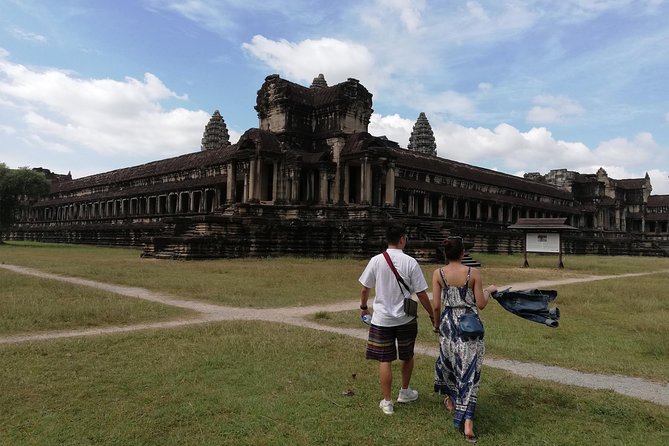
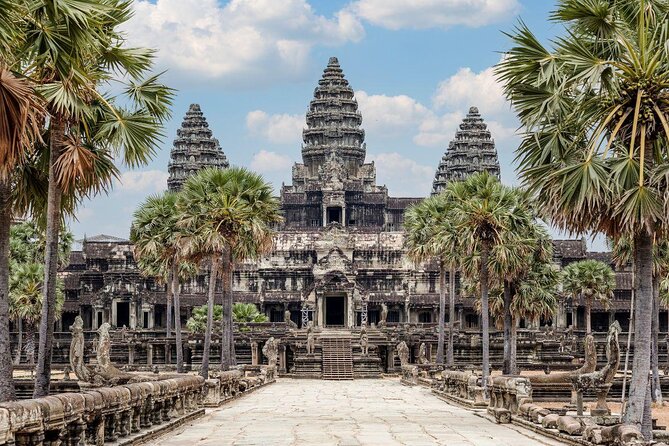
Angkor Wat is the headline stop, and this tour makes it more than a quick look from the outside. Your time there is around 2 hours, and it includes both outside viewing and entry into the temple area, guided by a local English speaker.
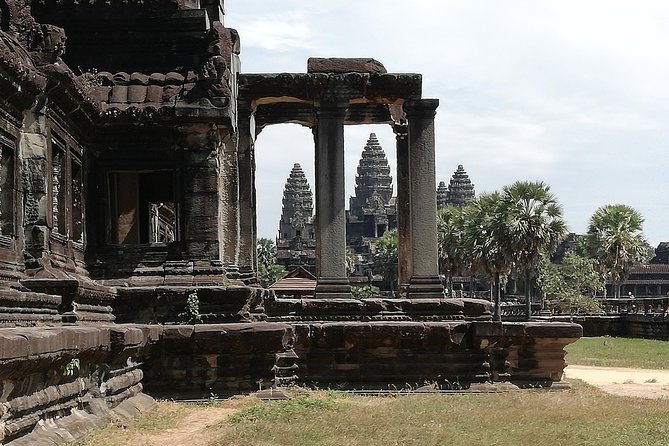
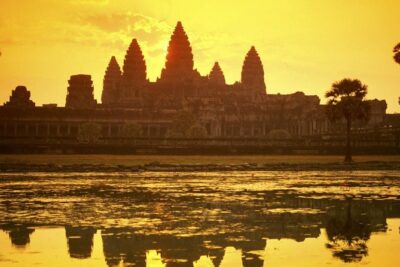
Here’s what you can expect to learn and notice. Angkor Wat was built in the early 12th century by King Suryavarman II. It’s organized in three levels with five main towers—so when you see the silhouette, you’re not just seeing a pretty landmark. You’re seeing a designed structure with a clear hierarchy.
It also has national importance. Angkor Wat is described as a symbol of Cambodia and appears on the national flag, representing the soul of the country. When your guide connects that meaning to what you’re standing in front of, it stops being abstract and starts feeling real.
Practical advice: plan for the entry rules. You’ll need to cover knees and shoulders when entering temples. If you show up even slightly uncovered, you may lose time waiting or adjusting.
What makes this stop shine is the pacing choice reported in the guide experience: starting with a less busy side of Angkor Wat. That’s a small detail that can have big payoff. Less crowd pressure means you can look longer, take steadier photos, and listen without shouting over shoulder-to-shoulder lines.
Ta Prohm: seeing the tree-covered ruins without turning it into a theme park
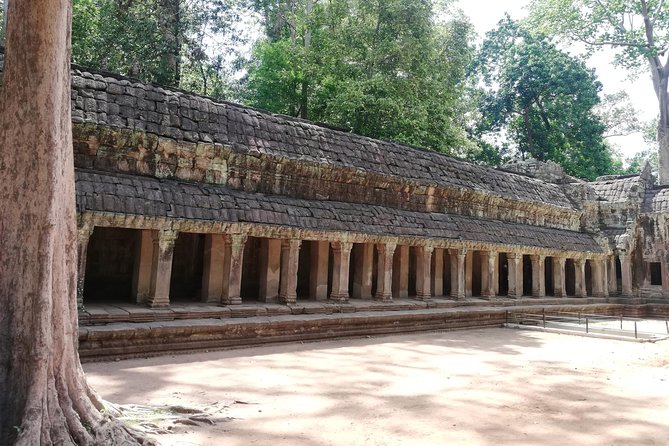
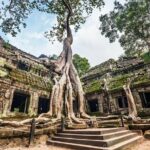
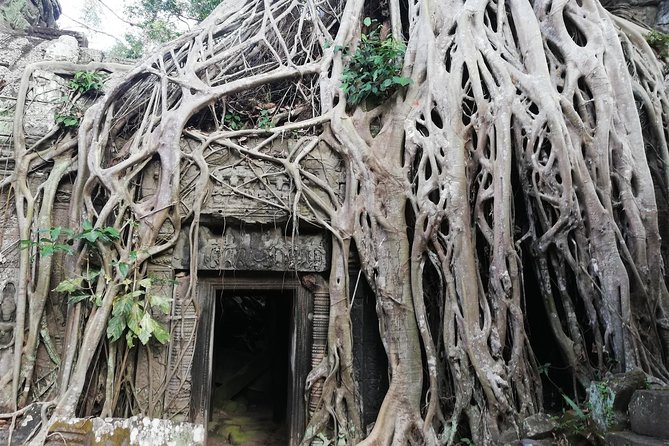
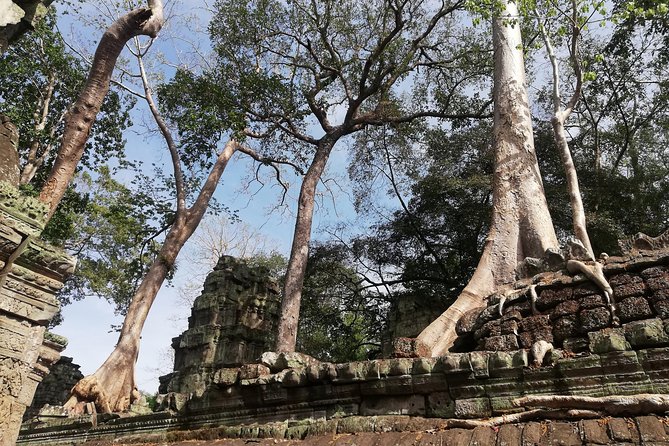
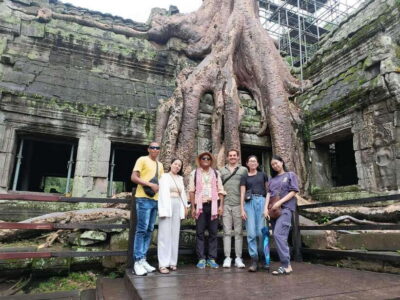
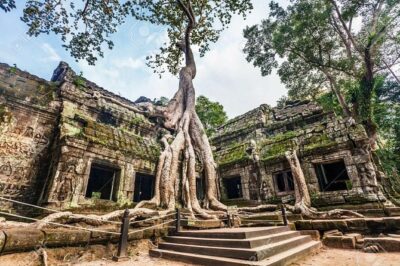
Next up is Ta Prohm, often called the Tomb Raider Temple because of its famous movie association. Your scheduled time here is about 1 hour.
What you should aim to notice at Ta Prohm is the way the roots and the ruins interact. The temple is known for its tree cover, and that’s exactly why it looks so dramatic. With a guide, you’ll usually get beyond the surface of the photos and learn what you’re seeing in terms of structure and historical context.
The tour keeps Ta Prohm at a manageable length. At many Angkor days, people overdo it: too much time in one place, then they’re rushed at the last stops. Here you get a focused hour, which is enough to appreciate the main viewpoints without ending your day exhausted.
Footwear matters at Ta Prohm. The ground can be uneven, and you’ll want shoes you trust. Even if you think you’ll be careful, trust me: you’ll want supportive sneakers before the first big stone step.
Chasing the light? More dawn and dusk runs

Bayon’s face towers: why the explanation is the difference
Bayon is the stop where a lot of first-time visitors suddenly realize the temples aren’t just decorative. The scheduled time is around 1 hour, and it includes outside and inside viewing plus interpretation from your guide.
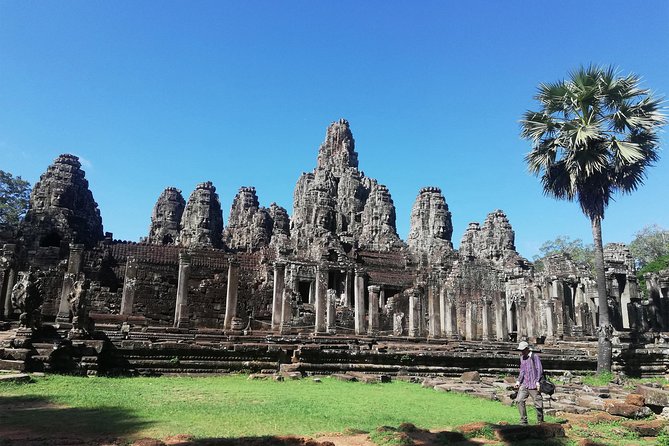
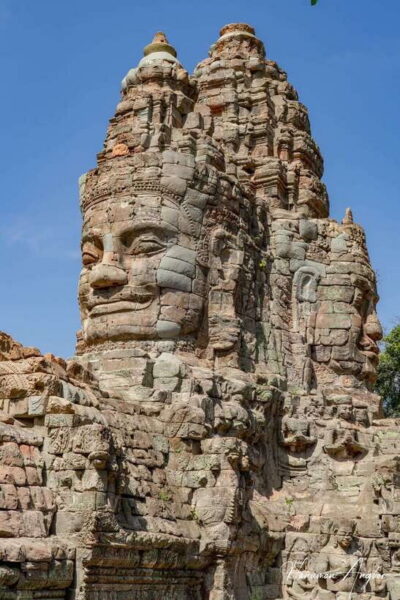
Bayon is famous for the faces—those repeated serene expressions carved into stone. If you go in without context, you can still enjoy it visually. But with guidance, you tend to understand how to read the composition: how the faces frame spaces, how the layout feels from different angles, and what the temple’s symbolism might mean in the bigger Angkor story.
This stop is short on paper, but it can feel long in the best way if your guide helps you slow down. Think of Bayon as the moment the tour shifts from awe to understanding.
Also, with Bayon and the surrounding Angkor Thom area later, you’ll start to see patterns. The faces make you pay attention to symmetry and repetition, which can make the next stops more meaningful.
Angkor Thom and the South Gate (Tonle Oum): the city behind the temples
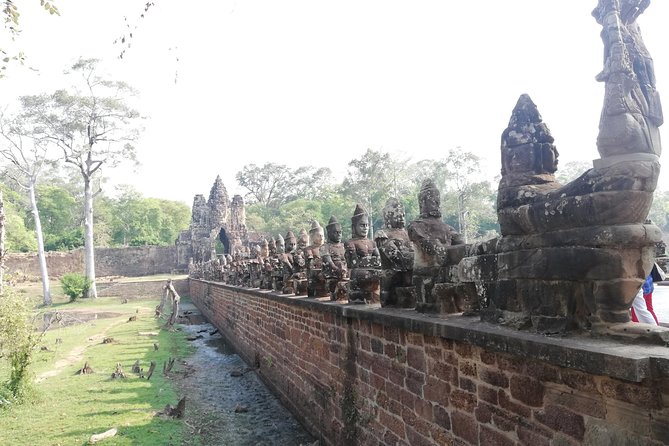
After Bayon, you head to Angkor Thom South Gate. This portion is only about 30 minutes, but it’s the kind of time that helps your brain organize what you’ve seen.
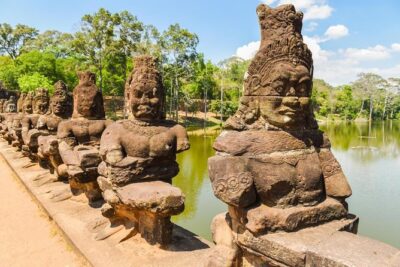
Angkor Thom is described as a walled city, and the South Gate is called Tonle Oum. The information you’re given includes the idea that the city has five gates: south gate, ghost gate (or gate of the dead), victory gate, dei chhnang gate (or north gate), and killing gate. It’s also noted that each side is about 3 kilometres.
That matters because it turns your viewpoint from I’m looking at one entrance into a clearer sense of urban design. When you understand it as a city layout, the temples stop feeling random and start feeling like parts of one plan.
Because this is a compact stop, the best use of your time is to ask your guide what to notice. For example: where the gate positions you in relation to Bayon, what you should expect next around the area, and why different gates get different names.
Phnom Bakheng for sunset: the finish that needs planning
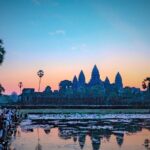
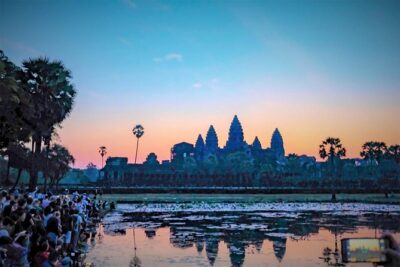
The last major stop is Phnom Bakheng Temple for sunset. Your time there is about 1 hour, and the mountain is located about 1.5 kilometres northwest of Angkor Wat.
This temple is described as a Hindu temple mountain dedicated to Shiva, built in the 9th century by King Yasovarman I. That’s a great detail to keep in mind when the sky starts changing color. You’re not ending with a generic view. You’re ending with a specific sacred site that has a long timeline behind it.
In many Angkor experiences, the sunset portion can either feel magical or feel chaotic, depending on logistics and crowd control. The good news here is that sunset is built into the itinerary as a planned final act, not a last-minute add-on.
Quick practical move: wear your comfiest shoes. You’re likely to walk more on the way up and around the viewpoint. Bring water too; it’s included on the tour as drinking water, but you’ll still want to sip consistently as you wait for the light.
If you’re aiming for photos, give yourself a few minutes to find a spot before the best light hits. And don’t forget that the real win is the combination of the temple silhouette and the explanation of where you are—Shiva’s temple mountain, not just a viewpoint on a hill.
Who this tour suits best (and who should consider a different option)
This private afternoon tour fits best if you want:
- A guide-driven day: you like learning as you walk, especially at Angkor Wat and Bayon
- Comfort and control: pickup, an air-conditioned car, and a plan that doesn’t feel like herding
- A balanced route: big temples plus the tree-covered Ta Prohm and the city context at Angkor Thom
It may be less ideal if you’re the type who wants a totally self-directed visit. The itinerary includes specific stops and time blocks. If you want to linger for hours in only one temple, you’ll need to choose a different style of tour.
Also, budget planners should be aware: temple admission tickets are not included. If you compare this price to options that bundle everything, factor in the entrance cost so you don’t get surprised at the end.
What to bring and how to dress so the day feels easy
Based on the rules given for temple entry, pack clothing accordingly. You must cover knees and shoulders, so plan light layers that still meet the requirement.
For your feet, choose comfortable walking shoes. The tour info specifically recommends comfortable walking shoes, and the practical advice from the guide experience was to wear sneakers.
Bring a small day bag, and keep valuables to a minimum. The tour guidance advises not to bring valuables with you on the tour, which is smart given the number of moving parts and crowded temple areas.
Finally, you’ll have drinking water and cold towels provided. That helps. Still, it’s wise to sip regularly, especially in the later afternoon-to-sunset transition when you may not feel as hot but you’re still walking.
The bottom line: should you book the Afternoon Angkor Wat Private Tour with Sunset?
If you want an Angkor day that combines the top sights with real meaning—and you care about how smoothly it runs—this is a strong pick. The biggest win is the guide-led approach at Angkor Wat and Bayon, plus the logical ending at Phnom Bakheng for sunset. Add in hotel pickup, air-conditioned transport, and cold towels, and it feels like good value rather than a bare-bones sightseeing drive.
I’d think twice only if you hate paying extra temple admissions or you plan to arrive underprepared for dress code. If you can handle a simple clothing rule and you budget for tickets, this tour offers a well-paced route through classic Angkor highlights with enough guidance to make the stones feel like they have a voice.
FAQ
What’s included in the Afternoon Angkor Wat private tour?
The tour includes an air-conditioned car, drinking water and cold towels, hotel pickup and drop-off, and a local English-speaking tour guide.
Are temple tickets included?
No. Temple ticket costs are not included, so you’ll need to pay for admission separately.
How long is the tour?
The duration is listed as about 5 to 7 hours.
Where does the tour start and end?
It includes hotel pickup and drop-off in Siem Reap.
What temples and areas are visited?
You’ll visit Angkor Wat, Ta Prohm, Bayon Temple, Angkor Thom South Gate, and Phnom Bakheng Temple for sunset.
What should I wear to enter the temples?
You must cover your knees and shoulders when entering the temples.
Is this tour truly private?
Yes. It’s a private tour/activity, and only your group participates.
More Temple Circuits Around Siem Reap
- Angkor Wat Sunrise or Sunset Tour with Guide from Siem Reap
★ 5.0 · 12,109 reviews - Siem Reap: Angkor Wat: Small-Group Sunrise or Sunset Tour
★ 5.0 · 9,444 reviews - Siem Reap: Angkor Wat 2-Day Tour with Sunrise and Sunset
★ 4.9 · 4,429 reviews - Siem Reap: Full-Day Angkor Wat Guided Tour with Sunset
★ 4.9 · 3,803 reviews - Angkor Wat Sunrise tour with Small – Group and Guide tours
★ 5.0 · 3,655 reviews
Dawn and Dusk Over Angkor
- Angkor Wat Sunrise or Sunset Tour with Guide from Siem Reap
★ 5.0 · 12,109 reviews - Siem Reap: Angkor Wat: Small-Group Sunrise or Sunset Tour
★ 5.0 · 9,444 reviews - Sunset tour of Kampong Phluk stilts home village on the Tonle Sap
★ 5.0 · 4,865 reviews - Siem Reap: Angkor Wat 2-Day Tour with Sunrise and Sunset
★ 4.9 · 4,429 reviews - Siem Reap: Full-Day Angkor Wat Guided Tour with Sunset
★ 4.9 · 3,803 reviews
Angkor Wat, a Few More Ways In
- Angkor Wat Sunrise or Sunset Tour with Guide from Siem Reap
★ 5.0 · 12,109 reviews - Siem Reap: Angkor Wat: Small-Group Sunrise or Sunset Tour
★ 5.0 · 9,444 reviews - Siem Reap: Angkor Wat 2-Day Tour with Sunrise and Sunset
★ 4.9 · 4,429 reviews - Siem Reap: Full-Day Angkor Wat Guided Tour with Sunset
★ 4.9 · 3,803 reviews - Angkor Wat Sunrise tour with Small – Group and Guide tours
★ 5.0 · 3,655 reviews
Just Added: Fresh Siem Reap Tour Reviews

Angkor Wat Temple Tours, compared.
 ★ 5.0Angkor Wat Sunrise or Sunset Tour with Guide from Siem ReapFrom $1812,109 reviews
 ★ 5.0Angkor Wat: Small-Group Sunrise or Sunset TourFrom $159,444 reviews
 ★ 4.9Angkor Wat 2-Day Tour with Sunrise and SunsetFrom $344,429 reviews
 ★ 4.9Full-Day Angkor Wat Guided Tour with SunsetFrom $153,803 reviews
 ★ 5.0Angkor Wat Sunrise tour with Small – Group and Guide toursFrom $143,655 reviews
 ★ 5.0Angkor Wat Highlights and Sunrise Guided Tour from Siem ReapFrom $233,213 reviews
 ★ 5.0Angkor Wat Sunset Small Group Tour with Lunch IncludedFrom $203,059 reviews
 ★ 5.0Full-Day Angkor Wat Sunrise Private Tour with Guide from Siem ReapFrom $602,920 reviews