
Reviewed · ANGKOR WAT TEMPLE TOURS
Angkor Wat 1Day Tour With Sunrise
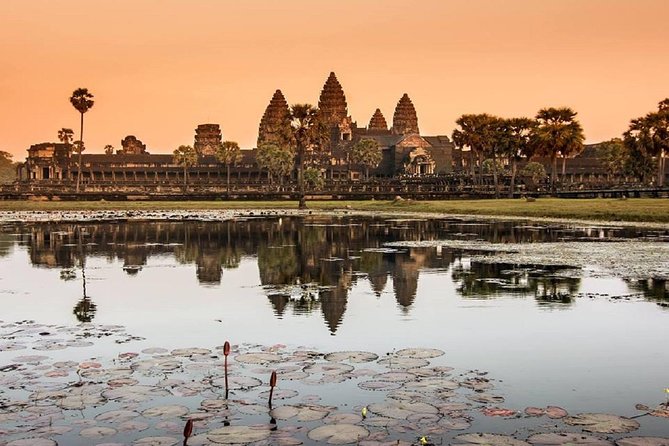
Sunrise at Angkor Wat sounds like a postcard, but it’s real. This 1-day Angkor Wat sunrise tour starts around 4:45am, then sweeps you through the big-name temples of the Angkor Archaeological Park with a dedicated English guide. I especially like the early start (fewer hours of sweaty waiting) and the small comforts like cold water and cold towels on the ride. One thing to plan for: temple tickets and lunch aren’t included, so budget extra for entry fees and food.
You’ll cover the classics, from Angkor Wat at first light to the wider Angkor Thom circuit (South Gate, Bayon, Baphuon, and the royal terraces), then finish with Ta Prohm’s famous tree and stops that feel calmer like Banteay Kdei and Srah Srang. It’s also a private setup for up to 3 people, which means less time wrangling and more time looking.
The meeting point is in Siem Reap with a start time of about 4:45am, so this is not a sleep-in day. You’ll also want to follow the temple dress code rules your tour provides.
In This Review
- Key highlights from this Angkor Wat Sunrise 1-Day Tour
- Sunrise logistics in Siem Reap: a 4:45am start that’s worth it
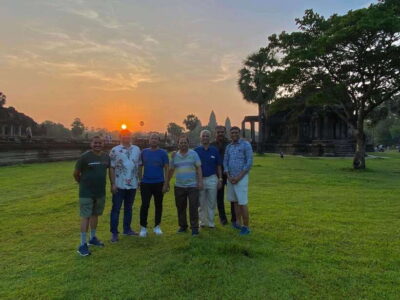
- Angkor Wat at first light: what you should watch for
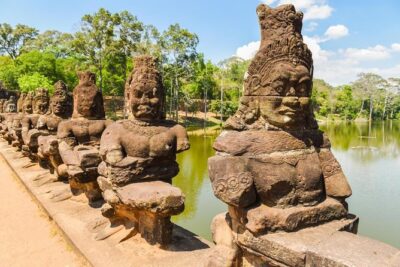
- Angkor Thom’s South Gate: the 3km x 3km entrance and myth details
- Bayon Temple’s 216 smiling faces near the South Gate
- Baphuon and the royal terraces: pyramid tiers, training stages, and carved jaw-droppers
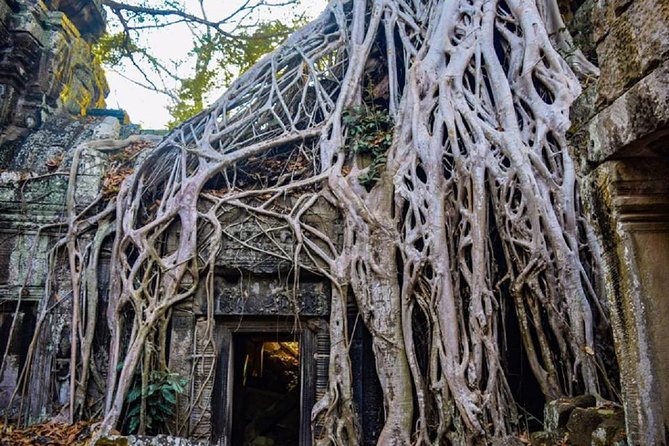
- Ta Prohm: the Tomb Raider temple with a living tree inside the ruins
- Banteay Kdei and Srah Srang: a quieter temple-forest break
- Price and value for a group up to 3 people (plus what you still pay)
- Who should book this Angkor Wat Sunrise day, and who might skip it
- Should you book this Angkor Wat 1Day Tour With Sunrise?
- FAQ
- What time does the Angkor Wat sunrise tour start?
- Where is the meeting point?
- What’s included in the tour price?
- Are temple tickets included?
- Is there lunch included during the tour?
- How many people are in a group for this private tour?
- Do I need to follow a dress code?
- Do they provide a mobile ticket?
- What’s the cancellation policy?
Key highlights from this Angkor Wat Sunrise 1-Day Tour
- Early-morning tuk tuk pickup around 4:45am for sunrise timing
- English guide included, plus practical commentary as you move temple to temple
- Angkor Wat sunrise plus major Angkor sites in one day
- Angkor Thom must-sees: South Gate, Bayon’s 216 faces, and Baphuon
- Photo-friendly stops like Ta Prohm and the tree-covered temple ruins
- Cold water and cold towels included to make the long morning easier
Other ways to walk the great temple
- Angkor Wat Sunrise or Sunset Tour with Guide from Siem Reap★ 5.0 · 12,109 reviews
- Siem Reap: Angkor Wat: Small-Group Sunrise or Sunset Tour★ 5.0 · 9,444 reviews
- Siem Reap: Angkor Wat 2-Day Tour with Sunrise and Sunset★ 4.9 · 4,429 reviews
- Siem Reap: Full-Day Angkor Wat Guided Tour with Sunset★ 4.9 · 3,803 reviews
Sunrise logistics in Siem Reap: a 4:45am start that’s worth it
This tour kicks off early—around 4:30–5:00am at Angkor Wat arrival, with the listed start time at 4:45am in Siem Reap. The timing matters because sunrise is the entire point here. When you’re already up, you might as well be moving toward the temples instead of trying to scramble for transport after dark.
I like that the basic comfort pieces are handled. The tour includes a tuk tuk driver, plus cold water and cold towels, which is a lifesaver when you’re walking stone paths in early heat. You’re also traveling as a private tour for your group only, capped at up to 3 people, so the schedule can stay tight without waiting around for other pickups.
One practical note: sunrise days feel fast. You’ll be transferring, waiting, walking, and switching temple zones throughout the morning, so wear comfortable shoes and expect a long day of legs. If you’re the type who gets grumpy from early starts, this one may be harder than the temples themselves.
Angkor Wat at first light: what you should watch for
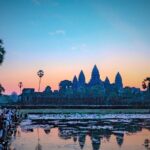
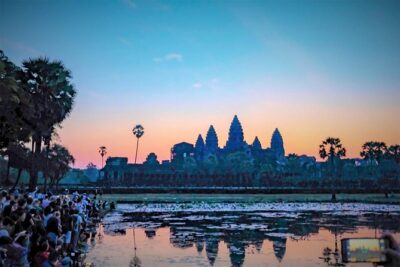
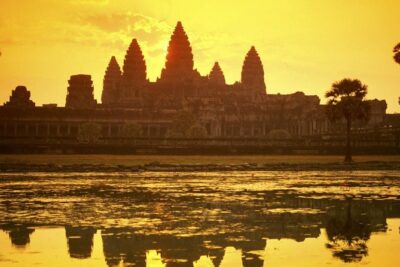
Angkor Wat is the headline stop, and the tour is built around watching sunrise there. You’ll drive in early and then focus on the view as the light shifts across the mega-religious structure. Sunrise at Angkor is special because it changes how the stone looks—darker tones early, then softer contrast as the sky brightens.
As you explore, the best move is to slow down on the main areas rather than sprinting for photos. The guide will help you connect what you’re seeing with what the site represents. And because this is a timed sunrise experience, you’re not forced to guess when the light will be best.
After sunrise, the rest of Angkor Wat sightseeing becomes more about details: architecture, symmetry, and that feeling that you’re inside a huge sacred geometry. This is where having an English guide helps you spot what you might otherwise miss.
Angkor Thom’s South Gate: the 3km x 3km entrance and myth details
Next comes Angkor Thom, starting with the South Gate, described as a 3km by 3km gate built to protect the capital of Angkor Thom. This is a massive “arrive and orient yourself” moment. The scale is hard to grasp until you’re standing near it, and it sets the tone for the rest of the circuit.
What I really like here is the story your guide can connect to the artwork. At the front of the causeway, there are two rows of devas and asuras tied to the Hindu Myth of the Churning of the Sea of Milk. It’s the kind of detail that makes the stone feel less like background decoration and more like a lesson you can walk through.
Practical tip: take a minute at the gate for a wide view first, then circle to look at the carved elements. That way your photos capture both the scale and the meaning, instead of just one or the other.
Bayon Temple’s 216 smiling faces near the South Gate
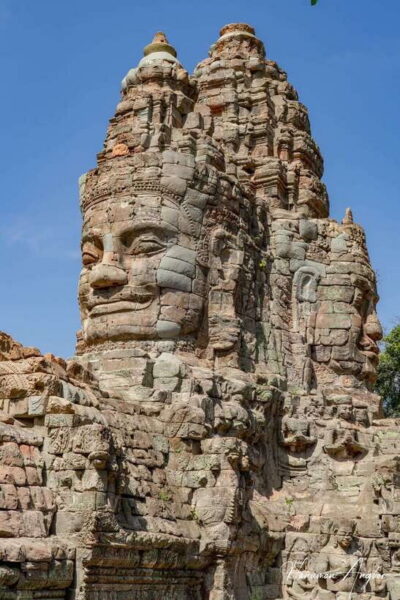
From the South Gate, you move about 1km to Bayon Temple, located at the heart of Angkor Thom and associated with King Jayavarman VII. Bayon is famous for its 54 towers decorated with 216 smiling faces of Avalokiteshvara. People call it alien-looking, and honestly that’s an accurate vibe once you’re close enough to see the repetition.
This is one of the stops where a guide’s commentary changes the whole experience. Instead of just staring up, you’ll understand what you’re seeing and why the design is repeated the way it is. Then you can choose how long you want to spend—more time for photos and facial angles, or more time absorbing how the towers structure the space.
Practical consideration: this area is busiest in the day than at sunrise, so if you want fewer distractions, you may need to time your looking and keep moving between viewpoints. The tour schedule is designed to keep you moving, but you can still choose where to pause longer.
Chasing the light? More dawn and dusk runs
Baphuon and the royal terraces: pyramid tiers, training stages, and carved jaw-droppers
Baphuon Temple is next, and it’s described as the second biggest temple in Angkor Thom. It was built in the mid-11th century as a state temple of King Udayadityavarman II for the Hindu God Shiva. You’ll see it as a pyramid-shaped temple with three tiers, which makes it feel different from the more tower-heavy look of Bayon.
If Bayon is the face temple, Baphuon is the structure temple. Look for how the tiers step up and how the lines pull your eye upward. Even if you’re not a hardcore architecture person, the shape does the work.
Then you get two very close stops tied to the royal palace zone: the Terrace of Elephants and the Terrace of the Leper King. The Terrace of Elephants is a 350m-long stretch that served as a viewing stage for public ceremonies and as a base for the king to watch military training. That length is worth appreciating slowly, because it explains why the terrace feels designed for gatherings.
Right next to it is the Terrace of the Leper King, which the tour describes as filled with stunning carvings. Expect to pause here—carvings are one of those things where the more you look, the more you see. Your guide can help you make sense of what you’re looking at so it doesn’t blur into random decoration.
Ta Prohm: the Tomb Raider temple with a living tree inside the ruins
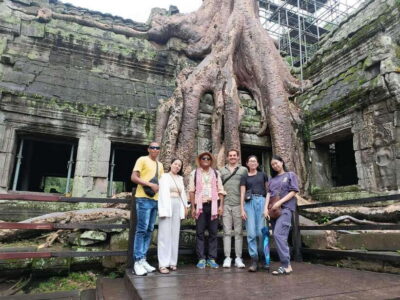
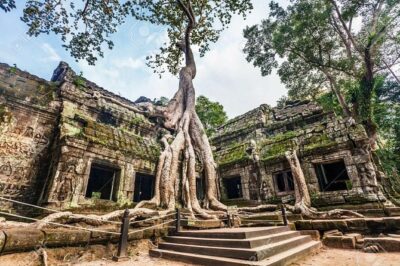
Ta Prohm is a standout because it’s both ruined and alive. The tour describes it as once used as a Buddhist monastery and a university, and it’s called the Tomb Raider temple since the movie was filmed here. That pop-culture link is easy to understand, but the real draw is the feel of the place.
The most famous detail: a large tree growing on the temple. That’s why Ta Prohm is a photo magnet. But if you can, try not to treat it like a single photo spot. Step back and look at how the roots and stone interact. Then walk closer and find the carvings and transitions where the structure holds together around the tree.
Banteay Kdei and Srah Srang: a quieter temple-forest break
After the high-impact royal and iconic stops, the tour shifts into a moodier zone with Banteay Kdei and Srah Srang.
Banteay Kdei is described as recently restored but still open to tourists. The surrounding forest makes it feel mysterious and quiet, which is a nice break from the busier, more famous complexes. If you like moments where you can hear your own footsteps, this is where the day slows down a bit.
Then you reach Srah Srang, described as the baray or reservoir of Banteay Kdei. The views are called stunning, especially at sunrise and sunset. Even if your schedule places you there at some other time of day, the water setting usually gives you a calmer visual pause between temple zones.
Practical tip: bring patience here. Forest-temple areas reward slow wandering. If you keep a quick pace the whole time, you might miss the effect the trees and reservoir have on the mood.
Price and value for a group up to 3 people (plus what you still pay)
The listed price is $130.39 per group (up to 3 people) for about 1 day. For a private tour, that can be a good deal—especially because you’re not paying per person. If you’re a couple or small family, your cost per traveler drops fast compared with larger group formats.
What’s included is practical and directly useful for a sunrise day:
- Tuk tuk driver
- English tour guide
- Cold water
- Cold towels
What isn’t included matters for budgeting:
- Temples tickets
- Lunch near temple
- Personal expenses
So the real value equation is: the tour handles transport + guide + comfort items, while you handle the temple entry fees and meals. If you’re the kind of traveler who wants to pay everything in one go, you’ll need to plan for those add-ons. If you’re okay budgeting for entry tickets and lunch separately, this structure keeps the package straightforward.
Who should book this Angkor Wat Sunrise day, and who might skip it
This is a great fit if you:
- want Angkor Wat at sunrise as a priority
- like a tight “highlights tour” instead of a slow multi-day plan
- appreciate an English guide that can point out what you’re looking at
- want a private setup for up to 3 people with cooling support (cold water and towels)
It might be less ideal if you hate early mornings. This starts around 4:45am in Siem Reap, and the day is structured around getting to major sites quickly. Also, because temple tickets and lunch aren’t included, you’ll want to accept that you’ll still be spending money during the day.
Should you book this Angkor Wat 1Day Tour With Sunrise?
I’d book it if sunrise is your thing and you want a single-day plan that covers both Angkor Wat and the major Angkor Thom highlights, plus Ta Prohm and a calmer forest-temple stop. The included tuk tuk + English guide + cold water/towels is a smart combo for a long early day.
I’d think twice if you’re trying to minimize extra payments or you strongly prefer to control meals and entry tickets yourself from start to finish. In most cases, though, the tour’s value is in how it stitches the sites together efficiently—without leaving you to organize everything at 4:45am.
FAQ
What time does the Angkor Wat sunrise tour start?
The start time is listed as 4:45am in Siem Reap, Cambodia.
Where is the meeting point?
The meeting point is Siem Reap, Siem Reap Province (Siem Reap city area is listed as the start).
What’s included in the tour price?
Included are a tuk tuk driver, an English tour guide, cold water, and cold towels.
Are temple tickets included?
No. Temples tickets are not included.
Is there lunch included during the tour?
No. Lunch near temple is not included.
How many people are in a group for this private tour?
It’s private, and the tour price is per group up to 3 people.
Do I need to follow a dress code?
Yes. You need to follow the dress code rules when visiting the temples.
Do they provide a mobile ticket?
Yes. The tour includes a mobile ticket.
What’s the cancellation policy?
There is free cancellation. You can cancel up to 24 hours in advance for a full refund; cancellations inside 24 hours aren’t refunded.
More Temple Circuits Around Siem Reap
- Angkor Wat Sunrise or Sunset Tour with Guide from Siem Reap
★ 5.0 · 12,109 reviews - Siem Reap: Angkor Wat: Small-Group Sunrise or Sunset Tour
★ 5.0 · 9,444 reviews - Siem Reap: Angkor Wat 2-Day Tour with Sunrise and Sunset
★ 4.9 · 4,429 reviews - Siem Reap: Full-Day Angkor Wat Guided Tour with Sunset
★ 4.9 · 3,803 reviews - Angkor Wat Sunrise tour with Small – Group and Guide tours
★ 5.0 · 3,655 reviews
Dawn and Dusk Over Angkor
- Angkor Wat Sunrise or Sunset Tour with Guide from Siem Reap
★ 5.0 · 12,109 reviews - Siem Reap: Angkor Wat: Small-Group Sunrise or Sunset Tour
★ 5.0 · 9,444 reviews - Sunset tour of Kampong Phluk stilts home village on the Tonle Sap
★ 5.0 · 4,865 reviews - Siem Reap: Angkor Wat 2-Day Tour with Sunrise and Sunset
★ 4.9 · 4,429 reviews - Siem Reap: Full-Day Angkor Wat Guided Tour with Sunset
★ 4.9 · 3,803 reviews
Angkor Wat, a Few More Ways In
- Angkor Wat Sunrise or Sunset Tour with Guide from Siem Reap
★ 5.0 · 12,109 reviews - Siem Reap: Angkor Wat: Small-Group Sunrise or Sunset Tour
★ 5.0 · 9,444 reviews - Siem Reap: Angkor Wat 2-Day Tour with Sunrise and Sunset
★ 4.9 · 4,429 reviews - Siem Reap: Full-Day Angkor Wat Guided Tour with Sunset
★ 4.9 · 3,803 reviews - Angkor Wat Sunrise tour with Small – Group and Guide tours
★ 5.0 · 3,655 reviews
Just Added: Fresh Siem Reap Tour Reviews

Angkor Wat Temple Tours, compared.
 ★ 5.0Angkor Wat Sunrise or Sunset Tour with Guide from Siem ReapFrom $1812,109 reviews
 ★ 5.0Angkor Wat: Small-Group Sunrise or Sunset TourFrom $159,444 reviews
 ★ 4.9Angkor Wat 2-Day Tour with Sunrise and SunsetFrom $344,429 reviews
 ★ 4.9Full-Day Angkor Wat Guided Tour with SunsetFrom $153,803 reviews
 ★ 5.0Angkor Wat Sunrise tour with Small – Group and Guide toursFrom $143,655 reviews
 ★ 5.0Angkor Wat Highlights and Sunrise Guided Tour from Siem ReapFrom $233,213 reviews
 ★ 5.0Angkor Wat Sunset Small Group Tour with Lunch IncludedFrom $203,059 reviews
 ★ 5.0Full-Day Angkor Wat Sunrise Private Tour with Guide from Siem ReapFrom $602,920 reviews