
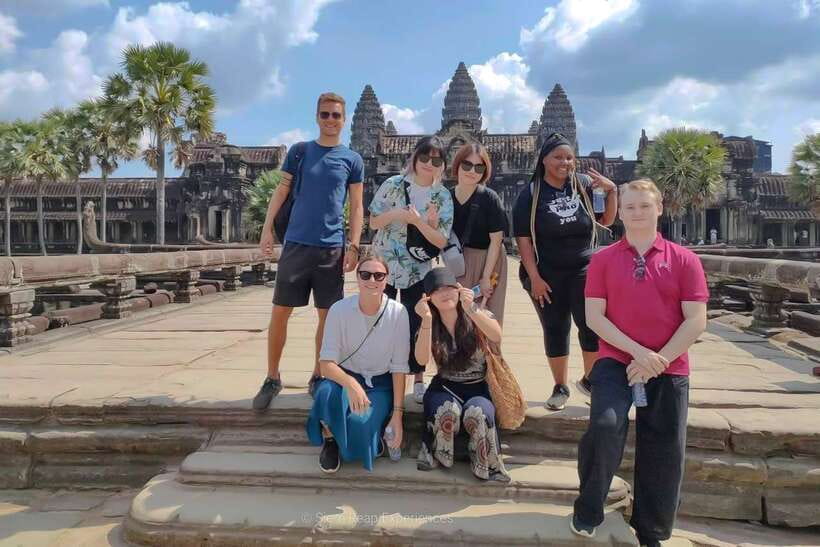
Reviewed · ANGKOR WAT TEMPLE TOURS
Angkor Wat 2-Day complex Sun rise & Sun set with Guided Tour
Some mornings feel like time travel. This 2-day Angkor Wat guided set-up pairs a sunrise trek with a sunset hilltop finish, plus built-in temple context so you do not just see stone—you understand why it was made. I like that the tour visits major highlights like Angkor Wat and Bayon, then fills in with the more peaceful outer-temple stops so you do not feel like you only rushed the headline scenes.
I also like the practical side: hotel pickup/drop-off in an air-conditioned minibus, a limit of about 13 people, and a guide who keeps things moving while still making room for photos. One drawback to plan around: the Day 1 sunrise start is very early, and you may spend time waiting in the dark before the light arrives, plus you will be walking on uneven surfaces before sunrise.
In This Review
- Key highlights worth planning around
- Sunrise logistics at Angkor Wat: when the stone finally wakes up
- Day 1 temples: Angkor Wat, Angkor Thom, and the quieter stops
- Angkor Wat: the main stage at first light
- Angkor Thom and Bayon: faces in the jungle light
- Banteay Kdei: a Buddhist pyramid temple used by monks
- Ta Keo: a 10th-century mountain temple feel
- Day 2 on the grand loop: Preah Khan to Phnom Bakheang
- Preah Khan: the biggest stop in your loop
- Neak Pean Island: water as part of bathing and ritual space
- Ta Som: the East Gate and the tree takeover
- East Mebon: an island temple that is now a dry reservoir
- Pre-Rup: a full-moon meditation structure
- Phnom Bakheang: 33 towers for sunset
- What you really pay for: $30 value plus the temple pass you must budget
- Guides and group size: why the pacing feels right
- Comfort and rules: what to bring so Day 1 is not miserable
- Should you book this Angkor Wat sunrise and sunset tour?
- FAQ
- What is the duration of this experience?
- Where does the tour start from?
- When is pickup on Day 1?
- When is pickup on Day 2?
- What time does the tour end?
- How many temples are visited?
- Is the Angkor Archaeological Park ticket included?
- Does the tour include a guide and what language?
- What should I wear and avoid?
- Is it wheelchair accessible, and is a passport needed?
Key highlights worth planning around
- Two separate loops, two different moods: Day 1 focuses on the morning run around Angkor Wat and Angkor Thom; Day 2 turns toward the outer circuit for sunset.
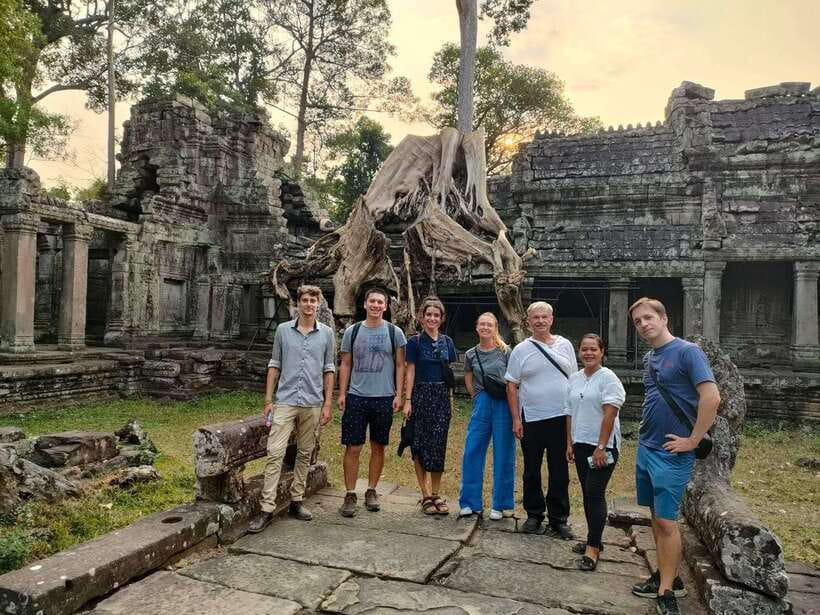
- Real guidance, not just a walk-and-point: guides such as Sam Vone, Sayon, John, Sam, Nick, Pip, and others are repeatedly praised for explanations and photo help.
- Cool transport in heat: the air-conditioned minibus is a big part of the comfort on both long days.
- Sunrise at Angkor Wat, sunset at Phnom Bakheang: you get the classic light show in the morning, then a hilltop wind-down with 33 towers.
- 11 temples visited with thoughtful pacing: you see the big-name structures plus smaller stops like Banteay Kdei and Ta Som.
Other ways to walk the great temple
- Angkor Wat Sunrise or Sunset Tour with Guide from Siem Reap★ 5.0 · 12,109 reviews
- Siem Reap: Angkor Wat: Small-Group Sunrise or Sunset Tour★ 5.0 · 9,444 reviews
- Siem Reap: Angkor Wat 2-Day Tour with Sunrise and Sunset★ 4.9 · 4,429 reviews
- Siem Reap: Full-Day Angkor Wat Guided Tour with Sunset★ 4.9 · 3,803 reviews
Sunrise logistics at Angkor Wat: when the stone finally wakes up
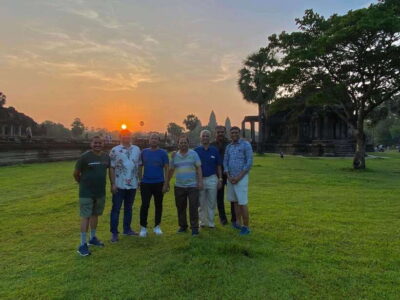
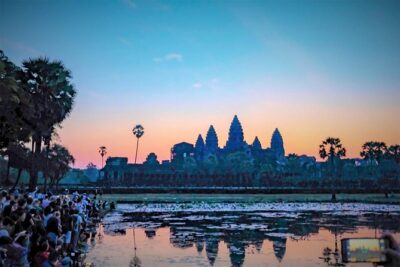
Your Day 1 starts with pickup from your Siem Reap hotel between 4:00am and 4:20am. The tour runs as a sunrise small tour (scheduled 4:30am to about 1:00pm), which is a lot earlier than most people think they want to be. But here is the trade: fewer crowds and cooler air. Even if it feels intense at first, sunrise is when Angkor changes from an impressive site into a living story.
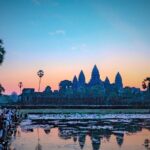
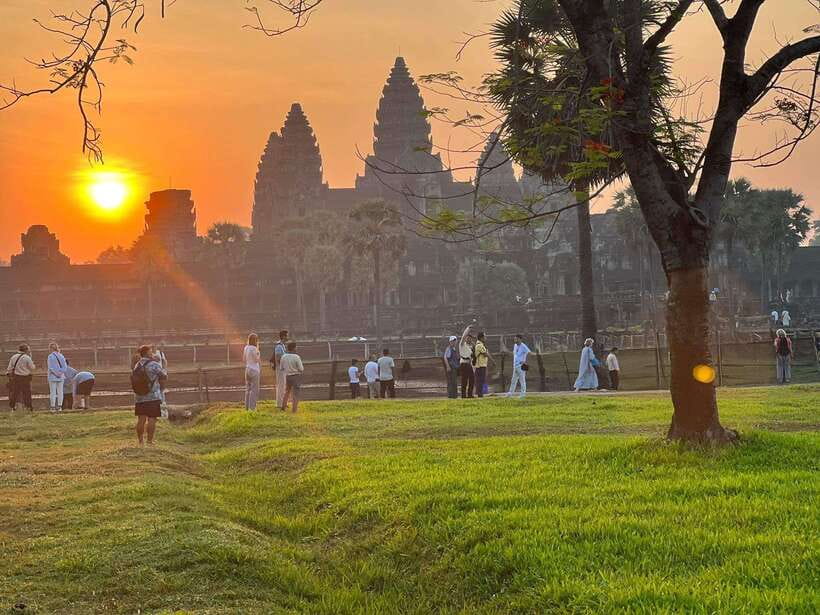
Angkor Wat at dawn hits differently because the light moves across the carved surfaces instead of flattening everything. The guide is there to help you connect what you are seeing to the Khmer world that built it—layout, symbolism, and why certain towers and galleries look the way they do. And because your group is small, you usually get a bit more room to slow down, frame photos, and ask questions.
A practical note: one of the most common “consider” points is waiting. With pickup that early, you can end up standing around in the dark before the sun breaks the horizon. It is not a deal-breaker, but it is something to mentally budget for.
Day 1 temples: Angkor Wat, Angkor Thom, and the quieter stops
After transfer, you will focus on Angkor Wat first, then move into Angkor Thom and surrounding temples while the morning stays manageable.
Angkor Wat: the main stage at first light
This is the big one: the main temple complex that anchors the whole Angkor Archaeological Park experience. The sunrise moment is the obvious draw, but what makes it worth a guided approach is the way you learn to read the temple as a design, not just a backdrop for photos. You get time to look, take pictures, and catch the atmosphere as it shifts from pre-dawn to full brightness.
Angkor Thom and Bayon: faces in the jungle light
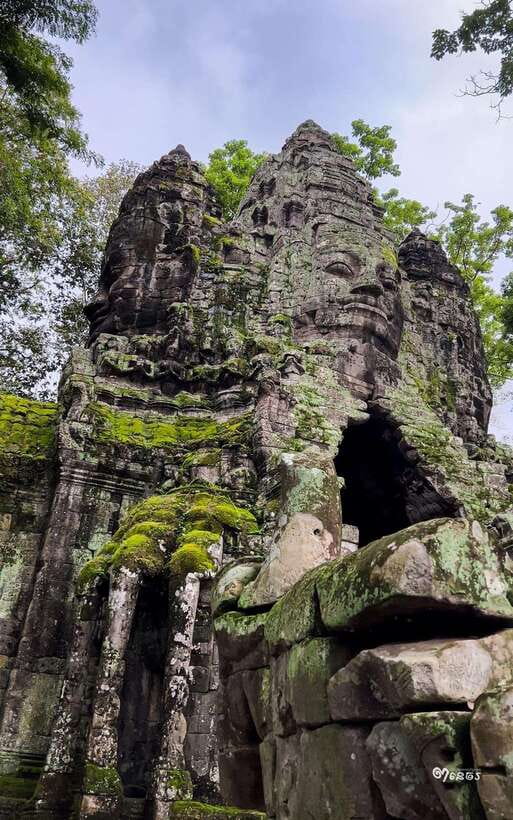
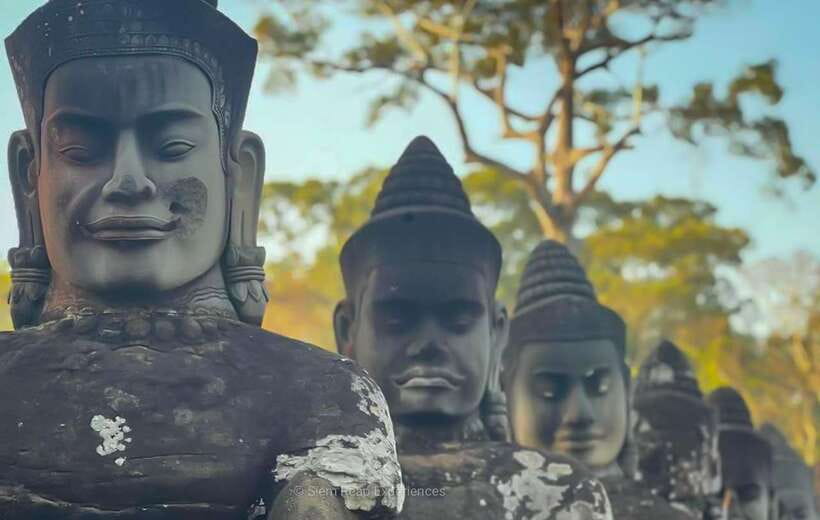
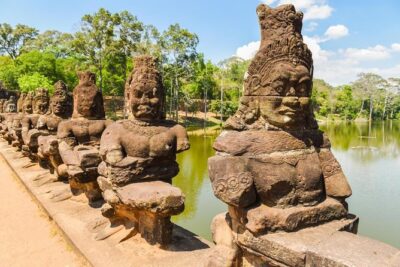
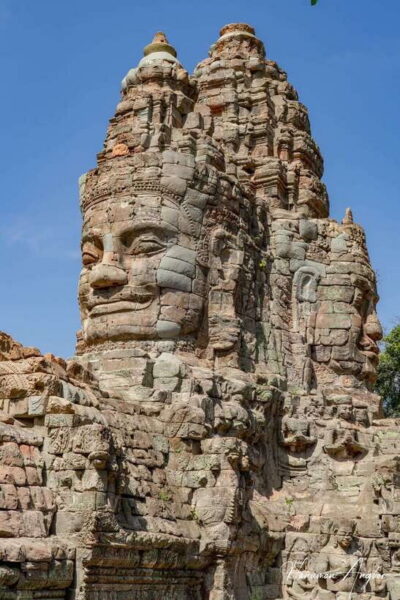
Next comes Angkor Thom, a well-known jungle-leaning temple zone, famous for both its past and its strong movie-like visual presence. Bayon is the standout here, with the large smiling faces. At this hour, the faces can look almost calm and mythic instead of crowded and chaotic.
The biggest value of having a guide is that you do not only take in the visuals—you understand what those faces and repeated stone motifs are meant to communicate. You also benefit from a guide who knows where to position the group for good views and less traffic.
Chasing the light? More dawn and dusk runs
Banteay Kdei: a Buddhist pyramid temple used by monks
You will also visit Banteay Kdei, described as a pyramid temple used by monks. This stop is one of the “why this tour works” moments for me: it slows the pace and adds spiritual texture beyond the most famous monuments.
Ta Keo: a 10th-century mountain temple feel
Finally on Day 1 is Ta Keo, a mountain temple built in the 10th century. Mountain-temple architecture is all about elevation and progression—stone steps, clear sightlines, and that sense of moving upward into a sacred space. Even if you are not a hardcore architecture fan, it helps to have someone explain the design logic so the stones feel intentional rather than random.
You wrap up Day 1 with a return to your accommodation around early afternoon (the overall tour end timing notes arrival back between 1:00pm and 1:30pm on Day 1).
Day 2 on the grand loop: Preah Khan to Phnom Bakheang
Day 2 starts later: pickup at your hotel lobby between 10:00am and 10:20am, and the tour runs until around 7:00pm with return to your accommodation. This day is the “big tour” loop, meaning you cover more ground and hit the temples that make Angkor feel like a whole world, not a single highlight.
Preah Khan: the biggest stop in your loop
You begin with Preah Khan, described as the biggest temple on this loop. The tour context matters here: it is associated with King Bayon and was built for his father, so the site has a personal dynastic meaning rather than being just an old structure. You also pass through temple areas where water and ritual space show up in how the ruins were planned.
Neak Pean Island: water as part of bathing and ritual space
Neak Pean is included through its temple area and its relationship to water. The water around Neak Pean Island was used for bathing in the Angkor period. That detail changes your perspective while you walk the grounds. Instead of seeing “a pool” or “a marshy spot,” you start thinking about the body, purification, and how water functioned in Khmer religious life.
Ta Som: the East Gate and the tree takeover
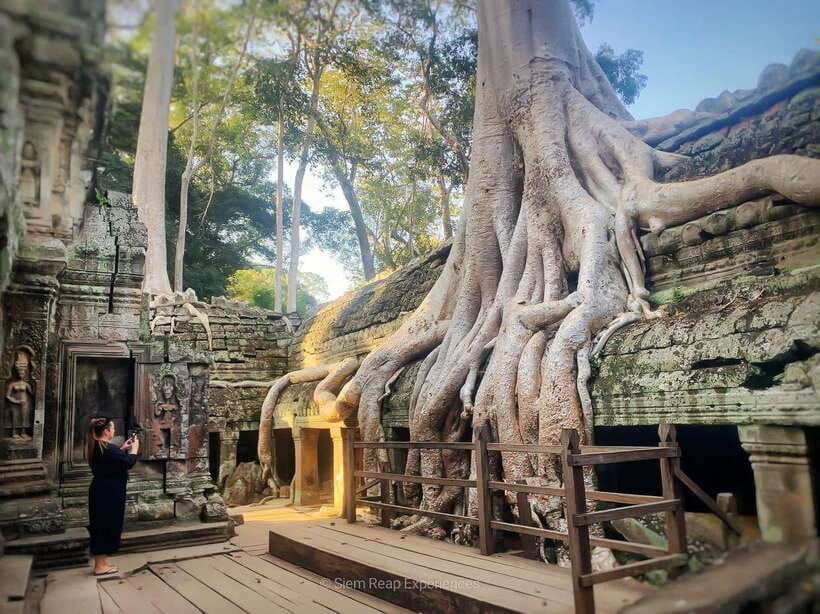
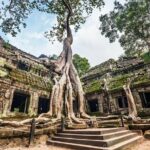
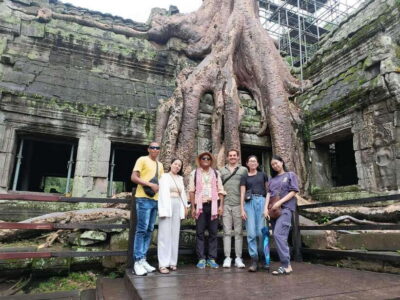
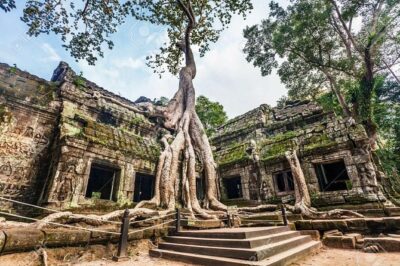
Ta Som comes next, known for a distinctive tree grown over the East Gate. It is one of those sights where you feel nature writing its own captions over human design. A guide can help you find angles that show both the gate structure and the tree’s scale without you fighting the crowd.
East Mebon: an island temple that is now a dry reservoir
Then you move to East Mebon, once an artificial island but now sitting in a dry reservoir. This is a great reminder that Angkor is a living landscape with shifting water systems. It is also a good stop to slow down and look closely at how the ruins sit in the current terrain.
Pre-Rup: a full-moon meditation structure
Pre-Rup is next, described as a stone structure used by Hindus to meditate on the full moon. That gives the stop a specific emotional tone. You are not just walking to another viewpoint—you are going to a place tied to lunar timing and religious practice.
Phnom Bakheang: 33 towers for sunset
Your Day 2 finale is Phnom Bakheang for sunset. It is a hilltop temple with 33 towers representing the heavens. This is where the day clicks into place: after hours of ruins, carvings, gates, and courtyards, you get a horizon view that frames the temple as a symbol of the cosmos.
If you care about photos, sunset is usually when guides are most helpful. The best guidance here is not only when to shoot, but also where to stand and how to avoid the worst congestion while still getting the light.
You return to your hotel around 7:00pm.
What you really pay for: $30 value plus the temple pass you must budget
The listed price is $30 per person for the 2-day guided experience. The value is not just the guide—it is the combination of:
- hotel pickup and drop-off in an air-conditioned minibus
- a professional English-speaking guide
- two separate day schedules (small sunrise day and big day loop)
- visits to 11 temples
- chilled bottled water and a refreshing towel
The temple pass is not included. You must buy the Angkor Archaeological Park ticket separately (the tour notes 1-day at 37 USD, 2–3 days at 62 USD). If you choose this tour, you are effectively buying two days of guided temple access, but you still need that entry ticket.
My practical suggestion: buy your temple pass online through Angkor Enterprise ahead of time (the tour recommends buying online 1 day before your activity or in advance). That reduces last-minute stress and keeps your Day 1 morning focused on the actual temples.
Also plan for meals. Breakfast or lunch may be available at local restaurants near the temples, but food and soft drinks are not included.
Guides and group size: why the pacing feels right
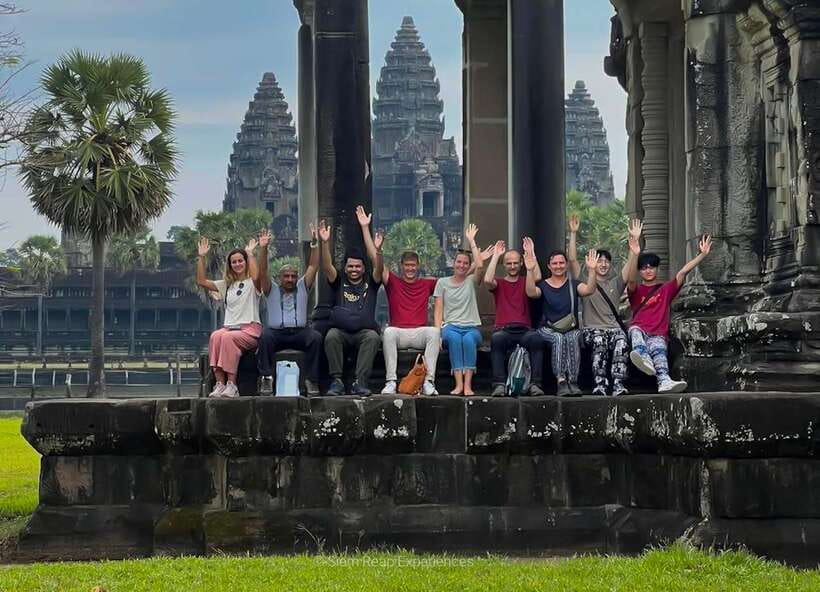
This is a small group tour limited to 13 participants, and that matters more than people think. With a larger crowd, sunrise becomes a scramble. With a small group, your guide can keep people together without turning it into a race.
On the guide side, you will often get standout English explanations and solid photo assistance. In the guide names tied to this experience, you will see names like Sam Vone, Sayon, John, Sam, Nick, Pip, Sok, Rith, and Heang praised for keeping the day organized, answering questions, and helping with pictures. Some guides also bring humor and cultural context, which makes the carved stories easier to remember later.
The pacing is another strength: the schedule gives you time to explore on your own in spots, then re-groups for interpretation. That balance tends to create less fatigue than tours that feel like a continuous lecture with no breathing room.
Comfort and rules: what to bring so Day 1 is not miserable
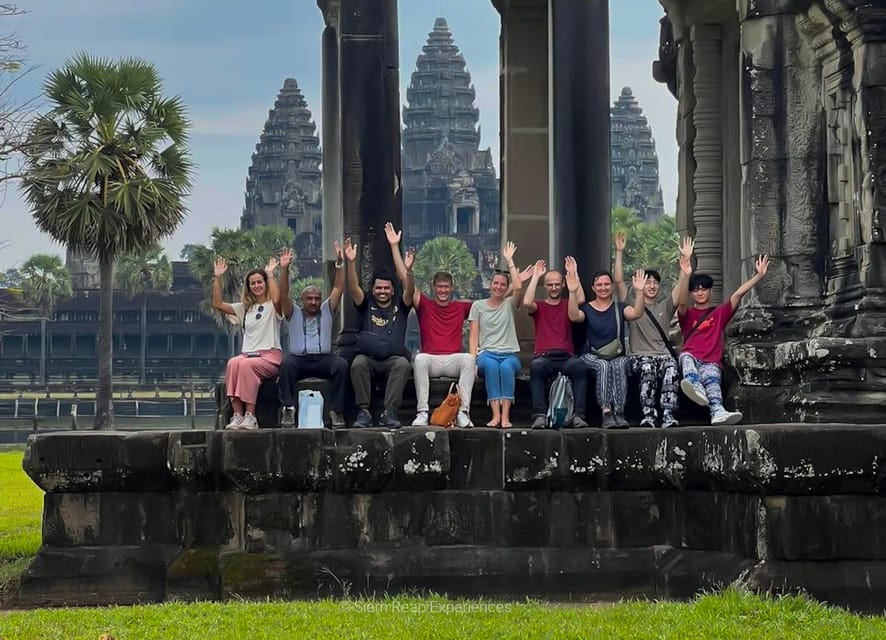
Angkor is hot, and you are outside for long stretches. This tour helps with the basics: chilled bottled water, refreshing towels, and air-conditioned transport between temple clusters.
You should bring:
- camera
- long pants
- cash
- hat
- sunscreen
- sarong
Dress code rules matter:
- No short skirts
- No sleeveless shirts
- Shorts are not allowed
- You should cover knees and shoulders at temples
I consider this more than just compliance. If you arrive dressed wrong, you waste energy dealing with it mid-tour. If you come prepared, the day flows.
Also bring some practical patience for bathroom breaks. The tour notes bathroom breaks are part of the day’s flow, and many stops in Angkor are not glamorous, but they are workable when the schedule is organized.
Should you book this Angkor Wat sunrise and sunset tour?
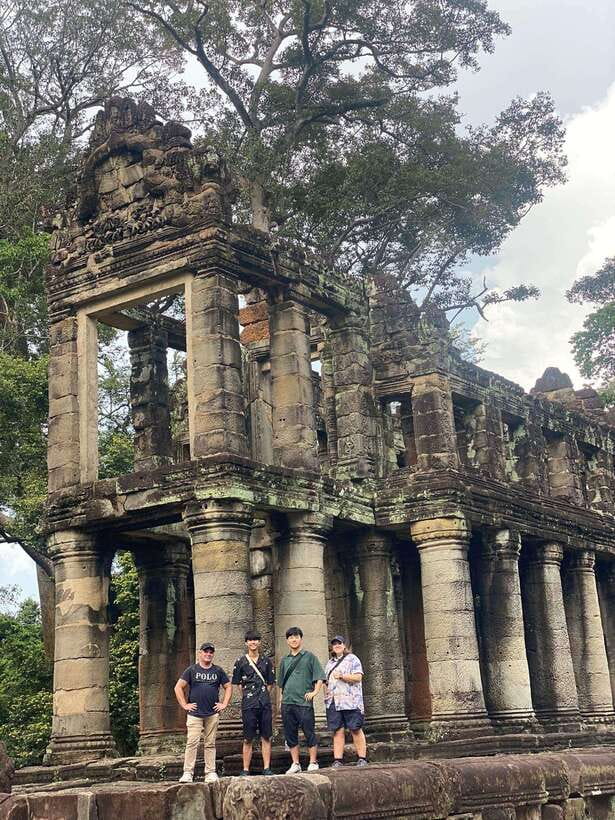
Yes, I would book it if you want a guided overview across both the classic sites and the broader loop, without having to plan each temple route yourself. The combination of sunrise at Angkor Wat and sunset at Phnom Bakheang, plus visits to 11 temples, is exactly the kind of structure that helps you see more while still understanding what you are looking at.
I would hesitate only if you hate very early starts or you are sensitive to standing around in the dark before sunrise. Also note that meals are not included, so you are dependent on restaurant stops that can vary.
If you do book: buy your temple pass in advance, pack long pants and a hat, and treat Day 1 as a marathon of lights, stone, and patience. You will end both days with a clearer mental map of the Khmer world—and that is the real souvenir.
FAQ
What is the duration of this experience?
It runs over 2 days.
Where does the tour start from?
Pickup is from your hotel in Siem Reap (hotel lobby meeting point).
When is pickup on Day 1?
Pickup on Day 1 is scheduled between 4:00am and 4:20am.
When is pickup on Day 2?
Pickup on Day 2 is scheduled between 10:00am and 10:20am.
What time does the tour end?
Day 1 returns to your hotel between 1:00pm and 1:30pm. Day 2 returns to your hotel around 7:00pm (arrival timing is listed as between 1:00pm–1:30pm Day 1 and 7pm on Day 2).
How many temples are visited?
The tour includes visits to 11 temples.
Is the Angkor Archaeological Park ticket included?
No. The temple ticket is not included. The tour lists ticket prices for 1 day and 2–3 days.
Does the tour include a guide and what language?
Yes. There is a professional English-speaking guide.
What should I wear and avoid?
You should cover your knees and shoulders. The tour lists no short skirts, no sleeveless shirts, and no shorts.
Is it wheelchair accessible, and is a passport needed?
It is not suitable for wheelchair users, and the tour data says it does not require a passport.
More Temple Circuits Around Siem Reap
- Angkor Wat Sunrise or Sunset Tour with Guide from Siem Reap
★ 5.0 · 12,109 reviews - Siem Reap: Angkor Wat: Small-Group Sunrise or Sunset Tour
★ 5.0 · 9,444 reviews - Siem Reap: Angkor Wat 2-Day Tour with Sunrise and Sunset
★ 4.9 · 4,429 reviews - Siem Reap: Full-Day Angkor Wat Guided Tour with Sunset
★ 4.9 · 3,803 reviews - Angkor Wat Sunrise tour with Small – Group and Guide tours
★ 5.0 · 3,655 reviews
Dawn and Dusk Over Angkor
- Angkor Wat Sunrise or Sunset Tour with Guide from Siem Reap
★ 5.0 · 12,109 reviews - Siem Reap: Angkor Wat: Small-Group Sunrise or Sunset Tour
★ 5.0 · 9,444 reviews - Sunset tour of Kampong Phluk stilts home village on the Tonle Sap
★ 5.0 · 4,865 reviews - Siem Reap: Angkor Wat 2-Day Tour with Sunrise and Sunset
★ 4.9 · 4,429 reviews - Siem Reap: Full-Day Angkor Wat Guided Tour with Sunset
★ 4.9 · 3,803 reviews
Angkor Wat, a Few More Ways In
- Angkor Wat Sunrise or Sunset Tour with Guide from Siem Reap
★ 5.0 · 12,109 reviews - Siem Reap: Angkor Wat: Small-Group Sunrise or Sunset Tour
★ 5.0 · 9,444 reviews - Siem Reap: Angkor Wat 2-Day Tour with Sunrise and Sunset
★ 4.9 · 4,429 reviews - Siem Reap: Full-Day Angkor Wat Guided Tour with Sunset
★ 4.9 · 3,803 reviews - Angkor Wat Sunrise tour with Small – Group and Guide tours
★ 5.0 · 3,655 reviews
Just Added: Fresh Siem Reap Tour Reviews

Angkor Wat Temple Tours, compared.
 ★ 5.0Angkor Wat Sunrise or Sunset Tour with Guide from Siem ReapFrom $1812,109 reviews
 ★ 5.0Angkor Wat: Small-Group Sunrise or Sunset TourFrom $159,444 reviews
 ★ 4.9Angkor Wat 2-Day Tour with Sunrise and SunsetFrom $344,429 reviews
 ★ 4.9Full-Day Angkor Wat Guided Tour with SunsetFrom $153,803 reviews
 ★ 5.0Angkor Wat Sunrise tour with Small – Group and Guide toursFrom $143,655 reviews
 ★ 5.0Angkor Wat Highlights and Sunrise Guided Tour from Siem ReapFrom $233,213 reviews
 ★ 5.0Angkor Wat Sunset Small Group Tour with Lunch IncludedFrom $203,059 reviews
 ★ 5.0Full-Day Angkor Wat Sunrise Private Tour with Guide from Siem ReapFrom $602,920 reviews
Browse the lists this tour appears in