
Reviewed · ANGKOR WAT TEMPLE TOURS
Angkor Wat 2 Days and a Half Temples & Tonle Sap-Small Group Tour
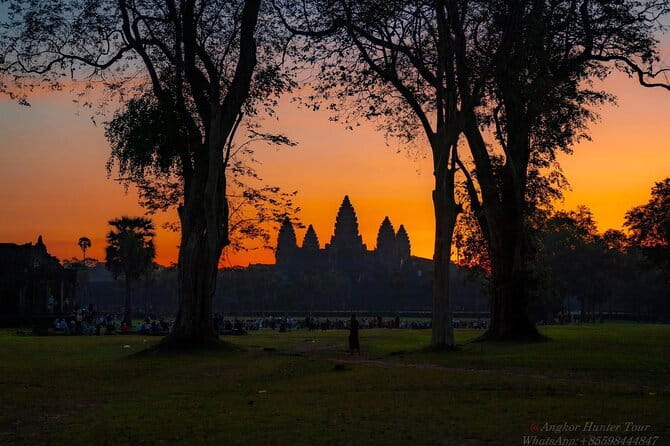
Sunrise over Angkor Wat is unforgettable. This 2.5-day Angkor plan pairs pre-dawn access with an organized route through standout temples, then adds a Tonle Sap boat ride for real local life beyond the stone ruins. I especially like that you get both the big-ticket lights-on moment at Angkor Wat and a slower, more human day out at Kampong Phluk. One thing to plan for: the temple pass is not included (it’s paid directly at the sites), and the schedule does start very early.
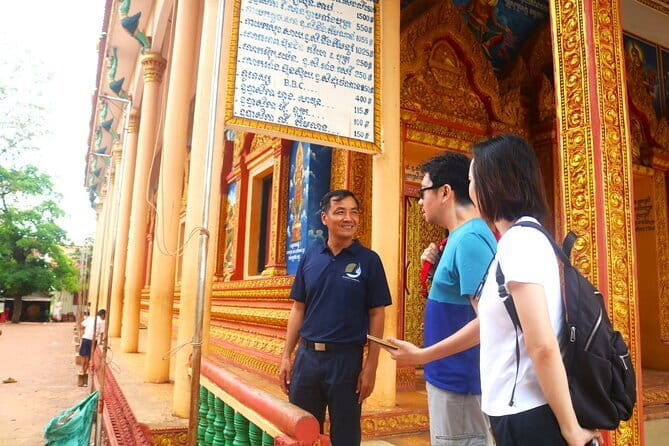
What makes it feel smooth is the human setup. With a maximum of 15 people and hotel pickup, the day stays practical instead of chaotic, and you’re not stuck waiting around for your group to find the right gate. I also like the way the tour highlights guide quality, like Sak’s strong English and temple-and-culture background, plus Mao’s driving that keeps transfers from becoming a stress test.
The main trade-off is money and timing. You pay $62 per person for the temple pass separately, and you’re on your feet for sunrise hours and temple walking that can feel long in the heat.
In This Review
- Key points to know before you go
- Angkor Wat timing: why sunrise is the real win
- Small-group travel in Siem Reap: where value shows up
- Day 1 temples: Pre Rup, Banteay Srei, Neak Pean, Preah Khan
- Pre Rup: a temple outside the big city core
- Banteay Srei: fine carving, smaller scale
- Neak Pean: the artificial island temple
- Preah Khan: atmospheric ruins and roots
- Day 2: pre-dawn Angkor Wat, then Ta Prohm and the face towers
- Angkor Wat at sunrise: walk in darkness, then watch it open
- Srah Srang: a local meal pause by the water
- Ta Prohm: jungle mood you can actually feel
- Angkor Thom: eastern gate and your approach to the complex
- Bayon: the faces and the way you should look
- Day 3 on Tonle Sap: Kampong Phluk by boat
- Price and value: what $79 really buys, plus the $62 temple pass
- Logistics that make or break this kind of trip
- The Phare circus option in dry season (Seat C)
- Who this tour suits best
- Should you book this Angkor Wat and Tonle Sap combo?
- FAQ
- What is the duration of the tour?
- How much does the tour cost?
- Is hotel pickup and drop-off included?
- What time does the tour start?
- Is the temple pass included in the price?
- Are meals included?
- Does the tour include Tonle Sap entrance and the boat cruise?
- What about sunrise and sunset?
- How large is the group?
- Is there any additional included entertainment?
Key points to know before you go
- Pre-dawn Angkor Wat entry with sunrise viewing outside the temple, plus early morning timing that helps you beat the crowds.
- Sunset and sunrise included as actual tour moments, not just a vague promise in the description.
- Small group limit (up to 15) means fewer delays and better chances to ask questions.
- Tonle Sap entrance fee and boat cruise included so you don’t have to scramble for add-ons.
- English-speaking guides (you may meet Sak) and experienced drivers (like Mao) who keep the story clear as you walk.
- Phare circus seat C in dry season is included, adding an evening option beyond temples.
Other ways to walk the great temple
- Angkor Wat Sunrise or Sunset Tour with Guide from Siem Reap★ 5.0 · 12,109 reviews
- Siem Reap: Angkor Wat: Small-Group Sunrise or Sunset Tour★ 5.0 · 9,444 reviews
- Siem Reap: Angkor Wat 2-Day Tour with Sunrise and Sunset★ 4.9 · 4,429 reviews
- Siem Reap: Full-Day Angkor Wat Guided Tour with Sunset★ 4.9 · 3,803 reviews
Angkor Wat timing: why sunrise is the real win
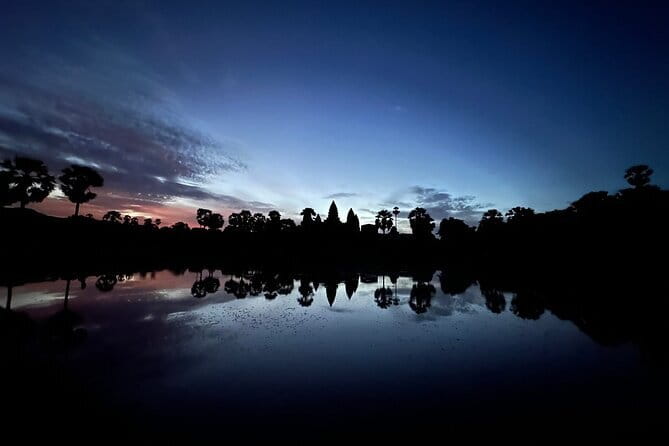
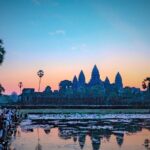
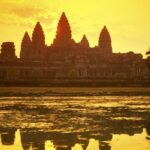
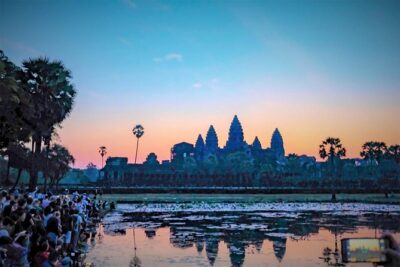
Angkor Wat sunrise isn’t just a pretty postcard. It’s a time when you can see the temple at its most dramatic—still, dim, and full of atmosphere before the day warms up and the crowds settle in. This tour builds that moment into the schedule with a pre-dawn departure from your hotel, then takes you into the temple early, using the light available to move around in the dark before the sun fully arrives.
You also get a sunset on day one, which balances the plan nicely. The day one route gets you ready to understand what you’re looking at, then the light changes and you see the temples in a totally different mood. It’s the same stone, different feelings. That matters, because Angkor can feel overwhelming if you only see it in full daylight.
If you’re sensitive to early mornings, you’ll want to treat day two like a priority. This is not the kind of trip where you can sleep in and still feel the payoff. The payoff is real, though.
Small-group travel in Siem Reap: where value shows up
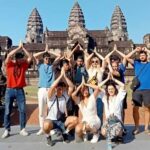
With a maximum of 15 travelers, you get something rare in Angkor tours: a pace that doesn’t constantly stall. Hotel pickup also helps a lot in Siem Reap, where travel between sites can eat time if you’re coordinating on your own.
The tour also emphasizes English-speaking guidance. On trips like this, the guide matters because Angkor isn’t just buildings—you’re learning why temples look the way they do and how the sites connect to Cambodian history and culture. The strongest feedback you’ll see tends to match this: guides who can explain more than the basics, and drivers who keep the day on track.
For example, on a small-group tour experience, Sak is known for strong English and for connecting temple details to context, while Mao is recognized as a capable driver. That combination usually means fewer transport headaches and more time actually seeing.
Day 1 temples: Pre Rup, Banteay Srei, Neak Pean, Preah Khan
Day one is a smart warm-up. Instead of rushing straight to the most famous locations first, the route starts with temple types that help you build a quick mental map of Angkor.
Pre Rup: a temple outside the big city core
You begin at Pre Rup, described as a Hindu mountain temple built from brick, laterite, and sandstone. That construction mix is part of what makes it visually interesting—different materials, different textures, and a temple shape that feels like it’s rising out of the ground. It’s a good opening because it gives you a sense of scale and style before you hit the more iconic names.
A potential drawback: the admission ticket for sites is not included, so you’ll want to keep your money plan straight early in the trip. Also, you’ll likely be walking and climbing around typical temple areas, so comfortable shoes matter.
More temple circuits, set side by side
Banteay Srei: fine carving, smaller scale
Next is Banteay Srei, a smaller sandstone temple with reliefs regarded as some of the finest craft work in Cambodia. This is where the trip shifts from big impressions to close details. If you like careful carving, Banteay Srei is a great match.
Because it’s smaller than some of the giants, you’ll spend time looking rather than just photographing. That’s a win for anyone who hates feeling like they’re sprinting from one highlight to the next.
Neak Pean: the artificial island temple
Then you stop at Neak Pean, an artificial island with a Buddhist temple set on a circular island. The setting changes the feel of the day. You’re not just dealing with stone walls and gateways; you’re dealing with water, reflections, and a layout that invites slower attention.
Neak Pean is also useful because it broadens your understanding of what you’re seeing across different religious influences within the Angkor era.
Preah Khan: atmospheric ruins and roots
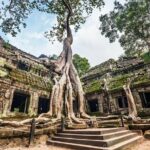
To finish day one, you go to Preah Khan, known for a ruined, atmospheric mix of stone structures and tree roots. This is one of those stops where the surroundings are part of the story. Even if you’re not a hardcore architecture nerd, it’s hard not to feel the scale and the quiet.
Day one ends with the promise of sunset over ancient ruins. Even without getting too poetic, sunset does something practical: it softens contrasts, makes shadows more forgiving, and can make carvings easier to read.
Day 2: pre-dawn Angkor Wat, then Ta Prohm and the face towers
Day two is the spine of the whole trip. The schedule is built around two major temple moods: the controlled symmetry of Angkor Wat in early light, and the jungle-wrapped drama of Ta Prohm plus the iconic human faces at Bayon.
Angkor Wat at sunrise: walk in darkness, then watch it open
You depart pre-dawn and enter Angkor Wat early, before sunrise. The tour description notes entering in darkness and using a torch’s light. That’s your clue to bring a small flashlight/headlamp if you have one. Even if the tour handles lighting, having your own means you’re not scrambling if something feels tight or dark.
Inside, you’ll be moving through key spaces as the light changes. This is where the temple becomes less of a photo subject and more like a real place. The scale hits differently at dawn.
One more practical note: because the sunrise is a time-based experience, you’ll want to be ready to follow the group’s pace and not drift. The guide can help you orient quickly, which keeps the experience from becoming confusing.
Srah Srang: a local meal pause by the water
After the morning temple focus, you enjoy breakfast at a Khmer local restaurant, with the Srah Srang stop involved in that break. Srah Srang itself is a reservoir area, and building a meal pause here helps you recharge without losing momentum.
Meals are not included on the tour plan, but the breakfast during this segment is provided by the local restaurant timing described in the schedule. Still, it’s wise to think of lunches and snacks as things you’ll handle on your own.
Ta Prohm: jungle mood you can actually feel
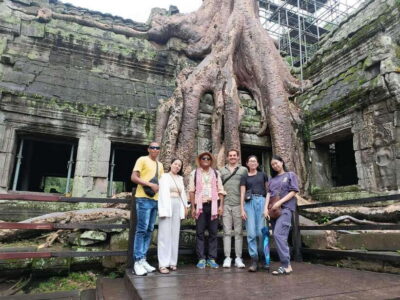
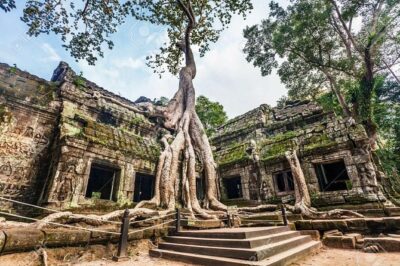
Next comes Ta Prohm, famous for trees and roots growing around the temple ruins. This stop works because you’re not just looking at stone; you’re looking at a living scene where vegetation takes part in the architecture.
If you like temples that feel like a story, Ta Prohm delivers. If you dislike walking under uneven surfaces, take it slow. The charm comes with some rough ground and uneven stone.
Angkor Thom: eastern gate and your approach to the complex
Then you visit Angkor Thom, starting with the eastern gate. That choice is practical. The gate sets you up for the rest of the morning, giving you a clear entry point into a larger walled area.
Bayon: the faces and the way you should look
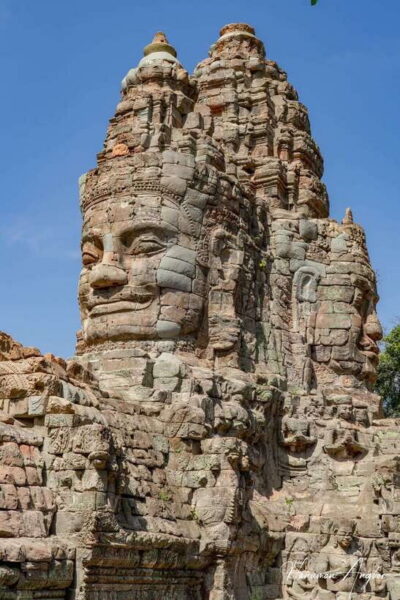
Finally you reach Bayon, with its central towers covered in more than 200 faces. The time listed for this stop is about an hour, which is enough if you don’t rush.
Here’s the key: don’t just snap and move on. Pick a couple of angles, then compare how the faces look in different light. That’s where Bayon becomes more interesting than a single photo.
Day 3 on Tonle Sap: Kampong Phluk by boat
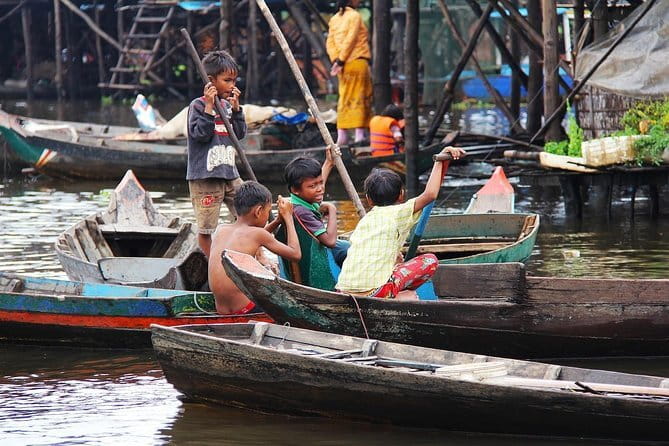
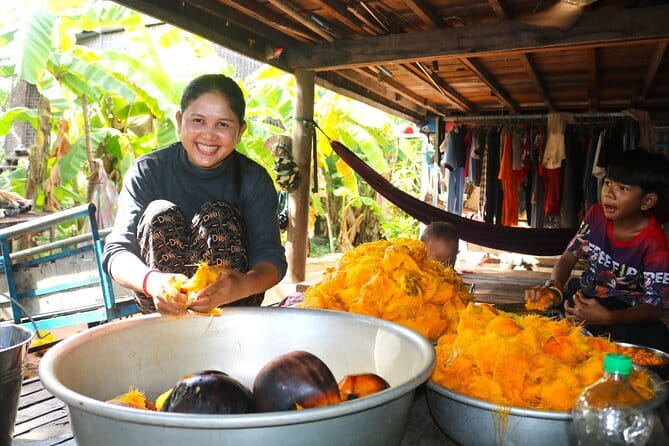
After two days centered on stone temples, day three changes your senses. You head toward Tonle Sap Lake, described as the world’s second-largest freshwater lake. Then you take a boat trip to Kampong Phluk, which includes multiple small fishing villages.
This is more than a side trip. It gives you context for how Cambodians live with water and seasonality. Floating villages can feel like a set piece if you rush, but the boat ride helps you see how daily life works from the perspective of travel over water.
The good news for planning: the tour includes Tonle Sap entrance fee and the boat cruise. That means fewer extra tickets on the day. It also makes it easier to budget, because you already know the temple pass situation from earlier in the trip.
A consideration: boat trips depend on conditions, and Tonle Sap can feel hot and bright. Bring whatever you need for sun comfort and keep water in mind, since you’re not only sitting still during the day.
Price and value: what $79 really buys, plus the $62 temple pass
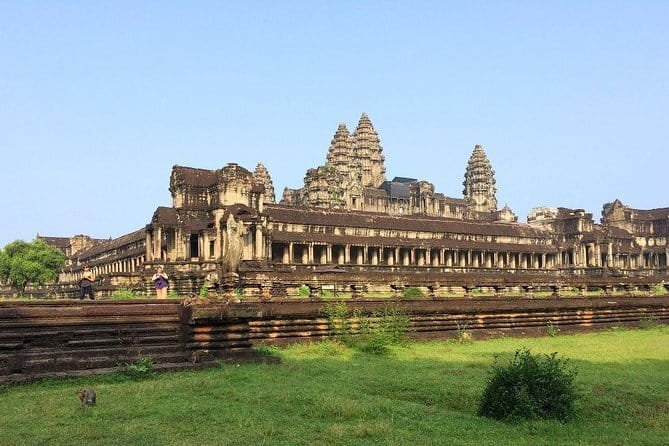
The headline price is $79 per person, and the tour lists several meaningful inclusions: air-conditioned vehicle, experienced English-speaking guide, hotel pickup and drop-off, sunset and sunrise, bottled water and a cool towel, and Tonle Sap entrance fee plus the boat cruise.
That bundle matters because Angkor and Tonle Sap are not cheap if you start piecing them together yourself. You pay for transport, guide time, and the big timed moments. With small-group pacing, you’re also paying for the ability to move efficiently without constant regrouping.
Here’s the catch: the temple pass is not included and costs $62 per person, paid directly to the sites. So your likely “all-in” day cost is closer to $141 per person before meals and personal spending.
Meals aren’t included, so you’ll want to plan for your own lunch and snacks. One bright spot is that the schedule includes a breakfast stop in the middle of day two, but you should still budget for the rest.
Overall, if you want sunrise access handled for you, plus Tonle Sap boat time without ticket juggling, this price structure can feel fair.
Logistics that make or break this kind of trip
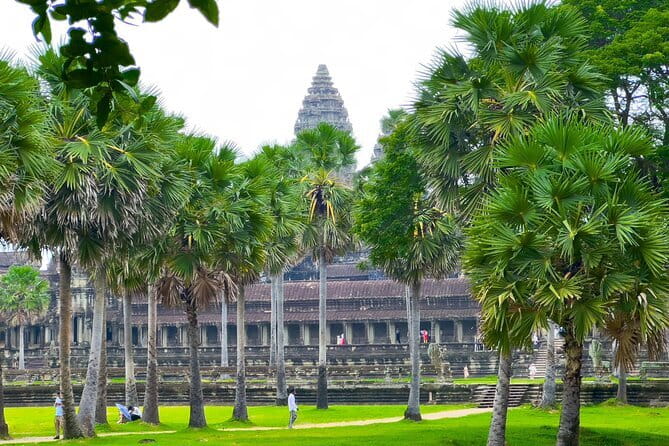
This tour is built around timed temple entries, and that means logistics matter.
- Air-conditioned vehicle keeps transfers tolerable, especially if you’re doing multiple temple zones in a day.
- Hotel pickup and drop-off reduces confusion and saves energy.
- Mobile ticket is included, which can make check-in smoother.
- Group size (up to 15) reduces waiting and keeps you moving between sites.
A small practical tip: temple days often mean sudden shifts between shaded and open areas. Your cool towel and bottled water inclusion helps, but you’ll still want to manage hydration and comfort yourself.
If you’re photographing a lot, build in extra time for setup. Sunrise, in particular, can make you feel rushed even when the tour is working well.
The Phare circus option in dry season (Seat C)
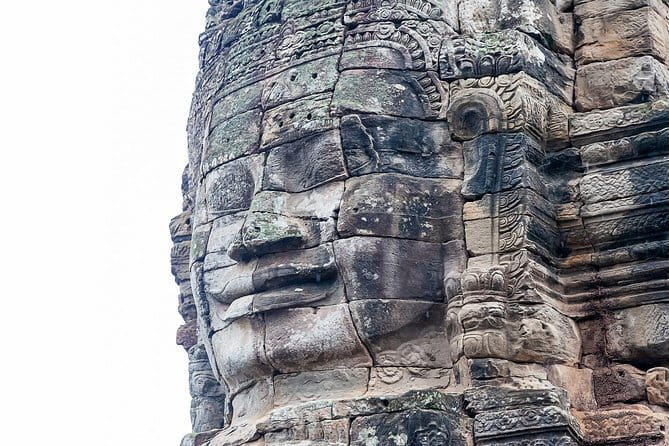
On top of temples and Tonle Sap, the tour includes Cambodia Phare circus (Seat C) in the dry season. This can be a nice way to close the day because it’s a different type of cultural experience, not another ruin.
Since it’s dry-season specific, if your travel dates fall outside that window, you should expect that circus inclusion may not apply. When it does apply, it’s a useful add-on without extra ticket hunting.
Who this tour suits best
This is a strong match if you:
- Want Angkor Wat sunrise without DIY chaos
- Prefer a small group over long bus-style days
- Like having an English-speaking guide explain what you’re seeing, not just where to stand
- Want at least one day that’s about life on the water at Tonle Sap
It’s less ideal if you dislike early starts, long walks around temple areas, or if you prefer completely independent travel with zero set timing.
Should you book this Angkor Wat and Tonle Sap combo?
If you’re choosing between a “temples only” plan and a trip that includes Kampong Phluk, I’d lean toward booking this one. The mix of Angkor’s timed highlights plus a boat ride for real local context gives you a fuller Siem Reap story than temple photos alone.
Pay attention to the two big planning points: the $62 temple pass you’ll pay separately, and the fact that day two is built around pre-dawn sunrise timing. If you can handle those, you’ll likely feel like the value lines up well with what you’re getting: guide-led temple time, included sunrise/sunset moments, and a Tonle Sap cruise that’s already handled.
If you want, tell me your travel dates and whether you’re more into sunrise photography or temple details. I can help you decide if this schedule fits your style.
FAQ
What is the duration of the tour?
The tour runs for about 3 days (often described as roughly a 2.5-day experience due to how the schedule flows across sunrise and sunset).
How much does the tour cost?
The price is $79.00 per person.
Is hotel pickup and drop-off included?
Yes, convenient hotel pickup and drop-off services are included.
What time does the tour start?
The listed start time is 8:00 am.
Is the temple pass included in the price?
No. The temple pass must be paid directly to the sites, and the listed cost is $62.00 per person.
Are meals included?
Meals are not included. You’ll choose your own options unless a specific meal stop is part of the day’s schedule.
Does the tour include Tonle Sap entrance and the boat cruise?
Yes. Tonle Sap entrance fee and the boat cruise are included.
What about sunrise and sunset?
Sunset and sunrise are included as part of the experience.
How large is the group?
This tour/activity has a maximum of 15 travelers.
Is there any additional included entertainment?
Cambodia Phare circus (Seat C) is included in the dry season.
Out on Tonle Sap
- From Siem Reap: Kampong Phluk Floating Village Tour by Boat
★ 4.9 · 6,979 reviews - Sunset tour of Kampong Phluk stilts home village on the Tonle Sap
★ 5.0 · 4,865 reviews - Kompong Phluk Floating Village Half-Day Tour ( Morning / Sunset )
★ 5.0 · 1,494 reviews - Siem Reap: Kulen Mountain, Beng Mealea and Tonle Sap Tour
★ 5.0 · 1,483 reviews - Tonle Sap Lake & Kampong Phluk Village Half-Day Tour
★ 5.0 · 1,045 reviews
More Temple Circuits Around Siem Reap
- Angkor Wat Sunrise or Sunset Tour with Guide from Siem Reap
★ 5.0 · 12,109 reviews - Siem Reap: Angkor Wat: Small-Group Sunrise or Sunset Tour
★ 5.0 · 9,444 reviews - Siem Reap: Angkor Wat 2-Day Tour with Sunrise and Sunset
★ 4.9 · 4,429 reviews - Siem Reap: Full-Day Angkor Wat Guided Tour with Sunset
★ 4.9 · 3,803 reviews - Angkor Wat Sunrise tour with Small – Group and Guide tours
★ 5.0 · 3,655 reviews
Angkor Wat, a Few More Ways In
- Angkor Wat Sunrise or Sunset Tour with Guide from Siem Reap
★ 5.0 · 12,109 reviews - Siem Reap: Angkor Wat: Small-Group Sunrise or Sunset Tour
★ 5.0 · 9,444 reviews - Siem Reap: Angkor Wat 2-Day Tour with Sunrise and Sunset
★ 4.9 · 4,429 reviews - Siem Reap: Full-Day Angkor Wat Guided Tour with Sunset
★ 4.9 · 3,803 reviews - Angkor Wat Sunrise tour with Small – Group and Guide tours
★ 5.0 · 3,655 reviews
Just Added: Fresh Siem Reap Tour Reviews

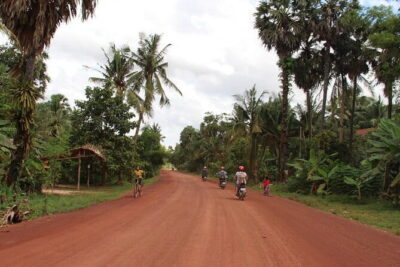
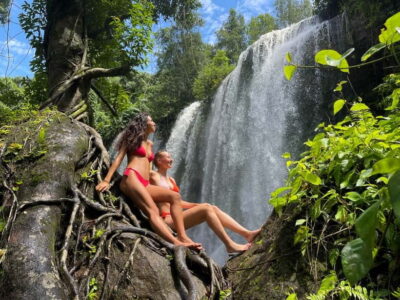
Angkor Wat Temple Tours, compared.
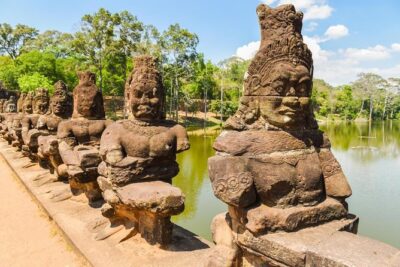 ★ 5.0Angkor Wat Sunrise or Sunset Tour with Guide from Siem ReapFrom $1812,109 reviews
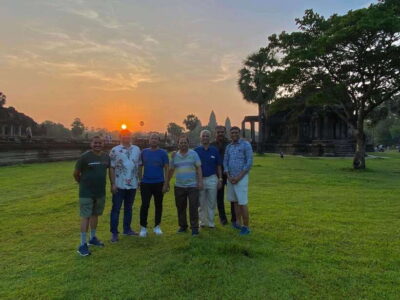 ★ 5.0Angkor Wat: Small-Group Sunrise or Sunset TourFrom $159,444 reviews
 ★ 4.9Angkor Wat 2-Day Tour with Sunrise and SunsetFrom $344,429 reviews
 ★ 4.9Full-Day Angkor Wat Guided Tour with SunsetFrom $153,803 reviews
 ★ 5.0Angkor Wat Sunrise tour with Small – Group and Guide toursFrom $143,655 reviews
 ★ 5.0Angkor Wat Highlights and Sunrise Guided Tour from Siem ReapFrom $233,213 reviews
 ★ 5.0Angkor Wat Sunset Small Group Tour with Lunch IncludedFrom $203,059 reviews
 ★ 5.0Full-Day Angkor Wat Sunrise Private Tour with Guide from Siem ReapFrom $602,920 reviews
Browse the lists this tour appears in