
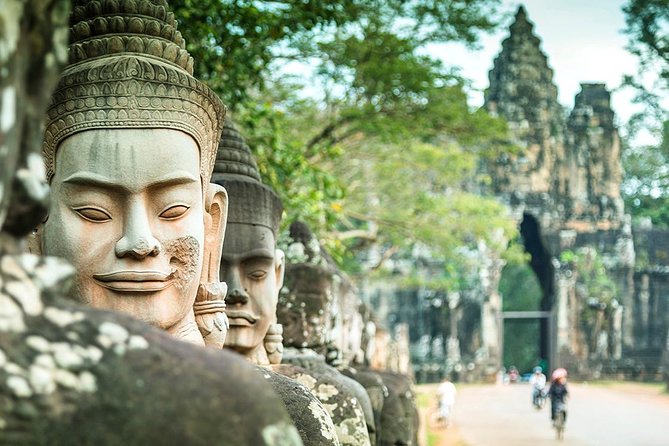
Reviewed · ANGKOR WAT TEMPLE TOURS
Angkor Wat Admission Ticket
Angkor can be magic at dawn. The best part here is that your Angkor Archaeological Park ticket gets to your hotel the evening before, so you can go straight to the temples instead of hunting for an office ticket line. I like that you can pick a 1-, 3-, or 7-day option based on how much time you really have, not how ambitious you feel at 10 pm. I also love the peace of mind for early plans, since this pass is valid for sunrise-to-sunset temple visits.
The main drawback is simple: you’re paying extra for the service, and you still need to handle your own transportation between sites (tuk-tuk, car, minivan, bus). Also, you must send passport photo details after booking, or the ticket won’t be issued.
In This Review
- Key things I’d watch for
- Why pre-booking an Angkor pass makes mornings easier
- Price and value: what the extra cost actually buys
- How hotel delivery works (and what you must do right)
- What your 1-, 3-, or 7-day access really lets you do
- Angkor Wat: plan your first two hours like a storyboard
- Angkor Thom and Bayon: the city inside the walls
- Ta Prohm: the one you’ll remember forever
- Banteay Srei: why the detour is worth it
- Preah Khan and Bakong: when you want Khmer depth
- Neak Pean and Srah Srang: water temples and reservoirs
- Short stops that add up: Baksei Chamkrong, Ta Keo, Pre Rup
- Long day options: Kulen, Phnom Krom, Phnom Bok, and Beng Mealea
- Extra temple names you’ll hear once you’re out there
- Practical tips that will save you energy and keep things respectful
- Hiring a guide versus going it alone
- Should you book this Angkor ticket delivery service?
- FAQ
- Where will my Angkor ticket be delivered?
- What time window is the pass valid for once I have it?
- Do I need to buy tickets separately for Phnom Kulen and Koh Ker?
- Is transportation to the temples included?
- Do I need to send passport photos after booking?
- What happens if my travel plans change?
- Can the pass be transferred to someone else?
- Are drones allowed?
Key things I’d watch for
- Hotel delivery to your name: saves you from ticket-office stress right before sunrise
- Multiple day options: 1-, 3-, or 7-day access to match your pace
- Valid only for printed dates: your pass won’t work after the validity window
- Photo + personal details required: the pass includes your photo, and you must submit passport photos
- No transport included: you’ll need your own ride planning for each circuit
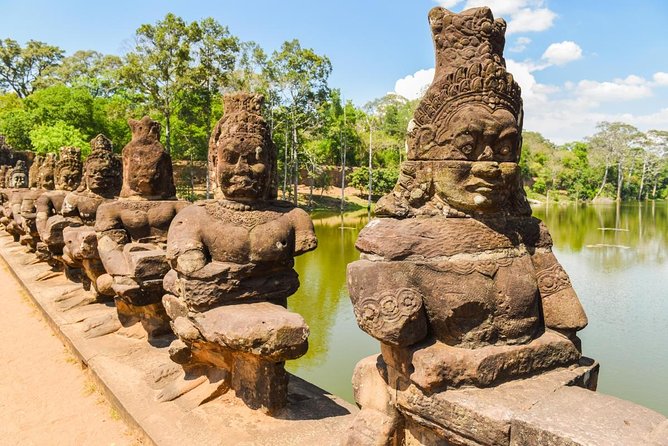
- One pass, many sites: from Angkor Wat and Angkor Thom to lots of “outside the main loop” stops
Other ways to walk the great temple
- Angkor Wat Sunrise or Sunset Tour with Guide from Siem Reap★ 5.0 · 12,109 reviews
- Siem Reap: Angkor Wat: Small-Group Sunrise or Sunset Tour★ 5.0 · 9,444 reviews
- Siem Reap: Angkor Wat 2-Day Tour with Sunrise and Sunset★ 4.9 · 4,429 reviews
- Siem Reap: Full-Day Angkor Wat Guided Tour with Sunset★ 4.9 · 3,803 reviews
Why pre-booking an Angkor pass makes mornings easier
If you’re aiming for sunrise at Angkor Wat, timing is everything. Getting your pass in advance means you avoid one of the most annoying parts of a first visit: waiting around before the light hits the west-facing causeway. Instead, you can plan your morning like a pro—wake up, get to the entrance, and spend your energy on the temples, not logistics.
This service is built around a simple idea: you shouldn’t have to show up early just to buy a ticket. With delivery to your hotel front desk (listed as around 6 pm the evening before your visit), you can keep your morning schedule intact and spend the early hours doing what you came for.
Price and value: what the extra cost actually buys

The headline price is $59 per person, but here’s the real story: the ticket itself is cheaper at the official ticket office, and your total includes service fees and value-added handling. The data you were given is clear that the service is more expensive than the original price from the Angkor Enterprise Ticket Office.
So when does this price make sense?
- When you have a tight schedule: one late arrival day, an early flight, or limited temple hours
- When sunrise is your top priority: the cost of stress is higher than the price difference
- When you don’t want ticket-office uncertainty: online access can be glitchy for some people, and delivery avoids that
- When you want a smooth process: the included steps (photo submission, ticket prep, named delivery) reduce guesswork
When it may not be worth it: if you’re traveling slowly, you can handle a ticket office stop on your own time, and you don’t care about losing time to lines.
How hotel delivery works (and what you must do right)
This is the part that makes or breaks the experience: you have to send the required passport photos after booking. If they don’t receive your photo details, your ticket won’t be issued.
Here’s what you should expect based on the details provided:
- Delivery timing: the ticket is delivered the evening before your next day(s) visits (the info says around 6 pm)
- Validity timing: the ticket is dropped one day before your visit, and the pass is valid on the next day after delivery
- Keep the ticket: you must carry it and show it to ticket controllers when requested
- Photo on the pass: the pass isn’t transferable, and it contains your photo
One more practical note: you’ll be checking this pass during temple entry, so keep it somewhere easy—if you put it at the bottom of your bag, you’ll eventually have that classic Angkor moment of searching while everyone else is moving.
What your 1-, 3-, or 7-day access really lets you do
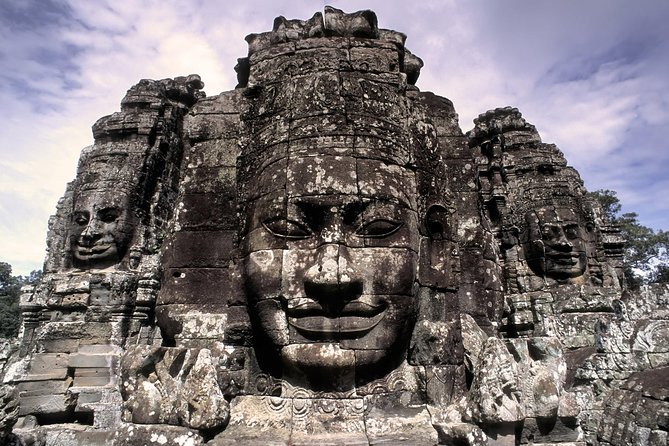
An Angkor Archaeological Park pass is about access, not a guided tour. Your entry covers visiting from sunrise to sunset on your own schedule, which means you can do temple circuits the way you like: a big day, a lighter day, or an early start plus a late breakfast.
The key detail you’re given: transportation is not included. So you should plan how you’ll get between sites:
- hiring a tuk-tuk for a day
- using a car/minivan for longer distances
- arranging your own ride for “farther out” temples
Also, your pass doesn’t cover everything. The information you have states that Phnom Kulen and Koh Ker temples require separate tickets, so don’t build your dream itinerary around those stops assuming they’re included.
More temple circuits, set side by side




Angkor Wat: plan your first two hours like a storyboard

Angkor Wat is the obvious headline. It’s the largest religious monument in the world on a huge site, and most first-timers end up spending more time here than they planned.
With this pass, you’re free to visit on your schedule during open hours. A common rhythm is:
- arrive early enough for calmer entry
- take your time with the main views and the causeway feel
- expect roughly 1–2 hours depending on how many photos and temple angles you want
If you’re doing sunrise, the value of hotel delivery is big. Sunrise mornings get hectic fast, and anything that prevents you from being stuck in a line is worth real money.
Angkor Thom and Bayon: the city inside the walls
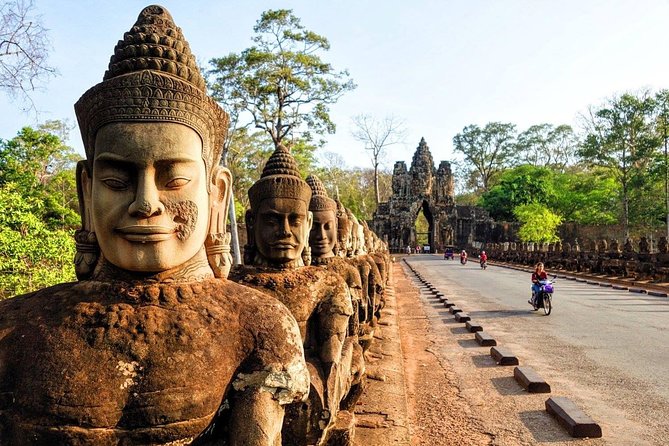
Angkor Thom is the last major capital city of the Khmer empire, and once you enter, the scale hits you. You’ve got walls, gateways, and a layout that feels like a maze that rewards patience.
In the itinerary-style plan you were given:
- Angkor Thom is listed for about 1 hour 20 minutes
- Bayon Temple is listed around 1 hour
Bayon is especially important because it’s the heart of the city’s temple—lots of faces, lots of photo angles, and lots of details that make you slow down even when you’re tired.
A practical tip: wear shoes you trust. Stone can be slick after rain, and Angkor walking is less “museum stroll” and more “archaeology workout.”
Ta Prohm: the one you’ll remember forever
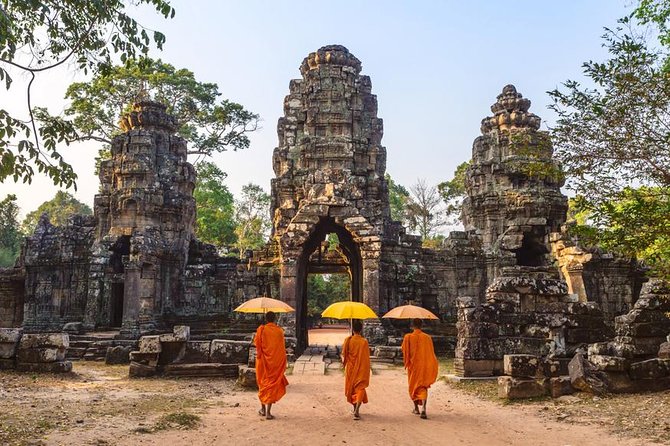
Ta Prohm is famous for the way trees and roots take over the structures. It’s also where the experience becomes a little surreal, because you’re watching nature and architecture fight for control.
Your plan lists Ta Prohm at about 1 hour. That’s a good target. If you try to do it fast, you’ll miss the best moments—like roots wrapping around doorways and the way light changes the mood as you move deeper in.
If you prefer a temple you can feel emotionally, not just visually, Ta Prohm is the one.
Banteay Srei: why the detour is worth it
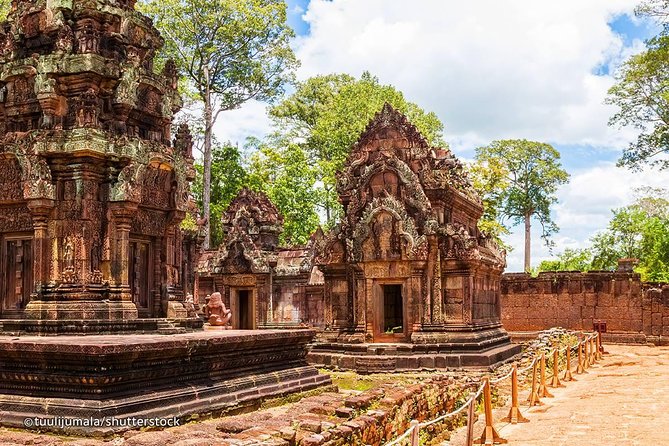
Banteay Srei is the Ladies Temple, dedicated to Shiva, and it sits near Phnom Dei, about 25 km northeast of the main area. That distance matters, because it changes how you plan your day.
In your itinerary plan, it’s about 1 hour. The value of adding it is that Banteay Srei often feels less crowded than the core temples—and because it’s farther out, it can turn into your “half day’s worth” highlight if you time it well.
Just remember: longer distance means longer ride time since transport isn’t included in the pass service.
Preah Khan and Bakong: when you want Khmer depth
Two different vibes show up in this part of the park.
- Preah Khan (listed around 1 hour 20 minutes) is tied to King Jayavarman VII honoring his father, and it sits northeast of Angkor Thom with close relation to the Jayatataka baray. It’s the kind of temple where your attention gets rewarded as you walk.
- Bakong (listed around 1 hour) is described as the first temple mountain of sandstone constructed by Khmer rulers in the 9th century. It’s a great choice when you want to understand how early Khmer temple-building developed before the biggest masterpieces.
If you’re only doing a 1-day pass, these can be “maybe” stops depending on how tired you are. With 3 or 7 days, they become the fun way to spread things out.
Neak Pean and Srah Srang: water temples and reservoirs
Angkor isn’t only temples. Water works—barays and reservoirs—are part of the temple world here.
Your itinerary includes:
- Neak Pean (around 1 hour) described as an artificial island with a Buddhist temple
- Srah Srang (Royal Bath) (around 20 minutes) as a reservoir in the park
These are shorter stops, but they help you connect the dots. If you spend all day only on towering temples, Angkor can feel like a parade of stone. Add the water elements and suddenly the layout makes more sense.
Short stops that add up: Baksei Chamkrong, Ta Keo, Pre Rup
These are the temples you can fit between bigger sights, but they still matter.
In the plan you were given:
- Baksei Chamkrong: about 30 minutes
- Ta Keo: about 40 minutes
- Pre Rup: about 30 minutes
- Ta Som, Srah Srang, and more are slotted as in-between options
What you get from these shorter stops is contrast. Some are more Hindu-focused in feel, some feel more state-temple in intent, and many help you appreciate why Angkor isn’t one temple—it’s a whole system.
Long day options: Kulen, Phnom Krom, Phnom Bok, and Beng Mealea
If you’ve got more time (3 or 7 days is ideal), you can spread your trip into bigger day excursions.
Your itinerary includes:
- Kbal Spean on the Kulen Hills slopes (listed for 3–4 hours in one spot)
- Prasat Phnom Krom on a hill about 12 km southwest of Siem Reap (listed around 2 hours 20 minutes)
- Phnom Bok Temple (listed around 2 hours)
- Prasat Beng Mealea described as a temple from the Angkor Wat period about 40 km east (listed 2 hours and shown as free in the plan)
These are the stops where “transport planning” matters the most. Because you’re farther from the core, build in extra time for the ride and energy for the walking once you arrive.
Kbal Spean is also a location where you’ll likely see more nature and outdoors feel than the main temple circuit, which can be exactly what you want on a longer trip day.
Extra temple names you’ll hear once you’re out there
Your itinerary list includes plenty of sites that you can mix and match depending on the day:
- Lolei (Roluos group)
- Preah Ko and other Roluos temples
- Prasat Kravan, Ta Som, Prasat Kravan, Baksei Chamkrong, and more on the smaller circuits
- Additional stops like Banteay Samré near the East Baray area
- Prasat Beng Mealea and the repeat Kbal Spean mention (so it’s clearly something this plan emphasizes)
Don’t try to do everything on day one. With a 7-day option, you can return to the temples that stuck with you—rather than racing through to “check the list.”
Practical tips that will save you energy and keep things respectful
Angkor is visitor-friendly, but it does have rules—and they’re there for good reasons.
Follow the visitor code basics included in your details:
- cover shoulders and knees
- don’t touch carvings
- respect monks and follow signs
- don’t litter, don’t smoke
- avoid giving money or candy to children
And bring what you need for real walking:
- comfortable, grippy shoes
- water and snacks if you can (foods and drinks are not included)
- a plan for heat and sun—especially mid-day
One more detail for photographers: the information you were given says drones and professional commercial filming require a permit from the APSARA National Authority.
Hiring a guide versus going it alone
The ticket pass service itself is about admissions. A tour guide is listed as available to hire in most languages, but not included.
When guides do get added, it can turn your visit from looking to understanding. In the reviews you provided, names like Mr Ho, Piseth, Sok Piseth, Vantha, Bob, and Bunthang Lim show up as examples of the people who helped make temples click—especially for sunrise timing and temple context.
If you go without a guide, you’ll still have an amazing day. If you want deeper meaning and faster “what am I looking at?” answers, hiring a guide can be a smart upgrade.
Should you book this Angkor ticket delivery service?
Book it if your priority is time control. Hotel delivery is most valuable when:
- sunrise is on your plan
- you’re arriving late or leaving early and can’t risk delays
- you want a low-stress way to get the pass and keep moving
Skip it if:
- you’re comfortable doing a ticket-office stop
- you’re traveling at an easy pace and don’t mind lines
- the extra cost doesn’t fit your budget
Bottom line: paying extra can be a great deal when it protects your schedule. Angkor rewards patience, and this service helps you start with the right kind of patience.
FAQ
Where will my Angkor ticket be delivered?
Your ticket is delivered to your hotel front desk under your name in the evening at around 6 pm for visits on the next following days.
What time window is the pass valid for once I have it?
The pass allows visits from sunrise to sunset, and it is only valid within the printed validity from and to dates.
Do I need to buy tickets separately for Phnom Kulen and Koh Ker?
Yes. The information provided states that visiting Phnom Kulen and Koh Ker temples requires a separate ticket.
Is transportation to the temples included?
No. Transportation to the sites (tuk-tuk, car, minivan, or bus) is not included.
Do I need to send passport photos after booking?
Yes. The information says you must email passport photos for all travelers after booking, and if they are not received you will not be issued a ticket.
What happens if my travel plans change?
The experience is non-refundable and cannot be changed for any reason.
Can the pass be transferred to someone else?
No. Passes are not transferable because the pass contains a photo of the visitor.
Are drones allowed?
Drones, filming, and taking pictures with professional equipment for commercial purposes require a permit from the APSARA National Authority.
Passes and Tickets Sorted
- Siem Reap: Angkor Wat Admission Ticket
★ 4.7 · 106 reviews - Kullen Waterfall Park with Small Group included entrance fee
★ 5.0 · 105 reviews - Phnom Kulen National Park Admission Ticket
★ 4.7 · 30 reviews - Angkor Eye Standard Ride Ticket
★ 5.0 · 26 reviews - Siem Reap: Angkor Wat Admission Ticket
★ 5.0 · 20 reviews
More Temple Circuits Around Siem Reap
- Angkor Wat Sunrise or Sunset Tour with Guide from Siem Reap
★ 5.0 · 12,109 reviews - Siem Reap: Angkor Wat: Small-Group Sunrise or Sunset Tour
★ 5.0 · 9,444 reviews - Siem Reap: Angkor Wat 2-Day Tour with Sunrise and Sunset
★ 4.9 · 4,429 reviews - Siem Reap: Full-Day Angkor Wat Guided Tour with Sunset
★ 4.9 · 3,803 reviews - Angkor Wat Sunrise tour with Small – Group and Guide tours
★ 5.0 · 3,655 reviews
Angkor Wat, a Few More Ways In
- Angkor Wat Sunrise or Sunset Tour with Guide from Siem Reap
★ 5.0 · 12,109 reviews - Siem Reap: Angkor Wat: Small-Group Sunrise or Sunset Tour
★ 5.0 · 9,444 reviews - Siem Reap: Angkor Wat 2-Day Tour with Sunrise and Sunset
★ 4.9 · 4,429 reviews - Siem Reap: Full-Day Angkor Wat Guided Tour with Sunset
★ 4.9 · 3,803 reviews - Angkor Wat Sunrise tour with Small – Group and Guide tours
★ 5.0 · 3,655 reviews
Just Added: Fresh Siem Reap Tour Reviews



Angkor Wat Temple Tours, compared.
 ★ 5.0Angkor Wat Sunrise or Sunset Tour with Guide from Siem ReapFrom $1812,109 reviews
 ★ 5.0Angkor Wat: Small-Group Sunrise or Sunset TourFrom $159,444 reviews
 ★ 4.9Angkor Wat 2-Day Tour with Sunrise and SunsetFrom $344,429 reviews
 ★ 4.9Full-Day Angkor Wat Guided Tour with SunsetFrom $153,803 reviews
 ★ 5.0Angkor Wat Sunrise tour with Small – Group and Guide toursFrom $143,655 reviews
 ★ 5.0Angkor Wat Highlights and Sunrise Guided Tour from Siem ReapFrom $233,213 reviews
 ★ 5.0Angkor Wat Sunset Small Group Tour with Lunch IncludedFrom $203,059 reviews
 ★ 5.0Full-Day Angkor Wat Sunrise Private Tour with Guide from Siem ReapFrom $602,920 reviews
Browse the lists this tour appears in