
Reviewed · ANGKOR WAT TEMPLE TOURS
Angkor Wat & Banteay Srey Tour
Angkor Wat plus Banteay Srei in one long day. I love the smart routing that pairs the big icons (Angkor Wat, Bayon, Ta Prohm) with the finer detail of Banteay Srei, and I especially like that you get hotel pickup plus A/C comfort and cool water. The one catch: entrance fees are not included, and Angkor Wat’s ticket/pass is something you’ll handle during the day.
This is also the kind of tour where the guide matters. In past tours, guides like Mr Oun Kosorl (and sometimes substitutes such as Sinann) have a talent for turning stone and bas-reliefs into a story you can actually follow, instead of just walking from one ruin to the next.
In This Review
- Key Things to Love About This Angkor Wat & Banteay Srey Tour
- Price and Value: What $50 Really Buys You
- Pickup-to-Temples Flow: How the Day Stays Organized
- Angkor Wat: The 12th-Century Giant You’ll See First
- Bayon and Angkor Thom: 54 Towers and 200+ Smiling Faces
- Ta Prohm: Where the Trees Called Spung Take Over
- Banteay Srei: Pink Sandstone Detail and the Lady-Temple Mood
- Banteay Samre: A Smaller Stop That Completes the Pattern
- Guides Who Make the Stones Explain Themselves
- Practical Tips for a Comfortable 7 to 10 Hour Circuit
- Should You Book This Angkor Wat & Banteay Srey Tour?
- FAQ
- Is pickup included?
- How long is the tour?
- Is the Angkor Wat entrance fee included?
- Are there admission fees for the other temples?
- What does the price include?
- Are meals included?
- Do I need to buy anything in advance?
- Is sunrise included?
- Is this tour private?
- Can I cancel for a full refund?
Key Things to Love About This Angkor Wat & Banteay Srey Tour
- Hotel pickup and air-conditioned transport to keep the day from feeling like a heat-stress marathon
- A temple pass stop during the day, so you don’t have to guess what to buy before you arrive
- Five temple stops across major Angkor sites, not just one big highlight
- Ta Prohm’s tree-and-stone look at a slower, photo-friendly rhythm
- Banteay Srei’s pink sandstone detail plus a mid-way chance to watch sugar-palm sweets making
Other ways to walk the great temple
- Angkor Wat Sunrise or Sunset Tour with Guide from Siem Reap★ 5.0 · 12,109 reviews
- Siem Reap: Angkor Wat: Small-Group Sunrise or Sunset Tour★ 5.0 · 9,444 reviews
- Siem Reap: Angkor Wat 2-Day Tour with Sunrise and Sunset★ 4.9 · 4,429 reviews
- Siem Reap: Full-Day Angkor Wat Guided Tour with Sunset★ 4.9 · 3,803 reviews
Price and Value: What $50 Really Buys You
At $50 per person, this tour is priced like a practical day package—not a luxury add-on. You’re paying for the things that usually add up in Cambodia: a car with A/C, a speaking guide and driver, and the small comfort extras like cool towels and cool drinking water.
Here’s the important value point: entrance fees are not included. The program notes also list some temple admissions as free (Bayon, Ta Prohm, Banteay Srei, Banteay Samre), while Angkor Wat specifically says the admission ticket is not included. In plain terms, you should budget for your temples pass/ticket for Angkor Wat and then expect the other stops to be straightforward on the day.
So is $50 worth it? If you’re coming from Siem Reap hotels and you want a clear route with a guide who can explain what you’re seeing, yes—because paying for transport + guiding separately usually costs more. If you prefer to go fully independent, then you’d be paying mainly for convenience.
Pickup-to-Temples Flow: How the Day Stays Organized
The day starts with pickup from your hotel at your selected time. You meet in the hotel lobby, then you head out for the ticket office stop to buy your temples pass. That’s a small detail, but it matters: it keeps the schedule from turning into a scramble, and you’re not trying to figure out the right ticket under pressure.
Once you’re set, you’re driven between sites while the guide keeps things moving with context—history, architecture, and what to notice on each structure. The full circuit is listed as about 7 to 10 hours, which is long enough to do real sightseeing but not so long that you’d expect zero downtime.
Also note the comfort side: cool water, cool towels, and A/C transport aren’t just extras. Angkor days can get physically tiring, and having those basics built in makes it easier to enjoy the temples instead of just surviving them.
Angkor Wat: The 12th-Century Giant You’ll See First
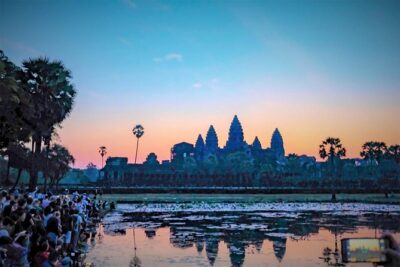
Starting with Angkor Wat is a smart choice. It’s the largest and most famous Khmer temple, built in the 12th century during the reign of Suryavarman II (dated between 1113–1150). The temple is about 65 meters high, and it sits within a large moat.
What makes this stop so rewarding is the layered visual experience. You’re not just looking at one view—you’re seeing a whole system: approach, walls, towers, and interior spaces. The walls include base-reliefs, which are a big part of why Angkor Wat feels so dense and impressive up close.
Time-wise, the program lists 3 hours here. That’s enough to move beyond the first photo moment and actually study the carvings—especially if you take breaks when the sun is strongest.
One practical drawback: Angkor Wat’s ticket is not included. You’ll handle that with your temples pass during the day, so don’t plan on skipping the ticket stop. If you’re hoping for a sunrise-style experience, this program notes that sunrise has an extra charge and isn’t included—so you’d need to plan that separately.
Bayon and Angkor Thom: 54 Towers and 200+ Smiling Faces
Next up is Bayon Temple, also tied to Angkor Thom. This one is Buddhist in style and was built in the late 12th / early 13th century by Jayavarman VII.
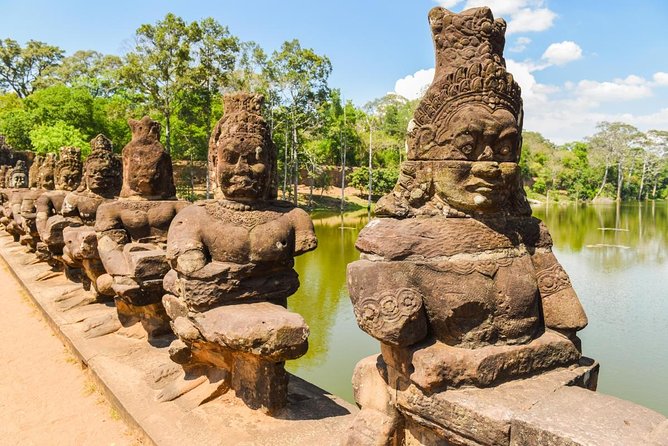
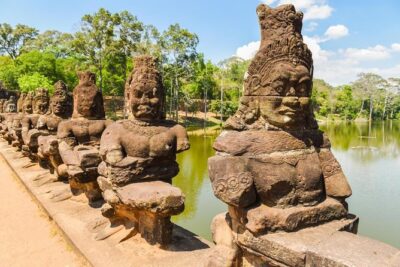
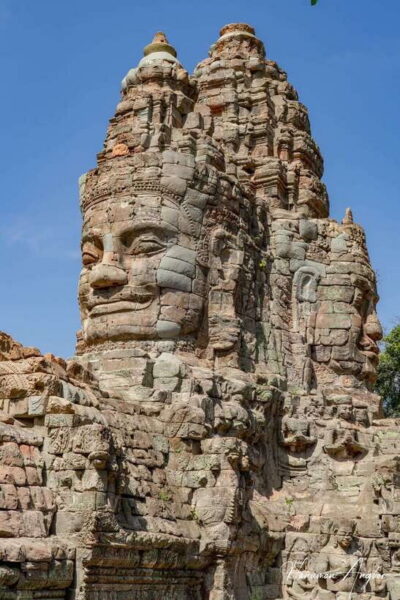
The headline feature is iconic: 54 towers meant to represent the provinces of the Khmer empire (before and during the empire). Then, on top of that, there are over 200 smiling faces carved into those towers. Even if you don’t know Khmer art terms, you can feel why this place catches attention fast—the faces are everywhere once you start noticing them.
The stop is listed as 2 hours, and that length works because Bayon is visually busy. You’ll likely want time to step back, then closer, then look up again. The guide’s job here is valuable: pointing out what you might otherwise miss and putting Bayon into the bigger Angkor story.
One more angle you shouldn’t ignore: Bayon was damaged in 1811 by Cham invaders. It’s the kind of detail that makes the site feel real—not just “ancient ruins,” but something that has had a long, complicated life.
More temple circuits, set side by side
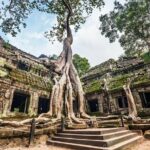

Ta Prohm: Where the Trees Called Spung Take Over
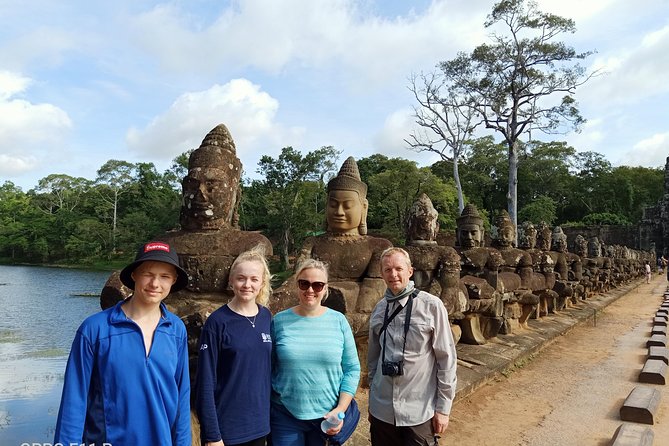
Ta Prohm Temple is one of those places where the famous look actually lives up to expectations. It was built in the late 12th century by Jayavarman VII and dedicated in 1186 to his mother.
The history has a twist that you’ll want the guide to explain: Ta Prohm originally had a Buddhist background, but later it was converted to Hindu, so some Buddhist galleries were replaced with Hindu symbols like yoni and lingam. That means you’re seeing layers of belief and power change over time, not just one “frozen” moment.
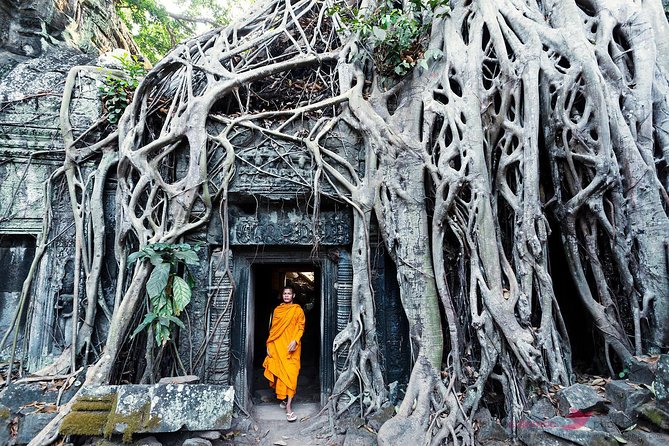
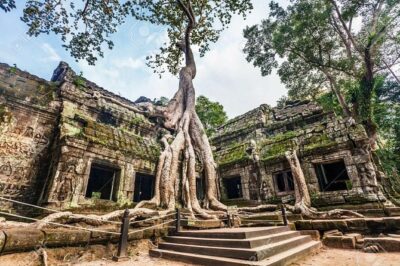
Then comes the visual signature: the trees called spung growing strongly up, on, and over the sandstone block walls. That’s why Ta Prohm is so photogenic, but it’s also why it can feel chaotic if you rush. The program lists 2 hours here, which is good—you can step into the shadowed corridors, step back to get the big framing shots, and still have time to notice how the roots and stones interact.
One caution: if you’re not used to walking uneven stone paths and dealing with crowds, Ta Prohm can be mentally tiring. A slower pace helps. The included guide and A/C breaks between stops are exactly what make this feel doable.
Banteay Srei: Pink Sandstone Detail and the Lady-Temple Mood
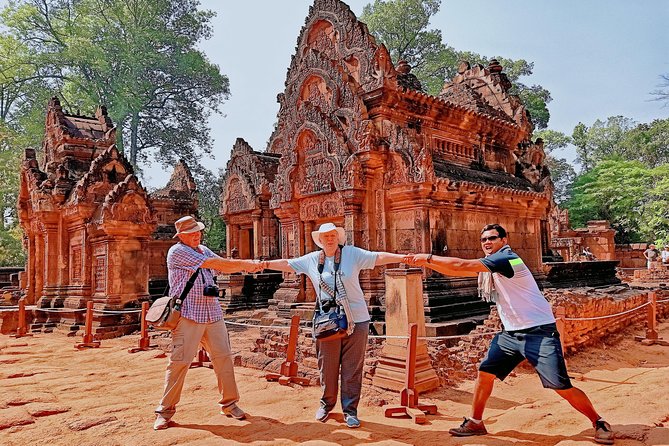
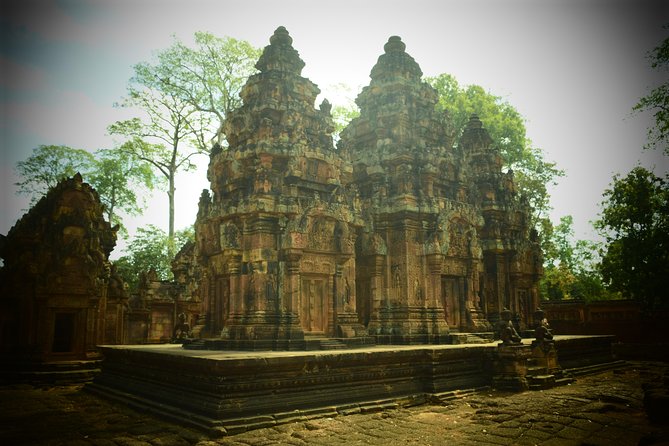
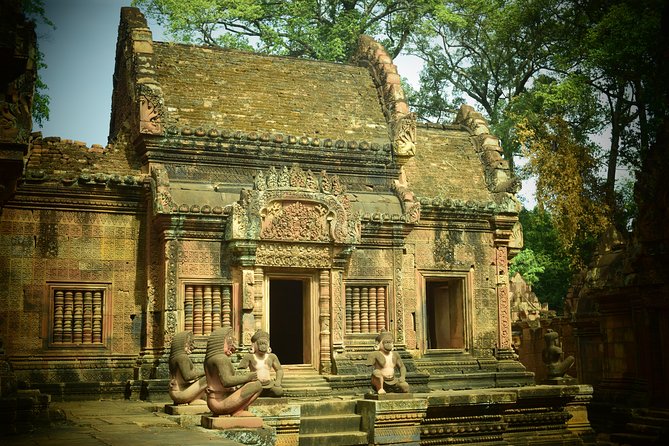
Now for the part many people remember most for the craftsmanship: Banteay Srei, known as the Lady Temple. It’s famous for its pink sandstone and delicate carvings, and it’s about 35 kilometers away from the grand tour area.
That distance matters because it changes the rhythm of the day. You’ll spend more time traveling, but the payoff is that Banteay Srei feels more “attention to detail” and less like a checklist stop. When carvings are delicate, you can’t just glance—you have to look carefully to see why the place earned its reputation.
The program notes 2 hours here and even adds a nice cultural add-on: you can stop mid-way to see locals making natural sugar products from sugar palm. If you’ve only seen sugar as a bag in a shop, this is a rare look at how something simple becomes a local craft. It also breaks up the temple focus so the day doesn’t blur.
The stop is listed as free for admission on this program, but always keep your eyes on what your ticket/pass covers for the day you’re going. For Angkor, details can vary by ticket type.
Banteay Samre: A Smaller Stop That Completes the Pattern
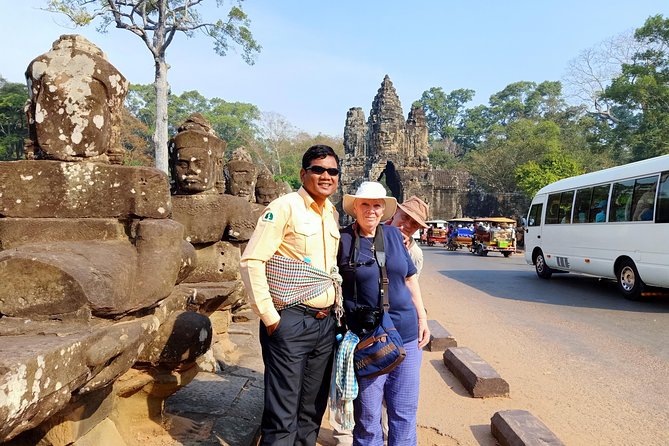
After the distance and fine carvings of Banteay Srei, Banteay Samre comes in as a shorter, calmer add-on. It’s located about 400 meters east of the East Baray.
This is a Hindu temple built during the reigns of Suryavarman II and Yasovarman II in the early 12th century—and it’s in the style of Angkor Wat.
The program lists 1 hour here and free admission. That timing feels right. This isn’t about squeezing in another major masterpiece. It’s more like adding another architectural example so the whole route makes sense: different sites, same cultural language, different emphasis.
If you feel tempted to skip it when you’re tired, consider staying for the full hour. Even at this length, you’ll get a better sense of how Angkor temples connect to each other as a system.
Guides Who Make the Stones Explain Themselves
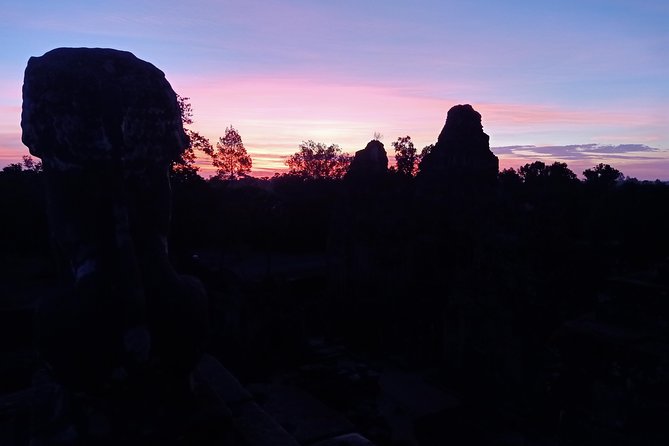
A big part of why this tour scores so well is the guide. Names that come up repeatedly include Mr Oun Kosorl, described as passionate about the Angkor temples and Cambodia. In one case, Sinann stepped in when another guide was ill, and the day still stayed strong with clear explanations and a kind, helpful attitude.
What that tells you as a visitor: you’re not just hiring transportation. You’re hiring interpretation. The best guides do two things well:
- They help you know where to look—faces on towers, carving styles, symbolic details.
- They connect the old stories to Cambodia’s modern reality, so the temples feel less like museum objects and more like living heritage.
If you care about photography, you’ll also like the way some guides actively help with shots. One theme in the feedback is that the guide didn’t just point out views; they also worked with visitors so they came away with photos that match what the place looks like.
Practical Tips for a Comfortable 7 to 10 Hour Circuit
This is a full-day temple loop, so plan like it’s one continuous walking day, not five separate photoshoots.
- Wear breathable clothes and plan for sun exposure. Even with A/C driving between stops, you’ll be outdoors.
- Bring a hat and sunglasses. The program provides cool towels and cool water, which helps a lot.
- If you’re sensitive to stairs, consider pace. Angkor Wat and other temples involve climbing and uneven surfaces, and guides in this program have shown they can adjust for comfort when needed.
- Don’t overpack with big tour goals. With Angkor Wat (3 hours) plus Bayon (2), Ta Prohm (2), and then two more stops, you’ll get a lot of variety. It’s better to pick a few “must pay attention to” moments—like the Angkor Wat base-reliefs or Ta Prohm’s spung trees—and actually look.
One more practical thought: sunrise is not included and costs extra. If you want that dramatic Angkor Wat feel at dawn, ask ahead so you can build the rest of the day around it.
Should You Book This Angkor Wat & Banteay Srey Tour?
Book it if you want:
- A guided circuit that hits Angkor Wat, Bayon, Ta Prohm, Banteay Srei, and Banteay Samre in one day
- Hotel pickup and comfort extras like A/C, cool towels, and water
- A guide who can explain what you’re seeing, not just point and move on
Consider skipping (or choosing a different format) if:
- You’re only interested in one or two temples and would rather self-drive
- You’re hoping everything is fully “all-included,” because entrance fees are not included and sunrise is extra
FAQ
Is pickup included?
Yes. Your guide or driver picks you up from your hotel lobby at the time you select when booking.
How long is the tour?
The duration is listed as about 7 to 10 hours.
Is the Angkor Wat entrance fee included?
No. The Angkor Wat stop lists admission as not included, and you’ll buy your temples pass during the day.
Are there admission fees for the other temples?
The program lists admission as free for Bayon, Ta Prohm, Banteay Srei, and Banteay Samre.
What does the price include?
It includes A/C transportation, cool towels, cool drinking water, and a speaking guide & driver.
Are meals included?
No. Meals (breakfast/lunch/dinner) are not included.
Do I need to buy anything in advance?
The tour includes a stop at the ticket office to buy your temples pass during the day, rather than requiring you to handle it beforehand.
Is sunrise included?
Sunrise is listed as an extra charge, so it’s not included in the standard tour.
Is this tour private?
Yes. It’s described as private, with only your group participating.
Can I cancel for a full refund?
Yes. Free cancellation is available up to 24 hours in advance of the experience start time for a full refund.
More Tour Reviews in Siem Reap
- Angkor Wat Sunrise or Sunset Tour with Guide from Siem Reap
★ 5.0 · 12,109 reviews - Siem Reap: Angkor Wat: Small-Group Sunrise or Sunset Tour
★ 5.0 · 9,444 reviews - From Siem Reap: Kampong Phluk Floating Village Tour by Boat
★ 4.9 · 6,979 reviews - Sunset tour of Kampong Phluk stilts home village on the Tonle Sap
★ 5.0 · 4,865 reviews - Siem Reap: Angkor Wat 2-Day Tour with Sunrise and Sunset
★ 4.9 · 4,429 reviews
More Temple Circuits Around Siem Reap
- Angkor Wat Sunrise or Sunset Tour with Guide from Siem Reap
★ 5.0 · 12,109 reviews - Siem Reap: Angkor Wat: Small-Group Sunrise or Sunset Tour
★ 5.0 · 9,444 reviews - Siem Reap: Angkor Wat 2-Day Tour with Sunrise and Sunset
★ 4.9 · 4,429 reviews - Siem Reap: Full-Day Angkor Wat Guided Tour with Sunset
★ 4.9 · 3,803 reviews - Angkor Wat Sunrise tour with Small – Group and Guide tours
★ 5.0 · 3,655 reviews
Angkor Wat, a Few More Ways In
- Angkor Wat Sunrise or Sunset Tour with Guide from Siem Reap
★ 5.0 · 12,109 reviews - Siem Reap: Angkor Wat: Small-Group Sunrise or Sunset Tour
★ 5.0 · 9,444 reviews - Siem Reap: Angkor Wat 2-Day Tour with Sunrise and Sunset
★ 4.9 · 4,429 reviews - Siem Reap: Full-Day Angkor Wat Guided Tour with Sunset
★ 4.9 · 3,803 reviews - Angkor Wat Sunrise tour with Small – Group and Guide tours
★ 5.0 · 3,655 reviews
Just Added: Fresh Siem Reap Tour Reviews

Angkor Wat Temple Tours, compared.
 ★ 5.0Angkor Wat Sunrise or Sunset Tour with Guide from Siem ReapFrom $1812,109 reviews
 ★ 5.0Angkor Wat: Small-Group Sunrise or Sunset TourFrom $159,444 reviews
 ★ 4.9Angkor Wat 2-Day Tour with Sunrise and SunsetFrom $344,429 reviews
 ★ 4.9Full-Day Angkor Wat Guided Tour with SunsetFrom $153,803 reviews
 ★ 5.0Angkor Wat Sunrise tour with Small – Group and Guide toursFrom $143,655 reviews
 ★ 5.0Angkor Wat Highlights and Sunrise Guided Tour from Siem ReapFrom $233,213 reviews
 ★ 5.0Angkor Wat Sunset Small Group Tour with Lunch IncludedFrom $203,059 reviews
 ★ 5.0Full-Day Angkor Wat Sunrise Private Tour with Guide from Siem ReapFrom $602,920 reviews