
Three headline temples, one efficient day. This tour works because you hit Angkor Wat, Bayon, and Ta Prohm with a local English-speaking guide who explains what you’re actually seeing, not just where to stand for photos. I especially liked the way the guide connects the carvings and face towers to the beliefs and politics behind them, and I also liked the practical comfort details like cold towels and bottled water along the drive.
Here’s the one thing to consider: you must plan for the temple fees (not included) and dress correctly, covering knees and shoulders, or you may be turned away at entrances.
In This Review
- Key highlights to look for
- Angkor in One Day: How This 5–7 Hour Plan Really Works
- Angkor Wat: From Flag Symbol to Real-World Details
- Angkor Thom South Gate (Tonle Oum): A City Read Like a Map
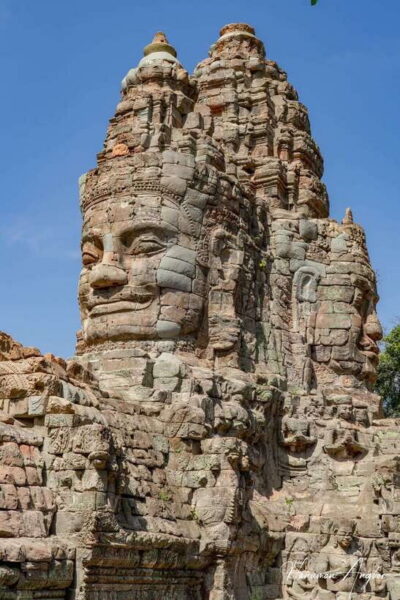
- Bayon Temple: The Faces, and What Your Guide Points Out
- Angkor Thom’s Extra Stops: Baphuon, Elephant Terrace, Leper King, Royal Palace
- Ta Prohm: Tree Temple, Tomb Raider Energy, Real Stonework
- Transport, Comfort, and How to Time Your Photos
- Price and Value: $45 Plus Temple Fees (The Real Math)
- Who This Tour Suits Best (And Who Might Prefer Something Else)
- Should You Book This Angkor Wat–Bayon–Ta Prohm Tour?
- FAQ
- What’s included in the tour price?
- What isn’t included?
- How long is the tour?
- Is the hotel pickup and drop-off included?
- Do I need to pay temple fees separately?
- What’s the dress code?
- Is this a private tour?
- When will I know my booking is confirmed?
Key highlights to look for
- Angkor Wat built by Suryavarman II (1113–1150 AD), with three levels and five main towers to spot
- Angkor Thom’s South Gate (Tonle Oum) and the other gate names that shape how you read the city
- Bayon’s giant faces plus explanations of how religion and rule shaped the sculpting
- Ta Prohm the tree temple experience, including why it’s famous in popular culture
- Hotel pickup + A/C car, with water and cold towels to keep the day manageable
Other ways to walk the great temple
- Angkor Wat Sunrise or Sunset Tour with Guide from Siem Reap★ 5.0 · 12,109 reviews
- Siem Reap: Angkor Wat: Small-Group Sunrise or Sunset Tour★ 5.0 · 9,444 reviews
- Siem Reap: Angkor Wat 2-Day Tour with Sunrise and Sunset★ 4.9 · 4,429 reviews
- Siem Reap: Full-Day Angkor Wat Guided Tour with Sunset★ 4.9 · 3,803 reviews
Angkor in One Day: How This 5–7 Hour Plan Really Works
This is a classic small-circuit style day, tuned for people who want the big temples without turning it into an all-day slog. You’ll start with Angkor Wat, then move through Angkor Thom via the South Gate, and finish at Ta Prohm before heading back to your hotel. Expect about 5 to 7 hours, depending on pacing and how long you want to linger.
What makes this format good for you is that it gives structure. When you know which temple comes next, you stop making awkward decisions like Where should we go first? and Why are these walls covered in faces? You’re also not relying on a self-guided scramble. A local guide helps you slow down just enough to notice the details.
The tour is private for your group, with hotel pickup and drop-off, so you’re not stuck waiting on a van full of strangers. You’ll ride in an air-conditioned car—a small luxury that matters in Siem Reap heat.
Angkor Wat: From Flag Symbol to Real-World Details
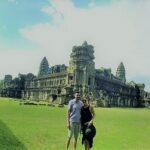
Angkor Wat is the one that people think they know. Then you arrive and it’s bigger than your mental picture. It was built from 1113 to 1150 AD under King Suryavarman II, and it measures 330 meters by 260 meters. You’ll see why the site became the national symbol of Cambodia—it even shows up on the flag—because the whole place feels planned to be seen as a statement.
This tour does Angkor Wat in two modes. First, you’ll look at the temple from the outside, then you’ll go inside. That pairing is key. From outside, you can spot the layout and the sense of levels. Inside, the guide helps you understand what you’re standing in front of and why certain carvings exist.
Try to notice the math of the design. Angkor Wat has three levels and five main towers. Even if you don’t become an architecture expert, you’ll feel the hierarchy: up is more sacred, and the middle is where the story becomes more intense. If you’re the type who likes to learn while walking, this is where the tour pays off.
One practical note: temple entry requires you to cover knees and shoulders. Wear something breathable but compliant. Comfortable walking shoes are non-negotiable here, because “just a little walking” turns into hours on uneven stone.
Angkor Thom South Gate (Tonle Oum): A City Read Like a Map
After Angkor Wat, you head to Angkor Thom, starting at the South Gate, also called Tonle Oum. This is a fast stop—about 30 minutes—but it sets up the rest of the day because it gives you a way to read the city.
Angkor Thom is laid out like a big square, with about 3 kilometers on each side, and it has five gates. Knowing the gate names changes your perspective as you move around. The gates include the South Gate (Tonle Oum), the Ghost Gate or Gate of the Dead, the Victory Gate, the Dei Chhnang Gate or North Gate, and the Killing Gate.
If you’re wondering why a tour would spend time on a gate when the faces are right there later, this is why: the city isn’t random. It’s a planned layout tied to story and symbolism. Even in a short time, a guide can help you make sense of why the entrance matters.
Expect a lot of photo moments here, but don’t rush. Even brief stops are more enjoyable when you know what the stop is for.
Bayon Temple: The Faces, and What Your Guide Points Out
Next comes Bayon, usually the emotional center of the day for first-timers. This stop runs about 1 hour. Yes, it’s famous for the giant faces, but the real win is understanding what those faces are doing in the bigger picture.
The guide’s storytelling style matters here. In my experience with this kind of Angkor tour approach, the difference is whether you’re just looking at shapes or you’re learning what the sculpting was trying to communicate. The standout praise for guide Dan is that he tells stories well and links Cambodian history and religion to what you see in the temple carvings. That’s the exact skill Bayon rewards.
Here’s how to make Bayon work for you: slow your pace right when you notice the faces. Then scan the carvings and details your eyes jump over. Bayon’s power is visual, but it’s not just a single view. Different angles change the feeling—almost like the faces follow you, even though that’s your brain doing the work.
Also, keep your timing in mind. Bayon is popular, and the site has a lot of foot traffic. An organized group plan helps you spend your attention where it matters most.
Back through the south gate to Bayon
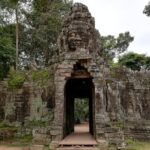


Angkor Thom’s Extra Stops: Baphuon, Elephant Terrace, Leper King, Royal Palace
Between South Gate and Bayon, the tour continues deeper into Angkor Thom. You’ll stop at several major points, including Baphuon Temple, Elephant Terrace, the Terrace of the Leper King, and the Royal Palace. The exact walk time for each part can vary depending on pacing, but the value is consistent: you get a fuller sense of the royal and religious landscape rather than treating Angkor Thom as a one-temple detour.
These stops matter because they fill in the “why” behind what you’re seeing. If Angkor Wat feels like a grand statement, these areas feel more like the operating parts of a royal city. Even when you’re not reading every carving, the different sections help you understand how power, ceremony, and daily meaning were arranged in stone.
If you have energy, this tour’s structure also gives a little flexibility to add another small temple stop. That’s not a guarantee of every extra stop for every person, but it’s a nice option if you don’t want the day to end right at Ta Prohm.
Ta Prohm: Tree Temple, Tomb Raider Energy, Real Stonework
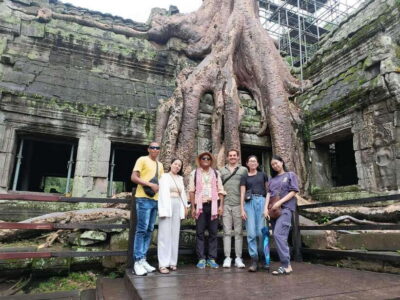
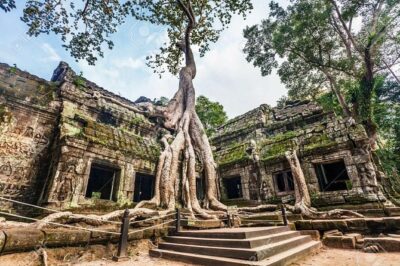
Ta Prohm is the final temple, and it’s special for a reason. It’s known as a tree temple, and it’s also the one people associate with the Tomb Raider vibe. The tour gives about 1 hour here, with time to view it from outside and then explore inside with your guide.
Ta Prohm’s signature is the way nature and architecture share the same stage. The trees feel like they’re part of the building rather than guests on the edges. That’s the attraction, but it also makes this stop a little slower. You’ll want to look up, then look down, then look around again to piece together what’s holding what.
Dress and shoe rules are the same. You’ll walk on uneven surfaces, and you’ll want grip. If you’ve made it through the morning, Ta Prohm is often the point where people finally stop rushing and just enjoy the spectacle.
Transport, Comfort, and How to Time Your Photos
This tour is built around efficient movement, but it still gives enough time at key sites to absorb what’s there. You’ll ride in an A/C car between stops, and you’ll get drinking water and cold towels—simple additions that keep you comfortable when the sun gets loud.
The total duration is 5 to 7 hours, and that can feel long or short depending on how often you pause. If you want the best experience, plan for short breaks at each temple rather than trying to sprint photo-to-photo. When you slow down, Bayon and Ta Prohm get more interesting fast.
Also, keep expectations realistic about heat and crowds. These temples draw serious numbers, so start early energy tends to help. Even if you don’t control the sun, you can control your pace.
One more smart move: the tour notes advise you not to bring valuables. That’s not just a generic warning. When you’re touring major sites with lots of foot traffic, fewer distractions equals a smoother day.
Price and Value: $45 Plus Temple Fees (The Real Math)
At $45 per person, the headline price is only half the story. Your major add-on is the temple fee of $37 per person, plus recommended tipping for the guide and driver. When you factor in the temple fee, you’re paying for access plus the structure that makes the day easier.
So is it good value? For most people, yes—because you’re not just buying transportation. You’re buying time saved (pickup and a plan), comfort (A/C, water, cold towels), and the guide’s on-site explanations. Angkor is one of those places where a good guide turns a list of monuments into a coherent story.
If you’re traveling as a private group, the “per person” value can feel even better because you’re not splitting attention with a huge crowd. Still, if you hate guided learning and prefer to wander freely, you might feel boxed in by a tight schedule.
Who This Tour Suits Best (And Who Might Prefer Something Else)
This tour fits you if you want the big names—Angkor Wat, Bayon, and Ta Prohm—in one organized plan with a local guide who knows what the carvings mean. It’s especially good if you enjoy clear storytelling and want help noticing the religious and political influences behind the temples.
It also suits you if you like practical support. Hotel pickup and drop-off, plus comfortable walking shoes and dressing correctly, make the day easier to manage. The “private tour” format helps if you want a calmer flow and fewer delays.
You might choose a different option if you want unlimited time at each site or if you plan to spend most of the day just wandering at your own pace. This itinerary is designed for efficiency, not for stretching into a slow, pick-your-own schedule kind of day.
Should You Book This Angkor Wat–Bayon–Ta Prohm Tour?
If your goal is to see the headline temples and come away with a clearer understanding, I’d say book it. The guide-led approach—especially with Dan’s mix of history, religion, and storytelling—turns your visits into more than photo stops.
If you’re sensitive to costs, do the math early: $45 + $37 temple fee, then budget for tipping. If you can handle that, you’ll likely feel like the day was organized rather than rushed.
And if you want a smooth first crack at Angkor from Siem Reap, this small-circuit style plan is a smart way to get oriented fast—Angkor Wat first, then Angkor Thom landmarks, then Ta Prohm for the dramatic finale.
FAQ
What’s included in the tour price?
Hotel pickup and drop-off, an air-conditioned car, a local English-speaking tour guide, plus drinking water and cold towels.
What isn’t included?
Temple fees are not included (listed as $37.00 per person). Tipping for the guide and driver is recommended, and travel insurance is not included.
How long is the tour?
The duration is listed as approximately 5 to 7 hours.
Is the hotel pickup and drop-off included?
Yes, hotel pickup and drop-off are included.
Do I need to pay temple fees separately?
Yes. Temple fee is listed as $37.00 per person, and it is not included in the tour price.
What’s the dress code?
You must cover your knees and shoulders when entering the temples.
Is this a private tour?
Yes. It’s private, and only your group participates.
When will I know my booking is confirmed?
Confirmation is received at the time of booking.
Ta Prohm and the Roots
- Siem Reap Tour: Angkor Wat Sunrise, Bayon, Ta Prohm, Banteay Srei
★ 5.0 · 931 reviews - Angkor Wat Private Driver Tours to Angkor Wat Sunrise, Angkor Thom & Ta Prohm
★ 5.0 · 98 reviews - Angkor Wat, Angkor Thom Ancient Capital, Ta Promh Temple
★ 5.0 · 85 reviews - Private Temples Guided Tour (Angkor Wat, Ta Prom & Angkor Thom)
★ 5.0 · 75 reviews - One Full Day Private tour of Angkor Wat, Ta Prohm, Angkor Thom & Banteay Srie
★ 5.0 · 64 reviews
Through Angkor Thom to Bayon
- Siem Reap Tour: Angkor Wat Sunrise, Bayon, Ta Prohm, Banteay Srei
★ 5.0 · 931 reviews - Angkor Wat Private Driver Tours to Angkor Wat Sunrise, Angkor Thom & Ta Prohm
★ 5.0 · 98 reviews - Angkor Wat Sunrise and Angkor Thom Sunset Tour
★ 5.0 · 89 reviews - Angkor Wat, Angkor Thom Ancient Capital, Ta Promh Temple
★ 5.0 · 85 reviews - Private Temples Guided Tour (Angkor Wat, Ta Prom & Angkor Thom)
★ 5.0 · 75 reviews
Angkor Wat, a Few More Ways In
- Angkor Wat Sunrise or Sunset Tour with Guide from Siem Reap
★ 5.0 · 12,109 reviews - Siem Reap: Angkor Wat: Small-Group Sunrise or Sunset Tour
★ 5.0 · 9,444 reviews - Siem Reap: Angkor Wat 2-Day Tour with Sunrise and Sunset
★ 4.9 · 4,429 reviews - Siem Reap: Full-Day Angkor Wat Guided Tour with Sunset
★ 4.9 · 3,803 reviews - Angkor Wat Sunrise tour with Small – Group and Guide tours
★ 5.0 · 3,655 reviews
Just Added: Fresh Siem Reap Tour Reviews



Angkor Wat Temple Tours, compared.
 ★ 5.0Angkor Wat Sunrise or Sunset Tour with Guide from Siem ReapFrom $1812,109 reviews
 ★ 5.0Angkor Wat: Small-Group Sunrise or Sunset TourFrom $159,444 reviews
 ★ 4.9Angkor Wat 2-Day Tour with Sunrise and SunsetFrom $344,429 reviews
 ★ 4.9Full-Day Angkor Wat Guided Tour with SunsetFrom $153,803 reviews
 ★ 5.0Angkor Wat Sunrise tour with Small – Group and Guide toursFrom $143,655 reviews
 ★ 5.0Angkor Wat Highlights and Sunrise Guided Tour from Siem ReapFrom $233,213 reviews
 ★ 5.0Angkor Wat Sunset Small Group Tour with Lunch IncludedFrom $203,059 reviews
 ★ 5.0Full-Day Angkor Wat Sunrise Private Tour with Guide from Siem ReapFrom $602,920 reviews
Browse the lists this tour appears in