
Reviewed · ANGKOR WAT TEMPLE TOURS
Angkor Wat & Bayon: the Smiling Temple
Two temples, one gentle bike ride. This small-group Angkor cycling tour turns big-ticket sights into something you can take in slowly, from quiet side paths to the famous stone gates of Angkor Thom. You get to connect the dots with a guide’s explanations while the morning air stays calm.
I also like how practical the inclusions are: Trek mountain bikes with a helmet, plus a proper sit-down break with lunch and coconut juice to keep you going. On the trail, you’re not just dodging crowds. You’re moving through areas where you might spot butterflies and flowers and hear the whole site feel alive.
One thing to plan around: the temple pass is extra (and there’s some off-road riding, which can be tougher on a very hot day). Also, there’s no hotel pickup, so factor that into your morning logistics.
In This Review
- Key things to know before you pedal
- Why Angkor by Bike Works So Well at 7:30 AM
- Price and What Your $50 Covers (Bike, Lunch, Drinks)
- Pedaling Through Angkor Thom: South Gate and the Wall Walk
- Prasat Chrung Viewpoint and the Off-Road Reality
- Bayon’s 216 Smiling Faces Without the Rush
- Temple Etiquette, What to Pack, and Heat-Smart Tips
- Should You Book This Angkor Wat and Bayon Cycling Tour?
- FAQ
- How long is the Angkor Wat & Bayon smiling temple cycling tour?
- What time does the tour start?
- Where do I meet for the tour?
- Is Angkor temple entry included in the price?
- What’s included in the $50 price?
- Is hotel pick up and drop off included?
- How large is the group?
- Is the ride suitable for beginners or different fitness levels?
- What clothing is allowed at Angkor?
- Do I receive a mobile ticket?
Key things to know before you pedal
- Guaranteed small group (max 10), so it stays relaxed rather than rushed.
- Premium bike setup included with Trek mountain bike and helmet.
- Lunch, coconut juice, and bottled water are part of the price.
- Most important sights are covered: South Gate of Angkor Thom and Bayon, plus a viewpoint at Prasat Chrung.
- Admission not included: you’ll need a 1-day temple pass separately.
- Some off-road sections and a short climb mean comfort matters more than speed.
Other ways to walk the great temple
- Angkor Wat Sunrise or Sunset Tour with Guide from Siem Reap★ 5.0 · 12,109 reviews
- Siem Reap: Angkor Wat: Small-Group Sunrise or Sunset Tour★ 5.0 · 9,444 reviews
- Siem Reap: Angkor Wat 2-Day Tour with Sunrise and Sunset★ 4.9 · 4,429 reviews
- Siem Reap: Full-Day Angkor Wat Guided Tour with Sunset★ 4.9 · 3,803 reviews
Why Angkor by Bike Works So Well at 7:30 AM
Angkor is an active spiritual place, so the timing matters. This tour starts at 7:30 am, when the heat is often easier to manage and the crowds can be lighter than later in the day. On a bike, you’re not stuck in one spot trying to see everything at once. You’re traveling through the Angkor area at a human pace, with time to look at details and listen while your guide connects landmarks to the larger story.
The ride is described as leisurely and non-adventurous, which is exactly what you want if you’re not trying to “train” on vacation. You’ll cruise toward the big anchors of the visit—Angkor Wat and Bayon—while still getting that in-between time that most standard temple tours miss. That includes slower segments through quieter trails where nature shows up (think butterflies and flowers) and the whole experience feels less like an obligation and more like a morning you’ll actually remember.
One more smart thing about a bike morning: you can reach viewpoints and gates with less friction. When walking, you lose energy just moving between areas. Here, movement is the plan, so your energy goes toward enjoying the temples instead of fighting fatigue before you even arrive.
Price and What Your $50 Covers (Bike, Lunch, Drinks)
At $50 per person, this is best thought of as a “guided bike day” package, not an Angkor entry ticket. The temple pass is not included, so you’ll add about $37 for a 1-day entry. That puts the real all-in total at roughly $87, assuming you do a single-day pass.
What you get for that $50 is the stuff that usually costs extra if you try to DIY:
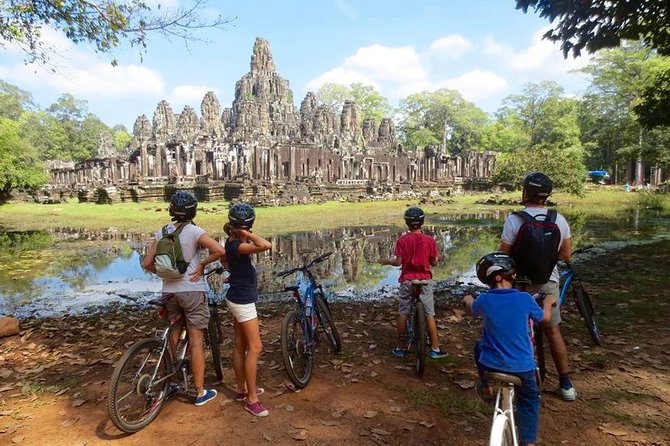
- a premium Trek mountain bike plus a helmet
- an English-speaking guide
- lunch
- coconut juice/water and pure drinking water
This matters because Angkor can be pricey once you start adding pieces one by one. Bike rental plus a guide plus a food stop often becomes more expensive than it looks at first. Here, the value is that you buy the “comfort layer” up front: equipment, someone to set the route, and scheduled breaks so you’re not guessing.
Two small logistics points that affect value:
- hotel pickup and drop-off are not included, so you’ll need to get yourself to the start point.
- the tour uses a mobile ticket, which helps you avoid last-minute paperwork.
Also, it’s worth noting what this tour is not built to be. It’s not a hardcore workout or a long-distance expedition. You’re paying for a steady, enjoyable ride and guided temple highlights in a group capped at 10.
Pedaling Through Angkor Thom: South Gate and the Wall Walk
Your morning flows toward two major “must sees,” with Angkor Wat as one of the headliners and Bayon as the other. Between them, the tour leans into Angkor Thom, especially its gates and defensive walls. This is where a bike day helps most: you can cover ground while still stopping when something is worth a close look.
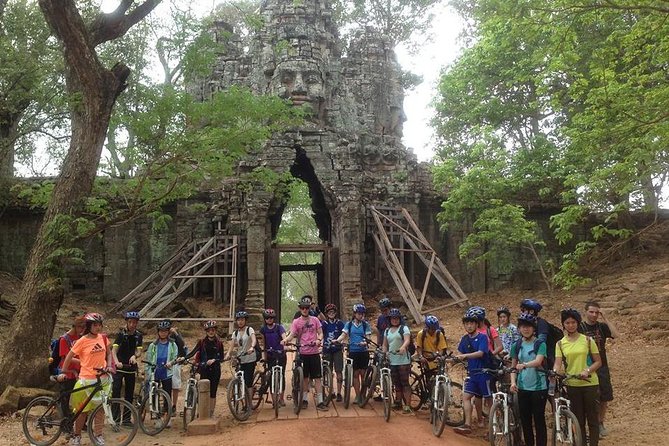
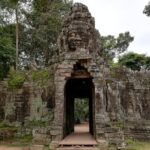
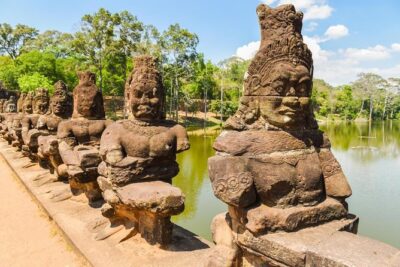
Early on, you’ll move toward the South Gate of Angkor Thom, described as the most appealing defensive wall of Angkor Thom. That phrase matters. Gates here aren’t just entrances. They’re part of the city’s protection system and built to impress even before you’re inside. Coming by bike also makes it easier to position yourself without squeezing through tight crowd bottlenecks.
Then you get a key moment: a climb to venture on the protection wall for the viewpoint at Prasat Chrung. That’s a big reason to choose the cycling version instead of only walking. You still get that “climb and see more” feeling, but you’re doing it as part of an overall route rather than a separate hike.
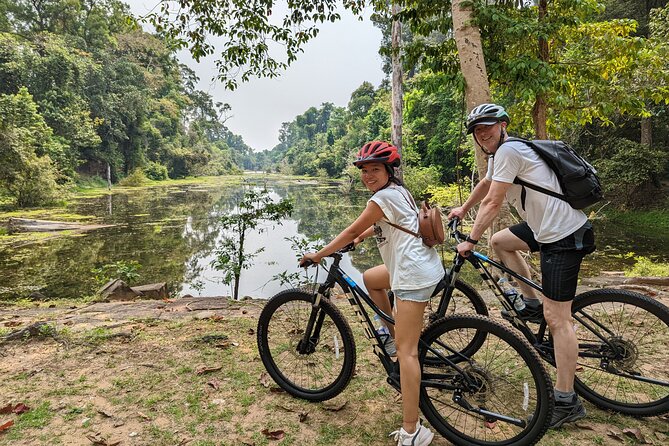
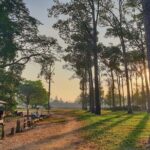
Along the way, the tour highlights the softer side of Angkor Thom too. It’s not only stone and signage. You’re given time on trails where you might see butterflies and flowers, plus the sound of nature. Even a short “breathing space” on the schedule can change how the day feels.
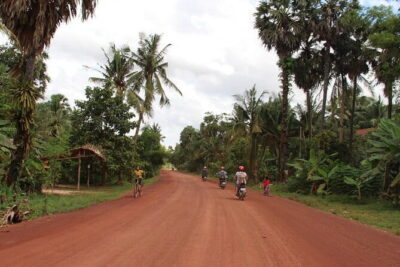
One practical drawback to keep in mind: if you’re expecting a smooth paved-road ride the whole time, you may be surprised. There can be some off-road biking, so wearing the right shoes and staying relaxed in your posture makes a difference.
Prasat Chrung Viewpoint and the Off-Road Reality
Prasat Chrung is the kind of stop people remember because it’s not just a temple plaque moment. You’re getting up onto the protection wall area to see the view, which means you’ll feel the day shift from “ride and arrive” to “ride and work a little.” It’s still framed as non-adventurous, but there is a climb involved, and it’s part of what makes the tour feel earned.
This is also where you should manage expectations about the heat. Angkor can be relentless on sunny days. If the weather is very hot, the off-road segments and the climb can slow the pace. The good news is that this tour is designed to be leisurely for a few hours, so you’re not committing to an endurance challenge. Still, plan to go easy on yourself. If you’re someone who gets overheated easily, bring sunscreen and sunglasses and drink regularly.
For comfort, I’d treat this as a day where preparation beats grit:
- wear breathable clothing under the temple rules (more on that below)
- use sunscreen early
- keep water and coconut juice in your plan, not as an afterthought
- expect a bumpy feel on some sections
There’s another gate stop later that rounds out the defensive-wall theme: the West Gate of Angkor Thom, described as the never-restored gate. That detail is helpful because it signals what you might notice when you’re standing there. Instead of “polished restoration,” you’re seeing a more original-looking structure, which can feel more real and slightly more weathered.
If you’re the type who loves architecture and city planning, the wall-and-gate focus is one of the smartest ways to understand Angkor Thom beyond the main temple headlines.
Back through the south gate to Bayon
Bayon’s 216 Smiling Faces Without the Rush
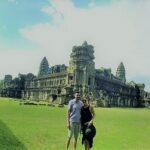
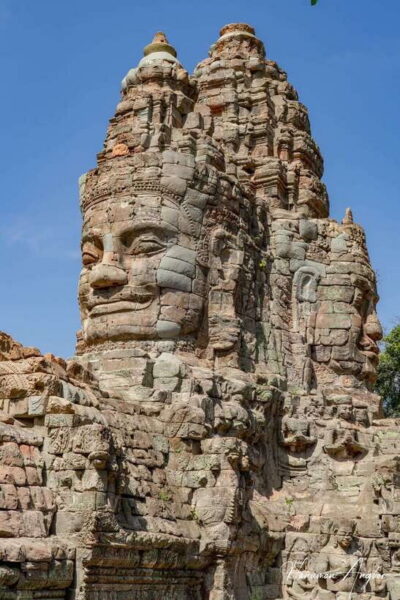
Bayon is the emotional payoff of the day. It’s presented as the second most important temple after Angkor Wat, and it’s instantly identifiable once you’re there: 54 towers and 216 smiling faces.
This is where the bike tour approach pays off. Instead of arriving only at the peak crowd peak and being forced into a rapid “see it, move on” loop, you arrive in a more paced, guided rhythm. Your guide’s storytelling helps you read what you’re looking at. And Bayon’s faces do something that a lot of temples don’t: they create a sense of being watched. They’re not just decorative. They change the mood of the space as you move.
The tour also includes the quiet lead-in pieces—like the south and west gates—so Bayon doesn’t feel random. You’re coming in with context: a city built for defense, a complex of sacred meaning, and then a temple that centers expression and symbolism.
One thing to plan for: Angkor is active and sacred. In real-world terms, that means you’ll need to be respectful with your movement and clothing so you don’t stand out for the wrong reason. If you’re traveling as a family, that matters even more because you’re setting the tone for kids.
And if you’re worried about the ride back, it’s worth knowing the tour leadership has handled real-life situations where younger kids couldn’t ride the entire return route, including arranging a tuk-tuk home in at least one case. That’s not something to assume in every situation, but it’s a reassuring signal that the day has a bit of flexibility built in.
Temple Etiquette, What to Pack, and Heat-Smart Tips
Before you go, get clear on the dress rules. Angkor is an active spiritual site for Buddhists and locals who use it daily for worship, prayer, and meditation. That means revealing clothes are prohibited in sacred palace areas. Specifically:
- shorts and skirts above the knees are not allowed
- bare shoulders are not allowed
Respectful dress is strongly encouraged. I’d treat this like a checklist, not a suggestion. Bring something light but covering enough that you won’t have to improvise at the last second. If you’re coming from a beachy day or very hot hotel morning, plan your clothing strategy now.
What to pack is simple and practical:
- a camera
- sunglasses
- sunscreen
And if you tend to get dry, you’re covered on the hydration front. The tour includes pure drinking water and coconut juice, so you shouldn’t need to hunt for drinks during the ride.
One more “smart move” tip: because the temple pass is separate, make sure you’re ready to buy or show it before you enter. The tour does not include Angkor entry, so your time is valuable. I’d confirm your temple pass setup the day before so you’re not scrambling while everyone else is already getting in.
Should You Book This Angkor Wat and Bayon Cycling Tour?
Book it if you want an Angkor day that feels like a guided morning stroll with wheels. This is a great fit for first-timers who want the headline sights—Angkor Wat and Bayon—plus the in-between Angkor Thom gate and wall moments. I also think it’s a strong choice if you’re traveling with mixed ages or fitness levels, since the ride is described as suitable for all riders and not adventurous, with a relaxed pace and a max 10 group size.
Skip it (or consider another option) if you want a purely indoor, fully seated, low-movement temple visit. There is some off-road biking and you’ll face heat, plus the cost doesn’t include the temple pass. It’s still a pleasant day, just not a couch-on-a-tour-bus style experience.
If your schedule is flexible, it’s also reassuring that you can cancel for a full refund up to 24 hours before the start time. That gives you breathing room if you’re juggling other Angkor plans.
Bottom line: if you like the idea of pairing bikes, storytelling, and two of the most famous temple stops—without turning your day into a sprint—this is a solid, good-value way to see Angkor Wat and Bayon.
FAQ
How long is the Angkor Wat & Bayon smiling temple cycling tour?
The tour lasts about 5 hours (approx.).
What time does the tour start?
It starts at 7:30 am.
Where do I meet for the tour?
The meeting point is Taphul Rd, Krong Siem Reap 17252, Cambodia.
Is Angkor temple entry included in the price?
No. Angkor admission is not included. A 1-day temple pass is listed at $37.
What’s included in the $50 price?
The tour includes an English-speaking guide, a premium mountain bike (TREK) and helmet, lunch, coconut water/juice, and pure drinking water.
Is hotel pick up and drop off included?
No. Hotel pick up and drop-off are not included.
How large is the group?
It’s guaranteed small-group with a maximum of 10 travelers.
Is the ride suitable for beginners or different fitness levels?
Yes. It’s described as suitable for all riders of all fitness levels and non-professional, non-adventurous.
What clothing is allowed at Angkor?
Revealing clothes are prohibited in sacred palace areas. Avoid shorts or skirts above the knees and bare shoulders. Respectful dress is strongly encouraged.
Do I receive a mobile ticket?
Yes. The activity uses a mobile ticket. Confirmation is received at booking.
More Temple Circuits Around Siem Reap
- Angkor Wat Sunrise or Sunset Tour with Guide from Siem Reap
★ 5.0 · 12,109 reviews - Siem Reap: Angkor Wat: Small-Group Sunrise or Sunset Tour
★ 5.0 · 9,444 reviews - Siem Reap: Angkor Wat 2-Day Tour with Sunrise and Sunset
★ 4.9 · 4,429 reviews - Siem Reap: Full-Day Angkor Wat Guided Tour with Sunset
★ 4.9 · 3,803 reviews - Angkor Wat Sunrise tour with Small – Group and Guide tours
★ 5.0 · 3,655 reviews
Through Angkor Thom to Bayon
- Siem Reap Tour: Angkor Wat Sunrise, Bayon, Ta Prohm, Banteay Srei
★ 5.0 · 931 reviews - Angkor Wat Private Driver Tours to Angkor Wat Sunrise, Angkor Thom & Ta Prohm
★ 5.0 · 98 reviews - Angkor Wat Sunrise and Angkor Thom Sunset Tour
★ 5.0 · 89 reviews - Angkor Wat, Angkor Thom Ancient Capital, Ta Promh Temple
★ 5.0 · 85 reviews - Private Temples Guided Tour (Angkor Wat, Ta Prom & Angkor Thom)
★ 5.0 · 75 reviews
Angkor Wat, a Few More Ways In
- Angkor Wat Sunrise or Sunset Tour with Guide from Siem Reap
★ 5.0 · 12,109 reviews - Siem Reap: Angkor Wat: Small-Group Sunrise or Sunset Tour
★ 5.0 · 9,444 reviews - Siem Reap: Angkor Wat 2-Day Tour with Sunrise and Sunset
★ 4.9 · 4,429 reviews - Siem Reap: Full-Day Angkor Wat Guided Tour with Sunset
★ 4.9 · 3,803 reviews - Angkor Wat Sunrise tour with Small – Group and Guide tours
★ 5.0 · 3,655 reviews
Just Added: Fresh Siem Reap Tour Reviews

Angkor Wat Temple Tours, compared.
 ★ 5.0Angkor Wat Sunrise or Sunset Tour with Guide from Siem ReapFrom $1812,109 reviews
 ★ 5.0Angkor Wat: Small-Group Sunrise or Sunset TourFrom $159,444 reviews
 ★ 4.9Angkor Wat 2-Day Tour with Sunrise and SunsetFrom $344,429 reviews
 ★ 4.9Full-Day Angkor Wat Guided Tour with SunsetFrom $153,803 reviews
 ★ 5.0Angkor Wat Sunrise tour with Small – Group and Guide toursFrom $143,655 reviews
 ★ 5.0Angkor Wat Highlights and Sunrise Guided Tour from Siem ReapFrom $233,213 reviews
 ★ 5.0Angkor Wat Sunset Small Group Tour with Lunch IncludedFrom $203,059 reviews
 ★ 5.0Full-Day Angkor Wat Sunrise Private Tour with Guide from Siem ReapFrom $602,920 reviews
Browse the lists this tour appears in