
Reviewed · ANGKOR WAT TEMPLE TOURS
Angkor Wat & Floating Village 3-Day Private Tour
Three days can feel like a lot, but this one flows. I love the private pace, and I love how an expert guide helps you read the temples instead of just snapping photos. One heads-up: the big temple entry cost (the 3-day pass) isn’t included in the tour price.
Beyond Angkor’s top sights, you also get a breather day built around the real life of the region. The included dinner with cultural performance and the boat trip to Kampong Phluk add variety, not just more stone. Still, you should plan for some walking and the trek up toward Kbal Spean.
In This Review
- Key Highlights That Make This Tour Worth Your Time
- Why This 3-Day Angkor Loop Feels Efficient (Not Rushed)
- Day 1: Ta Prohm Roots, Angkor Thom Faces, and Angkor Wat in the Heat
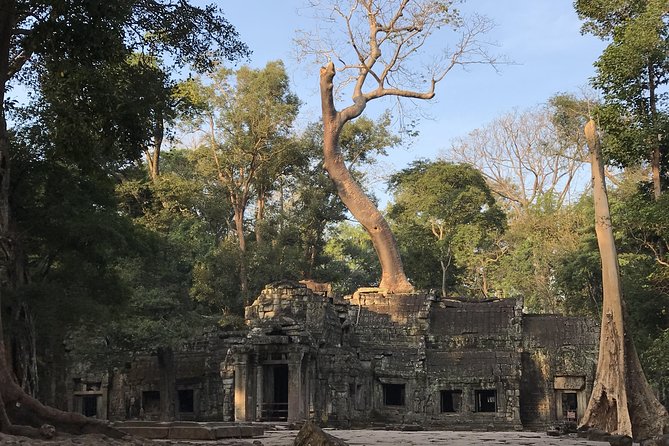
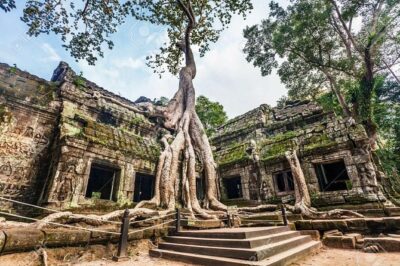
- Ta Prohm Temple: The Jungle Ruin That Looks Like It’s Breathing
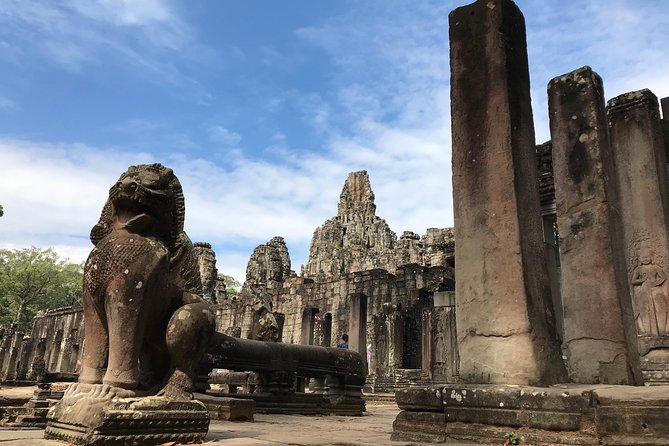
- Angkor Thom: Victory Gate and the Big Face Energy of Bayon
- Angkor Wat: The Main Stage, with Lunch Built In
- Dinner with Cultural Performance: A Smart Way to Close Day 1
- Day 2: Preah Khan, Banteay Srei, and the Kbal Spean Trek
- Preah Khan: A Grand Circuit Stop with University-Era Stories
- Banteay Srei: The Women’s Citadel Stop Marked as Free
- Kbal Spean: The One-Thousand Linga River (With a Trek)
- Day 3: Roluos Temples and Kampong Phluk’s Floating Village by Boat
- Roluos Temples: Former Capital Vibes Without the Main-Route Crowds
- Kampong Phluk Floating Village: Tonle Sap by Wooden Boat
- Price and Logistics: What You’re Really Paying For
- Guides Matter: How You Can Spot a Great Experience
- Practical Tips for Hot Temples and the Kbal Spean Trek
- Should You Book This Private Angkor Wat & Floating Village Tour?
- FAQ
- What is included in the tour price?
- Do I need to pay for the temple pass separately?
- Is pickup provided?
- Are lunch meals included?
- Is the floating village boat trip included?
- Is admission included for Banteay Srei?
- How much walking is involved, especially on Day 2?
- Is this tour only for my group?
- Can I cancel for a full refund?
Key Highlights That Make This Tour Worth Your Time
- Ta Prohm’s jungle drama: Strangler fig roots and a famous movie backdrop feel different in person.
- Angkor Thom’s face towers: Victory Gate and the Bayon complex give you a clear sense of Khmer power.
- Banteay Srei gets extra attention: The women’s citadel stop is marked as free for admission.
- Kbal Spean includes real effort: A moderate trek brings you to carved river imagery.
- Tonle Sap by wooden boat: Kampong Phluk fishing community views come from the water, not a viewing platform.
- Included small comforts: Cold tissues, mineral water, A/C transport, and a full dinner stop you from fading early.
Other ways to walk the great temple
- Angkor Wat Sunrise or Sunset Tour with Guide from Siem Reap★ 5.0 · 12,109 reviews
- Siem Reap: Angkor Wat: Small-Group Sunrise or Sunset Tour★ 5.0 · 9,444 reviews
- Siem Reap: Angkor Wat 2-Day Tour with Sunrise and Sunset★ 4.9 · 4,429 reviews
- Siem Reap: Full-Day Angkor Wat Guided Tour with Sunset★ 4.9 · 3,803 reviews
Why This 3-Day Angkor Loop Feels Efficient (Not Rushed)
This is built as a straight shot through the Angkor region’s best-known spiritual sites, with the day structure working in your favor. You start early around 8:00 AM, which matters because the temples get hot, crowded, and harder to enjoy as the day goes on. With air-conditioned transport and a guide doing the navigation, you lose less time bouncing between places.
I also like how the tour balances “must-see” and “time to look.” Some days include a short lunch break where your guide can point you toward food near the temples. Other parts of the schedule are shaped for wandering—especially around the jungle and carving temples where it’s easy to miss details if you’re moving too fast.
Because it’s private, your group stays together and your guide can slow down when questions pop up, or speed up when you want the next stop. That’s a big deal at Angkor, where the difference between seeing a temple and understanding it is often a few guided minutes.
Day 1: Ta Prohm Roots, Angkor Thom Faces, and Angkor Wat in the Heat
Day 1 is the classic emotional punch: you begin with Ta Prohm, then move through the royal center of Angkor Thom, and end at Angkor Wat.
Ta Prohm Temple: The Jungle Ruin That Looks Like It’s Breathing
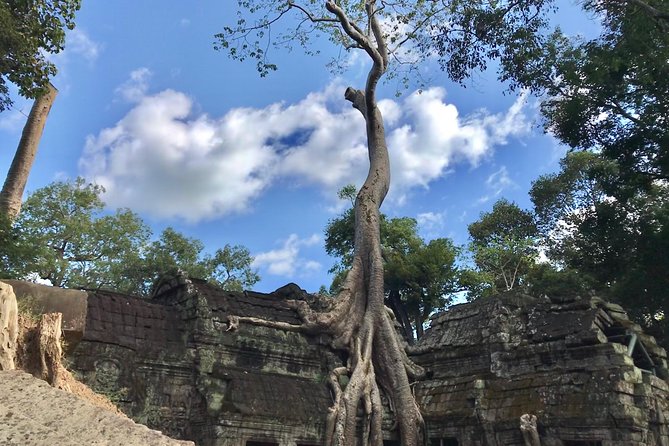
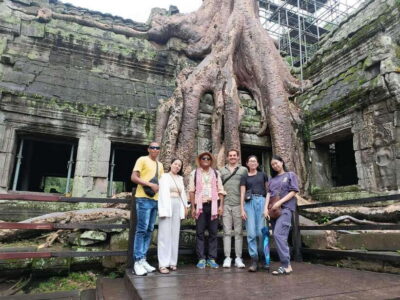
You’ll head to Ta Prohm first, which is when the “wow” factor hits hardest. This is the temple embraced by huge strangler fig trees, so it feels half ruin, half living set. The fact that it was used in Tomb Raider II is part of its modern fame, but the real attraction is how the roots and stones create a maze of angles to study.
It’s also a great stop to bring your guide into the moment. Ask what to look for—faces, lintels, later damage, and how the jungle encroaches. A guide can help you see the temple as a work in layers rather than a single photo.
Practical note: Ta Prohm’s admission ticket isn’t included, so budget for the temple pass.
Angkor Thom: Victory Gate and the Big Face Energy of Bayon
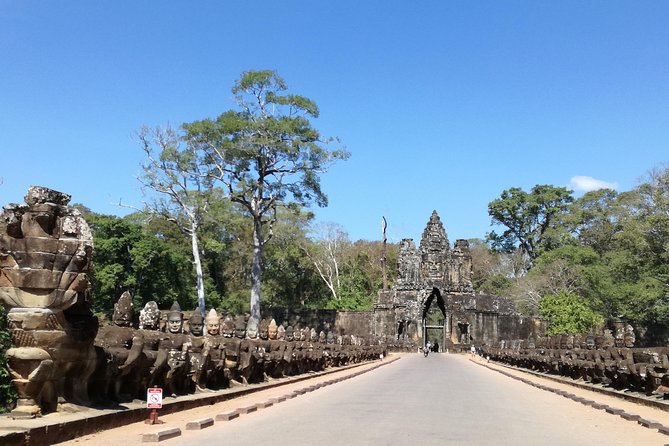
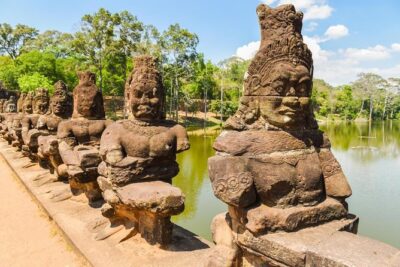
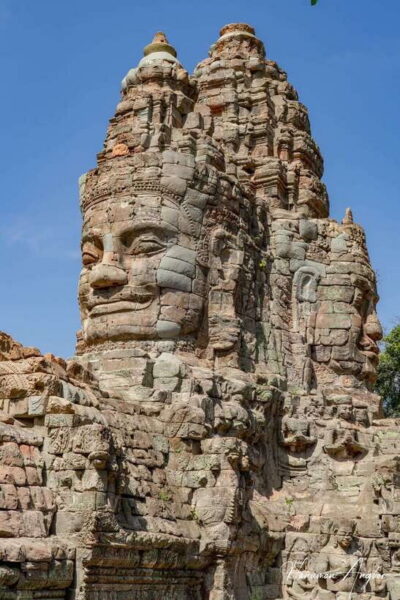
From Ta Prohm you drive into Angkor Thom, entering through the Victory Gate. This area feels more “political” than Ta Prohm—less movie-jungle and more royal city plan.
You’ll visit key spots such as:
- Elephant Terrace
- Terrace of the Leper King
- Royal Enclosure
- Phimean Akas
- Baphu (as listed in the tour flow)
And of course, this is where you’ll see the Bayon temple in the center—the one with many famous faces. It’s not just decoration. With a guide explaining what the faces represent and how the city was organized, the whole complex becomes easier to follow.
More temple circuits, set side by side
Angkor Wat: The Main Stage, with Lunch Built In
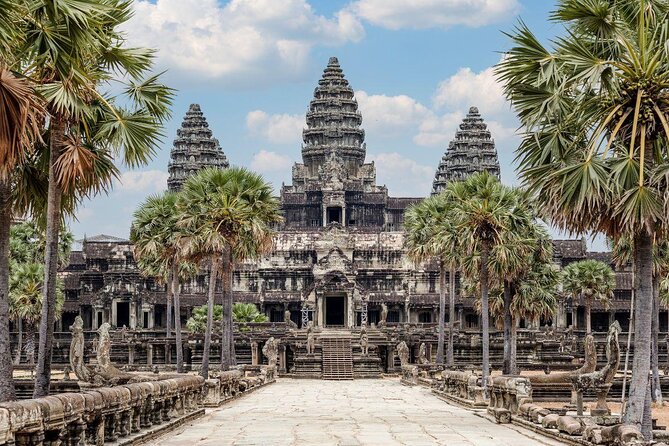
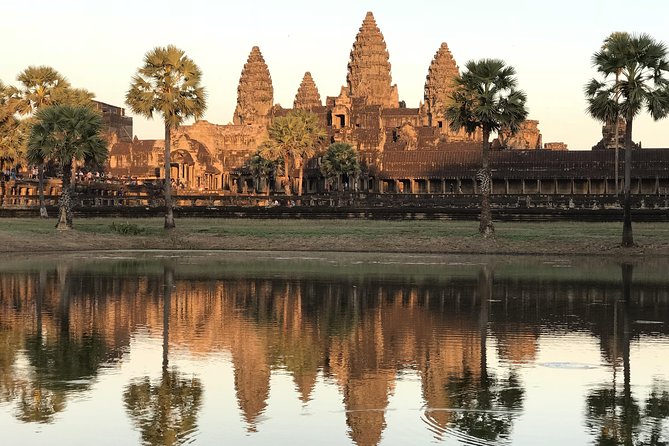
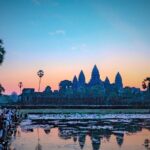
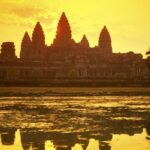
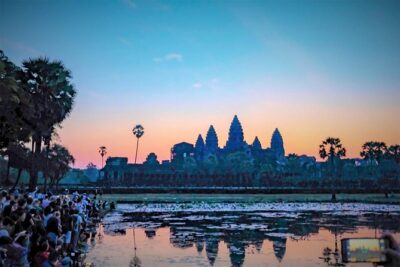
By noon you’ll reach Angkor Wat for your next key experience. Lunch is planned around this time, and the tour includes a short break where you can eat at local places near the temples. If you prefer staying on schedule, let your guide recommend a nearby option so you’re not guessing in the heat.
Angkor Wat’s ticket is also not included in the tour price, so plan on using the temple pass for the major stops.
Dinner with Cultural Performance: A Smart Way to Close Day 1
One reason this tour works is how it ends. You get an included dinner plus a cultural performance, which is a nice shift from stone to story. After a day of temples, it’s also a useful way to recover without losing time to planning.
If you’re the kind of traveler who likes understanding how Cambodians present culture today—food, music, dance—this stop adds meaning, not just entertainment.
Day 2: Preah Khan, Banteay Srei, and the Kbal Spean Trek
Day 2 leans into carvings and Buddhism-era Khmer craftsmanship, then ends with a physical change of pace at Kbal Spean.
Preah Khan: A Grand Circuit Stop with University-Era Stories
You’ll start with Preah Khan, part of the Grand Circuit, and it’s described as the “ancient Buddhist University.” That detail matters. Temples like this aren’t only about worship; they’re tied to teaching, learning, and community life. With a guide, you’ll get help connecting architecture to the role a site played centuries ago.
Admission tickets aren’t included here, so you’ll likely rely on the 3-day Temple Pass for the core Angkor sites.
Banteay Srei: The Women’s Citadel Stop Marked as Free
Next comes Banteay Srei, often called the women’s citadel. The listing notes admission is free for this stop, which is a rare bonus in a day full of paid temples.
This temple is known for its fine carving focus, and it’s a great contrast to the scale you saw at Ta Prohm and Angkor Thom. When you’re surrounded by bigger ruins, a carving-heavy site can feel like a breath of fresh detail—if you take time to look rather than rush.
Kbal Spean: The One-Thousand Linga River (With a Trek)
After lunch, you’ll head toward Kbal Spean, described as the river with one thousand linga. This stop changes the whole tone of the day. It’s not just “temple on the ground,” it’s a trek up toward a river setting with carvings.
This is where the “moderate physical fitness level” note becomes real. You don’t need to be an athlete, but you should expect uphill walking as part of the experience. If you know your limits, set expectations early with your guide—so you can pace yourself and still enjoy the scenery and the carvings.
Admissions here are also not included, so make sure your pass plan covers what you need.
Day 3: Roluos Temples and Kampong Phluk’s Floating Village by Boat
Day 3 is the calmer, more local-feeling finale: you start with the Roluos group, then shift to life on the water at Kampong Phluk on Tonle Sap Lake.
Roluos Temples: Former Capital Vibes Without the Main-Route Crowds
You’ll visit the Roluos temples group, described as three monuments connected to an earlier capital called Hari-Hara from the 9th century. The first stop listed includes Preah Ko, a Hindu temple.
Even if you’ve already seen the big Angkor names, Roluos can be a relief. The scale is different, and the overall feel is more “ancient city remains” than “everyone in line at the same gate.” A guide helps you connect the dots across sites—how ideas traveled, how Khmer religion evolved, and why these places mattered.
Again, admission tickets for these stops aren’t included, so your temple pass usually matters here.
Kampong Phluk Floating Village: Tonle Sap by Wooden Boat
After a lunch break at your own account, you’ll take a wooden boat along flooding forests to Kampong Phluk. This is one of the most distinct parts of the tour because you see the floating community from the water, not from shore.
The listing calls out the fishing community experience, and that “on the water” perspective is the whole point. You’ll have time to notice how daily life fits into a landscape shaped by season and water level.
The boat trip is included, and the tour provides the essentials like mineral water and cold tissues, which you’ll appreciate once you’re out there moving in the sun.
Price and Logistics: What You’re Really Paying For
At $198.98 per person for a 3-day private tour, you’re paying for more than transport. You’re paying for three things that matter at Angkor:
- A dedicated guide across multiple temple types (jungle ruin, royal city, carving temples, and then Tonle Sap life).
- Comfort and efficiency: an air-conditioned vehicle and planned morning starts.
- Two built-in value stops: dinner plus the Tonle Sap boat trip.
What’s not included is the 3-day Temple Pass cost of $62 per person. For most adults, your realistic all-in temple budget becomes about $260.98 per person once you add the pass.
Also note: meals other than dinner are not included. Lunch is described as a break with local restaurants nearby (your guide can recommend options), but you’ll be paying out of pocket.
So is it good value? If you want a true private experience with a guide who can explain what you’re seeing, this is priced like a comfortable “less stress” option. If you’re traveling solo and can handle your own planning confidently, it can still be worth it for time saved and reduced confusion at ticketing-heavy sites.
Guides Matter: How You Can Spot a Great Experience
One of the best signals in the provided feedback is how often guide names come up alongside words like patient, flexible, and genuinely helpful. For example, Sambath, Long, and Mork are named for being especially good at explaining what you’re looking at and keeping things running smoothly. Visovitou is also mentioned as patient and professional.
Some drivers get credit too—Veasna is praised for professional driving, and Phal is mentioned with a cooler of cold water, which is exactly the kind of small comfort that makes long temple days feel manageable. People also highlight English communication skills for guides like Long, which helps you understand details without guessing.
What should you do? Before you set off each morning, ask your guide:
- What should I look for first at each temple?
- Where are the best spots for photos that also show the layout?
- What’s the most tiring part today so we can pace it?
That turns the tour from a checklist into an experience you can actually remember.
Practical Tips for Hot Temples and the Kbal Spean Trek
Here are the things that most affect how your days feel—especially with an 8:00 AM start.
- Plan for heat and sun. Even with an A/C car, temple time adds up fast. Bring a hat and use sunscreen.
- Wear shoes you can hike in. Day 2 includes the trek up toward Kbal Spean, and that means uneven ground and uphill walking.
- Use the guide for lunch decisions. Lunch is not included, but the tour is set up so you can eat locally near the temples and keep momentum.
- Don’t forget the temple pass. The 3-day pass is separate and priced at $62 per person. The tour notes admission not included for many major stops.
- Expect an early, full day rhythm. Most stops happen in a tight window with guided time. If you need slow mornings, tell the guide upfront.
And since this is a private tour, you can also ask for small adjustments like spending a little more time where you’re most interested—jungle ruins, facial towers, or carving details.
Should You Book This Private Angkor Wat & Floating Village Tour?
I’d book this tour if you want:
- Private guide attention across the big Angkor highlights plus a Tonle Sap day that doesn’t feel like more temples.
- A schedule that starts early and uses the full day effectively.
- Included upgrades that matter—dinner, A/C transport, and the floating village boat trip.
I would think twice if:
- You’re trying to keep costs as low as possible, because the Temple Pass adds a meaningful extra line item.
- You know you struggle with walking or uphill treks, since Kbal Spean involves trekking and the tour calls for moderate physical fitness.
If you’re traveling with a group that wants less planning and more explanation, this is one of those practical “do it once, do it well” Angkor formats.
FAQ
What is included in the tour price?
The tour includes dinner, an air-conditioned vehicle, an expert tour guide, a boat trip to the floating village on Tonle Sap Lake, mineral water, and cold tissues during the tour.
Do I need to pay for the temple pass separately?
Yes. The 3-day Temple Pass costs US$62 per person and is not included. It is free for children below 12 years old.
Is pickup provided?
Yes. Hotel pickup is offered, and the tour starts at 8:00 am.
Are lunch meals included?
No. Other meals and beverages are not included. Lunch breaks are listed with local restaurants you can choose from.
Is the floating village boat trip included?
Yes. The boat trip to Kampong Phluk on Tonle Sap Lake is included.
Is admission included for Banteay Srei?
The tour description lists Banteay Srei as admission free.
How much walking is involved, especially on Day 2?
The tour notes moderate physical fitness is recommended because the Kbal Spean stop includes trekking up.
Is this tour only for my group?
Yes. It’s a private tour/activity, so only your group participates.
Can I cancel for a full refund?
Yes. Free cancellation is offered up to 24 hours in advance for a full refund. If you cancel less than 24 hours before the start time, the amount paid is not refunded.
Out on Tonle Sap
- From Siem Reap: Kampong Phluk Floating Village Tour by Boat
★ 4.9 · 6,979 reviews - Sunset tour of Kampong Phluk stilts home village on the Tonle Sap
★ 5.0 · 4,865 reviews - Kompong Phluk Floating Village Half-Day Tour ( Morning / Sunset )
★ 5.0 · 1,494 reviews - Siem Reap: Kulen Mountain, Beng Mealea and Tonle Sap Tour
★ 5.0 · 1,483 reviews - Tonle Sap Lake & Kampong Phluk Village Half-Day Tour
★ 5.0 · 1,045 reviews
More Temple Circuits Around Siem Reap
- Angkor Wat Sunrise or Sunset Tour with Guide from Siem Reap
★ 5.0 · 12,109 reviews - Siem Reap: Angkor Wat: Small-Group Sunrise or Sunset Tour
★ 5.0 · 9,444 reviews - Siem Reap: Angkor Wat 2-Day Tour with Sunrise and Sunset
★ 4.9 · 4,429 reviews - Siem Reap: Full-Day Angkor Wat Guided Tour with Sunset
★ 4.9 · 3,803 reviews - Angkor Wat Sunrise tour with Small – Group and Guide tours
★ 5.0 · 3,655 reviews
Angkor Wat, a Few More Ways In
- Angkor Wat Sunrise or Sunset Tour with Guide from Siem Reap
★ 5.0 · 12,109 reviews - Siem Reap: Angkor Wat: Small-Group Sunrise or Sunset Tour
★ 5.0 · 9,444 reviews - Siem Reap: Angkor Wat 2-Day Tour with Sunrise and Sunset
★ 4.9 · 4,429 reviews - Siem Reap: Full-Day Angkor Wat Guided Tour with Sunset
★ 4.9 · 3,803 reviews - Angkor Wat Sunrise tour with Small – Group and Guide tours
★ 5.0 · 3,655 reviews
Just Added: Fresh Siem Reap Tour Reviews

Angkor Wat Temple Tours, compared.
 ★ 5.0Angkor Wat Sunrise or Sunset Tour with Guide from Siem ReapFrom $1812,109 reviews
 ★ 5.0Angkor Wat: Small-Group Sunrise or Sunset TourFrom $159,444 reviews
 ★ 4.9Angkor Wat 2-Day Tour with Sunrise and SunsetFrom $344,429 reviews
 ★ 4.9Full-Day Angkor Wat Guided Tour with SunsetFrom $153,803 reviews
 ★ 5.0Angkor Wat Sunrise tour with Small – Group and Guide toursFrom $143,655 reviews
 ★ 5.0Angkor Wat Highlights and Sunrise Guided Tour from Siem ReapFrom $233,213 reviews
 ★ 5.0Angkor Wat Sunset Small Group Tour with Lunch IncludedFrom $203,059 reviews
 ★ 5.0Full-Day Angkor Wat Sunrise Private Tour with Guide from Siem ReapFrom $602,920 reviews
Browse the lists this tour appears in