
Reviewed · ANGKOR WAT TEMPLE TOURS
Angkor Wat Small-Group Sunrise Tour from Siem Reap
You’re up at dawn for a reason. This small-group Angkor Wat sunrise tour gets you to the park early, with hotel pickup and a guide to explain what you’re seeing. It’s limited to 15 people, so the day feels calmer than the big-bus versions.
I really like the pacing built around sunrise. You start in the dark, use a flashlight when needed, and then you’re in position before crowds and heat kick in. Second, I love the “small group” size with real guidance—English-speaking, with enough attention that the temples don’t turn into blur. You’ll also get cold bottled water, which matters after an early start.
One drawback to plan for: the visit is tightly scheduled. If something nudges the timing (late pickup, cloudy skies, or a slower group moment), you may lose that crisp sunrise window, and you can end up with longer waits later.
In This Review
- Key Things That Make This Sunrise Tour Worth Your Time
- Why Angkor Wat at Sunrise Feels Worth the Alarm
- Meeting at 4:30 AM: Pickup Window, Flashlight, and Dress Code
- Small-Group Logistics: Tuk-Tuk or Minivan, Plus Cold Water
- Stop-by-Stop: How the Day Flows Through Key Angkor Sites
- Angkor Archaeological Park at Dawn: The Quiet Start You’re Paying For
- A note on timing
- Angkor Wat: Vishnu, Symmetry, and the Best-Preserved Reality
- What to watch for
- Angkor Thom South Gate: Massive Walls and a City-Scale Feel
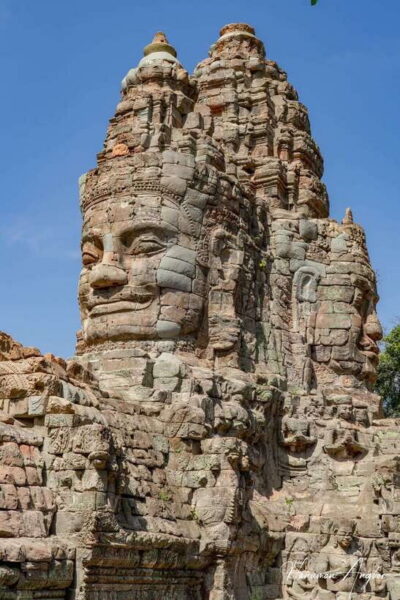
- Bayon Temple: 200 Smiling Faces and the Meaning Behind Them
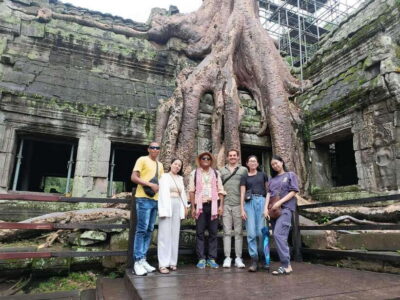
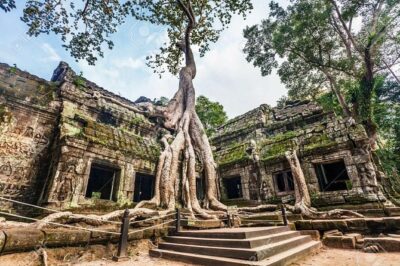
- Ta Prohm: Stones, Roots, and Jayavarman VII’s Family Story
- Price and Value: $39 Is the Easy Part, Tickets Are the Key Add-On
- What the Best Experiences Tend to Have in Common
- The Possible Downside: Wait Time and Sunrise That Can Vary
- Who Should Book This Angkor Wat Sunrise Tour?
- Should You Book This Angkor Wat Sunrise Tour?
- FAQ
- What time does pickup happen for the Angkor Wat sunrise tour?
- How many people are in the group?
- Is hotel pickup and drop-off included?
- What’s included in the tour price?
- What tickets do I need to pay for on the day?
- Are food and drinks included?
- What do I need to bring for the early morning?
- What clothing is allowed for temple visits?
- Is there free cancellation?
Key Things That Make This Sunrise Tour Worth Your Time
- Small group (max 15): easier movement around key temple areas and a more personal guide experience.
- Early pickup window (4:20am–5:20am, tour start around 4:30am): you’re set up for sunrise, not rushed at the last minute.
- Hotel pickup and drop-off: less stress at an hour when Siem Reap is basically still asleep.
- Real guided stops: Angkor Wat plus Angkor Thom highlights like South Gate and Bayon’s smiling faces.
- Ta Prohm is included: the famous “nature and stones” temple stop adds variety to the day.
- What you bring is part of the deal: flashlight, mosquito spray, and the right clothing keep the morning smoother.
Other ways to walk the great temple
- Angkor Wat Sunrise or Sunset Tour with Guide from Siem Reap★ 5.0 · 12,109 reviews
- Siem Reap: Angkor Wat: Small-Group Sunrise or Sunset Tour★ 5.0 · 9,444 reviews
- Siem Reap: Angkor Wat 2-Day Tour with Sunrise and Sunset★ 4.9 · 4,429 reviews
- Siem Reap: Full-Day Angkor Wat Guided Tour with Sunset★ 4.9 · 3,803 reviews
Why Angkor Wat at Sunrise Feels Worth the Alarm
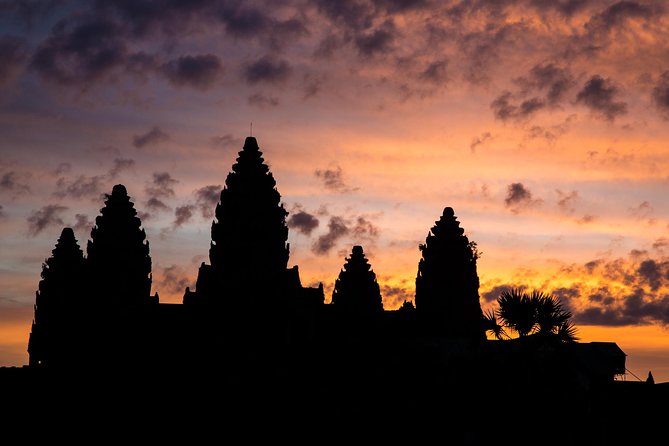
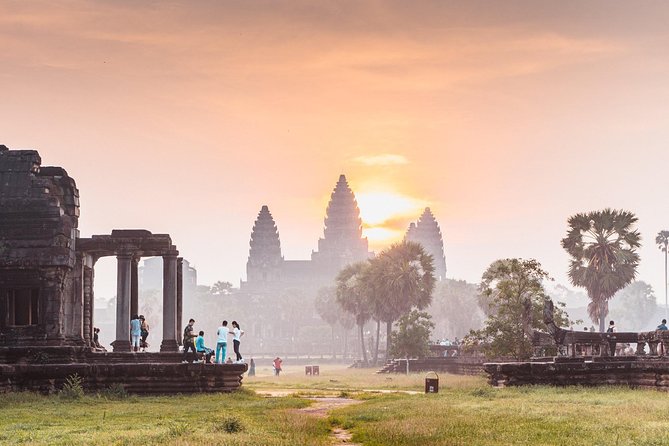
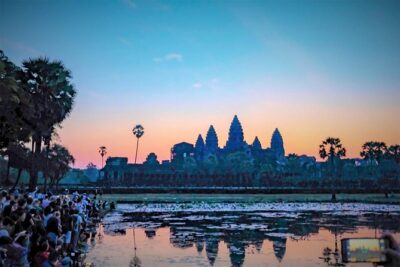
Angkor Wat is famous any time you visit, but sunrise changes the whole mood. At first light, you’re not fighting crowds and noise. The complex can feel almost quiet and dreamlike, especially while you’re waiting for the sky to shift. That early timing also means you’re seeing temple shadows stretch across stone instead of getting the harsh overhead light later in the day.
The tour also gives you a guide-led way to look longer. Temple viewing can turn into a checklist if you go on your own. Here, you have someone pointing out how the site is laid out and what to pay attention to—so you spend your energy where it counts, like angles, symmetry, and key details around the main structures.
The biggest win is that you’re not just watching sunrise. You’re watching sunrise and then immediately connecting it to what you see: the architecture, the layout, and why this place is so iconic on a World Heritage scale.
Meeting at 4:30 AM: Pickup Window, Flashlight, and Dress Code
This tour runs on an early start. Your pickup is typically between 4:20am and 5:20am, with the activity starting around 4:30am. That means you’ll want to plan your night before: set out your shoes, charge your phone, and keep a small bag ready so you’re not scrambling at 4am.
Two practical items matter for the morning:
- A flashlight is needed. The tour info says you should bring one, and it’s easy to forget until you’re already at the pickup stage.
- Mosquito spray is recommended. Early and temple-area shade can still mean bugs.
Clothing rules are specific: you must wear trousers or a knee-length skirt/dress. That’s not the time for fashion choices. Bring something comfortable for standing and walking in the dark and then in daylight.
Comfort beats style. You’ll do temple walking, so wear shoes that won’t annoy you after the first hour of uneven ground.
Small-Group Logistics: Tuk-Tuk or Minivan, Plus Cold Water
The tour is designed to move you efficiently without turning the day into a crowded bus ride. Transportation depends on your group size: 1–2 people go by tuk-tuk, and 3 or more go by minivan. That’s a nice detail because it affects comfort and how you experience the ride—tuk-tuks can feel more local, while a minivan is simpler if you’re traveling with a few people.
Pickup and drop-off are included, which is a big deal at this hour. You don’t have to wrestle with finding a driver, bargaining, or figuring out where the meet point is before sunrise.
You also get cold bottled water during the tour. It’s a small inclusion, but it helps you avoid the tired feeling that can hit fast on hot temple days—even if you start cool and dark.
Group size stays capped at 15 travelers, and that matters more than it sounds. You’re less likely to get separated or stuck waiting while everyone takes photos in the same narrow spot.
Stop-by-Stop: How the Day Flows Through Key Angkor Sites
The schedule is built like a track: start early, hit the main moments first, then fan outward through the Angkor area highlights. You’re looking at about 6 to 7 hours total, so it’s not a full-day all-day marathon. It’s long enough to feel substantial, but short enough that you’re not stuck until late evening.
There’s also a theme: you’ll see the site’s spiritual and political layers—Hindu dedication at Angkor Wat, then the wider Angkor Thom complex, then the more story-rich Ta Prohm.
Here’s what to expect in order.
Chasing the light? More dawn and dusk runs


Angkor Archaeological Park at Dawn: The Quiet Start You’re Paying For
Your pickup gets you out early so you can reach the Angkor Archaeological Park in time for the sunrise moment. Your tour guide will take you into the park area, and you’ll handle the entry process there.
This part sets the tone. Even if sunrise itself is cloudy (it can happen), the value comes from being in place before other groups swell in. You get the first look with breathing room and time to orient yourself.
You also get your first dose of the scale problem. Angkor looks big from the outside, but seeing it at the start of the day helps you understand where later stops sit in relation to each other.
A note on timing
The tour depends on early momentum. If the day starts to slip, sunrise can arrive with less drama and more brightness already in the sky. That doesn’t ruin the temples, but it does change the feel of the morning.
Angkor Wat: Vishnu, Symmetry, and the Best-Preserved Reality
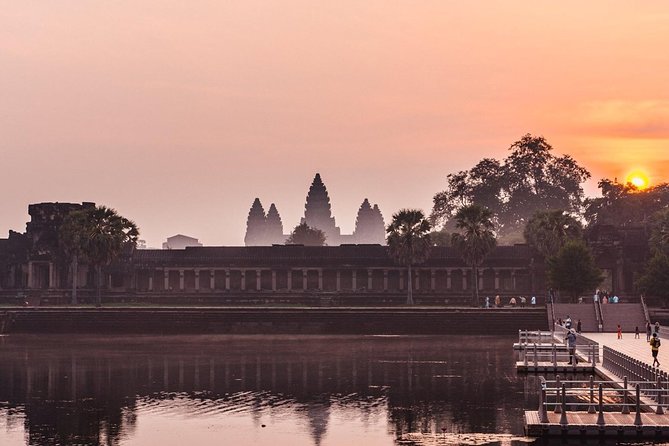
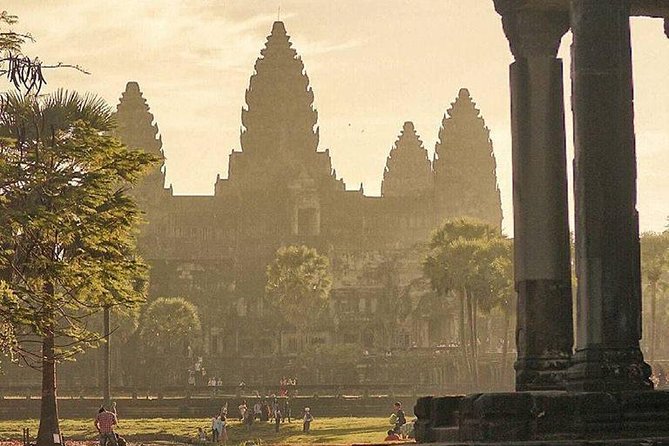
Angkor Wat is the main event. It was built between 1113 and 1150 AD and dedicated to Vishnu, the Hindu god of preservation. It’s also described as the best preserved among the temples—so you get a clearer view of the original intent, layout, and design.
You’ll spend about 2 hours at Angkor Wat. That’s a smart amount of time for two reasons:
- You can slow down for the best viewpoints and details.
- You have enough time to follow the guide’s explanation without feeling like you’re constantly rushing to the next photo spot.
The tour notes that Angkor Wat admission is not included in the tour price, so you’ll want to plan for the temple ticket costs on the day. The payoff is worth it for most first-timers: Angkor Wat is where the scale and symmetry hit the hardest.
What to watch for
Look for how the main structures and causeways create lines toward key points. A guide can help you understand the “why” behind the layout, not just the “what.”
Angkor Thom South Gate: Massive Walls and a City-Scale Feel
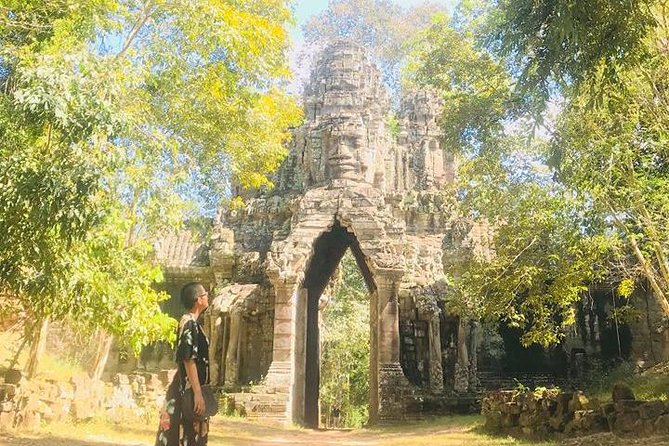
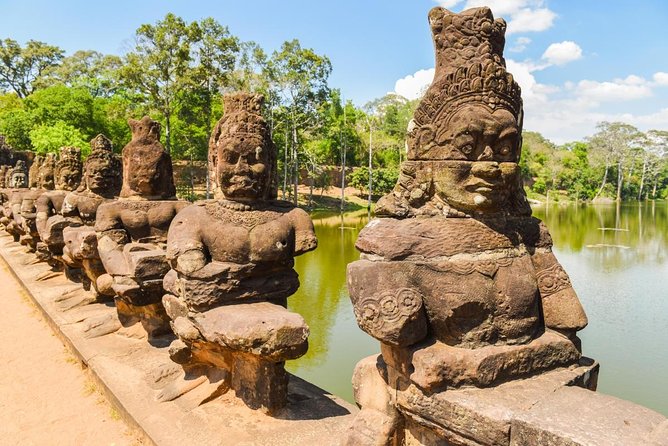
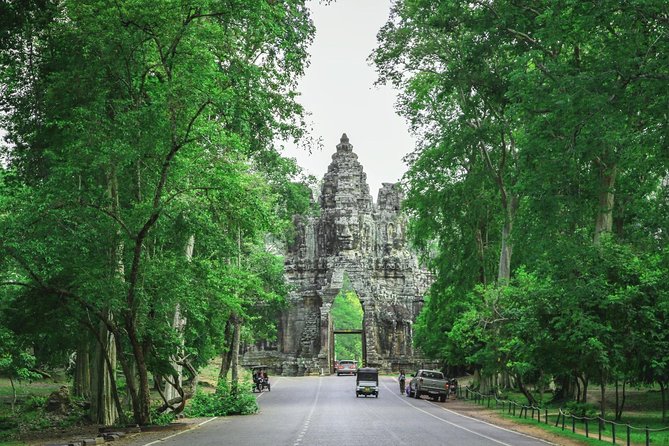
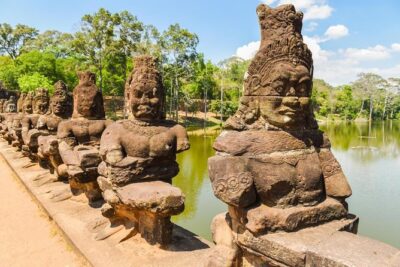
After Angkor Wat, you head to Angkor Thom South Gate. This isn’t the most delicate-looking stop, but it’s one of the most impressive for pure size.
The tour describes Angkor Thom’s walls as extremely wide and tall, with a length around 13 km—and some sections reaching about 8 m high. Seeing that kind of scale in person does something to your sense of place. You’re not just looking at a temple. You’re looking at the boundary of a whole city world.
Time here is about 45 minutes. That’s enough to see the gate and understand the layout before you move inward.
A drawback here can be fatigue. If your morning start was rough or you didn’t sleep well, your legs may feel the shift from quiet sunrise time to faster walking through the complex. Pace yourself.
Bayon Temple: 200 Smiling Faces and the Meaning Behind Them
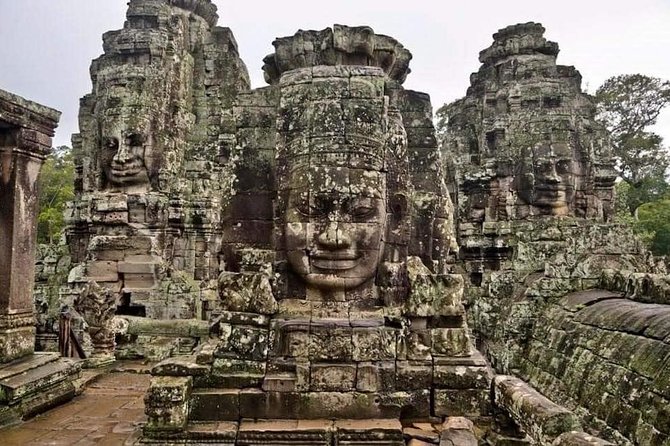
Bayon is where Angkor Thom starts to feel personal. The tour highlights the temple’s famous 200 smiling faces, set into the architecture. It’s not just an aesthetic trick; the faces become a visual guide across levels of the temple.
You’ll spend about 50 minutes at Bayon. That’s good because Bayon is all about looking from different angles. From one spot it’s strong and imposing. From another, you catch expressions and details you miss if you only rush the front.
This is also one of the times when having an English-speaking guide really matters. The guide can connect the faces to what you’re standing in and why the temple is placed where it is.
If it’s crowded at the moment you arrive, don’t panic. Bayon’s design lets you shift around and get more perspectives without feeling completely blocked.
Ta Prohm: Stones, Roots, and Jayavarman VII’s Family Story
Ta Prohm is the final major temple stop and it has a different vibe than Angkor Wat. It was built by King Jayavarman VII, described as both a residence for his mother and as a school.
Ta Prohm is especially known for how the temple interacts with nature. The tour notes it was left to the forces of time in a controversial way, and that’s part of why it looks the way many people expect: roots and stone share the same space.
You’ll have about 1 hour here. That’s plenty to photograph, walk a few paths, and read the place with your guide’s context.
This stop is often the one that feels most atmospheric, because it’s visually less “perfect” and more alive. It also helps break up the earlier symmetry-heavy viewing at Angkor Wat.
Price and Value: $39 Is the Easy Part, Tickets Are the Key Add-On
The tour price is $39 per person, and it’s usually booked about 30 days in advance. On its face, that seems like a bargain for an early morning, hotel pickup, transportation, and an English-speaking guide.
But the value really depends on what you pay at the park. The National Park ticket is $37 per person and is required. On top of that, the tour info indicates that specific temple admissions (like Angkor Wat and other stops) are not included in the tour price.
So think of this as a guided “service package” price plus park entry and site tickets you buy on the ground. Even so, it still can feel like good value if you prefer not to:
- figure out timings and entrances in the dark,
- deal with multiple tickets and transfers on your own,
- or lose a sunrise window because you got one thing wrong.
Small-group tours often cost more than DIY. This one lands in a middle zone: the guide and logistics are the main cost you’re buying, and the temples are where the extra entry fees come in.
What the Best Experiences Tend to Have in Common
If you want the day to feel magical, aim for the factors that make sunrise tours work:
- Be ready early. Don’t wait until pickup time to start your morning routine.
- Bring what’s requested. Flashlight and mosquito spray are not fancy extras here.
- Stay flexible if the sky changes. Clouds can still give you a special atmosphere, just not the same bright-gold moment.
- Use the guide’s timing. The point isn’t only photos; it’s learning what you’re looking at while you’re there.
One more thing I appreciate is the tour’s structure. You’re not thrown into the busiest part first without context. You start at dawn, then move through major highlights in a sensible order.
The Possible Downside: Wait Time and Sunrise That Can Vary
No sunrise plan is fully under your control. Weather can blunt the light. Also, the schedule can shift if the day’s starting pace gets interrupted. Since pickup happens in a window and you’re working around early morning darkness, it’s smart to arrive ready and keep your group on time.
One caution from past experiences is that sometimes the tour can include downtime after the sunrise moment. That can feel odd if you’re expecting constant temple time. If you hate waiting around without clear plans, build that possibility into your mindset.
Also, remember the tour is around 6–7 hours. It’s not a quick stop. You’ll walk and stand. This works best if you like a focused morning tour rather than hopping between sights all day.
Who Should Book This Angkor Wat Sunrise Tour?
This is a strong fit if you:
- want hotel pickup and a small group,
- like to see major Angkor highlights in one go,
- are okay with an early start and a bit of temple walking,
- want an English-speaking guide to explain what’s in front of you.
It’s also suitable for kids as long as they’re with an adult, and the tour’s minimum age is 4. The key is physical comfort—there’s a note about moderate physical fitness and you’ll need good walking shoes.
If you’re traveling with limited mobility, or if you dislike being on a schedule early in the day, you might prefer a later-start itinerary with fewer time pressures.
One last practical tip: dress for the temple rules even if it’s cold early. You can always add a warm layer on top, as long as your base fits the requirement (knee-length skirt/dress or trousers).
Should You Book This Angkor Wat Sunrise Tour?
I’d book it if sunrise is your top priority and you want a guided, small-group day that covers Angkor Wat plus Angkor Thom highlights and Ta Prohm without you doing the planning math. The 15-person limit, hotel pickup, and English guide are what make it feel low-stress, and the structure keeps you moving through the most important sights.
I’d think twice if you:
- can’t handle a very early morning,
- want total freedom to linger at your own pace,
- or really hate the idea of possible waiting if timing shifts.
If you do book, treat the required tickets as part of the real budget, pack a flashlight, and set your expectations for sunrise light. Even with clouds, being there early has a way of making Angkor feel less like a landmark and more like a living place.
FAQ
What time does pickup happen for the Angkor Wat sunrise tour?
Pickup is typically between 4:20am and 5:20am, with the tour starting around 4:30am.
How many people are in the group?
The tour is limited to a maximum of 15 travelers.
Is hotel pickup and drop-off included?
Yes. Hotel pickup and drop-off are included for convenience.
What’s included in the tour price?
The package includes hotel pickup/drop-off, an experienced English-speaking guide, transportation (tuk-tuk for 1–2 people, minivan for 3+), and cold bottled water.
What tickets do I need to pay for on the day?
A National Park ticket is required and costs $37 per person. The info also indicates that admission for Angkor Wat and other temple stops is not included.
Are food and drinks included?
No. Food and drinks are not included unless specified.
What do I need to bring for the early morning?
You’ll need a flashlight, and mosquito spray is recommended.
What clothing is allowed for temple visits?
Only trousers or a knee-length skirt/dress is permitted.
Is there free cancellation?
Yes. You can cancel for a full refund if you cancel up to 24 hours in advance of the experience’s start time.
More Temple Circuits Around Siem Reap
- Angkor Wat Sunrise or Sunset Tour with Guide from Siem Reap
★ 5.0 · 12,109 reviews - Siem Reap: Angkor Wat: Small-Group Sunrise or Sunset Tour
★ 5.0 · 9,444 reviews - Siem Reap: Angkor Wat 2-Day Tour with Sunrise and Sunset
★ 4.9 · 4,429 reviews - Siem Reap: Full-Day Angkor Wat Guided Tour with Sunset
★ 4.9 · 3,803 reviews - Angkor Wat Sunrise tour with Small – Group and Guide tours
★ 5.0 · 3,655 reviews
Dawn and Dusk Over Angkor
- Angkor Wat Sunrise or Sunset Tour with Guide from Siem Reap
★ 5.0 · 12,109 reviews - Siem Reap: Angkor Wat: Small-Group Sunrise or Sunset Tour
★ 5.0 · 9,444 reviews - Sunset tour of Kampong Phluk stilts home village on the Tonle Sap
★ 5.0 · 4,865 reviews - Siem Reap: Angkor Wat 2-Day Tour with Sunrise and Sunset
★ 4.9 · 4,429 reviews - Siem Reap: Full-Day Angkor Wat Guided Tour with Sunset
★ 4.9 · 3,803 reviews
Angkor Wat, a Few More Ways In
- Angkor Wat Sunrise or Sunset Tour with Guide from Siem Reap
★ 5.0 · 12,109 reviews - Siem Reap: Angkor Wat: Small-Group Sunrise or Sunset Tour
★ 5.0 · 9,444 reviews - Siem Reap: Angkor Wat 2-Day Tour with Sunrise and Sunset
★ 4.9 · 4,429 reviews - Siem Reap: Full-Day Angkor Wat Guided Tour with Sunset
★ 4.9 · 3,803 reviews - Angkor Wat Sunrise tour with Small – Group and Guide tours
★ 5.0 · 3,655 reviews
Just Added: Fresh Siem Reap Tour Reviews



Angkor Wat Temple Tours, compared.
 ★ 5.0Angkor Wat Sunrise or Sunset Tour with Guide from Siem ReapFrom $1812,109 reviews
 ★ 5.0Angkor Wat: Small-Group Sunrise or Sunset TourFrom $159,444 reviews
 ★ 4.9Angkor Wat 2-Day Tour with Sunrise and SunsetFrom $344,429 reviews
 ★ 4.9Full-Day Angkor Wat Guided Tour with SunsetFrom $153,803 reviews
 ★ 5.0Angkor Wat Sunrise tour with Small – Group and Guide toursFrom $143,655 reviews
 ★ 5.0Angkor Wat Highlights and Sunrise Guided Tour from Siem ReapFrom $233,213 reviews
 ★ 5.0Angkor Wat Sunset Small Group Tour with Lunch IncludedFrom $203,059 reviews
 ★ 5.0Full-Day Angkor Wat Sunrise Private Tour with Guide from Siem ReapFrom $602,920 reviews