
Reviewed · ANGKOR WAT TEMPLE TOURS
Angkor Wat & Small Tour with Bonteay Srei Temples
Stone faces at dawn feel unreal. This private Angkor day tour strings together Angkor Wat, Bayon, Ta Prohm, Phnom Bakheng, and Banteay Srei, with pickup and an optional sunrise or sunset start.
I like the way the plan stays realistic for a long day: you’re out around 8.5 hours, riding in an air-conditioned vehicle with cold water breaks. I also like that your professional guide ties the sites to the Khmer rulers and religious purpose behind the stones, so you’re not just collecting viewpoints.
One thing to plan for: entrance fees, food, and tips aren’t included, so you’ll want to budget extra once you know what you’ll spend at the ticket gates.
In This Review
- Key things to know before you go
- How a private Angkor day feels different from a scramble
- Angkor Wat: sunrise views and why the guide timing matters
- Bayon at Angkor Thom: the fortified-city story in 90 minutes
- Ta Prohm: jungle-temple energy without needing a movie trivia quiz
- Phnom Bakheng: the Shiva hill temple and the climb factor
- Banteay Srei: smaller footprint, bigger details
- The private guide value: Phally-style clarity and real-world help
- Timing, transport, and the small comforts that matter
- Price and whether this feels like good value at $38
- Who this tour suits best
- Should you book this Angkor Wat and small-temple route?
- FAQ
- What’s included in the tour price?
- Are entrance fees included for the temples?
- Does the tour include food?
- Is this tour private or shared with other groups?
- Can I choose sunrise or sunset for Angkor Wat?
- How long is the tour?
- Is there a mobile ticket?
- What is the cancellation policy?
Key things to know before you go
- Sunrise or sunset timing is flexible: start early for Angkor Wat sunrise or adjust to sunset based on what you prefer.
- Five major Angkor stops in one day: Angkor Wat, Bayon, Ta Prohm, Phnom Bakheng, and Banteay Srei.
- Khmer kings are part of the story: Jayavarman VII and Yasovarman come up directly in the route.
- Ta Prohm is the “tree-root-on-stone” highlight: huge trees and massive roots are the point here.
- You travel privately, not in a crowd: your group stays together with pickup, air-con transport, and cold water.
- Ticket help may happen in real time: one guide experience with Phally included buying tickets on the way during a sunrise run.
Other ways to walk the great temple
- Angkor Wat Sunrise or Sunset Tour with Guide from Siem Reap★ 5.0 · 12,109 reviews
- Siem Reap: Angkor Wat: Small-Group Sunrise or Sunset Tour★ 5.0 · 9,444 reviews
- Siem Reap: Angkor Wat 2-Day Tour with Sunrise and Sunset★ 4.9 · 4,429 reviews
- Siem Reap: Full-Day Angkor Wat Guided Tour with Sunset★ 4.9 · 3,803 reviews
How a private Angkor day feels different from a scramble
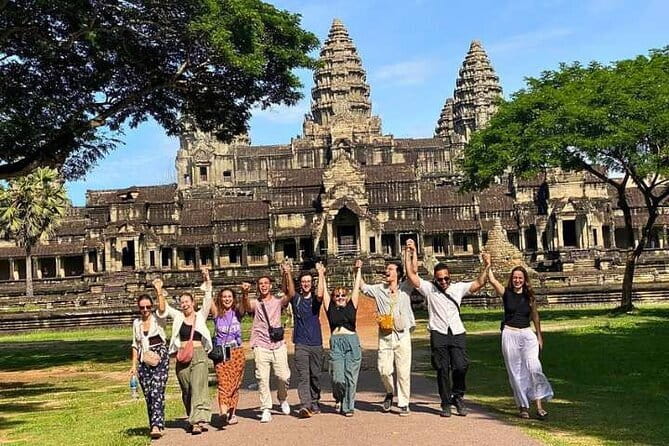
Angkor can go two ways: either you rush between landmarks chasing the next photo, or you slow down enough to understand what you’re seeing. This tour is built for the second option. You’ve got one professional guide guiding the flow, and you move by private transport between the main temple cluster stops.
What I like most is the pacing. The day runs about 8 hours 30 minutes, and the itinerary breaks your time into sensible chunks (for example, around 3 hours at Angkor Wat and shorter, focused windows for the others). That matters because Angkor isn’t just “walk, look, leave.” Heat, crowds, and walking distance add up fast.
The other smart touch is timing flexibility. The plan can work for sunrise or sunset, depending on your preference. Starting early for Angkor Wat sunrise is the classic move, but not everyone wants a very early wake-up. Having the option makes the day feel more tailored instead of forced.
Angkor Wat: sunrise views and why the guide timing matters
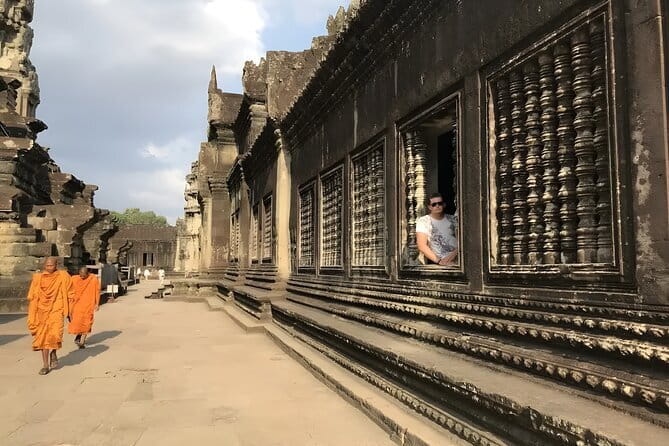
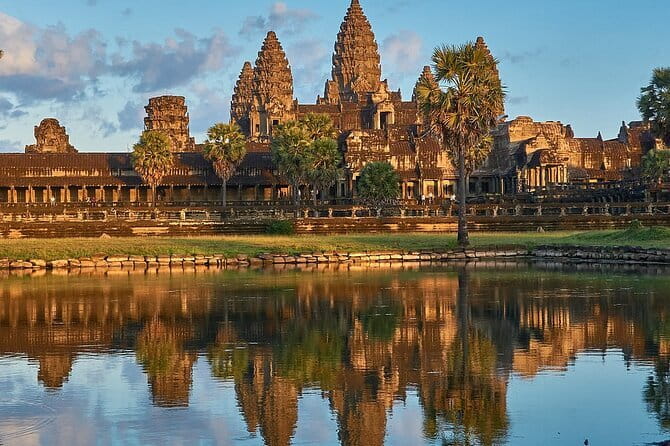
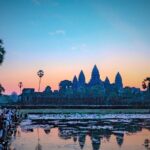
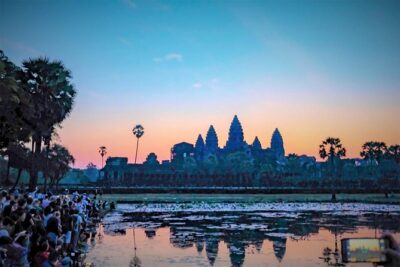
Angkor Wat is the headline, and the route gives it the time it deserves—about 3 hours. It’s described as the largest religious monument in the world, and it was originally constructed as a Hindu temple complex. That basic context changes how you look at the place. Instead of seeing only symmetry and scale, you start thinking about what the builders intended and why.
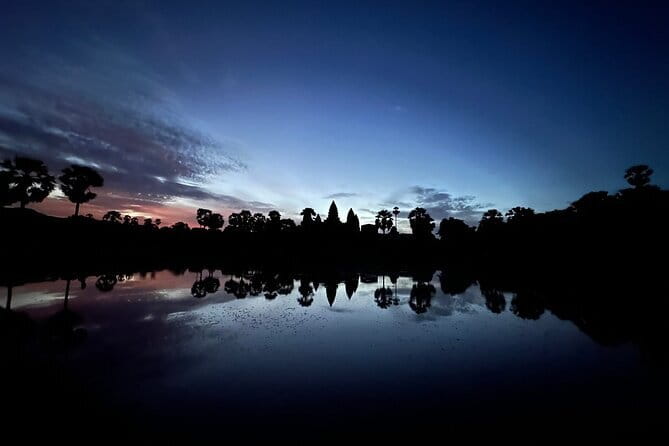
If you choose the sunrise version, you’ll get an early start specifically for the view in front of Angkor Wat. That part is practical: sunrise lighting and morning light quality are a big deal for stone detail. Also, being at the right spot early helps you avoid the feeling of arriving too late and playing catch-up.
What can be a drawback here is also simple: sunrise days mean you’re up early, and the walkways can still be busy even with a good plan. Entrance fees are not included, so you should expect an extra stop at the ticket step unless your guide handles purchasing along the way.
Bayon at Angkor Thom: the fortified-city story in 90 minutes
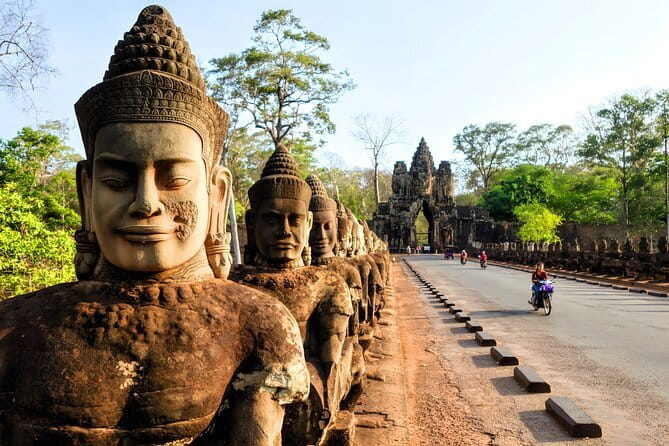
Next up is Bayon Temple, paired with Angkor Thom City. Bayon is tied to Jayavarman VII, who built it between the late 12th and early 13th centuries. You’re also learning how Angkor Thom functioned as the last and most enduring capital, covering about 9 square kilometers as a fortified city.
Bayon is about faces and meaning, but the guide piece is what makes it worth your time. In a short window—about 1 hour 30 minutes—you don’t want a generic commentary. You want the why behind the design, and that’s exactly where having a professional guide helps.
A practical consideration: this stop often involves walking around courtyards and moving between photo angles. The time block is tight enough that you’ll likely want to know what you want to focus on (faces, towers, or specific carved elements) before you arrive at Bayon.
Ta Prohm: jungle-temple energy without needing a movie trivia quiz
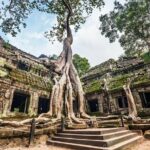
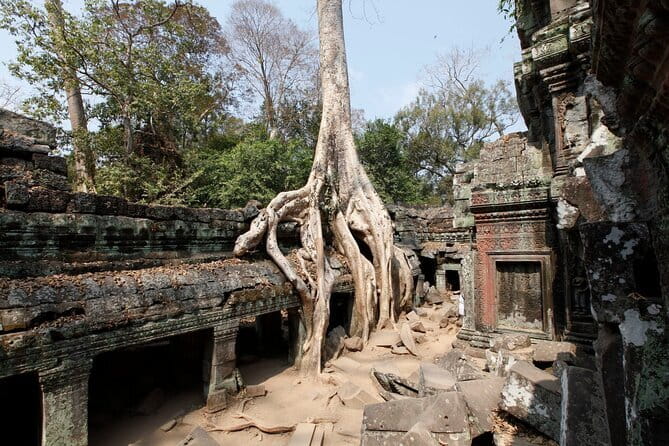
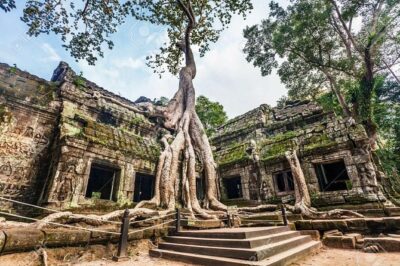
Ta Prohm is famous for the living relationship between nature and stone. The tour description highlights the “jungle temple” vibe: huge trees and massive roots growing out of the walls. It’s believed to have been built in the late 12th and early 13th century.
This stop is about atmosphere. The roots make the temple feel less like a museum and more like a place caught between eras—architecture that didn’t get fully swallowed, just slowed down by time. If you like seeing how Angkor has changed, Ta Prohm is usually the emotional hit of the day.
You’ll get about 1 hour 30 minutes here. That’s enough time to see the major angles and still regroup. It’s also long enough to pause for quieter moments when the crowd rhythm shifts.
The main thing to watch is comfort. The tour is family-friendly and paced for a comfortable rhythm, but Ta Prohm can still feel a bit uneven underfoot, and the sun can get sharp in the middle of the day. Bring your own water refills if you’re sensitive to heat, even though the tour includes cold water.
More temple circuits, set side by side

Phnom Bakheng: the Shiva hill temple and the climb factor
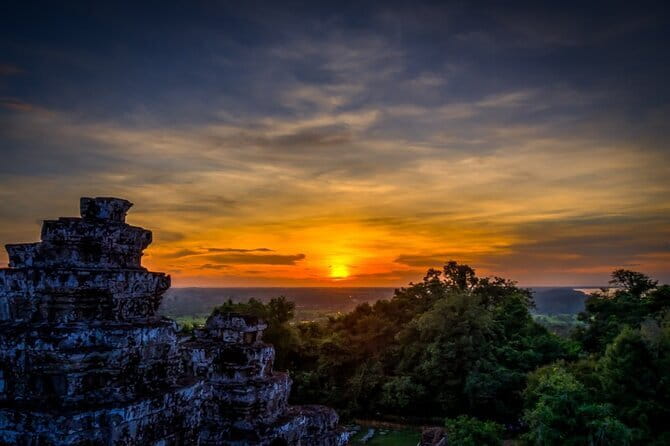
Phnom Bakheng brings a different flavor to the route. It’s described as a temple mountain dedicated to Shiva, built by King Yasovarman at the end of the 9th century. And it’s also explained that Phnom means hill or mountain in English, which helps you picture the geography: this temple is built at the top.
The tour gives it about 1 hour, which is a good match for this kind of stop. When a site has a climb or a summit feel, you don’t want to budget half the day. You want enough time to reach the top, look closely, and come away with a sense of place.
A real consideration here is effort. Even in a well-planned route, there’s some physical reality to “temple mountain.” If you’re traveling with kids, older family members, or anyone with mobility limits, you’ll want to go slowly and take breaks. The private setup helps you do that more comfortably than a fast group tour.
Banteay Srei: smaller footprint, bigger details
Banteay Srei is often the “slow down and look” stop. The description notes it was completed on 22 April 967 AD, and that it was dedicated to Shiva, like many temples from that period. It also mentions the original name: Tribhuvanamahesvara.
Your time here is about 1 hour 30 minutes, which is a sweet spot. You can focus on carvings and stonework instead of only scanning for the next famous tower. If you like architectural details and symbolism, Banteay Srei tends to reward attention.
One practical note: this is one more day in the sun. Even if the tour is timed well, you’ll still want to come prepared for heat and walking. A private guide can help you pick the best moments to pause, but you’ll still feel the day.
The private guide value: Phally-style clarity and real-world help
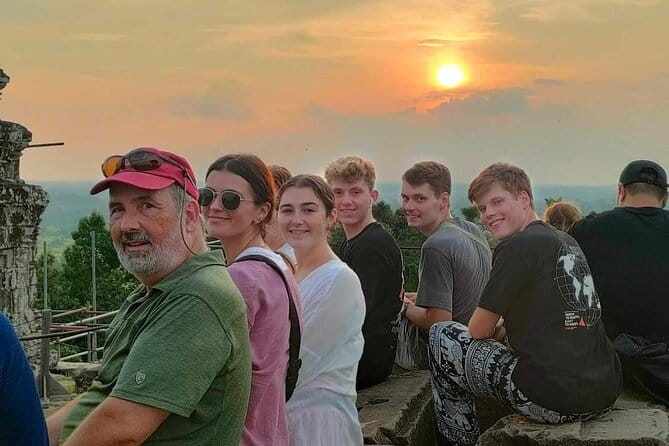
A temple tour can be two things: facts on a page, or an explanation that makes the site feel understandable. The guides on this format are central to the experience. You get professional commentary, and you also get guidance on what to notice so the place doesn’t turn into a blur of stone.
One guide name you might see in recent experiences is Phally. In a sunrise setup, Phally reportedly messaged quickly on WhatsApp after booking, arrived early, and even bought the tickets on the way. That kind of smooth handoff makes a big difference when you’re trying to maximize a short stay and you don’t want the day to stall at the gate.
Even when ticket purchasing isn’t handled exactly the same way for every group, the key takeaway for you is this: having a guide who knows the flow and helps with the practical steps makes the history part easier to absorb. It also makes the experience more relaxed because you’re not constantly asking what to do next.
Timing, transport, and the small comforts that matter
This is a full day, so logistics are part of the value. You get pickup and drop-off, air-conditioned private transport, and cold water. That may sound basic, but in Siem Reap, it’s the difference between enjoying the day and feeling drained before you even reach the first site.
The tour is also set up as private, meaning only your group participates. That tends to mean fewer waiting games, less time spent trying to keep up with strangers, and more flexibility if you want to slow down for a question.
There’s also a practical tech detail: the tour uses a mobile ticket. That usually helps cut down on time spent with paperwork, especially if you’re juggling multiple confirmations while traveling.
The day is described as flexible and family-friendly, which is code for something real: the itinerary aims for a comfortable pace and can be adjusted to your timing preferences (sunrise or sunset). That helps if you’re traveling with kids, or if you just don’t want to treat Angkor like a race.
Price and whether this feels like good value at $38
The price is $38 per person, with a professional guide, pickup/drop-off, air-conditioned private transport, and cold water included. That price is attractive on its face because you’re paying for a full day of logistics and interpretation, not just a driver with a map.
The trade-off is that entrance fees are not included, and food and tips aren’t included either. In practice, that means your total day cost will be higher once you factor tickets and meals. Still, for many people this tour can be a strong value because entrance fees tend to be the same story for everyone, while the guide and transport are where you’re paying for comfort and clarity.
One more thing: this type of tour is often booked ahead. The average booking window is 81 days in advance, which suggests you shouldn’t wait until the last week if your dates are firm. If you’re aiming for sunrise timing, booking early also helps lock in the best starting plan.
Who this tour suits best
This is a great match if you want Angkor’s top temple highlights without building a DIY day that becomes exhausting. The private guide makes it a good choice if you care about understanding what you’re looking at, not just seeing it.
It also fits families and mixed ages because the itinerary is described as flexible and comfortable. If you prefer a guided structure but still want a pace that doesn’t feel rushed, this route format is the right kind of middle ground.
If you’re the type who wants to spend hours inside every structure without moving on, you might find the stop times short. But if you want the best-known sites plus a thoughtful explanation within one long day, you’ll likely appreciate the structure.
Should you book this Angkor Wat and small-temple route?
Book it if you want a private, guide-led Angkor day that hits the big names—Angkor Wat, Bayon, Ta Prohm, Phnom Bakheng, and Banteay Srei—without turning the day into a logistical puzzle. The sunrise/sunset choice is also a real plus because it lets you tailor the experience to your energy level.
Skip it or consider a different option if you’re trying to keep costs ultra-low, since entrance fees, food, and tips aren’t included. Also, if you or your group struggles with climbs or uneven surfaces, you’ll want to think carefully about Phnom Bakheng’s hill-temple aspect.
If you’re booking, I’d plan for sunscreen, water strategy beyond the included bottle, and comfortable shoes. And if you get a WhatsApp message soon after booking, that’s a good sign—use it to confirm your exact pickup time so sunrise days don’t start with stress.
FAQ
What’s included in the tour price?
The tour includes a professional tour guide, pickup and drop-off, air-conditioned private transport, and cold water.
Are entrance fees included for the temples?
No. Admission tickets are not included for the stops listed.
Does the tour include food?
No. Food is not included.
Is this tour private or shared with other groups?
This is a private tour/activity. Only your group participates.
Can I choose sunrise or sunset for Angkor Wat?
Yes. The tour can be arranged so you witness sunrise or sunset over the temples, depending on your preferred timing.
How long is the tour?
The duration is about 8 hours 30 minutes (approx.).
Is there a mobile ticket?
Yes. The tour includes a mobile ticket.
What is the cancellation policy?
Free cancellation is offered up to 24 hours in advance of the experience’s start time for a full refund.
More Tour Reviews in Siem Reap
- Angkor Wat Sunrise or Sunset Tour with Guide from Siem Reap
★ 5.0 · 12,109 reviews - Siem Reap: Angkor Wat: Small-Group Sunrise or Sunset Tour
★ 5.0 · 9,444 reviews - From Siem Reap: Kampong Phluk Floating Village Tour by Boat
★ 4.9 · 6,979 reviews - Sunset tour of Kampong Phluk stilts home village on the Tonle Sap
★ 5.0 · 4,865 reviews - Siem Reap: Angkor Wat 2-Day Tour with Sunrise and Sunset
★ 4.9 · 4,429 reviews
More Temple Circuits Around Siem Reap
- Angkor Wat Sunrise or Sunset Tour with Guide from Siem Reap
★ 5.0 · 12,109 reviews - Siem Reap: Angkor Wat: Small-Group Sunrise or Sunset Tour
★ 5.0 · 9,444 reviews - Siem Reap: Angkor Wat 2-Day Tour with Sunrise and Sunset
★ 4.9 · 4,429 reviews - Siem Reap: Full-Day Angkor Wat Guided Tour with Sunset
★ 4.9 · 3,803 reviews - Angkor Wat Sunrise tour with Small – Group and Guide tours
★ 5.0 · 3,655 reviews
Angkor Wat, a Few More Ways In
- Angkor Wat Sunrise or Sunset Tour with Guide from Siem Reap
★ 5.0 · 12,109 reviews - Siem Reap: Angkor Wat: Small-Group Sunrise or Sunset Tour
★ 5.0 · 9,444 reviews - Siem Reap: Angkor Wat 2-Day Tour with Sunrise and Sunset
★ 4.9 · 4,429 reviews - Siem Reap: Full-Day Angkor Wat Guided Tour with Sunset
★ 4.9 · 3,803 reviews - Angkor Wat Sunrise tour with Small – Group and Guide tours
★ 5.0 · 3,655 reviews
Just Added: Fresh Siem Reap Tour Reviews


Angkor Wat Temple Tours, compared.
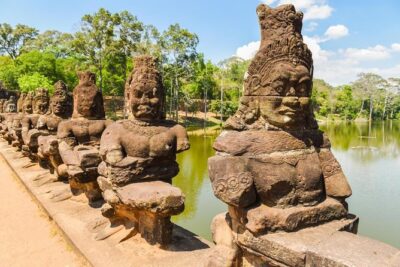 ★ 5.0Angkor Wat Sunrise or Sunset Tour with Guide from Siem ReapFrom $1812,109 reviews
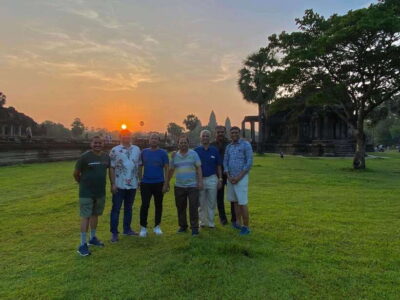 ★ 5.0Angkor Wat: Small-Group Sunrise or Sunset TourFrom $159,444 reviews
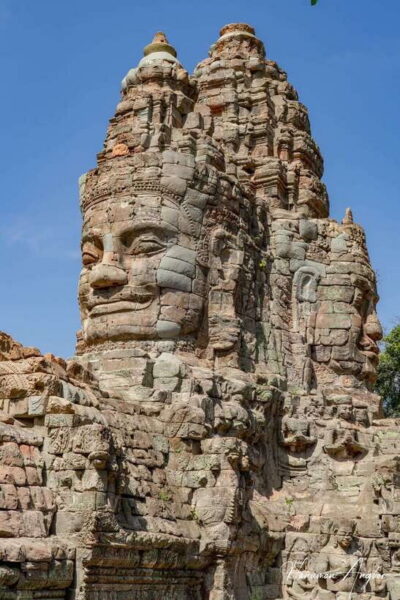 ★ 4.9Angkor Wat 2-Day Tour with Sunrise and SunsetFrom $344,429 reviews
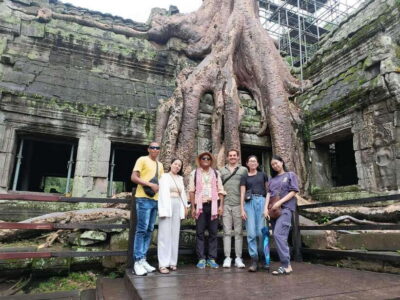 ★ 4.9Full-Day Angkor Wat Guided Tour with SunsetFrom $153,803 reviews
 ★ 5.0Angkor Wat Sunrise tour with Small – Group and Guide toursFrom $143,655 reviews
 ★ 5.0Angkor Wat Highlights and Sunrise Guided Tour from Siem ReapFrom $233,213 reviews
 ★ 5.0Angkor Wat Sunset Small Group Tour with Lunch IncludedFrom $203,059 reviews
 ★ 5.0Full-Day Angkor Wat Sunrise Private Tour with Guide from Siem ReapFrom $602,920 reviews