
Early light changes Angkor Wat. This small-group sunrise tour in Siem Reap pairs quiet dawn temple time with a practical, photo-friendly guide—plus a calmer, easier day since you start at 4:45am and work your way through the big highlights. I like that the tour doesn’t just point at stones; it explains the religious shift from Hindu roots linked to Vishnu and Khmer kings to the later Buddhist presence you’ll see in places like Banteay Kdei.
The main thing to think about is the trade-off: it’s an early morning start, and Angkor admission plus meals are on you (so the $39 base price is great, but your full day budget needs a ticket and lunch plan).
In This Review
- Key highlights you actually feel during the morning run
- Why this Angkor Wat sunrise tour works in practice
- The value of $39: what you’re paying for (and what you aren’t)
- First stop: Angkor Wat sunrise inside the complex
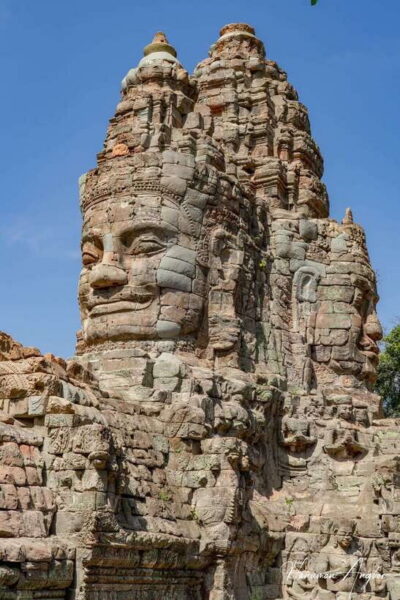
- Bayon Temple and the faces of Avalokesvara
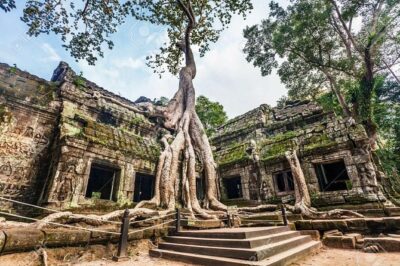
- Ta Prohm: fig trees, jungle setting, and ruins left as-found
- Banteay Kdei: the former monastery vibe
- Photo time and the guide’s role: more than just a lecture
- Timing and comfort: what your body will notice
- Who should book this sunrise small-group tour
- How to plan your day around what’s not included
- Should you book the Angkor Wat Sunrise Small Group Experience?
- FAQ
- What time does pickup happen?
- How long is the tour?
- What’s included in the price?
- Are admission tickets included?
- Are meals included?
- How many people are in the group?
- Is free cancellation available?
Key highlights you actually feel during the morning run
- Sunrise inside Angkor Wat so you’re not sprinting at the last second
- Small group (max 10) with room for the guide to help with photos
- English guide + AC vehicle + cold water and towel for an easier start
- Temple facts you can use at Bayon with its 54 towers and 216 faces
- Ta Prohm’s fig tree roots plus that famous left-in-place ruin look
- Banteay Kdei’s quieter feel as a former monastic site tied to Buddhist monks
Other ways to walk the great temple
- Angkor Wat Sunrise or Sunset Tour with Guide from Siem Reap★ 5.0 · 12,109 reviews
- Siem Reap: Angkor Wat: Small-Group Sunrise or Sunset Tour★ 5.0 · 9,444 reviews
- Siem Reap: Angkor Wat 2-Day Tour with Sunrise and Sunset★ 4.9 · 4,429 reviews
- Siem Reap: Full-Day Angkor Wat Guided Tour with Sunset★ 4.9 · 3,803 reviews
Why this Angkor Wat sunrise tour works in practice
If you only have one big temple day in Siem Reap, sunrise is the smart move. The heat is still deciding whether to show up, the crowds are thinner, and the whole complex feels more like a place of worship than a checklist. This tour leans into that timing: pickup is offered, and you’re on the move very early—hotel pickup happens at 4:45am, with the activity starting around 4:30am.
The second reason this experience makes sense is the pace and format. It’s set up as a small-group day with a dedicated English-speaking guide, cold water, and a towel to cool down after temple stops. That means less waiting, less confusion, and more time spent looking closely at carvings and layout—especially when the guide helps you find a good photo spot inside Angkor Wat.
Lastly, you get real context. The tour doesn’t treat Angkor as just stone monuments. It ties together the religious story: Hindu roots connected to Vishnu, the Khmer kingdom that built Angkor Wat under Khmer King Soryavaraman II, and then the later cultural layers you see as Buddhism becomes part of the picture at the other sites.
The value of $39: what you’re paying for (and what you aren’t)
At $39 for roughly 8 hours, this is positioned as a value option for a guided, early-day temple circuit. What you get is not just transport. You get an English guide, an air-conditioned vehicle, and cooling comforts (cold water and a cold towel). You also get guided photo time—an underrated part of seeing Angkor well, because the “best” angles can be hard to find when you’re in a crowd.
What you don’t get is the big-ticket day cost for the temples themselves. Admission tickets are listed as not included, and meals are also not included (no breakfast, lunch, or dinner included). So your budget math should look like this: cheap guided morning + transport comforts, plus you still need to plan for ticket entry and a local lunch.
That trade-off is still often worth it. Angkor tickets usually cover multiple temple areas, but the details depend on the pass you choose. Either way, the tour is built around those temple stops, so you’ll want to have your entry sorted before you go.
First stop: Angkor Wat sunrise inside the complex
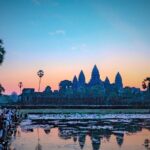
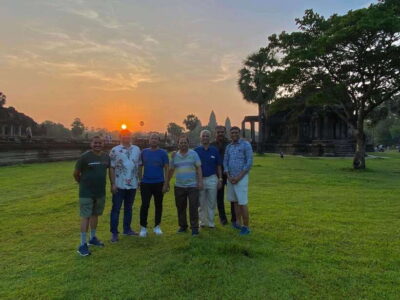
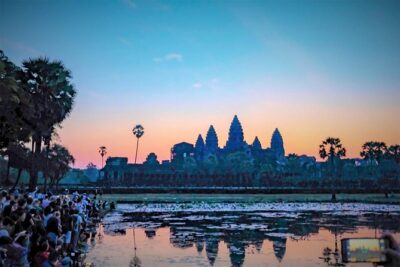
This is the core of the day. The tour is designed to get you to Angkor Wat at sunrise, and it even includes time with the guide to help you find a solid photo location inside the temple. The morning atmosphere is part of the point—temperate conditions and a calmer feel make it easier to slow down and actually look.
Angkor Wat isn’t just a pretty silhouette at dawn. It carries deep religious meaning, which the guide uses to put what you’re seeing into context. You’ll learn about the religious history tied to Vishnu, and you’ll connect it to the Khmer royal building program—Angkor Wat is described as being built by Khmer King Soriyavaraman II. That context helps you notice details instead of only scanning for postcard angles.
Time-wise, you’re at Angkor Wat for about 3 hours. That includes sunrise viewing plus guided touring through the complex. It’s enough time to see major areas without feeling like you’re constantly being shoved forward. It’s also long enough that you can catch different light changes as the sun climbs.
One practical note: the ticket for Angkor Wat is not included. So don’t rely on the tour price alone when planning your day.
Bayon Temple and the faces of Avalokesvara
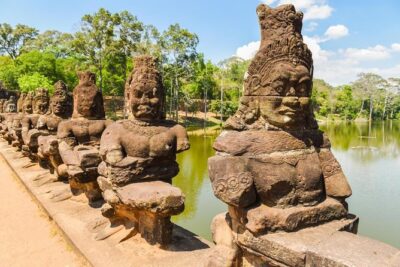
After Angkor Wat, you move to Bayon Temple, typically paired with a stop at the South Gate of Angkor Thom. This transition matters because it changes what you’re focused on: from Angkor Wat’s iconic grandeur to Angkor Thom’s dense symbolic world.
At Bayon, you’ll see the famous faces and you get the numbers that make the place easier to remember. Bayon is described as having 54 towers and 216 faces of Buddhisatva Avalokesvara. That kind of detail is useful while you’re standing there, because it turns the carvings into a “map” in your mind. Instead of thinking, I see faces, you start thinking, I’m seeing the repeated pattern that defines this temple’s identity.
You spend about 2 hours here. The time is just right for slow looking without burning your legs. If you’re the type who takes photos, you’ll likely appreciate the guide’s rhythm—time to frame shots, then time to listen and orient.
As with the other stops, admission is not included, so make sure your ticket plan covers what you’ll enter.
Chasing the light? More dawn and dusk runs
Ta Prohm: fig trees, jungle setting, and ruins left as-found
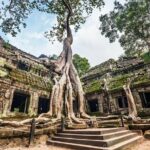
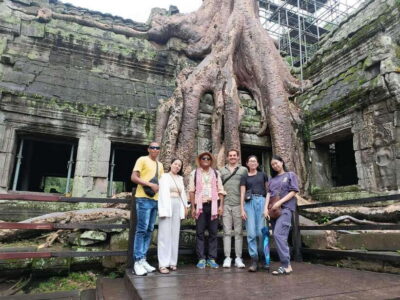
Ta Prohm is the stop many people book for. It’s the temple where the enormous fig trees feel like they’re part of the architecture rather than planted around it. You’ll visit Ta Prohm and see it in that much-discussed, “left in the same condition” look.
That matters because the appeal isn’t polished perfection. The charm is the sense of time layers: stone, roots, and jungle surroundings acting like they share one scene. You don’t just walk through a museum-like corridor. You’re walking through a living-feeling ruin.
The guide also keeps it grounded with history and why the place looks the way it does. Even without specific building-story facts spelled out for Ta Prohm in the tour notes, the tour frames it as part of the broader Angkor story—what started as royal and religious power later lived with the pressures of nature and changing cultural identities.
You’ll spend about 2 hours at Ta Prohm. It’s a good block because you’ll want time to move around the roots and carvings and also to take photos that show the scale.
Banteay Kdei: the former monastery vibe
The final major stop is Banteay Kdei, described as a former monastery for Buddhist monks. The tour notes that it was built by King Jayavarman VII in the late 12th to early 13th century, and it’s also characterized as a largely non-restored, monastic complex in a similar style to Ta Prohm.
This is a helpful contrast to the day’s earlier wow-factors. Ta Prohm can feel chaotic and visually loud. Banteay Kdei is quieter by comparison, and that makes it a strong last stop for people who like to end the day with something that feels less like a theme park and more like a lived religious site.
You spend about 1 hour here. For many people, that’s just enough time to notice how the layout supports monastic life—space, corridors, and that “sprawling” sense of a site built for people to live and worship, not just to be viewed.
Photo time and the guide’s role: more than just a lecture
One of the most praised parts of this tour is how the guide supports photos and orientation. The tour explicitly mentions that your guide will help find a good location for taking a photo inside Angkor Wat, and that’s exactly what makes a difference when you’re dealing with early crowds and shifting angles.
In recent feedback tied to this experience, specific guides show up with a consistent theme: they mix explanations with humor and they help people get shots that actually show the structure. Names you may hear include Sen and Thourn, Vuthy, Sam, and a guide described as bringing an Indiana Jones-style energy. Drivers like James and Mr Lucky are also mentioned for keeping things smooth and for having cold towels ready after temple stops.
I’d treat that as a hint about what you’ll likely experience: the day isn’t only about facts. It’s about keeping you moving with confidence while still giving you real moments to look.
Timing and comfort: what your body will notice
Starting around 4:30–4:45am is the headline challenge. You’re going to feel it at first—no way around that. But the payoff is also practical: cooler morning conditions and a calmer atmosphere mean less sweat and less pushing. That matters when you’re spending hours walking between big temple zones.
The comfort support is there: the tour uses an air-conditioned vehicle, and you get cold water and cold towels. Those small details matter more than you’d think, especially because this is a day with several separate temple entries.
Pacing-wise, the stops are stacked but not rushed-feeling if you’re willing to go in a “slow walk, stop for photos” mode. Total time is roughly 8 hours, with about 3 hours at Angkor Wat, then 2 hours each at Bayon and Ta Prohm, and about 1 hour at Banteay Kdei.
Who should book this sunrise small-group tour
This is a strong fit if you:
- Want the sunrise advantage without dealing with a huge group
- Like having context for what you see—Hindu Vishnu connections, Khmer royal building stories, and later Buddhist influences
- Care about photos but don’t want to spend your morning guessing angles
- Prefer a guided structure rather than self-driving temple hopping
You might not love it if you:
- Hate early mornings in general
- Don’t want a full day of walking and temple circuits
- Prefer a totally self-paced visit (this tour is guided and time-boxed at each stop)
How to plan your day around what’s not included
Since admission tickets and meals are not included, you’ll do best if you plan those two things early.
- Ticket: make sure you buy/prepare the Angkor admission you need for the temples you’ll enter. The tour lists tickets as not included, so don’t assume the entry fee is bundled.
- Meals: breakfast, lunch, and dinner are not included. The guide experience includes recommendations for local lunch, and that’s useful. If you can, plan to eat after the temples while you’re still in Siem Reap—don’t leave it until you’re exhausted and cranky.
If you’re picky about budget, remember the $39 base is only part of your total temple day cost. Still, for a guided sunrise-to-monastery circuit, it usually lands as good value.
Should you book the Angkor Wat Sunrise Small Group Experience?
If you want an Angkor day that hits the big sites in a logical order—starting with sunrise at Angkor Wat and finishing at Banteay Kdei—this tour is an easy “yes” for most people. The small-group limit (up to 10) plus an English guide plus transport comforts make it feel efficient without turning the temples into a sprint.
I’d especially recommend it if you value explanations that connect Hindu Vishnu history and Khmer royal building to the Buddhist layers you’ll see later in the day. And if photos matter to you, the guide support inside Angkor Wat is one of the most practical parts of the whole experience.
The decision flips only if you’re not an early-morning person or you don’t want to handle admission and meals yourself. If those two points work for you, this is a solid way to see Angkor with less stress and more meaning.
FAQ
What time does pickup happen?
Pickup is offered, with hotel pickup scheduled at 4:45am for this sunrise experience.
How long is the tour?
The tour runs for about 8 hours (approx.).
What’s included in the price?
The tour includes an air-conditioned vehicle, an English tour guide, and cold water plus a cold towel.
Are admission tickets included?
No. Angkor Wat admission is not included, and admission tickets are also listed as not included for the other temple stops.
Are meals included?
No. Breakfast, lunch, and dinner are not included.
How many people are in the group?
This experience has a maximum of 10 travelers.
Is free cancellation available?
Yes. You can cancel for a full refund up to 24 hours before the experience’s start time.
More Temple Circuits Around Siem Reap
- Angkor Wat Sunrise or Sunset Tour with Guide from Siem Reap
★ 5.0 · 12,109 reviews - Siem Reap: Angkor Wat: Small-Group Sunrise or Sunset Tour
★ 5.0 · 9,444 reviews - Siem Reap: Angkor Wat 2-Day Tour with Sunrise and Sunset
★ 4.9 · 4,429 reviews - Siem Reap: Full-Day Angkor Wat Guided Tour with Sunset
★ 4.9 · 3,803 reviews - Angkor Wat Sunrise tour with Small – Group and Guide tours
★ 5.0 · 3,655 reviews
Dawn and Dusk Over Angkor
- Angkor Wat Sunrise or Sunset Tour with Guide from Siem Reap
★ 5.0 · 12,109 reviews - Siem Reap: Angkor Wat: Small-Group Sunrise or Sunset Tour
★ 5.0 · 9,444 reviews - Sunset tour of Kampong Phluk stilts home village on the Tonle Sap
★ 5.0 · 4,865 reviews - Siem Reap: Angkor Wat 2-Day Tour with Sunrise and Sunset
★ 4.9 · 4,429 reviews - Siem Reap: Full-Day Angkor Wat Guided Tour with Sunset
★ 4.9 · 3,803 reviews
Angkor Wat, a Few More Ways In
- Angkor Wat Sunrise or Sunset Tour with Guide from Siem Reap
★ 5.0 · 12,109 reviews - Siem Reap: Angkor Wat: Small-Group Sunrise or Sunset Tour
★ 5.0 · 9,444 reviews - Siem Reap: Angkor Wat 2-Day Tour with Sunrise and Sunset
★ 4.9 · 4,429 reviews - Siem Reap: Full-Day Angkor Wat Guided Tour with Sunset
★ 4.9 · 3,803 reviews - Angkor Wat Sunrise tour with Small – Group and Guide tours
★ 5.0 · 3,655 reviews
Just Added: Fresh Siem Reap Tour Reviews

Angkor Wat Temple Tours, compared.
 ★ 5.0Angkor Wat Sunrise or Sunset Tour with Guide from Siem ReapFrom $1812,109 reviews
 ★ 5.0Angkor Wat: Small-Group Sunrise or Sunset TourFrom $159,444 reviews
 ★ 4.9Angkor Wat 2-Day Tour with Sunrise and SunsetFrom $344,429 reviews
 ★ 4.9Full-Day Angkor Wat Guided Tour with SunsetFrom $153,803 reviews
 ★ 5.0Angkor Wat Sunrise tour with Small – Group and Guide toursFrom $143,655 reviews
 ★ 5.0Angkor Wat Highlights and Sunrise Guided Tour from Siem ReapFrom $233,213 reviews
 ★ 5.0Angkor Wat Sunset Small Group Tour with Lunch IncludedFrom $203,059 reviews
 ★ 5.0Full-Day Angkor Wat Sunrise Private Tour with Guide from Siem ReapFrom $602,920 reviews