
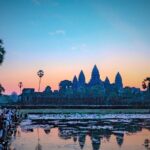
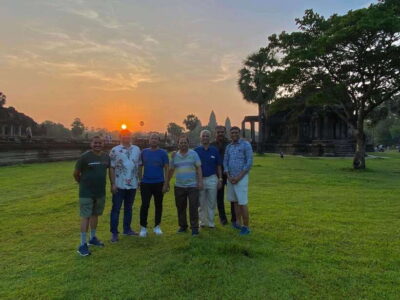
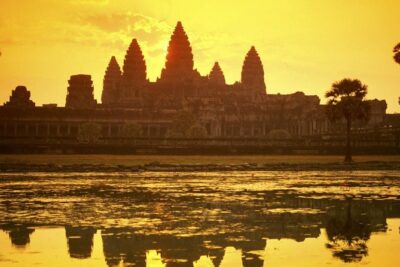
Sunrise at Angkor Wat starts before your alarm. This small-group tour gets you to Angkor Wat early with an English-speaking guide, then keeps going through big-name temples across the Angkor Archaeological Park. I like that it’s built for people who want the morning magic without the stress of figuring out timing and logistics alone.
Two things I’d pick right away: hotel pickup/drop-off (so you’re not hunting tuk-tuks in the dark) and the guide’s talk as you move temple to temple. One thing to keep in mind: sunrise depends on the sky, and if it’s cloudy, the view won’t have the same wow-factor.
In This Review
- Key Highlights
- Why this Angkor Wat sunrise tour works for first-timers
- Timing, pickup, and what 4:45 am really means
- Angkor Wat sunrise: the pass you need and the photo mindset
- The morning circuit through Angkor Thom: South Gate to the key faces
- Bayon, Baphuon, Phimeanakas, and those terraces up close
- Ta Prohm (Tomb Raider Temple) and Banteay Kdei in the afternoon
- Guide style matters: Mr Boy and Youk Makara as proof
- Price and value: $39 tour plus the $37 Angkor pass
- Smart packing and dress code so you don’t get stuck outside
- Who should book this sunrise small group tour
- Should you book this Angkor Wat sunrise small group tour?
- FAQ
- What time does the tour start?
- Is hotel pickup and drop-off included?
- Does the $39 price include the Angkor temple ticket?
- What transportation and comforts are provided?
- How big is the group?
- Which temples are included?
- Can I cancel for a full refund?
Key Highlights
- 4:45 am start so you reach Angkor Wat before the crowds truly kick in
- English-speaking guide with commentary and photo tips as you go
- Cold water + cold towel during the temple portion, plus air-conditioned transport
- Breakfast and lunch breaks built into the schedule (you’ll be able to eat nearby)
- Small group size (up to 10 travelers, with a cap that can be around 12)
Other ways to walk the great temple
- Angkor Wat Sunrise or Sunset Tour with Guide from Siem Reap★ 5.0 · 12,109 reviews
- Siem Reap: Angkor Wat: Small-Group Sunrise or Sunset Tour★ 5.0 · 9,444 reviews
- Siem Reap: Angkor Wat 2-Day Tour with Sunrise and Sunset★ 4.9 · 4,429 reviews
- Siem Reap: Full-Day Angkor Wat Guided Tour with Sunset★ 4.9 · 3,803 reviews
Why this Angkor Wat sunrise tour works for first-timers
Angkor is huge, and it’s easy to waste time. This tour is designed to cut the guesswork. You start in the dark, you see sunrise from the right perspective at Angkor Wat, then you keep rolling through the main sights on a full-day circuit.
What makes it especially good value is what you’re getting for the $39 tour price: guide time, transportation, and the rhythm of the day (morning sunrise, then temple hops, then an afternoon finish back in Siem Reap). The only big cost you’re adding later is the required temple/Angkor pass ticket.
And even if you’re the independent type, sunrise is one moment you don’t want to wing. Getting there late means missing the best light and the calm. Getting there early means you can actually focus on what you came for.
Timing, pickup, and what 4:45 am really means
The tour starts at 4:45 am. You’ll want to be ready in your hotel lobby at 4:50 am, so you’re not sprinting while your driver waits. Meeting happens at Peacock Asia Tours, and then you transfer in a tuk tuk with air-conditioned transport along the way.
This early start is not subtle. You’ll go from hotel sleepiness to temple awe fast. But that’s the point: sunrise at Angkor Wat is the headline, and the schedule is built to make it happen.
Also note how breakfast fits in. After sunrise, you’ll have a break around 8:00 am for breakfast. You can bring your own, or you can grab something from local spots close by. That’s a helpful option because some mornings feel better with food you already like.
Angkor Wat sunrise: the pass you need and the photo mindset
You’ll stop first at Peacock Asia Tours to purchase the required one-day pass. The Angkor pass is $37 per person (not included in the $39 tour). Plan on buying it on the day, and keep your ticket organized—this is the ticket that gets you into the temple zones for your chosen day.
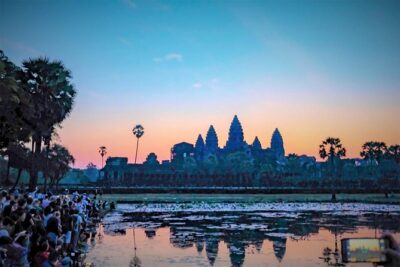
Once you arrive at Angkor Wat, you’ll spend time before and during sunrise while your guide sets up what you’re looking at. One of the best benefits of this kind of group sunrise is that someone else handles the “where to stand” part. A guide named Mr Boy is specifically praised for pointing out the best spots for photos and answering off-the-cuff questions. That matters because at sunrise, a few steps can change your framing a lot.
Cloud cover can happen. One guide-style doesn’t change the weather. If the sky is gray, you may still enjoy the temple, but the dramatic backlit look behind the structure won’t hit the same way.
So I’d go in with realistic expectations: you’re buying access to the right moment, not a guaranteed postcard sky.
The morning circuit through Angkor Thom: South Gate to the key faces
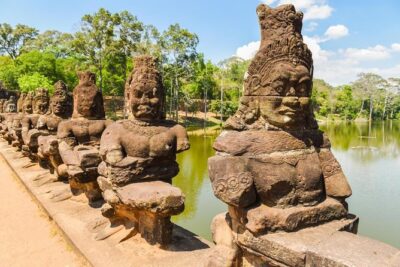
After sunrise and breakfast, the tour shifts into Angkor Thom territory—big stone gateways and the faces that people instantly recognize from photos. You’ll visit the South Gate of Angkor Thom, then move into the core temple cluster.
Here’s why this matters: seeing Angkor Wat is one story. Seeing the city-temple layout of Angkor Thom is another. The South Gate gives you scale and context, and then the temples start feeling like part of a larger urban plan instead of separate monuments.
From there, you’ll see:
- Bayon
- Baphuon
- Phimeanakas
- Elephant Terrace and Leper King Terrace
These stops are a strong mix of carved details, tower massing, and the kind of stone storytelling that rewards a slower look—especially when your guide is talking you through what you’re actually seeing.
If you like to photograph, this section is useful because it’s compact enough to move efficiently, but different enough that you aren’t repeating the same angles over and over.
Chasing the light? More dawn and dusk runs

Bayon, Baphuon, Phimeanakas, and those terraces up close
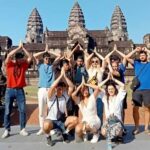
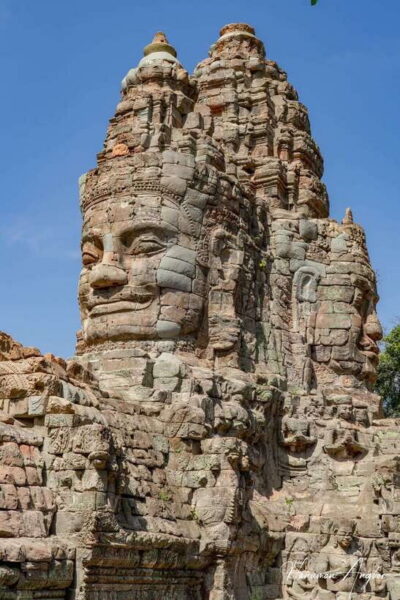
The Bayon experience is about scale and repetition: lots of towers, lots of faces, and a steady flow of people around you. Your guide’s job here is to make it more than just a photo stop. You get commentary to help you understand what the carvings and structures are doing visually.
Then you’ll move to Baphuon and Phimeanakas, which tend to feel more architectural. These are the temples where you can focus on layers, proportions, and how the complex sits within the larger Angkor setting.
The terraces—Elephant Terrace and Leper King Terrace—are the kind of stops that slow you down in a good way. Even when you’re tired from the early morning, terraces invite you to look closely at the reliefs and the way the stonework connects to the broader ceremonial space.
One more practical note: this section is done on a morning schedule, so it’s still cooler than afternoon. You’ll be grateful you had sunrise and breakfast before the worst heat arrives.
Ta Prohm (Tomb Raider Temple) and Banteay Kdei in the afternoon
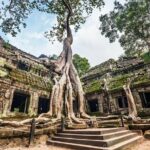
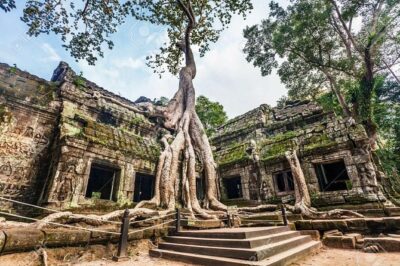
Around 1:00 pm, you head toward Ta Prohm, often called the Tomb Raider Temple. This is a highlight for many people because the setting feels different from the more open, clearer stone views. You’ll see the way roots and stones create that famous “ruin meets jungle” look.
Then you’ll continue to Banteay Kdei. This stop is a good contrast: you get another temple environment with its own rhythm and details, without the exact same visual pattern you just saw at Ta Prohm.
Afternoon is the trade-off. The tour covers a lot of ground, and Cambodia’s heat can turn “cool stone sightseeing” into “sit down for a minute” territory. The good news is that you have air-conditioned transport between temple zones and cold water plus a cold towel to help you reset.
Also, this tour includes scheduled breaks for meals. You’ll be able to purchase lunch during the day rather than just powering through on snacks.
Guide style matters: Mr Boy and Youk Makara as proof
A big part of why this tour feels worth it is the guide. One person you might get is Mr Boy, praised for being both knowledgeable about Angkor and great at directing you to stronger photo locations. Another guide mentioned is Youk Makara, described as passionate about Cambodia and with formal studies in archaeology, which shows up in the way he answers questions and connects what you see to the bigger story.
You can tell the difference between a guide who repeats dates and one who watches your questions. If you like to ask why something was built a certain way—or what certain carvings might represent—this is the setup that supports that kind of interaction.
And since sunrise is a sensory moment, having guidance during the early viewing helps you actually notice details instead of just snapping pictures and moving on.
Price and value: $39 tour plus the $37 Angkor pass
Let’s do the math. The tour price is $39, and the Angkor pass ticket is $37 per person for a single day. So you’re looking at roughly $76 all-in before souvenirs and meals.
That can sound steep until you compare what’s included:
- English-speaking guide time for the day
- Hotel pickup and drop-off
- Air-conditioned transport plus tuk tuk transfers
- Cold drinking water and a cold towel during temple time
- A route that covers Angkor Wat sunrise plus major temple stops in a single day
For many people, the real value isn’t the temples. It’s not getting stuck on logistics. You don’t want to waste your only sunrise morning sorting out tickets, timing, and where to go next.
If you’re traveling solo and planning to hire a driver anyway, this kind of structured small group can be a smarter use of money than going fully independent.
Smart packing and dress code so you don’t get stuck outside
Temple rules are strict, and they’re not the place to test your luck. Plan your outfit before you leave your hotel.
You’ll want:
- Shoulders covered
- Knees covered (so long shorts or pants)
- No tank tops
- The tour also notes no scarf or shawl
That last point surprises some people, so don’t pack the usual temple trick and assume it’ll work. If you’re unsure, go with light cotton clothes you can comfortably wear for long hours in hot and humid weather.
Weather note: the guidance calls out that November, December, and January tend to be nicer. Even then, start early and keep hydration in mind.
Who should book this sunrise small group tour
This is a strong match for you if:
- You want sunrise at Angkor Wat without planning chaos
- You prefer a guided route that still gives you time to look and photograph
- You’d rather avoid long negotiations for transport and ticket timing
- You don’t want a huge group. The cap is small, around 10 travelers (with the tour described as able to go up to 12)
It may feel less ideal if:
- You can’t handle an extremely early morning start
- You’re sensitive to weather uncertainty (sunrise is weather-dependent)
- You’re hoping for a relaxed, slow day with lots of free time. This schedule keeps moving.
Should you book this Angkor Wat sunrise small group tour?
If you’re choosing only one “structured” Angkor day, sunrise is usually the best place to spend your planning energy. This tour gives you that moment, plus an efficient temple circuit afterward, without making you deal with every moving part yourself.
My call: book it if you can handle 4:45 am, you’re okay with paying the separate $37 Angkor pass, and you want a guide who actively helps you see and photograph better. If you’re the type who hates early starts or expects sunrise to be a guaranteed clear-sky show, you might prefer a later temple day and keep your expectations flexible.
Either way, dress right, bring light layers, and plan for heat later in the day.
FAQ
What time does the tour start?
The tour starts at 4:45 am. You should be ready in your hotel lobby at 4:50 am.
Is hotel pickup and drop-off included?
Yes. Hotel pickup and drop-off are included.
Does the $39 price include the Angkor temple ticket?
No. The entrance fee/Angkor pass is $37 per person for a single day and is not included in the $39 tour price.
What transportation and comforts are provided?
You’ll travel with air-conditioned transportation, plus tuk tuk transportation during the temple trip. You also get cold pure drinking water and a cold towel during the temple time.
How big is the group?
It’s capped at a maximum of 10 travelers. The tour is also described as able to accommodate up to 12 people.
Which temples are included?
You’ll visit Angkor Wat for sunrise, then the South Gate of Angkor Thom, Bayon, Baphuon, Phimeanakas, Elephant and Leper King Terraces, plus Ta Prohm and Banteay Kdei.
Can I cancel for a full refund?
Yes, you can cancel up to 24 hours in advance of the experience start time for a full refund.
More Temple Circuits Around Siem Reap
- Angkor Wat Sunrise or Sunset Tour with Guide from Siem Reap
★ 5.0 · 12,109 reviews - Siem Reap: Angkor Wat: Small-Group Sunrise or Sunset Tour
★ 5.0 · 9,444 reviews - Siem Reap: Angkor Wat 2-Day Tour with Sunrise and Sunset
★ 4.9 · 4,429 reviews - Siem Reap: Full-Day Angkor Wat Guided Tour with Sunset
★ 4.9 · 3,803 reviews - Angkor Wat Sunrise tour with Small – Group and Guide tours
★ 5.0 · 3,655 reviews
Dawn and Dusk Over Angkor
- Angkor Wat Sunrise or Sunset Tour with Guide from Siem Reap
★ 5.0 · 12,109 reviews - Siem Reap: Angkor Wat: Small-Group Sunrise or Sunset Tour
★ 5.0 · 9,444 reviews - Sunset tour of Kampong Phluk stilts home village on the Tonle Sap
★ 5.0 · 4,865 reviews - Siem Reap: Angkor Wat 2-Day Tour with Sunrise and Sunset
★ 4.9 · 4,429 reviews - Siem Reap: Full-Day Angkor Wat Guided Tour with Sunset
★ 4.9 · 3,803 reviews
Angkor Wat, a Few More Ways In
- Angkor Wat Sunrise or Sunset Tour with Guide from Siem Reap
★ 5.0 · 12,109 reviews - Siem Reap: Angkor Wat: Small-Group Sunrise or Sunset Tour
★ 5.0 · 9,444 reviews - Siem Reap: Angkor Wat 2-Day Tour with Sunrise and Sunset
★ 4.9 · 4,429 reviews - Siem Reap: Full-Day Angkor Wat Guided Tour with Sunset
★ 4.9 · 3,803 reviews - Angkor Wat Sunrise tour with Small – Group and Guide tours
★ 5.0 · 3,655 reviews
Just Added: Fresh Siem Reap Tour Reviews

Angkor Wat Temple Tours, compared.
 ★ 5.0Angkor Wat Sunrise or Sunset Tour with Guide from Siem ReapFrom $1812,109 reviews
 ★ 5.0Angkor Wat: Small-Group Sunrise or Sunset TourFrom $159,444 reviews
 ★ 4.9Angkor Wat 2-Day Tour with Sunrise and SunsetFrom $344,429 reviews
 ★ 4.9Full-Day Angkor Wat Guided Tour with SunsetFrom $153,803 reviews
 ★ 5.0Angkor Wat Sunrise tour with Small – Group and Guide toursFrom $143,655 reviews
 ★ 5.0Angkor Wat Highlights and Sunrise Guided Tour from Siem ReapFrom $233,213 reviews
 ★ 5.0Angkor Wat Sunset Small Group Tour with Lunch IncludedFrom $203,059 reviews
 ★ 5.0Full-Day Angkor Wat Sunrise Private Tour with Guide from Siem ReapFrom $602,920 reviews