
Reviewed · ANGKOR WAT TEMPLE TOURS
Angkor Wat Sunrise, Ta Promh, Banteay Srei, Bayon Private Tour
Waking up at 4:30 a.m. sounds brutal. It is, but this private Angkor circuit is timed for the best light and the most iconic sights, before the crowds fully take over. You get hotel pickup, an English-speaking licensed guide, air-conditioned private transfers, plus cold water and towels—so you can focus on temples, not logistics.
The big win for me is that the day is built around the early hours at Angkor Wat, then it keeps moving through places that feel very different from each other: the tree-root drama at Ta Prohm, the delicate pink stone carvings at Banteay Srei, and the face-filled calm of Bayon and Angkor Thom. One possible drawback: you’ll be out for about 7 to 9 hours, and even after a cool sunrise start, it can get hot during the middle of the day.
In This Review
- Key highlights worth knowing before you go
- The early start: 4:30 a.m. is not optional here
- Angkor Wat sunrise: the reflection pool crowd test
- Ta Prohm: walking through the roots
- Banteay Srei: the pink sandstone “jewel” stop
- Angkor Thom, Bayon, and the south gate faces
- Price and value: why $69 can make sense for a private day
- What the private format changes for your day
- Practical tips so you enjoy it more (and stress less)
- Who should book this tour
- Should you book the Angkor Wat sunrise, Ta Prohm, Banteay Srei, and Bayon private day?
- FAQ
- What time does the tour start?
- Is hotel pickup and drop-off included?
- What’s included in the price?
- Are Angkor entrance tickets included?
- Can I buy the entrance ticket the morning of the tour?
- How long is the full tour?
- Is this tour private or shared with other people?
- Does the tour offer mobile tickets?
- Is there free cancellation?
Key highlights worth knowing before you go
- Sunrise at Angkor Wat: Go early to get a chance at the famous reflection pools, which get very crowded.
- Ta Prohm’s tree-root ruins: This temple’s “left as-is” feel comes from limited restoration beyond paths and strengthening.
- Banteay Srei’s pink sandstone: Small, detailed, and still impressively intact thanks to the stone quality.
- Bayon + Angkor Thom: You see the Buddhist state-temple viewpoint and the grand royal-city gates and terraces.
- English licensed guide: Past guests singled out guide knowledge and the way they handled heat and shaded breaks.
- Entrance tickets not included: You’ll need an Angkor pass, and you can buy it on the morning route to the temples.
Other ways to walk the great temple
- Angkor Wat Sunrise or Sunset Tour with Guide from Siem Reap★ 5.0 · 12,109 reviews
- Siem Reap: Angkor Wat: Small-Group Sunrise or Sunset Tour★ 5.0 · 9,444 reviews
- Siem Reap: Angkor Wat 2-Day Tour with Sunrise and Sunset★ 4.9 · 4,429 reviews
- Siem Reap: Full-Day Angkor Wat Guided Tour with Sunset★ 4.9 · 3,803 reviews
The early start: 4:30 a.m. is not optional here
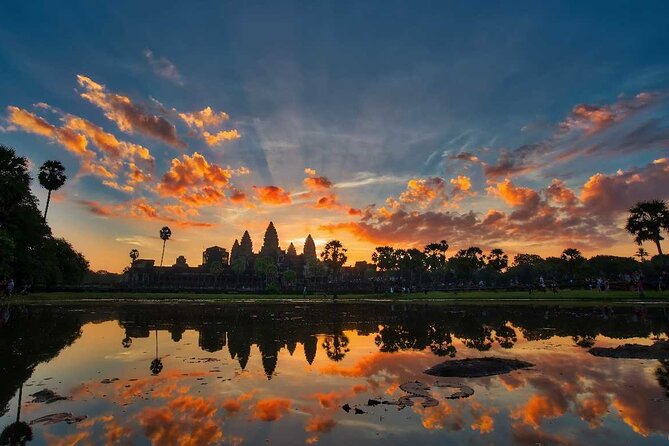
This tour begins at 4:30 a.m., with pickup from your hotel. That timing matters more than you might think. Angkor Wat at sunrise isn’t just about a pretty sky—it’s about position. You want to arrive early enough that you’re not stuck far from the most photographed angles, especially around the two reflection pools in front of the temple.
I also like that the tour is private, meaning your guide can adjust the pacing for your group. When the light changes fast and crowds surge, having someone who knows how to move people calmly helps. In at least one case, a guide (Mr Keo Pysedh) was praised for keeping a family and a young child happy by finding shade when it got too hot later in the day—exactly the sort of practical care that turns a long outing from stressful into manageable.
Angkor Wat sunrise: the reflection pool crowd test
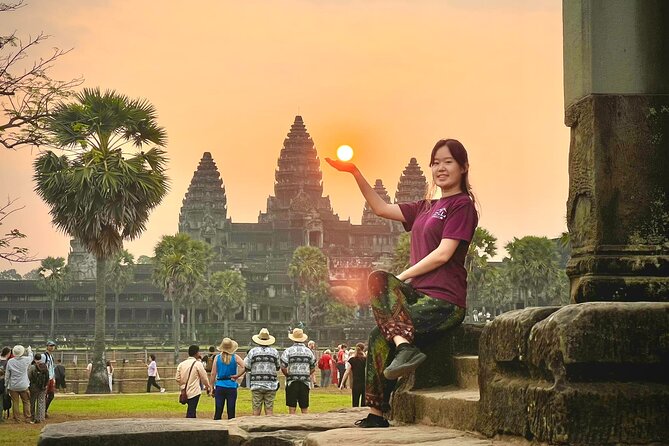
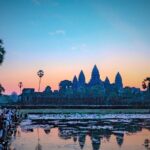
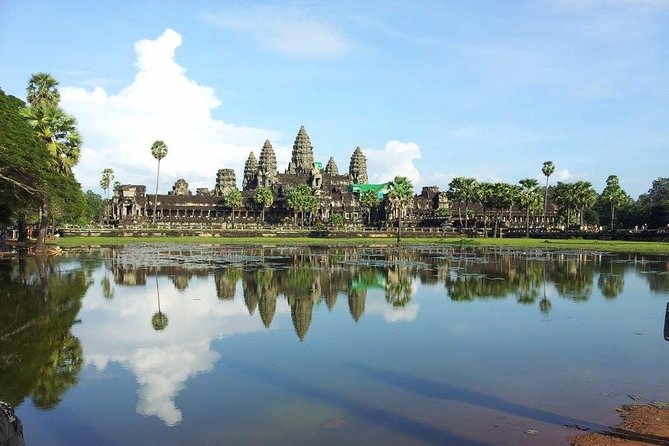
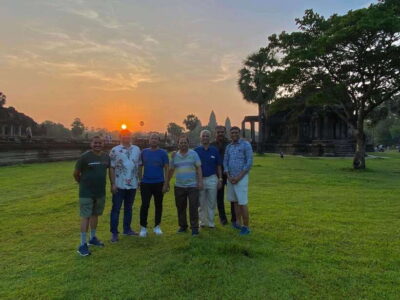
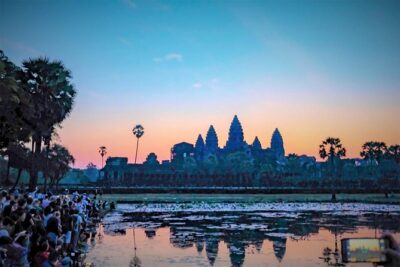
Angkor Wat is the headliner, and sunrise is when it feels most unreal. The idea is simple: you’re there while the first light rises behind the temple’s silhouette. The effect is quiet and dramatic at once.
Here’s the practical reality: sunrise is crowded at Angkor Wat, and the front reflection pools are the busiest spots. If you’re picturing an empty scene, adjust your expectations. Even so, it’s still a wonderful experience, and sunrise here has a “first explorers” feel—like you’re witnessing the temple in its most iconic mood.
A tip for your comfort: plan for long standing time. The tour time allocated at Angkor Wat is around 2 hours. That’s enough to see the initial light shift, walk the key views, and catch a few angles without feeling like you’re sprinting.
Also remember: admission ticket is not included. The good news is that you can buy your pass in the morning on the way to the temple, which saves you from scrambling at the last second.
Ta Prohm: walking through the roots
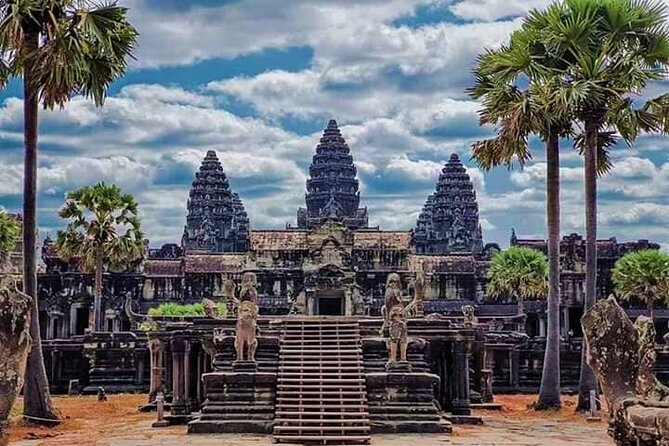
After sunrise, you head to Ta Prohm, where the atmosphere changes fast. If Angkor Wat feels monumental and orderly, Ta Prohm feels haunted—in a good way.
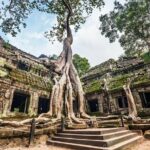
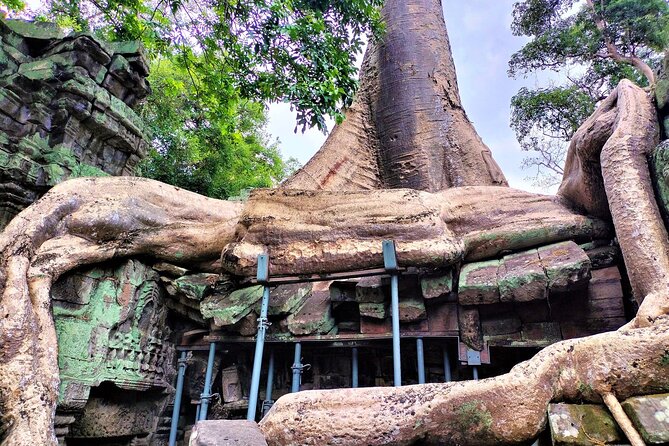
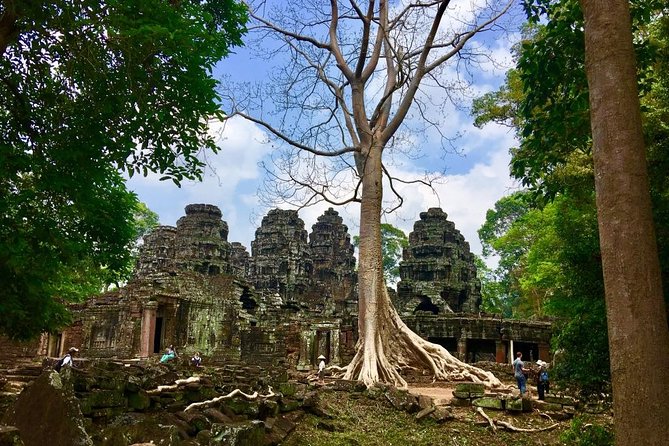
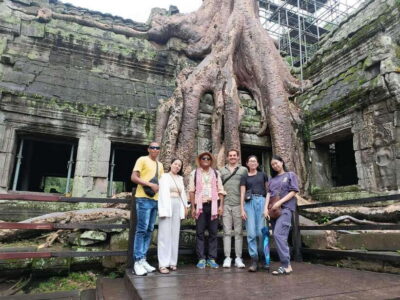
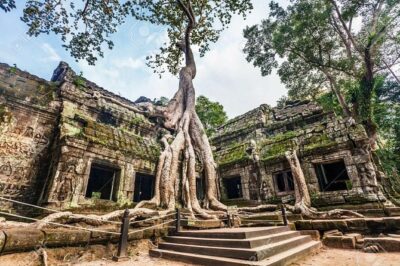
Ta Prohm is known as the kingdom of the trees, and it’s not just a nickname. The temple was left in a natural state as much as possible, with restoration limited to clearing a path for visitors and structural strengthening to slow further deterioration. That means you’re not just seeing “old stones”—you’re walking through a scene where giant fig, banyan, and kapok roots have spread over walls and terraces, and where trunks twist among pillars.
What I love about this stop is how it looks like two stories at once: the human architecture below and the jungle growth above. It feels like a rediscovery moment, closer to how early explorers encountered these ruins in the 1800s.
Timing note: you’ll spend about 2 hours at Ta Prohm. That’s a solid amount because the carvings and root patterns invite slow walking. Still, factor in heat. By midday, the sun can hit hard, and one guest specifically mentioned that the guide worked to keep people in shade, which tells you this is a real-life need, not a hypothetical one.
Banteay Srei: the pink sandstone “jewel” stop
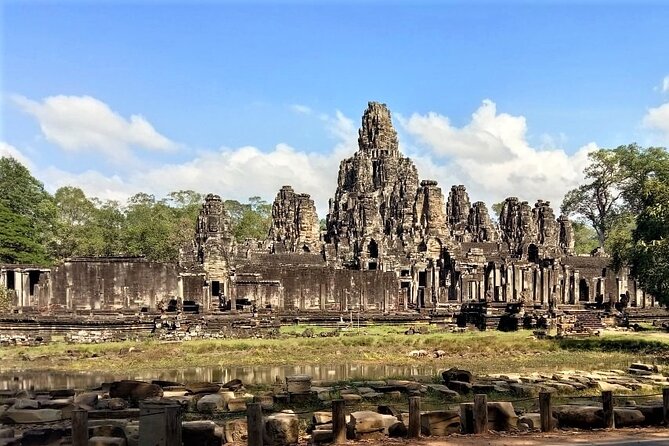
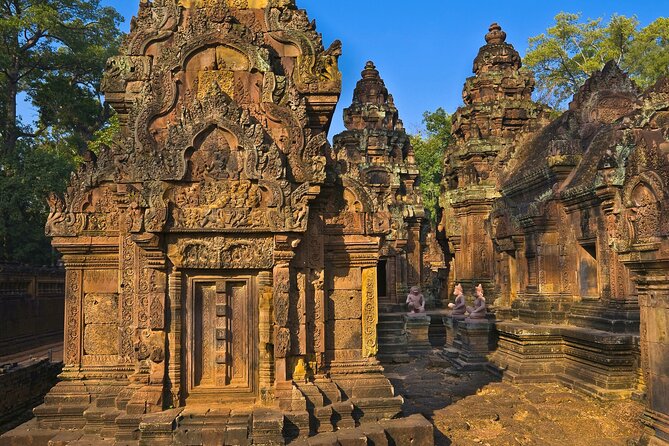
Banteay Srei is smaller than the big-ticket temples, but it’s exactly the kind of stop that makes the whole day feel balanced. Here, the stone color does the heavy lifting. The temple is famous for pink sandstone, and even though it’s more than 1,000 years old, the sculptures have remained due to the sandstone quality.
This is a great change of pace after Ta Prohm. Instead of roots and jungle drama, you get intricate carving detail. Your guide can help you read what you’re seeing—where to look, how the style differs from other sites, and why this temple is often called a highlight of Khmer art.
You’ll spend about 1 hour at Banteay Srei. That length feels about right for this kind of stop: enough time to appreciate details without it turning into “temple fatigue.”
As with the rest of the sites, admission isn’t included, so keep your Angkor pass handy (or plan to purchase it in the morning route).
Chasing the light? More dawn and dusk runs
Angkor Thom, Bayon, and the south gate faces
Angkor Thom is the ancient royal city—big gates, grand terraces, and a sense of ceremonial power. It’s often described in terms of Buddhist cosmology, and the way the space is laid out can make that idea feel visible. You’re walking through a city-plan scale scene, not just a single monument.
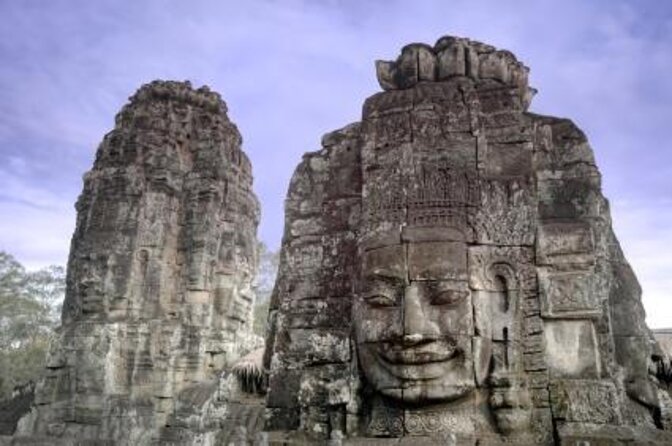
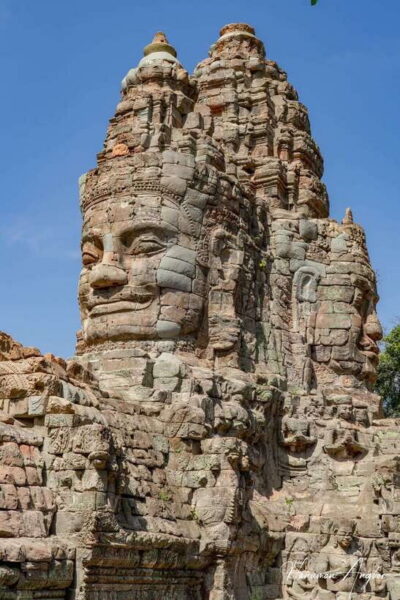
Then you move to Bayon, which has a distinct look: the stone faces. Bayon was constructed during Jayavarman VII’s reign and is the only Buddhist state temple in the Angkor Empire, plus it’s considered the last temple built in that empire. That mix of “only” and “last” matters. It helps you understand why Bayon feels both iconic and oddly focused compared to the earlier structures you saw that morning.
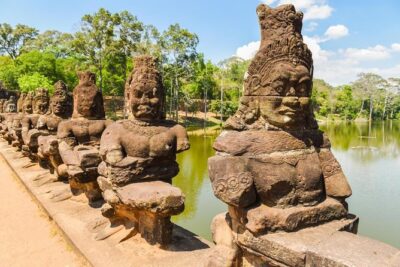
Your tour includes both Bayon and Angkor Thom South Gate. The south gate is especially popular because it’s been fully restored and many of the heads remain in place. It’s also located on the main road into Angkor Thom from Angkor Wat, so it ties the route together nicely: you feel like you’re moving through the city’s most symbolic entrance.
Time allocation here is shorter than Angkor Wat and Ta Prohm. You’ll have about:
- 1 hour for Angkor Thom
- 1 hour for Bayon
- 30 minutes for Angkor Thom South Gate
That’s enough for the major sights without dragging you through every last corner. If you love wandering, you’ll still want more time—but for most people, this balance keeps the whole day fun and not exhausting.
Price and value: why $69 can make sense for a private day
At $69 per person, this isn’t priced like a luxury expedition. It’s priced like a practical way to see the big names efficiently with guide help. What you’re paying for is the stuff that usually costs extra when you piece it together yourself:
- Hotel pickup and drop-off
- Private air-conditioned transfers
- Professional English-speaking licensed guide
- Cold drinking water and cold towels
- Services charge and current government VAT
Two things make the math feel better here. First, you’re covering multiple temples in one day rather than doing separate half-day plans. Second, a good licensed guide helps you avoid the common mistake of “seeing a lot” without understanding what you’re looking at.
The one extra cost you must plan for is the Angkor entrance ticket, which is not included. You can buy it in the morning route to the temples, but it’s still a cost you should budget for. Also, tips for your guide and driver are not included, and that’s normal for private tours—just don’t ignore it when you’re doing your trip budget.
From the way guests talked about guides, the value can go beyond facts. One guide named Sothear was praised for making the holiday feel five star, and Sok was described as experienced, helpful, and great for learning about Cambodian culture. When you get that level of guidance, your photos improve too, because you know where to stand and what details to notice.
What the private format changes for your day
Because this is a private tour, you’re not fighting for your spot in line, and you’re not stuck with a pacing style you dislike. Your guide can keep you moving while also slowing down for the parts you care about most—sunrise angles, carving detail at Banteay Srei, or the exact way the Bayon faces line up with the temple geometry.
Private also helps when weather hits. Even with a sunrise start, Cambodia can shift quickly into heat. One guest noted that their guide kept them and their young child in the shade and happy. That kind of practical adjustment is easier in a private setting than when you’re stuck inside a large group flow.
One more practical bonus: cold water and cold towels. These seem minor until you’re out under sun and walking between different temple zones for hours. It’s the kind of comfort that lets you keep your energy for photos and explanations instead of just coping.
Practical tips so you enjoy it more (and stress less)
Here’s how I’d set yourself up for a smooth day based on what matters most in the schedule and what people highlighted:
- Arrive ready for sunrise standing time: Angkor Wat gets crowded around the reflection pools, and the tour starts at 4:30 a.m.
- Plan for heat after sunrise: It may be cooler early, but later you’ll be walking. Ask your guide to help you time shade breaks.
- Bring a hat and sunscreen: Not listed as included, but it’s hard to enjoy stone-carving stops when you’re baked.
- Budget for the entrance ticket: Tickets are not included, and you’ll need one for this route. You can buy it on the morning way to the temples.
- Don’t forget tips: Tips for the guide and driver are not included, and they’re part of how private tours stay excellent.
- Keep expectations realistic at reflection pools: You’re going early for a chance, not for guaranteed emptiness.
If you’re trying to build a perfect day in Siem Reap, this kind of itinerary is also a smart “big hitters” plan. It mixes major icons with a temple you might not guess to prioritize: Banteay Srei.
Who should book this tour
This tour fits best if you:
- want a guided day that actually helps you understand what you’re seeing,
- care about sunrise timing at Angkor Wat,
- like variety—jungle ruins, delicate carvings, and face-filled Buddhist temples,
- prefer private pacing over big-group rush.
It’s less ideal if you hate early mornings or you need very gentle, slow walking with lots of breaks. Most people can participate, but the day is long at about 7 to 9 hours, and you’ll be outside for most of it.
Should you book the Angkor Wat sunrise, Ta Prohm, Banteay Srei, and Bayon private day?
If you’re choosing only one day to see the most famous Angkor sights in a way that feels thoughtful rather than chaotic, I’d say yes. The combination of sunrise at Angkor Wat, the unforgettable tree-root texture of Ta Prohm, the detail-focused beauty of Banteay Srei, and the face-and-gate drama of Bayon and Angkor Thom makes for a full Angkor “story arc” in one day.
I’d book it especially if you value guide care and clear organization. Guests have highlighted guide expertise and practical handling of heat—examples like Mr Keo Pysedh, Sothear, and Sok show that the human side of this tour matters. Just be honest with yourself about the early wake-up and the fact that you’ll likely need to manage crowds at the reflection pools.
FAQ
What time does the tour start?
The tour starts at 4:30 a.m.
Is hotel pickup and drop-off included?
Yes. Pickup & drop-off at your hotel are included.
What’s included in the price?
You get private transfers by air-conditioned vehicle, a professional English-speaking licensed tour guide, cold drinking water and cold towels, plus services charge and government VAT.
Are Angkor entrance tickets included?
No. Angkor entrance tickets are not included, and you’ll need them for this tour.
Can I buy the entrance ticket the morning of the tour?
Yes. The tour information says you can buy your ticket in the morning on the way to the temple.
How long is the full tour?
The duration is about 7 to 9 hours.
Is this tour private or shared with other people?
It’s private. Only your group participates.
Does the tour offer mobile tickets?
Yes. A mobile ticket is part of the tour features.
Is there free cancellation?
Yes, you can cancel for a full refund if you cancel at least 24 hours in advance of the experience start time.
Through Angkor Thom to Bayon
- Siem Reap Tour: Angkor Wat Sunrise, Bayon, Ta Prohm, Banteay Srei
★ 5.0 · 931 reviews - Angkor Wat Private Driver Tours to Angkor Wat Sunrise, Angkor Thom & Ta Prohm
★ 5.0 · 98 reviews - Angkor Wat Sunrise and Angkor Thom Sunset Tour
★ 5.0 · 89 reviews - Angkor Wat, Angkor Thom Ancient Capital, Ta Promh Temple
★ 5.0 · 85 reviews - Private Temples Guided Tour (Angkor Wat, Ta Prom & Angkor Thom)
★ 5.0 · 75 reviews
Dawn and Dusk Over Angkor
- Angkor Wat Sunrise or Sunset Tour with Guide from Siem Reap
★ 5.0 · 12,109 reviews - Siem Reap: Angkor Wat: Small-Group Sunrise or Sunset Tour
★ 5.0 · 9,444 reviews - Sunset tour of Kampong Phluk stilts home village on the Tonle Sap
★ 5.0 · 4,865 reviews - Siem Reap: Angkor Wat 2-Day Tour with Sunrise and Sunset
★ 4.9 · 4,429 reviews - Siem Reap: Full-Day Angkor Wat Guided Tour with Sunset
★ 4.9 · 3,803 reviews
Angkor Wat, a Few More Ways In
- Angkor Wat Sunrise or Sunset Tour with Guide from Siem Reap
★ 5.0 · 12,109 reviews - Siem Reap: Angkor Wat: Small-Group Sunrise or Sunset Tour
★ 5.0 · 9,444 reviews - Siem Reap: Angkor Wat 2-Day Tour with Sunrise and Sunset
★ 4.9 · 4,429 reviews - Siem Reap: Full-Day Angkor Wat Guided Tour with Sunset
★ 4.9 · 3,803 reviews - Angkor Wat Sunrise tour with Small – Group and Guide tours
★ 5.0 · 3,655 reviews
Just Added: Fresh Siem Reap Tour Reviews

Angkor Wat Temple Tours, compared.
 ★ 5.0Angkor Wat Sunrise or Sunset Tour with Guide from Siem ReapFrom $1812,109 reviews
 ★ 5.0Angkor Wat: Small-Group Sunrise or Sunset TourFrom $159,444 reviews
 ★ 4.9Angkor Wat 2-Day Tour with Sunrise and SunsetFrom $344,429 reviews
 ★ 4.9Full-Day Angkor Wat Guided Tour with SunsetFrom $153,803 reviews
 ★ 5.0Angkor Wat Sunrise tour with Small – Group and Guide toursFrom $143,655 reviews
 ★ 5.0Angkor Wat Highlights and Sunrise Guided Tour from Siem ReapFrom $233,213 reviews
 ★ 5.0Angkor Wat Sunset Small Group Tour with Lunch IncludedFrom $203,059 reviews
 ★ 5.0Full-Day Angkor Wat Sunrise Private Tour with Guide from Siem ReapFrom $602,920 reviews
Browse the lists this tour appears in