
Reviewed · ANGKOR WAT TEMPLE TOURS
Angkor Wat Sunrise Tour & Archaeological Park Exploration
Morning temples beat the heat every time. This Angkor Wat sunrise tour gets you up early, drives you in comfort, and pairs the first light at the pond with a tight circuit of nearby masterpieces. You end up seeing more than just a photo moment.
I love two things most: the free hotel pickup/drop-off means you’re not figuring out dawn transportation, and the English-speaking guide helps you connect what you’re looking at with what it actually represents. You’ll also have bottled water on hand for the early start, which is a small thing that matters at 5-something in the morning.
One drawback to plan for: the big temple entrance ticket is not included, and there’s no lunch in the tour price. So your total cost at the end of the day is higher than the headline tour fee.
In This Review
- Quick highlights
- The 4:30 AM run to Angkor Wat (and why it matters)
- Hotel pickup, AC comfort, and a private group morning
- Sunrise setup at the reflecting pool: where the magic happens
- Stop 1: Angkor Wat (main temple time after first light)
- Stop 2: Bayon Temple and Jayavarman VII’s state temple
- Stop 3: Ta Prohm on the edge of East Baray
- Price and logistics: what $19 turns into
- How to get the most out of the early morning
- Should you book this Angkor Wat sunrise tour?
- FAQ
- How long is the Angkor Wat sunrise and archaeological park tour?
- When does the tour start?
- Is sunrise included and when does it happen?
- What’s included in the tour price?
- Are the temple entrance fees included?
- Is the tour private?
- What is the cancellation policy?
Quick highlights
- 4:30 AM departure: you’re built for sunrise timing, not a relaxed morning stroll
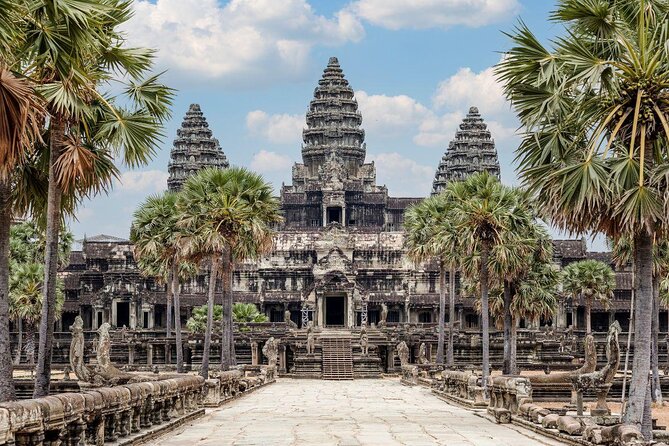
- Reflecting pool vantage: aiming near the main entrance gives you the best chance at that temple-in-water look
- Air-conditioned transport: comfort returns right after the walking and viewing
- Small-circuit pacing: Angkor Wat, Bayon, and Ta Prohm in a focused morning block
- Private group: it’s only your group, so the guide can keep things moving for you
- Phyrom is a name to watch for: past groups have praised him for making the sites click
Other ways to walk the great temple
- Angkor Wat Sunrise or Sunset Tour with Guide from Siem Reap★ 5.0 · 12,109 reviews
- Siem Reap: Angkor Wat: Small-Group Sunrise or Sunset Tour★ 5.0 · 9,444 reviews
- Siem Reap: Angkor Wat 2-Day Tour with Sunrise and Sunset★ 4.9 · 4,429 reviews
- Siem Reap: Full-Day Angkor Wat Guided Tour with Sunset★ 4.9 · 3,803 reviews
The 4:30 AM run to Angkor Wat (and why it matters)
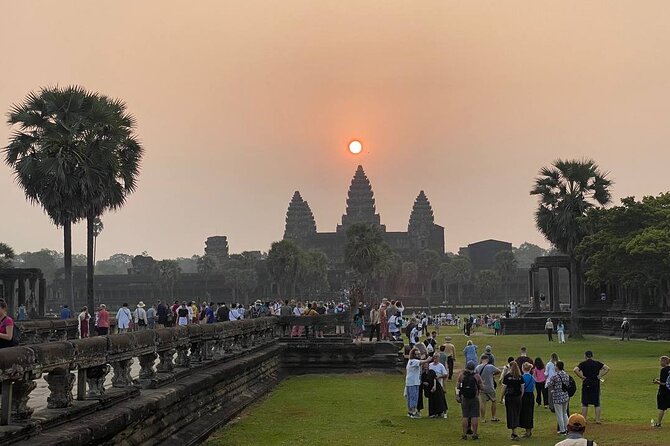
This tour is designed around one simple reality: the best Angkor Wat experience starts before the crowds and before the heat. You start the trip at 4:30 AM, with sunrise typically landing around 5:30 to 6:00 AM depending on the season. That early timing is where the value lives.
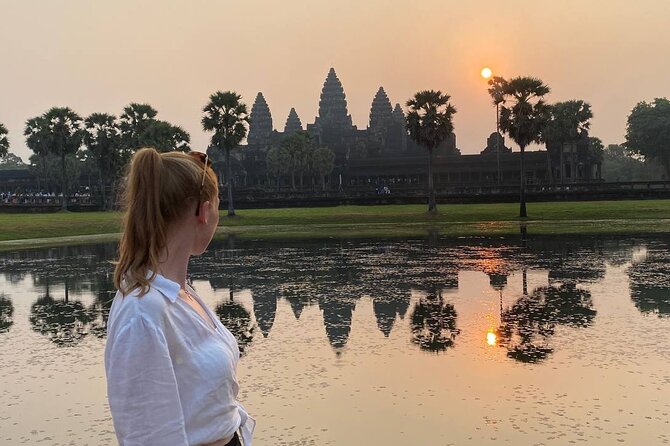
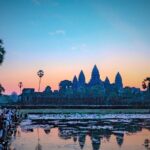
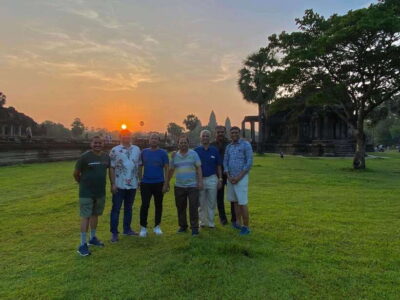
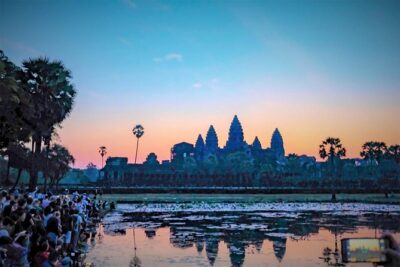
If you want the classic view, go for the area in front of the reflecting pool near the main entrance. That’s where the water gives you a natural mirror effect when the temple is still half-dark and the sky starts coloring up. The earlier you’re in position, the less you’re fighting other people for a decent spot.
There’s another practical upside: after sunrise, you get to move through the temples during the cooler morning hours. Cambodia’s midday warmth can be a lot, and this schedule helps you see big stones and carvings without roasting quite as fast.
Hotel pickup, AC comfort, and a private group morning
I like tours that remove the hardest part of the day: getting started. This one includes free pick up and drop off at your hotel, plus an air-conditioned vehicle for the ride. You’re still walking through temple grounds, but you’re not stuck doing transfers in the dark or standing in the street waiting for a van.
The guide is English speaking, which matters at Angkor because the details can be easy to miss when you’re just trying to get your bearings. A good guide helps you understand what you’re seeing, and it also keeps the stops efficient so the morning doesn’t turn into long waits.
It’s also a private tour/activity, meaning it’s only your group. That can translate to a smoother pace, fewer interruptions, and less time herding people through checkpoints. Even with a set route, private mornings tend to feel less chaotic.
Finally, you get free mineral water, which is helpful at sunrise when you’re awake but not fully hydrated. It won’t fix everything, but it supports a comfortable start.
Sunrise setup at the reflecting pool: where the magic happens
Your sunrise goal is not just seeing the sun go up. It’s seeing Angkor Wat in the soft light before the day becomes loud and hot. Getting there early helps, because the area near the reflecting pool fills up quickly.
Once sunrise begins, you’re looking at the temple silhouette and the sky changing tones in real time. There’s a reason people describe this as breathtaking: the contrast between dark stone and light sky makes the architecture feel sharper and more dramatic than it does later. If you’re into photography, this is one of the easiest places to capture a meaningful composition without needing fancy tricks.
Timing is also part of the experience. Sunrise runs in a window of about 30 minutes, so the tour timing (arrival early, viewing at the pond area, then moving on) gives you enough space to watch the first light arrive and settle. You’re not rushing off the moment the sun pops.
What to watch for: the reflection works best when the water is calmer. If you see people already settling into the most direct view spots, that’s a hint to take a seat and let the sky do its thing.
Stop 1: Angkor Wat (main temple time after first light)
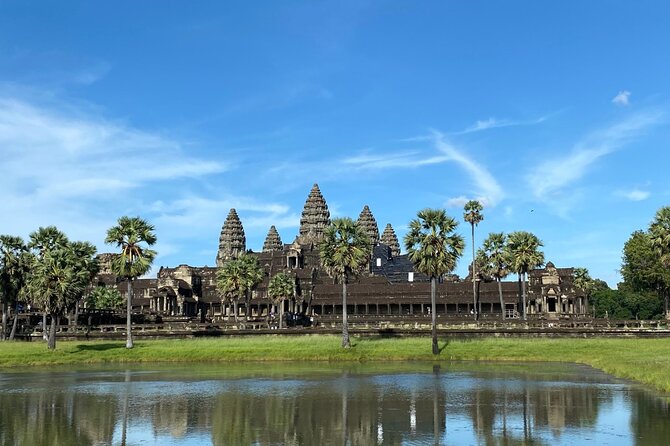
After sunrise viewing, the next phase is exploring the main Angkor Wat temple area. You’ll spend about 2 hours here, with the visit focused on the core sights rather than trying to cram everything into a single morning.
This is the stop where a guide earns their keep. Angkor Wat isn’t just a single building; it’s a layout, a set of alignments, and a whole visual rhythm of courtyards and towers. When someone explains what you’re looking at, the place stops feeling like a background for photos and starts feeling like a real planned design.
You’ll also appreciate the schedule shift. Right after sunrise, the air is often more tolerable, and walking between points doesn’t feel like a marathon. By the time the day heats up, you’re already deep enough into the experience that it still feels like your morning was well spent.
One note for your planning: entrance fee is not included, and Angkor Wat access requires that temple ticket. If you show up without it, you’ll lose time at the very moment you’re trying to protect.
Chasing the light? More dawn and dusk runs


Stop 2: Bayon Temple and Jayavarman VII’s state temple
Bayon Temple is where the morning history and symbolism sharpen. This stop is about 1 hour, and it’s clearly part of the classic Angkor loop.
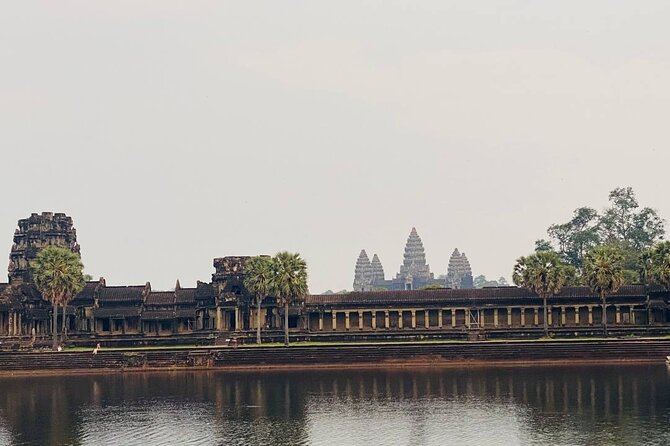
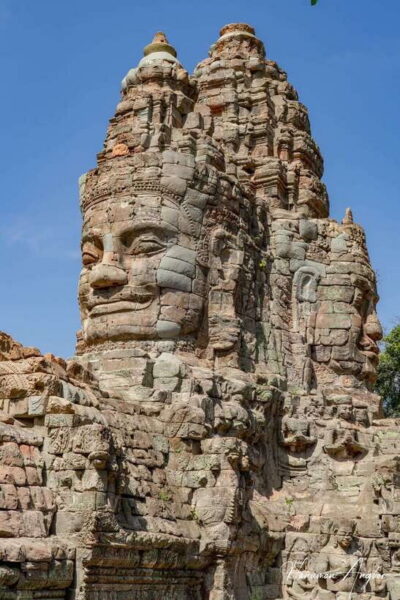
Bayon is described as a richly decorated Khmer temple related to Buddhism at Angkor, built in the late 12th or early 13th century as the state temple of King Jayavarman VII. That context helps, because Bayon’s look can feel overwhelming at first glance. With the background, you start seeing patterns and why certain elements matter.
The best way to enjoy Bayon during a sunrise tour is pacing. Don’t sprint. Spend a few minutes looking wide, then narrow in. The hour is enough time to absorb the atmosphere and still move on without feeling stuck in a slow line.
The cool morning advantage still applies here. Bayon is a strong stop, but it can become tiring if you’re rushing through just to hit the next location. A guide can help keep you from spending your limited time only taking photos without actually understanding the space you’re in.
And again: ticket access applies. Bayon is included on the route, but the entrance fee is separate.
Stop 3: Ta Prohm on the edge of East Baray
Ta Prohm is the stop that often gives people a different feeling from the more orderly main temple areas. It’s about 1 hour, and it’s known by its modern name for this Angkor-area temple near Siem Reap.
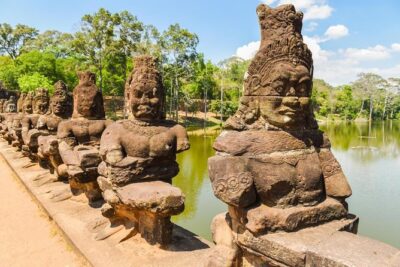
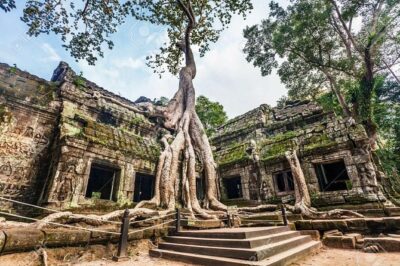
Ta Prohm is located approximately one kilometer east of Angkor Thom, and on the southern edge of the East Baray. It’s built in the Bayon style, which means it shares an artistic language with the broader Jayavarman VII period rather than feeling like a totally separate experience.
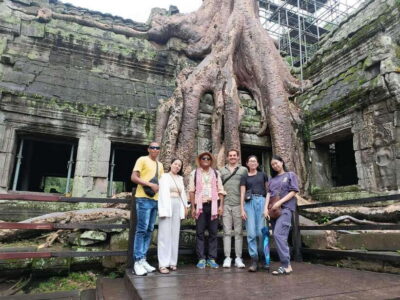
People sometimes call it the jungle temple of Ta Prohm, and that name shows up for a reason. The setting can feel more atmospheric and natural than the first big temple you saw at sunrise. It’s a nice contrast: after structured Angkor Wat viewing, Ta Prohm tends to feel more about textures, angles, and the way structures interact with the environment.
Why the timing matters here: by late morning, heat can slow you down. With this tour, you hit Ta Prohm before conditions get too intense, so you can actually enjoy what you’re seeing instead of just power-walking through.
As with the other stops, entrance is not included in the tour price. You’ll want to have the temple ticket ready so the morning stays smooth.
Price and logistics: what $19 turns into
Let’s talk value, because the headline price can be misleading if you don’t do the math. The tour cost is $19.00 per person, and the big items included are transport, guide, and convenience: air-conditioned vehicle, English-speaking guide, and free pick up/drop off. You also get free mineral water.
What’s not included is just as important: the 01-day temple ticket is $37.00 per person, and lunch is not included. So your likely total for the core experience becomes about $56 per person, before any meals. That’s still not outrageous for what you’re getting: a guided, early, multi-stop Angkor morning with comfort built in.
Where the $19 price really pays off is how much stress it removes. Getting to sunrise on your own means arranging transport in the dark, finding the right viewing area, and coordinating entry tickets. Here, the guide and vehicle handle much of that friction, so you can focus on the sunrise and the monuments.
The biggest “gotcha” is simply planning your meals. If lunch isn’t included, you’ll want to either budget for it afterward or plan a snack strategy for the late morning. Otherwise you might feel fine for sunrise and then suddenly start paying for that energy with hunger.
Also, your tour has a solid time block of about 5 hours, so you’re not losing an entire day to getting started. That’s good value if you’re trying to fit other Siem Reap activities later.
How to get the most out of the early morning
This kind of tour rewards small preparation choices. First, treat the arrival timing seriously. The tour experience is built for being early—ideally you arrive by 5:00 AM to secure a good viewing spot. If you show up late, you’ll still see sunrise, but you’ll likely be choosing from less ideal areas.
Second, keep your mobile ticket ready. The tour uses mobile ticketing, so you’ll want your phone charged and accessible when it’s time to enter temple areas. Nothing ruins a great morning faster than scrambling for a signal or battery right when you need to move.
Third, bring comfort for walking. The itinerary is short in time per stop—two hours at Angkor Wat, then one hour each at Bayon and Ta Prohm—but it still involves real walking in temple zones. Comfortable footwear and a light day bag help.
Fourth, manage expectations about the pacing. This is not a slow museum day. It’s a focused morning circuit meant to take advantage of cooler hours. If you want more free time at each site, this might feel a bit structured, but that structure is what protects the sunrise schedule.
Finally, if you’re able to get guide Phyrom, consider it a bonus. People have specifically praised him for making the history and experience feel more engaging, and that kind of explanation can turn “I saw the temple” into “I understood what I was looking at.”
Should you book this Angkor Wat sunrise tour?
Book it if you want the most important Angkor Wat experience—sunrise—without the stress of DIY logistics. The combination of early timing, hotel pickup, AC transport, and an English guide makes the morning feel efficient and actually enjoyable.
You should also book if you like the idea of hitting Angkor Wat, Bayon, and Ta Prohm in a compact timeframe while the air is still comfortable. The route is built for that cooler morning window, and that’s when the experience is easiest to savor.
Skip it or reconsider if you’re trying to keep costs ultra-low or you hate the idea of paying temple entrance fees on top of the tour price. Also, if you need long unstructured time at each stop, this won’t match that style.
If you’re okay budgeting for the temple ticket and you want sunrise to be the headline moment, this is a strong choice.
FAQ
How long is the Angkor Wat sunrise and archaeological park tour?
The tour lasts about 5 hours.
When does the tour start?
The trip begins at around 4:30 AM, so you can reach the sunrise viewing area in time.
Is sunrise included and when does it happen?
Yes. Sunrise timing is usually around 5:30 to 6:00 AM depending on the season.
What’s included in the tour price?
It includes an air-conditioned vehicle, an English speaking guide, free pick up and drop off at your hotel, and free mineral water.
Are the temple entrance fees included?
No. The entrance fee for the 01-day temple ticket is $37.00 per person, and it’s not included in the tour price.
Is the tour private?
Yes. It’s a private tour/activity, and only your group will participate.
What is the cancellation policy?
Free cancellation is available up to 24 hours in advance for a full refund. If you cancel less than 24 hours before the experience starts, the amount paid is not refunded.
More Temple Circuits Around Siem Reap
- Angkor Wat Sunrise or Sunset Tour with Guide from Siem Reap
★ 5.0 · 12,109 reviews - Siem Reap: Angkor Wat: Small-Group Sunrise or Sunset Tour
★ 5.0 · 9,444 reviews - Siem Reap: Angkor Wat 2-Day Tour with Sunrise and Sunset
★ 4.9 · 4,429 reviews - Siem Reap: Full-Day Angkor Wat Guided Tour with Sunset
★ 4.9 · 3,803 reviews - Angkor Wat Sunrise tour with Small – Group and Guide tours
★ 5.0 · 3,655 reviews
Dawn and Dusk Over Angkor
- Angkor Wat Sunrise or Sunset Tour with Guide from Siem Reap
★ 5.0 · 12,109 reviews - Siem Reap: Angkor Wat: Small-Group Sunrise or Sunset Tour
★ 5.0 · 9,444 reviews - Sunset tour of Kampong Phluk stilts home village on the Tonle Sap
★ 5.0 · 4,865 reviews - Siem Reap: Angkor Wat 2-Day Tour with Sunrise and Sunset
★ 4.9 · 4,429 reviews - Siem Reap: Full-Day Angkor Wat Guided Tour with Sunset
★ 4.9 · 3,803 reviews
Angkor Wat, a Few More Ways In
- Angkor Wat Sunrise or Sunset Tour with Guide from Siem Reap
★ 5.0 · 12,109 reviews - Siem Reap: Angkor Wat: Small-Group Sunrise or Sunset Tour
★ 5.0 · 9,444 reviews - Siem Reap: Angkor Wat 2-Day Tour with Sunrise and Sunset
★ 4.9 · 4,429 reviews - Siem Reap: Full-Day Angkor Wat Guided Tour with Sunset
★ 4.9 · 3,803 reviews - Angkor Wat Sunrise tour with Small – Group and Guide tours
★ 5.0 · 3,655 reviews
Just Added: Fresh Siem Reap Tour Reviews



Angkor Wat Temple Tours, compared.
 ★ 5.0Angkor Wat Sunrise or Sunset Tour with Guide from Siem ReapFrom $1812,109 reviews
 ★ 5.0Angkor Wat: Small-Group Sunrise or Sunset TourFrom $159,444 reviews
 ★ 4.9Angkor Wat 2-Day Tour with Sunrise and SunsetFrom $344,429 reviews
 ★ 4.9Full-Day Angkor Wat Guided Tour with SunsetFrom $153,803 reviews
 ★ 5.0Angkor Wat Sunrise tour with Small – Group and Guide toursFrom $143,655 reviews
 ★ 5.0Angkor Wat Highlights and Sunrise Guided Tour from Siem ReapFrom $233,213 reviews
 ★ 5.0Angkor Wat Sunset Small Group Tour with Lunch IncludedFrom $203,059 reviews
 ★ 5.0Full-Day Angkor Wat Sunrise Private Tour with Guide from Siem ReapFrom $602,920 reviews