
Reviewed · ANGKOR WAT TEMPLE TOURS
Angkor Wat Tour with Sun Rise Small Group Day Tour
Sunrise at Angkor Wat sets the tone. This 7-hour small-group day tour starts with a hotel pickup in Siem Reap, then gets you inside the ruins when the light is soft and the mood is calmer than later in the day.
I like the way the tour is paced for people who want the highlights without feeling rushed—especially the Sunrise entry at Angkor Wat and the compact group size (max 10 travelers). I also appreciate the practical comfort: air-conditioned transport, bottled water, and an English-speaking guide who explains what you’re actually looking at.
One heads-up: the Angkor Wat admission fee isn’t included. You’ll want to budget for that on top of the $18 tour price, and remember the day is long enough that good shoes and a steady morning game plan matter.
In This Review
- Key Highlights You’ll Feel Immediately
- Sunrise at Angkor Wat: The Real Reason This Tour Works
- The Angkor Wat Game Plan: East Entrance, Jungle Path, Bas-Relief Stories
- Breakfast Before the Temples: Fuel for Ta Prohm and Bayon
- Ta Prohm: The Tomb Raider Look, With a Real-World Context
- Bayon’s Smiling Faces: More Than a Photo Op
- Angkor Thom South Gate: The Stone Figures Entrance to the Ancient Capital
- Logistics That Keep You From Wasting Morning Hours
- Price and Value: $18 Isn’t the Whole Story, But It’s a Strong Deal
- Who This Angkor Sunrise Tour Fits Best
- Should You Book This Angkor Wat Sunrise Small-Group Tour?
- FAQ
- How long is the Angkor Wat Sunrise small-group day tour?
- Where does pickup happen?
- How many people are in the group?
- Is the guide English-speaking?
- Are tickets included for all temples?
- Is there bottled water during the tour?
- Do you use a mobile ticket?
- Is transportation air-conditioned?
- Who can participate?
- What is the cancellation policy?
Key Highlights You’ll Feel Immediately
- Sunrise timing at Angkor Wat for softer light and a smoother start to the day
- Eastern-side entrance plus a jungle path walk toward the north ancient library pool
- Multiple “wow” temples in one morning: Ta Prohm, Bayon, then Angkor Thom South Gate
- Small-group size (up to 10) that makes questions easier and the flow less chaotic
- English-speaking guide + air-conditioned vehicle so you spend more time seeing and less time figuring things out
- Mobile ticket for a simpler start once you’re at the meeting point
Other ways to walk the great temple
- Angkor Wat Sunrise or Sunset Tour with Guide from Siem Reap★ 5.0 · 12,109 reviews
- Siem Reap: Angkor Wat: Small-Group Sunrise or Sunset Tour★ 5.0 · 9,444 reviews
- Siem Reap: Angkor Wat 2-Day Tour with Sunrise and Sunset★ 4.9 · 4,429 reviews
- Siem Reap: Full-Day Angkor Wat Guided Tour with Sunset★ 4.9 · 3,803 reviews
Sunrise at Angkor Wat: The Real Reason This Tour Works
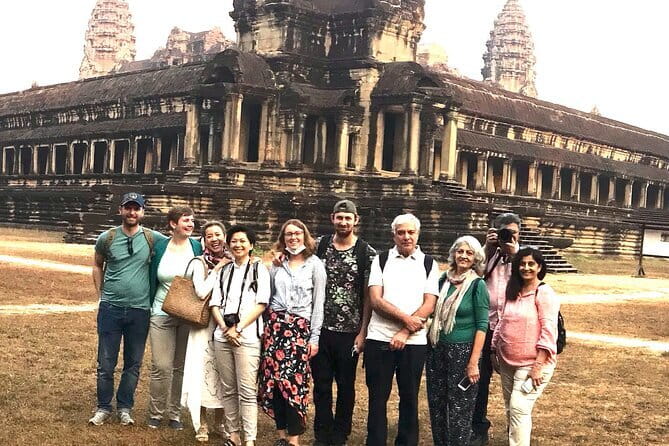
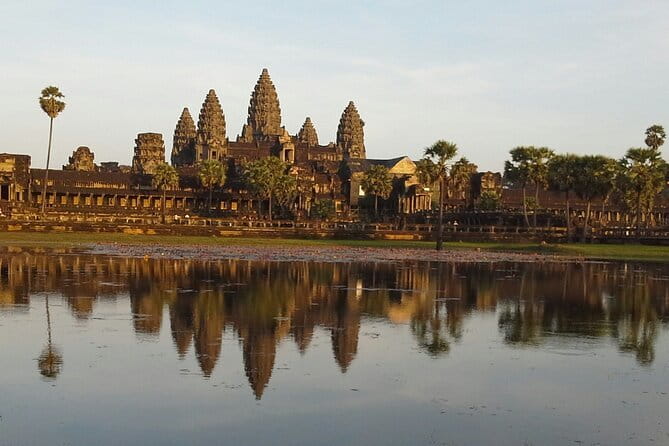
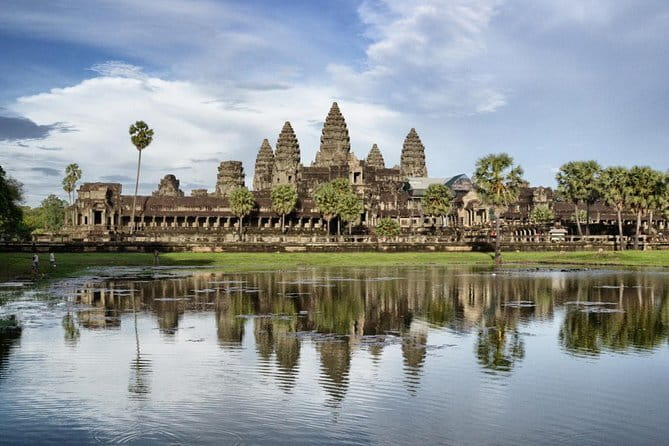
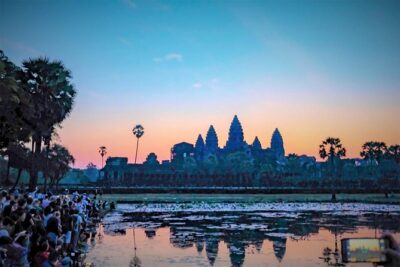
Angkor Wat is famous for a reason, but sunrise is what turns it from a checklist stop into a lived-in moment. The early timing means you’re seeing the temple when the sky is starting to brighten and the stone has that gentle, changeable look. Even if you’ve seen photos before, the scale hits differently when you’re standing in front of it before the crowds thicken.
This tour’s setup is also built around staying efficient. You’re picked up from your hotel in Siem Reap and transported by an air-conditioned vehicle, which helps you avoid the “we’ll just figure it out” scramble that often ruins early starts. The day then runs like a smooth circuit: first Angkor Wat, then Ta Prohm, Bayon, and Angkor Thom’s South Gate.
What I especially like is that it’s not just sunrise for sunrise’s sake. After the early Angkor Wat time, you get a sequence of temples that feel connected—same Khmer world, different artistic emphasis, and different moods as you move through the complex.
The Angkor Wat Game Plan: East Entrance, Jungle Path, Bas-Relief Stories
The tour’s first stop focuses on getting inside Angkor Wat in a way that avoids the most cookie-cutter approach. You enter from the eastern side, which is described as a little-visited eastern side entry. That detail matters because it can help you feel less like you’re herded into the same viewing points everyone posts from.
From there, you move on foot and squeeze through a jungle path toward the north ancient library pool. It’s not just scenery—it’s part of how the site feels. You’re transitioning from open temple space into a more overgrown, lived-in atmosphere, and the guide’s explanations help you connect the walk to the temple layout instead of treating it like a random shortcut.
Angkor Wat itself is introduced as the largest religious monument in the world, built in the early 12th century. The tour then shifts you into the temple’s central chambers, where the guide shares the history, myths, and stories shown in the bas-reliefs. This is a key value point: Angkor’s art can feel overwhelming if you don’t know what you’re seeing, but the guided “what it means” approach gives you anchors to remember.
You also get time to focus on the bas-reliefs—specifically noted as the longest stretch of bas-relief carvings in the world. That’s exactly the kind of detail that pays off in person. Up close, the carvings aren’t just decoration; they’re the temple’s visual language, telling you who the people were, what they believed, and what scenes mattered enough to be carved into stone.
Consideration: Angkor Wat admission is not included. So while the tour price is low, your total day cost depends on getting that ticket sorted ahead of time.
Breakfast Before the Temples: Fuel for Ta Prohm and Bayon
After the intense start at Angkor Wat, the tour includes a breakfast stop before heading to Ta Prohm. That timing is smart. If you skip food early, you’ll hit Ta Prohm and Bayon with sore feet and low focus—two things you really don’t want when you’re trying to take in stone faces, roots, and carvings.
Because this is a guided circuit, breakfast also helps you keep the flow. You’re not left wandering for food while trying to “meet up later.” With the tour’s structure, you go from one temple mood to the next with less friction.
And yes, you’re still walking. The day is built around temple-to-temple movement, so breakfast isn’t a luxury; it’s part of keeping you steady for the final stretch at Bayon and Angkor Thom.
Ta Prohm: The Tomb Raider Look, With a Real-World Context
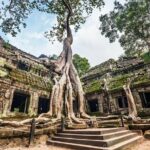
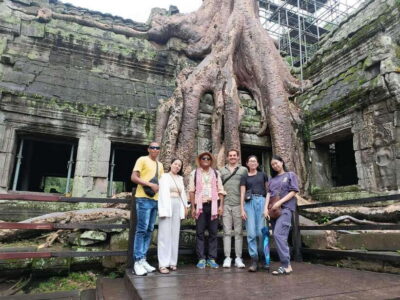
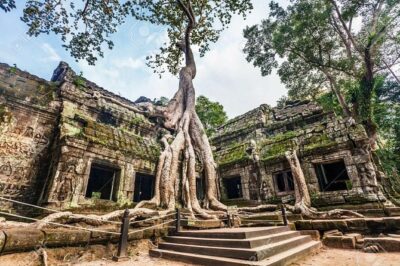
Ta Prohm is the temple many people come for because of the dramatic mix of trees and ruins. It’s described as jungle-enveloped and “Tomb raider temple,” and it’s built in the 13th century. What makes Ta Prohm special isn’t just the visuals—it’s that it’s in much the same condition as it was found, which helps explain why it feels so authentic and atmospheric.
You’ll also get the UNESCO context: Ta Prohm was inscribed as a World Heritage site in 1992. That matters because it’s a reminder that this isn’t just a movie set look—it’s a serious cultural monument with real preservation importance.
This stop is also one of the most photo-friendly times of the day, but the best way to enjoy it is to slow down. The roots, trunks, and stone blocks create a natural maze-like feeling. Let the guide’s explanations do the heavy lifting, then use your own pace to look upward and side-to-side instead of only snapping from eye level.
What to watch for: Ta Prohm’s relationship with the surrounding jungle is part of its identity. When you understand that, you stop thinking of it as ruins “with trees” and start seeing it as a temple shaped by time.
Chasing the light? More dawn and dusk runs



Bayon’s Smiling Faces: More Than a Photo Op
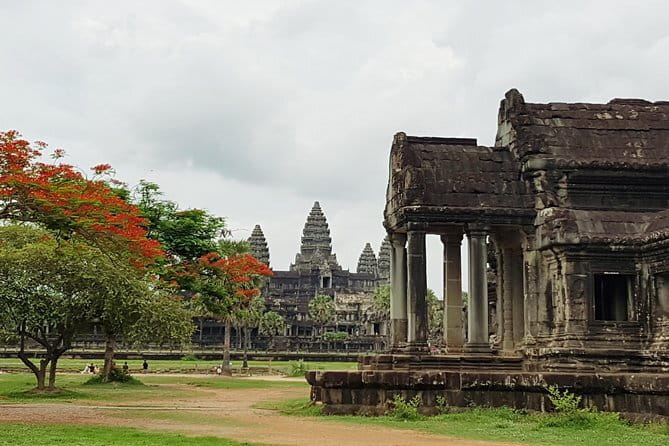
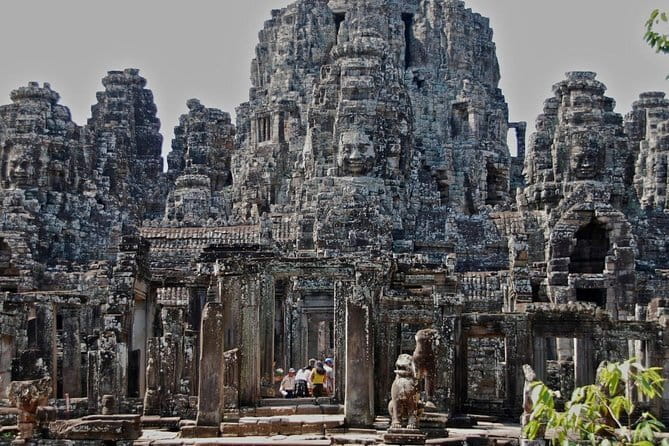
Then comes Bayon, the richly decorated Khmer temple at Angkor. It was built in the 13th century as the state temple of King Jayavarman VII, and it sits at the center of Jayavarman’s capital. That royal-intent framing is useful. It keeps Bayon from feeling like a random stop and turns it into a core statement of power and belief.
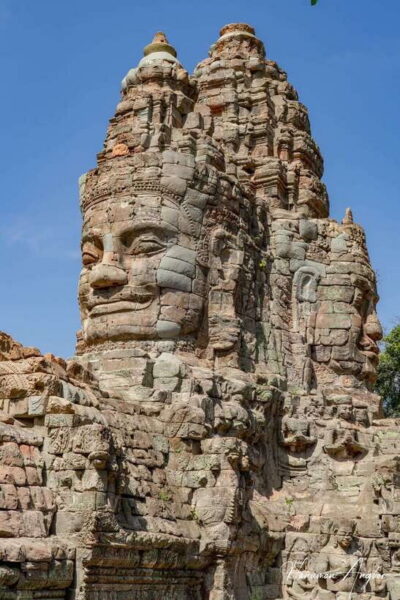
The headline feature is the multitude of serene and smiling stone faces on the towers. You’ll see towers covered in more than 200 enormous faces, clustered around a central peak. It’s hard to describe what that scale does until you’re standing there and noticing how the faces look in different directions.
Bayon also offers bas-reliefs with variety. You’ll see two sets of bas-reliefs that cover mythological, historical, and everyday scenes. The outer wall of the outer gallery features bas-reliefs too, described as historiographic scenes. In practical terms, this means Bayon isn’t only about the faces—it’s also about storytelling across multiple layers of time.
This is the stop where I’d pay close attention to the guide’s pointing. Bayon rewards a “look, then understand, then look again” rhythm.
Angkor Thom South Gate: The Stone Figures Entrance to the Ancient Capital
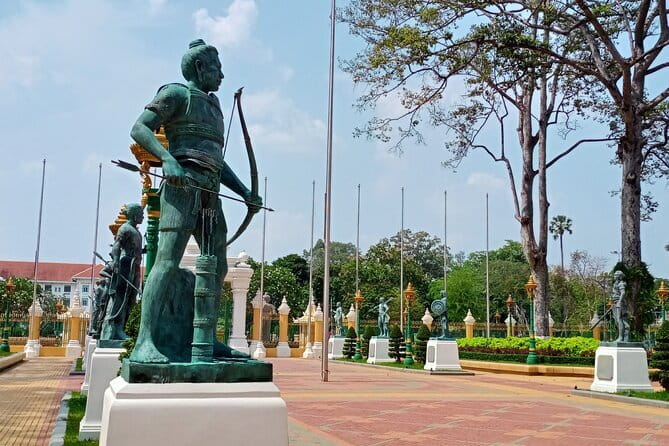
After Bayon, the tour moves to the Angkor Thom South Gate. This gate is one of five gates of Angkor Thom, the ancient capital city of the Khmer Empire. The South Gate is the kind of place that can feel less dramatic than the temples, until you notice what it’s built to do: it’s a fortified entrance.
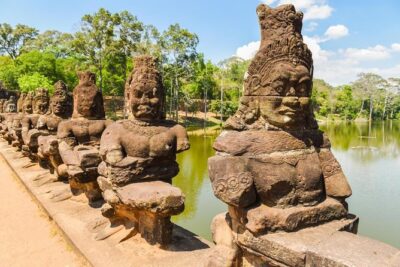
Here’s the standout detail. The South Gate is flanked by a row of 54 stone figures on each side. That count alone gives you an immediate sense of design planning and symbolism. It’s not random decoration; it’s architecture built to impress.
The tour keeps this portion shorter—around 30 minutes—which makes sense. You’re getting the “gateway moment” and then you’re heading back. Still, even in a short stop, the guide’s framing turns it from scenery into context: Angkor Thom once had a population of more than one million people, and it’s described as larger than London at the height of its greatness. That kind of scale statement helps you understand why the gates and city layout were so heavily fortified.
Logistics That Keep You From Wasting Morning Hours
With a tour like this, the best luxury is time. This one includes pickup from your hotel in Siem Reap and returned transfers, so you don’t lose energy negotiating transport mid-journey. The air-conditioned vehicle also helps you reset between temple zones.
Another helpful inclusion is bottled water. For a long early day, that small thing matters more than it sounds. You can focus on photos, carvings, and stone faces instead of hunting for a drink as you move.
The group size cap—maximum 10 travelers—is also a big deal for comfort and pace. Smaller groups tend to move more smoothly and create space for questions. It’s also less stressful when you’re climbing stairs, walking through passages, or pausing for the guide’s explanations.
There’s also mention of group discounts. The practical meaning: if you’re traveling with friends or planning to book as a shared group, you might pay even less than the base price.
Price and Value: $18 Isn’t the Whole Story, But It’s a Strong Deal
At $18 per person, this is priced like a budget-friendly way to see the key Angkor sites early. The value is not only the ticket-less tour fee; it’s what you get bundled into that price:
- live English-speaking guide
- air-conditioned vehicle
- bottled water
- hotel pickup and returned transfers
- mobile ticket
Where you need to be realistic is the admission situation. The Angkor Wat admission fee isn’t included, and that’s the biggest fee associated with the tour’s most iconic stop. Ta Prohm, Bayon, and the South Gate are listed as free admissions for this experience. So your main “add-on cost” is Angkor Wat.
Even with that consideration, the structure still feels like value. You’re not just buying transport—you’re buying a guide-led circuit that strings together sunrise, jungle atmosphere, bas-relief interpretation, and the famous Bayon faces without requiring you to plan the route yourself.
Who This Angkor Sunrise Tour Fits Best
This tour makes the most sense if you want the early Angkor experience without a complicated plan. If you’re staying in Siem Reap and you like guided context—what you’re seeing and why it matters—you’ll get a lot from this format.
It’s also a good match for:
- couples who want a sunrise start and a romantic-light temple sequence
- solo travelers who don’t want to navigate between sites alone
- small groups of friends who prefer less chaos and more guidance
- anyone who values efficient hotel pickup and a steady itinerary
The tour indicates that most travelers can participate. Because there’s walking on foot and movement through temple areas, it’s worth going in with reasonable expectations for time on uneven ground and stair steps.
Should You Book This Angkor Wat Sunrise Small-Group Tour?
If your priority is sunrise at Angkor Wat plus a tight, guided morning of the main “must-see” temples, I’d say this is worth serious consideration. The small group size, English-speaking guide, and air-conditioned pickup/return add up to a low-stress day that still hits the major visual highlights.
I’d only hesitate if you strongly prefer full independence—because the tour pace is guided and structured. And I’d also factor in the one important cost: Angkor Wat admission fee is not included. If you’re good with that math, this is a smart way to spend one solid morning in Siem Reap without turning it into a logistics project.
FAQ
How long is the Angkor Wat Sunrise small-group day tour?
The tour runs for approximately 7 hours.
Where does pickup happen?
Pickup is offered from your hotel in Siem Reap, and returned transfers are included.
How many people are in the group?
This tour has a maximum of 10 travelers.
Is the guide English-speaking?
Yes. The tour includes a live English-speaking tour guide.
Are tickets included for all temples?
Angkor Wat admission is not included. Ta Prohm, Bayon, and the Angkor Thom South Gate are listed as free for this experience.
Is there bottled water during the tour?
Yes. Bottled water is included.
Do you use a mobile ticket?
Yes. A mobile ticket is included.
Is transportation air-conditioned?
Yes. The vehicle is air-conditioned.
Who can participate?
Most travelers can participate.
What is the cancellation policy?
Free cancellation is available. You can cancel up to 24 hours in advance for a full refund. If you cancel less than 24 hours before the start time, the amount paid is not refunded.
More Temple Circuits Around Siem Reap
- Angkor Wat Sunrise or Sunset Tour with Guide from Siem Reap
★ 5.0 · 12,109 reviews - Siem Reap: Angkor Wat: Small-Group Sunrise or Sunset Tour
★ 5.0 · 9,444 reviews - Siem Reap: Angkor Wat 2-Day Tour with Sunrise and Sunset
★ 4.9 · 4,429 reviews - Siem Reap: Full-Day Angkor Wat Guided Tour with Sunset
★ 4.9 · 3,803 reviews - Angkor Wat Sunrise tour with Small – Group and Guide tours
★ 5.0 · 3,655 reviews
Dawn and Dusk Over Angkor
- Angkor Wat Sunrise or Sunset Tour with Guide from Siem Reap
★ 5.0 · 12,109 reviews - Siem Reap: Angkor Wat: Small-Group Sunrise or Sunset Tour
★ 5.0 · 9,444 reviews - Sunset tour of Kampong Phluk stilts home village on the Tonle Sap
★ 5.0 · 4,865 reviews - Siem Reap: Angkor Wat 2-Day Tour with Sunrise and Sunset
★ 4.9 · 4,429 reviews - Siem Reap: Full-Day Angkor Wat Guided Tour with Sunset
★ 4.9 · 3,803 reviews
Angkor Wat, a Few More Ways In
- Angkor Wat Sunrise or Sunset Tour with Guide from Siem Reap
★ 5.0 · 12,109 reviews - Siem Reap: Angkor Wat: Small-Group Sunrise or Sunset Tour
★ 5.0 · 9,444 reviews - Siem Reap: Angkor Wat 2-Day Tour with Sunrise and Sunset
★ 4.9 · 4,429 reviews - Siem Reap: Full-Day Angkor Wat Guided Tour with Sunset
★ 4.9 · 3,803 reviews - Angkor Wat Sunrise tour with Small – Group and Guide tours
★ 5.0 · 3,655 reviews
Just Added: Fresh Siem Reap Tour Reviews


Angkor Wat Temple Tours, compared.
 ★ 5.0Angkor Wat Sunrise or Sunset Tour with Guide from Siem ReapFrom $1812,109 reviews
 ★ 5.0Angkor Wat: Small-Group Sunrise or Sunset TourFrom $159,444 reviews
 ★ 4.9Angkor Wat 2-Day Tour with Sunrise and SunsetFrom $344,429 reviews
 ★ 4.9Full-Day Angkor Wat Guided Tour with SunsetFrom $153,803 reviews
 ★ 5.0Angkor Wat Sunrise tour with Small – Group and Guide toursFrom $143,655 reviews
 ★ 5.0Angkor Wat Highlights and Sunrise Guided Tour from Siem ReapFrom $233,213 reviews
 ★ 5.0Angkor Wat Sunset Small Group Tour with Lunch IncludedFrom $203,059 reviews
 ★ 5.0Full-Day Angkor Wat Sunrise Private Tour with Guide from Siem ReapFrom $602,920 reviews