
Reviewed · ANGKOR TEMPLE TOURS
Angkor’s Finest Examples in Brief
Jaw-dropping Angkor, planned start to finish. This full-day temple loop from Siem Reap strings together Angkor Thom, Ta Prohm, and Angkor Wat with a guide who helps you read the stone, not just pose in front of it. I like that it’s set up with hotel pickup, air-conditioned transport, and a private format for your group.
I love the way the day builds from Angkor Thom’s city-center highlights to Ta Prohm’s jungle-drugged atmosphere, then finishes at Angkor Wat when the light starts to soften. I also love the guide factor: the experiences I saw repeatedly praised guides like Pitt for clear English and smart, practical explanations, plus attentive support from guides such as Mr.Pising.
One drawback to plan around: the Angkor Archaeological site entrance pass is not included, so you’ll need to budget for it separately when you reach the ticket counter.
In This Review
- Quick hits: what you’ll notice right away
- Why this Angkor Wat day works: a tight circuit with real guidance
- Angkor Thom first: Bayon, Elephant Terrace, and the Leper King
- The ticket moment and how the day kicks off
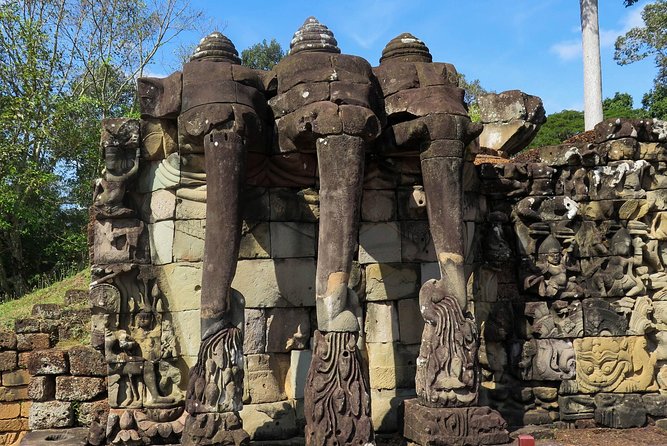
- Elephant Terrace: power in stone
- Terrace of the Leper King: a name with a story
- Bayon: the face towers (with a real-world reconstruction caveat)
- Time spent here and how to avoid feeling rushed
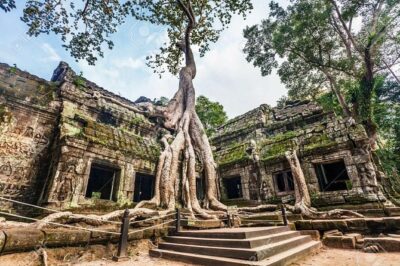
- Ta Prohm: letting the jungle keep its grip
- What makes Ta Prohm special for your senses
- Time on site: 1.5 hours
- Angkor Wat in the afternoon: symmetry, west-facing drama, sunset outside
- A quick mental picture before you arrive
- Why “sunset from outside” can be the smartest plan
- The guide + group pace: the difference between seeing and understanding
- Price and value: what you get for $141.44 (and what costs extra)
- Practical tips so your day feels easy (not miserable)
- Dress code: cover up where it counts
- Walking is involved, but you won’t be thrown into chaos
- Camera and electronics protection
- Bayon reconstruction: set your expectations now
- Should you book this Angkor Wat day trip?
- FAQ
- What time does the tour start and when do you return?
- Is hotel pickup and drop-off included?
- Is the Angkor Archaeological site entrance pass included?
- Is this a private tour?
- Does the tour include a guide and what language do they speak?
- How much walking is involved?
- Are there dress-code rules at Angkor temples?
- Will you be able to see all levels of Bayon?
- Is free cancellation available?
Quick hits: what you’ll notice right away
- Hotel pickup and drop-off keeps your day from turning into a scavenger hunt through Siem Reap.
- English-speaking guide helps you connect names (Bayon, Elephant Terrace, Leper King) to what you’re actually seeing.
- Angkor Thom first means you’re tackling the biggest “city” portion while it’s still manageable for photos and heat.
- Ta Prohm is left as the jungle found it, with trees and roots pulling their way through the stones.
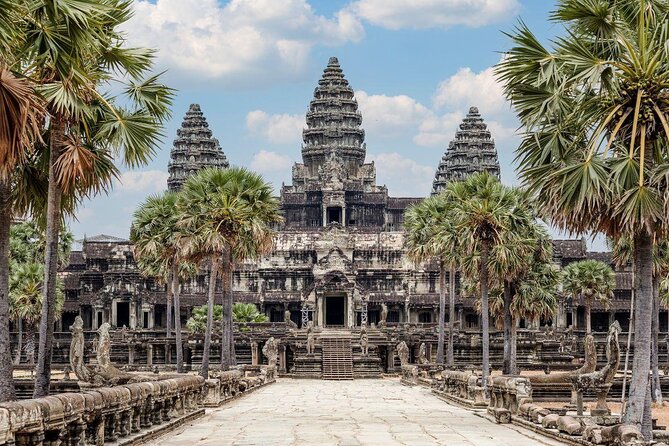
- Angkor Wat near sunset time gives you a calmer end of day, with sunset viewing from outside.
- Bayon reconstruction affects upper levels, so you may only see the lower tiers’ famous faces.
More temple circuits, set side by side
- Angkor Wat Sunrise or Sunset Tour with Guide from Siem Reap★ 5.0 · 12,109 reviews
- Siem Reap: Angkor Wat: Small-Group Sunrise or Sunset Tour★ 5.0 · 9,444 reviews
- Siem Reap: Angkor Wat 2-Day Tour with Sunrise and Sunset★ 4.9 · 4,429 reviews
- Siem Reap: Full-Day Angkor Wat Guided Tour with Sunset★ 4.9 · 3,803 reviews
Why this Angkor Wat day works: a tight circuit with real guidance
Angkor can feel like a choose-your-own-adventure where you spend more time guessing than looking. This trip is built to reduce that stress. You get the main stops—Angkor Thom, Ta Prohm, and Angkor Wat—within one day, with a professional English-speaking guide steering the order and pacing.
The biggest practical win for you is timing. You start around 8:00am, then move through the “city” section before heading into the jungle temple and finally the grand, iconic Angkor Wat. That flow matters because the temples aren’t just different views; they’re different moods. Angkor Thom reads like an imperial snapshot. Ta Prohm feels like the forest taking over. Angkor Wat lands like a formal statement.
Also, you’re not dealing with constant logistics. Transport is by air-conditioned vehicle with a professional driver, and the tour includes round-trip pickup/drop-off for hotels in and inside Siem Reap. That’s a big deal in Cambodia’s traffic and heat.
Angkor Thom first: Bayon, Elephant Terrace, and the Leper King
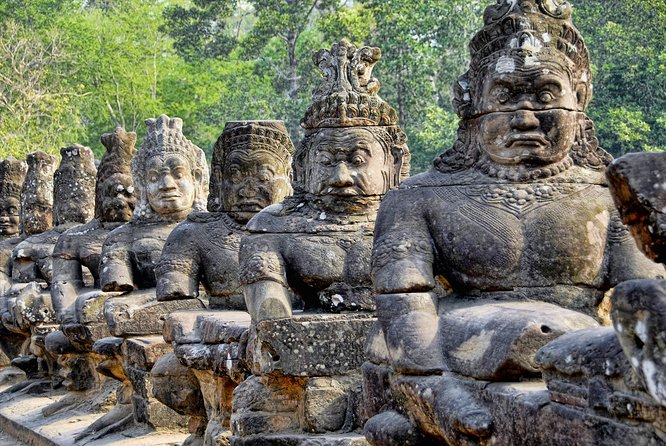
Starting at Angkor Thom gives you structure. This is the last capital of the Khmer Empire, and it’s designed so your eyes keep finding “anchors”—gates, courtyards, and temple focal points. With a guide, you don’t just hear legends; you learn what you’re looking at on the walk in.
The ticket moment and how the day kicks off
You’ll head to the temple pass ticket counter after pickup around 8:00am. Since the entrance pass isn’t included, this is where you’ll handle that first. The advantage of doing it early is simple: you avoid losing time later, when the day is already heating up and lines can be less forgiving.
Elephant Terrace: power in stone
One highlight you should make space for is the Elephant Terrace. It’s one of those places where bas-reliefs and design details reward slow looking. Even if you’re not a sculpture person, the terrace gives you a sense of how ceremony and authority worked in Khmer royal space—large gestures, big symbols, and thick walls that were meant to be seen up close.



Terrace of the Leper King: a name with a story
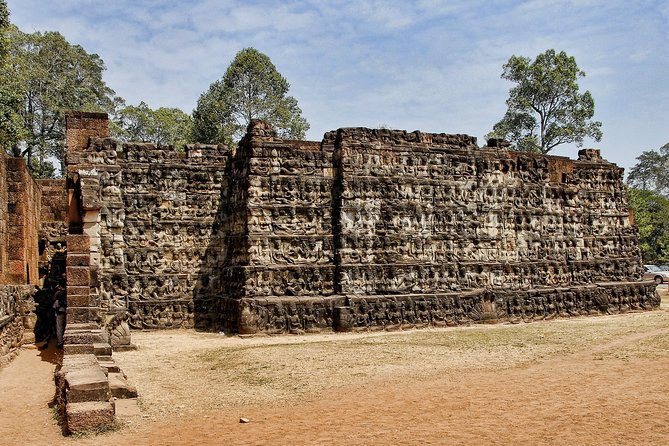
The Terrace of the Leper King is famous for its title, but what’s more useful is what it helps you understand: how visitors and guides connect historical architecture with later interpretations. Your guide’s job here is to keep it grounded in what the terrace is visually and spatially, not just what the name sounds like.
Bayon: the face towers (with a real-world reconstruction caveat)
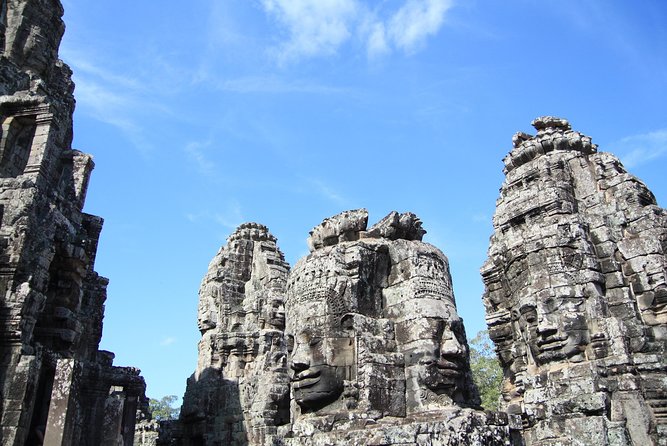
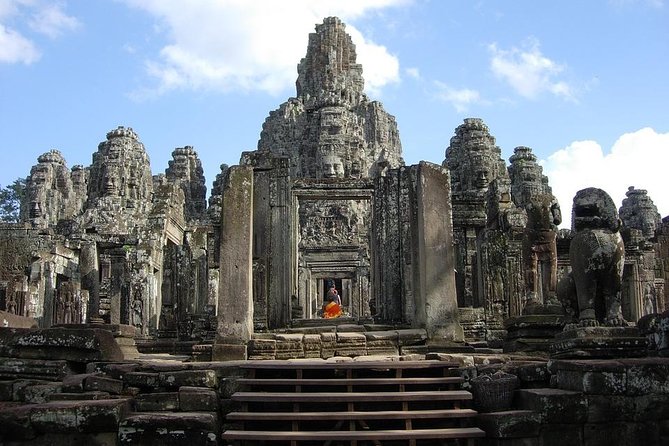
Then comes Bayon, at the center of Angkor Thom. Expect symmetry and grandeur, and be ready for a sea of expression. The towers have 3 or 4 gently smiling faces, and there are over 200 across the complex.
Important note for your planning: until further notice, the top two levels of Bayon are being reconstructed, so you may only see the faces on the first and second levels. That doesn’t make Bayon less impressive. It just changes what you can see in the vertical direction—so set expectations accordingly.
Time spent here and how to avoid feeling rushed
In practice, Angkor Thom takes about 3 hours on this itinerary. That’s enough time to hit the major stops without sprinting across everything. The trick is to pause at viewpoints you enjoy instead of trying to photograph every inch. You’ll get better pictures by waiting for the light and the crowds to thin rather than chasing a perfect shot every second.
Ta Prohm: letting the jungle keep its grip
Ta Prohm is where Angkor shifts from “engineered city” to “living ruins.” This temple was built in the late 12th century by Jayavarman VII as a shrine to his mother. The key feature is how it’s been treated over time: when the forest was cleared back, authorities decided to leave parts of the jungle in place so it would act as a reminder of how it was first discovered.
What makes Ta Prohm special for your senses
You’ll feel it in two ways. First, the stone feels older and more fragile because the roots and trees break up clean lines. Second, your attention goes upward more often—toward branches, shadows, and the way vines wrap around columns.
A guide helps here because Ta Prohm can look like chaos if you don’t have a framework. With guidance, you start noticing the temple’s structure again: the courtyards, the main halls, and how the “wild takeover” is woven into specific parts of the complex.
Time on site: 1.5 hours
You’ll spend about 1 hour 30 minutes at Ta Prohm. That’s a good length if you like walking, looking, and taking a breather. If you’re someone who wants to linger for long photo sessions, plan to make your pauses count early—because once you’re later in the day, the light and energy level start to drop.
Angkor Wat in the afternoon: symmetry, west-facing drama, sunset outside
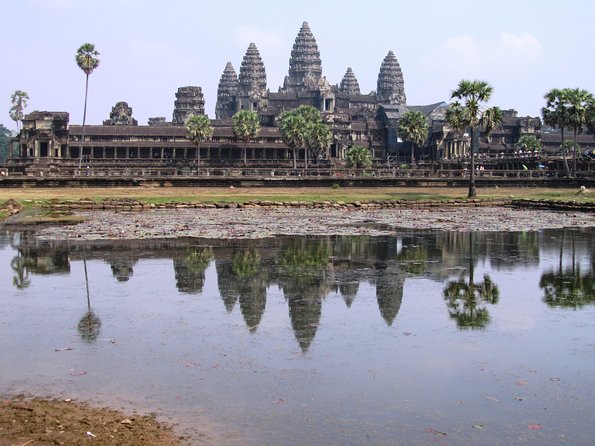
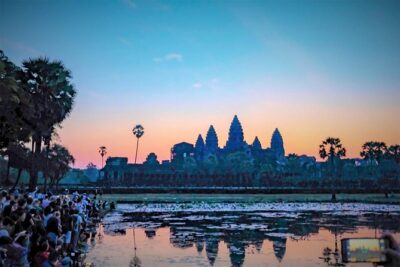
Angkor Wat is the one almost everyone comes for. It’s also the one that deserves a bit of context, because it’s unlike many other Khmer temples in a practical way: it faces west. In other words, it plays differently with the sun.
This trip reserves the rest of the afternoon for Angkor Wat, about 2 hours 30 minutes. That time includes sightseeing plus a sunset moment. You’ll admire sunset from outside the temple before returning to your hotel around 5:30pm.
A quick mental picture before you arrive
Angkor Wat is described as a huge religious building, with a stone volume said to equal that of the Cheops pyramid in Egypt. Whether you focus on the numbers or not, the takeaway is the same: the scale is hard to absorb quickly. Your guide’s explanation helps you keep orientation, so you don’t spend the entire visit lost in arches and courtyards.
Why “sunset from outside” can be the smartest plan
This tour doesn’t promise sunset inside. That’s not a failure—it can be a practical advantage. Outside viewpoints can reduce bottlenecks, keep the mood calmer, and let you enjoy the light change without getting trapped in the logistics of entry and crowd movement.
If you’re planning photos, you’ll likely want:
- A few steady minutes to watch the sky shift
- One quick walk to check angles
- Then time to just look, not shoot
The guide + group pace: the difference between seeing and understanding
In the feedback you provided, the standout theme is guidance quality. People consistently praised guides such as Pitt for perfect English and deep familiarity with what you’re looking at, plus attentive service from guides like Mr.Pising.
There’s another detail that matters for your experience: a good guide helps you explore at a sensible pace. One of the most useful reasons to choose a structured day like this is that it can help you avoid wasted time. Instead of sprinting between temple gates, you understand the layout well enough to roam briefly on your own when it makes sense.
Because this is a full private basis with English-speaking guiding, you should expect more flexibility than large public-group tours. If your group wants extra photo stops or a slower moment to recover from the heat, your guide can usually steer the flow.
Price and value: what you get for $141.44 (and what costs extra)
At $141.44 per person, you’re paying for a guided full-day temple circuit plus logistics that would be annoying to DIY—hotel pickup/drop-off within Siem Reap, air-conditioned transport, and a professional English-speaking guide.
What’s not included is the Angkor Archaeological site entrance pass. That’s the key extra cost to budget for, and it’s the reason I’d call this an all-in guided day rather than a ready-to-go ticket package. The good news is that you buy the pass early on the itinerary, after pickup around 8:00am, so it doesn’t become an afternoon problem.
You also get practical add-ons like a mobile ticket and a “pickup offered” structure, which usually means smoother check-in than a paper-only setup.
In terms of value for your time: if you only have one day and you want the best-known sights—Angkor Thom, Ta Prohm, and Angkor Wat—this routing is the efficient option. If you can spend more than one day in Angkor, you might prefer splitting temple areas across multiple visits to slow down even more. But for one-day coverage, the structure here is strong.
Practical tips so your day feels easy (not miserable)
Angkor is outdoors, and it’s hot. Even on cloudy days, the sun can feel intense, so come ready. The tour info specifically advises sunglasses, a hat/cap, and high SPF sunscreen. I’d treat that as non-negotiable.
Dress code: cover up where it counts
Some temple areas (including places like Baphuon) have strict dress rules. You’ll want clothing that covers shoulders and falls below the knees. The tour info also warns that shirts with obscene or disrespectful prints may get you refused entry, and brightly colored clothing can be an issue—so stick to practical, respectful outfits.
Walking is involved, but you won’t be thrown into chaos
You should expect some walking. The good part is that the tour notes it will use the most comfortable paths between sight entrances. Still, wear supportive shoes, not flimsy sandals.
Camera and electronics protection
If you’re carrying a phone or camera, plan for humidity and rain-like conditions. The tour info notes that natural elements can damage electronics, so protect your gear and wrap it when needed. This is not a “maybe” situation in Cambodia; it’s a “do it or risk it” situation.
Bayon reconstruction: set your expectations now
Because Bayon’s upper levels are under maintenance, you may only see faces on the first and second levels. If you’re the type who hates surprises, read that line twice before you go. If you’re the type who loves the faces you can see, you’ll still enjoy Bayon.
Should you book this Angkor Wat day trip?
Book it if you want one day that hits the big three with guidance: Angkor Thom, Ta Prohm, and Angkor Wat, plus a sunset viewing moment and hotel pickup. It’s also a smart choice if you’d rather have an expert handle pacing and orientation, especially since the entrance pass is an extra you’ll need to buy anyway.
Skip or reconsider if you already know the layout well and prefer a very slow, unguided day. You might also want to look elsewhere if you’re outside central Siem Reap, since return transfers are only included for hotels in and inside Siem Reap, and places like Tonle Sap, Koh Ker, Banteay Srei, and the Siem Reap International Airport are excluded (with supplements).
If you want a smooth, well-structured Angkor day with real human explanations, this trip makes a lot of sense.
FAQ
What time does the tour start and when do you return?
The tour starts at 8:00am. The itinerary includes sunset viewing from outside Angkor Wat, and you’re returned to your hotel at around 5:30pm.
Is hotel pickup and drop-off included?
Yes. Pickup and drop-off at your hotel are included, as long as you’re staying in and inside Siem Reap. Transfers outside that area are excluded.
Is the Angkor Archaeological site entrance pass included?
No. The entrance pass is not included, and you’ll buy the temple pass at the ticket counter early in the day.
Is this a private tour?
It’s operated on a full private basis, with only your group participating.
Does the tour include a guide and what language do they speak?
Yes. You’ll have a professional English-speaking guide. Other languages may be available on request for additional charges.
How much walking is involved?
Some walking is required. The tour notes that they take the most comfortable ways from the entrance of each sight to the sight itself, but you should still plan for walking.
Are there dress-code rules at Angkor temples?
Yes. Some sights have a strict dress code, including covered shoulders and clothing that falls below the knees. The tour also notes that inappropriate printed shirts may lead to refusal of entry.
Will you be able to see all levels of Bayon?
Until further notice, the top two levels of Angkor Thom’s Bayon temple are being reconstructed, so visitors may only see the faces on the first and second levels.
Is free cancellation available?
Yes. You can cancel up to 24 hours in advance for a full refund, with no refund if you cancel less than 24 hours before the experience starts.
More Tour Reviews in Siem Reap
- Angkor Wat Sunrise or Sunset Tour with Guide from Siem Reap
★ 5.0 · 12,109 reviews - Siem Reap: Angkor Wat: Small-Group Sunrise or Sunset Tour
★ 5.0 · 9,444 reviews - From Siem Reap: Kampong Phluk Floating Village Tour by Boat
★ 4.9 · 6,979 reviews - Sunset tour of Kampong Phluk stilts home village on the Tonle Sap
★ 5.0 · 4,865 reviews - Siem Reap: Angkor Wat 2-Day Tour with Sunrise and Sunset
★ 4.9 · 4,429 reviews
More Temple Circuits Around Siem Reap
- Angkor Wat Sunrise or Sunset Tour with Guide from Siem Reap
★ 5.0 · 12,109 reviews - Siem Reap: Angkor Wat: Small-Group Sunrise or Sunset Tour
★ 5.0 · 9,444 reviews - Siem Reap: Angkor Wat 2-Day Tour with Sunrise and Sunset
★ 4.9 · 4,429 reviews - Siem Reap: Full-Day Angkor Wat Guided Tour with Sunset
★ 4.9 · 3,803 reviews - Angkor Wat Sunrise tour with Small – Group and Guide tours
★ 5.0 · 3,655 reviews
Just Added: Fresh Siem Reap Tour Reviews



Angkor Temple Tours, compared.
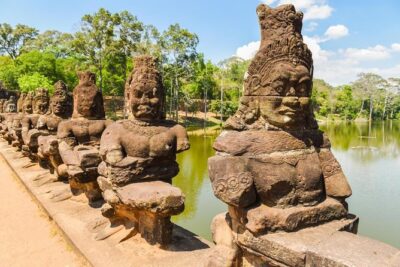 ★ 5.0Angkor Wat Sunrise or Sunset Tour with Guide from Siem ReapFrom $1812,109 reviews
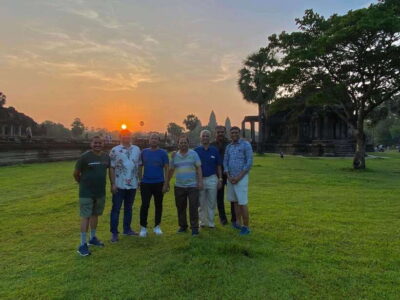 ★ 5.0Angkor Wat: Small-Group Sunrise or Sunset TourFrom $159,444 reviews
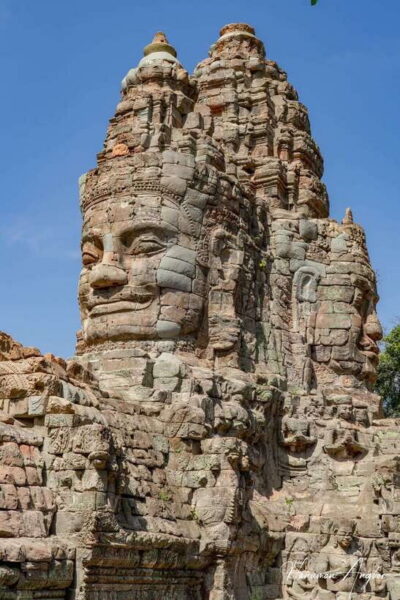 ★ 4.9Angkor Wat 2-Day Tour with Sunrise and SunsetFrom $344,429 reviews
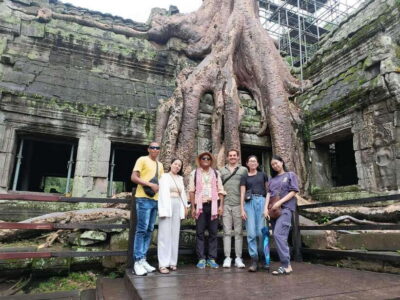 ★ 4.9Full-Day Angkor Wat Guided Tour with SunsetFrom $153,803 reviews
 ★ 5.0Angkor Wat Sunrise tour with Small – Group and Guide toursFrom $143,655 reviews
 ★ 5.0Angkor Wat Highlights and Sunrise Guided Tour from Siem ReapFrom $233,213 reviews
 ★ 5.0Angkor Wat Sunset Small Group Tour with Lunch IncludedFrom $203,059 reviews
 ★ 5.0Full-Day Angkor Wat Sunrise Private Tour with Guide from Siem ReapFrom $602,920 reviews