
Reviewed · ANGKOR TEMPLE TOURS
Bakong Temples & Floating Village Tour
Temple-mountain design and daily life on water. That’s what makes this Siem Reap tour fun: you get Bakong’s five-tier sandstone pyramid and its Mount Meru symbolism, then shift to the real-world side of the Tonle Sap floating community at Kampong Phluk. I love how the stone details are explained in plain language, so the temple doesn’t feel like just another photo stop.
My second favorite part is the way the guide connects architecture to people and place. With an English-speaking guide like Mr Oun Kosorl (and other guides under the same operator, such as Mr K), you’re not just watching temples you’re getting the “why” behind the Naga causeway and the guardian elephants and lions on the lower levels. For the floating village portion, that human touch matters even more because it’s easy to forget there are schools and daily routines floating on water too.
One consideration: key admission fees are not included. Lolei and Kampong Phluk are listed as not included, and the Angkor Pass is noted separately (under Angkor Pass: $37 per person), so you’ll want to budget for that extra cost and plan around your weather and water conditions.
In This Review
- Key Things to Know Before You Go
- Why Bakong Feels Like the Start of Angkor
- Lolei and Preah Ko: Two Different Flavors in One Morning Block
- The Bakong Core: What to Watch For During Your Two Hours
- Kampong Phluk Floating Village: The Moving Parts of Daily Life
- Boat Time and School Visits: Where the Human Side Shows Up
- Price and Value: $45 Plus the Pass Reality
- How Guides Like Mr Oun Kosorl and Mr K Shape the Day
- Timing, Weather, and What to Pack for Comfort
- Who This Tour Fits Best (and Who Might Want Another Option)
- Should You Book Bakong Temples and Kampong Phluk?
- FAQ
- How long is the Bakong Temples & Floating Village Tour?
- Do you get pickup and drop-off?
- What’s included in the price?
- Is there an admission fee for temples or the floating village?
- Is the tour private?
- Is there a mobile ticket?
- What’s the pickup timing like?
- How far in advance should I book?
- What is the cancellation policy?
Key Things to Know Before You Go
- Bakong is the prototype temple-mountain: the earlier model that later Khmer temple designs followed.
- Symbolic engineering is the star: Mount Meru shapes, moats, and enclosing walls are part of the design language.
- Naga details and guardian statues pay off: look for the causeway and the preserved elephant and lion figures.
- Kampong Phluk is a whole moving community: homes and schools adapt as the water level rises and falls.
- Two “floating” styles exist: structures that float directly and others on stilts that lift higher in the dry season.
- The guide can change the day: guides such as Mr Oun Kosorl and Mr K are praised for clarity and charm.
More temple circuits, set side by side
- Angkor Wat Sunrise or Sunset Tour with Guide from Siem Reap★ 5.0 · 12,109 reviews
- Siem Reap: Angkor Wat: Small-Group Sunrise or Sunset Tour★ 5.0 · 9,444 reviews
- Siem Reap: Angkor Wat 2-Day Tour with Sunrise and Sunset★ 4.9 · 4,429 reviews
- Siem Reap: Full-Day Angkor Wat Guided Tour with Sunset★ 4.9 · 3,803 reviews
Why Bakong Feels Like the Start of Angkor
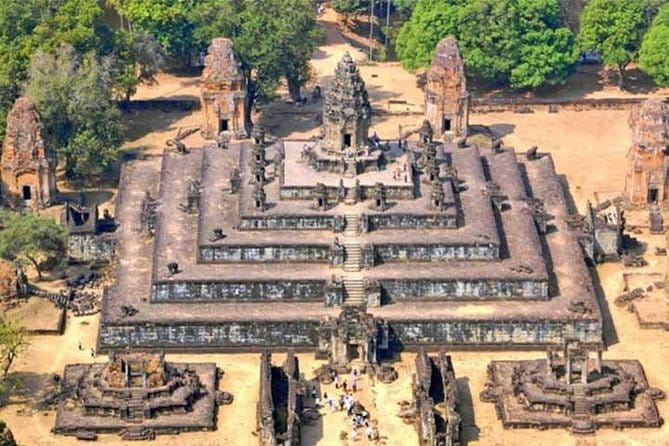
Most temple circuits hit you with scale first. This one hits you with origin. Bakong is the first Khmer temple-mountain at Angkor near modern Siem Reap, built in 881 AD by King Indravarman I. Knowing that helps you read what you see instead of just ticking boxes.
The temple’s layout is built around the idea of Mount Meru, a sacred mountain concept used in Khmer temple symbolism. You’ll notice the five-tier pyramid form and the way moats and enclosing walls create a layered sense of “holy space” moving upward. It’s not random—each level works like a visual ladder toward the center.
Then there’s the Naga causeway. The architecture here includes one of the earliest known Khmer examples of a Naga causeway (those mythical serpent motifs tied into temple storytelling). Even if you’re not a history buff, once your guide points out where to look, the temple starts to feel like a designed text.
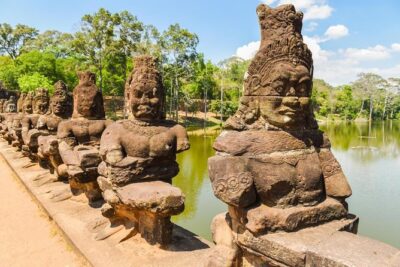
And don’t skip the lower levels. The preserved stone guardian statues of elephants and lions are a standout feature in a way that’s hard to fake in a picture. Up close, the stone weathering makes them look less like a decoration and more like a living part of the temple’s original identity.
Lolei and Preah Ko: Two Different Flavors in One Morning Block
This tour doesn’t rush you through the smaller Roluos-area temples. You’ll start with Lolei, which sits as the northernmost temple in the Roluos group. It’s a late 9th-century Hindu temple, paired with two other early anchors in the group: Preah Ko and Bakong. Lolei is a good place to get your bearings because it feels less crowded and more “temple-in-the-landscape” (even though it’s still very much about stone layout).
Expect about one hour here, and keep in mind that admission is not included for this stop. If you’re trying to keep costs under control, check what pass you’re using before you go so you’re not doing mental math mid-walk.
Then you move to Preah Ko. This one is free for the tour day, and it’s the first temple built in the defunct city of Hariharalaya, about 15 kilometers southeast of the main Angkor area. That “before Angkor” angle is worth paying attention to. Preah Ko helps you understand that the Khmer temple world didn’t start with the headline names—you’re seeing the earlier experiments and the developing style.
In about one hour, you get a clear contrast: Lolei gives you a quieter northern feel, while Preah Ko brings a more straightforward early-city story. If you like your temples in context, this middle step keeps the day from feeling like temple overload.
The Bakong Core: What to Watch For During Your Two Hours
Your time at Bakong is longer—around two hours—and that’s the right amount of time if you want to do more than glance. Here’s where you’ll get the real “wow” from the design choices.
First, watch how the pyramid rises. The five tiers aren’t just height; they’re separation. Your guide should help you see the layers as part of the Mount Meru symbolism rather than simply levels of steps.
Next, look for the edges and the boundary feeling created by moats and enclosing walls. That water-and-wall concept is central to the temple-mountain idea, and it ties back to how Khmer temples imagined sacred space.
Finally, plan to focus on the lower levels before you drift upward. The preserved guardian statues of elephants and lions are distinctive, and if you head straight for the top, you can miss the best carved details. When your guide explains the meaning behind the Naga causeway and the guardian figures, the whole place starts to connect.
If you’re someone who likes photos, take a few from the outer angles, but don’t only do the postcard view. The best shots here often come from the parts that show structure and story at the same time.
Kampong Phluk Floating Village: The Moving Parts of Daily Life
After temple stone, you switch to water. Kampong Phluk sits on Tonle Sap Lake, the large lake system that affects life across multiple Cambodian provinces. This is the tour’s main “living world” segment, and it’s built around one idea: the village is not fixed in the way land villages are.
The community’s infrastructure moves and adapts as water levels change with the seasons. Some structures float directly on the water, while others use stilts that rise high above the ground during the dry season. That seasonal adjustment is the point. It’s not a gimmick. It’s survival, planning, and tradition all in one.
The tour typically runs about three hours here, which is enough time to understand how the village works without feeling like you’re being rushed down a single path.
One practical reality: water conditions can affect how much you see and how the boat ride feels. In rough weather, it can get less comfortable. If your day happens to be rainy or windy, I’d build in extra patience and keep a light layer handy.
Also, Kampong Phluk is often visited after temples, so it can feel busy in peak times. If you want calmer moments, take your time in the transitions between spots so you get a few minutes of quiet observation before the next group cycles through.
Back out on the lake, more stilted villages
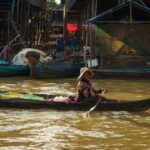
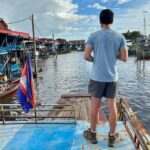

Boat Time and School Visits: Where the Human Side Shows Up
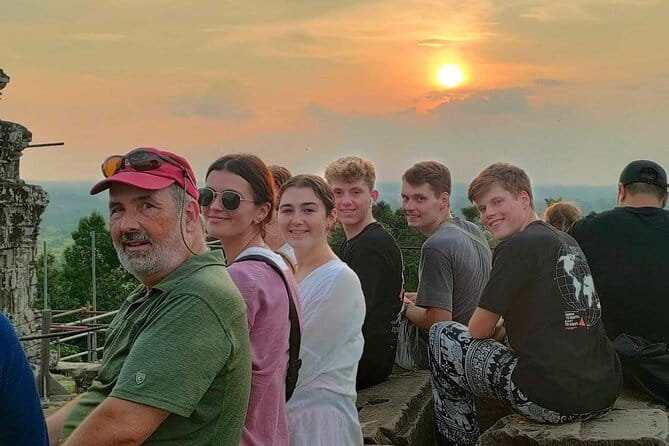
Floating villages can look like a scenery set from a distance. The guide’s role matters because you need context for what you’re seeing.
In the time spent at Kampong Phluk, you may get a look at community life that goes beyond houses—some tours arrange time with local institutions, including what can be a grade-school setting where children learn, even English. That kind of stop changes your view fast. It turns the floating village from a photo target into a place with routines, learning, and everyday effort.
Even if you don’t get the same exact stops every day, keep an open mind for the types of places a guide chooses. Ask questions about how the village handles the wet and dry seasons. You’ll understand the architecture faster when you know why it’s built that way.
And for the boat part: you’ll likely take a boat ride along the river to reach the village area. If you’re sensitive to motion or water spray, plan accordingly. It’s one of the few moments where comfort depends on conditions more than it depends on the tour company.
Price and Value: $45 Plus the Pass Reality
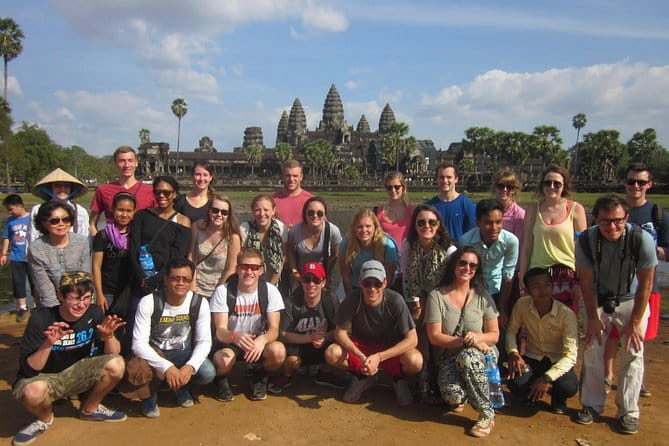
At $45 per person, the headline price looks like a good deal for a full half-day loop. What makes it feel fair is what’s included.
You’re getting:
- an English-speaking tour guide
- pickup and drop-off
- cold drinking water
- an air-conditioned vehicle
- a mobile ticket
- and it’s described as private, meaning it’s only your group
That’s a lot of “logistics solved” for the price. You’re not driving yourself between widely separated areas, and you’re not paying for an extra guide on top.
Now, the part to plan for: admissions. The tour notes that admission fees for Lolei and Kampong Phluk are not included. It also lists an Angkor Pass cost under Angkor Pass as $37 per person. Preah Ko and Bakong are shown as free in the tour details, which helps keep costs down, but you still need to budget for the paid entries.
My suggestion: before you lock it in, check which sites you’ll actually need the pass for on your specific day and whether the $37 figure is the total you should expect for admission. That way, there are no surprises when you meet the ticket line.
Also, cold water and air-conditioning matter more than you think in Siem Reap. This tour’s value isn’t just the temples and water—it’s the comfort of getting between them.
How Guides Like Mr Oun Kosorl and Mr K Shape the Day
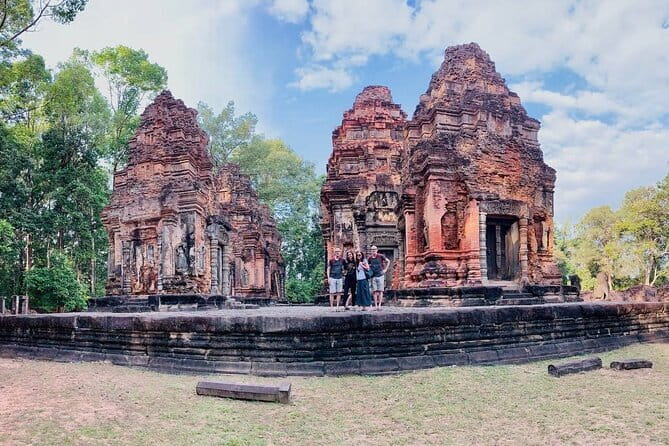
For a tour that mixes carved stone and everyday living on water, the guide has to do two jobs at once: explain temple symbolism and translate community life into understandable context.
The name that stands out is Mr Oun Kosorl, praised for making Angkor Wat temple history feel contagious—like you want to keep asking questions. Another guide, Mr K, is described as charming and insightful on Siem Reap and the temple story. Those compliments matter because they point to the same thing: clear explanations and a friendly pace.
When you have a guide who points out the early Khmer meaning of Bakong and then switches to how water conditions shape Kampong Phluk, the tour stops feeling like two unrelated activities. It becomes a single theme: how cultures build meaning into their environment.
If you’re deciding between similar tours, this is the differentiator. A slightly more expensive guided option can be worth it if it changes what you take home from the day.
Timing, Weather, and What to Pack for Comfort
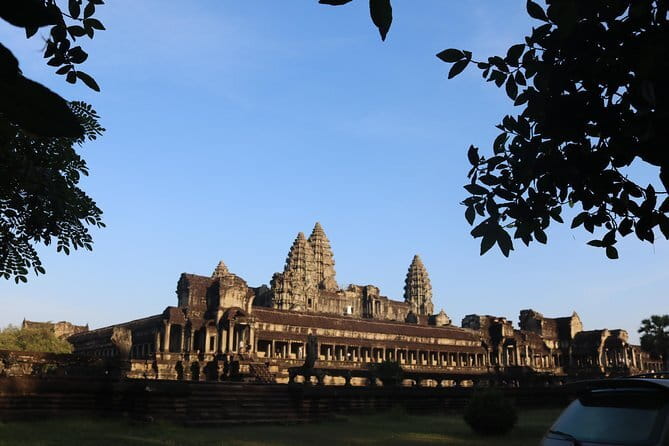
This is a six to eight hour tour. That timeframe is helpful: it’s long enough to cover multiple temple stops plus the floating village, but short enough that you won’t lose your entire day to logistics.
Still, the combination of walking in temple areas and sitting on a boat (often) means you should pack for both.
Bring:
- light rain cover if weather turns
- sunscreen and a hat
- comfortable shoes for uneven temple ground
- a small towel or extra tissue for water spray
- a light layer for AC vehicle time
Also, remember that water levels change seasonally. The floating village concept is based on those seasonal shifts, including stilts rising in the dry season. That means what you experience can vary with the time of year and how the water is behaving that day.
If you’re unlucky with weather, don’t assume the day is ruined. It just changes what “best view” means. Focus on the design explanations and the human routines inside the village area.
Who This Tour Fits Best (and Who Might Want Another Option)
This tour is a great match if you want both sides of Siem Reap without spending all day piecing plans together.
I think it fits you if:
- you want the early Khmer temple-mountain story at Bakong, not just the famous finale temples
- you like seeing how daily life works, not only monuments
- you prefer a guide who speaks English and walks you through meaning, step by step
- you want pickup and drop-off so your day stays simple
It might be less ideal if:
- you hate budgeting for additional admission fees
- you get uncomfortable on boats or in rain
- you want a lot of free time to wander completely on your own (this tour is structured)
The private-group setup also helps if you want a calmer pace with your own small group, though it doesn’t change the fixed time on each stop.
Should You Book Bakong Temples and Kampong Phluk?
Book it if you want a smart mix: temple symbolism at Bakong plus a real community built for Tonle Sap water levels. The guide factor can make this tour feel like a story with a beginning and a living middle, especially with guides such as Mr Oun Kosorl or Mr K.
Skip or choose carefully if you’re sensitive to weather, you’re not ready for the pass and admission cost layer, or you only want famous, postcard temple names with minimal extras.
If you’re traveling with limited time in Siem Reap, this is the kind of tour that gives you two kinds of understanding in one day: how Khmer builders made sacred space, and how people build ordinary life on water.
FAQ
How long is the Bakong Temples & Floating Village Tour?
It runs about 6 to 8 hours.
Do you get pickup and drop-off?
Yes. Pickup and drop-off are included.
What’s included in the price?
The tour includes an English-speaking guide, cold drinking water, and an air-conditioned vehicle.
Is there an admission fee for temples or the floating village?
Admission fees are not included for Lolei and Kampong Phluk. Preah Ko and Bakong are listed as free, and the tour also references an Angkor Pass cost of $37 per person.
Is the tour private?
Yes. It’s described as private, with only your group participating.
Is there a mobile ticket?
Yes. The tour includes a mobile ticket feature.
What’s the pickup timing like?
The exact pickup timing isn’t specified in the details provided, so you’ll want to confirm it at booking.
How far in advance should I book?
On average, it’s booked about 12 days in advance.
What is the cancellation policy?
You can cancel for a full refund up to 24 hours in advance of the experience start time. If you cancel less than 24 hours before, the amount paid is not refunded.
Through the Siem Reap Countryside
- From Siem Reap: Kampong Phluk Floating Village Tour by Boat
★ 4.9 · 6,979 reviews - Kampong Phluk Floating Village Tour by Boat
★ 5.0 · 1,020 reviews - Siem Reap Countryside Bike Tour / E-Bike or Tuk Tuk
★ 5.0 · 935 reviews - Siem Reap: Tonle Sap, Kampong Phluk & Floating Village Tour
★ 4.4 · 397 reviews - Siem Reap Countryside Quad Biking Tour
★ 5.0 · 322 reviews
Out on Tonle Sap
- From Siem Reap: Kampong Phluk Floating Village Tour by Boat
★ 4.9 · 6,979 reviews - Sunset tour of Kampong Phluk stilts home village on the Tonle Sap
★ 5.0 · 4,865 reviews - Kompong Phluk Floating Village Half-Day Tour ( Morning / Sunset )
★ 5.0 · 1,494 reviews - Siem Reap: Kulen Mountain, Beng Mealea and Tonle Sap Tour
★ 5.0 · 1,483 reviews - Tonle Sap Lake & Kampong Phluk Village Half-Day Tour
★ 5.0 · 1,045 reviews
More Temple Circuits Around Siem Reap
- Angkor Wat Sunrise or Sunset Tour with Guide from Siem Reap
★ 5.0 · 12,109 reviews - Siem Reap: Angkor Wat: Small-Group Sunrise or Sunset Tour
★ 5.0 · 9,444 reviews - Siem Reap: Angkor Wat 2-Day Tour with Sunrise and Sunset
★ 4.9 · 4,429 reviews - Siem Reap: Full-Day Angkor Wat Guided Tour with Sunset
★ 4.9 · 3,803 reviews - Angkor Wat Sunrise tour with Small – Group and Guide tours
★ 5.0 · 3,655 reviews
Just Added: Fresh Siem Reap Tour Reviews

Angkor Temple Tours, compared.
 ★ 5.0Angkor Wat Sunrise or Sunset Tour with Guide from Siem ReapFrom $1812,109 reviews
 ★ 5.0Angkor Wat: Small-Group Sunrise or Sunset TourFrom $159,444 reviews
 ★ 4.9Angkor Wat 2-Day Tour with Sunrise and SunsetFrom $344,429 reviews
 ★ 4.9Full-Day Angkor Wat Guided Tour with SunsetFrom $153,803 reviews
 ★ 5.0Angkor Wat Sunrise tour with Small – Group and Guide toursFrom $143,655 reviews
 ★ 5.0Angkor Wat Highlights and Sunrise Guided Tour from Siem ReapFrom $233,213 reviews
 ★ 5.0Angkor Wat Sunset Small Group Tour with Lunch IncludedFrom $203,059 reviews
 ★ 5.0Full-Day Angkor Wat Sunrise Private Tour with Guide from Siem ReapFrom $602,920 reviews
Browse the lists this tour appears in