
Reviewed · BATTAMBANG DAY TRIPS
Cambodia 7 Days Tour from Siem Reap to Battambang and Phnom Penh
A whirlwind of temples and tough history, all in one week. This Cambodia tour strings together UNESCO Angkor highlights, a Tonle Sap boat day, and the slower pace of Battambang—then it ends with Phnom Penh’s Royal Palace and the Khmer Rouge memorials. I especially like how the plan moves by private transport with an English-speaking guide, so you’re not stuck figuring out what you’re looking at.
I also like that the price is set up for convenience: your daily breakfasts are included, and admission fees are built in for the stops listed. One thing to consider: the itinerary is packed, and you’ll spend long stretches walking under heat and humidity—plus Phnom Penh includes sites tied to the Khmer Rouge, which can feel heavy.
In This Review
- Key highlights and what they mean for you
- Siem Reap to Angkor Wat: where your week really starts
- Your Angkor day-to-evening pacing: the “route logic” that helps
- Beyond the big names: Tonle Sap and Kampong Phluk
- Battambang by norry and temple climbs: a slower, stranger-feeling Cambodia
- Phnom Penh and the Khmer Rouge sites: respectful, organized, and heavy
- Udong Mountain and a meditation pause on the way in
- Hotels, private transport, and the service side that matters
- Price and value: is $1,025.05 a good deal?
- Who this tour is best for (and who should be cautious)
- Should you book this Siem Reap to Battambang and Phnom Penh tour?
- FAQ
- What cities does this 7-day tour include?
- What’s included in the tour price?
- What’s not included?
- Is this a private tour?
- Where do you get picked up and dropped off?
- What are the main activities you’ll do during the week?
- How late can I cancel for a full refund?
Key highlights and what they mean for you
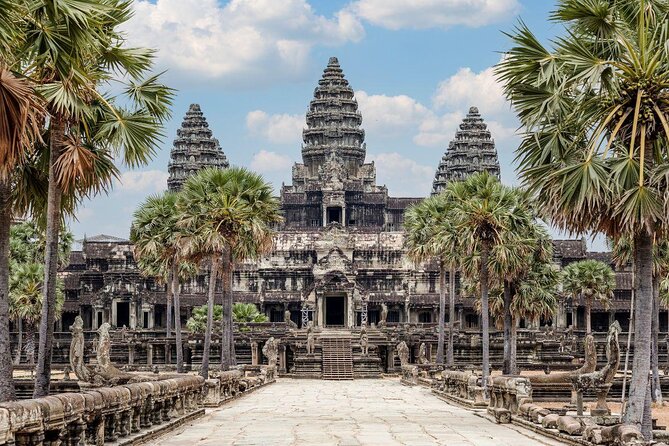
- Angkor Wat and Angkor Thom: Big-name temples with multiple viewpoints, so your photos don’t feel like repeat shots.
- Tonle Sap + Kampong Phluk: A real look at how floating villages connect to fishing and daily life.
- Artisans Angkor and Wat Bo: Time for Khmer crafts and Buddhist wall paintings, not just ruins.
- Battambang by norry (bamboo train): Fun transport that also explains why this region stayed slightly off the main tourist rails.
- Phnom Sampeau and Battambang bat caves: A hilltop temple area with the famous evening bat spectacle.
- Tuol Sleng and Choeung Ek: The most emotionally demanding part of the trip, handled as organized museum visits.
South to Battambang and the bamboo train
- Battambang Full Day Tour from Siem Reap – Bamboo Train, Killing Cave & Sunset★ 5.0 · 101 reviews
- From Siem Reap: Battambang Day Trip Return or to Phnom Penh★ 4.9 · 73 reviews
- Full Day From Siem Reap – Bamboo Train, Killing Cave & Sunset★ 5.0 · 57 reviews
- Private Transfer : Siem Reap ↔ Battambang★ 5.0 · 31 reviews
Siem Reap to Angkor Wat: where your week really starts
Siem Reap is basically a launchpad for one of the world’s most intense temple experiences. On your arrival day, you’ll transfer from Siem Reap Angkor International Airport into town and get settled at your hotel. It’s a smooth way to start because jet lag usually hits hardest on Day 1, and you don’t want your first Cambodian hours to be paperwork and logistics.
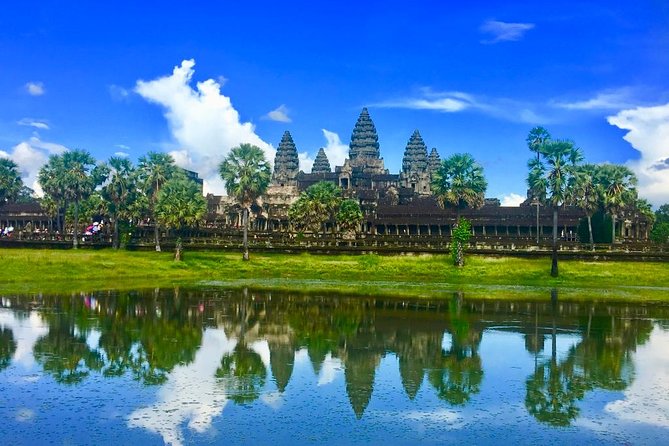
In the early temple morning, your tour begins at Angkor Thom South Gate. That matters because it sets the scene: you’re moving from the city’s defensive entrance into the core royal-temple zone. From there, you’ll visit Bayon Temple, known for its carved faces and late-12th-century construction style. Then you’ll continue to Baphuon, Phimeanakas, and the Terrace of the Elephants and the Terrace of the Leper King.
These stops are more than photo ops. You’ll start to see how Khmer kings used temples like a visual statement—power, belief, and authority all packed into stone. The terraces with bas-reliefs help you understand why the Angkor site is more than one building. It’s a whole system.
Then the route turns toward two of the most famous atmospheres in the park. Ta Prohm is the temple people instantly recognize, partly because it looks like nature is taking its time back. And Angkor Wat is your “how is this real?” moment: the descriptions focus on the architecture and preservation, and you’ll feel it when you’re standing in the space where balance and proportion were clearly planned.
Finally, the day includes Phnom Bakheng Temple, a temple mountain on a 60-meter hill. Even if you’re not trying to chase a specific sunset, the climb gives you a sense of how Angkor was designed to be experienced from above.
A practical note: this is a long walking day. You’ll want comfortable shoes and a hat you trust, because shade can be limited when you’re moving between clusters of temples.
Your Angkor day-to-evening pacing: the “route logic” that helps
A common problem with Angkor is wasting energy going back and forth. What I like here is the way the order is built around the site layout. Starting at the South Gate and moving through major royal-temple stops helps you build mental maps fast. You’re not just seeing structures—you’re learning how they relate.
Also, this kind of schedule works well if you’re the type who wants structure but still likes to linger when something catches your eye. You’ll hit the listed highlights: South Gate, Bayon, Baphuon, Phimeanakas, terraces, Ta Prohm, Angkor Wat, and Phnom Bakheng. That’s a lot, but it’s a clear sequence rather than random hopping.
One consideration: Angkor can be crowded, and this itinerary includes some of the park’s busiest names. Going with a guide helps with timing and navigation, but you should still expect busy moments and plan your pace accordingly—especially if you’re sensitive to heat.
Beyond the big names: Tonle Sap and Kampong Phluk
Day 3 shifts gears from stone monuments to water-world Cambodia. You’ll start at Tonle Sap Lake, described as the largest freshwater body in Southeast Asia and a foundation for carp breeding and harvesting. That’s the kind of detail that makes the scenery make sense. You’re not just looking at a lake—you’re looking at an engine of local food and work.
Next is Kampong Phluk Floating Village. This stop also includes the mangrove setting, which matters because it explains why the villages can function where they do. The descriptions point out that the area supports floating fishing villages inhabited largely by ethnic Cambodian communities. When you’re on the water with your guide, it becomes easier to connect the daily routines you see with the lake’s seasonal rhythms.
After the water day, you return to Siem Reap for cultural stops that break up the pace. Artisans Angkor is included as a Cambodian social business focused on job opportunities for young people and reviving traditional Khmer craftsmanship. If you care about buying well-made souvenirs, this is the kind of place you want—because you can see the human side of the craft and job training angle.
You’ll also visit Wat Bo Temple, noted for preserved wall paintings from the 19th century, plus the Royal Residence in Siem Reap, where the king stays when he visits the region.
This day feels like a “Cambodia 101” lesson, and that’s a real value for a short trip. It prevents the whole week from being only temples.
Battambang by norry and temple climbs: a slower, stranger-feeling Cambodia
The move to Battambang is one of the best course corrections you can make on a one-week itinerary. The big capitals get the most attention, but Battambang is where Cambodia can feel quieter and more regional.
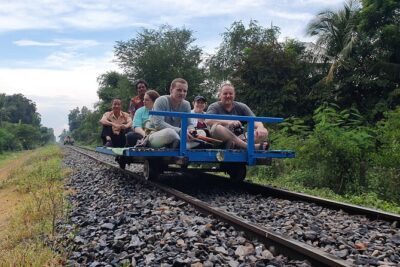
Day 4 starts with the classic transport experience: the bamboo train, also called norry. The descriptions emphasize it as simple but essential transport, and you’ll hear that it’s faster and fun compared with the once-a-week passenger train. In practice, I like this part because it’s not just a ride—it gives you a feel for why the countryside still moves differently than the main tourist circuits.
From there, you’ll explore city stops like Battambang Central Market. Then the itinerary shifts to religious and historical sites: White Elephant Pagoda (Wat Tahm-rai-saw), Cambodia Peace Gallery (Cambodia Peace Museum), and Ek Phnom Pagoda.
Then comes one of the most memorable Battambang areas: Phnom Sampeau. It’s described as a popular attraction and named for its shape, like a ship. The tour also includes Battambang Bat Caves, where—at least in the setup described—you can expect the famous spectacle of millions of bats pouring out as the sun sinks and evening approaches.
A small consideration: bat cave timing can be sensitive. You’ll want to keep your energy and camera batteries ready without assuming the exact moment of flight. Your guide should help you stay on track.
Doors held and bags carried, more transfers



Phnom Penh and the Khmer Rouge sites: respectful, organized, and heavy
Day 6 is the emotional weight of this whole trip. First, you’ll go to Cheung Ek killing field, tied to the Khmer Rouge history around Phnom Penh. The time listed is about two hours. It’s not a “sightseeing” stop in the usual sense, so try to move through it slowly. This is one place where rushing can make the experience feel worse, not faster.
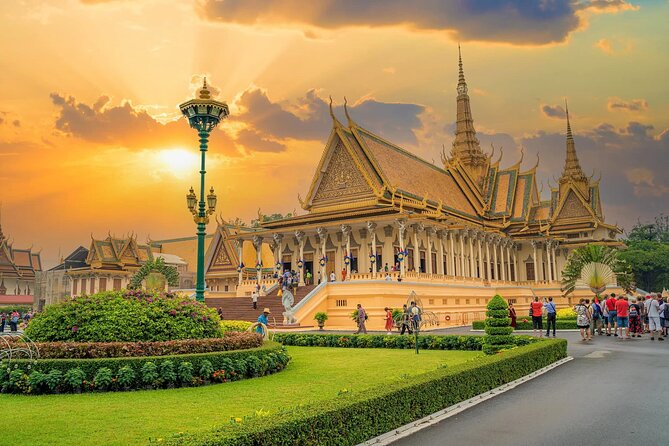
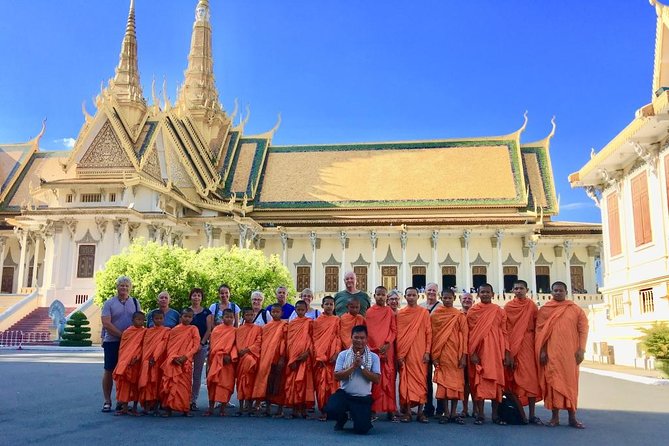
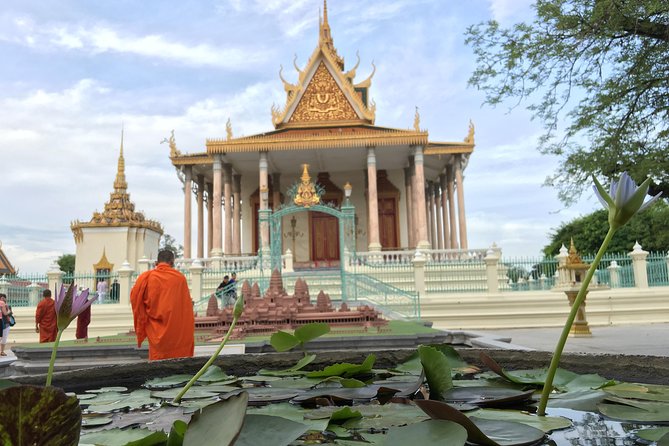
Then you move into the parts of Phnom Penh that show Cambodia’s capital life and royal influence. You’ll visit Royal Palace, followed by the Silver Pagoda, right next door. After that: Wat Phnom, which sits on a tree-covered knoll and is described as the only hill in town. Then you’ll see major city landmarks like Independence Monument, plus the Statue of King Father Norodom Sihanouk.
You also visit Wat Ounalom, one of Phnom Penh’s original monasteries, which helps balance the day with a calmer religious setting near the riverfront.
The historical focus intensifies again with two major genocide sites. Tuol Sleng Genocide Museum is included, described as the former Security Prison 21. After that, you’ll visit Choeung Ek Genocidal Center, described as mass graves of Khmer Rouge victims between 1975 and 1979.
These are not optional stops if you want to understand modern Cambodia. Even if you’ve read books or watched documentaries, seeing the museum spaces and memorial grounds in person gives context to what the numbers can’t explain.
Finally, the day includes Central Market, a big dome-shaped market constructed in 1937 with four arms branching into many stalls. Ending with a market gives you a chance to reset your senses a bit after the heavy museums.
Udong Mountain and a meditation pause on the way in
There’s one more Day 5 segment that I think works well: it’s a transition day that doesn’t just bounce from Battambang to Phnom Penh.
You’ll travel from Battambang toward Phnom Penh with a stop at Udong Mountain. Udong is described as a royal capital site from the 17th to 19th centuries, so it helps explain why this region matters beyond just modern city life. The itinerary describes the two mounds connected to each other, which makes the area feel like more than a hill with ruins.
The tour also includes a stop at a place marked as QQW7+WQH, described as teaching Vipassana meditation techniques. The description notes you’re welcome to wander gardens and grounds and enter the main temple. Even if you don’t try meditation, this kind of pause can help your body absorb what you’ve already seen—temples, countryside, then shifting toward the darker side of 20th-century Cambodia.
Hotels, private transport, and the service side that matters
This tour is built as a private tour for your group, with private transport and an English-speaking guide. That’s a big deal in Cambodia, where sites can be spread out and traffic can change quickly. Your guide also handles entry logistics at the places listed and keeps the day on track.
Hotel quality varies by the star option you choose. The included options in Siem Reap include Royal Crown Hotel & Spa (3-star), Regency Angkor Hotel (4-star), or Angkor Paradise Hotel (5-star). In Battambang, the options listed are Classy Hotel & Spa (3-star), Cambana La Riviere Hotel (4-star), or Maisons Wat Kor (5-star). In Phnom Penh, the options listed include Mahasakor Inn Phnom Penh (3-star), Sun & Moon Urban Hotel (4-star), or Sun & Moon Riverside (5-star).
From the service feedback, the consistent theme is friendly, helpful guide work and careful driving. Examples of named guides in feedback include Mr Sara and Vany, and drivers mentioned include Mr Art. It’s also clear that itinerary flexibility and calm patience matter, which you’ll appreciate if you’re the type who wants time to slow down inside a temple.
And yes, you should still plan around long days. Even with a smooth schedule, you’re moving between major sites.
Price and value: is $1,025.05 a good deal?
At $1,025.05 per person for about 7 days / 6 nights, this is priced as a guided, convenience-heavy package rather than a budget DIY route. The value case is strongest if you want all these elements covered up front:
- accommodation based on double or twin rooms
- private transport
- an English-speaking tour guide
- entrance fees for listed stops
- daily breakfasts (6 included)
- drinks water
What you pay extra for: tipping for the guide and driver, and a single-room supplement of 40% of the total tour price if you need solo lodging.
Compared to building this trip yourself, you’re paying for organization. That can be a smart trade if you’d rather spend your energy on the temples and museums, not figuring out which tickets and transfer times fit together.
If you’re the kind of traveler who enjoys control and prefers independent scheduling, you might feel the structure is limiting. But if you want the best shot at covering Angkor, Battambang, and Phnom Penh without headaches, this kind of package is often worth it.
Who this tour is best for (and who should be cautious)
This works well for you if:
- you want a single guided route through Siem Reap, Battambang, and Phnom Penh
- you’re excited about Angkor Wat plus other Angkor Thom temples, not just the headline postcard views
- you like a mix of nature (Tonle Sap, floating villages), transport fun (bamboo train), and cultural stops (crafts and monasteries)
- you can handle the emotional weight of Khmer Rouge sites in Phnom Penh
Be cautious if:
- you dislike packed sightseeing days and long walking stretches
- you’re looking for a light, party-style Cambodia week
- you want extensive free time every day (this itinerary is structured)
Should you book this Siem Reap to Battambang and Phnom Penh tour?
If your idea of a good Cambodia week includes Angkor temples, a Tonle Sap boat day, bamboo-train fun, Battambang’s hilltop views, and Phnom Penh’s major memorial sites, then this tour is a strong match. The price looks fair because it bundles transport, guide, admission fees, and most meals that matter for early starts.
My only hesitation is the emotional and physical load: you’ll be walking a lot, and you’ll spend meaningful time at Tuol Sleng and Choeung Ek. If you’re okay with that—and you want your schedule handled—this is a practical way to see a lot of Cambodia without getting lost.
FAQ
What cities does this 7-day tour include?
It starts in Siem Reap and ends in Phnom Penh, traveling via Tonle Sap, Battambang, and Udong Mountain (Mt. Oudong).
What’s included in the tour price?
The tour includes accommodation (double or twin), transport, an English-speaking tour guide, entrance fees, drinks water, and breakfast (6 times).
What’s not included?
The only listed add-on is tipping for the guide and driver.
Is this a private tour?
Yes. It’s described as a private tour/activity, and only your group participates.
Where do you get picked up and dropped off?
You start at Siem Reap Airport. On the final day, you’re transferred to Techo International Airport (KTI).
What are the main activities you’ll do during the week?
The week includes major Angkor temple sites, Tonle Sap and Kampong Phluk floating village, Artisans Angkor, the bamboo train in Battambang, plus Phnom Penh visits including the Royal Palace and the Tuol Sleng and Choeung Ek genocide-related sites.
How late can I cancel for a full refund?
You can cancel up to 6 days in advance for a full refund. The policy specifies you must cancel at least 6 full days before the experience’s start time.
More Tour Reviews in Siem Reap
- Angkor Wat Sunrise or Sunset Tour with Guide from Siem Reap
★ 5.0 · 12,109 reviews - Siem Reap: Angkor Wat: Small-Group Sunrise or Sunset Tour
★ 5.0 · 9,444 reviews - From Siem Reap: Kampong Phluk Floating Village Tour by Boat
★ 4.9 · 6,979 reviews - Sunset tour of Kampong Phluk stilts home village on the Tonle Sap
★ 5.0 · 4,865 reviews - Siem Reap: Angkor Wat 2-Day Tour with Sunrise and Sunset
★ 4.9 · 4,429 reviews
Smooth Arrivals and Rides
- Siem Reap: Apsara Show Including Dinner & Hotel Pickup
★ 4.6 · 615 reviews - Siem Reap: Apsara Dance Show and Dinner with Hotel Pickup
★ 4.6 · 425 reviews - Siem Reap Angkor Airport Taxis (from Airport to Hotel)
★ 5.0 · 332 reviews - Siem Reap to Phnom Penh by Private Car or Minivan
★ 5.0 · 189 reviews - Siem Reap: Dinner and Traditional Show with Hotel Transfer
★ 4.1 · 172 reviews
A Day Out to Battambang
- Battambang Full Day Tour from Siem Reap – Bamboo Train, Killing Cave & Sunset
★ 5.0 · 101 reviews - From Siem Reap: Battambang Day Trip Return or to Phnom Penh
★ 4.9 · 73 reviews - Full Day From Siem Reap – Bamboo Train, Killing Cave & Sunset
★ 5.0 · 57 reviews - Battambang Day Trip from Siem Reap-Bamboo Train, Bats Cave
★ 5.0 · 48 reviews - Private Transfer : Siem Reap ↔ Battambang
★ 5.0 · 31 reviews
Just Added: Fresh Siem Reap Tour Reviews

Battambang Day Trips, compared.
 ★ 5.0Battambang Full Day Tour from Siem Reap – Bamboo Train, Killing Cave & SunsetFrom $132101 reviews
 ★ 4.9From Siem Reap: Battambang Day Trip Return or to Phnom PenhFrom $8073 reviews
 ★ 5.0Full Day From Siem Reap – Bamboo Train, Killing Cave & SunsetFrom $9957 reviews
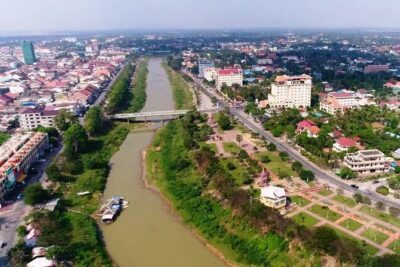 ★ 5.0Battambang Day Trip from Siem Reap-Bamboo Train, Bats CaveFrom $12948 reviews
 ★ 5.0Private Transfer : Siem Reap ↔ BattambangFrom $6531 reviews
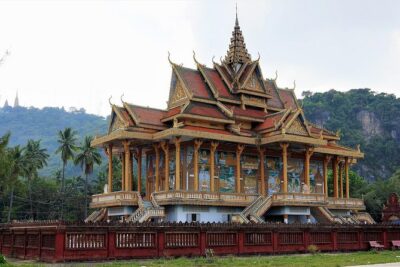 ★ 4.5Siem Reap to Battambang Private Guided Tour (Day Trip)From $14515 reviews
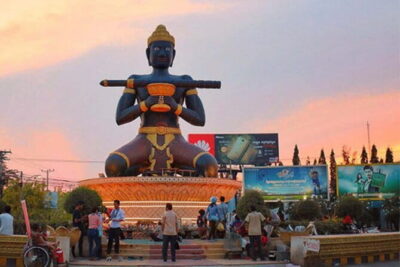 ★ 5.0Full Day Tour from Siem Reap – Bamboo Train, Killing Cave & SunsetFrom $13015 reviews
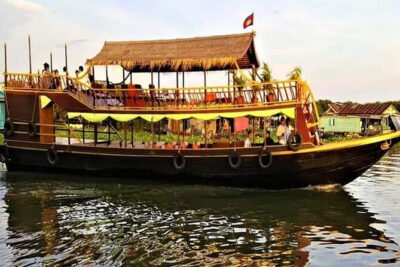 ★ 4.2Scenic Boat Journey from Siem Reap to BattambangFrom $6510 reviews
Browse the lists this tour appears in