
Reviewed · ANGKOR WAT TEMPLE TOURS
Discover Angkor Wat Temples And Phnom Kulen
Angkor feels bigger when your route is planned for you. This 3-day circuit hits Angkor Wat, the quieter corners of Angkor Thom, and then sends you to Phnom Kulen for waterfall country and major stone carvings.
I especially like the way the schedule stacks the biggest sights while still leaving short breathing space at key photo spots. I also like the included comfort on the road: A/C car, cold mineral water, and cold face towels to cool you down fast.
The main thing to consider is that temple and park admission tickets aren’t included, so you’ll need to budget for entry fees on top of the tour price—and you’ll need covered shoulders and knees for worship sites.
In This Review
- Key highlights worth planning for
- Three days in Siem Reap: what you really get
- Price and value: $170 plus admission fees
- Getting a smooth day: pickup, start times, and comfort
- Day 1 Angkor Wat + Angkor Thom: the big story, told step-by-step
- Angkor Wat: the world symbol and the best first photo angle
- Bayon: 116 smiling faces and real-life carvings
- Baphuon: steep stone, and the guide calls the climbing rules
- Phimeanakas, Terrace of the Elephants, Terrace of the Leper King: royal-city stops that feel oddly human
- Prasat Suor Prat and Ta Keo: small structures, big symbolism
- Ta Prohm: Tomb Raider energy with roots doing the work
- Day 2 Preah Khan to Eastern Mebon: the calmer, more atmospheric Angkor side
- Preah Khan: second-largest, temporary capital, and a calmer mood
- Neak Pean: artificial island, water-centered ritual, and weekend locals
- Banteay Srei: orange sandstone detail you can actually appreciate
- Banteay Samre: quiet recovery from the bigger crowds
- Pre Rup: tall five towers and a funerary legend
- Ta Som: a gate eaten by an octopus-shaped tree
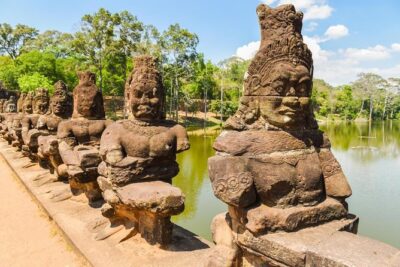
- Eastern Mebon: elephants at the corners
- Day 3 Phnom Kulen: national park time, fewer easy paths, big religious images
- Waterfall: the reward for the travel time
- Giant reclining Buddha: a massive focal point
- 1000 Shiva’s Linga in the riverbed
- Dress code, sun, and how to avoid feeling rushed
- Who should book this tour (and who should think twice)
- Should you book? My practical take
- FAQ
- What time does the tour start each day?
- Where does the tour begin and end?
- What’s included in the tour price?
- Are admission tickets included for Angkor and Phnom Kulen?
- Do they offer pickup?
- Is this tour private or shared?
- What temples and sights are covered in three days?
- How do you handle Phnom Kulen tickets?
- What dress code is required?
- What’s the cancellation policy and weather note?
Key highlights worth planning for
- Angkor Wat photo positioning: your guide aims you at the best angles for the main temple.
- Angkor Thom’s “small stops” that matter: terraces and towers you might otherwise skip.
- A guide-led pacing strategy: climb decisions at Baphuon are based on your physical condition.
- Neak Pean and Ta Som’s local feel: one draws locals on weekends, the other has a wild tree that swallows the gate.
- Phnom Kulen is a different day type: 1.5 hours up to the park, with waterfall, a reclining Buddha, and riverbed carvings.
Other ways to walk the great temple
- Angkor Wat Sunrise or Sunset Tour with Guide from Siem Reap★ 5.0 · 12,109 reviews
- Siem Reap: Angkor Wat: Small-Group Sunrise or Sunset Tour★ 5.0 · 9,444 reviews
- Siem Reap: Angkor Wat 2-Day Tour with Sunrise and Sunset★ 4.9 · 4,429 reviews
- Siem Reap: Full-Day Angkor Wat Guided Tour with Sunset★ 4.9 · 3,803 reviews
Three days in Siem Reap: what you really get
This is a classic “most important in one trip” Angkor program, but with a practical twist: you’re not just visiting temples, you’re following a route that keeps the morning energy up and the heat manageable. Each day starts at 8:00 am, which matters in Cambodia. Later in the day, the combination of sun + walking + crowds can turn even the most impressive stonework into a slog.
You’re also getting an English-speaking guide, plus a comfortable ride in an A/C vehicle. That may sound basic, but it changes how you experience Angkor. With transport handled and guide interpretation included, you spend more time looking closely and less time figuring out where to go next.
Finally, Phnom Kulen is a great way to break up “only Angkor.” It adds jungle-road reality, a waterfall stop, and big religious imagery like the reclining Buddha and the carved riverbed with 1000 Shiva’s Linga.
Price and value: $170 plus admission fees
The tour price is $170 per person for about 3 days. In value terms, here’s what that money buys you most clearly:
- A/C car + fuel across multiple long temple days
- an English-speaking tour guide
- small but very helpful cooling extras: cold mineral water and cold face towels
- a mobile ticket approach (handy if you want fewer printed hassles)
What’s not included is just as important. All fees and taxes aren’t included, and the admission ticket line for each stop is explicitly marked as not included. Practically, that means you should expect to pay entry fees separately for temples and for Phnom Kulen.
Also note: this is described as a private tour/activity, meaning it’s only for your group. If you’re traveling with friends, that’s a nice setup. Group discounts may apply depending on your group size, but the experience is still tailored to your party—not a giant bus of strangers.
Getting a smooth day: pickup, start times, and comfort
You start at 8:00 am each day, and the tour ends back at the meeting point in Siem Reap. Pickup is offered, and the meeting point is in Krong Siem Reap.
Comfort details are included and they matter more than you might think:
- Cold mineral water helps you keep moving without hunting down drinks every hour.
- Cold face towels are a small luxury that can reset you in the worst of the midday sun.
And yes, you’ll still want to prepare your own essentials. The tour notes call out sunscreen. I’d add a hat if you’re heat-sensitive, and water refills if you tend to drink a lot—because temple circuits are long even when each stop is “only” 10–100 minutes.
Day 1 Angkor Wat + Angkor Thom: the big story, told step-by-step
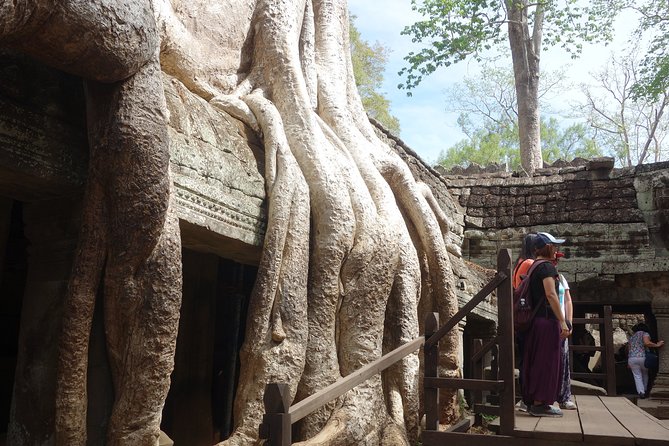
Day 1 is the most famous sweep. You’ll cover Angkor Wat first, then move into Angkor Thom (Bayon, Baphuon, and the royal-city cluster), and finish with Ta Prohm—the temple most people associate with Tomb Raider energy.
More temple circuits, set side by side
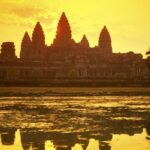
Angkor Wat: the world symbol and the best first photo angle
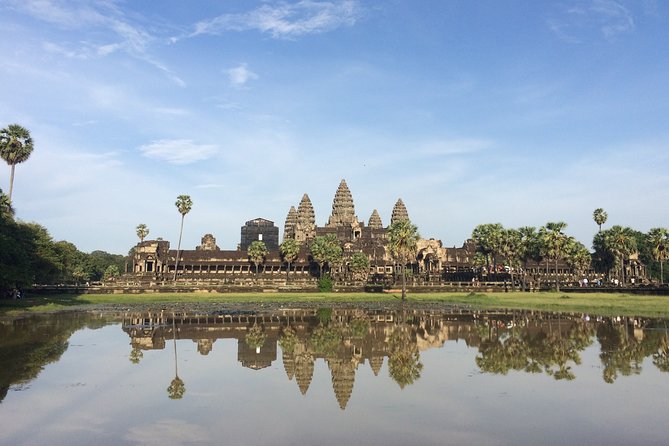
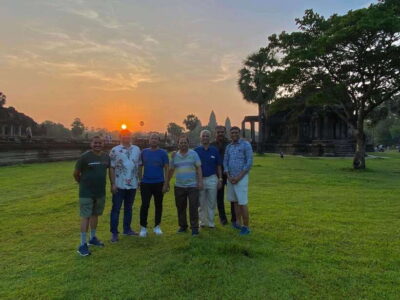
Angkor Wat is the world’s largest religious temple in the Angkor complex. Your guide focuses on the big picture story: it was built to symbolize the whole world and was used as the tomb of King Surya Varaman II. That context helps you look beyond the wow-factor.
Timing-wise, you’re there for about 1 hour 40 minutes, which is a good amount to see the main sightlines without feeling rushed. You’ll also get help finding the best spots to take photos—and that’s huge here because Angkor Wat is all about perspective. Stand in the wrong place and you’ll miss what makes the façade feel so massive.
Possible drawback: this is the most heavily visited temple on your route. Even with early timing, expect busy moments. If you want calmer photos, use the guide’s photo breaks as your timing cue.
Bayon: 116 smiling faces and real-life carvings
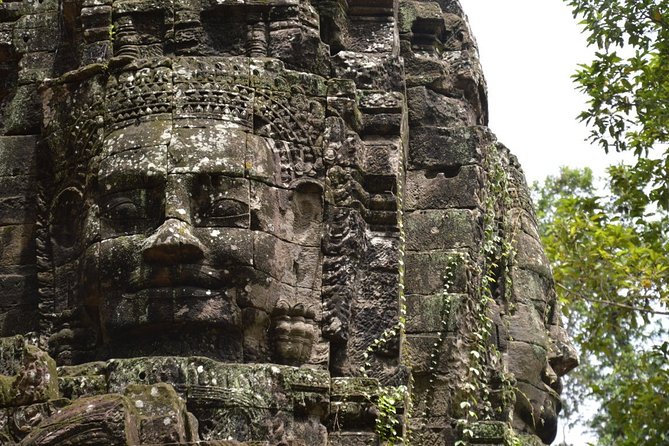
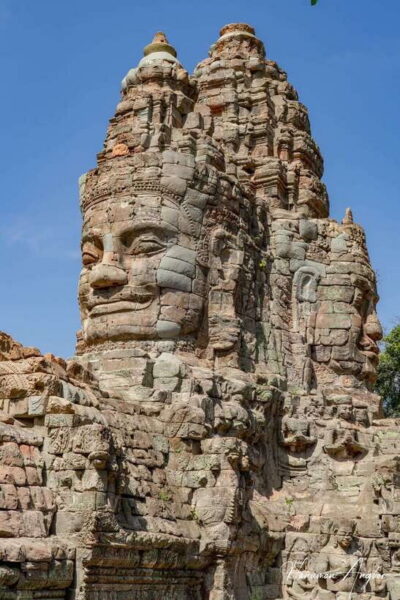
Next comes Bayon, famous for its 116 Buddha-like smiling faces and for wall carvings showing everyday life. Bayon can feel like a maze, but your guide’s explanation turns the carvings from background texture into meaningful scenes. You’ll get more from it if you pause and actually look at the details instead of just moving on for the next façade.
You’ll spend about 50 minutes. That fits well here because Bayon rewards slow reading.
Baphuon: steep stone, and the guide calls the climbing rules
Baphuon is described as the largest temple in the ancient city of Angkor Thom. There’s also a giant Buddha figure on the back, and the main practical note is that it’s steep. Your guide decides whether you can climb based on your physical condition.
I like this approach. Temples aren’t amusement parks, and a safe decision beats a dramatic one. If climbing isn’t for you that day, you still get the architecture and the views without turning it into a physical challenge.
Phimeanakas, Terrace of the Elephants, Terrace of the Leper King: royal-city stops that feel oddly human
These stops are short, but they add up to the “royal power” vibe of Angkor Thom:
- Phimeanakas: sacred space where kings met gods (it’s in the middle of the royal palace area).
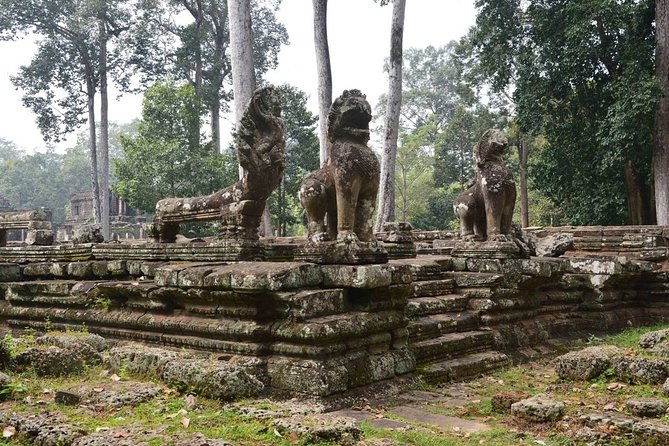
- Terrace of the Elephants: used like a platform for royalties watching national games and festivals.
- Terrace of the Leper King: used as a royal crematorium area; a top statue is called the leper king by locals.
These are the kind of places where you might otherwise rush through because they’re not the single headline temple. But the guide’s framing makes them feel like a coherent story: politics, ritual, and public events, all built into stone.
Prasat Suor Prat and Ta Keo: small structures, big symbolism
Prasat Suor Prat is quick—about 5 minutes—but it’s interesting: the twelve towers represent the twelve years of the lunar calendar, aligned north to south. That kind of detail is why having a guide matters. Without it, towers are just towers.
Ta Keo is another brief stop. It’s a giant temple that remains unfinished, and the plan may include a quick photo pause for around 5 minutes. Even unfinished, it still hits because you can see how the structure claims the ground.
Ta Prohm: Tomb Raider energy with roots doing the work
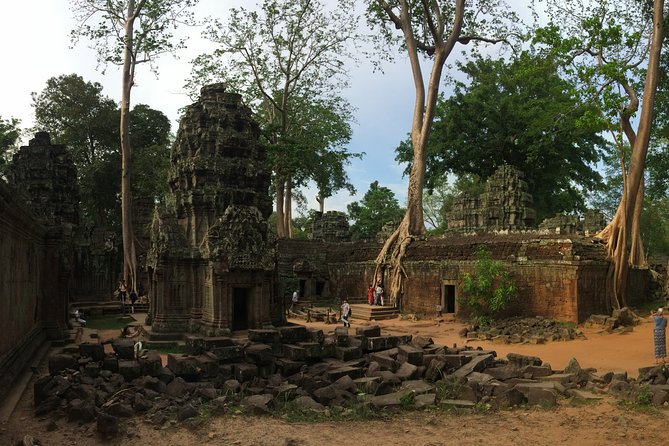
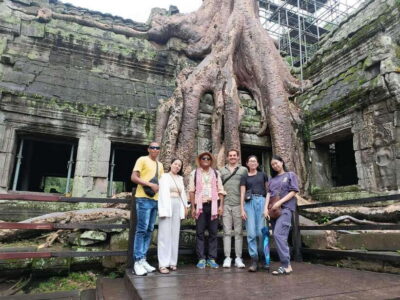
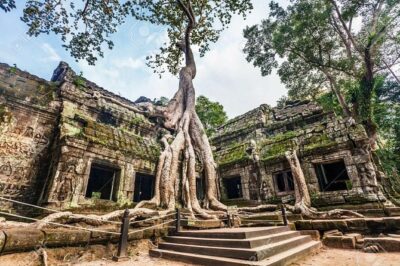
End Day 1 at Ta Prohm, the one people often call Tomb Raider after the Angelina Jolie film. What you’re looking at is the dramatic effect of massive trees and roots overgrowing parts of the temple.
You’ll be there for about 1 hour, which is enough to take photos, walk the key views, and actually feel the scene rather than just grab and go.
Potential drawback: it’s photogenic from multiple angles, so it can be tempting to spend all your time on pictures and miss the story. Try to do one slow pass first, then switch to photo hunting.
Day 2 Preah Khan to Eastern Mebon: the calmer, more atmospheric Angkor side
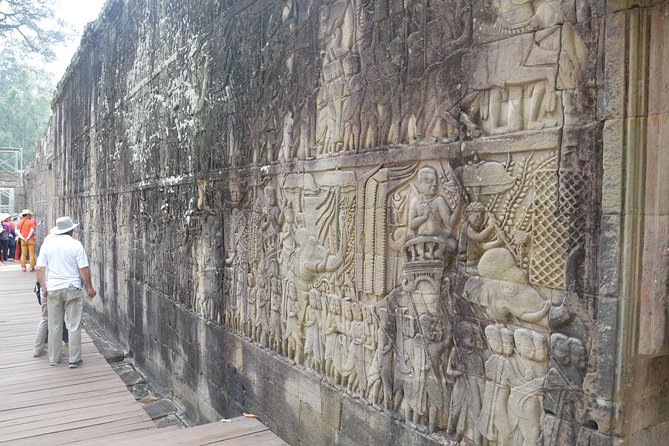
Day 2 starts again at 8:00 am and leans into temples that feel quieter and more “lived-in by nature.” You also go beyond the main cluster with trips like Banteay Srei, which sits about 30 kilometers north of the Angkor area.
You’ll see a mix of ruins, religious layout, and carving styles that help you understand Angkor as a whole system—not just one famous landmark.
Preah Khan: second-largest, temporary capital, and a calmer mood
Preah Khan is described as the second largest temple in the Angkor complex. It served as a temporary capital in the 12th century, and it’s connected to the king’s father temple.
This one is often a relief after the crowds of the headline stops. The atmosphere is calm and fascinating, and your 1-hour visit gives you time to slow down.
Neak Pean: artificial island, water-centered ritual, and weekend locals
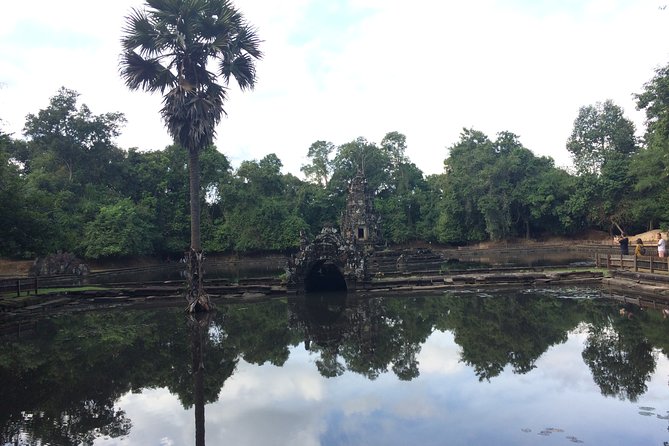
At Neak Pean, you’re told it functioned as a hospital in the Angkor era. The setting is striking: it sits on an artificial island, with an artificial lake surrounding it.
This temple has a very different crowd pattern because locals are drawn to it on weekends. That’s a bonus for you if you want less purely tourist energy and more everyday human presence.
Banteay Srei: orange sandstone detail you can actually appreciate
Banteay Srei is known for intricate carvings and is often described as the most beautiful temple in Cambodia. It’s made mostly of orange sandstone—the plan notes 90% of the structure is that material.
You’ll spend about 50 minutes, which is the right length for detailed stonework. If you’ve only seen Angkor as giant mass stone, this is the stop that reminds you how fine the craft can be.
Banteay Samre: quiet recovery from the bigger crowds
Banteay Samre is positioned as calmer. It’s a good palate cleanser after more famous temples, and it’s said to share Angkor Wat architectural style.
Plan about 30 minutes. This is a stop you can enjoy more than “tick off” because it’s not trying to outshine everything else. You’ll feel the change in pace immediately.
Pre Rup: tall five towers and a funerary legend
At Pre Rup, you’ll see five towers that represent gods and king ancestors. You’ll also get a local belief about how it was used as a cremation and funeral place.
Expect about 30 minutes. This stop is less about crowds and more about form: tall, visible towers that read from far away.
Ta Som: a gate eaten by an octopus-shaped tree
Ta Som is part of a set of temples built in one ling, along with Preah Khan and Neak Pean. A key visual here is the big octopus-shaped tree covering the back gate. It’s the kind of image that feels unreal until you’re standing there.
You’ll have about 20 minutes. Don’t waste it just looking forward. Walk around enough to see how the tree frames the gate opening.
Eastern Mebon: elephants at the corners
The day ends (in your outline) with Eastern Mebon. It’s described as a mixed brick-and-sandstone 10th century temple dedicated to the king’s ancestors. The standout detail is the elephant statues on the corners of each level.
You’ll spend around 30 minutes. This is a strong closing note because it feels different from the late-day “generic ruin” vibe. You get specific sculptural elements you can track as you walk.
Day 3 Phnom Kulen: national park time, fewer easy paths, big religious images
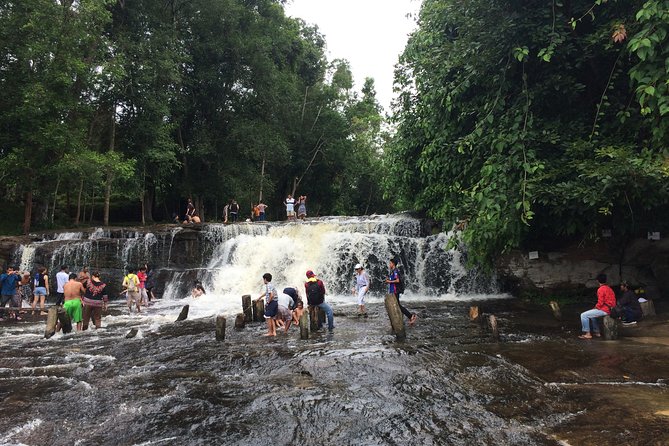
Day 3 is the change of pace: you’ll leave the Angkor circuit and head to Phnom Kulen National Park.
Before you drive, you buy tickets for Phnom Kulen at the operator’s office in the city. Then you head north, with about 1.5 hours to reach the top of the park area.
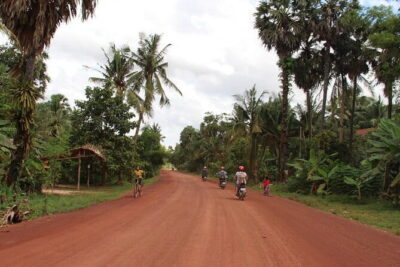
Phnom Kulen’s name relates to lychee, because the mountain is covered with lychee trees. You’re also told the park has many attractions, but only a couple are easy to access due to thick woods and road conditions. That’s a key expectation to set. This is not a “park where everything is a flat walk.”
Waterfall: the reward for the travel time
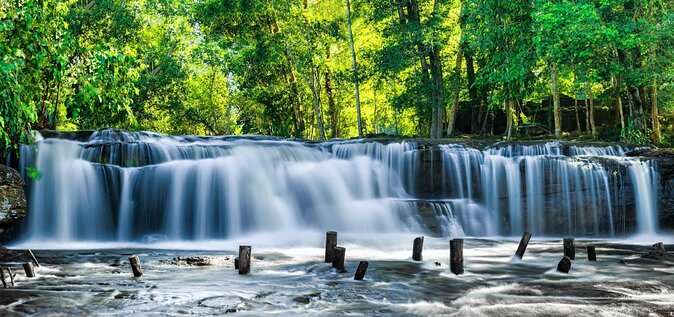
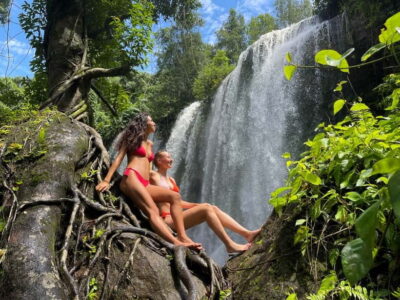
You’ll see a waterfall during the 2-hour portion in the park area. It’s one of the easier “big moments” and a nice break from temple stone.
Practical note: waterfalls often mean slick footing nearby. Go steady.
Giant reclining Buddha: a massive focal point
You’ll also see the giant reclining Buddha statue. It’s the sort of sight that instantly changes the mood from “ruins” to “still powerful religious site.”
The day is built around these heavyweight visuals, so even with fewer accessible stops, you still leave feeling like you got the main storyline.
1000 Shiva’s Linga in the riverbed
The third major stop is the 1000 Shiva’s Linga carved into the riverbed. This is one of those places where “don’t rush” matters. You’ll want time to notice the repeating pattern and understand that it’s not just one sculpture—it’s a whole field of devotion.
If you tend to skip details when you’re tired, this is where you’ll get a payoff by slowing down.
Dress code, sun, and how to avoid feeling rushed
This tour requires a dress code for places of worship and selected museums: no shorts or sleeveless tops. Both men and women must have knees and shoulders covered, or you risk refused entry.
That one rule is so important that it can affect your whole day. If you show up in a tank top and shorts, you may need to improvise quickly—or lose time. I’d plan clothes specifically for temples: breathable long pants or a long skirt, and a light shirt that covers shoulders.
Add sun planning too. The tour explicitly says to prepare sunscreen. With early starts you’ll still get strong sun, especially when you’re in exposed courtyard zones between stops.
Who should book this tour (and who should think twice)
This works best if you:
- want a guided, English-speaking way to see the Angkor highlights across two major temple days plus Phnom Kulen
- like structure: you get a clear route and time in each spot rather than wandering all day
- value included comfort (A/C transport, cold water, and face towels) in the heat
Consider thinking twice if:
- you hate walking and steep stairs. Some areas like Baphuon are steep, and while the guide can decide on climbing, you’ll still be moving around uneven temple ground.
- you don’t want to pay extra once you arrive. Temple/park admission tickets and taxes aren’t included, so the real all-in cost will be higher than $170.
Should you book? My practical take
If your goal is to see the key Angkor temples plus Phnom Kulen within a short window, this is a solid, efficient choice. The route is classic, but it’s not lazy. You get time where it matters—Angkor Wat for photo angles and context, Bayon for carvings, Ta Prohm for the roots-and-trees spectacle, and Phnom Kulen for the big religious visuals.
My decision tip: book it if you’re the type who likes being organized on day one and flexible on day two. A well-run guide and driver can make small route tweaks and keep the day feeling smooth, which is exactly what you want when you’re trying to cover a lot without feeling like you’re sprinting.
So yes—this is a good fit for first-timers and for anyone who wants value from a tight 3-day structure. Just budget for admission fees and pack temple-appropriate clothing.
FAQ
What time does the tour start each day?
The tour starts at 8:00 am on all three days.
Where does the tour begin and end?
It begins in Krong Siem Reap, Cambodia and ends back at the same meeting point.
What’s included in the tour price?
Included items are A/C car, fuel, an English speaking tour guide, cold mineral water, and cold face towels.
Are admission tickets included for Angkor and Phnom Kulen?
No. Admission tickets and fees/taxes are not included.
Do they offer pickup?
Yes, pickup is offered.
Is this tour private or shared?
It’s described as a private tour/activity where only your group participates.
What temples and sights are covered in three days?
You’ll see Angkor Wat, Angkor Thom highlights (including Bayon, Baphuon, Phimeanakas, terraces, and Ta Keo), Ta Prohm on Day 1; Preah Khan, Neak Pean, Banteay Srei, Banteay Samre, Pre Rup, Ta Som, and Eastern Mebon on Day 2; and Phnom Kulen National Park (waterfall, giant reclining Buddha, and 1000 Shiva’s Linga) on Day 3.
How do you handle Phnom Kulen tickets?
You buy the Phnom Kulen tickets in their office in the city before heading up to the park.
What dress code is required?
You need covered shoulders and knees. No shorts or sleeveless tops are allowed, and you may risk refused entry if you don’t comply.
What’s the cancellation policy and weather note?
You can cancel for a full refund if you cancel up to 24 hours in advance. The experience requires good weather, and if it’s canceled due to poor weather, you’ll be offered a different date or a full refund.
Kulen Mountain and the Falls
- Kulen Waterfall Join-in Tour (local Picnic lunch)
★ 5.0 · 2,434 reviews - Kulen Mountain: Small-Group Tour and Picnic lunch
★ 4.9 · 1,802 reviews - Siem Reap: Kulen Mountain, Beng Mealea and Tonle Sap Tour
★ 5.0 · 1,483 reviews - Phnom Kulen Waterfall & the Sacred 1000 Lingas (with Lunch)
★ 4.8 · 974 reviews - Kulen Mountain with Beng Mealea and Tonle Sap Small Group Tour
★ 5.0 · 780 reviews
More Temple Circuits Around Siem Reap
- Angkor Wat Sunrise or Sunset Tour with Guide from Siem Reap
★ 5.0 · 12,109 reviews - Siem Reap: Angkor Wat: Small-Group Sunrise or Sunset Tour
★ 5.0 · 9,444 reviews - Siem Reap: Angkor Wat 2-Day Tour with Sunrise and Sunset
★ 4.9 · 4,429 reviews - Siem Reap: Full-Day Angkor Wat Guided Tour with Sunset
★ 4.9 · 3,803 reviews - Angkor Wat Sunrise tour with Small – Group and Guide tours
★ 5.0 · 3,655 reviews
Angkor Wat, a Few More Ways In
- Angkor Wat Sunrise or Sunset Tour with Guide from Siem Reap
★ 5.0 · 12,109 reviews - Siem Reap: Angkor Wat: Small-Group Sunrise or Sunset Tour
★ 5.0 · 9,444 reviews - Siem Reap: Angkor Wat 2-Day Tour with Sunrise and Sunset
★ 4.9 · 4,429 reviews - Siem Reap: Full-Day Angkor Wat Guided Tour with Sunset
★ 4.9 · 3,803 reviews - Angkor Wat Sunrise tour with Small – Group and Guide tours
★ 5.0 · 3,655 reviews
Just Added: Fresh Siem Reap Tour Reviews

Angkor Wat Temple Tours, compared.
 ★ 5.0Angkor Wat Sunrise or Sunset Tour with Guide from Siem ReapFrom $1812,109 reviews
 ★ 5.0Angkor Wat: Small-Group Sunrise or Sunset TourFrom $159,444 reviews
 ★ 4.9Angkor Wat 2-Day Tour with Sunrise and SunsetFrom $344,429 reviews
 ★ 4.9Full-Day Angkor Wat Guided Tour with SunsetFrom $153,803 reviews
 ★ 5.0Angkor Wat Sunrise tour with Small – Group and Guide toursFrom $143,655 reviews
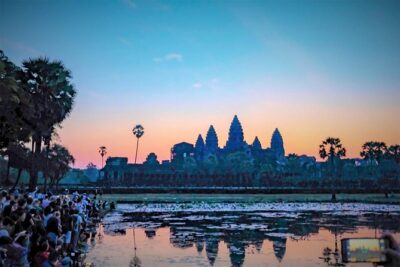 ★ 5.0Angkor Wat Highlights and Sunrise Guided Tour from Siem ReapFrom $233,213 reviews
 ★ 5.0Angkor Wat Sunset Small Group Tour with Lunch IncludedFrom $203,059 reviews
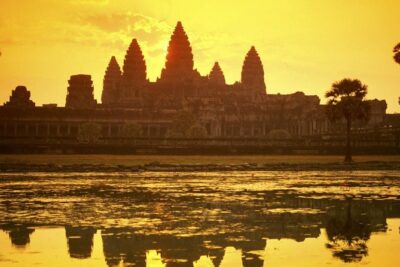 ★ 5.0Full-Day Angkor Wat Sunrise Private Tour with Guide from Siem ReapFrom $602,920 reviews
Browse the lists this tour appears in