
Reviewed · ANGKOR WAT TEMPLE TOURS
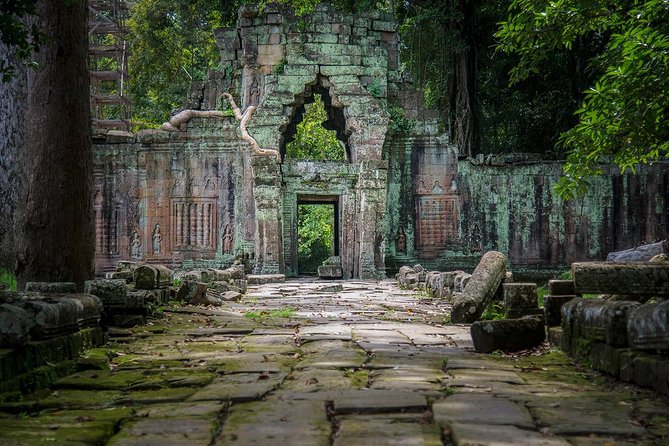
Explore Angkor Wat Temple , Bayon Temple and Jungle Temple Ta-Prohm
Angkor hits hardest when it starts early. This private day is built around an early start to see Bayon and Angkor Thom before the heaviest crowds, and it pairs that timing with an English guide who can put names and symbolism to what you’re looking at. One thing to keep in mind: entrance tickets and meals aren’t included, so you’ll still need to budget for them.
You’ll cover the three headline temples of Angkor Archaeological Park in about 7 hours, with hotel pickup and drop-off, an air-conditioned vehicle, and bottled water to keep things sane in Cambodia’s heat. It’s ideal if you’ve got limited time in Siem Reap and you want a clear, guided route instead of piecing it together on your own.
In This Review
- Key things I’d plan around first
- Private Angkor in 7 hours: who this day trip fits best
- Hotel pickup and an 8:30am heat strategy that actually helps
- Bayon Temple and Angkor Thom’s South Gate: what to notice first
- Ta Prohm with fig-tree roots: why going slow pays off
- Angkor Wat in the afternoon: Vishnu-era scale and what to aim at
- Comfort and pacing in Angkor: what to bring and how to survive the day
- Price and value: what you pay for and what you still need to budget
- Should you book this Angkor day trip?
- FAQ
- What time does the tour start in Siem Reap?
- How long is the Angkor temple tour?
- Is hotel pickup and drop-off included?
- Are entrance tickets included in the price?
- What is included in the tour price?
- Is this tour private?
- Can I get a refund if I need to cancel?
Key things I’d plan around first
- Private setup for real flexibility: You’re not stuck waiting on a big group schedule.
- Early Bayon and Angkor Thom: Designed to help you beat the crowds and get better “look around” time.
- A guide who explains what you’re seeing: A guide named Paul has been singled out for sharing a lot of useful context.
- Ta Prohm’s fig-tree ruins: You’ll spend real time at the temple that looks like the jungle grew around it.
- Angkor Wat as the final centerpiece: Late-day viewing gives you a long, unhurried look at the most famous complex.
- Cold comfort touches: Cold water is included, and cool washcloths have been mentioned as a helpful extra on hot days.
Other ways to walk the great temple
- Angkor Wat Sunrise or Sunset Tour with Guide from Siem Reap★ 5.0 · 12,109 reviews
- Siem Reap: Angkor Wat: Small-Group Sunrise or Sunset Tour★ 5.0 · 9,444 reviews
- Siem Reap: Angkor Wat 2-Day Tour with Sunrise and Sunset★ 4.9 · 4,429 reviews
- Siem Reap: Full-Day Angkor Wat Guided Tour with Sunset★ 4.9 · 3,803 reviews
Private Angkor in 7 hours: who this day trip fits best
This is a smart choice when you want maximum temple time with minimum stress. If you only have one day in Siem Reap, three major sites in one loop makes a lot of sense. You’re not burning hours bouncing between places, and you’re not stuck in a slow-moving herd.
The private angle matters, too. You can move at the pace you need, pause longer where something grabs your attention, and keep walking when you’re ready. That’s especially helpful at Angkor, where the sights are huge and your energy can evaporate faster than you expect in the heat.
For the money, the price is attractive mainly because it covers your transport and guided commentary. At $43 per person, you’re paying for a dedicated English guide, an air-conditioned vehicle, and bottled water, rather than just a ticketed entry to one site. The big caveat is that entrance fees and meals are on you, so plan for those costs before you book.
This tour also includes a mobile ticket, which is handy because it reduces the hassle of coordinating paperwork on the day.
Hotel pickup and an 8:30am heat strategy that actually helps
Starting at 8:30am is a big part of the value here. Going early helps you see Angkor Thom and Bayon before the peak crowds arrive, which means you can actually stand back, look up, and take photos without constant jostling.
You’ll get hotel pickup and drop-off, plus air-conditioned transport. That may sound minor, but it matters a lot when you’re spending the rest of the day outside. You’ll also have bottled water included from the start, which gives you one less thing to manage right away.
A nice touch in the day plan is lunch being handled near the temples, with lunch at your own expense. That approach saves time because you’re not heading back to town and then returning again. You stay in temple mode, and you keep momentum.
Real talk: if you’re the type who gets cranky when plans slide, the early start and one-day focus can be a relief.
Bayon Temple and Angkor Thom’s South Gate: what to notice first
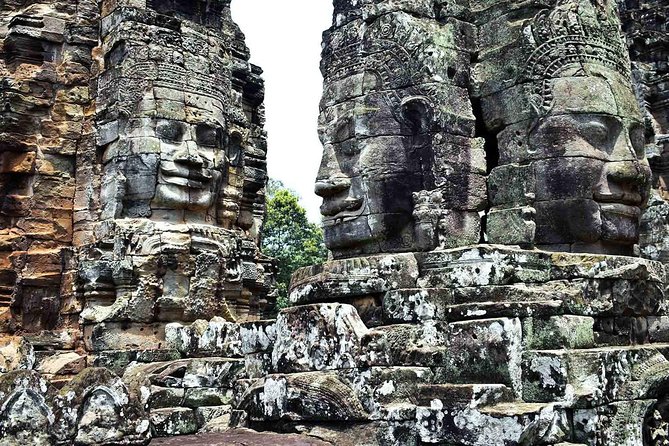
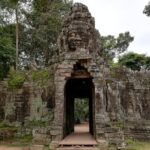
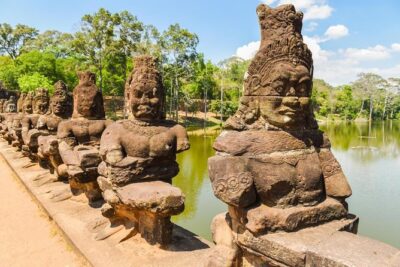
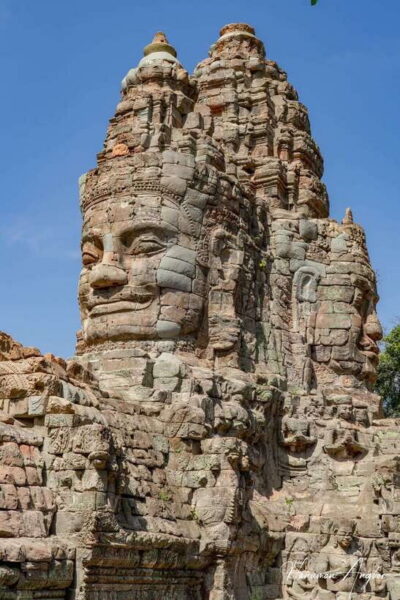
Bayon Temple is the heart of Angkor Thom for many people, and the way this tour routes you matters. You begin at the South Gate of Angkor Thom, then move into central Angkor Thom, where Bayon dominates the scene.
Bayon is famous for its faces. You’ll see 54 towers and 216 faces of Buddhisatva Avalokesvara. The scale is hard to grasp until you’re actually standing close enough to notice the repeated expressions. From far away, it’s a pattern. Up close, it becomes portraits carved for a specific gaze.
Bayon is also linked to the Angkor royal era. You’ll hear context that it was built by Jayavaraman, one of the major kings associated with Angkor’s big building projects. Having that framing makes the carvings feel less like random decoration and more like intentional storytelling.
How I’d use your time here:
- Spend the first stretch looking for symmetry and repetition, not details. Get your bearings fast.
- Then switch to “faces mode.” Look from tower to tower and notice how the expressions feel different depending on where you stand.
- If you’re a photo person, don’t just shoot. Stop, let your eyes adjust, then take a calmer shot.
At Bayon, crowds can still show up, but the morning timing helps. You also get a shorter, defined stop instead of trying to cover everything in one long slog.
Ta Prohm with fig-tree roots: why going slow pays off
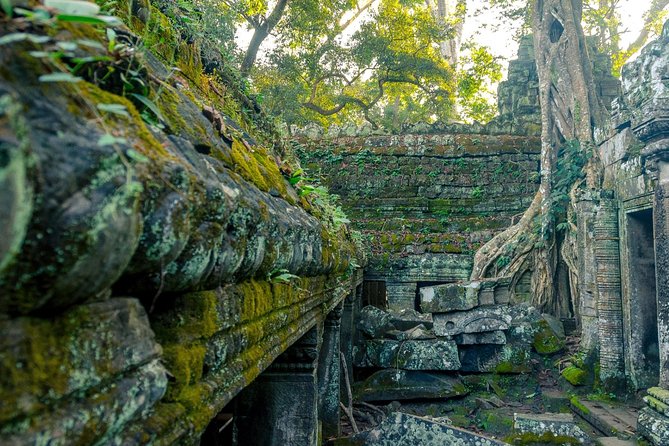
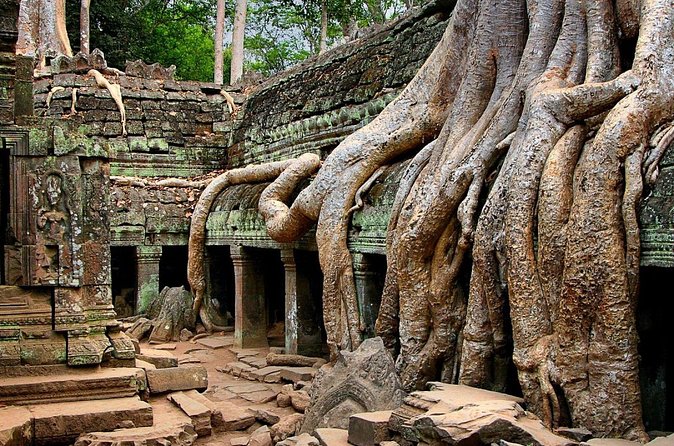
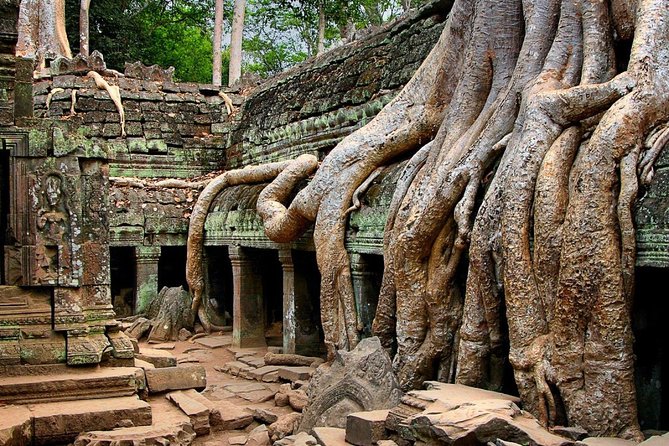
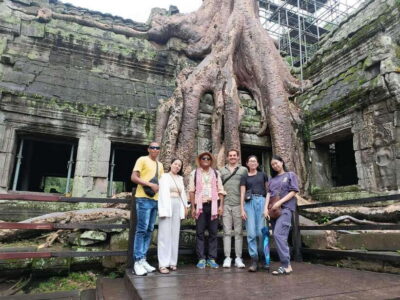
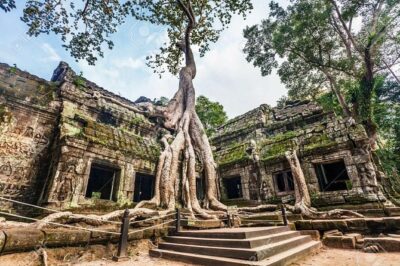
Ta Prohm is the temple that people describe as if nature and stone had a long conversation. Here, enormous fig trees embrace the ruins, with roots and branches wrapping around structures in a way that’s impossible to fake with imagination.
You’re set up for a proper visit, not a quick glance. The temple is known for being left in a similar state to how it was found, which is part of its power. It doesn’t feel polished for a postcard. It feels like you’ve walked into a moment frozen mid-discovery.
That also means you’ll want to go at a human pace. Roots and walls create visual clutter, and if you rush, you’ll miss why the place feels eerie and alive at the same time. Give yourself time to walk, stop, and look upward, then back down at how the stonework sits in the roots.
Practical considerations:
- The ground can be uneven, and you’ll likely do a lot of walking. Comfortable shoes are non-negotiable.
- Shade helps, but you’re not fully protected from sun and heat. Take breaks when you need them.
- Photos are great, but your best memory will be how the fig trees frame the carvings like giant living columns.
The guide’s commentary really helps at Ta Prohm, because the temple can look like pure spectacle unless you understand what you’re seeing and why it’s preserved the way it is.
Back through the south gate to Bayon
Angkor Wat in the afternoon: Vishnu-era scale and what to aim at
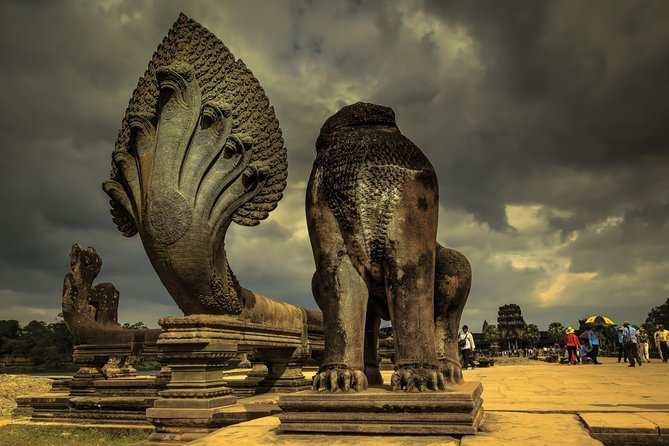
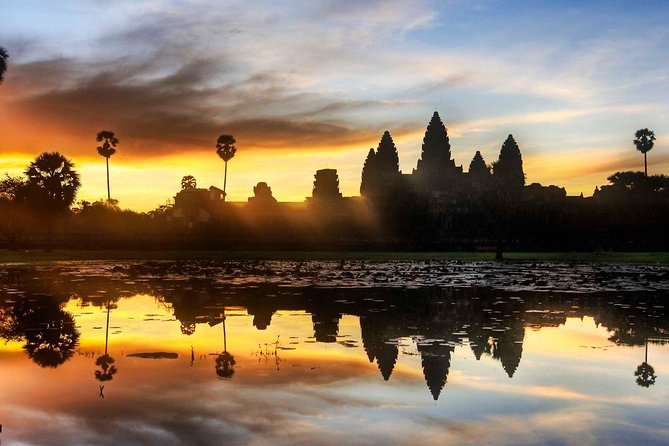
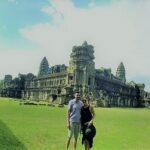
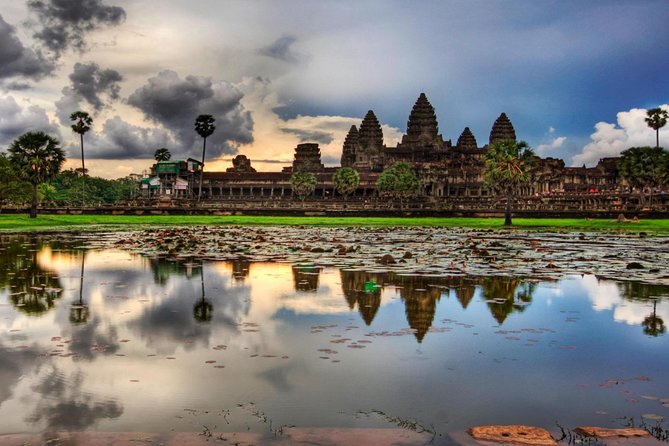
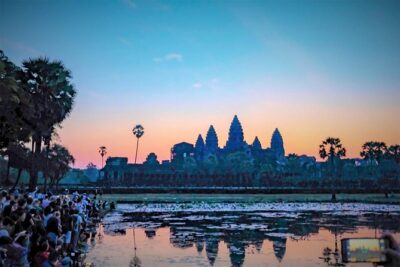
Angkor Wat is the big finale. After Ta Prohm, you’ll head to the most important archaeological site in Southeast Asia. This is the temple associated with the Khmer King Soriyavaraman II, built in the early 12th century, and dedicated to Vishnu.
Three hours here is a healthy amount of time. Angkor Wat isn’t a “see it once and move on” kind of place. Even if you’re not a hardcore architecture fan, you’ll notice how the layout pulls your eyes along a deliberate path. The scale is the main story: courtyards, corridors, and the layered geometry of the complex all feel built to impress.
Because you’re coming in the afternoon, you may get different light than you’d see at sunrise. That can be a bonus. Afternoon light can soften some shadows and make textures stand out. It’s also realistic: you’ll be warmed up by then, and you won’t be sprinting to beat an early-morning start.
What you can do to make the most of your time:
- Don’t rush to the most photographed view first. Take a few minutes to understand the complex’s “flow.”
- Look for symbolism as you go. Knowing it’s a Vishnu temple gives you a clearer sense of why certain carvings and structures matter.
- If your route includes nearby highlights like the Terrace of the Elephants, treat it as a palate cleanser. It’s another way to see Angkor’s artistic storytelling, and it breaks up the main temple sweep.
Angkor Wat often feels like a reward after the day’s earlier stops. If you’ve paced yourself through Bayon and Ta Prohm, this last section can feel oddly restful, even with the walking.
Comfort and pacing in Angkor: what to bring and how to survive the day
Angkor is not just about sights. It’s about managing the physical reality: heat, sun, uneven paths, and long stretches of walking.
Here’s what the tour experience does to help:
- Bottled water is included.
- You’ll ride in an air-conditioned vehicle between stops.
- A guide named Paul has been mentioned for bringing cold water and cool washcloths on hot days, which is genuinely practical.
Here’s what you should bring because the tour data doesn’t list it:
- Comfortable walking shoes (this is the most important one).
- Sun protection (hat or cap, sunscreen if you use it).
- A light layer for air-conditioned car rides, because the temperature swings can be dramatic.
Pacing advice I’d follow:
- Plan on slower starts, faster middles, then a calm finish at Angkor Wat.
- Take small breaks even if you don’t feel tired yet. In heat, fatigue sneaks up.
- If you see a detail you like, zoom in briefly and then step back. That helps you absorb both the artwork and the overall design.
If you keep your expectations realistic, you’ll enjoy the day more. The temples are big. Your job is to look long enough for the place to click.
Price and value: what you pay for and what you still need to budget
The price is $43 per person for a private, guided day covering Bayon, Ta Prohm, and Angkor Wat over about 7 hours. That’s not a bargain in the sense of being “cheap,” but it is solid value because it includes the practical backbone of the day: transport, an English guide, and bottled water.
What’s not included is the big variable:
- Entrance tickets are not included.
- Meals are not included.
Lunch is specifically described as something you’ll get on your own near the temples. That means you should carry a bit of cash or have a plan for payment where you’re eating.
Also note that this tour offers group discounts and uses a mobile ticket, both of which can reduce the usual small frictions.
Value verdict: if you factor in that you’re getting a dedicated guide and air-conditioned transport for a full temple day, the $43 price makes sense. If you’re mainly looking for the cheapest way to enter a couple of sites, then the entrance fees and meals could narrow the gap. But if you want context and a well-managed route, it’s a good match.
Should you book this Angkor day trip?
Book it if:
- You have limited time in Siem Reap and want the top temples in one day.
- You’d rather have a guide explain what you’re seeing than rely on guesswork.
- You want hotel pickup, air-conditioned transport, bottled water, and a private-group approach.
- Early timing at Bayon and Angkor Thom sounds like your kind of plan.
Consider skipping or choosing something else if:
- You’re traveling very tightly on budget and don’t want to think about guide + transport costs on top of temple entry fees and meals.
- You prefer a totally DIY pace with no scheduled stops.
- You’re hoping for a fully included meal plan, since meals are not part of the package.
If you’re aiming for an efficient, guided Angkor day without the stress of planning a route, this one is an easy yes.
FAQ
What time does the tour start in Siem Reap?
It starts at 8:30am.
How long is the Angkor temple tour?
It runs about 7 hours.
Is hotel pickup and drop-off included?
Yes. Hotel pickup and drop-off are provided.
Are entrance tickets included in the price?
No. All entrance ticket fees are not included.
What is included in the tour price?
You get an air-conditioned vehicle, an English tour guide, and bottled water, plus mobile ticket access.
Is this tour private?
Yes. It is a private tour/activity, and only your group will participate.
Can I get a refund if I need to cancel?
Yes, you can cancel for free up to 24 hours before the experience starts for a full refund.
More Temple Circuits Around Siem Reap
- Angkor Wat Sunrise or Sunset Tour with Guide from Siem Reap
★ 5.0 · 12,109 reviews - Siem Reap: Angkor Wat: Small-Group Sunrise or Sunset Tour
★ 5.0 · 9,444 reviews - Siem Reap: Angkor Wat 2-Day Tour with Sunrise and Sunset
★ 4.9 · 4,429 reviews - Siem Reap: Full-Day Angkor Wat Guided Tour with Sunset
★ 4.9 · 3,803 reviews - Angkor Wat Sunrise tour with Small – Group and Guide tours
★ 5.0 · 3,655 reviews
Through Angkor Thom to Bayon
- Siem Reap Tour: Angkor Wat Sunrise, Bayon, Ta Prohm, Banteay Srei
★ 5.0 · 931 reviews - Angkor Wat Private Driver Tours to Angkor Wat Sunrise, Angkor Thom & Ta Prohm
★ 5.0 · 98 reviews - Angkor Wat Sunrise and Angkor Thom Sunset Tour
★ 5.0 · 89 reviews - Angkor Wat, Angkor Thom Ancient Capital, Ta Promh Temple
★ 5.0 · 85 reviews - Private Temples Guided Tour (Angkor Wat, Ta Prom & Angkor Thom)
★ 5.0 · 75 reviews
Angkor Wat, a Few More Ways In
- Angkor Wat Sunrise or Sunset Tour with Guide from Siem Reap
★ 5.0 · 12,109 reviews - Siem Reap: Angkor Wat: Small-Group Sunrise or Sunset Tour
★ 5.0 · 9,444 reviews - Siem Reap: Angkor Wat 2-Day Tour with Sunrise and Sunset
★ 4.9 · 4,429 reviews - Siem Reap: Full-Day Angkor Wat Guided Tour with Sunset
★ 4.9 · 3,803 reviews - Angkor Wat Sunrise tour with Small – Group and Guide tours
★ 5.0 · 3,655 reviews
Just Added: Fresh Siem Reap Tour Reviews


Angkor Wat Temple Tours, compared.
 ★ 5.0Angkor Wat Sunrise or Sunset Tour with Guide from Siem ReapFrom $1812,109 reviews
 ★ 5.0Angkor Wat: Small-Group Sunrise or Sunset TourFrom $159,444 reviews
 ★ 4.9Angkor Wat 2-Day Tour with Sunrise and SunsetFrom $344,429 reviews
 ★ 4.9Full-Day Angkor Wat Guided Tour with SunsetFrom $153,803 reviews
 ★ 5.0Angkor Wat Sunrise tour with Small – Group and Guide toursFrom $143,655 reviews
 ★ 5.0Angkor Wat Highlights and Sunrise Guided Tour from Siem ReapFrom $233,213 reviews
 ★ 5.0Angkor Wat Sunset Small Group Tour with Lunch IncludedFrom $203,059 reviews
 ★ 5.0Full-Day Angkor Wat Sunrise Private Tour with Guide from Siem ReapFrom $602,920 reviews
Browse the lists this tour appears in