
Reviewed · ANGKOR WAT TEMPLE TOURS
Full-Day Guided Bicycle Tour in Angkor Wat Temple
Angkor, but on two wheels. This full-day bike tour is one of the more comfortable ways to see the big names like Angkor Wat and Bayon, while still getting time for quiet roads, forest shade, and temple stops that feel calmer than the usual circuit. I like that the ride is guided and structured, so you can focus on what matters: the carvings, the ruined walls, and the slow rhythm of pedaling through the Angkor Archaeological Park.
Two things I particularly like are the traffic-free trails through jungle paths and the chance to mix famous temples with smaller, less-expected stops like Kravan Temple and Banteay Kdei. One consideration: the advertised price does not include entrance fees, so you’ll want to budget extra for the Angkor day-entry ticket on top of the $55 tour cost.
In This Review
- Key highlights worth your attention
- How the full-day Angkor bike tour actually works
- Bikes, helmets, and the “chill but organized” approach
- Ta Prohm and the forest start: where the roots take over
- Angkor Thom walls, Bayon smiles, and two famous terraces
- Angkor Wat in the afternoon: walking time plus a proper lunch break
- Price and value: $55 plus the day-entry ticket
- The guide factor: English support and better context
- Group size, pace, and what “most travelers can participate” means
- Practical tips that make the day smoother
- Who this Angkor Wat bike tour is best for
- Should you book this cycling tour of Angkor Wat?
- FAQ
- FAQ
- How long is the Angkor Wat full-day bicycle tour?
- What temples are included in the route?
- Is pickup from my hotel included?
- Is lunch included?
- Are entrance fees included in the $55 price?
- What does the tour include for riding equipment?
- How many people are in a group?
- What time does the tour operate?
- What is the cancellation policy?
- What happens if the weather is poor?
Key highlights worth your attention
- Hotel pickup and drop-off so you’re not juggling tuk-tuks before your ride
- Good quality bike and helmet, plus a fitting and a safety briefing before moving out
- A small max group size (12), which usually means more room to breathe at viewpoints
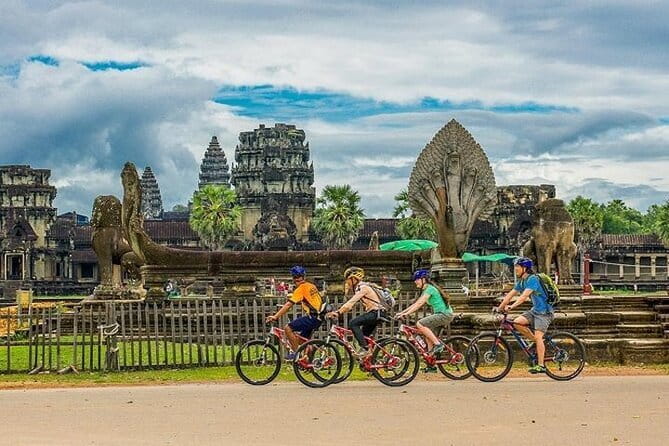
- Traffic-free riding through shaded forest paths instead of constant road noise
- Temple mix that includes Ta Prohm, Bayon, Angkor Thom, and Angkor Wat in one day
- Lunch, water, and snacks included during the longer temple segments
Other ways to walk the great temple
- Angkor Wat Sunrise or Sunset Tour with Guide from Siem Reap★ 5.0 · 12,109 reviews
- Siem Reap: Angkor Wat: Small-Group Sunrise or Sunset Tour★ 5.0 · 9,444 reviews
- Siem Reap: Angkor Wat 2-Day Tour with Sunrise and Sunset★ 4.9 · 4,429 reviews
- Siem Reap: Full-Day Angkor Wat Guided Tour with Sunset★ 4.9 · 3,803 reviews
How the full-day Angkor bike tour actually works
This is a guided, full-day bicycle tour based out of Siem Reap, run by Asia Backroads Travel. The day is designed around temple timing and ride time, so you’re not just stopping at random photo spots—you’re moving through the Angkor complex in a logical sequence.
Expect an 8-hour day in total, with a hotel pickup at the start and a drop-off back at your place after the last temple stop. The tour runs within the provider’s daily operating window (8:00 AM to 5:00 PM), so your exact pickup time will depend on scheduling, but the plan is clearly built for a full daylight experience.
Bikes, helmets, and the “chill but organized” approach
Before you pedal, you get a bike fitting and a safety briefing. That matters more than it sounds. A comfortable seat, working brakes, and knowing hand signals make a big difference once you’re rolling through uneven temple roads and dirt stretches.
You’ll also get a steady flow of support during the ride: pure drinking water plus local snacks and seasonal fruit. It’s a small detail, but it helps you stay focused instead of wasting energy looking for something to eat or drink.
The ride itself is described as relaxed, and the route emphasizes peaceful trails with minimal traffic. In practical terms, that’s the difference between “touring with chaos” and “touring with breathing room.”
Ta Prohm and the forest start: where the roots take over
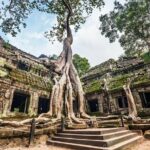
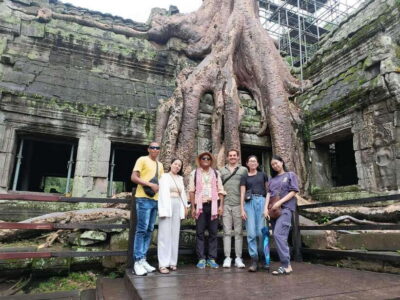
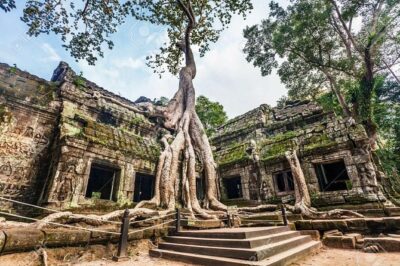
Your day begins at Ta Prohm, one of Angkor’s most famous temple scenes: huge fig tree roots and vines wrapping around stone. You’ll spend about 3 hours in this area, with the tour starting after you pass through the Angkor checkpoint.
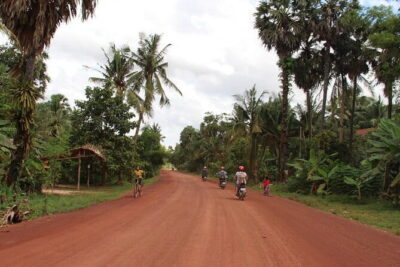
After setup and briefing, you roll along a scenic, shaded road through the forest. Along the way, the route includes stops at Kravan Temple and Banteay Kdei before you arrive at Ta Prohm.
Why I think this first temple stop is such a smart move: Ta Prohm works best when you slow down. With a longer block of time and a bike-based arrival, you’re more likely to notice the smaller details—root patterns, worn steps, and the way carvings frame doorways—rather than rushing just to say you were there.
If you’re the type who likes atmosphere, this start also hits nicely. You’re shifting from “modern road life” into a quieter world where the jungle feels like part of the monument.
Angkor Thom walls, Bayon smiles, and two famous terraces
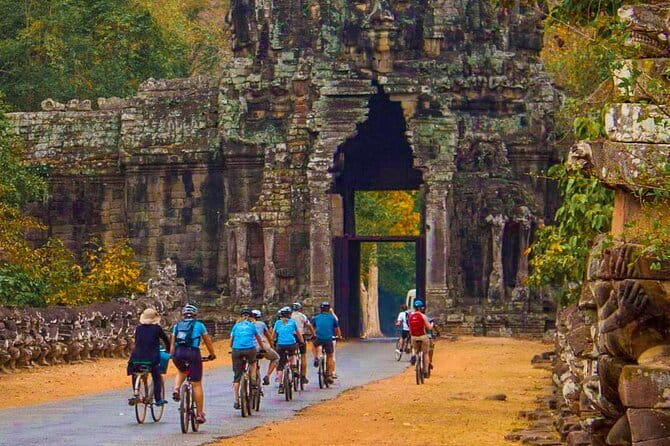
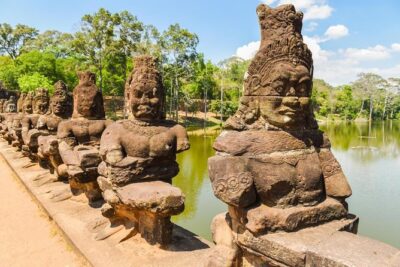
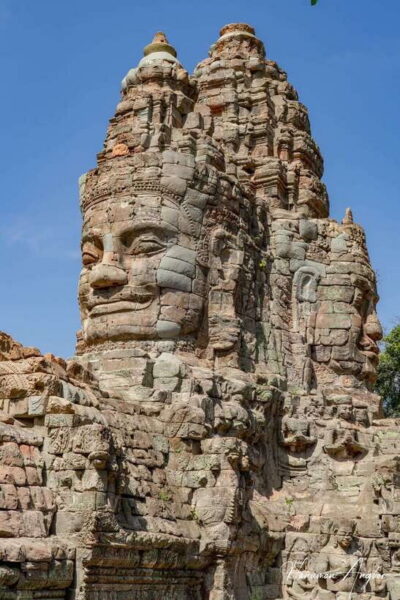
After Ta Prohm, you cycle onward to Angkor Thom, the ancient walled city. You enter through a stone gate with carved elephants and towering faces, which sets the tone fast: this is not a single temple visit, it’s a whole urban plan made of stone.
The stop at Angkor Thom and Bayon is about 2 hours, and Bayon is the headline. Bayon is known for the stone faces—calm, slightly smiling expressions that seem to watch you from multiple angles. It’s a great contrast to Ta Prohm: less jungle chaos, more structured city space.
You also visit the Terrace of the Elephants and the Terrace of the Leper King. Both are known for detailed bas-reliefs, and they’re a useful way to “read” the site beyond the main faces. If you’re trying to understand what you’re seeing, these terraces help you connect the architecture to the stories carved into the stone.
This portion also benefits from being guided. When you’re walking alone, it’s easy to get lost in what looks similar. With an English cycling guide, you get orientation and context so your brain can actually track what’s where.
More temple circuits, set side by side
Angkor Wat in the afternoon: walking time plus a proper lunch break
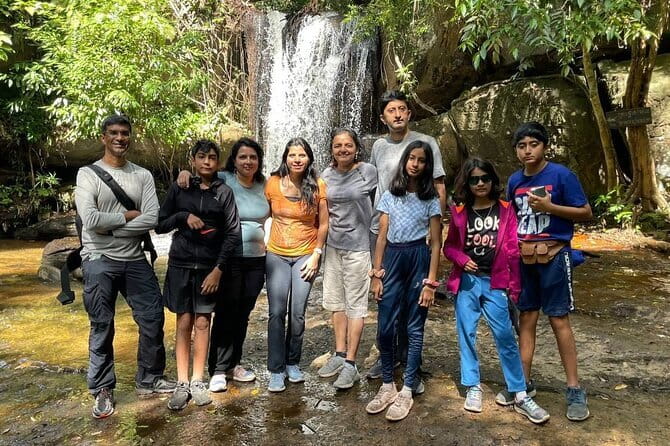
After your morning temple cluster, you take a lunch break at a local restaurant near the temples. The tour includes lunch as well as water and snacks earlier in the day, so you’re not scrambling for food once you’re surrounded by crowds and tour buses.
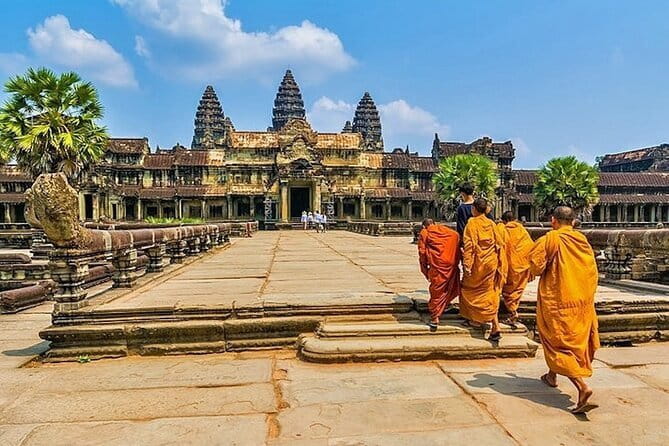
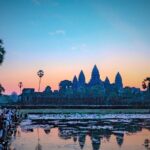
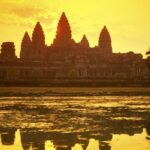
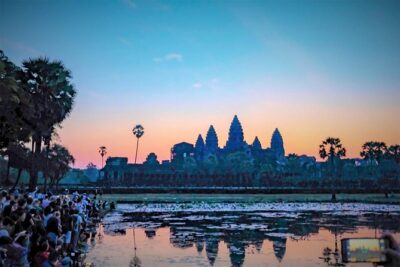
Then in the afternoon, you visit Angkor Wat. The time allocated is about 3 hours—enough to see it as more than a quick skyline stop. Angkor Wat is the world’s largest religious monument, and the tour focuses on its history, architecture, and symbolism.
A bike tour works well here because you arrive with momentum but not stress. You get to move between zones without burning your energy in traffic. Then when you dismount, you’re ready to walk and look for details: geometry, doorways, and the layers of meaning built into the design.
Price and value: $55 plus the day-entry ticket
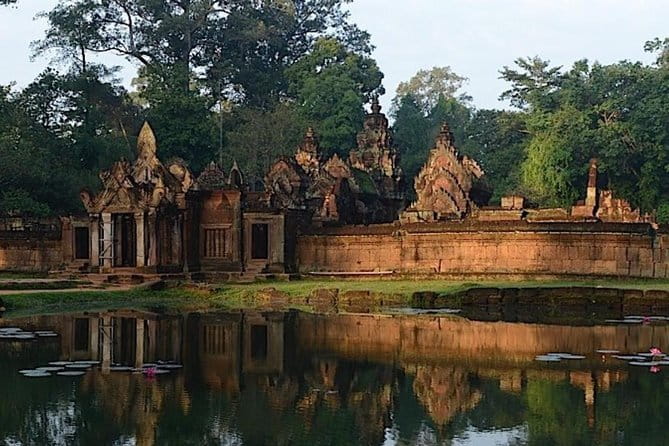
The tour price is $55 per person, and it includes a lot of the practical stuff that often adds up: English cycling guide, good bike and helmet, lunch, hotel pickup and drop-off, plus local snacks and seasonal fruit.
The big extra cost is entrance fees. Entrance fees for attractions are USD 37 for a single-day entry, and that is not included. So your realistic total for the day is usually around $92 before any optional purchases.
Alcohol is not included, but alcoholic drinks are available to purchase at a local shop. That’s a normal setup for a temple day, but it’s worth knowing so you don’t assume drinks are part of lunch.
When I look at value, I see two strengths. First, you’re paying for guided flow and logistics—getting you through a huge site without spending half your day figuring out transport. Second, you’re paying for the “bike advantage,” meaning you cover more ground than a slow walk, while still having time at each key temple.
The guide factor: English support and better context
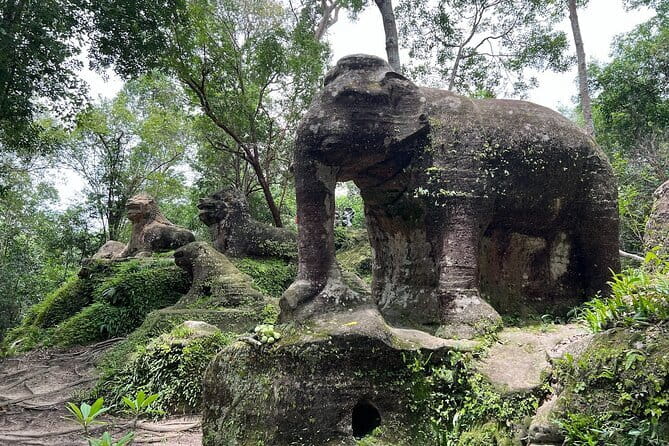
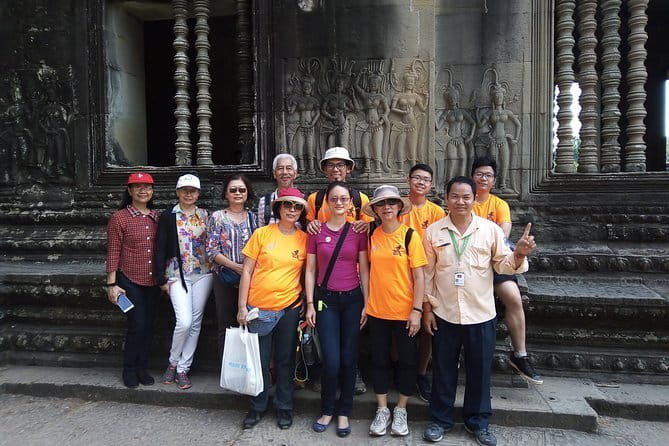
The tour includes an experienced English cycling guide, and the best part is how that translates on the ground. You’re not just being told where to go—you’re getting explanations that help you connect the carvings, the layout, and the temple purpose.
In the reviews, guides such as Vuthy and Chuoy get mentioned by name. What stands out is how fun and knowledgeable the guides can be, and how they keep the day light while staying informative. That combination matters on a long day: you want facts, but you also want momentum and laughs.
Group size, pace, and what “most travelers can participate” means
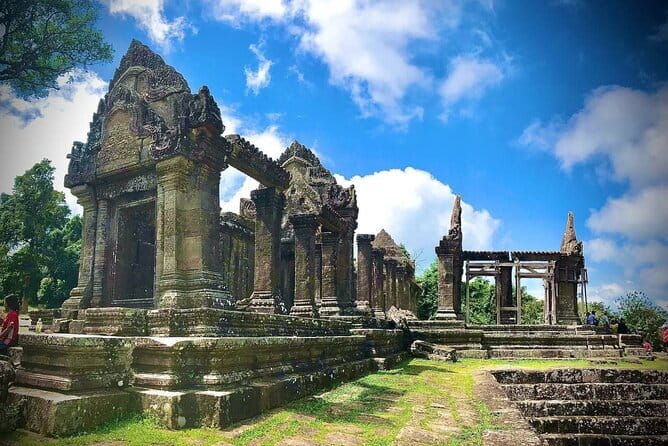
This tour has a maximum of 12 travelers, which is small enough to feel personal. It also helps at temple entrances and queue points, where large groups can slow everything down.
The tour description says most travelers can participate, which suggests the riding portion isn’t meant to be extreme. Still, it’s a full-day cycling experience. If you know you struggle with long sitting periods or longer outdoor days, consider that before booking.
The day is also weather-dependent. The provider notes that good weather is required, and if the tour is canceled due to poor weather, you’ll be offered a different date or a full refund. In other words, it’s not a “rain or shine, no matter what” situation.
Practical tips that make the day smoother
You don’t need to become a cyclist to enjoy this, but you do want to prepare like you’re going out for 8 hours. The tour includes the essentials for riding—bike, helmet, and water—so your main job is showing up ready to pedal and walk.
A few smart planning moves:
- If you have control over your clothing, choose something comfortable for biking and temple walking.
- Bring your energy for a long day that mixes riding with multi-hour temple time at Ta Prohm, Bayon/Angkor Thom, and Angkor Wat.
- Keep the entrance fee in mind so you don’t get hit with surprise costs right before touring.
Also, the tour uses a mobile ticket, which can make check-in simpler if you’re already comfortable using your phone for reservations.
Who this Angkor Wat bike tour is best for
This is a great fit if you want a mix of iconic temples and quieter roads. I’d especially recommend it if you like the idea of escaping the worst congestion by moving through shaded, calmer areas rather than being stuck in lines all day.
It’s also a good match for couples and small groups who want structure but not a stiff, rushed vibe. You’re getting a guided route, set stops, and scheduled meals, but the pacing is described as relaxed.
If you’re a history deep-dive type, you’ll still get context for the architecture and symbolism. The terraces and main temples give plenty to work with, as long as you’re ready to do real walking too.
Should you book this cycling tour of Angkor Wat?
If you want Angkor without spending your whole day in traffic or chasing a map, this is an easy yes. The combination of guided temple stops, a longer time block at each major site, and the chance to ride through forested, less-crowded paths makes the day feel balanced.
Book it if:
- you like active sightseeing that still includes breaks like lunch,
- you want a guide to help you make sense of what you’re seeing,
- you appreciate small-group limits and organized flow.
Skip or reconsider if:
- you know you don’t handle long outdoor days well,
- you’re only interested in one or two temples and don’t want an 8-hour commitment,
- you’re trying to avoid extra costs beyond the $55 price since the USD 37 day-entry ticket is separate.
FAQ
FAQ
How long is the Angkor Wat full-day bicycle tour?
The tour runs for about 8 hours.
What temples are included in the route?
You’ll visit Ta Prohm, Bayon, Angkor Thom, the Terrace of the Elephants, the Terrace of the Leper King, and Angkor Wat. Stops also include Kravan Temple and Banteay Kdei along the way.
Is pickup from my hotel included?
Yes. Hotel pick-up and drop-off are included.
Is lunch included?
Yes. Lunch is served at a local restaurant during the tour.
Are entrance fees included in the $55 price?
No. Entrance fees for all attractions are not included. The day entry fee is listed as USD 37 for single-day entry.
What does the tour include for riding equipment?
You get a good quality bike and a helmet, plus a bike fitting and a safety briefing before you start.
How many people are in a group?
The maximum group size is 12 travelers.
What time does the tour operate?
The provider’s daily operating hours are listed as 8:00 AM to 5:00 PM.
What is the cancellation policy?
Free cancellation is available. You can cancel up to 24 hours in advance for a full refund.
What happens if the weather is poor?
This experience requires good weather. If it’s canceled due to poor weather, you’ll be offered a different date or a full refund.
More Tour Reviews in Siem Reap
- Angkor Wat Sunrise or Sunset Tour with Guide from Siem Reap
★ 5.0 · 12,109 reviews - Siem Reap: Angkor Wat: Small-Group Sunrise or Sunset Tour
★ 5.0 · 9,444 reviews - From Siem Reap: Kampong Phluk Floating Village Tour by Boat
★ 4.9 · 6,979 reviews - Sunset tour of Kampong Phluk stilts home village on the Tonle Sap
★ 5.0 · 4,865 reviews - Siem Reap: Angkor Wat 2-Day Tour with Sunrise and Sunset
★ 4.9 · 4,429 reviews
More Temple Circuits Around Siem Reap
- Angkor Wat Sunrise or Sunset Tour with Guide from Siem Reap
★ 5.0 · 12,109 reviews - Siem Reap: Angkor Wat: Small-Group Sunrise or Sunset Tour
★ 5.0 · 9,444 reviews - Siem Reap: Angkor Wat 2-Day Tour with Sunrise and Sunset
★ 4.9 · 4,429 reviews - Siem Reap: Full-Day Angkor Wat Guided Tour with Sunset
★ 4.9 · 3,803 reviews - Angkor Wat Sunrise tour with Small – Group and Guide tours
★ 5.0 · 3,655 reviews
Angkor Wat, a Few More Ways In
- Angkor Wat Sunrise or Sunset Tour with Guide from Siem Reap
★ 5.0 · 12,109 reviews - Siem Reap: Angkor Wat: Small-Group Sunrise or Sunset Tour
★ 5.0 · 9,444 reviews - Siem Reap: Angkor Wat 2-Day Tour with Sunrise and Sunset
★ 4.9 · 4,429 reviews - Siem Reap: Full-Day Angkor Wat Guided Tour with Sunset
★ 4.9 · 3,803 reviews - Angkor Wat Sunrise tour with Small – Group and Guide tours
★ 5.0 · 3,655 reviews
Just Added: Fresh Siem Reap Tour Reviews

Angkor Wat Temple Tours, compared.
 ★ 5.0Angkor Wat Sunrise or Sunset Tour with Guide from Siem ReapFrom $1812,109 reviews
 ★ 5.0Angkor Wat: Small-Group Sunrise or Sunset TourFrom $159,444 reviews
 ★ 4.9Angkor Wat 2-Day Tour with Sunrise and SunsetFrom $344,429 reviews
 ★ 4.9Full-Day Angkor Wat Guided Tour with SunsetFrom $153,803 reviews
 ★ 5.0Angkor Wat Sunrise tour with Small – Group and Guide toursFrom $143,655 reviews
 ★ 5.0Angkor Wat Highlights and Sunrise Guided Tour from Siem ReapFrom $233,213 reviews
 ★ 5.0Angkor Wat Sunset Small Group Tour with Lunch IncludedFrom $203,059 reviews
 ★ 5.0Full-Day Angkor Wat Sunrise Private Tour with Guide from Siem ReapFrom $602,920 reviews