
Reviewed · ANGKOR WAT TEMPLE TOURS
Full-Day private Tour in Lost City & Angkor Wat from Siem Reap
Eight hours, and the stone starts talking.
This private Lost City and Angkor Wat tour is interesting because it guides you through Angkor Wat from the little-visited Eastern side, then continues through Angkor Thom’s key temples and finishes at Ta Prohm. I love the way the guide keeps things moving with clear explanations (and lets you keep your own pace), and I like the route choices that help you dodge the worst crowds and heat. One drawback: the Angkor Wat admission fee is not included, so you’ll need to plan for that extra cost.
You’ll get hotel pickup and drop-off plus a private, comfortable vehicle, bottled water, and a lunch stop with cold drinks near the temples. It’s also truly private, so you’re not herded with strangers, and you can ask questions without shouting over the group.
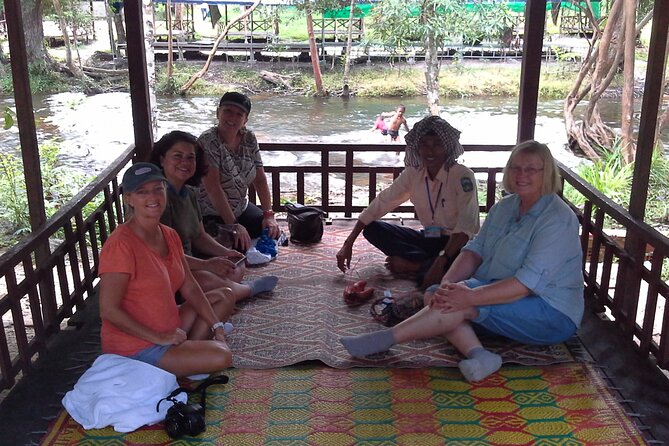
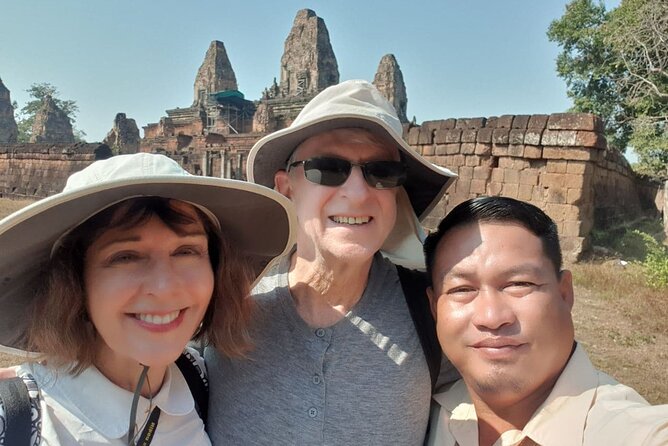
If you’re lucky, you’ll get a guide like Sim or Rith. In recent outings, Sim handled changes smoothly (including shifting the order when people needed a break, and when rain showed up), while Rith impressed with strong historical detail and a calm, flexible rhythm. The main consideration is the day is long and there’s a lot of walking on uneven temple paths—so comfortable shoes matter.
In This Review
- Key highlights worth your time
- Private pickup makes the whole Angkor day feel lighter
- Angkor Wat from the Eastern side: bas-reliefs and central chambers
- South Gate and Bayon faces: Angkor Thom without the scramble
- Baphuon and Phimeanakas: palace-temple details most people skip
- Terrace of the Elephants and Terrace of the Leper King: story in plain sight
- Secret stops in Angkor Thom: why your guide matters
- Ta Prohm: jungle trees, UNESCO energy, and real photo opportunities
- Lunch, breaks, and photo time without losing momentum
- Price and admission fees: what $30 really means
- What to wear: knees, shoulders, and shoes that don’t betray you
- Who this private Angkor day trip suits best
- Should you book this Lost City and Angkor Wat tour?
- FAQ
- How long is the tour?
- Do you pick me up from my hotel in Siem Reap?
- Is Angkor Wat admission included in the price?
- Are the other temple stops included without extra tickets?
- Is the guide English speaking?
- Is this tour private?
- What should I wear for the temples?
- Is lunch included?
- What is the cancellation rule?
Key highlights worth your time
- Eastern Angkor Wat entry for a quieter, less overused approach and different photo angles
- English-speaking private guide who explains bas-reliefs, myths, and the temple layouts as you walk
- Angkor Thom must-sees without the sprinting: South Gate, Bayon faces, Baphuon, and palace-temple corners
- Two Terrace stops that turn “tour photos” into real context: Elephants and Leper King
- Ta Prohm jungle experience with trees growing from ruins and UNESCO-level atmosphere
Other ways to walk the great temple
- Angkor Wat Sunrise or Sunset Tour with Guide from Siem Reap★ 5.0 · 12,109 reviews
- Siem Reap: Angkor Wat: Small-Group Sunrise or Sunset Tour★ 5.0 · 9,444 reviews
- Siem Reap: Angkor Wat 2-Day Tour with Sunrise and Sunset★ 4.9 · 4,429 reviews
- Siem Reap: Full-Day Angkor Wat Guided Tour with Sunset★ 4.9 · 3,803 reviews
Private pickup makes the whole Angkor day feel lighter
This tour starts with a simple win: hotel pickup and drop-off in Siem Reap. That means you don’t waste early hours figuring out transport or bargaining for rides, and you can focus on getting to the temples when the light and air are still reasonable.
The day runs about 8 hours, which is long enough to see the big anchors (Angkor Wat, Angkor Thom, Ta Prohm), but structured enough that you’re not constantly lost or guessing where to go next. You’ll travel in a private comfortable vehicle, and you’ll have bottled water along the way.
Because it’s private, your guide can respond to what your group needs. One of the best examples from recent experiences: Sim was flexible about moving the order forward and slowing down when people got tired—useful because temple days can go from exciting to exhausting fast, especially in humidity.
Angkor Wat from the Eastern side: bas-reliefs and central chambers
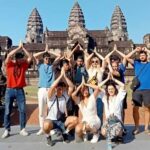
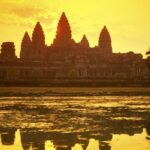
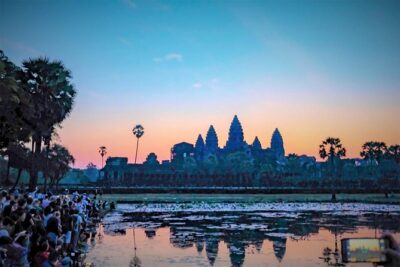
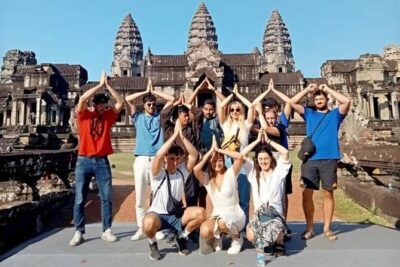
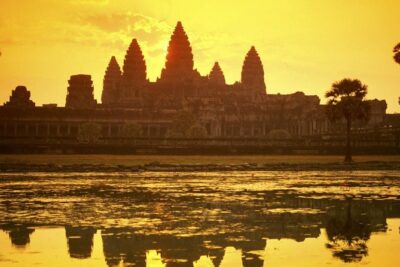
Angkor Wat is the headline for a reason. It’s the largest religious monument in the world and a 12th-century masterpiece that’s still one of the best-preserved temples at Angkor. What makes this tour feel different is how you enter: you come in from the eastern side, described as the little-visited route.
That approach matters. The eastern entry lets you experience the temple’s scale and carvings in a less chaotic flow, and it pairs nicely with the next stage: a slow, scenic walk on a jungle path. You’ll move through the greenery and head toward the north ancient library pool, stopping for the kind of explanation that turns stone decoration into story.
Expect real attention on the bas-reliefs. You’ll be pointed to the long stretches of carved storytelling—some descriptions note it as the longest continuous stretch of bas-relief carvings in the world. The guide’s job here is to translate what you’re seeing: who the scenes are showing, what the carvings are meant to communicate, and how Khmer rulers used temple art like public memory.
A big payoff comes when you move into the central chambers and then up toward the upper terraces. The stairs and elevated viewpoints are part of the physical experience, but the guide also helps you connect what you see from above to the design below.
Two practical notes to keep your day enjoyable:
- Angkor Wat admission fee isn’t included on this tour price, so budget for it separately.
- Some sacred areas require clothing that covers knees and shoulders, so pack accordingly.
South Gate and Bayon faces: Angkor Thom without the scramble
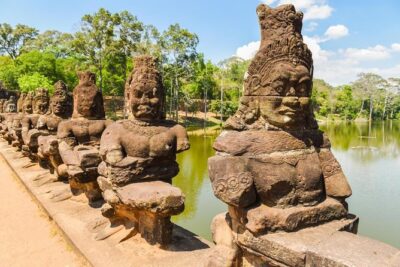
After Angkor Wat, you’ll head into Angkor Thom, the ancient capital city of the Khmer Empire. One of the first moments is the South Gate, one of five gates into the walled city. It’s flanked by rows of 54 stone figures on each side.
Even though this area is one of the most popular stops in the Angkor Wat zone, a good guide makes a difference. You’re not just passing through—you’re learning what you’re looking at and why this gateway mattered when Angkor Thom was at its peak. Descriptions tie it to a time when the city was enormous, even larger than London by comparison.
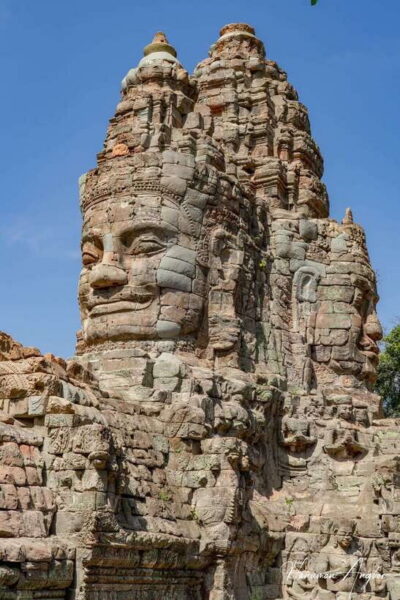
Next comes Bayon, the temple known for its more than 200 enormous stone faces. Bayon was built in the 13th century as the state temple of King Jayavarman VII, and those calm, smiling expressions are the visual hook you’ll remember long after your feet tire.
Bayon also rewards you with another layer: bas-relief storytelling in two modes. Outer galleries are described as featuring scenes tied to historical events and daily life of the Khmer, while inner galleries focus more on mythological events. Your guide’s pacing here matters—if you rush, you miss the “how this art works” feeling. If you slow down, the temple starts to read like a living narrative.
Baphuon and Phimeanakas: palace-temple details most people skip
This part of the day is quieter in spirit, even if you’re still in busy Angkor Thom territory. You’ll visit Baphuon, located northwest of Bayon. It’s a 11th-century temple mountain with three tiers—built as a state temple and connected to royal palace geography.
Baphuon is also interesting because its scale and design are described in a way that makes you look twice. A useful guide will help you notice features and measurements that make the temple feel less like a random pile of stones and more like a planned statement about power. Even the historical context from descriptions (like an account comparing Bayon to a tower of gold and Baphuon to a tower of bronze) is the kind of detail that makes a tour feel curated without being staged.
Then you’ll move inside the royal palace enclosure to Phimeanakas (also spelled Vimeanakas). This one is a temple connected to the palace world and built in the late 10th century, later completed by Suryavarman I. The design is described as a three-tier pyramid with a tower on top, and galleries around the platform edges.
Phimeanakas is a nice change of pace because it’s more about temple structure and sacred placement than face-carving or big outdoor terraces. If you like temple architecture, this stop is a strong reason to choose a guided day rather than a self-guided shuffle.
More temple circuits, set side by side
Terrace of the Elephants and Terrace of the Leper King: story in plain sight
Two stops here turn your day into something more than a photo run. First is the Terrace of the Elephants, a long structure described as 350 meters and used like a ceremonial reviewing stand—almost like an ancient Khmer stadium for public events. It was built in the 13th century under Jayavarman VII.
When you stand along a terrace like this, you get a sense of how the kings addressed crowds and staged authority. A good guide helps you picture the space in use, not just as a monument.
Next is the Terrace of the Leper King—which gets its name from a later sculpture discovery, even though the structure itself dates to the 13th century under Jayavarman VII. Descriptions say the U-shaped structure may have been used for a royal cremation site. The story attached to the name traces back to the depiction of Yama, the Hindu god of death, linked to a 15th-century sculpture found there.
This is the moment where you’ll feel the value of interpretation. Without explanation, terraces can blur together. With the right framing, you see how belief, power, and ritual were built into public spaces.
Secret stops in Angkor Thom: why your guide matters
This tour includes short “secret destination” style moments inside Angkor Thom. The details aren’t fixed in the same way as the big famous names like Bayon or Ta Prohm, but the intent is clear: you’ll be taken to places most visitors don’t see, guided by someone who knows the layout and timing.
If you like the feel of being shown something a little off the main path, these brief detours are often the memories that stick. They also help break the “same set of photos every day” vibe that can happen when you only hit the most photographed corners.
Two short Angkor Thom secret stops are scheduled, each with a brief time window, so think of them as high-impact flavor rather than extra walking time.
Ta Prohm: jungle trees, UNESCO energy, and real photo opportunities
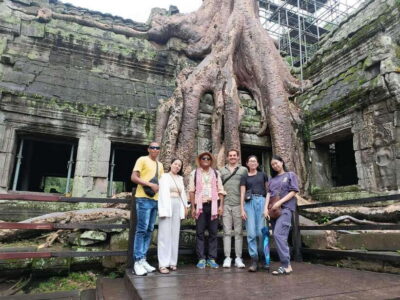
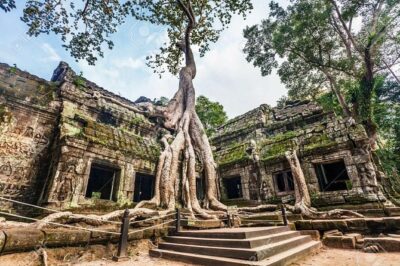
Ta Prohm is the temple people come for when they want atmosphere. It’s known as a jungle-enveloped site—often linked to the Tomb Raider nickname—and it’s described as one of the most atmospheric parts of Angkor. Built in the 13th century, it’s also notable for being in a similar condition to how it was found, making the trees-and-stone combination feel immediate rather than “restored for visitors.”
You’ll have about 1 hour here, which is a good amount of time. There’s plenty to look up at the roots, check the framing on doorways and corridors, and find photo angles where the ruins blend into the greenery instead of looking like separate objects.
Ta Prohm is also UNESCO-listed (1992), and descriptions add an extra layer: during the 12th and 13th centuries, it functioned as a religious temple in the center of what’s described as the Ancient Khmer University. A guide’s explanation helps you move beyond the movie-set vibe and understand why this place was designed the way it was.
Lunch, breaks, and photo time without losing momentum
You’ll enjoy lunch at a restaurant near the temple area with cold drinks. That’s not just a comfort stop; it’s a realistic way to reset before the next round of walking and heat.
The schedule also includes photo opportunities. The trick is using those moments well. If you wait until you’re exhausted, you’ll rush the photos and miss the details. If you treat photo stops as short pauses—look, shoot, and move—you keep the day feeling fun instead of tiring.
Since this is a private day, you can ask for small changes. In recent outings, Sim showed how flexible the flow can be when people needed a breather. That kind of human adjustment is a big part of why a private tour can feel worth it compared with rigid group circuits.
Price and admission fees: what $30 really means
At $30 per person, the value here is mostly in what’s included beyond the monuments: English-speaking tour guide, private vehicle, hotel pickup/drop-off, bottled water, and lunch with cold drinks. You also get multiple major temples in one long day, plus the interpretation that ties it all together.
The one cost you must treat separately is Angkor Wat’s admission fee. In the itinerary details, Angkor Wat is marked admission not included, while many other listed stops are marked as free. So you’re likely paying most of the ticket cost only where needed, instead of paying full admission for every single stop.
If you’re trying to make the math work, plan like this:
- budget the tour price ($30)
- budget the separate Angkor Wat temple entry fee
- wear the right clothes and shoes so you’re not stuck turning back at sacred areas
Also note: your guide will send a link to purchase a temple entrance e-ticket days in advance. This saves time on the day, and the “mobile ticket” idea is meant to simplify entry.
What to wear: knees, shoulders, and shoes that don’t betray you
This is practical, but it matters. For some sacred places, you need clothing that covers knees and shoulders. Casual clothing is fine, but plan ahead so you don’t end the day at risk of being turned away.
Wear flat shoes you’ve already broken in. Temple paths can be uneven, and the day is long enough that new shoes turn into a punishment quickly.
If you want a simple packing checklist for a hot day:
- covered, breathable top
- shorts or pants that cover knees
- comfortable flat shoes
- light layer for sun and humidity
- small water habit (even with bottled water provided)
Who this private Angkor day trip suits best
This tour fits best if you want:
- a private day with hotel pickup
- a guide who explains what you’re seeing, not just where to walk
- the chance to visit Angkor Wat from the Eastern side and then continue through Angkor Thom
- a full Angkor sampling without turning it into a marathon of random navigation
It’s also a strong choice for couples, families with older kids, and anyone who prefers a calmer pace over group sprinting. If your ideal travel day is “see the big sights, understand the meaning, and still feel human at the end,” this one is built for you.
Should you book this Lost City and Angkor Wat tour?
I’d book it if you care about how the day is structured. The Eastern-side approach to Angkor Wat, the guided explanation of bas-reliefs and temple symbolism, and the inclusion of lunch and bottled water make it a straightforward value play for a private day.
Skip it or rethink if you know you don’t want to pay extra for Angkor Wat’s admission fee, or if long temple walking doesn’t match your energy level. Also, if you’re hoping to only spend time in the most famous spots and ignore the less crowded corners, you may find the appeal depends heavily on the guide’s pacing—which, from recent experiences with Sim and Rith, seems to be a real strength.
FAQ
How long is the tour?
The tour lasts about 8 hours.
Do you pick me up from my hotel in Siem Reap?
Yes. Hotel pickup and drop-off are included, and pickup is offered.
Is Angkor Wat admission included in the price?
No. The Angkor Wat admission fee is not included. Your guide will send a link to purchase the temple entrance e-ticket in advance.
Are the other temple stops included without extra tickets?
Many of the other listed stops are marked as admission ticket free in the schedule.
Is the guide English speaking?
Yes, the tour includes an English speaking tour guide.
Is this tour private?
Yes. It’s private, and only your group participates.
What should I wear for the temples?
For some sacred places, you need clothes that cover your knees and shoulders. Flat shoes that are comfortable for walking are also recommended.
Is lunch included?
Yes. You’ll have lunch at a restaurant near the temple, with cold drinks.
What is the cancellation rule?
You can cancel for free up to 24 hours in advance for a full refund.
Just Your Group: Private Days
- Full-Day Angkor Wat Sunrise Private Tour with Guide from Siem Reap
★ 5.0 · 2,920 reviews - Siem Reap: Angkor Wat Private Tuk-Tuk Tour
★ 4.9 · 2,222 reviews - Angkor Wat Private Day Tour from Siem Reap
★ 5.0 · 834 reviews - Angkor Wat Private Tuk-Tuk Tour (sunrise Option) & more
★ 5.0 · 439 reviews - Private Angkor Wat Day Tour – Best of Angkor
★ 5.0 · 269 reviews
More Temple Circuits Around Siem Reap
- Angkor Wat Sunrise or Sunset Tour with Guide from Siem Reap
★ 5.0 · 12,109 reviews - Siem Reap: Angkor Wat: Small-Group Sunrise or Sunset Tour
★ 5.0 · 9,444 reviews - Siem Reap: Angkor Wat 2-Day Tour with Sunrise and Sunset
★ 4.9 · 4,429 reviews - Siem Reap: Full-Day Angkor Wat Guided Tour with Sunset
★ 4.9 · 3,803 reviews - Angkor Wat Sunrise tour with Small – Group and Guide tours
★ 5.0 · 3,655 reviews
Angkor Wat, a Few More Ways In
- Angkor Wat Sunrise or Sunset Tour with Guide from Siem Reap
★ 5.0 · 12,109 reviews - Siem Reap: Angkor Wat: Small-Group Sunrise or Sunset Tour
★ 5.0 · 9,444 reviews - Siem Reap: Angkor Wat 2-Day Tour with Sunrise and Sunset
★ 4.9 · 4,429 reviews - Siem Reap: Full-Day Angkor Wat Guided Tour with Sunset
★ 4.9 · 3,803 reviews - Angkor Wat Sunrise tour with Small – Group and Guide tours
★ 5.0 · 3,655 reviews
Just Added: Fresh Siem Reap Tour Reviews

Angkor Wat Temple Tours, compared.
 ★ 5.0Angkor Wat Sunrise or Sunset Tour with Guide from Siem ReapFrom $1812,109 reviews
 ★ 5.0Angkor Wat: Small-Group Sunrise or Sunset TourFrom $159,444 reviews
 ★ 4.9Angkor Wat 2-Day Tour with Sunrise and SunsetFrom $344,429 reviews
 ★ 4.9Full-Day Angkor Wat Guided Tour with SunsetFrom $153,803 reviews
 ★ 5.0Angkor Wat Sunrise tour with Small – Group and Guide toursFrom $143,655 reviews
 ★ 5.0Angkor Wat Highlights and Sunrise Guided Tour from Siem ReapFrom $233,213 reviews
 ★ 5.0Angkor Wat Sunset Small Group Tour with Lunch IncludedFrom $203,059 reviews
 ★ 5.0Full-Day Angkor Wat Sunrise Private Tour with Guide from Siem ReapFrom $602,920 reviews
Browse the lists this tour appears in