
Reviewed · ANGKOR TEMPLE TOURS
Full-day Private VIP Tour to Angkor Complex
A private Angkor day saves energy and stress. You get a driver-led route through the big hitters, plus cold water, towels, and return transport so you can focus on temples, not logistics. The pace is flexible, and you’re not squeezed into someone else’s timeline.
I especially like the Baphuon approach—there’s a 225m elevated sandstone walkway with a pavilion mid-way that sets you up for the views over Angkor Thom. I also love that Bayon is treated as more than a quick stop: its towers once had 49 faces facing the four cardinal directions, and you can actually take in what that symmetry means in person.
One consideration: tickets to the temples aren’t included, so your final cost depends on what you choose to pay at each site. Also, if you’re expecting constant, photo-style guidance at every minute, you’ll want to set that expectation early—temples are close in map terms, but you still spend time traveling between them.
In This Review
- Key things to know before you go
- A VIP day at Angkor: less waiting, more seeing
- Price and value: what $84 really buys
- How the day flows: from South Gate to Angkor Wat
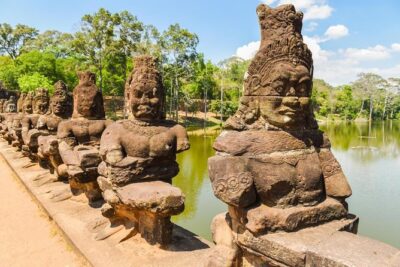
- Angkor Thom South Gate: churning of the ocean
- Bayon Temple: the face towers that change as you walk
- Baphuon: the elevated walkway and the Angkor Thom views
- Phimeanakas: royal palace enclosure stop
- Terrace of the Elephants: pomp, power, and perspective
- Chau Say Tevoda and Thommanon: small but meaningful Brahmanism sites
- Takeo: the 40m five-level pyramid
- Banteay Kdei: calmer ruins and chamber maze energy
- Ta Prohm and Angkor Wat: the cinematic stops
- Ta Prohm: the jungle-temple mood
- Angkor Wat: timing for sunset and the scale factor
- The driver + flexibility combo that makes it feel personal
- What I’d watch out for
- Is this the right tour for you?
- FAQ
- FAQ
- What does the tour price include?
- Are temple entrance fees included?
- How long is the private VIP Angkor Complex tour?
- Do I need to buy a mobile ticket?
- Is this tour private, or do I share it with other groups?
- Will I have an English-speaking driver?
- Does it include transportation back to my accommodation?
- Which main temples are included in the day?
- Can the itinerary be adjusted to my preferences?
- What is the cancellation policy?
- Should you book this private Angkor tour?
Key things to know before you go
- Private vehicle with hotel pickup/drop-off so you start and end the day without haggling
- English-speaking driver who can explain history and culture as you go
- Angkor Thom highlights like Bayon, Baphuon, Phimeanakas, and the Terrace of the Elephants
- Ta Prohm for that jungle-temple vibe made famous by the Hollywood film Tomb Raider
- Sunset timing with Angkor Wat as the natural capstone
More temple circuits, set side by side
- Angkor Wat Sunrise or Sunset Tour with Guide from Siem Reap★ 5.0 · 12,109 reviews
- Siem Reap: Angkor Wat: Small-Group Sunrise or Sunset Tour★ 5.0 · 9,444 reviews
- Siem Reap: Angkor Wat 2-Day Tour with Sunrise and Sunset★ 4.9 · 4,429 reviews
- Siem Reap: Full-Day Angkor Wat Guided Tour with Sunset★ 4.9 · 3,803 reviews
A VIP day at Angkor: less waiting, more seeing
Angkor’s scale can feel like a trick. One minute you’re staring at carvings and towers; the next minute you’re crossing a wide compound where the “main” photo spot is only part of the story. This kind of private setup helps because you’re not fighting your way through tour buses at every stop.
The practical wins start right at pickup. You’re collected from your accommodation, and the tour includes return transport, plus parking fees and basic tourist information. You also get cold water and a towel, which is genuinely useful in Siem Reap heat, especially when you’re walking temple grounds back to back.
This is also a true “restricted to your group” experience. That matters because you can linger where you care most and move on when you’re done. If you want to add a local-village detour or shift toward a more authentic meal, you can adjust the day around your preferences.
Price and value: what $84 really buys
At about $84 for a full day with a private vehicle and English-speaking driver, the value is strong—especially for couples, friends, or small families. You’re paying for convenience, time, and a calmer rhythm than a bus group.
But the big budget item is temple entrance fees. They’re not included, and Angkor’s site access costs can affect your total. If you’re trying to keep costs predictable, calculate entrances ahead of time and budget for them on top of the $84.
Where this tour can feel especially worth it is when you want the “greatest hits” plus context. The driver isn’t just a chauffeur; you can expect history and culture explanations in English, and that can turn a pile of stones into something that makes sense.
How the day flows: from South Gate to Angkor Wat
The day is structured as a full circuit through major Angkor landmarks, with short to medium temple stops so you still have time for the big moments. Think of it as two blocks: Angkor Thom first, then the wider complex stops toward Takeo, Banteay Kdei, Ta Prohm, and Angkor Wat.
Your biggest advantage is that you’re not stuck guessing between locations. You’ll be in motion through the same classic roads and temple clusters that most visitors try to cover—and doing it with return transport from your hotel makes a huge difference at the end of the day.
Angkor Thom South Gate: churning of the ocean
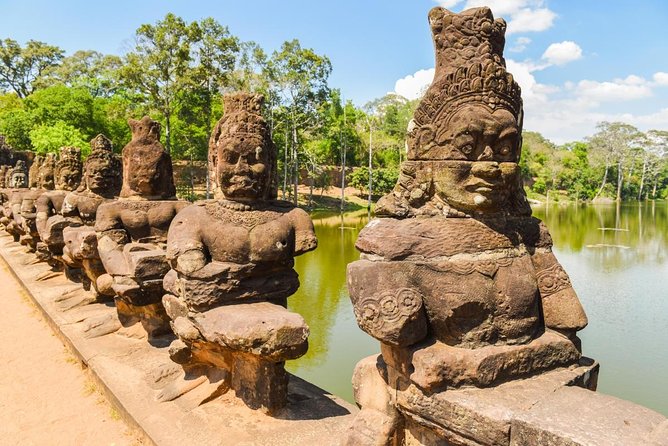
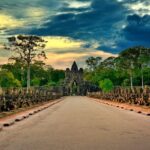
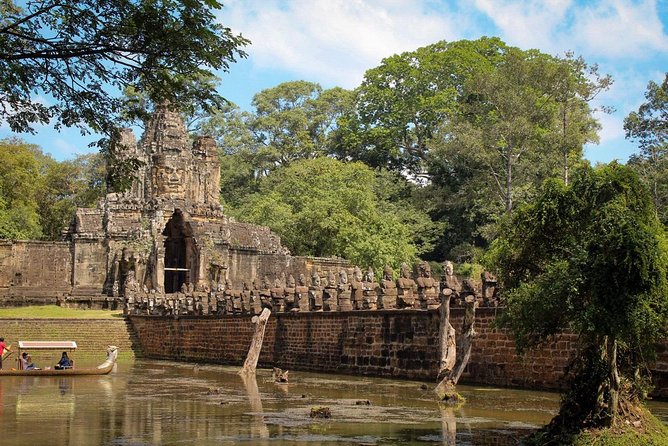
You start at Angkor Thom South Gate, and the standout theme is the churning of the ocean of milk. Gates in Angkor can feel like “just entrances,” but this one sets a tone—religious storylines are carved into the very way you pass through.
This is a shorter stop (about 20 minutes), so it’s best as a warm-up. You’ll want to take a few minutes to look at details before you move on, because later temples will demand your attention in a big way.
Just your group, at your own pace
Bayon Temple: the face towers that change as you walk
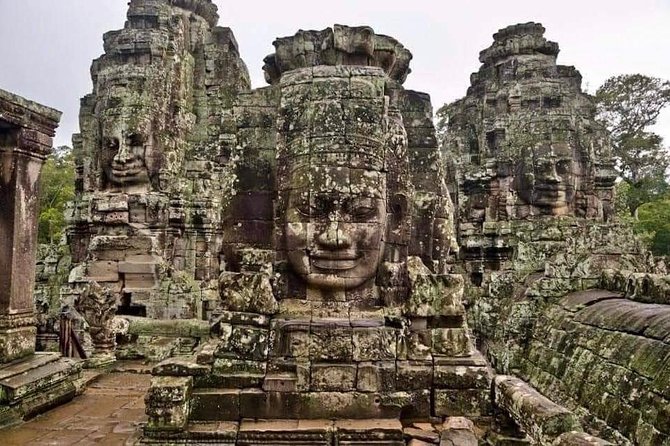
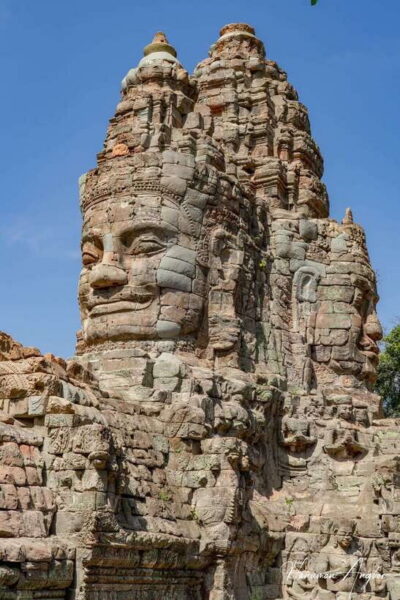
Bayon is the temple most people remember after Angkor. It’s famous for its many serene faces carved on towers, and the concept is even bigger than it sounds: originally there were 49 towers decorated with faces looking in the four cardinal directions.
You’ll spend about an hour here, which is the right amount if you want to walk slowly. Don’t treat the faces as a single viewpoint. Their expressions feel different from different angles, and the architecture makes you naturally orbit and re-check what you’re seeing.
If you’re the kind of traveler who likes a “site makes sense” moment, this is it. Bayon is where you start to understand how Khmer design blends religion, kingship, and visual storytelling into one space.
Baphuon: the elevated walkway and the Angkor Thom views
Next is Baphuon, known for its elevated sandstone walkway approach: it’s about 225m long, and there’s a pavilion about halfway along. That pacing matters. You’re not just walking up to a temple; you’re moving along a built-in viewpoint.
The stop is about 35 minutes, and you’ll get the best value by slowing down at the mid-way pavilion. From there you get a better sense of how Baphuon sits within Angkor Thom’s landscape.
Phimeanakas: royal palace enclosure stop
Phimeanakas sits inside the enclosure of the Royal Palace of Angkor Thom, north of Baphuon. It’s a smaller stop (about 25 minutes), but it’s useful because it connects the dots between religious temple space and royal authority.
When you’re moving quickly through Angkor Thom, it’s easy to think every structure is the same. This is a good reminder that the complex included official spaces tied to the king’s world.
Terrace of the Elephants: pomp, power, and perspective
At the Terrace of the Elephants (about 25 minutes), the big idea is the scale of public ceremony. The terrace served as a giant viewing stand for major gatherings and was also tied to the king’s grand audience hall.
If you imagine the king’s court in use—infantry, cavalry, horse-drawn chariots, and elephants—you’ll start to see why the terrace is so designed. It’s meant for spectacle and controlled sightlines.
Chau Say Tevoda and Thommanon: small but meaningful Brahmanism sites
You’ll hit two temples near the Victory Gate area: Chau Say Tevoda (about 20 minutes) and Thommanon (about 20 minutes). Both are dedicated to Brahmanism and were built in the late 11th and early 12th centuries under King Suryavarman II.
These stops are shorter by design, but that can actually work in your favor. They’re a welcome change from the biggest, most crowded photo magnets because they let you focus on form and detail without rushing.
Takeo: the 40m five-level pyramid
Takeo comes next for about 25 minutes. It’s described as a pyramid of five levels, reaching roughly 40m tall, built in a way that includes enclosing courtyards and galleries.
This is a strong “step back and see the whole structure” stop. With a multi-level pyramid, you’ll get more out of it if you pause long enough to understand how the levels relate to each other.
Banteay Kdei: calmer ruins and chamber maze energy
Banteay Kdei is peaceful and quiet, and its name means Citadel of Chambers. That’s a good description of what you’ll feel here: the ruins form a maze of chambers that rewards slower exploration.
You’re given about 30 minutes, which is enough to wander a few paths without feeling like you need to map the whole site. If you’re a photography person, the softer mood can help because you’re not only hunting for one signature shot.
Ta Prohm and Angkor Wat: the cinematic stops
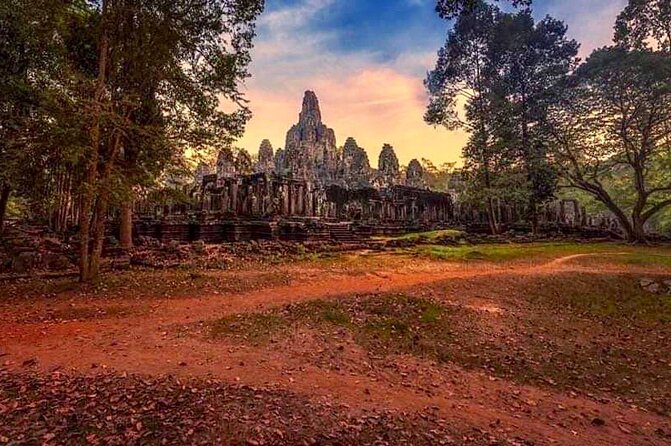
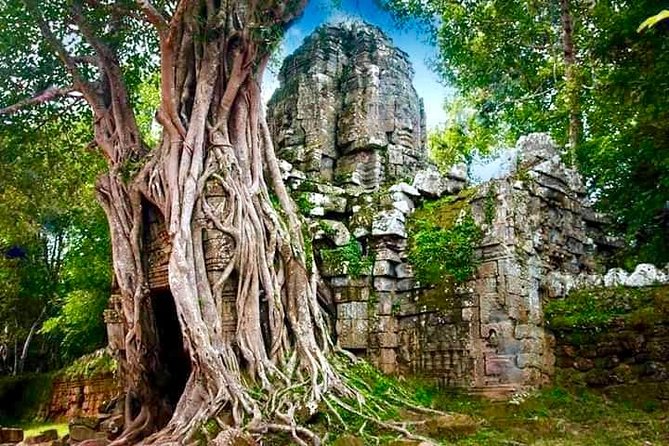
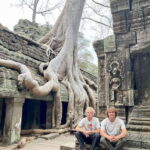
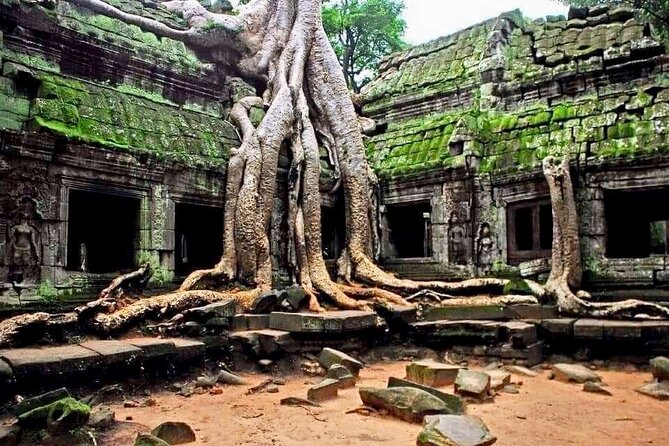
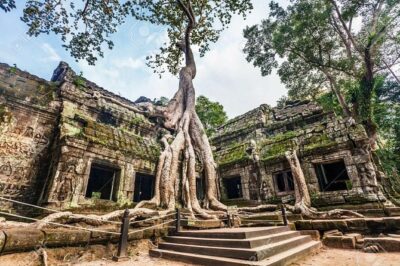
Two temple experiences tend to change people’s day: Ta Prohm and Angkor Wat. Ta Prohm is famous because it looks like nature is taking over, and it was used as a set for the Hollywood movie Tomb Raider.
Ta Prohm: the jungle-temple mood
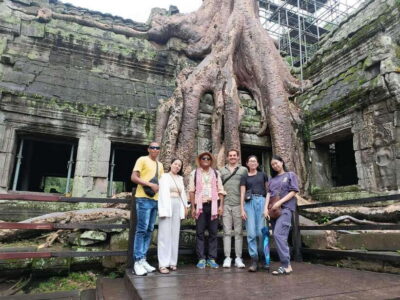
At about 1 hour, Ta Prohm gives you time to slow down. The atmosphere is the point here: it’s less about perfect symmetry and more about how the temple and surrounding trees create a lived-in scene.
If you love seeing how films shaped tourism, this stop is where you’ll feel that connection. Just remember: the real value is the lived texture—the roots, stones, and layered light—more than the movie reference.
Angkor Wat: timing for sunset and the scale factor
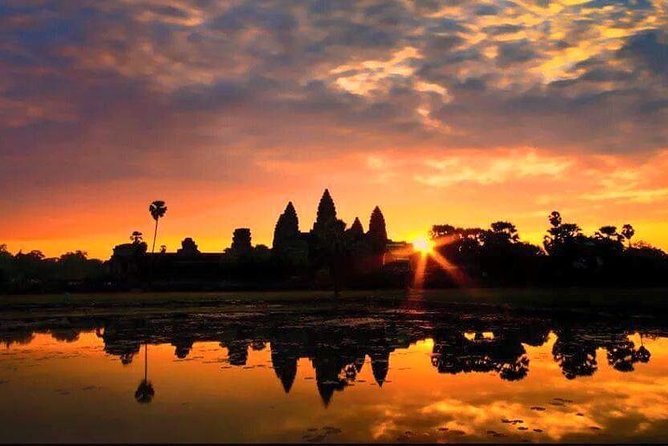
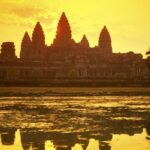
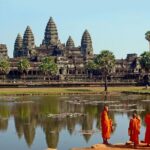
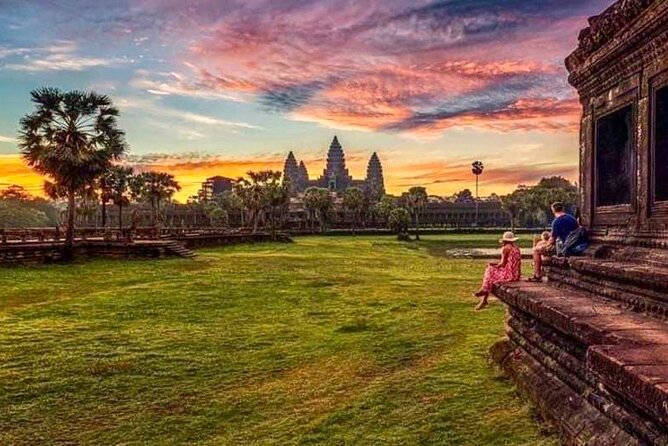
Finally, you reach Angkor Wat, and you’ll spend about 2 hours. This is the biggest Hindu temple in the world, and it’s a place people often plan around sunrise or sunset.
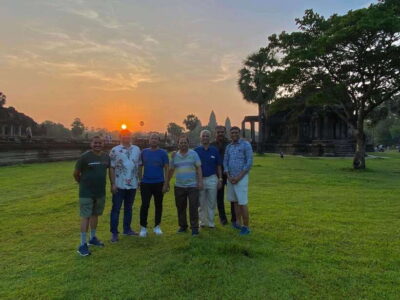
Your tour includes sunset, so Angkor Wat is a natural place to experience that light shift. Even if you don’t chase sunrise, the late-day glow can make the stone feel different, and the open compounds help you see the temple’s proportions more clearly.
If you’re deciding how much energy to save, this is the spot to conserve for. By the time you arrive, you’ll be grateful you have the time to take in the scale instead of rushing through.
The driver + flexibility combo that makes it feel personal
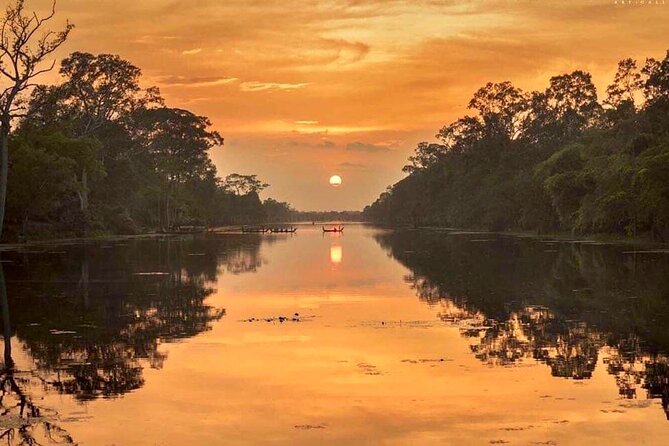
A good driver can make or break a day like this. Here, you get an English-speaking driver and a private vehicle, which helps you avoid the friction that comes with bus tours. The driver can also adjust the day according to your interests, including local villages or more authentic cuisine if you want that kind of add-on.
One thing to do: decide what you care about most before you go. If you’re temple-nerdy, ask for more explanation at Bayon and Baphuon. If you’re more into atmosphere and photos, prioritize Ta Prohm and then give Angkor Wat time for the light and viewpoints.
Also, pay attention to how you want the day paced. If you prefer fewer stops with more time at each, you should say so up front. This route is packed with major sites, and some travelers find that the day feels fast even when it’s private.
What I’d watch out for
The tour is marketed as VIP, but “VIP” mainly means private access and comfort—not unlimited time at every single structure. Temple sites can take longer than expected if the lighting is great, crowds build, or you stop to really read details.
Entrance fees are the other realistic factor. Since those tickets aren’t included, your total spend will rise once you’re on the ground. If you’re traveling on a tight budget, build that into your planning rather than treating the $84 as the full cost.
Finally, consider your expectations for guidance. If you want very active, hands-on direction for the best views and photo angles at each stop, it’s smart to ask your driver what approach they’ll take and how much narration you’ll get at each temple.
Is this the right tour for you?
This is a strong match if you want:
- A private Angkor day with hotel pickup and return transport
- An English-speaking guide/driver who can explain what you’re seeing
- A classic “greatest hits” route through Angkor Thom, Ta Prohm, and Angkor Wat
- A relaxed day structure with a bit of flexibility for your own preferences
It’s less ideal if:
- You want a strict, photo-optimized itinerary built around specific shot lists
- You’re trying to keep the day’s total cost as low as possible once temple entrances are added
- You dislike a route that moves between several major sites in one long day
FAQ
FAQ
What does the tour price include?
The tour includes pickup and drop-off to your hotel, a private vehicle, an English-speaking driver, parking fees, tourist information, cold water and a towel, and sunset. Mobile ticket is mentioned as well.
Are temple entrance fees included?
No. Temple entrance fees are not included.
How long is the private VIP Angkor Complex tour?
It runs about 8 to 10 hours.
Do I need to buy a mobile ticket?
The tour includes a mobile ticket.
Is this tour private, or do I share it with other groups?
It’s a private tour/activity, restricted to your group only.
Will I have an English-speaking driver?
Yes, the tour includes an English speaking driver.
Does it include transportation back to my accommodation?
Yes, return transportation to your accommodation is included.
Which main temples are included in the day?
You’ll visit Angkor Thom South Gate, Bayon Temple, Baphuon Temple, Phimeanakas, the Terrace of the Elephants, Chau Say Tevoda, Thommanon, Takeo, Banteay Kdei, Ta Prohm, and Angkor Wat.
Can the itinerary be adjusted to my preferences?
Yes. The tour can be adjusted according to your interests and preferences, including adding local villages or authentic cuisine.
What is the cancellation policy?
Free cancellation is offered. You can cancel up to 24 hours in advance for a full refund.
Should you book this private Angkor tour?
If you want a smooth, private day that hits the major Angkor temples with explanations and a sunset finale, this is a solid choice. The combination of hotel pickup/drop-off, cold water and towel, and an English-speaking driver gives you real value for an $84 base price—just remember to budget for temple entrance fees.
If your ideal day is all about slowing down at fewer spots or getting very specific photo-direction, message the provider in advance about your expectations and walking pace. For most people, though, this is the kind of Angkor day that feels organized, calm, and genuinely memorable.
More Tour Reviews in Siem Reap
- Angkor Wat Sunrise or Sunset Tour with Guide from Siem Reap
★ 5.0 · 12,109 reviews - Siem Reap: Angkor Wat: Small-Group Sunrise or Sunset Tour
★ 5.0 · 9,444 reviews - From Siem Reap: Kampong Phluk Floating Village Tour by Boat
★ 4.9 · 6,979 reviews - Sunset tour of Kampong Phluk stilts home village on the Tonle Sap
★ 5.0 · 4,865 reviews - Siem Reap: Angkor Wat 2-Day Tour with Sunrise and Sunset
★ 4.9 · 4,429 reviews
Just Your Group: Private Days
- Full-Day Angkor Wat Sunrise Private Tour with Guide from Siem Reap
★ 5.0 · 2,920 reviews - Siem Reap: Angkor Wat Private Tuk-Tuk Tour
★ 4.9 · 2,222 reviews - Angkor Wat Private Day Tour from Siem Reap
★ 5.0 · 834 reviews - Angkor Wat Private Tuk-Tuk Tour (sunrise Option) & more
★ 5.0 · 439 reviews - Private Angkor Wat Day Tour – Best of Angkor
★ 5.0 · 269 reviews
More Temple Circuits Around Siem Reap
- Angkor Wat Sunrise or Sunset Tour with Guide from Siem Reap
★ 5.0 · 12,109 reviews - Siem Reap: Angkor Wat: Small-Group Sunrise or Sunset Tour
★ 5.0 · 9,444 reviews - Siem Reap: Angkor Wat 2-Day Tour with Sunrise and Sunset
★ 4.9 · 4,429 reviews - Siem Reap: Full-Day Angkor Wat Guided Tour with Sunset
★ 4.9 · 3,803 reviews - Angkor Wat Sunrise tour with Small – Group and Guide tours
★ 5.0 · 3,655 reviews
Just Added: Fresh Siem Reap Tour Reviews

Angkor Temple Tours, compared.
 ★ 5.0Angkor Wat Sunrise or Sunset Tour with Guide from Siem ReapFrom $1812,109 reviews
 ★ 5.0Angkor Wat: Small-Group Sunrise or Sunset TourFrom $159,444 reviews
 ★ 4.9Angkor Wat 2-Day Tour with Sunrise and SunsetFrom $344,429 reviews
 ★ 4.9Full-Day Angkor Wat Guided Tour with SunsetFrom $153,803 reviews
 ★ 5.0Angkor Wat Sunrise tour with Small – Group and Guide toursFrom $143,655 reviews
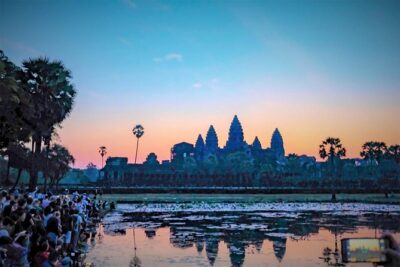 ★ 5.0Angkor Wat Highlights and Sunrise Guided Tour from Siem ReapFrom $233,213 reviews
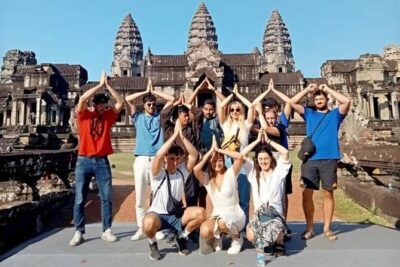 ★ 5.0Angkor Wat Sunset Small Group Tour with Lunch IncludedFrom $203,059 reviews
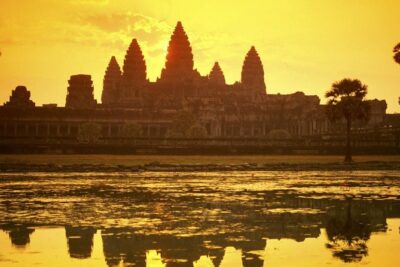 ★ 5.0Full-Day Angkor Wat Sunrise Private Tour with Guide from Siem ReapFrom $602,920 reviews