
Reviewed · ANGKOR TEMPLE TOURS
Full Day Temples Explorer – Small Group
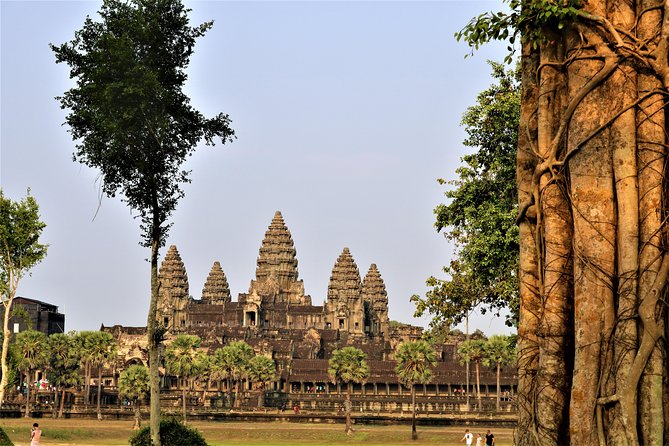
Morning Angkor feels different when you start early. This Full Day Temples Explorer packs the key sights—especially Angkor Wat—into one calm, small-group day built around a compact route. You get a licensed English-speaking guide, hotel pickup, and an air-conditioned ride, so you can focus on temples instead of logistics.
I like the way the route mixes the big icons with the in-between moments. Angkor Wat gets time to take it all in, and Ta Prohm is scheduled after lunch when you can reset and still catch that jungle-temple mood. I also love that the group size stays small enough that your guide can keep the flow human, not factory-fast.
One consideration: the $19 tour price does not include the temple pass, which you pay directly at the sites. Plan on adding that on top, or you’ll end the day doing math you didn’t pack.
In This Review
- Key highlights at a glance
- What this tour does well: an 8-hour Angkor plan that stays workable
- Angkor Wat: the day’s main event, scheduled first
- South Gate of Angkor Thom: short stop, big first impression
- Bayon Temple: face towers and the feeling of a living city
- Terrace stops: quick glimpses that add texture to the story
- Srah Srang lunch break: a needed pause inside the route
- Ta Prohm: jungle atmosphere and why it lands differently after lunch
- Price and value: $19 tour plus temple pass budgeting
- Guide experience: why Noy and Sok came up for a reason
- Who should book this Full Day Temples Explorer
- Should you book? My take on when this is a smart choice
- FAQ
- How long is the Full Day Temples Explorer?
- What time does the tour start in Siem Reap?
- Is hotel pickup and drop-off included?
- Do I need to pay the temple pass separately?
- Is lunch included?
- What temples are visited during the day?
- Is admission included for each temple?
- How big is the group?
- Is free cancellation available?
Key highlights at a glance
- Angkor Wat first, with about 3 hours to see the monument without feeling rushed
- Small-group feel with a cap that keeps the tour from turning into a crowd parade
- Bayon Temple + Ta Prohm in one day, so you get both carved power and jungle atmosphere
- Guided interpretation, including how the sites connect to Khmer history and what you’re looking at
- Srah Srang lunch stop built into the route, with time to pause during an 8-hour day
More temple circuits, set side by side
- Angkor Wat Sunrise or Sunset Tour with Guide from Siem Reap★ 5.0 · 12,109 reviews
- Siem Reap: Angkor Wat: Small-Group Sunrise or Sunset Tour★ 5.0 · 9,444 reviews
- Siem Reap: Angkor Wat 2-Day Tour with Sunrise and Sunset★ 4.9 · 4,429 reviews
- Siem Reap: Full-Day Angkor Wat Guided Tour with Sunset★ 4.9 · 3,803 reviews
What this tour does well: an 8-hour Angkor plan that stays workable
Angkor can be overwhelming. The whole complex is huge, and if you pick the wrong route you end up sprinting from one famous gate to the next. This tour is built like a smart day: one main anchor temple, a couple of major structures that give you context, then a pair of iconic “wow” stops. The total time is about 8 hours, starting at 8:00 am, which matters because mornings tend to be calmer than later in the day.
You’ll ride in an air-conditioned vehicle, with hotel pickup and drop-off within Siem Reap city. That sounds basic, but in Angkor heat it’s a real comfort factor. The tour also includes mineral water, which helps you stay focused while you’re walking around stone, stairs, and long viewpoints.
The other big win is the small-group setup. The listing describes a small-group experience with a max of 10 people, while also stating a maximum of 15 travelers for the activity. Either way, you’re not in a massive bus crowd, and that changes how the guide can teach and how the group can move.
Angkor Wat: the day’s main event, scheduled first
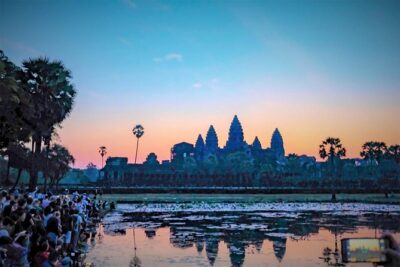
This is the stop most people plan their whole Siem Reap trip around, and the tour gives it the time it deserves. You head straight to Angkor Wat after pickup, and you spend around 3 hours on site. Admission is not included in the $19, but you do get guided time on the monument itself, not just a quick photo lap.
Angkor Wat isn’t only a single viewpoint. It’s a whole sacred design in layers—outer space, then more structured areas, then the heart of the complex. With 3 hours, you have enough room for the rhythm that makes the site click: look outward to understand the scale, then slow down for the details and align what you see with what your guide explains.
It’s also the best place to start because it sets the tone for the rest of the day. Once you’ve got the Angkor Wat “grammar” in your head, the later temples read more clearly. You’ll understand why Bayon feels different, why Ta Prohm feels dramatic, and why Angkor Thom’s gates matter.
Practical tip from a reviewer-type angle: if you want photos, you’re typically more effective when you’re not also trying to catch up to the group. This tour’s pacing helps you keep up without feeling like you’re being herded.
South Gate of Angkor Thom: short stop, big first impression
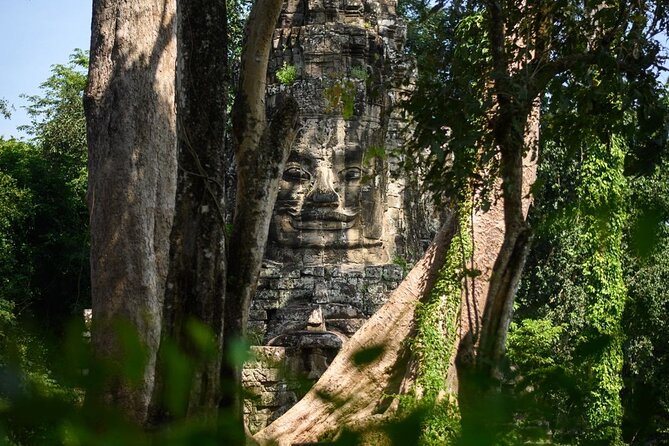
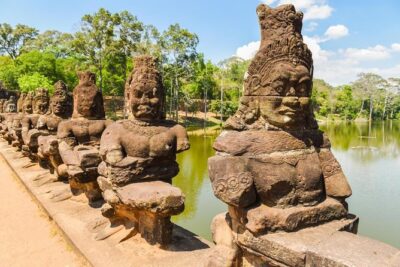
After Angkor Wat, the route moves you to Angkor Thom’s South Gate. This is one of those places where you can get a lot out of a short visit. The gate is flanked by rows of stone figures—gods on one side and demons on the other—plus the feel of a fortified city entry point.
Your time here is about 30 minutes, and admission is not included. That time window is intentional. You’ll get oriented to the scale and storytelling of the gate without losing the rest of the day. If you tried to turn this gate into a long museum-style stop, it would squeeze the temples that actually need longer blocks of time.
This is also a good “reset” stop between the intensity of Angkor Wat and the face-filled experience of Bayon. Gates and entryways help you shift mental gears: you stop thinking only about one monument and start thinking about a whole urban religious landscape.
Bayon Temple: face towers and the feeling of a living city
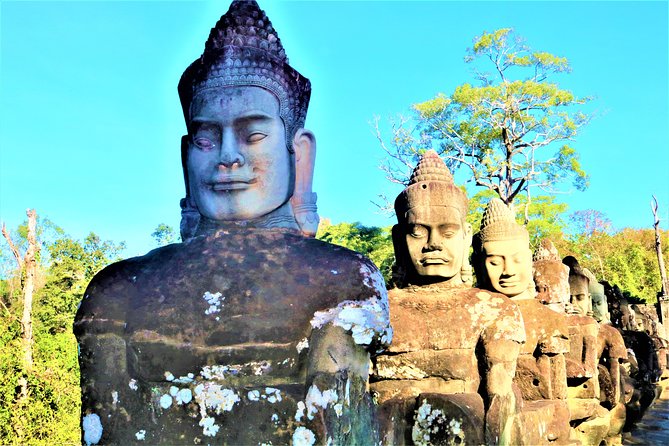
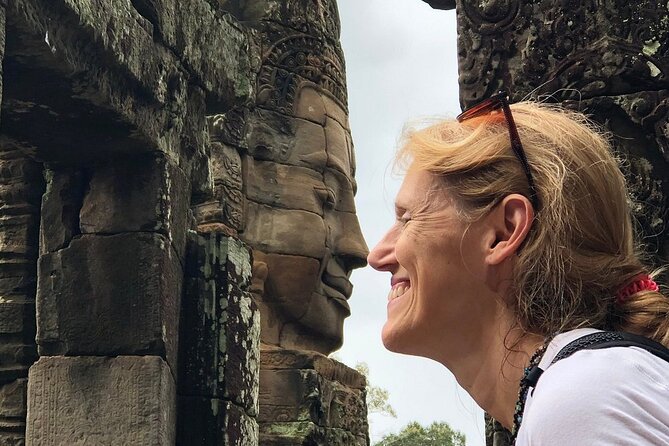
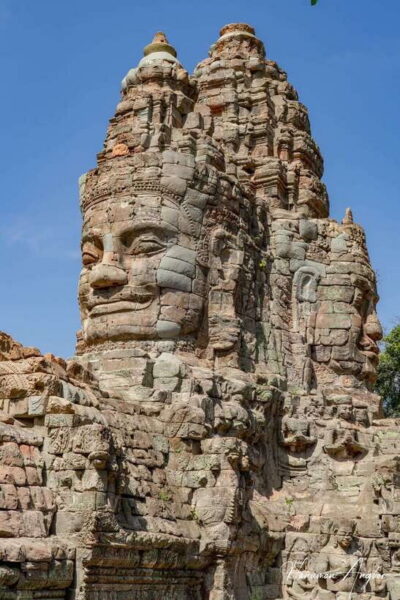
Bayon Temple is next, with about 1.5 hours on site. This is where the tour really delivers that signature Angkor feeling: carved stone towers topped with more than 200 enormous faces. The listing calls out those central towers directly, and that’s the visual center of Bayon.
Bayon also sits inside the broader idea of a Khmer imperial capital. Your guide explains the background as you arrive, which helps the architecture stop being just stone and start feeling intentional. With 1 hour 30 minutes, you have time to experience Bayon as both exterior drama and interior exploration.
Here’s the value of a guided stop at Bayon: it’s easy to wander and think you’re just looking at faces. Your guide’s job is to help you see what the design is doing and why the site layout matters. Reviewers highlighted guides like Noy and Sok for explaining both temple details and country context, and that kind of interpretation is exactly what makes Bayon click.
Other full days worth the early start

Terrace stops: quick glimpses that add texture to the story
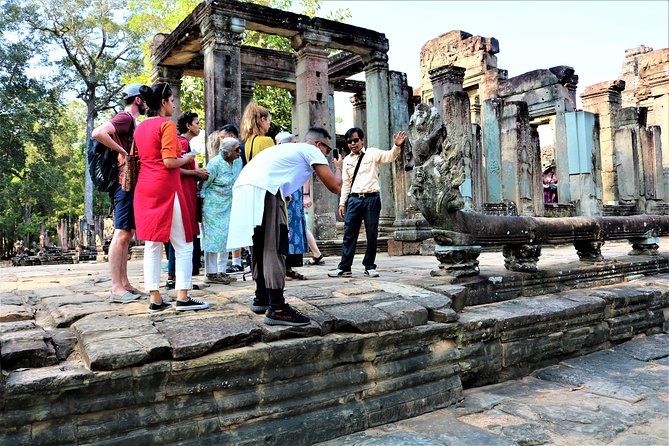
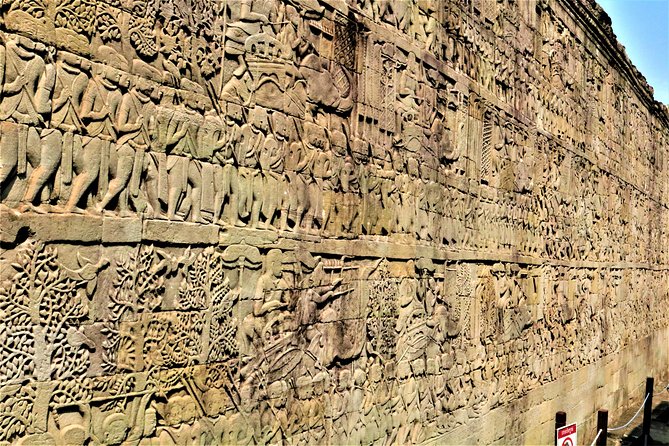
In between Bayon and the later temple, the tour passes by the famous Terrace of the Leper King and the Terrace of Elephant. These aren’t listed as full stops with set time the way Angkor Wat, Bayon, and Ta Prohm are. But they do matter because they add texture.
Even as pass-by moments, terraces like these help you understand Angkor Thom as more than a single picture-perfect gate or one temple cluster. You start seeing how the city space was used—ritual, power, display—rather than only temple worship in isolation.
If you want a day that gives you both the headline temples and the connective tissues, this kind of “brief but included” stop style works.
Srah Srang lunch break: a needed pause inside the route
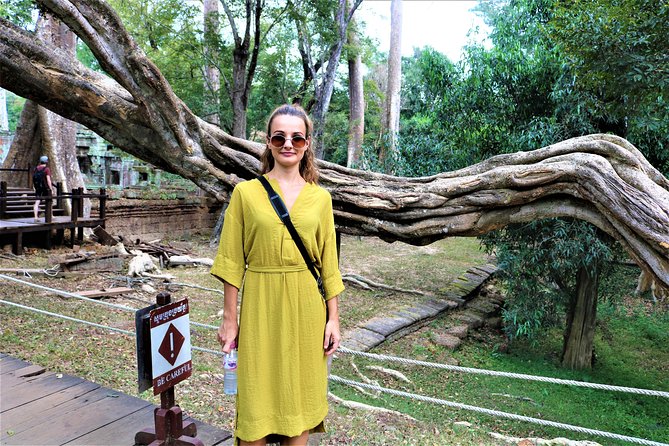
Between temples, the tour includes Srah Srang, with a scheduled lunch break at a Khmer local restaurant. The itinerary lists lunch as included at that stop, and Srah Srang itself is noted as admission free.
That matters because half the battle on a long temple day is not the temples—it’s staying functional. After Bayon, your body will want a break. This lunch pause does two things at once: it gives you time to eat without derailing the route, and it breaks up the walking stretch so Ta Prohm feels fresh instead of exhausted.
Also, Srah Srang is a reminder that Angkor includes more than stone towers. This stop helps make the day feel less like a photo checklist and more like a coherent morning through Khmer spaces. Even if you’re mainly in it for Angkor Wat and Ta Prohm, this break keeps the day from turning into temple burnout.
Ta Prohm: jungle atmosphere and why it lands differently after lunch
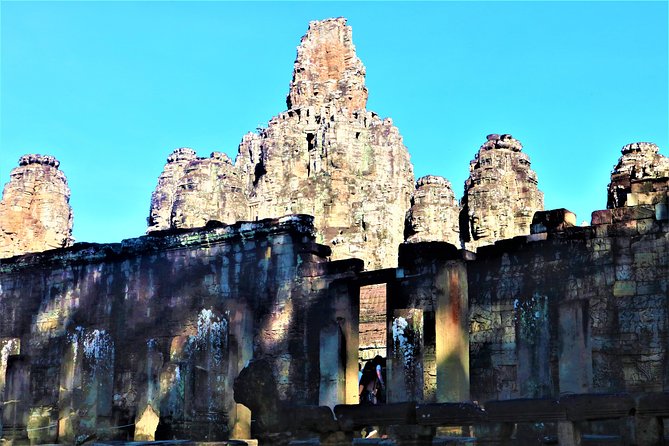
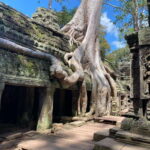
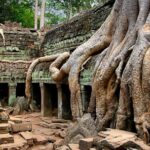
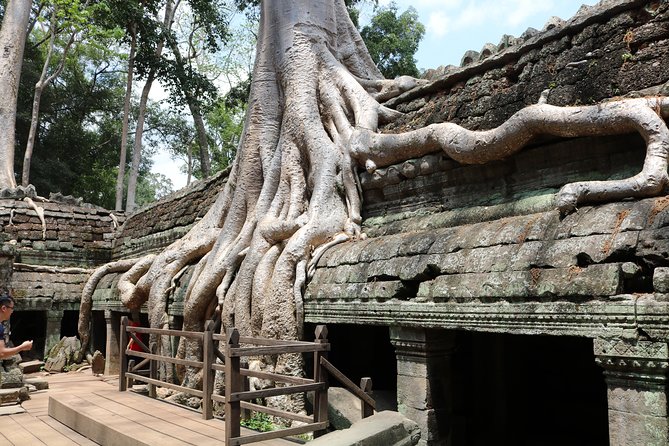
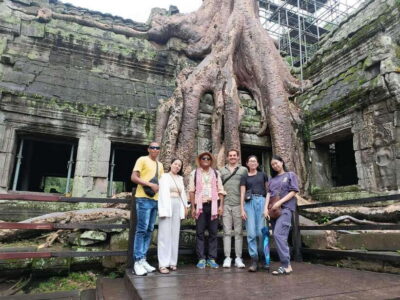
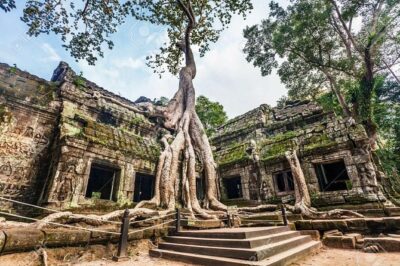
The final major temple on the route is Ta Prohm, with about 1.5 hours. This is the one people often describe with a strong visual memory: temple structures that feel braided into the jungle. The listing notes it as one of the most atmospheric temples in the complex, and it also includes an important detail—that it once housed 2,740 monks.
That background changes how you look at the ruins. Instead of only seeing “nature taking over,” you can start thinking about how the site functioned and how that monastic presence shaped the architecture. Your guide’s explanations help you connect the story to what’s in front of you.
Ta Prohm also benefits from being scheduled toward the end of the morning-to-early-afternoon window. After lunch, you’re more alert, and you have enough time to wander the interior spaces without turning it into a frantic sprint. The listing specifically mentions exploring the maze-like interior, and that’s exactly what Ta Prohm offers: you get to move through the structure rather than only stand outside.
Price and value: $19 tour plus temple pass budgeting
The tour price is $19.00 per person, booked on average about 10 days in advance, with an 8-hour duration. That’s the tour component. The part you must budget separately is the temple pass, listed at $37.00 per person, which you pay directly at the sites.
So what you’re really buying is not just transportation and a guide—you’re buying a structured route with time blocks that make sense. At this price point, that structure matters. Instead of trying to stitch together your own Angkor day, you get:
- a guide who explains what you’re seeing,
- hotel pickup and drop-off in Siem Reap city,
- air-conditioned transport,
- bottled mineral water,
- and a plan that hits multiple key temples without turning into chaos.
With total costs around $56 per person before lunch add-ons (the lunch stop is listed as included), you’re still in a pretty reasonable range for a full-day guided Angkor experience—especially with the small-group angle.
One thing to keep straight: the temple pass is not included, so don’t wait until the last minute to plan your budget.
Guide experience: why Noy and Sok came up for a reason
This tour stands or falls on the guide. The included package lists an experienced and licensed English-speaking tour guide, and the comments you’ll see attached to this experience emphasize teaching, not just facts.
One review highlights Noy as a strong guide who provided sight-related information and also shared Cambodia background that helped make sense of the country. Another praises Sok for perfect knowledge of Angkor and for sharing history and explanations throughout the day. Those are the exact traits that change your experience of Bayon and Ta Prohm, where it’s easy to get lost in the visuals if you don’t know what you’re looking for.
Even the review wording about “just the right amount of sights” points to a real strength: the pacing supports conversation. You’re not only hearing a lecture while walking; you have room to ask questions and connect as a small group.
Who should book this Full Day Temples Explorer
You’ll probably enjoy this tour if you want:
- the main Angkor headline temples in one shot (Angkor Wat, Bayon, Ta Prohm),
- a small-group style that keeps the day manageable,
- hotel pickup and air-conditioned comfort,
- and a guide that explains history and temple meaning.
It’s also a good pick if you don’t want to spend extra energy planning a route and time yourself across multiple sites. The schedule is already built for a coherent morning-to-midday flow, then a final big temple stop.
Two caution notes from the tour data: children under 5 aren’t allowed, and the tour has a small-group maximum (listed up to 15 travelers, described as up to 10 in the overview). If you’re hoping to bring a very young child, or if you prefer ultra-flexible pacing, you might want a different style of tour.
Should you book? My take on when this is a smart choice
Book it if you want an efficient, guide-led Angkor day that hits the essentials and keeps the group experience human. The combination of early start, small headcount, and time allocated to the big temples is what makes this feel like good value, not a rushed checklist.
Skip (or compare) if you’re very price-sensitive and your plan is to DIY everything with zero guide time. You’ll still need the temple pass, and you’ll trade away the structured time blocks and interpretation that make Bayon and Ta Prohm easier to understand.
If your priority is getting the major temples with less stress—then this is a strong fit.
FAQ
How long is the Full Day Temples Explorer?
It runs for about 8 hours (approx.).
What time does the tour start in Siem Reap?
The start time is 8:00 am.
Is hotel pickup and drop-off included?
Yes. The tour includes pickup and drop-off from your hotel in Siem Reap city.
Do I need to pay the temple pass separately?
Yes. The temple pass is not included and must be paid directly at the sites at $37.00 per person.
Is lunch included?
There is a lunch break at a Khmer local restaurant, and the itinerary notes that lunch is included at that stop.
What temples are visited during the day?
You visit Angkor Wat, South Gate of Angkor Thom, Bayon Temple, you pass by the Terrace of the Leper King and Terrace of Elephant, then Srah Srang, and finish with Ta Prohm.
Is admission included for each temple?
No. Admission tickets are listed as not included for Angkor Wat, South Gate of Angkor Thom, and Bayon, and Ta Prohm is also marked as not included. Srah Srang is marked as admission free.
How big is the group?
The overview describes a small group with a maximum of 10 people, and the additional info lists a maximum of 15 travelers.
Is free cancellation available?
Yes, you can cancel for a full refund if you cancel up to 24 hours in advance of the experience’s start time.
A Full Day, Well Spent
- Siem Reap: Full-Day Angkor Wat Guided Tour with Sunset
★ 4.9 · 3,803 reviews - Full-Day Angkor Wat Sunrise Private Tour with Guide from Siem Reap
★ 5.0 · 2,920 reviews - Siem Reap: Angkor Wat Sunrise and Full-Day Sightseeing Tour
★ 4.9 · 2,828 reviews - Full-Day Guided Sunset Tour of Angkor Wat
★ 5.0 · 1,507 reviews - Siem Reap: Full Day Angkor Wat Temple Experience with Sunset
★ 4.9 · 1,490 reviews
More Tour Reviews in Siem Reap
- Angkor Wat Sunrise or Sunset Tour with Guide from Siem Reap
★ 5.0 · 12,109 reviews - Siem Reap: Angkor Wat: Small-Group Sunrise or Sunset Tour
★ 5.0 · 9,444 reviews - From Siem Reap: Kampong Phluk Floating Village Tour by Boat
★ 4.9 · 6,979 reviews - Sunset tour of Kampong Phluk stilts home village on the Tonle Sap
★ 5.0 · 4,865 reviews - Siem Reap: Angkor Wat 2-Day Tour with Sunrise and Sunset
★ 4.9 · 4,429 reviews
More Temple Circuits Around Siem Reap
- Angkor Wat Sunrise or Sunset Tour with Guide from Siem Reap
★ 5.0 · 12,109 reviews - Siem Reap: Angkor Wat: Small-Group Sunrise or Sunset Tour
★ 5.0 · 9,444 reviews - Siem Reap: Angkor Wat 2-Day Tour with Sunrise and Sunset
★ 4.9 · 4,429 reviews - Siem Reap: Full-Day Angkor Wat Guided Tour with Sunset
★ 4.9 · 3,803 reviews - Angkor Wat Sunrise tour with Small – Group and Guide tours
★ 5.0 · 3,655 reviews
Just Added: Fresh Siem Reap Tour Reviews



Angkor Temple Tours, compared.
 ★ 5.0Angkor Wat Sunrise or Sunset Tour with Guide from Siem ReapFrom $1812,109 reviews
 ★ 5.0Angkor Wat: Small-Group Sunrise or Sunset TourFrom $159,444 reviews
 ★ 4.9Angkor Wat 2-Day Tour with Sunrise and SunsetFrom $344,429 reviews
 ★ 4.9Full-Day Angkor Wat Guided Tour with SunsetFrom $153,803 reviews
 ★ 5.0Angkor Wat Sunrise tour with Small – Group and Guide toursFrom $143,655 reviews
 ★ 5.0Angkor Wat Highlights and Sunrise Guided Tour from Siem ReapFrom $233,213 reviews
 ★ 5.0Angkor Wat Sunset Small Group Tour with Lunch IncludedFrom $203,059 reviews
 ★ 5.0Full-Day Angkor Wat Sunrise Private Tour with Guide from Siem ReapFrom $602,920 reviews