
Reviewed · ANGKOR WAT TEMPLE TOURS
Guided Private A/C vehicle Tour Angkor Wat and Small Circle and Five Extras
This is the long, intense version of the classic Small-Circle day, timed to make Angkor Wat easier to enjoy. I like how it mixes two Angkor Wat visits with less-frequented temples, then finishes with Angkor Thom’s quieter walls and gates. If you want a full-value day instead of a rushed checklist, this kind of schedule fits.
What I especially like is the comfort and pace control: you’re in a private A/C vehicle and your licensed Angkor guide stays with you at each site while the driver waits in the car park. I also like the way the itinerary treats “extras” as real experiences, not filler—places like Ta Nei, Mangalartha, and Prasat Chrung are the sort of stops that feel different from the main circuits.
One drawback to factor in: the big Angkor Ticket isn’t included, and lunch isn’t included either. You’ll also be on your feet for a 3.5 km walk inside Angkor Thom, so it’s best if you’re comfortable with heat, cobblestones, and uneven paths.
In This Review
- Key things to know before you go
- Price and Ticket Reality Check (What value really means here)
- The 6:30am start: why it matters more than you think
- A/C private transport + an English guide who actually guides
- Stop 1: Angkor Wat from the East Gate in the best light
- Prasat Kravan: brick carvings that feel different
- Prasat Bat Chum: inscriptions that point to an early Buddhist thread
- Srah Srang lunch break: where temples meet water and ceremonies
- Banteay Kdei: Ta Prohm’s smaller sister that still has real scale
- Ta Prohm: the jungle temple people talk about for a reason
- Ta Nei: the Indiana Jones feeling for people who like quiet ruins
- Ta Keo: steep stairs and an artificial mountain viewpoint
- Spean Thma: a quick photo bridge made from older stones
- Chau Say Tevoda and Thommanon: pediments and paired tower styles
- Mangalartha: one of the last stone temples, and it’s rarely visited
- Angkor Thom hike: Victory Gate to Prasat Chrung and then pickup
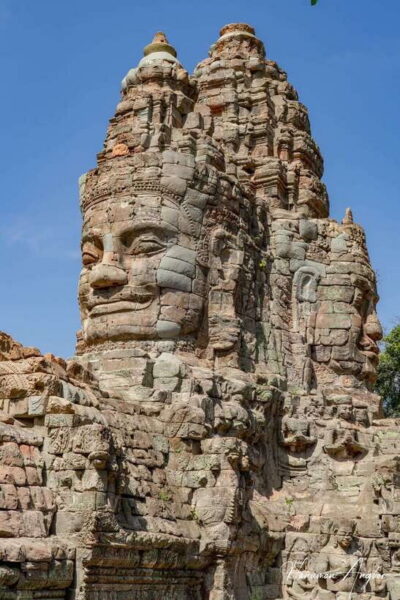
- South Gate photos: face towers, demon/god railings, and a classic payoff
- Late-day Angkor Wat again: ponds, towers, and kinder light
- Wat Thmey (Killing Fields): brief but weighty
- Siem Reap drop-off: back to town center convenience
- Should you book this intense private Angkor day?
- FAQ
- How long is the tour?
- Is the Angkor Ticket included?
- What time does the tour start?
- Is lunch included?
- Is this a private tour?
- Do you offer elephant rides at Angkor Thom?
Key things to know before you go
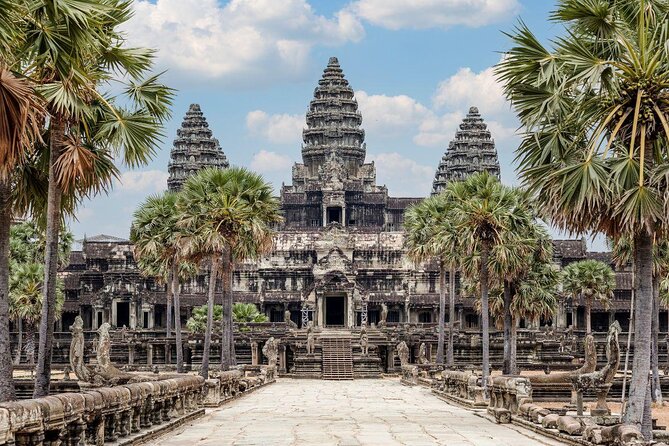
- Two Angkor Wat visits: morning light first, then a shorter late-afternoon return for reflections and tower photos.
- Private guide + driver setup: you see temples with your English-speaking guide while the driver waits.
- Five less-frequented “extras”: temple stops like Ta Nei and Prasat Chrung that most circuits skip.
- A 3.5 km Angkor Thom hike: from Victory Gate toward the East Gate area, then you’re picked up near South Gate.
- Lunch at Srah Srang: you can eat near the water or adjust the plan if you’re willing to cover extra driving.
- No elephant rides at Angkor Thom due to an animal welfare policy.
Other ways to walk the great temple
- Angkor Wat Sunrise or Sunset Tour with Guide from Siem Reap★ 5.0 · 12,109 reviews
- Siem Reap: Angkor Wat: Small-Group Sunrise or Sunset Tour★ 5.0 · 9,444 reviews
- Siem Reap: Angkor Wat 2-Day Tour with Sunrise and Sunset★ 4.9 · 4,429 reviews
- Siem Reap: Full-Day Angkor Wat Guided Tour with Sunset★ 4.9 · 3,803 reviews
Price and Ticket Reality Check (What value really means here)
The tour cost is $69 per person, and it runs about 11–13 hours. That price covers the private A/C transportation, the English-speaking driver, and the English-speaking licensed Angkor guide. In practice, that’s where your money goes: guide time, transport time, and keeping the day efficient without you having to fight for directions.
The part people forget: your Angkor Ticket is not included. You’ll need a one- or multiple-day ticket that’s valid for the temples you enter, listed here as $37 for a 1-day ticket. If you’re already planning a second Angkor day, a multi-day ticket can make sense. If not, you’re still paying for entry—so budget it up front so the “cheap-ish tour” doesn’t surprise you later.
Lunch isn’t included either. The good news is that the tour’s lunch break is at Srah Srang, where you can find several restaurant options nearby, so you’re not stuck guessing where to eat mid-temple.
The 6:30am start: why it matters more than you think
You start around 6:30am, and it’s not just a schedule flex. Angkor is a lot easier when you arrive early. Morning light helps carvings look crisp instead of flat, and the crowds at the biggest sites tend to be lighter in the early window.
This itinerary also uses the timing to build a two-part Angkor Wat experience:
- a morning visit that starts from the East Gate (a less busy approach), and
- a late-afternoon return where you get a second look, aimed at tower photos and reflections.
That second visit is one of the best “value-per-minute” moves in the whole plan because it lets you re-shoot Angkor in different light without doing extra traveling.
A/C private transport + an English guide who actually guides
This is a private tour, meaning it’s only your group. You won’t be squeezed into a large group van with a rushed guide trying to keep 20 people moving. Instead, the driver handles logistics and waiting, while the guide does the storytelling and on-the-ground interpretation.
Here’s what that means for you:
- You can hear explanations clearly without shouting over other languages.
- You’re not constantly doing the “where’s the bus?” panic.
- At each temple, the guide is with you while the driver waits at the car park.
In past feedback tied to this operator, a big theme has been professionalism and time control. One review specifically praised an A/C bus and the fact that the program stayed on track even during rain. That’s exactly what you want when your day starts early and runs long.
Also, if you’ve had trouble getting organized in Cambodia before, the same operator has been described as responsive with transfers and planning details—names like Mr Bunna come up in reviews about comfort and organization. Even if you won’t meet the same person every day, it signals the company style: get you where you need to be, and keep things running.
Stop 1: Angkor Wat from the East Gate in the best light
You first enter Angkor Wat from the East Gate. That’s a meaningful detail because it changes your early arrival feel. You get Angkor Wat in morning light before the crush, and the guide can set context without you fighting the logistics of big crowds.
You’ll spend about 2 hours here. The ticket cost is separate, but plan to budget time at least for a slow walk through key viewpoints and the main approaches.
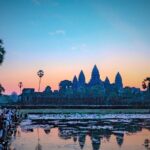
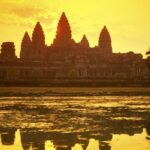
Later in the day, you’ll visit again for a shorter photo-focused round (this time in late afternoon). The goal: towers and temple ponds reflected in the water and calmer light.
More temple circuits, set side by side
Prasat Kravan: brick carvings that feel different
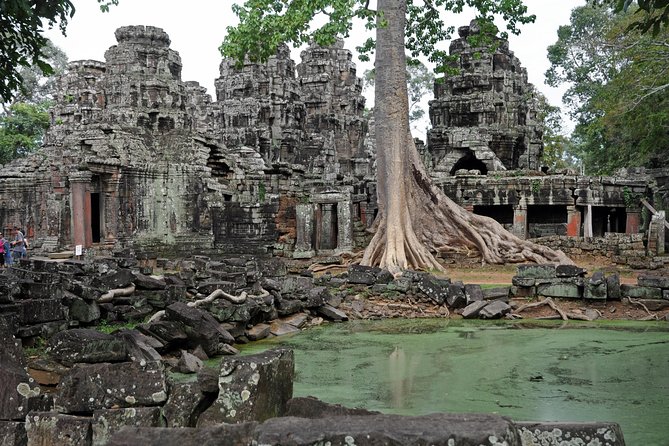
Next is Prasat Kravan, a small temple with five towers in a line. The “wow” is in the brickwork. In Angkor, most carvings you see are in sandstone, so brick carvings at this scale stand out in a very tangible way.
You’re only there around 20 minutes, but it’s the kind of quick stop that rewards paying attention: tower shape, carving placement, and how the brick surface catches light.
Why it’s worth it: this is one of the “extras” that breaks the pattern of only seeing the big monuments.
Prasat Bat Chum: inscriptions that point to an early Buddhist thread
Prasat Bat Chum is also small—three towers on a shared platform. The main draw is the large inscriptions that indicate Buddhism was present in Angkor long before the era associated with the Buddhist king Jayavarman VII.
Again, you’re looking at about 20 minutes, but this stop is a nice reset from the visuals-heavy sites. The guide’s explanation matters here. If you let the guide talk for a few minutes, you’ll end up understanding what you’re seeing rather than just taking photos.
And yes, it’s not heavily frequented, which helps it feel quieter and more “found” than “visited.”
Srah Srang lunch break: where temples meet water and ceremonies
Srah Srang is a reservoir complex with a decorative terrace and animal sculptures. It’s picturesque, but the deeper appeal is understanding the function: Srahs aren’t the same as Barays. A baray is basically a reservoir; a srah is an artificially deepened basin, likely tied to ceremony rather than irrigation.
The site is connected to construction and rebuilding across centuries, with a Buddhist prime minister initiating it in the 10th century and a Buddhist king rebuilding it in the late 12th century.
Your time here is about 10 minutes for the stop itself, then you’ll have lunch around the area near 45 minutes of downtime. Practically, this is a good setup: you’re already out at the temple zone, and you can choose among nearby restaurants.
Banteay Kdei: Ta Prohm’s smaller sister that still has real scale
After lunch, you’ll visit Banteay Kdei. It’s described as the smaller sister of Ta Prohm, but don’t let the word “smaller” fool you—this is still a large complex with a labyrinth-like layout.
Time on site is about 1 hour 15 minutes for Ta Prohm, but Banteay Kdei’s segment is built to be manageable before you head into the most famous jungle chaos.
How to enjoy it: take it slow and let your guide point out the layout logic. Even without getting lost, you’ll appreciate how this temple feels different from the easier-to-follow main routes.
Ta Prohm: the jungle temple people talk about for a reason
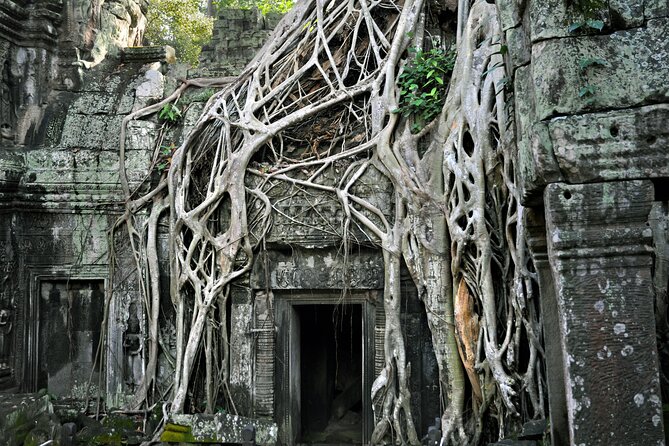
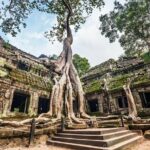
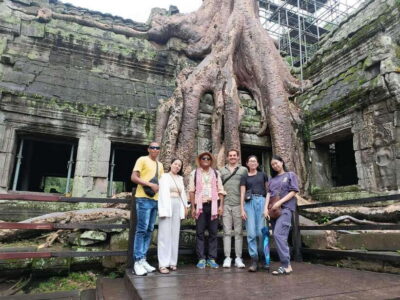
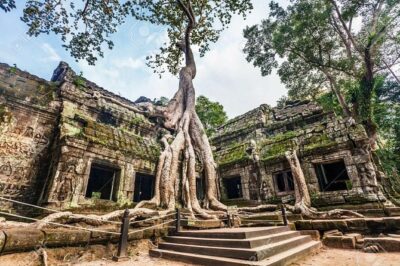
Ta Prohm is the world-famous jungle temple—overgrown by large strangler fig trees. It’s a big compound, so plan for wandering without the pressure to “finish.”
You get 1 hour 15 minutes at Ta Prohm, which is enough to:
- see the main structures from multiple angles, and
- pause where the roots and carvings create photo compositions.
Yes, it’s famous. But the guide framing helps you see more than the postcard parts.
Ta Nei: the Indiana Jones feeling for people who like quiet ruins
Ta Nei is reached on gravel roads, which is why most circuits don’t include it. This is one of the places that gives you that how is this still here? feeling.
You get about 30 minutes, and the payoff is that it feels tucked away, with enough time to slow down and look at relief details—especially if the guide points out specific carvings.
This is also one of the tour’s core “extras,” because it swaps mainstream flow for exploration that feels more personal.
Ta Keo: steep stairs and an artificial mountain viewpoint
Ta Keo is a former state temple built like an artificial mountain—a stepped pyramid. The stairs to the uppermost level (where five prasats sit) are described as extraordinarily steep.
You’ll have about 40 minutes here. If you’re the type who hates climbing, you can still enjoy Ta Keo from lower viewpoints, but the full effect comes when you’re willing to climb.
Tip: bring a bottle of water and take breaks. It’s not technical hiking, but the stairs add up after a long morning.
Spean Thma: a quick photo bridge made from older stones
At Spean Thma, you’ll do a short photo stop. It’s a stone bridge from the late Angkor period, built using carved stones taken from earlier temples.
The riverbed shifted further east over time, which adds to the “why does this look like it’s in the wrong place?” feel. Even with only 5 minutes, this stop is worth it if your brain likes details and “how did they do that?” questions.
Chau Say Tevoda and Thommanon: pediments and paired tower styles
Next are two temples that pair nicely thematically:
- Chau Say Tevoda, with a processional route from the east and a lot of pediment carvings with mythological scenes.
- Thommanon, the sister temple, with towers in the same style as Angkor Wat.
Time is shorter for both (20 minutes for Chau Say Tevoda, 15 minutes for Thommanon), but they’re the kind of stops where the guide’s pointing direction helps you notice carvings you’d miss while wandering.
If you like myth scenes, you’ll probably want to linger longer than the clock allows.
Mangalartha: one of the last stone temples, and it’s rarely visited
Mangalartha is a small temple on a steep, tiered platform, dated to the 13th century. It’s considered among the very last stone temples built in Angkor.
It’s also rarely visited, which is why it’s listed as one of the “extras” on this intense route. You get about 15 minutes.
This is the kind of stop that can make your whole day feel more special. When you skip a “big name” temple, you’re often trading away convenience. Here, you trade away predictability—and you get that quieter, more personal feeling back.
Angkor Thom hike: Victory Gate to Prasat Chrung and then pickup
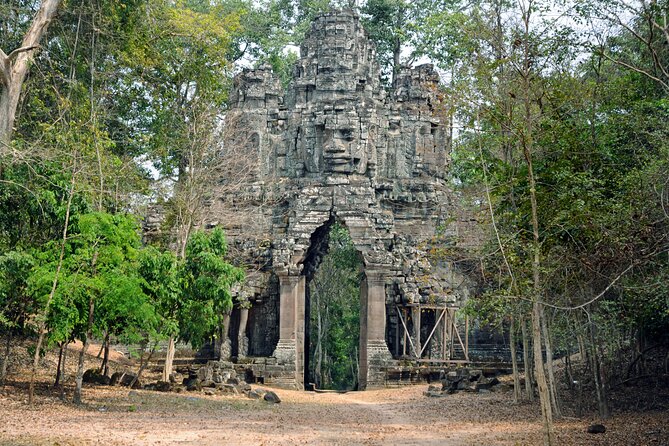
Now comes the activity part: the tour includes a 3.5 km walk in Angkor Thom.
It starts at the Victory Gate, where you’ll climb the wall for a view toward the southern giant face of the gate. The guide begins the walk, which follows along the rarely visited East Gate area and passes toward Prasat Chrung.
Prasat Chrung is one of the best-preserved corner temples, placed on the city walls and not reachable by vehicles. That means you see it without the usual crowd pressure. The plan is built so you’ll be able to fill that moment with less interruption—part of why it’s considered one of the key “special” stops.
You then get picked up at Angkor Thom South Gate.
Practical expectation: you’ll feel this more than a typical short walk. It’s not described as technical, but it’s long enough that you should wear shoes you trust and plan to take breaks if the heat hits.
South Gate photos: face towers, demon/god railings, and a classic payoff
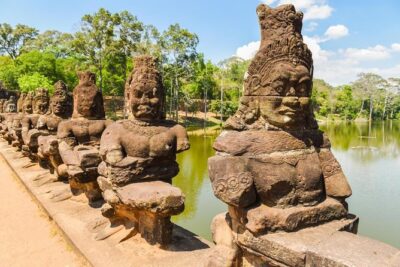
At Angkor Thom South Gate, the stop is about 15 minutes. This is one of the must-sees: the face tower and the railings with rows of giant statues depicting demons and gods.
Even if you’ve seen pictures before, the scale works in person. It’s also a nice moment in the day because it’s a different kind of viewing: you’re no longer moving through small ruins on the way to your next stop.
Also good to know: the tour notes an animal welfare policy—no elephant rides at Angkor Thom.
Late-day Angkor Wat again: ponds, towers, and kinder light
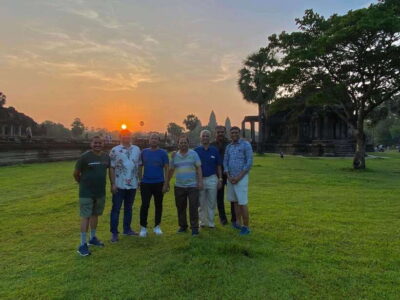
After the Angkor Thom walk and gate photos, you return to Angkor Wat in late afternoon for a short, photo-focused revisit. This timing is chosen for mirror-like pond reflections and softer light on the towers.
You get about 30 minutes, which is intentionally shorter than the morning visit. In other words: you’re not re-learning the site—you’re refining the photos and enjoying it with less planning stress.
There’s also an optional small (stationary) balloon ride mentioned as an add-on. If you’re curious about a bird’s-eye view, ask the guide for how it fits with timing on your day.
Wat Thmey (Killing Fields): brief but weighty
The final temple stop is Wat Thmey, linked to the Khmer Rouge killing fields. The site has a memorial stupa and photo boards with images related to victims, plus an open prayer hall.
You’ll have about 10 minutes here. It’s short, but it’s the kind of stop that adds context and memory weight to the day, especially if your Angkor focus has been mostly visual.
Siem Reap drop-off: back to town center convenience
At the end, you’ll be dropped back at your hotel or another point in Siem Reap town center. That matters because you likely won’t want to navigate transportation after a full day. The meeting point is listed near Little Pub St, so your start and end are handled in a straightforward way.
Should you book this intense private Angkor day?
Book it if you want:
- maximum temple coverage without losing control of the day, thanks to a private A/C setup and a guide with you throughout.
- the two-part Angkor Wat plan (morning light first, then late-day reflections).
- extra chances to see places like Ta Nei, Mangalartha, and Prasat Chrung that feel quieter and more discovery-like than the main circuit.
Skip—or at least think hard—if:
- you’re not comfortable with a 3.5 km walk on uneven surfaces, even if it’s within an organized route,
- you don’t want to pay for your own Angkor Ticket and handle lunch on your own.
If you like your Angkor day with structure, comfort, and a little variety beyond the headline sites, this is a strong fit.
FAQ
How long is the tour?
It runs about 11 to 13 hours, depending on timing through the temples and the day’s conditions.
Is the Angkor Ticket included?
No. The Angkor Ticket is not included. The tour requires a one- or multiple-day ticket that is valid for the temples you enter.
What time does the tour start?
The start time is 6:30am.
Is lunch included?
No. Lunch is not included. Lunch break is at the Srah Srang area, where you can choose from nearby restaurant options.
Is this a private tour?
Yes. It’s private, so only your group participates.
Do you offer elephant rides at Angkor Thom?
No. The tour states an animal welfare policy and does not offer elephant rides at Angkor Thom.
Just Your Group: Private Days
- Full-Day Angkor Wat Sunrise Private Tour with Guide from Siem Reap
★ 5.0 · 2,920 reviews - Siem Reap: Angkor Wat Private Tuk-Tuk Tour
★ 4.9 · 2,222 reviews - Angkor Wat Private Day Tour from Siem Reap
★ 5.0 · 834 reviews - Angkor Wat Private Tuk-Tuk Tour (sunrise Option) & more
★ 5.0 · 439 reviews - Private Angkor Wat Day Tour – Best of Angkor
★ 5.0 · 269 reviews
More Temple Circuits Around Siem Reap
- Angkor Wat Sunrise or Sunset Tour with Guide from Siem Reap
★ 5.0 · 12,109 reviews - Siem Reap: Angkor Wat: Small-Group Sunrise or Sunset Tour
★ 5.0 · 9,444 reviews - Siem Reap: Angkor Wat 2-Day Tour with Sunrise and Sunset
★ 4.9 · 4,429 reviews - Siem Reap: Full-Day Angkor Wat Guided Tour with Sunset
★ 4.9 · 3,803 reviews - Angkor Wat Sunrise tour with Small – Group and Guide tours
★ 5.0 · 3,655 reviews
Angkor Wat, a Few More Ways In
- Angkor Wat Sunrise or Sunset Tour with Guide from Siem Reap
★ 5.0 · 12,109 reviews - Siem Reap: Angkor Wat: Small-Group Sunrise or Sunset Tour
★ 5.0 · 9,444 reviews - Siem Reap: Angkor Wat 2-Day Tour with Sunrise and Sunset
★ 4.9 · 4,429 reviews - Siem Reap: Full-Day Angkor Wat Guided Tour with Sunset
★ 4.9 · 3,803 reviews - Angkor Wat Sunrise tour with Small – Group and Guide tours
★ 5.0 · 3,655 reviews
Just Added: Fresh Siem Reap Tour Reviews

Angkor Wat Temple Tours, compared.
 ★ 5.0Angkor Wat Sunrise or Sunset Tour with Guide from Siem ReapFrom $1812,109 reviews
 ★ 5.0Angkor Wat: Small-Group Sunrise or Sunset TourFrom $159,444 reviews
 ★ 4.9Angkor Wat 2-Day Tour with Sunrise and SunsetFrom $344,429 reviews
 ★ 4.9Full-Day Angkor Wat Guided Tour with SunsetFrom $153,803 reviews
 ★ 5.0Angkor Wat Sunrise tour with Small – Group and Guide toursFrom $143,655 reviews
 ★ 5.0Angkor Wat Highlights and Sunrise Guided Tour from Siem ReapFrom $233,213 reviews
 ★ 5.0Angkor Wat Sunset Small Group Tour with Lunch IncludedFrom $203,059 reviews
 ★ 5.0Full-Day Angkor Wat Sunrise Private Tour with Guide from Siem ReapFrom $602,920 reviews