
Reviewed · FLOATING VILLAGES & TONLE SAP TOURS
Homestay Kampong Khleang Villages
Tonlé Sap life feels closer than you expect.
This 2-day homestay in Kampong Khleang turns you into part-time observer: a motor boat ride out to the flooded forest, then a night in a local fishing home where you share daily rhythms and a Cambodian fish dinner. Two things I’d count as standout value: the guided look at how the lake works (hydrology and local adaptations) and the chance to see everyday village life beyond a quick photo stop.
One thing to keep in mind: you’ll be on the water and walking around village areas, so plan for heat, sun, and changing ground conditions around the lake—good weather really matters for this experience.
In This Review
- Key highlights that make this homestay worth your time
- Kampong Khleang is a long-ish ride—and that’s part of the point
- Day 1: from hotel pickup to motor boats on Tonlé Sap
- Flooded forest + paddling: what you’ll actually be looking at
- The “plants and hydrology” lesson is the practical brain-food
- Living overnight in a local house: what immersion really means here
- Day 2: village walk, market, school, and pagoda stops
- Meals and included comforts: the “small stuff” that makes it smoother
- Price and logistics: does $230 make sense?
- Guide quality is a real factor here (and it shows)
- Who should book this homestay (and who might want a different style)
- Should you book Homestay Kampong Khleang Villages?
- FAQ
- Where is Kampong Khleang relative to Siem Reap?
- How long is the homestay experience?
- What’s included in the price?
- Is the tour private?
- What activities are included on the lake?
- Does lunch and dinner include seating at the village?
- Do I need to pay for admission fees?
- What happens if the weather is bad?
- Is there a mobile ticket?
Key highlights that make this homestay worth your time
- A focused Tonlé Sap itinerary: motor boat to the flooded forest, then paddled routes that show how the ecosystem changes seasonally
- Real village immersion: sleeping in a local house and following the host family’s day-to-day routine
- Practical learning: hydrology explained alongside useful plants for cooking and medicine
- A strong English guide experience: praise for attentive service and clear English, including a sense of humor from guides such as Seng Bunly / Mr. Bunley
- A setting upgrade for meals: lunch is served in the stilted village area, with menus described as unspicy and varied
- Private-group comfort: hotel pickup/drop-off and an A/C mini van for the long 55 km drive area
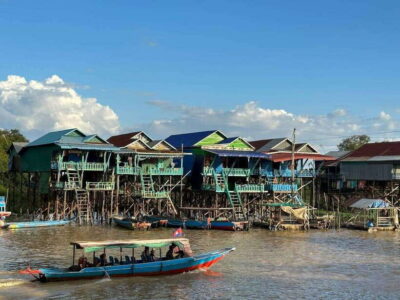
Back out on the lake, more stilted villages
- From Siem Reap: Kampong Phluk Floating Village Tour by Boat★ 4.9 · 6,979 reviews
- Sunset tour of Kampong Phluk stilts home village on the Tonle Sap★ 5.0 · 4,865 reviews
- Kompong Phluk Floating Village Half-Day Tour ( Morning / Sunset )★ 5.0 · 1,494 reviews
- Siem Reap: Kulen Mountain, Beng Mealea and Tonle Sap Tour★ 5.0 · 1,483 reviews
Kampong Khleang is a long-ish ride—and that’s part of the point
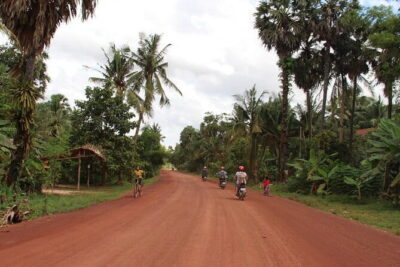
The homestay base is in Kampong Khleang, about 55 km southeast of Siem Reap. That distance is not just geography. It’s what gets you away from the temple-route bubble and into a working lake community where the rhythm of life is tied to flooding and fishing.
You’ll start with hotel pickup and head down toward the floating and flooded areas. This is also a good sign of how the tour is set up: the logistics are built around getting you there in time for the best light and water activity—rather than doing a slow, stop-and-start day.
Day 1: from hotel pickup to motor boats on Tonlé Sap
After you’re picked up from Royal Residence NR6 (the listed meeting point), the drive takes you toward Kampong Khleang’s water communities. Once you’re in the area, the tour shifts into “lake mode.”
Here’s what your first day generally looks like:
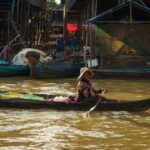
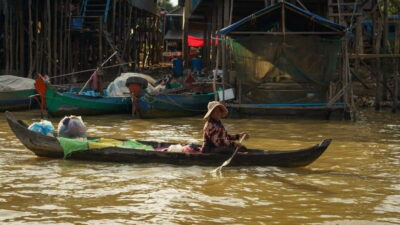
- You go by motor boat into the Kampong Khleang area, including the floating/flooded village zones.
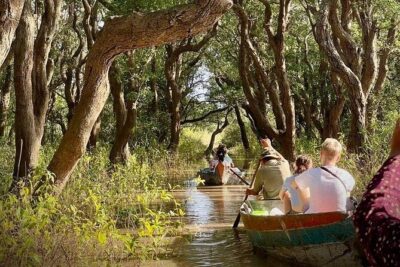
- You then spend time near the lake outskirts where villagers help paddle you to the flooded forest and onward to a Vietnamese village area.
That change in boat style matters. Motor boats move you efficiently to the right zone. The paddled sections slow you down just enough to notice what you’d miss from a speed ride: water edges, plant growth, and how people navigate narrow routes safely.
You’ll also get guided context as you travel—this isn’t only sightseeing. The plan includes explanation of how the lake’s waters behave and why that flooding cycle shapes both habitat and jobs like fishing.
Flooded forest + paddling: what you’ll actually be looking at
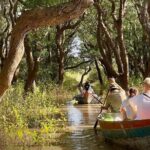
The “flooded forest” part is the headline, and for good reason. On Tonlé Sap, the landscape changes. Trees and plants that are dry land part of the year become habitat during high water. When your route goes into that zone, you start seeing the lake not as water, but as a living system.
During the boat portion, your guide explains:
- the hydrology (how the water moves and what seasonal flooding changes)
- human adaptations for life with fluctuating water levels
- the ecosystem you’re traveling through
If you like travel that teaches you how people make a living (not just where they live), this is one of the stronger parts of the day. It also helps you connect the scenery to real practices: fishing activities, daily logistics, and how the community manages work around water conditions.
The “plants and hydrology” lesson is the practical brain-food
One of the most interesting parts of this homestay is the combination of ecology and daily usefulness. You’re not just told to admire nature—you’re given a guide’s explanation of the lake environment and its resources.
According to the experience description, your guide shares information on useful plants for medicine and cooking while discussing the hydrology of the area. That gives the tour a hands-on intelligence.
Even if you don’t remember every plant name, you’ll leave with a clearer sense of why people here can treat the lake as both pantry and pharmacy (in the traditional sense) while also adjusting their lives to the water cycle.
Living overnight in a local house: what immersion really means here
Day 1 ends with the main event: sleeping in a local house in this fishing community. This is the part that turns a boat trip into an experience with texture.
What to expect:
- You’ll share the day-to-day rhythm of your host family.
- You’ll get time to settle in and be present in the environment rather than just passing through.
- Dinner is included, and the experience description emphasizes delicious Cambodian fish as part of the meal.
From the meal perspective, it’s also clear this homestay isn’t only about “being there.” Lunch is specifically described as having an excellent cuisine experience in an extraordinary setting, with menus noted as unspicy and varied. In plain terms: you don’t have to accept bland food as the tradeoff for cultural contact.
A quick consideration: homestay-style sleeping can feel very different from a hotel. You’re trading some comfort for proximity—noise, humidity, and local routines may be part of your night. If you’re the type who likes everything quiet and predictable, you might want to bring realistic expectations.
Day 2: village walk, market, school, and pagoda stops
The second morning is built for contact, not just sightseeing. After breakfast, you go for a walk around the village so you can meet local people and see everyday community activities.
The plan includes:
- time to meet local people
- a visit to the village market
- stops near a primary school and a pagoda
- a look at street activity such as boat repairing and making fishing gear
This is where the trip becomes more human-scale. Boats and flooding tell one story; workshops and school connections tell another. Seeing boat repairing and fishing tra… (the itinerary cuts off, but the idea is clear: gear and fishing-related work) helps you understand how the fishing economy keeps moving even as the lake expands and contracts.
Also, walking rather than only boating gives you a more direct view of daily life. You’ll likely notice details that don’t show up in a lake-only photo session: paths, community spaces, and the way people organize chores and trade.
Meals and included comforts: the “small stuff” that makes it smoother
This tour includes:
- Breakfast (2)
- Lunch (2)
- Dinner
- bottled water and cold towels during the tour
- hotel pick up and drop off
- A/C mini van transport
- an English-speaking guide
- a mobile ticket
Cold towels and water sound minor until you’re in the heat with boats and walking. Those small touches can make the difference between enjoying the day and simply surviving it.
Since the days include long travel time and water activity, the included meals are also part of the value calculation. At $230 per person, you’re not just paying for transport—you’re paying for a full two-day day/night package with food handled.
Price and logistics: does $230 make sense?
At $230 per person for an approx 2 days experience, this homestay price is best seen as a package deal for three things:
- Getting you out there and back (the 55 km drive and all transportation by A/C mini van)
- Guiding + interpretation (English guidance through lake hydrology, ecosystem explanation, and village context)
- Food + overnight participation (two breakfasts, two lunches, and dinner, plus sleeping in a local house)
If you tried to DIY this—driver, boat transport, a guide for interpretation, and a homestay arrangement—you’d likely spend comparable money and still not get a smooth schedule.
One more value detail: the tour is listed as private, meaning it’s your group only. That reduces waiting and awkward pacing and makes it easier to ask your guide questions during boat rides and village walks.
Guide quality is a real factor here (and it shows)
This kind of tour works or doesn’t work based on your guide. Here, the standout theme in the available details is strong English and attentive handling of the group.
Guides tied to this experience are mentioned with names like Seng Bunly / Mr. Bunley, and the praise points to:
- excellent English
- attentiveness and respect
- historical/cultural knowledge tied to what you’re seeing
- a sense of humor that makes the long day feel easier
In practice, that matters because the tour includes more than one setting: motor boats, flooded forest, paddling, and village walking. When your guide can translate what you’re seeing into understandable context, the experience feels worth it rather than random.
Who should book this homestay (and who might want a different style)
This experience is a good match if you:
- like nature tied to real livelihoods (fishing, floating village life)
- want more than temple photos and want a day-night local setting
- enjoy guided explanation you can apply to what you’re seeing right then
- are comfortable with modest homestay sleeping in a working village
It may be less ideal if you:
- strongly prefer hotel comfort and quiet
- dislike boat rides or don’t want time on the water
- need very predictable schedules with minimal walking
A final practical note: the experience states it requires good weather. If weather is poor, you’ll be offered another date or a full refund. That’s not something to ignore—flooded-forest routes depend on conditions.
Should you book Homestay Kampong Khleang Villages?
If your goal is to feel what daily life on Tonlé Sap is like—water cycle, fishing community routines, and real human contact—then I think this is an easy yes. The big strengths are the full package: boat + explanation + overnight homestay + village morning walk, all tied together with included meals and a guide who can talk clearly.
You should think twice only if you know you’ll hate the practical realities of a lake community night: basic homestay conditions, heat, humidity, and more time moving around than a purely seated tour.
My decision rule is simple: if you want a story you can tell later that goes beyond temples, this is the kind of day-night itinerary that delivers.
FAQ
Where is Kampong Khleang relative to Siem Reap?
Kampong Khleang is about 55 km southeast of Siem Reap town.
How long is the homestay experience?
It runs for about 2 days (approx.).
What’s included in the price?
The experience includes hotel pickup and drop-off, A/C mini van transportation, an English-speaking tour guide, bottled water and cold towels, meals (two breakfasts, two lunches, and dinner), and pickup-related services.
Is the tour private?
Yes. It’s listed as a private tour/activity, so only your group participates.
What activities are included on the lake?
You take a motor boat to the Kampong Khleang area, then you’re paddled to the flooded forest, with discussion of hydrology, ecosystem, fishermen’s activities, and plant uses.
Does lunch and dinner include seating at the village?
Lunch is included, and it’s described as being served in the stilted village area, with an emphasis on good, unspicy, varied menus. Dinner is also included.
Do I need to pay for admission fees?
The schedule notes admission ticket free for the first day. On the second day, admission is listed as not included, so there may be some fees depending on what’s required that day.
What happens if the weather is bad?
This experience requires good weather. If it’s canceled due to poor weather, you’ll be offered a different date or a full refund.
Is there a mobile ticket?
Yes, the experience includes a mobile ticket.
If you tell me your travel month and whether you prefer early starts or slower mornings, I can suggest how to time your rest and what to watch for when the lake conditions change.
More Tour Reviews in Siem Reap
- Angkor Wat Sunrise or Sunset Tour with Guide from Siem Reap
★ 5.0 · 12,109 reviews - Siem Reap: Angkor Wat: Small-Group Sunrise or Sunset Tour
★ 5.0 · 9,444 reviews - From Siem Reap: Kampong Phluk Floating Village Tour by Boat
★ 4.9 · 6,979 reviews - Sunset tour of Kampong Phluk stilts home village on the Tonle Sap
★ 5.0 · 4,865 reviews - Siem Reap: Angkor Wat 2-Day Tour with Sunrise and Sunset
★ 4.9 · 4,429 reviews
Out on Tonle Sap
- From Siem Reap: Kampong Phluk Floating Village Tour by Boat
★ 4.9 · 6,979 reviews - Sunset tour of Kampong Phluk stilts home village on the Tonle Sap
★ 5.0 · 4,865 reviews - Kompong Phluk Floating Village Half-Day Tour ( Morning / Sunset )
★ 5.0 · 1,494 reviews - Siem Reap: Kulen Mountain, Beng Mealea and Tonle Sap Tour
★ 5.0 · 1,483 reviews - Tonle Sap Lake & Kampong Phluk Village Half-Day Tour
★ 5.0 · 1,045 reviews
Just Added: Fresh Siem Reap Tour Reviews

Floating Villages & Tonle Sap Tours, compared.
 ★ 4.9From Siem Reap: Kampong Phluk Floating Village Tour by BoatFrom $206,979 reviews
 ★ 5.0Sunset tour of Kampong Phluk stilts home village on the Tonle SapFrom $214,865 reviews
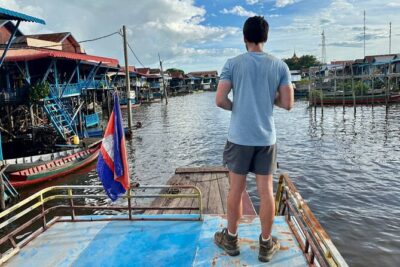 ★ 5.0Kompong Phluk Floating Village Half-Day Tour ( Morning / Sunset )From $241,494 reviews
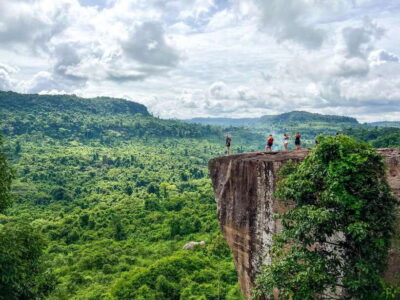 ★ 5.0Kulen Mountain, Beng Mealea and Tonle Sap TourFrom $481,483 reviews
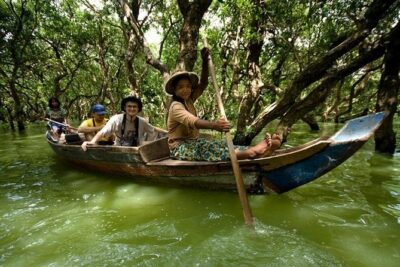 ★ 5.0Tonle Sap Lake & Kampong Phluk Village Half-Day TourFrom $491,045 reviews
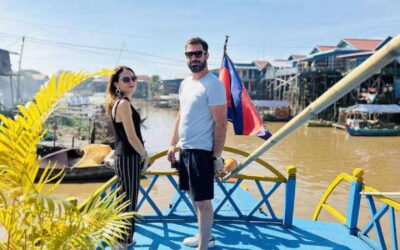 ★ 5.0Kampong Phluk Floating Village Tour by BoatFrom $201,020 reviews
 ★ 4.8Kompong Phluk Floating Village Half-Day TourFrom $24966 reviews
 ★ 5.0Kulen Mountain with Beng Mealea and Tonle Sap Small Group TourFrom $54780 reviews
Browse the lists this tour appears in