
Reviewed · ANGKOR PHOTOGRAPHY TOURS
Journey Through Time: Grand Tours with professional photographers
Angkor feels different when you can slow down. This private guide and photographer setup lets you move at your own speed while you learn what you’re actually looking at. I love the stop-by-stop temple explanations, and I love that you’re not stuck in a rushy herd. One possible drawback: you still pay for the Angkor Temple Pass and a Sun light fee, so your total cost may be higher than the headline price.
For $237, the value is in the included comfort and attention. You get a luxury private car/van, mineral water, tissue, and natural fruits, plus a pickup that’s made easier with an e-ticket on your phone. That means less time figuring out logistics and more time putting your feet on ancient stone.
This runs the Grand Circuit through the UNESCO Angkor complex—built for independent pacing rather than constant group regrouping. You’ll visit Preah Khan, Neak Pean, Ta Som, Pre Rup, Eastern Mebon, and Banteay Srei (with Banteay Srei listed as free entry). Do note the dress code: shoulders and knees covered; no shorts or sleeveless tops, or entry can be refused.
In This Review
- Key highlights to know before you go
- The Grand Circuit, not the rush: why this route works
- Pickup, car, and the photographer factor that matters
- Preah Khan: the Royal Sword Temple and its scale
- Neak Pean: the island temple in the middle of a story
- Ta Som: when trees and stone are part of the same scene
- Pre Rup: the mountain temple and the meaning of “turn the body”
- Eastern Mebon: what a dry baray teaches you
- Banteay Srei: smaller scale, detailed carvings, and a free entry listed
- Price and value: what $237 really buys you
- Dress code and timing: how to avoid entry headaches
- Who should choose this private Grand Circuit?
- Should you book Marvel Angkor Tours for the Grand Circuit?
- FAQ
- Is pickup from my hotel included?
- How long does the tour last?
- What temples are included on the route?
- Do I need to buy the Angkor Temple Pass?
- Is admission included for every temple stop?
- What does the price include?
- What should I wear to enter the temples?
- Is this tour private?
- Can I cancel for free?
Key highlights to know before you go
- Private pacing on the Grand Circuit: you can linger at carvings without the big-tour pressure to keep moving.
- Photo support included: you’ll travel with a professional photographer, so you’re not stuck taking selfies and missing details.
- Hotel transfer + phone e-ticket: the round-trip transfer and e-ticket help you get moving faster.
- A route built for variety: giant temple compounds, an island temple, and mountain-top views in one day.
- Real guide energy: guides like John, Diamond/Pich, and Davann have been praised for humor and strong on-the-ground storytelling.
- Most admissions are not included: Banteay Srei is free, but the Angkor Temple Pass is not.
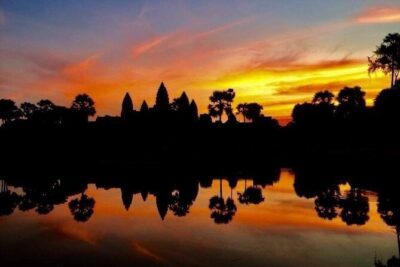
More frames of the temples at first light
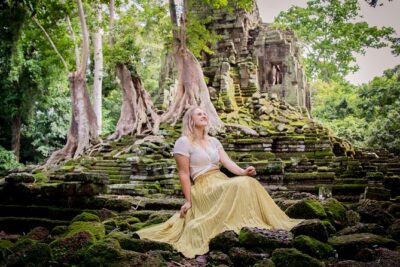
- Professional Photo Shoot in Angkor Archaeological Park, Siem Reap★ 5.0 · 42 reviews
- Golden Hours: Angkor wat sunrise photography tour with a pro!★ 5.0 · 25 reviews
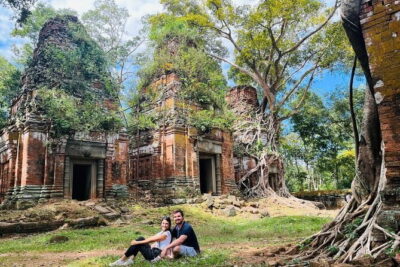
- Unseen Angkor Tour & Photoshoot★ 5.0 · 6 reviews
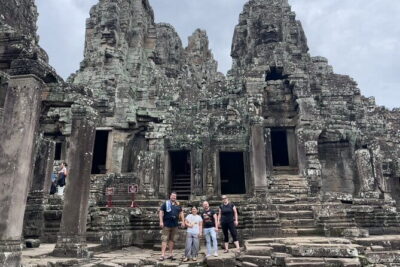
- Full Day Tour Photography in Siem Reap★ 5.0 · 3 reviews
The Grand Circuit, not the rush: why this route works
Angkor has two classic big loops: the Small Circuit and the Grand Circuit. The Grand Circuit tends to feel like the version where you can actually see how temples relate to water systems, paths, and terrain—not just how quickly you can tick off a list.
What I like about this setup is the promise of walking at your own pace within a practical day plan. Instead of “arrive, pose, sprint,” you get the chance to pause for the little stuff: the change in stone texture, the worn steps where feet have gone for centuries, the way later rulers layered their ideas onto earlier sites.
This tour is built for about 5 to 6 hours total. With roughly an hour at each stop, the day has a rhythm: drive in, see the main structures, take photos, then move on. If you’re the type who wants to read every carved sentence like it’s a novel, you might want to grab an extra strategy—like choosing one or two structures per temple to focus on—because the schedule is still a schedule.
Pickup, car, and the photographer factor that matters
The included round-trip hotel transfer is one of those practical extras that changes the whole day. Angkor can eat time just getting there and getting oriented. Here, you’re set up with a private luxury vehicle and you’re not trying to negotiate transport mid-day.
Even better: pickup is made easier with a mobile e-ticket. That’s small, but it helps. You can show your details right from your phone instead of hunting for paper in your bag.
Then there’s the photographer. A professional lens in the mix does two useful things:
- You stop wasting time framing shots and start paying attention to composition and angles.
- You get guidance on where to stand and how to capture the temple in context, not just “temple, but blurry.”
In the real world, guides named John and Diamond/Pich have also been praised for turning the day into something fun as well as informative—John, for example, reportedly pointed out Easter-egg style details around the temples. Davann has been described as funny and effective at helping avoid long waits. None of that changes the temple facts, but it changes your mood—and mood matters at Angkor, because you’ll be walking.
Preah Khan: the Royal Sword Temple and its scale
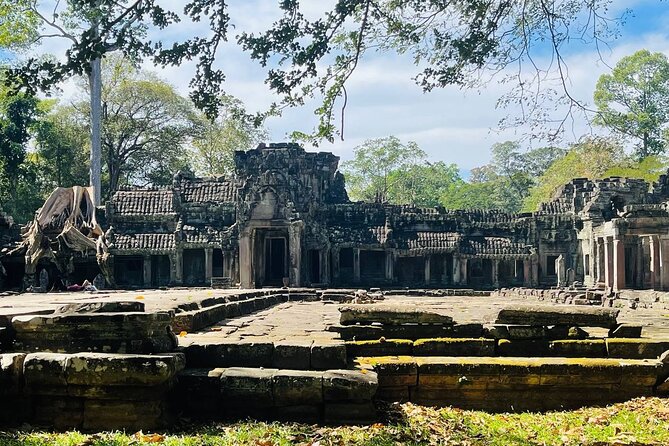
You start at Preah Khan, also known as the Royal Sword Temple. This one is a classic “big compound” temple. It was built in the early 12th century by King Jayavarman VII to honor his father. The temple wasn’t just a building—it functioned as a major center with an enormous organization tied to it, with almost 100,000 officials and servants.
That scale is what you should try to notice as you walk. Don’t just look at the main structures. Look at how the layout implies movement and work. Stone spaces that seem “empty” actually make sense once you imagine a functioning city inside the religious complex.
Plan on about an hour here. One practical drawback: because it’s a major site, it’s also a major photo target. If you want quieter moments, ask your guide to help with timing and walk through the spaces in a smarter order so you’re not always stopping in the most crowded spots.
Neak Pean: the island temple in the middle of a story
Next comes Neak Pean, a Buddhist temple built on an artificial island. It’s located nearby Preah Khan and was constructed by King Jayavarman VII in the center of what was the Preah Khan Baray (also referenced as Jayatataka).
This temple is different from the others because you’re not just watching stone and carvings. You’re watching a water-based idea—temple as reflection, temple as centerpiece. The “island” setup makes the views feel more contained, which is why it’s a favorite for people who like to photograph with a sense of enclosure.
One thing to keep in mind: the island setting can make you walk a bit more deliberately around open areas, depending on what’s accessible. Wear shoes that handle uneven ground and take your time.
Ta Som: when trees and stone are part of the same scene
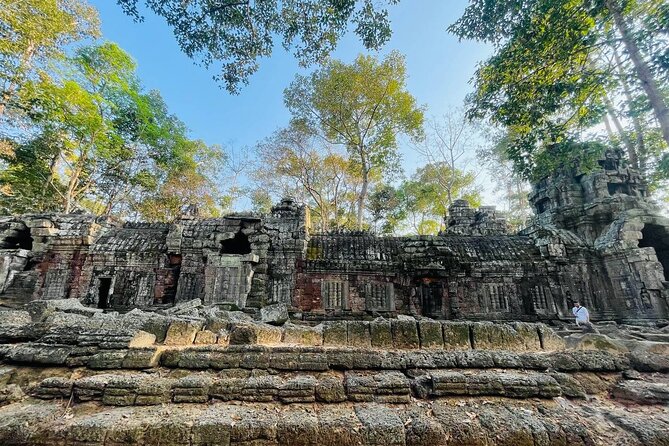
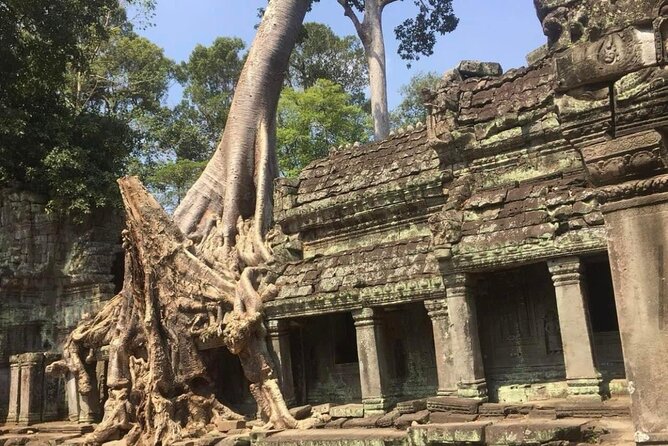
Then you’ll head to Ta Som, built by King Jayavarman VII in the late 12th century. Like Ta Prohm, Ta Som remains largely unrestored, with trees and roots integrated into the structures.
This is one of those stops where the “ruins” aren’t just damage. The way nature took over became part of the visual language. If you like dramatic composition—arches with roots, doorways swallowed by greenery, walls that look like they’re growing—you’ll get your fix here.
Practical note: because it’s a more overgrown feel, surfaces can be slick or messy after rainfall. Even without rain, take a cautious step in areas with roots and uneven stones. Your guide can help you pick photo angles without forcing you into awkward footing.
Pre Rup: the mountain temple and the meaning of “turn the body”
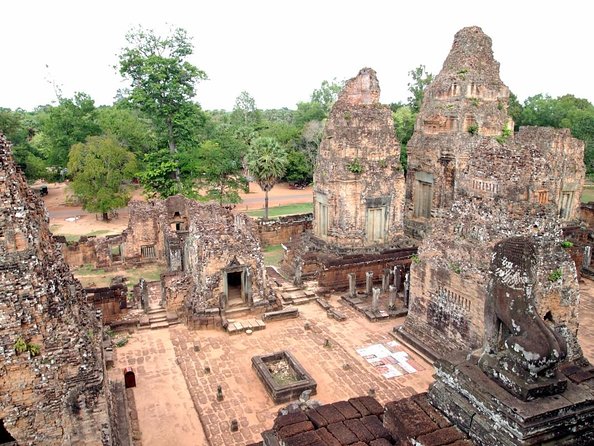
After that, you’ll visit Pre Rup, a Hindu mountain temple constructed by King Rajendravarman in 961 or early 962. The modern Khmer name means turn the body, and it’s tied to Cambodian beliefs around funerals.
From a visitor’s point of view, mountain-temple design matters. You’re meant to climb, and the plan makes you feel like you’re moving toward an idea of sacred height. Bring a little patience here: climbing and leveling take time, and you’ll want a moment to pause at viewpoints before you move onward.
This is also where the light and shadows can play tricks depending on the day. The tour lists a Sun light fee, so you’ll want to treat this as a “sun-aware” stop: you’re outdoors, you’re walking, and you’ll likely want to pace yourself so you don’t burn out before the last two temples.
Eastern Mebon: what a dry baray teaches you
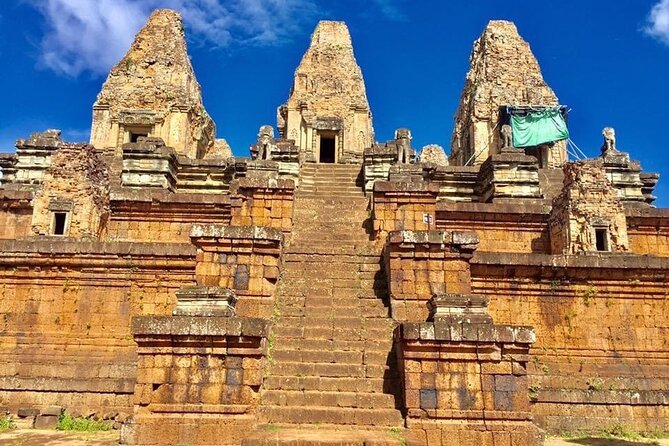
Your next stop is Eastern Mebon, a 10th-century temple built by Rajendravarman. It was dedicated to the Hindu God Vishu and honors the king’s parents. The temple used to be an artificial island in the center of the East Baray, but that baray is now dry.
This is a great place to connect the dots between “temple” and “water management.” Even if the water is gone, you can still see the logic of where things were placed. It’s also a spot where the setting helps you understand how these sites were designed as environments, not isolated monuments.
Because it’s open, it can feel hot. Plan to take short breaks and hydrate as needed. The included mineral waters are useful here.
Banteay Srei: smaller scale, detailed carvings, and a free entry listed
Finally, you’ll go to Banteay Srei (sometimes spelled similarly to Bantéay Srei). This temple is described as being in the Cambodian countryside about 25 kilometers northeast of the Angkor Archaeological Park. It may be smaller than the famous Angkor Wat, but it’s famous for the artistry of its Khmer carvings.
What you’ll likely enjoy most is the way Banteay Srei rewards slower looking. When a temple is smaller, your brain stops treating it like a giant distant landmark and starts seeing the details: patterns, figure work, and how surfaces have worn over time.
The tour data also lists admission for Banteay Srei as free. That’s a nice bonus at the end of the day, especially if you’re already tracking the Angkor Temple Pass cost.
Practical drawback: since it’s described as countryside, you’ll be more exposed during the drive and around the site. Dress code still applies—shoulders and knees covered—so come prepared.
Price and value: what $237 really buys you
Let’s talk money without pretending temples are “cheap.” The tour price is $237 for 5 to 6 hours, and it includes:
- Luxury private car/van
- Professional English-speaking tour guide
- Professional photographer
- Mineral waters and tissue
- Natural fruits
- Private transport from Siem Reap to Angkor and back
- Complimentary round-trip hotel transfer
- Mobile e-ticket for pickup convenience
What’s not included:
- 1-Day Angkor Temple Pass ($37 per person)
- Personal expenses
- Food & drinks
- Tips
- Sun light fee ($15 per person)
- Admission tickets aren’t included for several stops (with Banteay Srei listed as free)
So is it a good deal? For me, it becomes worthwhile when you value three things together: private transport, photo help, and a guide who can explain what you’re seeing at each site. If you just want to self-drive and wander, you could do Angkor for less—but you’ll trade away the convenience and the guided context that makes the route feel coherent.
Also, because several admissions are not included and the Angkor Temple Pass is extra, you’ll want to calculate your all-in cost before committing. A common mistake is thinking the base price is the whole day.
Dress code and timing: how to avoid entry headaches
Angkor is strict about clothing, and this tour lists a clear requirement: no shorts or sleeveless tops. Knees and shoulders must be covered for both men and women. If you don’t comply, you may be refused entry.
That’s the big rule. The rest is the usual temple-day reality: you’ll be walking a lot, and it’s easy to underestimate how quickly heat and sun stack up. Since the tour includes a Sun light fee line item, plan to treat the day as sun-exposed. Bring water (you’ll have some), wear breathable fabric under your covered outfit, and move at a pace that keeps you comfortable for the final stops.
Who should choose this private Grand Circuit?
This tour fits best if you:
- Want private pacing on the UNESCO Angkor complex, not the “follow the flag” style.
- Care about photos and would rather have a professional help with framing and angles.
- Like history explained in plain language as you walk, not just from a plaque.
- Want a guide with personality—John, Diamond/Pich, and Davann have all been mentioned for humor and engaging storytelling.
It may also work well for older visitors, based on a review that highlighted care for an 82-year-old. Because you’re in a private vehicle with a guide, you’ll usually have more flexibility if someone needs slower walking or extra pauses.
If you hate schedules and you want to spend multiple hours in one temple, you might find the roughly hour-long stops a bit tight. On the other hand, if you want variety across multiple temple types in one day, this route is built for that.
Should you book Marvel Angkor Tours for the Grand Circuit?
I’d book this if you want a smoother Angkor day where you don’t have to manage the hard parts: transport, timing, and figuring out what to look for at each site. The best part is the mix of private comfort and photo support, plus the guided storytelling that keeps each temple from blending into the next.
Before you hit confirm, do two practical checks:
- Plan for the 1-Day Angkor Temple Pass cost and the Sun light fee listed, so you’re not surprised at checkout.
- Decide your outfit based on the shoulders-and-knees rule, not on what you feel like wearing at breakfast.
If you’re comfortable with a structured but not rushed day, this private Grand Circuit is a strong way to see Angkor with more meaning—and fewer headaches.
FAQ
Is pickup from my hotel included?
Yes. The tour includes a complimentary round-trip hotel transfer, and pickup is arranged with an e-ticket you can download to your phone.
How long does the tour last?
It’s listed as about 5 to 6 hours.
What temples are included on the route?
The tour includes Preah Khan, Neak Pean, Ta Som, Pre Rup, Eastern Mebon, and Banteay Srei.
Do I need to buy the Angkor Temple Pass?
Yes. The 1-Day Angkor Temple Pass is not included and is listed as $37 per person.
Is admission included for every temple stop?
Not all of them. Admission tickets are listed as not included for several stops, and Banteay Srei is listed as free.
What does the price include?
It includes a luxury private car/van, a professional English-speaking tour guide, a professional photographer, mineral waters and tissue, and natural fruits.
What should I wear to enter the temples?
You must follow the dress code: no shorts or sleeveless tops. Knees and shoulders must be covered for both men and women.
Is this tour private?
Yes. It’s listed as private, with only your group participating.
Can I cancel for free?
Yes. Free cancellation is available up to 24 hours in advance for a full refund.
More Siem Reap Tours to Compare
- Angkor Wat Sunrise or Sunset Tour with Guide from Siem Reap
★ 5.0 · 12,109 reviews - Siem Reap: Angkor Wat: Small-Group Sunrise or Sunset Tour
★ 5.0 · 9,444 reviews - From Siem Reap: Kampong Phluk Floating Village Tour by Boat
★ 4.9 · 6,979 reviews - Sunset tour of Kampong Phluk stilts home village on the Tonle Sap
★ 5.0 · 4,865 reviews - Siem Reap: Angkor Wat 2-Day Tour with Sunrise and Sunset
★ 4.9 · 4,429 reviews
More Tour Reviews in Siem Reap
- Angkor Wat Sunrise or Sunset Tour with Guide from Siem Reap
★ 5.0 · 12,109 reviews - Siem Reap: Angkor Wat: Small-Group Sunrise or Sunset Tour
★ 5.0 · 9,444 reviews - From Siem Reap: Kampong Phluk Floating Village Tour by Boat
★ 4.9 · 6,979 reviews - Sunset tour of Kampong Phluk stilts home village on the Tonle Sap
★ 5.0 · 4,865 reviews - Siem Reap: Angkor Wat 2-Day Tour with Sunrise and Sunset
★ 4.9 · 4,429 reviews
The Temples Through a Lens
- Professional Photo Shoot in Angkor Archaeological Park, Siem Reap
★ 5.0 · 42 reviews - Golden Hours: Angkor wat sunrise photography tour with a pro!
★ 5.0 · 25 reviews - Unseen Angkor Tour & Photoshoot
★ 5.0 · 6 reviews - Full Day Tour Photography in Siem Reap
★ 5.0 · 3 reviews - Explore Koh Ker Pyramid Temple With Beng Mealea Photography Tours
★ 5.0 · 3 reviews
Just Added: Fresh Siem Reap Tour Reviews

Angkor Photography Tours, compared.
 ★ 5.0Professional Photo Shoot in Angkor Archaeological Park, Siem ReapFrom $6542 reviews
 ★ 5.0Golden Hours: Angkor wat sunrise photography tour with a pro!From $12025 reviews
 ★ 5.0Unseen Angkor Tour & PhotoshootFrom $756 reviews
 ★ 5.0Explore Koh Ker Pyramid Temple With Beng Mealea Photography ToursFrom $2563 reviews
 ★ 5.0Full Day Tour Photography in Siem ReapFrom $493 reviews
 ★ 5.0Professional Photoshoot in Angkor Archaeological ParkFrom $1353 reviews
Browse the lists this tour appears in