
Reviewed · KOH KER TEMPLE TOURS
Koh Ker & Preah Vihear
Two days, two worlds: ancient stone and rural roads. This route strings together Koh Ker and Preah Vihear, with stops like Beng Mealea and Peung Kom Nuo, so you get big Khmer monuments plus everyday life outside the main tourist loop. I love how small the group is (max 2 travelers) and how Vanra runs a calm, safety-first day with planned breaks. One thing to consider: the terrain is hilly and temple paths can be uneven, so you’ll want moderate fitness and grippy shoes.
This isn’t a rushed checklist trip. The guide Vanra (often referred to as Ry Vanra or Ra) is described as punctual, respectful, and funny, with English that makes the history make sense without getting heavy.
Value-wise, it’s $100 per person for two days of transport, a driver, a tour guide, and cold water. Entrance fees, meals, accommodation, and tips are on you, so I suggest you budget for those up front to avoid sticker shock later.
In This Review
- Key Points You’ll Care About
- A Road Trip Through Cambodia’s Real Terrain (Not Just Temples)
- Vanra and Driver Style: Calm, Clear, and Focused on Safety
- Day 1: Koh Ker Temple Then Beng Mealea’s Wild Ruins
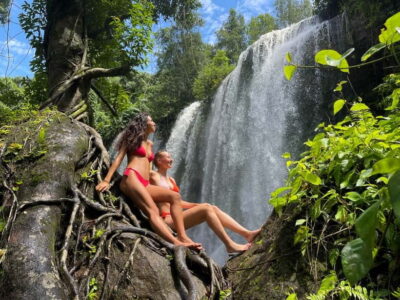
- Peung Kom Nuo on Kulen Mountain: A Quieter Reset Between Big Stops
- Day 2 Up the Dongrek Range: Preah Vihear’s Border-Peak Feel
- Ta Mok House: A Short Stop That Adds Context
- Price and Logistics: What You’re Paying For (and What You Aren’t)
- Timing, Fitness, and What to Pack for Hilly Temple Ground
- Who This Tour Fits Best (and Who Should Rethink It)
- Should You Book Koh Ker & Preah Vihear?
- FAQ
- Where does this tour take place?
- How long is the Koh Ker & Preah Vihear tour?
- What time does the tour start?
- Is pickup offered?
- What is the maximum group size?
- What’s included in the price?
- What’s not included?
- Do I need to buy tickets for the temples?
- What fitness level is required?
- Can I cancel for a full refund?
Key Points You’ll Care About
- Max 2 travelers means a quieter pace and more room for questions
- Vanra/Ry Vanra as guide with English explanations and a safety-first driving style
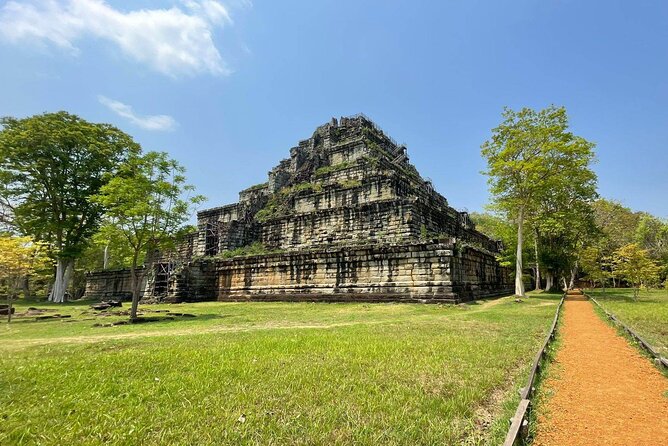
- Koh Ker’s 7-tier Prang pyramid from the Khmer Empire period (928–944 AD)
- Beng Mealea’s ruin surrounded by plants from the early 12th century (Suryavarman II)
- Preah Vihear on the Dongrek range with a dramatic border setting between Cambodia and Thailand
- Ta Mok House adds context about the Khmer Rouge era (1975–1979)
Out to the old pyramid capital
- Koh Ker Temple Group & Beng Mealea Full-Day Join-in Tour★ 5.0 · 710 reviews
- From Siem Reap: Koh Ker and Beng Mealea Temples Tour★ 4.9 · 293 reviews
- Preah Vihear: Full-Day Preah Vihear and Koh Ker Temple Tour★ 4.9 · 263 reviews
- Full-Day Preah Vihear, Koh Ker and Beng Mealea Private Tour★ 4.4 · 101 reviews
A Road Trip Through Cambodia’s Real Terrain (Not Just Temples)
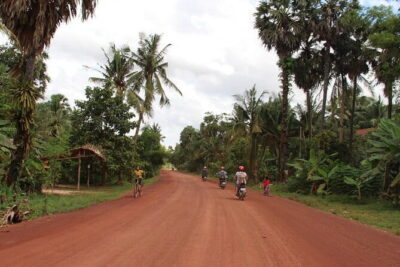
What makes this tour feel different is the travel rhythm. You’re moving through countryside and hill country, not hopping between only the famous city-center sights. That matters because it changes how you experience the ruins: you’re seeing the world the Khmer monuments were built into, and the present-day life that continues around them.
I also like that the day is structured for variety. Day 1 leans into Koh Ker’s older Khmer capital vibe and the more wild, overgrown feel of Beng Mealea. Day 2 shifts to the high, border-top perspective at Preah Vihear, then grounds the trip with a stop at Ta Mok House.
The main practical trade-off is effort. The tour asks for moderate physical fitness, and the wording about hills is not just marketing fluff. Plan for stairs, rough ground, and lots of walking under sun that can feel relentless in Cambodia.
Vanra and Driver Style: Calm, Clear, and Focused on Safety
The guide name you’ll hear is Vanra (also written as Ry Vanra or Ra). The common thread in the feedback is simple: he shows up on time, speaks good English, and explains what you’re looking at in a way that stays readable and practical.
The driving style gets specific praise too. The driver is described as careful and safe, and the route includes regular rest breaks at interesting stops. That’s not just comfort. On a two-day temple circuit, fewer “let’s power through” moments means you’re less likely to feel fried before the best viewpoints.
If you’re the type who likes your history with context (and a little humor), this setup fits. You’re not just standing in front of stone counting steps. You’re hearing why these places mattered, and what to notice as you move between them.
Day 1: Koh Ker Temple Then Beng Mealea’s Wild Ruins
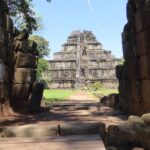
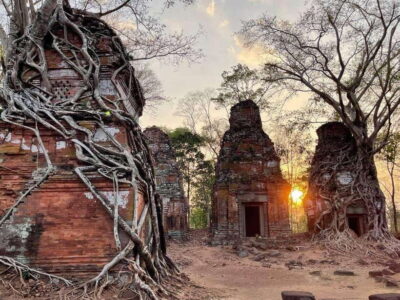
Day 1 starts with Koh Ker Temple, a site tied to one of the Khmer Empire’s older centers. Koh Ker was built between 928 AD and 944 AD and once supported a population said to be over 10,000 people. The star attraction is the 7-tiered Prang pyramid, a tall stepped structure that instantly makes you feel like you’re exploring something more remote than the usual Angkor-style crowds.
What I like about putting Koh Ker first is the mood shift. It feels less like you’re in a theme park and more like you’re heading toward a chapter of history that’s quieter and farther away. Even if you’ve seen big temple towers before, Koh Ker’s scale and tiers give your eyes a different anchor point.
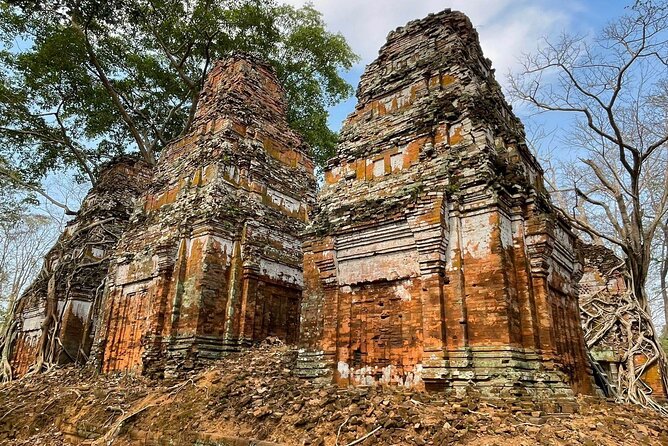
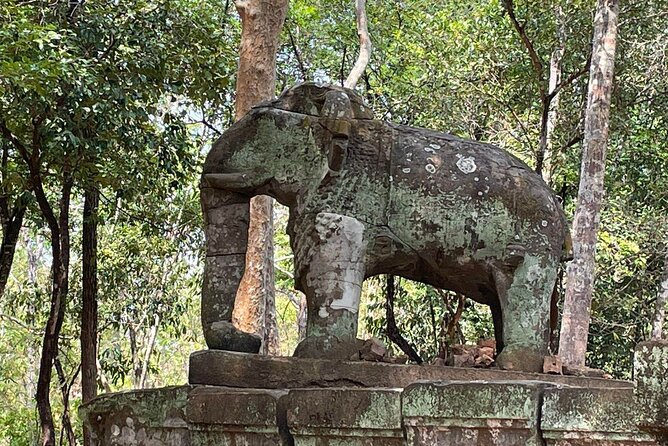
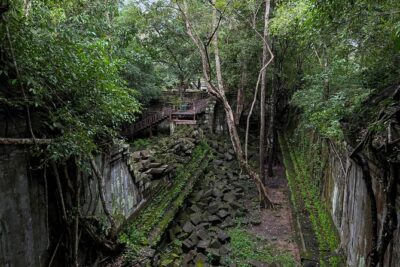
Next up is Prasat Beng Mealea, a ruin associated with King Suryavarman II in the early 12th century. This is the temple where plants start taking over the story, with greenery growing around the stone. The effect is dramatic: you get that “stone meets jungle” look, but it also means the ground can be unpredictable in spots.
A drawback to keep in mind: both Koh Ker and Beng Mealea can be physically demanding. Ruins often mean uneven paths, steps that don’t behave, and shaded areas that are more guesswork than guarantee. Good shoes matter here more than any souvenir-buying strategy.
Peung Kom Nuo on Kulen Mountain: A Quieter Reset Between Big Stops
After the big temple hits, the day includes Peung Kom Nuo, described as a hidden-feeling stop on Kulen Mountain. The way this fits your day is smart. You’ve already had Koh Ker and Beng Mealea—two locations with a lot for your brain to track visually and historically—so this becomes your chance to slow down.
Because the plan gives it about 1 hour, you’re not stuck there all day. You get enough time to appreciate the setting and recover your energy before you head into the next part of the itinerary. If you tend to feel “templed out” by mid-afternoon, this timing can help.
One thing to expect: Kulen Mountain areas usually mean more hill terrain. Even if you’re not climbing, you’re still on uneven ground and walking in sun. Bring water habits into the schedule. Cold water is included, but you’ll still want to sip regularly.
Up to the cliff-top sanctuary
Day 2 Up the Dongrek Range: Preah Vihear’s Border-Peak Feel
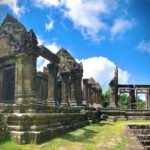
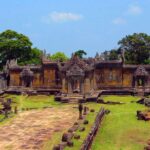
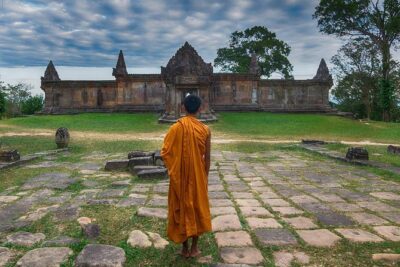
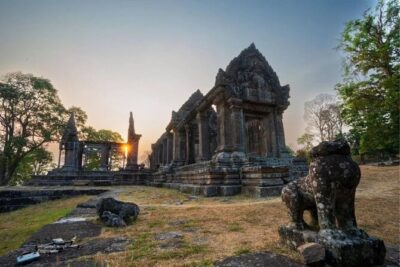
Day 2 begins at Preah Vihear Temple, an ancient Hindu temple built during the Khmer Empire. It sits on top of the Dongrek mountain range, placed between Cambodia and the Thailand border. That location changes everything about how you read the temple: you’re not just viewing architecture, you’re viewing distance, depth, and how a religious site relates to the land.
This stop is allocated about 3 hours, which is helpful. Preah Vihear takes time to absorb because of its elevated setting and the way you move around temple structures at height. If you want photos, this is also where you’ll benefit from that extra time, since light and viewpoint angles tend to shift as you reposition.
Possible consideration: the longer your second day runs, the more you’ll feel the earlier walking. If you come in with tired legs, Preah Vihear can feel more challenging than the same amount of walking would on a flatter route. Pace yourself, take breaks when needed, and don’t rush through just to check boxes.
Ta Mok House: A Short Stop That Adds Context
The last listed stop is Ta Mok House, scheduled for about 30 minutes. Ta Mok was one of the formal Khmer Rouge leaders, active from 1975 to 1979. This is not a temple-photo finish. It’s a darker, more reflective chapter inserted into a trip that otherwise focuses on ancient sites.
I like that the tour doesn’t ignore the more recent history of Cambodia. Even in a short time, it gives you a thread: Cambodia’s story isn’t only ancient stone. It includes modern trauma and political violence too, and those events shape how people remember the past.
Practical note: because it’s brief, you won’t have time for a long reading session on your own. If this topic matters to you, come prepared with basic context so the stop lands quickly and clearly.
Price and Logistics: What You’re Paying For (and What You Aren’t)
The price is $100 per person for the two-day experience in Siem Reap. For that, you get transport, a driver, a tour guide, and cold water. You also get pickup offered, which is a real time-saver on these longer temple days.
What’s not included is equally important: entrance fees, food, accommodation, tips, and other expenses. That means your real “out the door” number depends on what you eat and what the temple admissions cost for your specific dates and entry points.
Value check I recommend: if you’re happy letting someone handle routing and pacing, the deal makes sense. You’re paying for guided interpretation plus transport between distant sites. If you’d rather self-drive and you already know entrance costs and meal plans, you might compare against a DIY option—but for most visitors, two days of hassle-free travel is worth it.
Timing, Fitness, and What to Pack for Hilly Temple Ground
This tour starts at 8:30 am. That early start matters because temple sightseeing is easiest before heat builds and roads get busier. It also gives you more daylight buffer for Day 2’s higher-elevation parts.
The tour calls for moderate physical fitness. I’d treat that as: you don’t need to be an athlete, but you should be able to walk on uneven terrain without drama. Bring:
- Comfortable closed-toe shoes with grip
- Sun protection (hat/sunglasses/sunscreen)
- A light layer you can handle if you’re sweaty and then suddenly shaded
- Cash for entrance fees and any food you buy along the way
Cold water is included, but I still recommend you build your own hydration habit. In hot weather, you want regular sips, not just when you remember.
Who This Tour Fits Best (and Who Should Rethink It)
This is a strong match if you want a guided, two-day route that goes past the main “Angkor-only” pattern. If you like seeing how people live outside the tourist core, the countryside timing and rural setting help your day feel more grounded.
It’s also ideal for couples or solo travelers who prefer quiet. The maximum of 2 travelers changes the experience. You’re not stuck watching a group move like a school bus, and you can ask follow-up questions without shouting.
You might want to rethink if:
- You have mobility limits that make uneven temple ground hard
- You’re hoping for fully planned meals and accommodation (those are not included)
- You want a completely relaxed schedule with minimal walking (this route includes multiple ruins and mountain areas)
Should You Book Koh Ker & Preah Vihear?
I’d book this if you want two days that feel like a real Cambodian journey: old Khmer monuments in the hills, a mix of grand structures and overgrown ruins, then a high viewpoint at Preah Vihear followed by a short stop that adds modern historical context.
The biggest reasons to choose it are practical. You get a safety-first guide-driver team, a small group size, and enough time to actually see each stop rather than sprint through. The main reason to hesitate is also practical: you should be ready for hills and uneven temple paths, and you’ll need a budget for entrances and meals.
If that sounds like your kind of trip, this one is a smart use of two days in Siem Reap.
FAQ
Where does this tour take place?
It’s based in Siem Reap, Cambodia, and the route visits Koh Ker Temple, Beng Mealea, Peung Kom Nuo, Preah Vihear Temple, and Ta Mok House.
How long is the Koh Ker & Preah Vihear tour?
The duration is 2 days (approx.).
What time does the tour start?
The start time is 8:30 am.
Is pickup offered?
Yes. Pickup is offered.
What is the maximum group size?
The tour has a maximum of 2 travelers.
What’s included in the price?
Included are transport, a driver, a tour guide, and cold water.
What’s not included?
Entrance fees, food, accommodation, tips, and other expenses are not included.
Do I need to buy tickets for the temples?
Entrance tickets are not included, so you’ll need to pay the temple entry fees separately.
What fitness level is required?
The tour requires a moderate physical fitness level, mainly because the route includes hilly temple terrain.
Can I cancel for a full refund?
Yes. Free cancellation is allowed, and you can cancel up to 24 hours in advance for a full refund.
More Tour Reviews in Siem Reap
- Angkor Wat Sunrise or Sunset Tour with Guide from Siem Reap
★ 5.0 · 12,109 reviews - Siem Reap: Angkor Wat: Small-Group Sunrise or Sunset Tour
★ 5.0 · 9,444 reviews - From Siem Reap: Kampong Phluk Floating Village Tour by Boat
★ 4.9 · 6,979 reviews - Sunset tour of Kampong Phluk stilts home village on the Tonle Sap
★ 5.0 · 4,865 reviews - Siem Reap: Angkor Wat 2-Day Tour with Sunrise and Sunset
★ 4.9 · 4,429 reviews
Up to Preah Vihear
- Preah Vihear: Full-Day Preah Vihear and Koh Ker Temple Tour
★ 4.9 · 263 reviews - Full-Day Preah Vihear, Koh Ker and Beng Mealea Private Tour
★ 4.4 · 101 reviews - Preah Vihear temple – Koh Ker & Other temple with Small Group
★ 5.0 · 96 reviews - Private Preah Vihear and 2 Temples Guided Tour
★ 5.0 · 42 reviews - Preah Vihear, Koh Ker & Beng Mealea Tour
★ 5.0 · 18 reviews
The Pyramid at Koh Ker
- Koh Ker Temple Group & Beng Mealea Full-Day Join-in Tour
★ 5.0 · 710 reviews - From Siem Reap: Koh Ker and Beng Mealea Temples Tour
★ 4.9 · 293 reviews - Preah Vihear: Full-Day Preah Vihear and Koh Ker Temple Tour
★ 4.9 · 263 reviews - Full-Day Preah Vihear, Koh Ker and Beng Mealea Private Tour
★ 4.4 · 101 reviews - Preah Vihear temple – Koh Ker & Other temple with Small Group
★ 5.0 · 96 reviews
Just Added: Fresh Siem Reap Tour Reviews

Koh Ker Temple Tours, compared.
 ★ 5.0Koh Ker Temple Group & Beng Mealea Full-Day Join-in TourFrom $50710 reviews
 ★ 4.9From Siem Reap: Koh Ker and Beng Mealea Temples TourFrom $50293 reviews
 ★ 4.9Preah Vihear: Full-Day Preah Vihear and Koh Ker Temple TourFrom $100263 reviews
 ★ 4.4Full-Day Preah Vihear, Koh Ker and Beng Mealea Private TourFrom $85101 reviews
 ★ 5.0Preah Vihear temple – Koh Ker & Other temple with Small GroupFrom $10096 reviews
 ★ 5.04-Day Excursion of Angkor, Koh Ker, Beng Mealea, Tonle Sap and WaterfallsFrom $24987 reviews
 ★ 5.0Koh Ker, Beng Mealea, & Banteay Srei Join-in TourFrom $6948 reviews
 ★ 5.0Full Day Banteay Srei Beng Mealea and Koh Ker Small Group TourFrom $7533 reviews
Browse the lists this tour appears in