
Reviewed · FLOATING VILLAGES & TONLE SAP TOURS
Kompong Phluk Floating Village Tour from Siem Reap
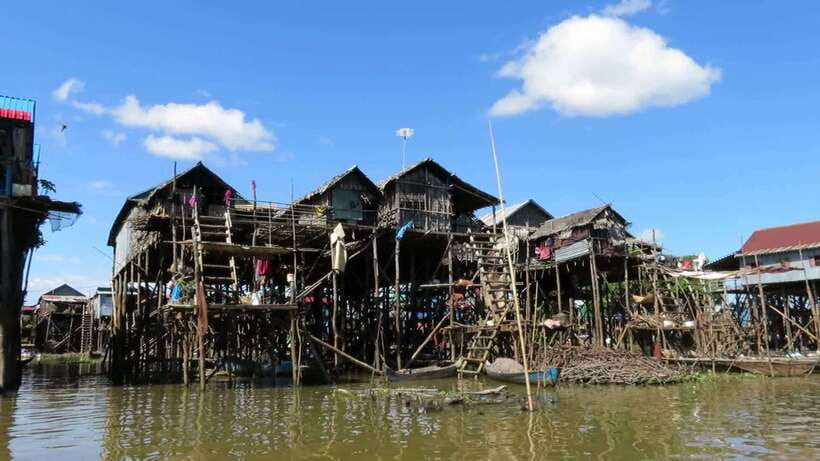
Stilted houses and school bells on the waterline make this day real. This short trip from Siem Reap takes you to Kompong Phluk, a traditional fishing-and-farming community on Tonlé Sap Lake’s biosphere reserve, with time on the river and into the wider lake system.
I love the practical, up-close look at how people live. You’ll see daily routines tied to fishing, small-scale farming, and village life that changes with the seasons. I also like the boat focus: when water levels allow, you get that extra movement through the flooded forest rather than just standing on a bank taking photos.
One drawback to plan around: four hours goes fast, and in drier periods you may walk more and get less of the classic flooded-forest rowing. If you’re sensitive about animal settings, there can also be an animal-cage stop on some days, so it’s worth keeping that in mind.
In This Review
- Key highlights that make this tour worth your time
- From Siem Reap to Tonlé Sap: the ride that sets expectations
- Kompong Phluk’s stilted streets: schools, pagoda, and two villages
- River cruising and the flooded-forest row: what changes by season
- Tonlé Sap Lake: the UNESCO biosphere reserve explained in plain terms
- A local guide from inside the village rhythm
- The animal-related stop you may want to think about first
- Lunch, water, and timing: how the day stays manageable
- Price and logistics: does $66 for four hours feel fair?
- Who should book Kompong Phluk, and who should skip it
- Should you book the Kompong Phluk Floating Village Tour from Siem Reap?
- FAQ
- How long is the Kompong Phluk Floating Village Tour?
- How much does it cost?
- Where is the pickup point?
- Does the tour include transportation and a guide?
- Is the boat trip included?
- What about food and drinks?
- Is there walking involved?
- Can the tour handle different weather?
- Are there age limits or rules for minors?
- What languages are the guides?
Key highlights that make this tour worth your time
- Stilted Khmer village life in two connected areas of Kompong Phluk, not a single staged spot
- School visits and a big pagoda temple, which makes the village feel like a real community
- Boat time and flooded-forest rowing (if conditions allow), where the water level changes the whole experience
- Tonlé Sap Lake context, including why this UNESCO biosphere reserve exists in the first place
- Possible wildlife sightings like large water birds, plus buffaloes cooling near the river systems
- Guides from local communities who can explain daily life from inside the rhythm of the lake
Back out on the lake, more stilted villages
- From Siem Reap: Kampong Phluk Floating Village Tour by Boat★ 4.9 · 6,979 reviews
- Sunset tour of Kampong Phluk stilts home village on the Tonle Sap★ 5.0 · 4,865 reviews
- Kompong Phluk Floating Village Half-Day Tour ( Morning / Sunset )★ 5.0 · 1,494 reviews
- Siem Reap: Kulen Mountain, Beng Mealea and Tonle Sap Tour★ 5.0 · 1,483 reviews
From Siem Reap to Tonlé Sap: the ride that sets expectations
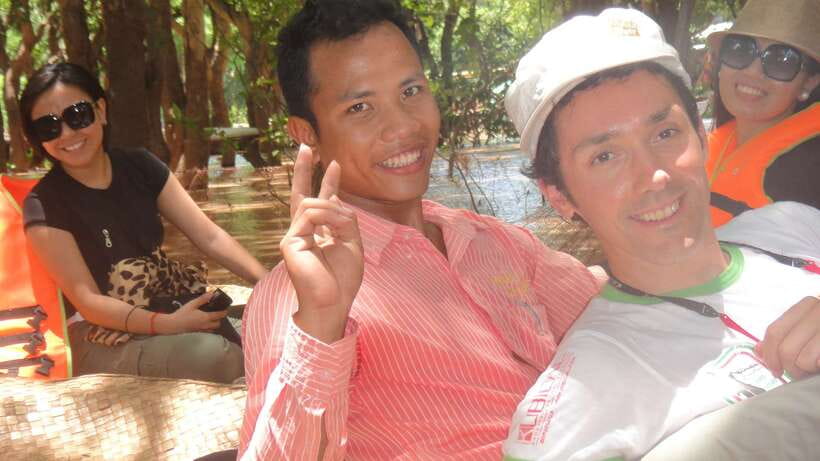
You’ll start with pickup from Krong Siem Reap, then head southeast through rural lanes, rice fields, and village outskirts until you reach the Tonlé Sap area. The transfer is done by air-conditioned car or minivan, with an extra tuk-tuk ride time in the mix depending on where you’re staying.
This matters because Kompong Phluk isn’t built like an Angkor stop with one obvious “big photo moment.” The drive is part of the point: you’re shifting from temple-country to water-country, where life depends on seasons and changing depth. If you tend to get impatient in transit, this is a good reminder to relax your pace for the day.
Once you reach the lake zone, you’ll board long-tail boats as far as you can by road, then shift into the water experience that actually defines Kompong Phluk. That handoff between road and river is where the vibe changes.
Kompong Phluk’s stilted streets: schools, pagoda, and two villages
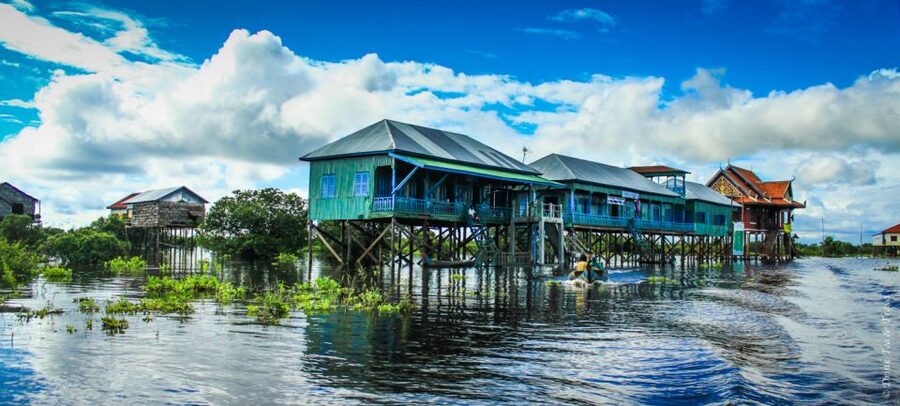
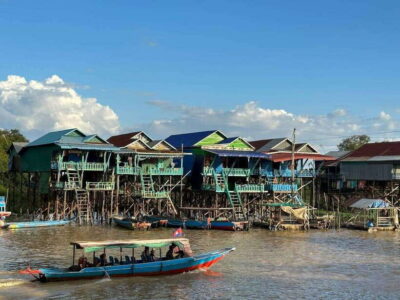
Kompong Phluk is a traditional Khmer village with about 3,000 people. Most residents make their living from fishing and farming, and the stilted homes show how their architecture responds to water rising and falling.
You’ll spend time in village areas that include multiple schools and a larger pagoda temple. Those visits are more than sightseeing because schools and temples anchor daily life and community routine. Even if you don’t know Khmer, you’ll pick up a lot from what children are doing and how people move through the space.
A key detail: Kompong Phluk is actually two villages. They’re separated by a large pergola, and this tour is designed to visit both sides rather than sticking to one cluster. You’ll see many stilted homes, some reported as reaching up to around 10 meters tall, which helps you understand why this place looks the way it does.
If the water isn’t high enough to float through everything, you may explore some parts on foot. That’s not automatically worse. Walking gives you a clearer sense of pathways between houses and how the village transitions from dry ground to water-based living.
River cruising and the flooded-forest row: what changes by season
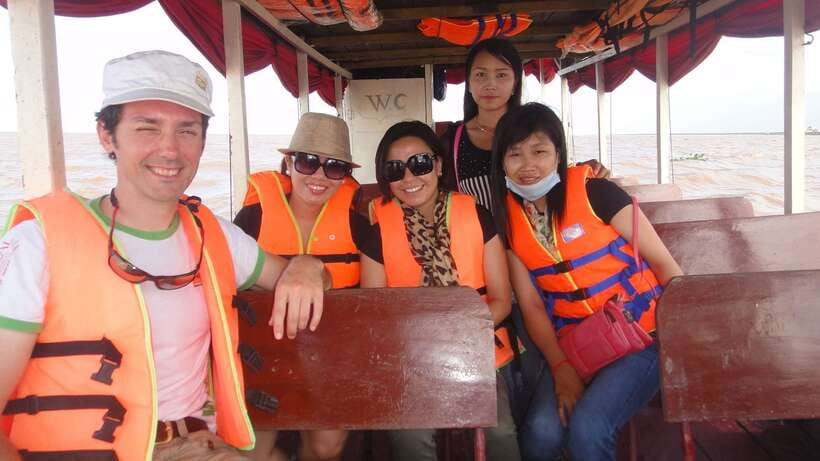
After you’re on the water, you’ll sail or cruise down the Kompong Phluk River toward the stilted township area. Depending on tidal conditions and the season, you may go as far as the main flow allows and then continue in smaller craft.
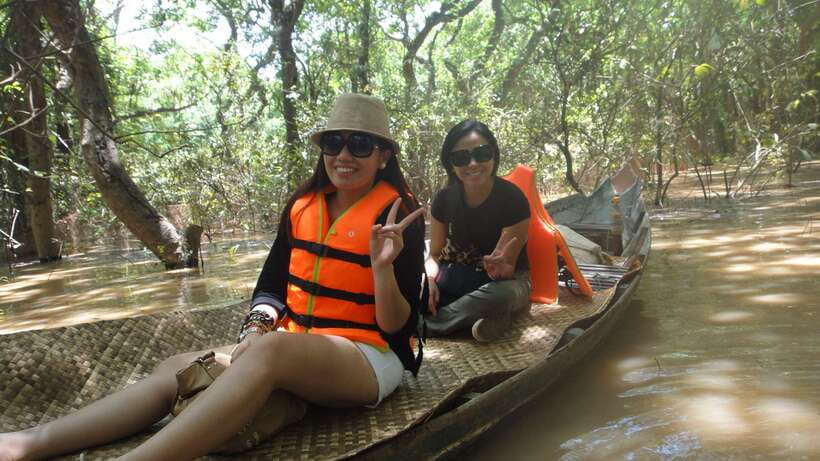
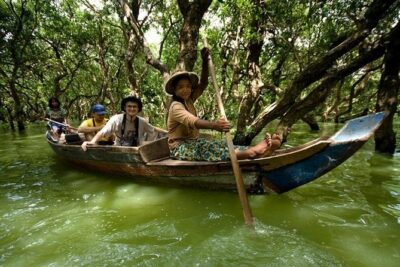
The standout option is being rowed through the flooded forest in a smaller boat. This is the moment that feels most distinct from a standard village visit, because the flooded trees and waterways create a tunnel-like feel. But it’s conditional: the level on Tonlé Sap can vary by up to about 10 meters depending on the season, so your day can look different.
In drier conditions, expect more walking and more “village viewpoint” time. In wetter conditions, expect more time with water all around you. Either way, bring that mindset and you’ll get more out of what you’re seeing.
Also keep your phone/camera ready, but don’t make it your only job. The slow boat motion is a great time to listen to your guide explain how farming and fishing schedules shift with water depth. In guides like Mr Friday and Veel, there’s a repeated emphasis on clear explanations and practical answers.
Tonlé Sap Lake: the UNESCO biosphere reserve explained in plain terms
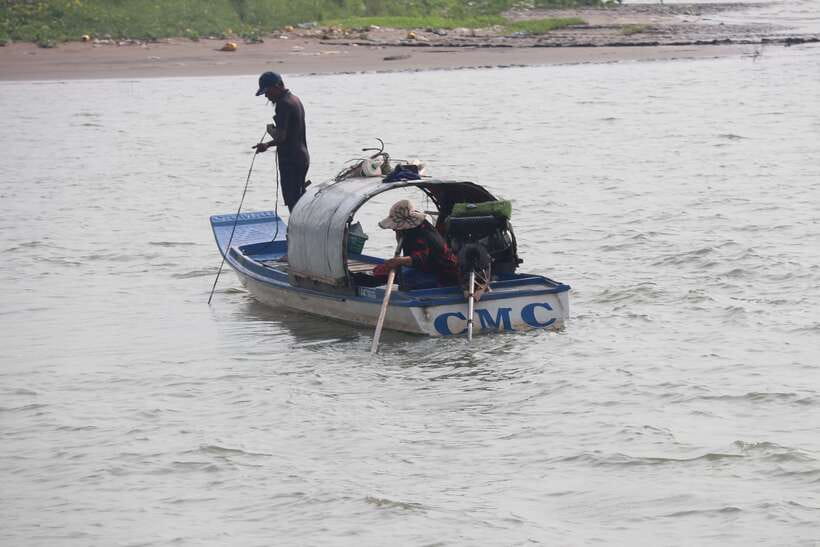
Tonlé Sap isn’t just a backdrop. It’s a UNESCO biosphere reserve designated in 1997 because of high biodiversity in the rivers and lakes, and that biodiversity drives how local livelihoods work.
When you head out further toward Tonlé Sap Lake, the scale changes quickly. Tonlé Sap is described as the largest freshwater lake in Southeast Asia and the richest fishing lake in the world. The tour context also emphasizes that a huge share of Khmer protein is connected to this system, with figures like 75% mentioned as coming from farming the lake’s ecosystem.
What you’re really learning is how food production here isn’t only about catching fish. It’s also about the flood cycle: nutrients spread, habitats expand, and seasonal changes create the conditions for abundant fisheries. That’s why Kompong Phluk’s daily life feels tied to the water level, not just the season in the calendar.
You may also spot wildlife, especially rare or unique large water birds. There’s a chance you’ll see fishing in the shallows or water buffalo cooling down in nearby river systems. None of this is guaranteed, but it’s exactly the kind of “take your time and look” moment that makes the lake worth leaving the road for.
Past the rice fields, more village days
A local guide from inside the village rhythm
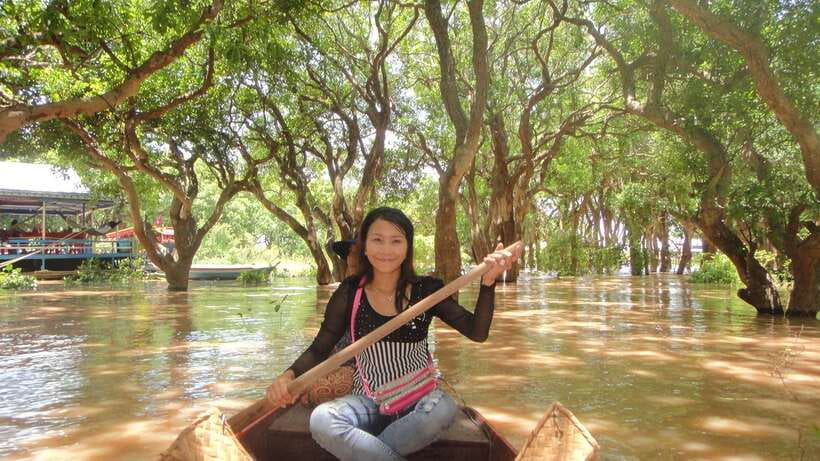
One reason this tour can feel more grounded is that your guide comes from the Kompong Phluk community itself. That means you’re getting explanations tied to daily routines and real struggles, not generic “tour guide facts.”
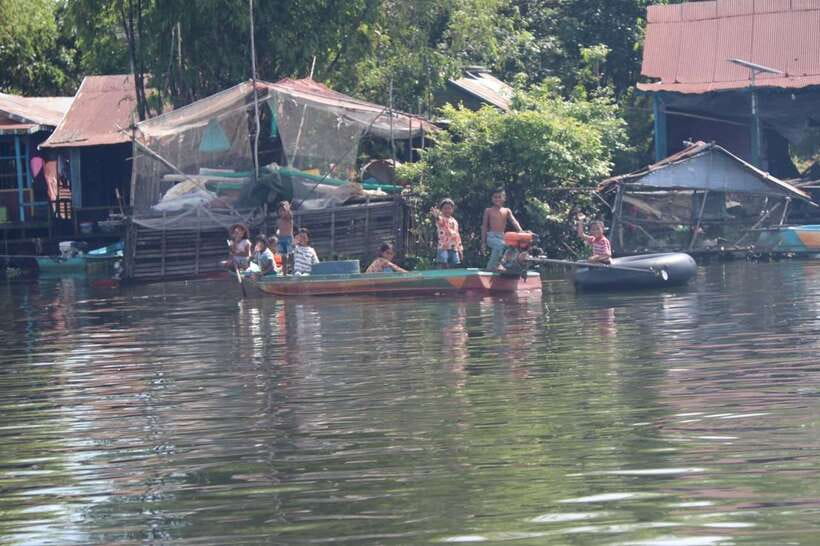
The tour also includes a smaller floating village attached to the overall area. It’s mentioned as less visited by many tours, which can make your experience feel quieter and more educational. With a local guide explaining life from inside, you’re more likely to understand what you’re seeing: how people adapt as the water changes and how children experience day-to-day life on or near the water.
Kids are often a highlight in the descriptions and feedback, frequently described as smiling and playful. That matters, because it keeps the day from feeling like a one-sided “look at the poor” photo session. You’re visiting a place with personalities, relationships, and routines.
If you want to get the most out of this part, ask practical questions. Things like how fishing works during different water levels, or what a typical school day looks like during floods. When guides such as Mr Friday, Mr Wanna, and Mr.bean are credited for strong English and friendly explanations, it’s usually because they can answer those everyday questions.
The animal-related stop you may want to think about first
Not every day will feel perfect for every value set. One experience noted a crocodile farm with animals in cages during a market/animal-related segment, and that reviewer felt it changed the tone of part of the route.
If animal welfare is a big factor for you, you’ll want to decide in advance what you’re comfortable with. The rest of the day can still be meaningful, especially the village time, school/pagoda visits, and the boat ride. But it helps to know that the day may include a stop that mixes local commerce with animal displays.
This is also where I encourage you to keep your attention on the village-side learning. Kompong Phluk is at its best when you’re watching daily life unfold and hearing local explanations, not when the itinerary turns into a wildlife attraction checklist.
Lunch, water, and timing: how the day stays manageable
You’ll get a light fruit lunch plus water included. That’s a useful detail because you’re out for about four hours and you don’t want to burn time hunting for snacks in rural areas. The fruit lunch also fits the overall simplicity of the day.
A small amount of walking is involved. You won’t be hiking, but you may move between stilted areas and viewpoints, especially in drier seasons when boat access is more limited. Wear shoes you don’t mind getting a bit dusty.
In terms of timing, the tour is built around a single large block on the lake and river side (about three hours). That keeps things from dragging, but it also means you won’t have unlimited time at each spot. If you’re the type who wants slow, long conversations, you may want to prioritize one or two areas to explore with your guide rather than trying to see everything at maximum speed.
Price and logistics: does $66 for four hours feel fair?
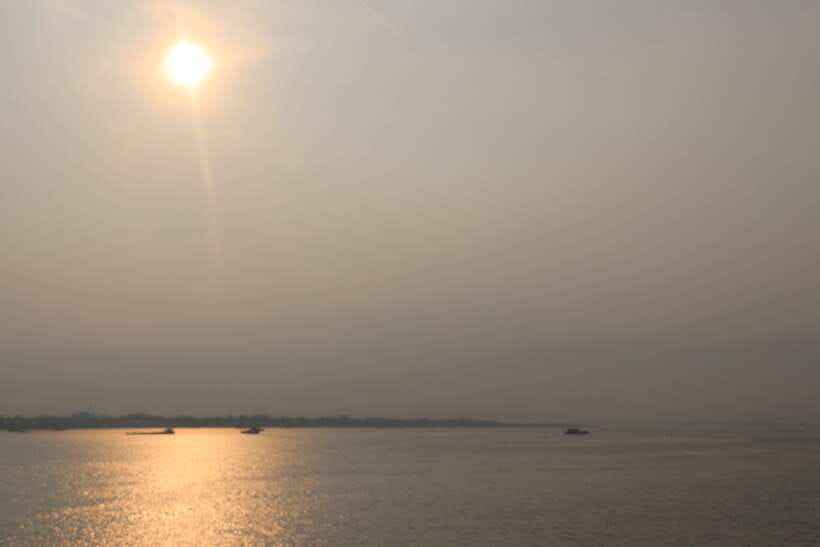
At $66 per person for a four-hour tour, the value depends on what you want from the day. This price includes hotel pick-up and drop-off, transport (including tuk-tuk transfers), a professional guide, the boat trip, light fruit lunch, water, and all checkpoint fees.
In practical terms, the expensive part here is the transportation plus boat time plus guide hours. Because you’re not just visiting one roadside attraction, the day has real infrastructure behind it: road transfer, boat handling, and multiple site stops. That makes the price feel more reasonable if you’d otherwise have to piece together a private driver and a separate boat arrangement.
Where price can feel less satisfying is if your season or water conditions reduce the flooded-forest rowing and limit boat access. One note also suggested there wasn’t that much to see for the price. I’d treat that as a reminder to check your expectations: this is short, and your payoff is strongest when water conditions allow you to see the village in its most “floating” form.
My practical advice: if you care most about the boat experience, go when conditions favor rowing. If you care most about village life, the stilted homes, pagoda, and school stops can still deliver even if the forest portion is smaller.
Who should book Kompong Phluk, and who should skip it
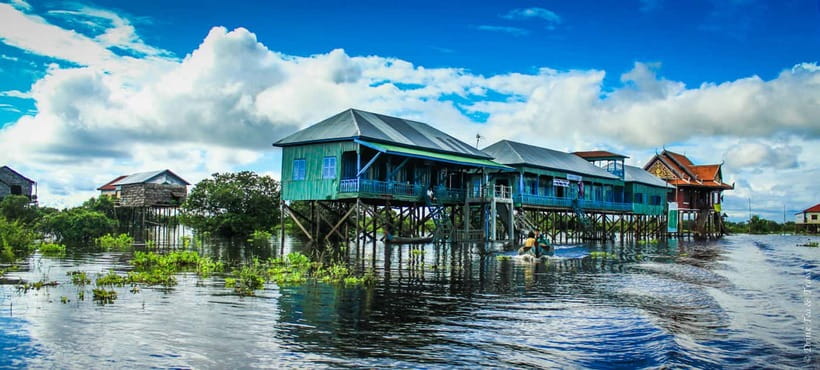
This is a great match if you want a contrast day from Angkor: village life tied to a working lake system, not just temples and carvings. It’s also a good choice if you like guided context because the experience is about how things work—fishing schedules, seasonal water level shifts, and daily community structure.
I’d also say it suits families, with one important caveat: unaccompanied minors aren’t allowed, and children must be with an adult. The tour involves some walking, so very young kids may need a calmer pace than a full-day day trip.
You might reconsider if you dislike uncertainty around water-based activities. The flooded-forest row depends on conditions, and in dry periods you may walk more. If you strongly prefer tours without any animal-farm-style stops, it’s worth mentally preparing for that possibility.
Should you book the Kompong Phluk Floating Village Tour from Siem Reap?
Yes, if you want an authentic Tonlé Sap day with stilted village life, school and pagoda time, and the chance at a flooded-forest boat row. The best part is how the tour explains daily routines tied to water levels, especially when your guide is from the community and can answer real questions.
Consider a “maybe” if you only care about maximum water-boat time, or if animal-cage attractions would make you uncomfortable. In that case, you can still get value from Kompong Phluk, but you should go with eyes open and keep your priorities on the village and river-side learning.
If you’re choosing between this and another Siem Reap activity, I’d pick this when you want something human-scale and seasonal. It’s the kind of day that changes how you picture Cambodia after the temples.
FAQ
How long is the Kompong Phluk Floating Village Tour?
The tour lasts about 4 hours.
How much does it cost?
It’s priced at $66 per person.
Where is the pickup point?
Pickup is from Krong Siem Reap.
Does the tour include transportation and a guide?
Yes. It includes hotel pick-up and drop-off, transportation by air-conditioned car or minivan or tuk tuk, and a professional guide.
Is the boat trip included?
Yes, a boat trip is included.
What about food and drinks?
A light fruit lunch and water are included. Other food and drinks are not included unless specified.
Is there walking involved?
Yes, a small amount of walking is involved.
Can the tour handle different weather?
It operates in all weather conditions, so dress appropriately.
Are there age limits or rules for minors?
Unaccompanied minors are not allowed, and children must be accompanied by an adult.
What languages are the guides?
The tour guide works in Cambodian and English.
More Tour Reviews in Siem Reap
- Angkor Wat Sunrise or Sunset Tour with Guide from Siem Reap
★ 5.0 · 12,109 reviews - Siem Reap: Angkor Wat: Small-Group Sunrise or Sunset Tour
★ 5.0 · 9,444 reviews - From Siem Reap: Kampong Phluk Floating Village Tour by Boat
★ 4.9 · 6,979 reviews - Sunset tour of Kampong Phluk stilts home village on the Tonle Sap
★ 5.0 · 4,865 reviews - Siem Reap: Angkor Wat 2-Day Tour with Sunrise and Sunset
★ 4.9 · 4,429 reviews
Through the Siem Reap Countryside
- From Siem Reap: Kampong Phluk Floating Village Tour by Boat
★ 4.9 · 6,979 reviews - Kampong Phluk Floating Village Tour by Boat
★ 5.0 · 1,020 reviews - Siem Reap Countryside Bike Tour / E-Bike or Tuk Tuk
★ 5.0 · 935 reviews - Siem Reap: Tonle Sap, Kampong Phluk & Floating Village Tour
★ 4.4 · 397 reviews - Siem Reap Countryside Quad Biking Tour
★ 5.0 · 322 reviews
Out on Tonle Sap
- From Siem Reap: Kampong Phluk Floating Village Tour by Boat
★ 4.9 · 6,979 reviews - Sunset tour of Kampong Phluk stilts home village on the Tonle Sap
★ 5.0 · 4,865 reviews - Kompong Phluk Floating Village Half-Day Tour ( Morning / Sunset )
★ 5.0 · 1,494 reviews - Siem Reap: Kulen Mountain, Beng Mealea and Tonle Sap Tour
★ 5.0 · 1,483 reviews - Tonle Sap Lake & Kampong Phluk Village Half-Day Tour
★ 5.0 · 1,045 reviews
Just Added: Fresh Siem Reap Tour Reviews

Floating Villages & Tonle Sap Tours, compared.
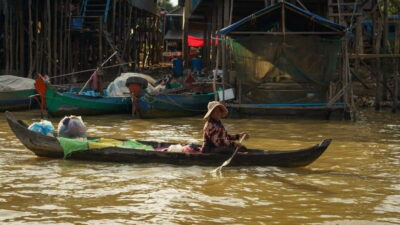 ★ 4.9From Siem Reap: Kampong Phluk Floating Village Tour by BoatFrom $206,979 reviews
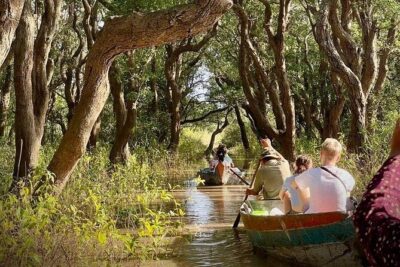 ★ 5.0Sunset tour of Kampong Phluk stilts home village on the Tonle SapFrom $214,865 reviews
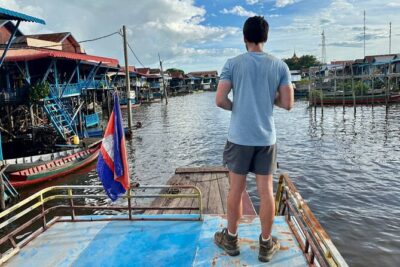 ★ 5.0Kompong Phluk Floating Village Half-Day Tour ( Morning / Sunset )From $241,494 reviews
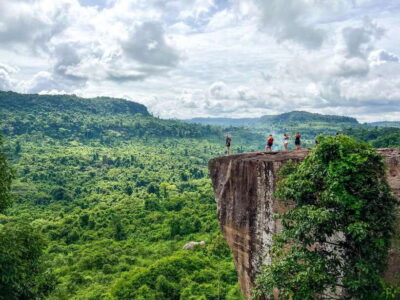 ★ 5.0Kulen Mountain, Beng Mealea and Tonle Sap TourFrom $481,483 reviews
 ★ 5.0Tonle Sap Lake & Kampong Phluk Village Half-Day TourFrom $491,045 reviews
 ★ 5.0Kampong Phluk Floating Village Tour by BoatFrom $201,020 reviews
 ★ 4.8Kompong Phluk Floating Village Half-Day TourFrom $24966 reviews
 ★ 5.0Kulen Mountain with Beng Mealea and Tonle Sap Small Group TourFrom $54780 reviews
Browse the lists this tour appears in