
Reviewed · ANGKOR WAT TEMPLE TOURS
Private 2 Days Angkor Wat Sunrise and Discover all Major Temples
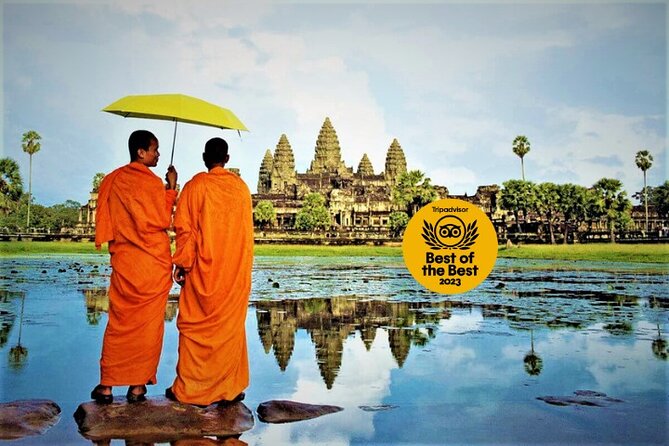
4:30am still feels like a cheat code here. This private two-day Angkor plan is built around the best light for Angkor Wat sunrise and a proper sunset viewpoint, plus a licensed English-speaking guide who connects the Khmer Empire story to the stones you’re standing on. You also get a comfortable, air-conditioned ride with bottled water and cool towels for the slower moments in between.
Two things I really like: the tight, logical route that hits the biggest names without turning your legs into dust, and the way the guide brings the site to life in clear, practical explanations. I’ve seen guides from this operator praised for strong English and helpful, calm energy (names like Sara and Leap show up often), and drivers like Ry and La are repeatedly described as careful and kind.
My main caution is simple: it’s an early, packed schedule and the Angkor Pass entrance fee is not included, so you’ll want to factor that in before you arrive.
In This Review
- Key things that make this Angkor tour worth it
- Why this 2-day Angkor Wat sunrise plan fits first-timers
- Price and what $149.46 buys you in real value
- Day 1: Angkor Wat sunrise, then the royal walls of Angkor Thom
- Angkor Wat at dawn: more than a postcard
- South Gate causeway: the road into the city
- Angkor Thom: the big city moment
- Bayon and its stone faces: the heart of the royal center
- Baphuon: huge before Angkor Wat stole the spotlight
- Phimeanakas and the royal terraces
- Ta Nei and Banteay Kdei: slowing down outside the center
- Day 1 pacing tip: this is “action-packed,” but not random
- Day 2: Banteay Srei’s details, Preah Khan’s scale, and the final viewpoint vibe
- Banteay Samre: a Hindu temple near the water
- Preah Dak Village: souvenirs with a local texture
- Preah Khan: dedicated to Jayavarman’s father
- Neak Pean: the island temple with a different plan
- Ta Som and Eastern Mebon: smaller, but with clear identities
- Pre Rup: the major legacy that fits the closing light
- What the best guides do here (and why it matters)
- Logistics that actually help: tickets, meals, and getting through the heat
- Who should book this Angkor Wat sunrise and major temples tour?
- Should you book it
- FAQ
- What locations is this tour based in?
- How long is the tour?
- Is hotel pickup and drop-off included?
- Is the Angkor Pass entrance fee included?
- What’s included in the tour price?
- Are meals included?
- Is this a private tour?
- Is free cancellation available?
Key things that make this Angkor tour worth it
- Angkor Wat at sunrise plus a sunset stop so you’re not just catching random daylight
- Licensed English guide who helps you read what you see (faces, terraces, devatas, and layout)
- Private AC vehicle with water and cool towels for real comfort between temples
- Major sites plus quieter add-ons like Ta Nei and Banteay Kdei, and day two’s Preah Khan and Neak Pean
- Flexible feel within a structured route, with customization mentioned in guest feedback
- Hotel pickup and drop-off in Siem Reap, so you start and end stress-free
Other ways to walk the great temple
- Angkor Wat Sunrise or Sunset Tour with Guide from Siem Reap★ 5.0 · 12,109 reviews
- Siem Reap: Angkor Wat: Small-Group Sunrise or Sunset Tour★ 5.0 · 9,444 reviews
- Siem Reap: Angkor Wat 2-Day Tour with Sunrise and Sunset★ 4.9 · 4,429 reviews
- Siem Reap: Full-Day Angkor Wat Guided Tour with Sunset★ 4.9 · 3,803 reviews
Why this 2-day Angkor Wat sunrise plan fits first-timers
If it’s your first time at Angkor, you’ll learn fast that the temples aren’t random. They’re built into a planned world of roads, water, gates, and ceremonies. This tour makes that pattern easier because it groups sites by how they connect to the royal city and the surrounding barays (those massive water reservoirs).
You also get the big advantage of timing. Sunrise at Angkor Wat is its own event, and doing it early means you’re viewing the silhouette when it’s calm enough to actually appreciate the architecture. Later, the schedule keeps you moving through the highlights while the day is hottest, and then aims for another memorable light moment with a sunset viewpoint.
Price and what $149.46 buys you in real value
At about $149.46 per person, what you’re paying for isn’t just temple entry. You’re paying for a licensed guide, a private air-conditioned vehicle, and the convenience of hotel pickup and drop-off.
Here’s what that can mean for your day-to-day comfort:
- A private AC car matters in Siem Reap heat, especially when you’re hopping between sites that can feel far apart.
- Bottled water and cool towels help you keep the pace without turning the whole trip into a dehydration project.
- You’re not wasting time on figuring out routes or which entrance to use. Your guide assists with the Angkor Pass purchase at the park entrance before you start.
One more value point: the route includes both the famous crowd-pleasers and additional temples that often get overlooked when people only do the fastest circuit. You’ll still see the icons, but the guide can explain why the lesser-visited sites matter.
Day 1: Angkor Wat sunrise, then the royal walls of Angkor Thom
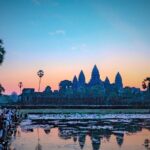
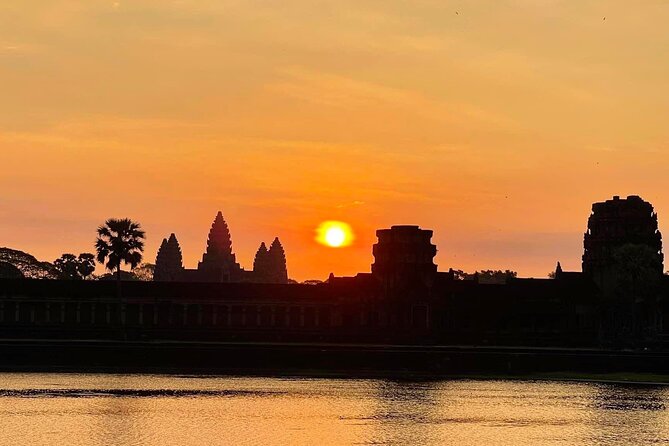
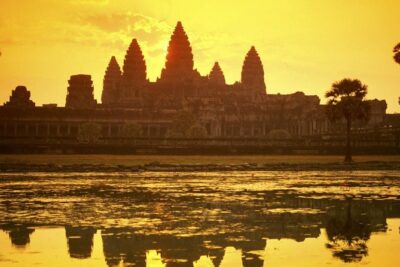
Day one starts very early. You’ll be picked up and positioned for sunrise at Angkor Wat. The timing is the whole point. When the light hits the towers, you get that classic silhouette effect, with the towers reading differently depending on the viewing angle. Your guide also uses the early hours to help you orient yourself, which pays off later when you’re trying to understand how Angkor Wat relates to the larger royal-city layout.
Angkor Wat at dawn: more than a postcard
Plan for sunrise to be the most emotional moment of the whole trip, mainly because you’re seeing the temple in a calmer rhythm. Your guide can help you understand the symbolism tied to the Khmer identity and the significance of the complex’s composition.
A practical note: the Angkor Pass entrance fee isn’t included, so make sure you’re ready to purchase it at the entrance area when instructed.
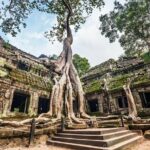
Chasing the light? More dawn and dusk runs
South Gate causeway: the road into the city
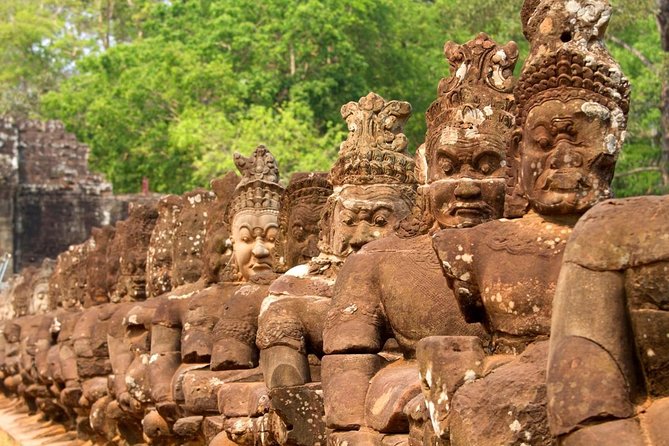
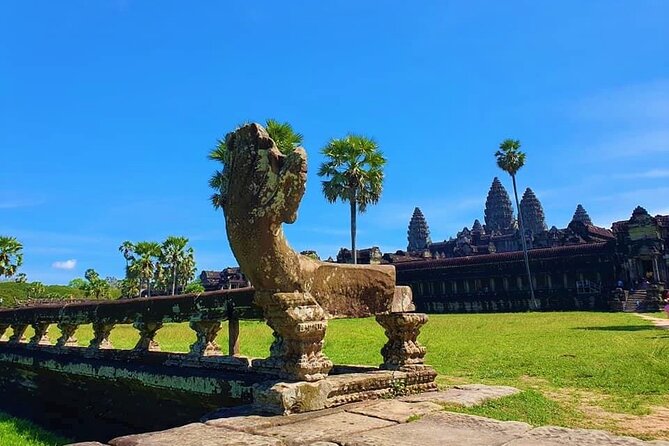
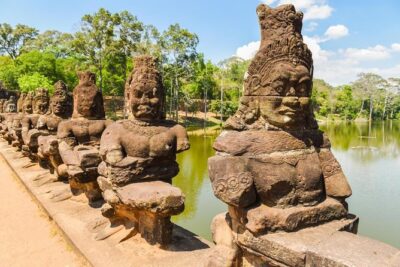
After sunrise, you shift to Angkor Thom’s monumental entrance area. The South Gate is famous for its restored stone causeway across the wide moat. What makes this stop more than just a doorway is the scale and the sculpted railings, built from long rows of giant figures. It’s the kind of place where your guide can point out how movement was choreographed—this was meant to feel ceremonial as much as it was meant to be practical.
Angkor Thom: the big city moment
Angkor Thom is the “big Angkor” royal city, and you’ll feel it the second you see the layout. This is where you start noticing repeating design ideas across temples: gateways, courtyards, axis lines, and carved boundaries that used to separate sacred and everyday spaces.
Bayon and its stone faces: the heart of the royal center
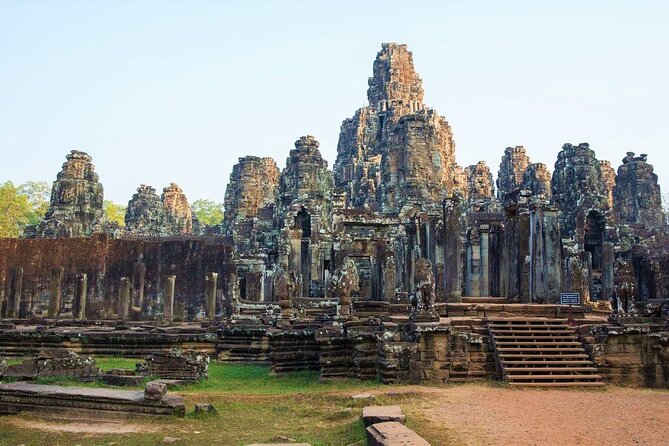
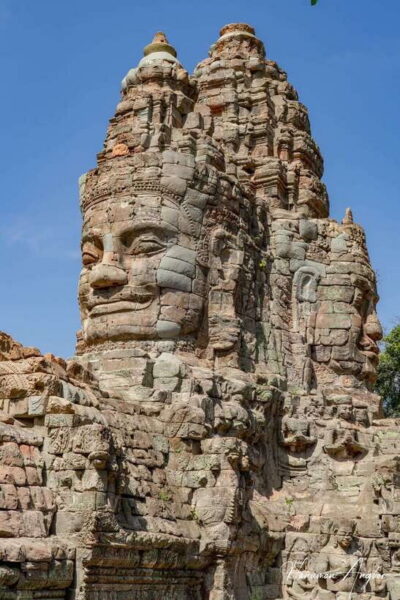
At Bayon, your eyes will lock onto the stone faces. The temple sits in the center of Angkor Thom and is considered the second most popular monument after Angkor Wat. The guide’s job here is crucial. If you just walk past, it’s easy to treat the faces like a single style. With interpretation, you start seeing how the expression, placement, and temple location connect to the political and religious messages of the era.
Baphuon: huge before Angkor Wat stole the spotlight
Next comes Baphuon, located near Bayon. You’ll learn that it was once the largest Khmer temple of its time, before Angkor Wat took over that role. Even if you’re not a stone-nerd, you’ll enjoy the way your guide ties Baphuon into the timeline of Khmer construction.
Phimeanakas and the royal terraces
A few stops later you’re moving through the layers of the royal compound:
- Phimeanakas: tied to the idea of an aerial or celestial palace.
- Terrace of the Elephants: a long, impressive wall-and-platform stretch along the western edge of the royal square.
- Terrace of the Leper King: another terrace stop in the northwest corner area.
These terraces can feel similar if you’re tired. Your best move is to let the guide talk for a minute at each one, then take your own quiet time to look at the carvings and their placement.
Ta Nei and Banteay Kdei: slowing down outside the center
You’ll finish day one with more spread-out temples, which is exactly what keeps the pace from getting monotonous:
- Ta Nei sits near the northwest corner of the East Baray and was dedicated to the Buddha, which makes it feel like a different flavor of sacred space compared with the royal Hindu-era sites.
- Banteay Kdei is convenient to find because it’s close to where major circuits meet, and it also sits near the Srah Srang reservoir area.
These are the kinds of stops where you’ll appreciate the private vehicle and timing, because they’re often less packed than the core monuments.
Day 1 pacing tip: this is “action-packed,” but not random
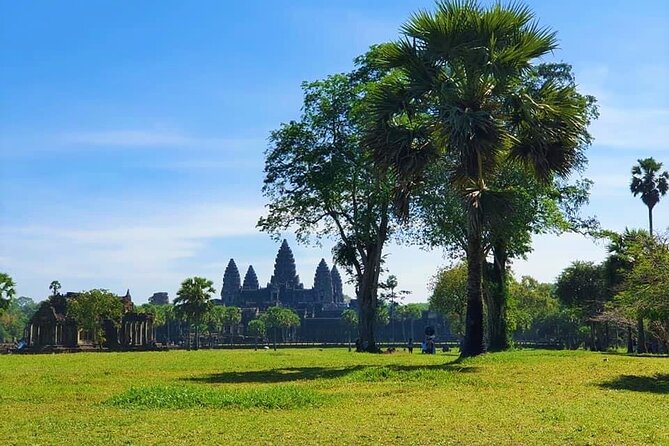
Day one is long and full. You’ll likely spend more time walking than you expected, and the heat can sneak up on you once the sun climbs. The good news is that the tour includes AC transfers plus cool towels and water, so you can recover between clusters.
If you’re sensitive to early starts, plan your evening before day one carefully. You don’t want to be negotiating sleep deprivation at 4:30am.
Day 2: Banteay Srei’s details, Preah Khan’s scale, and the final viewpoint vibe
Day two begins with Banteay Srei, a temple many people rank as the most beautiful they’ll see in Cambodia. It’s also the kind of place where your guide’s descriptions matter because the carvings reward close attention. The difference between a quick glance and a guided look is huge here: you’ll start spotting how the design repeats and how the stonework tells a story.
Banteay Samre: a Hindu temple near the water
Next is Banteay Samre, a 12th-century Hindu temple located east of the East Baray. This is a helpful contrast after Banteay Srei. You get a different scale, different mood, and another piece of the Khmer religious puzzle.
Preah Dak Village: souvenirs with a local texture
Between temples, there’s time at Preah Dak Village, described as a popular place for souvenirs and arts. I like adding one short “life” stop in the middle of a temple schedule. It breaks the visual intensity and gives you a chance to pick up small reminders without feeling like you’re trapped in a shop loop.
Preah Khan: dedicated to Jayavarman’s father
Then you move to Preah Khan. The big story point here is dedication in 1191 and the identity of the central statue, Jayavarmeshvara, meaning Jayavarman, Lord of the world. Even if you can’t memorize every name, your guide can translate the meaning into something you can remember when you look at the temple’s layout.
Neak Pean: the island temple with a different plan
Neak Pean stands out because its layout differs from other Khmer architecture. It’s on an artificial island in a huge baray area. When you’re standing there, the contrast to the more straightforward temple complexes is obvious, and it helps you understand why Khmer temple builders treated water as part of the sacred design.
Ta Som and Eastern Mebon: smaller, but with clear identities
Ta Som (late 12th century) is another temple built during Jayavarman VII’s era. The purpose isn’t totally clear, but your guide can explain the common theory about dedication to the king’s father or teacher.
Eastern Mebon is a mountain temple built in the 10th century by Rajendravarman II and dedicated to Shiva. These stops help you see the time layering across the park: the story isn’t one temple or one reign.
Pre Rup: the major legacy that fits the closing light
Your final temple stop is Pre Rup, founded in 961 and tied to Rajendravarman II, who’s mentioned as one of the big names among Angkor kings. Pre Rup is also the kind of site where the light changes fast, and the end of the tour usually carries that last-chance energy for photos and quiet reflection. The overall plan also includes sunset viewing, so you’ll be timing your day around that.
What the best guides do here (and why it matters)

This kind of tour lives or dies on interpretation. When the guide is strong, you stop seeing temples as scenery and start understanding them as systems: gates as transitions, terraces as stages, faces as messages, water as a sacred boundary.
The feedback you’ll find around this operator emphasizes two things:
- Excellent English that makes complicated timelines easier to hold in your head.
- A helpful, friendly style where the guide is ready to answer questions and adjust the feel of the day to your pace.
Also, if you’re traveling with kids or want a calm, controlled day, the combination of careful drivers and smooth pickup structure is a real plus. One reason people get stressed in Angkor is not the temples—it’s the logistics. This tour tries to remove that friction.
Logistics that actually help: tickets, meals, and getting through the heat
A few practical points you’ll want to plan for before you go:
- Angkor Pass is not included. Your guide assists you in purchasing it at the park entrance before you start.
- Entrance fees vary by what you choose to cover, but for this itinerary, the expectation is that the pass covers the temples on your route.
- Meals are on your own. Lunches are available at local restaurants with vegetarian and non-vegetarian options, and dish prices are roughly in the $3 to $10 range.
- You’ll have bottled water and cool towels, which are genuinely useful on day one.
- The tour includes services charge and current government VAT tax, so you’re not constantly surprised by small add-ons.
For your packing list, keep it simple: light clothing, sun protection, and comfortable shoes that handle a mix of flat stone and uneven steps. You’ll walk more than you think.
Who should book this Angkor Wat sunrise and major temples tour?
This tour fits best if you want:
- A first-timer-friendly 2-day hit list that covers the classics and adds extra temples.
- A private format where you can ask questions and move at a pace that makes sense.
- A guide-led approach that helps you understand what you’re looking at, not just where to stand for a photo.
If you’re the type who hates early mornings and wants long, slow museum-style breaks, you might find the schedule a bit intense. But if you can handle getting up early and you want your time in Angkor to count, this is a strong way to do it.
Should you book it
I’d book this tour if you want the best of Angkor without gambling on your ability to navigate the park on your own. The mix of Angkor Wat sunrise, core Angkor Thom sites, and second-day add-ons like Preah Khan and Neak Pean gives you variety, not just a same-day repeat of the biggest names.
Just budget for the Angkor Pass entrance fee and be ready for a packed, early start. Do that, and you’ll come away with a far clearer sense of how the Khmer world was built and why these places still feel so powerful today.
FAQ
What locations is this tour based in?
It takes place in Siem Reap, Cambodia, and covers major temples across the Angkor archaeological area.
How long is the tour?
It runs for about 2 days.
Is hotel pickup and drop-off included?
Yes. Pickup and drop-off at your hotel are included.
Is the Angkor Pass entrance fee included?
No. The Angkor Pass is not included, and your guide will assist you with purchasing it at the entrance before you start.
What’s included in the tour price?
Included items are pickup and drop-off, a professional licensed guide with excellent English skills, private AC transfers, bottled water and cool towels, and services charge plus current government VAT tax.
Are meals included?
Meals are not included. Lunches are available at local restaurants, with vegetarian and non-vegetarian options, and prices are typically $3–$10 per dish.
Is this a private tour?
Yes. It’s a private tour/activity, meaning only your group participates.
Is free cancellation available?
Yes. You can cancel up to 24 hours in advance for a full refund.
More Temple Circuits Around Siem Reap
- Angkor Wat Sunrise or Sunset Tour with Guide from Siem Reap
★ 5.0 · 12,109 reviews - Siem Reap: Angkor Wat: Small-Group Sunrise or Sunset Tour
★ 5.0 · 9,444 reviews - Siem Reap: Angkor Wat 2-Day Tour with Sunrise and Sunset
★ 4.9 · 4,429 reviews - Siem Reap: Full-Day Angkor Wat Guided Tour with Sunset
★ 4.9 · 3,803 reviews - Angkor Wat Sunrise tour with Small – Group and Guide tours
★ 5.0 · 3,655 reviews
Dawn and Dusk Over Angkor
- Angkor Wat Sunrise or Sunset Tour with Guide from Siem Reap
★ 5.0 · 12,109 reviews - Siem Reap: Angkor Wat: Small-Group Sunrise or Sunset Tour
★ 5.0 · 9,444 reviews - Sunset tour of Kampong Phluk stilts home village on the Tonle Sap
★ 5.0 · 4,865 reviews - Siem Reap: Angkor Wat 2-Day Tour with Sunrise and Sunset
★ 4.9 · 4,429 reviews - Siem Reap: Full-Day Angkor Wat Guided Tour with Sunset
★ 4.9 · 3,803 reviews
Angkor Wat, a Few More Ways In
- Angkor Wat Sunrise or Sunset Tour with Guide from Siem Reap
★ 5.0 · 12,109 reviews - Siem Reap: Angkor Wat: Small-Group Sunrise or Sunset Tour
★ 5.0 · 9,444 reviews - Siem Reap: Angkor Wat 2-Day Tour with Sunrise and Sunset
★ 4.9 · 4,429 reviews - Siem Reap: Full-Day Angkor Wat Guided Tour with Sunset
★ 4.9 · 3,803 reviews - Angkor Wat Sunrise tour with Small – Group and Guide tours
★ 5.0 · 3,655 reviews
Just Added: Fresh Siem Reap Tour Reviews

Angkor Wat Temple Tours, compared.
 ★ 5.0Angkor Wat Sunrise or Sunset Tour with Guide from Siem ReapFrom $1812,109 reviews
 ★ 5.0Angkor Wat: Small-Group Sunrise or Sunset TourFrom $159,444 reviews
 ★ 4.9Angkor Wat 2-Day Tour with Sunrise and SunsetFrom $344,429 reviews
 ★ 4.9Full-Day Angkor Wat Guided Tour with SunsetFrom $153,803 reviews
 ★ 5.0Angkor Wat Sunrise tour with Small – Group and Guide toursFrom $143,655 reviews
 ★ 5.0Angkor Wat Highlights and Sunrise Guided Tour from Siem ReapFrom $233,213 reviews
 ★ 5.0Angkor Wat Sunset Small Group Tour with Lunch IncludedFrom $203,059 reviews
 ★ 5.0Full-Day Angkor Wat Sunrise Private Tour with Guide from Siem ReapFrom $602,920 reviews
Browse the lists this tour appears in