
Reviewed · ANGKOR SUNRISE & SUNSET TOURS
Private Angkor Temple including Sunrise Viewing
Angkor at dawn beats any late start. This private Angkor Wat sunrise outing puts you on the main entrance climb when the light is at its best, and it also includes a full guided circuit through the biggest hits afterward. I especially like the private transport plus guide setup, because you’re not wasting time figuring things out, and you get help with photos. One drawback to keep in mind: the Angkor Temple Pass is not included, and sunrise days depend on good weather.
You’ll start in the dark and end after a solid temple day, with early-morning momentum that makes the whole trip feel focused instead of chaotic. The schedule hits four very different temple “moods”: the polished grandeur of Angkor Wat, the face-filled intensity of Bayon, the jungle-surrounded look of Ta Prohm, and the quieter, less-restored feel of Banteay Kdei.
The main tradeoff is simple: an early 5:00 am start means you’ll want an easy evening routine the night before (and maybe an extra cup of coffee). If you don’t handle morning starts well, this may not be your ideal way to do Angkor.
In This Review
- Key highlights before you go
- Why the 5:00 am sunrise start changes everything
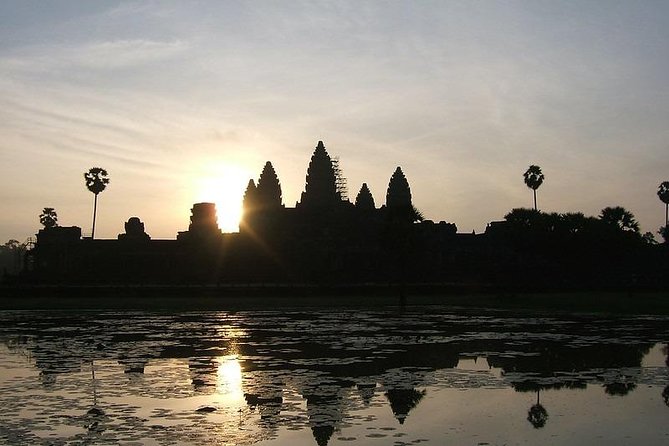
- Angkor Wat: sunrise from the main entrance climb
- Bayon and Angkor Thom: the faces of Jayavarman VII’s capital
- Ta Prohm: fig trees, roots, and ruins that feel alive
- Banteay Kdei: the quieter monastic mood of late-12th/early-13th century Angkor
- Price and what you’re really buying for $39
- The guide-and-driver advantage: Joe and Mr E in action
- Timing, endurance, and how to get the most out of an 8-hour circuit
- Who this private Angkor sunrise tour is best for
- Should you book this private Angkor Temple circuit with sunrise viewing?
- FAQ
- FAQ
- What time does the tour start?
- How long is the tour?
- Is hotel pickup and drop-off included?
- Is this a private tour?
- Do I need to buy an Angkor Temple Pass?
- What’s included in the price?
- Do I get a mobile ticket?
- What happens if the weather is poor?
- Is free cancellation available?
- Are service animals allowed?
Key highlights before you go
- 5:00 am start for sunrise timing at Angkor Wat, right when it gets busy
- Private English-speaking guide (Joe) and driver (Mr E) for smoother routing and comfort
- Cold water and chilled towels on the way back to the vehicle, which matters in the Cambodia heat
- Photo help and flexibility, including being happy to see Angkor Wat first if you request it
- Four major temple stops across classic, iconic, jungle, and less-restored styles
Chasing the light? More dawn and dusk runs
- Angkor Wat Sunrise or Sunset Tour with Guide from Siem Reap★ 5.0 · 12,109 reviews
- Siem Reap: Angkor Wat: Small-Group Sunrise or Sunset Tour★ 5.0 · 9,444 reviews
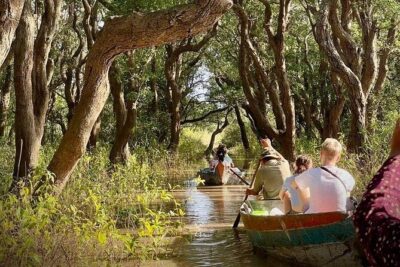
- Sunset tour of Kampong Phluk stilts home village on the Tonle Sap★ 5.0 · 4,865 reviews
- Siem Reap: Angkor Wat 2-Day Tour with Sunrise and Sunset★ 4.9 · 4,429 reviews
Why the 5:00 am sunrise start changes everything
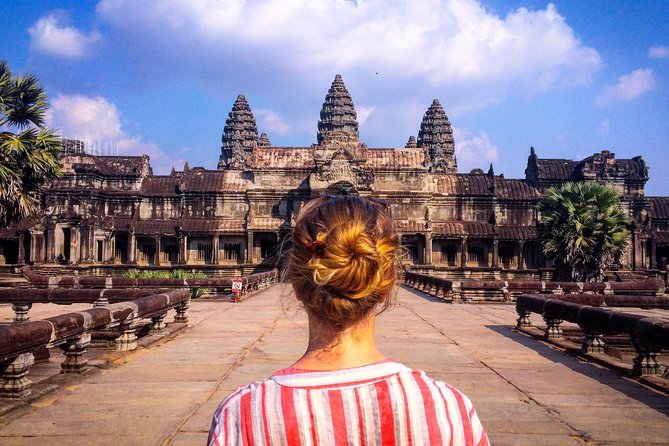
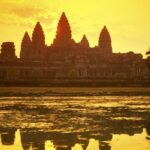
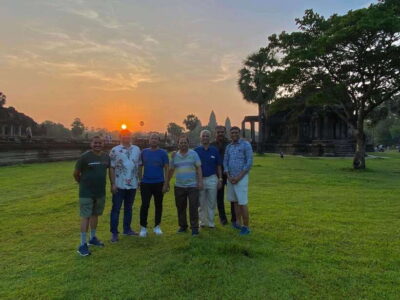
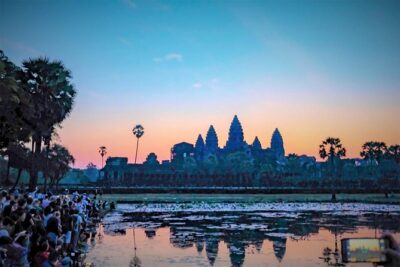
Angkor Wat at sunrise is famous for a reason: the light hits the stone differently, and the temple looks calm before the day fully kicks in. Starting at 5:00 am means you’re there when people are still finding their places, and you can enjoy the view without feeling like you’re arriving after the best angles are already taken.
There’s also a practical reason to love an early start. You’ll cover big ground while it’s still comfortable for walking and climbing. Later, when the sun climbs higher, you’re more likely to feel heat, dust, and the slow grind of daylight. Here, the schedule protects you from that by giving you the hardest “special moment” up front.
Private touring adds another layer. Instead of being herded around in a way that feels stressful, you can move at your group’s pace, with a guide who knows how to manage timing. In the experience I’m describing, Joe and Mr E are the kind of team that shows up early, checks in, and helps you get set for the first photo moments.
Angkor Wat: sunrise from the main entrance climb
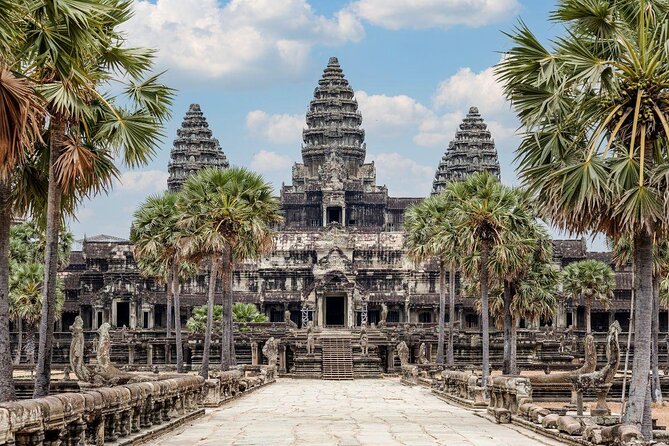
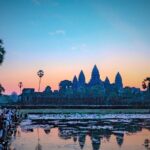
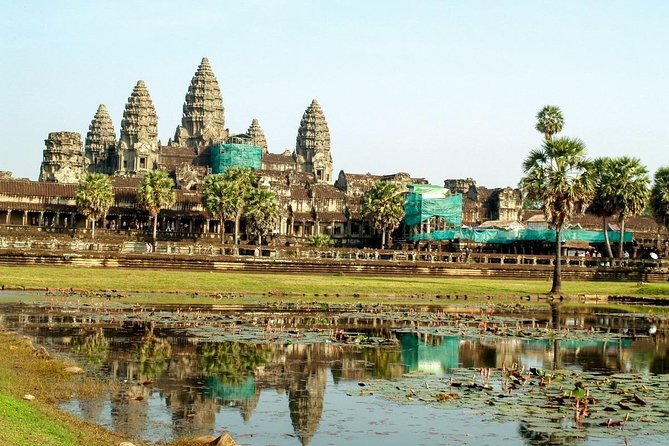
Angkor Wat sunrise is the main event, and this tour treats it that way. You don’t just stand around at the edge of things; you explore and climb at the main entrance before and during the sunrise viewing. That climb changes your perspective fast. From higher ground, the bas-reliefs and the way the towers and walls line up with the horizon make more sense.
You’ll spend about 2 hours on this stop, which is a good chunk of time for a sunrise visit. It gives you space to take photos, pause for the “wow” moment, and still walk around without feeling rushed. Sunrise days can turn into a tight squeeze depending on the flow of people, but having a guide helps you move with purpose rather than wandering while the light disappears.
One more useful thing: ask for your priorities early. In the experience I’m drawing from, you could request to see Angkor Wat first before it gets too hot, and the team was happy to accommodate. That kind of flexibility matters because Angkor is big, and you don’t want the day’s order to be decided by convenience alone.
What you should watch for: sunrise starts early enough that you’ll want to be properly geared for cool morning air and then warmer temps later. Bring layers you can shed, and plan on hydration.
Bayon and Angkor Thom: the faces of Jayavarman VII’s capital
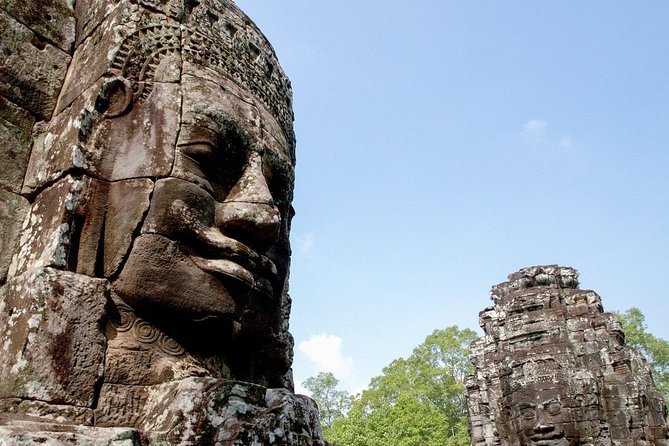
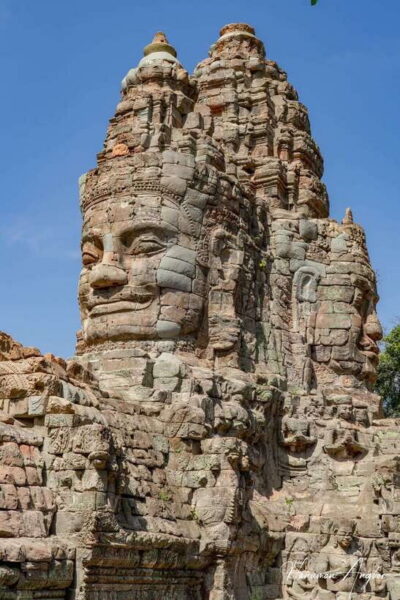
After Angkor Wat, you head to Bayon Temple, set in central Angkor Thom. This is where the experience shifts from “classic sunrise beauty” to something more intense and iconic. Bayon is famous for its 54 towers and 216 faces of Avalokeshvara. Those faces aren’t just a design detail—they’re how your brain navigates the space. You keep turning toward them, and you start noticing patterns: which towers line up with which courtyards, and how sightlines shift as you walk.
This stop is about 1 hour, and that timing is honest. Bayon is powerful, but trying to do everything in one long chunk can make it feel like information overload. With a guided approach and a defined time window, you get the meaning behind the details without losing the “stand in awe” part.
The guide also connects Bayon to nearby landmarks within Angkor Thom, which helps you see it as a planned capital rather than a single temple. You’ll also take in sights such as Baphoun, Terrace of the Elephant (used for public ceremonies), the Terrace of the Leper King (one of Angkor’s mysteries), and the Royal Palace Phimeanakas. Even if you don’t memorize every name, it helps you understand why the layout feels ceremonial and deliberate.
Small consideration: some areas can be crowded and uneven. Wear shoes with grip and be ready for steps. A guide helps you find the better routes and the spots where a pause actually makes sense.
Ta Prohm: fig trees, roots, and ruins that feel alive
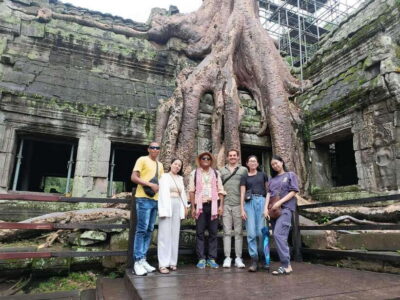
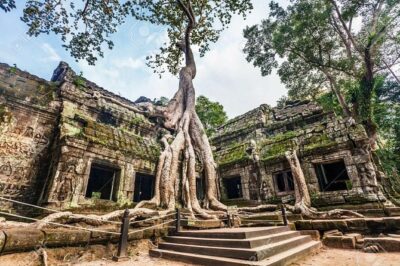
Next comes Ta Prohm, one of the most visually unforgettable temples at Angkor. This is the one people picture when they think of Angkor “jungle takeover,” and for good reason. The temple is embraced by massive fig trees, and the site is kept in a way that lets you experience the ruins in a very close-to-original state, with roots and greenery wrapped around stone.
You’ll spend about 1 hour here, which is about right. Ta Prohm works best when you slow down just enough to notice how the roots thread through the structures. Too little time and you rush past the details. Too much time and it turns into repetitive photo angles instead of real observation.
This is also the stop where your guide’s photo and movement advice really pays off. In the experience I’m using as a baseline, Joe and Mr E were the kind of team that actively helped with the best photo moments instead of just walking you from sign to sign. That means you spend your time getting the angles you want, not standing in the wrong place while the crowd grows.
Consider this if you’re choosing your own priorities: Ta Prohm is scenic, but it can feel busy. If you want quiet for your own photos, ask your guide how to handle timing during this stop.
More temple circuits, set side by side
Banteay Kdei: the quieter monastic mood of late-12th/early-13th century Angkor
In the afternoon, you visit Banteay Kdei, built under King Jayavarman VII from the late 12th century into the early 13th century. This temple is described as a sprawling monastic complex and is largely non-restored, which changes the feel immediately. Instead of polished surfaces, you get more raw texture—stone, pathways, and a slightly more “real” atmosphere where restoration isn’t trying to make everything look new.
Like Ta Prohm, Banteay Kdei has a similar overall style, but it doesn’t deliver the exact same type of visual drama. Here, the drama is in the space itself: the scale, the layout, and the sense that this place functioned as a center for religious life.
You’ll get about 1 hour at this stop, so it functions as a satisfying capstone rather than a final “try to see everything” marathon. When you’ve already seen Bayon and Ta Prohm, Banteay Kdei gives your eyes a break from the most famous elements and lets you shift into slower appreciation.
In the Cambodia heat, the afternoon timing can be the hardest part of the day. That’s why the comfort touches matter—this tour’s approach includes attention to comfort after temple time.
Price and what you’re really buying for $39
At $39 per person, this is one of the kinds of deals that looks too simple until you break it down. You’re paying for private transportation, a private English-speaking guide, and coverage of all fees and taxes—plus hotel pickup and drop-off. That’s not just logistics; it’s also time you don’t spend figuring out where to go next, and comfort when you’re moving between sites early and late.
The big catch is admissions. The Angkor Temple Pass is not included. That means your actual total cost will depend on the pass price at the time you buy it. If you plan poorly, the pass can be the difference between a smooth trip and a rushed one. So factor it into your budget before you go.
Still, for many people, the value is strong because the tour isn’t trying to be a “tick all boxes as fast as possible” group outing. The private setup matters, and the ability to shape your day—like seeing Angkor Wat first—means you’re not stuck with a one-size plan.
Also: sunrise tours can cost more when they include special access or long waits. Here, the pricing is relatively modest for a full-day, multi-temple private circuit.
The guide-and-driver advantage: Joe and Mr E in action
The difference between a basic sightseeing day and a genuinely enjoyable one is often the guide and driver. In the experience I’m drawing from, Joe and Mr E were a standout team. They arrived early and waited for the group at the start of the day, which helps you avoid that awkward scramble right before a big morning.
Joe’s value isn’t just telling you names. He’s described as informative and accommodating, and he also helped with the practical parts that make photos better and the day flow more smoothly. When you’re dealing with sunrise timing, that can mean the difference between getting your favorite shots and getting “whatever we could manage.”
Mr E’s contribution was equally practical: after the tour, the group was greeted with cold water and a fresh towel in the vehicle. That’s not a luxury you can ignore in Siem Reap weather. It’s the kind of small recovery step that keeps you comfortable for the ride back and helps you avoid feeling “done” before you’re done.
If you care about comfort and clarity—knowing what to look for, where to stand, and when to move—this private format is a smart choice.
Timing, endurance, and how to get the most out of an 8-hour circuit
This is an 8-hour style tour, roughly. That’s plenty of time to do the big four stops without feeling like you’re sprinting between them every five minutes. Still, remember: you’re doing sunrise first, then temples across different zones. You’ll walk. You’ll climb steps. You’ll be outside for a long stretch.
Your best strategy is simple. Plan to bring gear that handles changing conditions: morning cool, midday heat, and a lot of walking. Wear shoes that you trust on uneven stone. Bring water, and consider simple sun protection.
Also, this is a “good day” activity. It requires good weather. If it gets canceled for poor weather, you should expect an alternative date or a full refund. That matters because sunrise is what you’re paying for.
Who this private Angkor sunrise tour is best for
This tour makes the most sense if you want:
- A private experience where your group stays together and the day is managed for you
- An early start that centers the Angkor Wat sunrise instead of trying to squeeze it in later
- A full circuit across Angkor Wat, Bayon, Ta Prohm, and Banteay Kdei in one go
- Help with photo timing and practical comfort while you’re out in the heat
It may be less ideal if you hate early mornings or you want a very slow, unstructured day where you spend half-day wandering without a plan.
Should you book this private Angkor Temple circuit with sunrise viewing?
If sunrise at Angkor Wat is the reason you’re going to Siem Reap, this booking is easy to justify. You’re not just buying a pass and showing up—you’re buying private logistics, a guide who knows the storytelling behind what you see, and a driver who keeps things comfortable. The combination of a sunrise-first plan plus a meaningful follow-up circuit makes it a good “most efficient way to get the real feel” option.
I’d book it if you value comfort and clarity—especially if Joe and Mr E’s style of early, flexible, practical guidance sounds like your pace. I’d think twice only if you’re sensitive to very early mornings or you’d rather control every minute yourself without a structured route.
FAQ
FAQ
What time does the tour start?
It starts at 5:00 am.
How long is the tour?
The duration is about 8 hours.
Is hotel pickup and drop-off included?
Yes. Pick up and drop off at hotel is included.
Is this a private tour?
Yes. It’s a private tour/activity, meaning only your group participates.
Do I need to buy an Angkor Temple Pass?
Yes. The Angkor Temple Pass is not included.
What’s included in the price?
Included items are private transportation, a private English-speaking guide (other languages upon request), all fees and taxes, and hotel pickup and drop-off.
Do I get a mobile ticket?
Yes. The tour includes a mobile ticket.
What happens if the weather is poor?
This experience requires good weather. If it’s canceled due to poor weather, you’ll be offered a different date or a full refund.
Is free cancellation available?
Yes. You can cancel for a full refund up to 24 hours before the experience’s start time.
Are service animals allowed?
Yes. Service animals are allowed.
Just Your Group: Private Days
- Full-Day Angkor Wat Sunrise Private Tour with Guide from Siem Reap
★ 5.0 · 2,920 reviews - Siem Reap: Angkor Wat Private Tuk-Tuk Tour
★ 4.9 · 2,222 reviews - Angkor Wat Private Day Tour from Siem Reap
★ 5.0 · 834 reviews - Angkor Wat Private Tuk-Tuk Tour (sunrise Option) & more
★ 5.0 · 439 reviews - Private Angkor Wat Day Tour – Best of Angkor
★ 5.0 · 269 reviews
More Temple Circuits Around Siem Reap
- Angkor Wat Sunrise or Sunset Tour with Guide from Siem Reap
★ 5.0 · 12,109 reviews - Siem Reap: Angkor Wat: Small-Group Sunrise or Sunset Tour
★ 5.0 · 9,444 reviews - Siem Reap: Angkor Wat 2-Day Tour with Sunrise and Sunset
★ 4.9 · 4,429 reviews - Siem Reap: Full-Day Angkor Wat Guided Tour with Sunset
★ 4.9 · 3,803 reviews - Angkor Wat Sunrise tour with Small – Group and Guide tours
★ 5.0 · 3,655 reviews
Dawn and Dusk Over Angkor
- Angkor Wat Sunrise or Sunset Tour with Guide from Siem Reap
★ 5.0 · 12,109 reviews - Siem Reap: Angkor Wat: Small-Group Sunrise or Sunset Tour
★ 5.0 · 9,444 reviews - Sunset tour of Kampong Phluk stilts home village on the Tonle Sap
★ 5.0 · 4,865 reviews - Siem Reap: Angkor Wat 2-Day Tour with Sunrise and Sunset
★ 4.9 · 4,429 reviews - Siem Reap: Full-Day Angkor Wat Guided Tour with Sunset
★ 4.9 · 3,803 reviews
Just Added: Fresh Siem Reap Tour Reviews

Angkor Sunrise & Sunset Tours, compared.
 ★ 5.0Angkor Wat Sunrise or Sunset Tour with Guide from Siem ReapFrom $1812,109 reviews
 ★ 5.0Angkor Wat: Small-Group Sunrise or Sunset TourFrom $159,444 reviews
 ★ 5.0Sunset tour of Kampong Phluk stilts home village on the Tonle SapFrom $214,865 reviews
 ★ 4.9Angkor Wat 2-Day Tour with Sunrise and SunsetFrom $344,429 reviews
 ★ 4.9Full-Day Angkor Wat Guided Tour with SunsetFrom $153,803 reviews
 ★ 5.0Angkor Wat Sunrise tour with Small – Group and Guide toursFrom $143,655 reviews
 ★ 5.0Angkor Wat Highlights and Sunrise Guided Tour from Siem ReapFrom $233,213 reviews
 ★ 5.0Angkor Wat Sunset Small Group Tour with Lunch IncludedFrom $203,059 reviews