
Reviewed · ANGKOR TEMPLE TOURS
Private Angkor Temples Discovery Hosting by Local Expert
Angkor can feel like a blur, but this private temple circuit is built to make it workable: you start with hotel pickup in Siem Reap, ride in an air-conditioned vehicle, and follow an English-speaking guide who keeps the story straight as you move from site to site. I like that it mixes the headline temples with the smaller, in-between stops that give you context fast.
I also really like the people-first pacing. Your day runs about 6 to 8 hours, and the guide-led flow makes it easier to enjoy the details without losing time guessing where to go next. One consideration: the Angkor Wat ticket is not included, so you’ll want to budget for the temple pass on top of the $99 tour price.
In This Review
- Key highlights you’ll actually feel on the ground
- How this private temple circuit makes Angkor easier to enjoy
- Price and value: what the $99 really covers
- Morning start at Angkor Wat: the world’s largest religious structure (and what to watch for)
- What you’ll likely enjoy most
- A possible add-on moment: blessing water
- One practical note
- Bayon Temple and the four faces of loving-kindness
- Why this stop is worth your time
- Tickets
- Terrace of the Elephants and Srah Srang: the stops that add meaning
- Terrace of the Elephants: where kings watched victory
- Srah Srang: lunch near the water complex
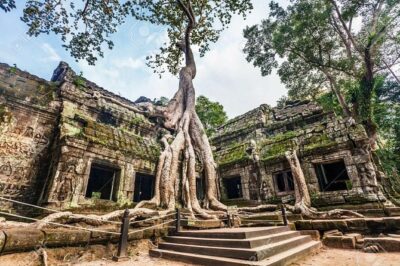
- Ta Prohm’s strangler fig roots: what makes it so compelling
- What you should expect from this stop
- Tickets
- Timing reality
- The guide factor: the difference between seeing Angkor and understanding it
- What to bring and how to keep the day comfortable
- If sunrise is part of your plan, know the weather reality
- Who this private Angkor discovery fits best
- Should you book this private Angkor temples tour?
- FAQ
- What’s included in the tour price?
- Are pickup and drop-off included?
- How long is the experience?
- What time does the tour start?
- Do I need to buy temple tickets?
- Is lunch included?
- Is this a private tour?
- How do tickets work for entry?
- What if weather is poor?
- Is there a cancellation window?
Key highlights you’ll actually feel on the ground
- Private, only-your-group setup so you can move at a comfortable pace
- English-speaking guide + clear explanations that connect faces, symbols, and layout
- Air-conditioned transport with cool water and a towel for the hot stretches
- A short, practical lunch break near Srah Srang (one dish per person)
- Ta Prohm with the tree-root effect that everyone recognizes from film
- Mobile ticket included to reduce ticket-day friction
More temple circuits, set side by side
- Angkor Wat Sunrise or Sunset Tour with Guide from Siem Reap★ 5.0 · 12,109 reviews
- Siem Reap: Angkor Wat: Small-Group Sunrise or Sunset Tour★ 5.0 · 9,444 reviews
- Siem Reap: Angkor Wat 2-Day Tour with Sunrise and Sunset★ 4.9 · 4,429 reviews
- Siem Reap: Full-Day Angkor Wat Guided Tour with Sunset★ 4.9 · 3,803 reviews
How this private temple circuit makes Angkor easier to enjoy
Angkor is big. Even if you love ruins, you can end up stressed: too many temples, too little time, and everyone jostling for the same viewpoints. The value here is that you’re not doing a chaotic checklist. You’re following a local expert who knows how to string the sites together in a way that feels logical.
What I like for you is the combination of practical comfort and on-the-ground guidance. You get cool water and a towel in the vehicle, plus hotel pickup so you don’t spend the morning figuring out transport. Then, once you’re at the temples, the guide steers you toward the parts that matter—like the four Buddhist face themes at Bayon or the iconic strangler fig roots at Ta Prohm.
You also get a private format. That matters more than people think. A private tour often means less time waiting while someone in the group finds the right photo angle or tries to interpret signs without help. It’s not about luxury. It’s about keeping your momentum.
Price and value: what the $99 really covers
At $99 per person, this is positioned as a budget-to-midrange private day. But the real “value math” depends on temple tickets.
Here’s what you should know from the details provided:
- Temple ticket for Angkor Wat is not included and is listed at $37 per person for a 1-day pass (kids under 12 are free for the temple ticket).
- Some temple areas are listed with free admission (for example, Bayon and Srah Srang), while one stop (Terrace of the Elephants) is listed as admission ticket not included.
So if you’re budgeting, expect your total spending to look like:
- Tour price ($99) plus the Angkor Wat temple ticket (listed at $37)
The extra value beyond the ticket is the guide, air-conditioned transport, and the fact that the day is structured so you’re not wandering between sites. In Angkor, that structure is what keeps the day from turning into “hours of driving and photos, then fatigue.”
Morning start at Angkor Wat: the world’s largest religious structure (and what to watch for)
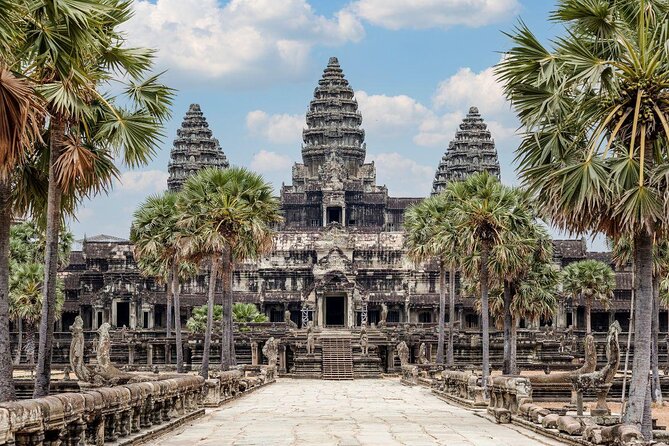
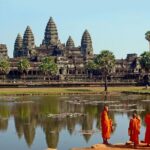
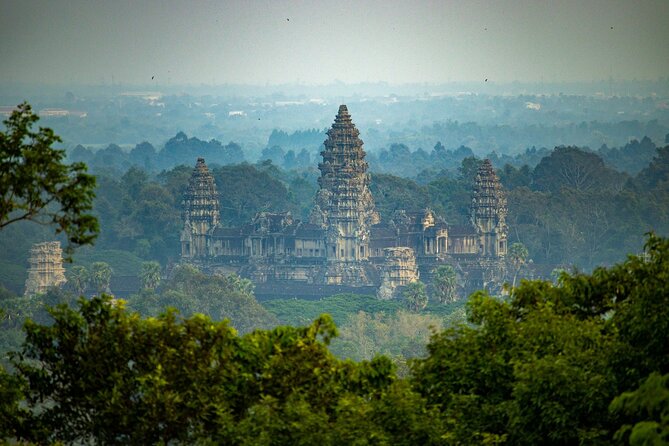
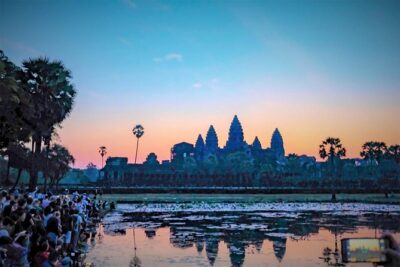
You’re picked up from your Siem Reap hotel in the morning and taken directly to Angkor Wat. The site is huge—about 162.6 hectares—and it’s recognized by Guinness World Records as the largest religious structure in the world.
This is the stop where your day sets its tone. Angkor Wat can be overwhelming at first glance. The guide’s job here is to help you slow down just enough to see what you’re actually looking at, instead of only snapping photos.
What you’ll likely enjoy most
- The sheer scale: you’ll understand why this site sits at the center of the whole Angkor story.
- The religious symbolism: the tour overview highlights Angkor Wat’s sacred status in Buddhism and Hinduism since the 12th century, and connects it to what people believe it offers in daily life.
Just your group, at your own pace

A possible add-on moment: blessing water
The tour description also says you may be brought to inspect blessing water by a monk, with the intent of receiving happiness, best of luck, power, and enjoying true life. Whether you treat that moment as spiritual, cultural, or simply interesting, it’s a human touch that’s easy to miss when you rush only for photos.
One practical note
Angkor Wat admission is not included. That’s the main friction point. If you arrive without confirming your ticket situation, your morning can get delayed.
Bayon Temple and the four faces of loving-kindness
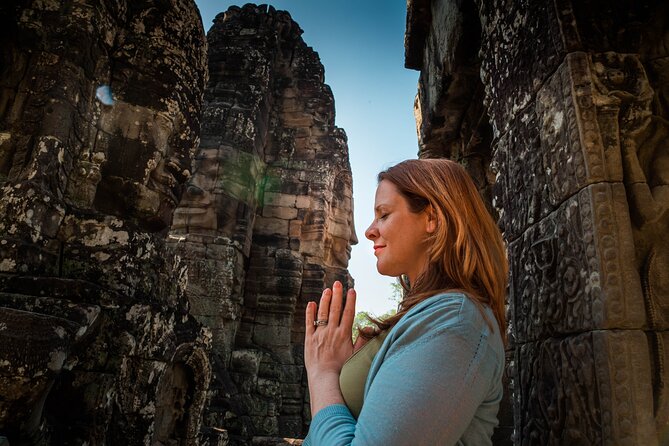
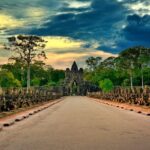
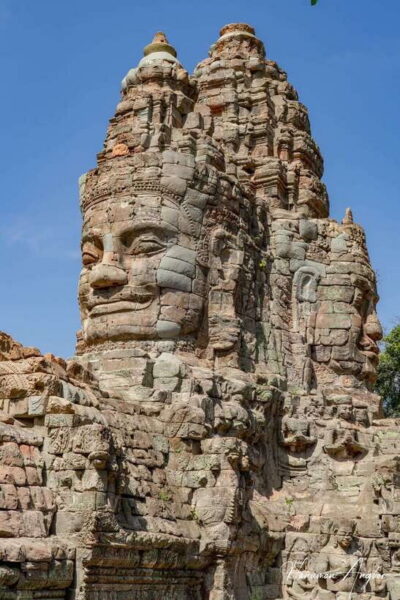
Next you head to Bayon Temple, located inside Angkor Thom. Bayon is the temple people remember right away, because of the stone faces. Here, the faces aren’t just an artistic signature; the tour framing connects them to Mahayana Buddhism ideas like loving-kindness, compassion, sympathy, and equality.
Bayon is also a photo-friendly maze—fantastic photo turns at every corner, largely because the architecture works like a series of angles. You can’t fully appreciate it from one viewpoint.
Why this stop is worth your time
- The design is different from Angkor Wat. Angkor Wat is about formal grandeur; Bayon feels more immediate, like you’re being watched while you walk through it.
- The tour details include that Bayon is the first Buddhist temple in Cambodia associated with 216 Buddha images. That’s a lot of sacred detail, and it’s the kind of thing a guide can help you look for without getting lost.
Tickets
Bayon is listed as free admission in the stop details. That makes it a relief in the budget side—once you’ve handled the Angkor Wat ticket.
Terrace of the Elephants and Srah Srang: the stops that add meaning
After Bayon, you move to two compact but important parts of the Angkor Thom world.
Terrace of the Elephants: where kings watched victory
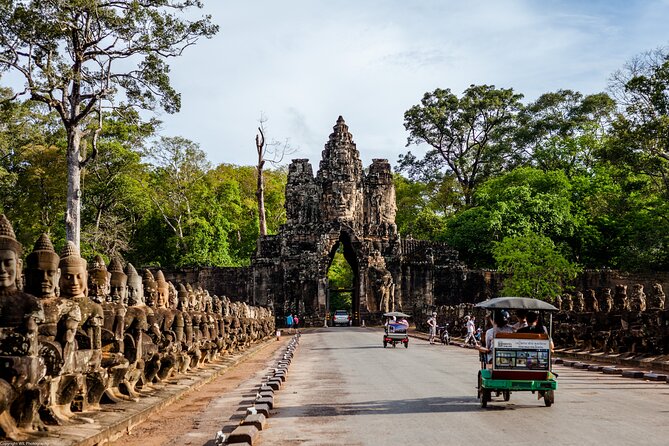
The Terrace of the Elephants is part of the walled city of Angkor Thom. The big takeaway here is historical purpose: the terrace was used by King Jayavarman VII as a viewing platform to see his victorious army returning.
This is a short stop—about 30 minutes—so you’re not here to linger for hours. Instead, it’s a place to reset your brain. You’ll come here after seeing the faces at Bayon, then shift into a different mode: power, ceremony, and control.
One caution: the stop details list admission as not included, so keep your ticket situation in mind.
Srah Srang: lunch near the water complex
Around 12:00 PM, you break for lunch at a local restaurant near Srah Srang. The tour lists lunch as included as one dish per person.
Srah Srang is more than a convenient pause. It’s part of the temple landscape that helps you understand how Angkor functioned beyond worship sites—water, daily life, and royal planning all show up in the overall layout.
If you’ve been walking in the heat, this meal break can be the difference between enjoying the afternoon and feeling like you’re dragging yourself through the last temple.
Ta Prohm’s strangler fig roots: what makes it so compelling
Then comes Ta Prohm, the temple that’s instantly recognizable because it appears in the movie Tom Raider.
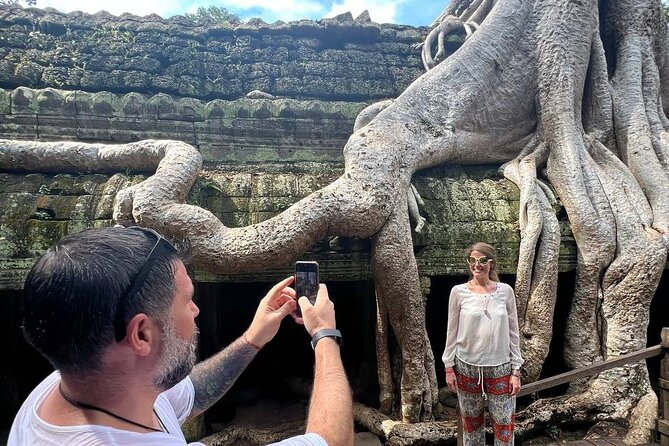
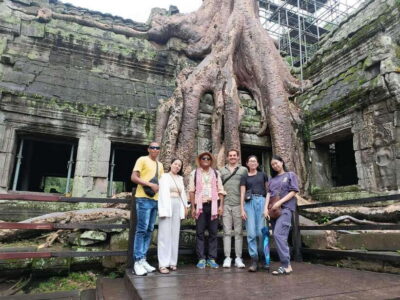
Ta Prohm is described as being embraced by enormous strangler fig trees that have recovered the temple for more than 400 years. That’s the key idea: you’re not just seeing ruins; you’re seeing nature actively involved in the scene.
What you should expect from this stop
- A maze-like interior, with the tree roots visually threading through the architecture.
- About 2 hours here, which is enough time to walk, look closely, and still step back to take in the big shapes.
Tickets
Ta Prohm is listed as free admission in the stop details. So once you’re through the Angkor Wat ticket, this part is easier on your budget.
Timing reality
Ta Prohm can be visually tiring because there’s so much to see: stone, roots, shadows, carvings, and changing light. I like having a guide here because you don’t have to guess which features matter most. You just follow and let the place do its thing.
The guide factor: the difference between seeing Angkor and understanding it
In the feedback pattern for this operator, guides come up again and again, and not just as a generic compliment. Specific names show up: Lee, Lyhin, Sharaya, Charaya, Smi/Smile, Lihin, and Long.
What I take from that for your decision is simple: this isn’t a drive-by tour. People single out guides for keeping the group engaged, telling the story clearly, and even helping with photos. One review highlights humor and a fun atmosphere with guide Lee. Another praises Lyhin for explaining the area and also taking great pictures. Several comments mention guides like Sharaya, Charaya, Smi/Smile, and Long for a mix of communication, kindness, and a day that feels smooth.
Could you do Angkor on your own? Sure. But if you want your time to feel meaningful—especially at Bayon and Ta Prohm—the guide role is the value.
If you book, I’d treat your guide as part of the experience design. Bring questions. Ask where to look. If you want photo help, say so early.
What to bring and how to keep the day comfortable
The tour includes some essentials: cool water and a towel, plus air-conditioning vehicle comfort between stops. Still, Angkor days are real walking days.
Here’s what you’ll want to plan for (based on the nature of the sites and what’s included):
- Sun protection for long outdoor temple segments (you’ll be exposed while walking and waiting)
- Comfortable shoes for stone surfaces and uneven paths
- Light clothing you can handle in Cambodian heat
- A positive attitude about crowds at Angkor Wat and Bayon peak areas
Also note: the tour offers a mobile ticket, which can be helpful if you want fewer paperwork steps at temples.
If sunrise is part of your plan, know the weather reality
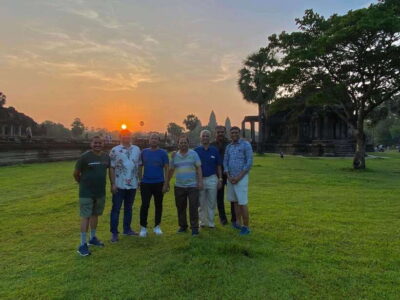
The official start time in the tour details is 8:00 am. But one of the experiences shared includes a much earlier pickup for sunrise, with skies turning cloudy. That’s a useful reality check: early temple timing can be worth it, but weather can change the outcome fast.
If you’re chasing sunrise specifically, build in flexibility. Even when the skies don’t cooperate, a well-guided early temple visit can still deliver a strong feel for the place.
Who this private Angkor discovery fits best
This tour is a good fit if:
- You want a private, only-your-group experience rather than a shared bus day
- You prefer a guide-led flow that reduces guesswork
- You’re aiming to see the major temples—Angkor Wat, Bayon, Ta Prohm—plus key supporting stops like Terrace of the Elephants and Srah Srang
- You value comfort between sites, thanks to AC vehicle and included water/towel
It may be less ideal if:
- You’re trying to minimize additional costs. Angkor Wat tickets are not included
- You want a fully self-paced day without explanation
Should you book this private Angkor temples tour?
I’d book it if you want an organized Angkor day with a real local guide and comfort built in. The price is fair for a private format, and the stops hit the big visual targets plus the contextual ones that make the architecture feel less random.
If you hate paying extra fees for big sites, confirm your Angkor Wat temple ticket ahead of time so the morning stays smooth. Then plan for the walk and sun, dress for comfort, and treat the guide as your navigation tool, not an optional extra.
For many people, this kind of private structure is what turns Angkor from a checklist into a story you can remember.
FAQ
What’s included in the tour price?
The tour includes an English speaking guide, cool water and a towel, and an air-conditioning vehicle.
Are pickup and drop-off included?
Pickup is offered in Siem Reap in the morning, with pickup from your hotel mentioned in the temple start.
How long is the experience?
It runs about 6 to 8 hours.
What time does the tour start?
The start time is listed as 8:00 am.
Do I need to buy temple tickets?
Yes for at least Angkor Wat: the Angkor Wat temple ticket is not included and is listed at $37 per person for a 1-day pass (kids under 12 are free). Other stops are listed with free admission or not included, depending on the site.
Is lunch included?
Yes. There’s a lunch break around 12:00 PM, with 1 dish per person included at a local restaurant near Srah Srang.
Is this a private tour?
Yes. It’s private, and only your group participates.
How do tickets work for entry?
The tour includes a mobile ticket.
What if weather is poor?
The experience requires good weather. If it’s canceled due to poor weather, you’ll be offered a different date or a full refund.
Is there a cancellation window?
There is free cancellation up to 24 hours in advance for a full refund.
More Tour Reviews in Siem Reap
- Angkor Wat Sunrise or Sunset Tour with Guide from Siem Reap
★ 5.0 · 12,109 reviews - Siem Reap: Angkor Wat: Small-Group Sunrise or Sunset Tour
★ 5.0 · 9,444 reviews - From Siem Reap: Kampong Phluk Floating Village Tour by Boat
★ 4.9 · 6,979 reviews - Sunset tour of Kampong Phluk stilts home village on the Tonle Sap
★ 5.0 · 4,865 reviews - Siem Reap: Angkor Wat 2-Day Tour with Sunrise and Sunset
★ 4.9 · 4,429 reviews
Just Your Group: Private Days
- Full-Day Angkor Wat Sunrise Private Tour with Guide from Siem Reap
★ 5.0 · 2,920 reviews - Siem Reap: Angkor Wat Private Tuk-Tuk Tour
★ 4.9 · 2,222 reviews - Angkor Wat Private Day Tour from Siem Reap
★ 5.0 · 834 reviews - Angkor Wat Private Tuk-Tuk Tour (sunrise Option) & more
★ 5.0 · 439 reviews - Private Angkor Wat Day Tour – Best of Angkor
★ 5.0 · 269 reviews
More Temple Circuits Around Siem Reap
- Angkor Wat Sunrise or Sunset Tour with Guide from Siem Reap
★ 5.0 · 12,109 reviews - Siem Reap: Angkor Wat: Small-Group Sunrise or Sunset Tour
★ 5.0 · 9,444 reviews - Siem Reap: Angkor Wat 2-Day Tour with Sunrise and Sunset
★ 4.9 · 4,429 reviews - Siem Reap: Full-Day Angkor Wat Guided Tour with Sunset
★ 4.9 · 3,803 reviews - Angkor Wat Sunrise tour with Small – Group and Guide tours
★ 5.0 · 3,655 reviews
Just Added: Fresh Siem Reap Tour Reviews



Angkor Temple Tours, compared.
 ★ 5.0Angkor Wat Sunrise or Sunset Tour with Guide from Siem ReapFrom $1812,109 reviews
 ★ 5.0Angkor Wat: Small-Group Sunrise or Sunset TourFrom $159,444 reviews
 ★ 4.9Angkor Wat 2-Day Tour with Sunrise and SunsetFrom $344,429 reviews
 ★ 4.9Full-Day Angkor Wat Guided Tour with SunsetFrom $153,803 reviews
 ★ 5.0Angkor Wat Sunrise tour with Small – Group and Guide toursFrom $143,655 reviews
 ★ 5.0Angkor Wat Highlights and Sunrise Guided Tour from Siem ReapFrom $233,213 reviews
 ★ 5.0Angkor Wat Sunset Small Group Tour with Lunch IncludedFrom $203,059 reviews
 ★ 5.0Full-Day Angkor Wat Sunrise Private Tour with Guide from Siem ReapFrom $602,920 reviews