
Reviewed · ANGKOR WAT TEMPLE TOURS
Private Angkor Wat Tour & Angkor Park/Heritage With Local Guide
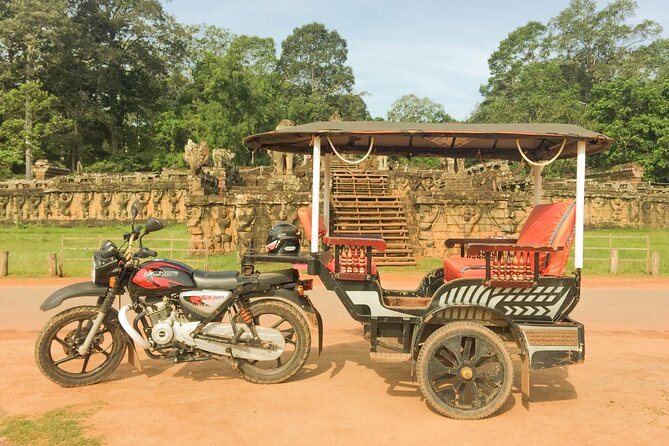
Angkor feels less overwhelming with a real plan. This private Angkor Wat tour strings together Angkor Wat and the main faces of Angkor Thom by tuk tuk, with hotel pickup and drop-off so you spend less time figuring out logistics. You also get an English-speaking guide who helps you read what you’re seeing, not just walk from stone to stone.
My favorite part is the pacing. You get a focused day on the biggest stops—Angkor Wat, Angkor Thom, Bayon, Ta Nei, and Ta Prohm—plus a calm break at Srah Srang, with rest built in. The one real caution: entrance fees to the Angkor Archaeological Park aren’t included, so you’ll want to budget for that before you go.
In This Review
- Key highlights worth knowing
- How this private Angkor Wat tuk-tuk day saves your energy
- Price and logistics: what $60 really covers (and what it doesn’t)
- Morning start in Siem Reap: pickup, timing, and comfort
- Stop 1: Angkor Wat — the grand layout, then time to look closely
- Stop 2: Angkor Thom — the capital city idea hits harder with context
- Stop 3: Bayon Temple — 54 towers and the face-first vibe
- Stop 4: Ta Nei Temple — short visit, good payoff if you like quiet
- Stop 5: Srah Srang — lunch with a reservoir view break
- Stop 6: Ta Prohm — jungle ruins and managing the famous photo moment
- Guide style and tuk-tuk comfort: why pacing is the real luxury
- Who this tour suits best (and who might want a different style)
- Should you book this private Angkor Wat tour?
- FAQ
- How long is the private Angkor Wat tour?
- What is included in the price?
- Are entrance fees to Angkor Archaeological Park included?
- Which temples and stops are visited?
- What transport do you use during the day?
- Is the guide English speaking?
- Is this tour private or group-based?
- Is pickup offered from hotels in Siem Reap?
Key highlights worth knowing
- Private, only your group: you can ask questions and move at a comfortable speed
- Hotel pickup and drop-off included: fewer hassles in Siem Reap
- English-speaking guide: explanations that make the carvings and layouts easier to follow
- Tuk-tuk transport: efficient getting around the Angkor area
- Lunch + snacks + drinks + water: helpful during a long, hot day
- Big-photo temples, not just a drive-by: Angkor Wat and Ta Prohm get proper time
Other ways to walk the great temple
- Angkor Wat Sunrise or Sunset Tour with Guide from Siem Reap★ 5.0 · 12,109 reviews
- Siem Reap: Angkor Wat: Small-Group Sunrise or Sunset Tour★ 5.0 · 9,444 reviews
- Siem Reap: Angkor Wat 2-Day Tour with Sunrise and Sunset★ 4.9 · 4,429 reviews
- Siem Reap: Full-Day Angkor Wat Guided Tour with Sunset★ 4.9 · 3,803 reviews
How this private Angkor Wat tuk-tuk day saves your energy
Siem Reap is the launch pad for Angkor, but Angkor itself is huge. If you try to DIY it, you end up doing a lot of mental math: where to go first, how long things take, and when to duck out of the midday heat.
This tour is built to solve that. You start with pickup, then move around by tuk tuk between the major sights. That means more “look closely” time and less “where is the entrance” time. And because it’s private, you’re not stuck matching your pace to a larger group.
I also like the structure. You’re not just visiting one temple. You’re getting the core story arc of the Angkor area: the grand centerpiece (Angkor Wat), the former royal city core (Angkor Thom and Bayon), a quiet jungle interlude (Ta Nei), and the famous jungle ruin vibe (Ta Prohm). It feels like a day with direction.
Price and logistics: what $60 really covers (and what it doesn’t)
At $60, the value comes from what’s included for a 7–8 hour day. You get:
- Round-trip tuk-tuk from your pickup point
- An English-speaking local guide
- Lunch, plus snacks and drinks
- Drinking water throughout the day
- A mobile ticket and convenience with hotel pickup/drop-off
The key thing to plan for: entrance fees to the Angkor Archaeological Park are not included. That’s common for Angkor tours, but it matters. You don’t want to get to the gate and realize you’re short on cash or need to stall while sorting payment.
So think of this as paying for the day plan, the guide, and the transport. Once you add the park ticket, the total cost still tends to make sense if you want a low-stress day with proper guide commentary.
Morning start in Siem Reap: pickup, timing, and comfort
The day runs about 7 to 8 hours, and the tour uses that time wisely. The included hotel pickup and drop-off is the difference between a smooth start and a frantic scramble. In Siem Reap, traffic and distances can add up, so saving your morning from that is a win.
You’ll be traveling by tuk tuk, which I enjoy for Angkor because it keeps things light and flexible. You’re not stuck in long stretches of walking just to get to the next entry point. Still, it’s Cambodia in daylight, so you’ll want to lean on the inclusions: drinking water all day, plus snacks and drinks, plus a lunch stop with a place to sit.
A small detail that makes a big difference: the guide’s job isn’t only to point. Good guides build in rest. In the feedback for this tour, an English guide named Ben/Yen is singled out for clear explanations and frequent resting stops—exactly what you want on a day like this.
Stop 1: Angkor Wat — the grand layout, then time to look closely
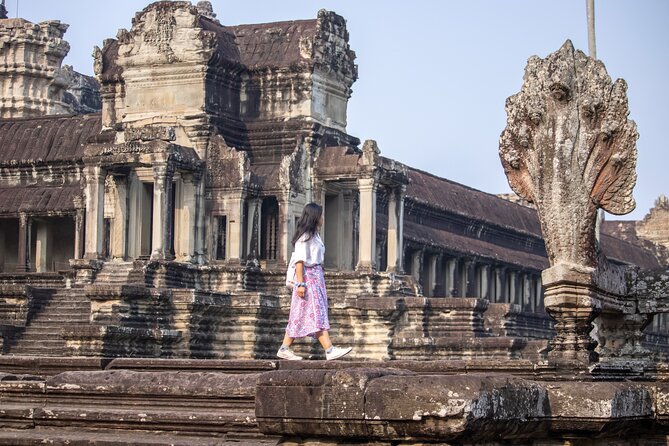
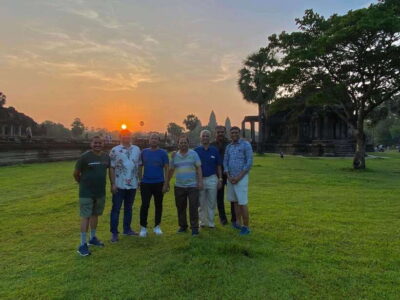
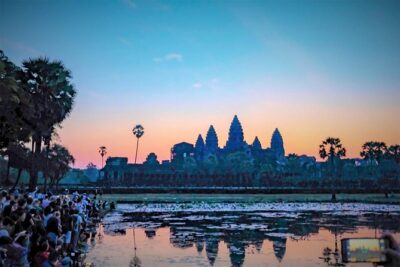
Angkor Wat is the first stop for a reason. It’s the big one, and it sets the visual language for the rest of the day.
You’ll spend about 2 hours here. That’s enough time to do more than snap photos. With a guide, it’s easier to notice how the temple is composed—things like the symmetry of the overall design, and the way the reliefs and sculptures are placed. The guide commentary helps you move from I see carvings to I understand why they’re there.
This is also where you benefit from going with someone local who can manage the flow. Angkor Wat can feel overwhelming at first glance. Having a plan and knowing what to focus on makes it feel more like a museum than a maze.
What to watch for:
- Look for the temple’s overall balance and the way sections relate to each other.
- Save your close-up time for the reliefs and sculpture areas your guide highlights.
- If you’re sensitive to heat, take advantage of the built-in breaks later, because this part can start you moving early.
Entrance fee note: you’ll need the Angkor Archaeological Park ticket for this stop, since park entry isn’t included.
More temple circuits, set side by side



Stop 2: Angkor Thom — the capital city idea hits harder with context
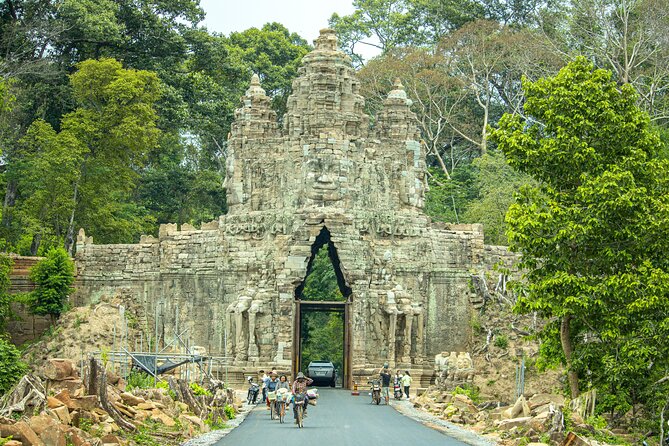
After Angkor Wat, the tour shifts to the broader Angkor Thom area. You’ll spend about 1 hour.
Angkor Thom matters because it wasn’t just a random temple stop. It was the Khmer Empire’s final and enduring capital city, founded in the late 12th century and spread over about 9 square kilometers. That scale can be hard to grasp when you’re standing in one spot. A guide helps translate the “big city” idea into what you can actually see.
This stop is also a good momentum reset. You’ve already done the showpiece temple. Now you’re learning the “where power lived” feeling of the area, and that makes the next stop—Bayon—hit even better.
Stop 3: Bayon Temple — 54 towers and the face-first vibe
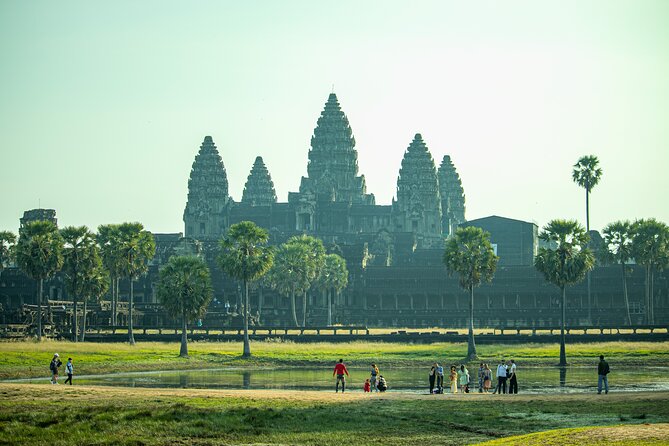
Bayon Temple is located right in the heart of Angkor Thom, and the tour gives it about 1 hour.
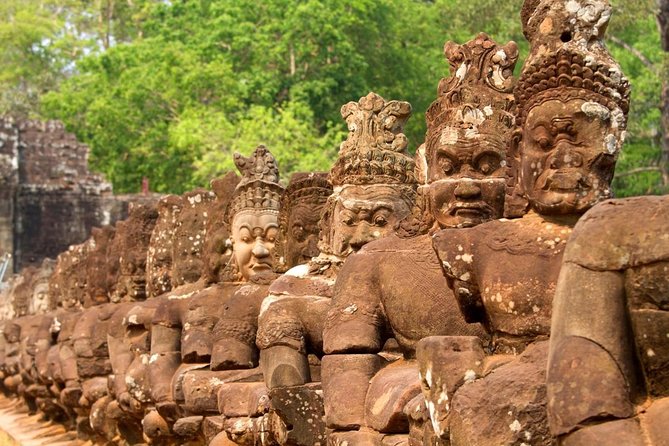
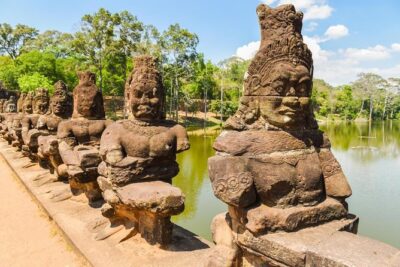
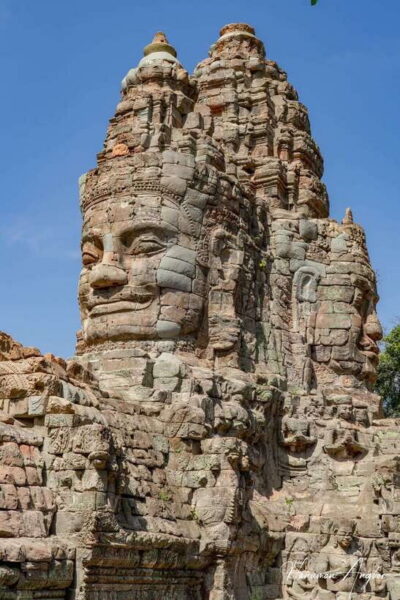
Bayon is known for its towers and the face imagery. The tour framing here is spot on: Bayon was constructed in the 12th century as a state temple for King Jayavarman VII. The iconic detail is the 54 towers, which creates that face-forward experience as you move through the complex.
Without guidance, you can still enjoy Bayon. But with a guide, you get more out of it—like understanding the historical role of a state temple and why the design is so intentional. For first-timers, that context turns Bayon from pretty architecture into meaningful architecture.
Practical note: Bayon is popular. If you’re the type who hates pressure or crowds, keep your expectations realistic. Your guide’s pacing and your willingness to take short pauses will make it more pleasant.
Entrance fee note again: park entry applies here too.
Stop 4: Ta Nei Temple — short visit, good payoff if you like quiet
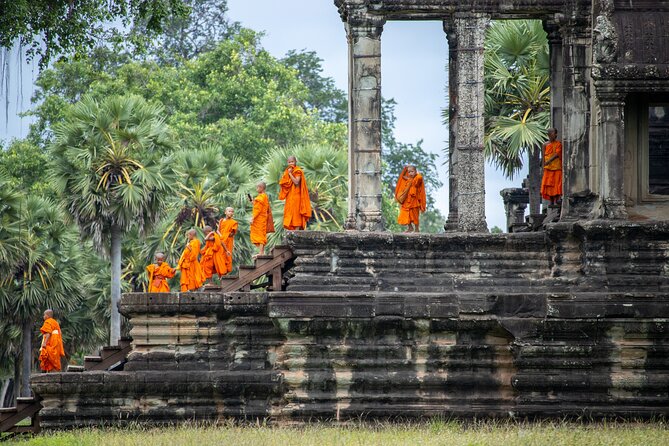
Then comes Ta Nei. You’ll spend about 20 minutes.
This temple is described as modest, quiet, and somewhat secluded, sitting in the middle of the jungle. That short time is intentional. It’s not meant to be your whole temple experience again. It’s a palate cleanser. You go from big-scale royal city energy to something smaller and calmer.
I like this part of the day because it reminds you that Angkor wasn’t only about monumental power. Some of it was daily life, worship, and routine architecture tucked into trees and shade. Even if you only get a brief window, it can feel like a real change of mood.
If you love slow travel, 20 minutes might feel short. But for a full-day “greatest hits” structure, it’s a good compromise.
Stop 5: Srah Srang — lunch with a reservoir view break
After Angkor Wat, Angkor Thom, and Bayon, it’s time to sit down. The tour schedules lunch at a restaurant and includes a break at Srah Srang, the reservoir area.
You’ll spend about 1 hour 30 minutes here. The standout isn’t just lunch. It’s the view side of the reservoir break, which gives your brain a reset after stone and carvings. You get relief from walking, a chance to cool down, and a more relaxed moment to look around.
This kind of break is one reason this tour works for most people. Angkor can turn into a constant stream of steps. A reservoir stop breaks that rhythm and helps you enjoy the later part of the day with energy.
If you get motion sickness from tuk-tuks, the later portion of the day still stays manageable because you’ve got a mid-day pause. If you’re prone to sun fatigue, using this stop to hydrate and slow your pace is smart.
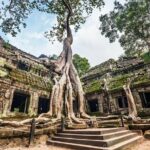
Stop 6: Ta Prohm — jungle ruins and managing the famous photo moment
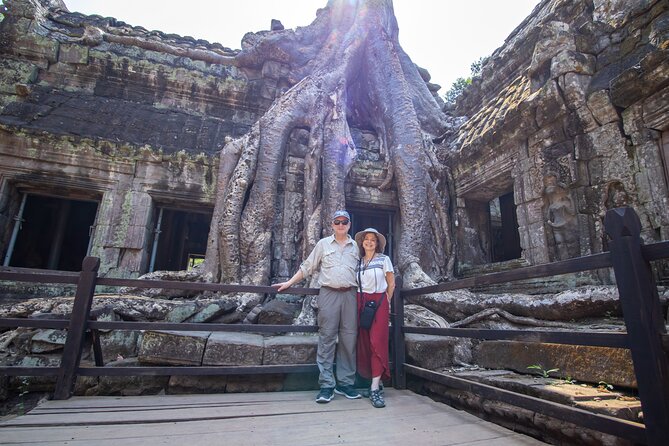
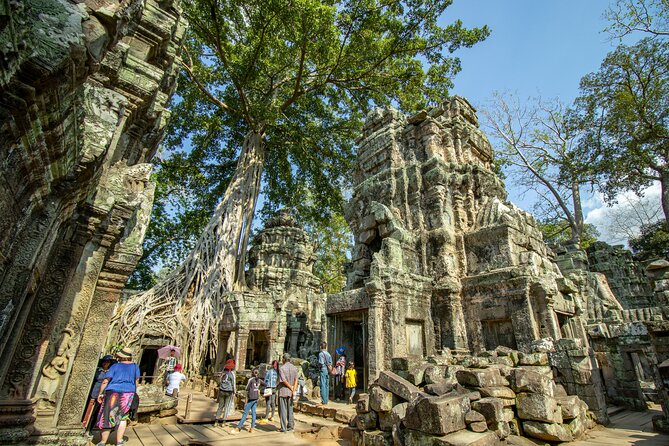
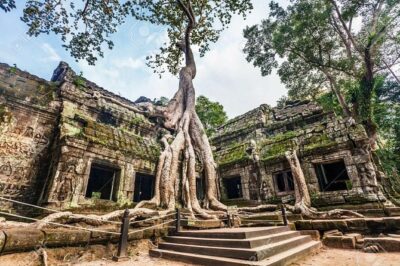
Ta Prohm is the stop most people recognize. It’s the ruined temple inside the jungle that many call the Tomb Raider Temple because it appeared in the Angelina Jolie film.
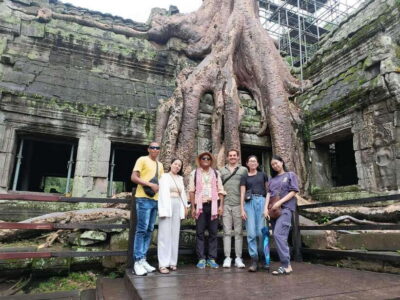
You’ll spend about 1 hour 30 minutes here. That’s enough time to enjoy the atmosphere and still move around without rushing. The key is knowing what makes Ta Prohm special: the way the trees grow into and around the ruins, creating that half-ruin, half-living landscape feeling.
I find Ta Prohm easier to enjoy when I can step back and look at the composition. A guide helps you notice where the trees shape sightlines and how the ruins sit within the jungle setting. It stops being only a photo spot and starts feeling like a story about time, nature, and restoration.
Crowd reality check: Ta Prohm is famous, so it can be busy. The good news is that the tour length gives you breathing room. Use it. Spend a few minutes finding a less hectic viewpoint, then return to the most photographed areas for your final shots.
Guide style and tuk-tuk comfort: why pacing is the real luxury
On paper, this tour looks like a simple list of temples. In real life, the difference is how the day flows.
The included English-speaking guide is what turns the route into something meaningful. In the feedback for this tour, Ben/Yen is praised for explanations and for stopping frequently so people could rest. That’s the kind of pacing that keeps Angkor fun instead of exhausting.
The driver handling the tuk tuk route matters too. A driver named Bo is specifically mentioned for doing a great job driving. That sort of competence is underrated. When you’re dealing with heat, uneven roads, and tight temple transitions, a calm driver keeps you focused on the sights.
Also, because it’s private, your guide can adjust to your group. If someone needs an extra minute before climbing stairs or walking through doorways, you can usually build that in without feeling like you’re holding up a busload of strangers.
Who this tour suits best (and who might want a different style)
This is a strong match if you:
- Want an organized first Angkor day without navigation stress
- Prefer a guide to explain what you’re looking at
- Like a comfortable daily rhythm with lunch, snacks, and water
- Enjoy a structured “big hits” route: Angkor Wat → Angkor Thom/Bayon → Ta Nei → Srah Srang → Ta Prohm
It may be less ideal if you:
- Want long, unhurried time at each temple and would rather skip a few stops for deeper exploration
- Get bored with short stops (Ta Nei is only about 20 minutes)
- Plan to rely on entrance fees being included, since park entry is extra
Should you book this private Angkor Wat tour?
If you’re thinking about it, I’d book it when your priority is a smooth, guided, high-impact day. The $60 price makes sense because you get transport, a guide, and built-in comfort: lunch, snacks, drinks, and water. Add the park ticket separately and you’re still set up for a solid, low-stress Angkor experience.
Skip it (or look for a longer-custom itinerary) if you know you want lots of off-route wandering or you want more time at a smaller number of temples. This tour is designed for getting the main sights done well, not for disappearing into the background for days.
If your goal is to return to Siem Reap tired in the good way—camera full, brain stimulated, and not wrecked by logistics—this private tuk-tuk plan is a strong choice.
FAQ
How long is the private Angkor Wat tour?
It runs about 7 to 8 hours.
What is included in the price?
The tour price includes round-trip tuk-tuk transport, an English-speaking guide, lunch, snacks and drinks, and drinking water throughout the day. It also includes convenient hotel pickup and drop-off and a mobile ticket.
Are entrance fees to Angkor Archaeological Park included?
No. Entrance fees to the Angkor Archaeological Park are not included.
Which temples and stops are visited?
You’ll visit Angkor Wat, Angkor Thom, Bayon Temple, Ta Nei Temple, Srah Srang (with a break and lunch), and Ta Prohm Temple.
What transport do you use during the day?
You travel around by tuk tuk for the round trip.
Is the guide English speaking?
Yes, the tour includes an English-speaking guide.
Is this tour private or group-based?
It’s private. Only your group participates.
Is pickup offered from hotels in Siem Reap?
Yes, hotel pickup and drop-off are included.
Just Your Group: Private Days
- Full-Day Angkor Wat Sunrise Private Tour with Guide from Siem Reap
★ 5.0 · 2,920 reviews - Siem Reap: Angkor Wat Private Tuk-Tuk Tour
★ 4.9 · 2,222 reviews - Angkor Wat Private Day Tour from Siem Reap
★ 5.0 · 834 reviews - Angkor Wat Private Tuk-Tuk Tour (sunrise Option) & more
★ 5.0 · 439 reviews - Private Angkor Wat Day Tour – Best of Angkor
★ 5.0 · 269 reviews
More Temple Circuits Around Siem Reap
- Angkor Wat Sunrise or Sunset Tour with Guide from Siem Reap
★ 5.0 · 12,109 reviews - Siem Reap: Angkor Wat: Small-Group Sunrise or Sunset Tour
★ 5.0 · 9,444 reviews - Siem Reap: Angkor Wat 2-Day Tour with Sunrise and Sunset
★ 4.9 · 4,429 reviews - Siem Reap: Full-Day Angkor Wat Guided Tour with Sunset
★ 4.9 · 3,803 reviews - Angkor Wat Sunrise tour with Small – Group and Guide tours
★ 5.0 · 3,655 reviews
Angkor Wat, a Few More Ways In
- Angkor Wat Sunrise or Sunset Tour with Guide from Siem Reap
★ 5.0 · 12,109 reviews - Siem Reap: Angkor Wat: Small-Group Sunrise or Sunset Tour
★ 5.0 · 9,444 reviews - Siem Reap: Angkor Wat 2-Day Tour with Sunrise and Sunset
★ 4.9 · 4,429 reviews - Siem Reap: Full-Day Angkor Wat Guided Tour with Sunset
★ 4.9 · 3,803 reviews - Angkor Wat Sunrise tour with Small – Group and Guide tours
★ 5.0 · 3,655 reviews
Just Added: Fresh Siem Reap Tour Reviews

Angkor Wat Temple Tours, compared.
 ★ 5.0Angkor Wat Sunrise or Sunset Tour with Guide from Siem ReapFrom $1812,109 reviews
 ★ 5.0Angkor Wat: Small-Group Sunrise or Sunset TourFrom $159,444 reviews
 ★ 4.9Angkor Wat 2-Day Tour with Sunrise and SunsetFrom $344,429 reviews
 ★ 4.9Full-Day Angkor Wat Guided Tour with SunsetFrom $153,803 reviews
 ★ 5.0Angkor Wat Sunrise tour with Small – Group and Guide toursFrom $143,655 reviews
 ★ 5.0Angkor Wat Highlights and Sunrise Guided Tour from Siem ReapFrom $233,213 reviews
 ★ 5.0Angkor Wat Sunset Small Group Tour with Lunch IncludedFrom $203,059 reviews
 ★ 5.0Full-Day Angkor Wat Sunrise Private Tour with Guide from Siem ReapFrom $602,920 reviews
Browse the lists this tour appears in