
Reviewed · ANGKOR TEMPLE TOURS
Private Full-Day Angkor Temples and Tonle Sap
Stone faces, floating houses, one easy plan. This private full-day tour strings together the big hits of Angkor Wat and the living world of Tonle Sap without making you manage the logistics.
I like that the day is built around a private, English-speaking guide (and you may even get a guide like Theam or Pin, who are singled out for clear storytelling). I also like that lunch is included, so you can focus on the temples and the water instead of hunting for food.
One drawback to consider: the Angkor Temple Pass is not included, and the timing details in the schedule can feel a bit tight or even contradictory around midday, so it’s worth confirming your exact hotel-return time with Bravo Indochina Tours.
In This Review
- Key Points You’ll Care About
- Price and what you get for $79 in Siem Reap
- Starting at 8:00am: how the private format changes your Angkor day
- Stop 1: Angkor Wat and why this temple works as a first scene
- Stop 2: Angkor Thom’s Southern Gate and Bayon faces
- Stop 3 and 4: Baphuon and the Terrace of the Elephants
- Stop 5: Terrace of the Leper King and what to expect from a short stop
- Lunch: a practical reset before Tonle Sap
- Tonle Sap Lake: where the “day trip” changes into a different world
- Chong Kneas floating village cruise: canal life up close
- What makes this itinerary work (and what can feel tight)
- How to make the most of photos at Angkor and on the water
- Who should book this private Angkor and Tonle Sap tour?
- Should you book Bravo Indochina Tours for Angkor and Tonle Sap?
- FAQ
- What time does the tour start?
- How long is the tour?
- Is pickup offered?
- Is lunch included?
- What’s included in the price besides lunch?
- What is not included?
- Is the Tonle Sap and floating village portion free to enter?
- Is this a private tour?
- What’s the cancellation policy?
- Is the tour appropriate for most people?
Key Points You’ll Care About
- Private format, just your group: less waiting, more time for questions.
- Four major temple stops plus viewing terraces: Angkor Wat, Angkor Thom, Baphuon, and key terraces.
- Lunch included at a local restaurant: saves time and helps you keep pace.
- Tonle Sap + Chong Kneas canal cruise: a clear break from stone to water-life.
- Free entries for Tonle Sap and floating village cruise parts: you mainly budget for the Angkor pass.
- 8:00am start with private transportation: a full day, but organized.
More temple circuits, set side by side
- Angkor Wat Sunrise or Sunset Tour with Guide from Siem Reap★ 5.0 · 12,109 reviews
- Siem Reap: Angkor Wat: Small-Group Sunrise or Sunset Tour★ 5.0 · 9,444 reviews
- Siem Reap: Angkor Wat 2-Day Tour with Sunrise and Sunset★ 4.9 · 4,429 reviews
- Siem Reap: Full-Day Angkor Wat Guided Tour with Sunset★ 4.9 · 3,803 reviews
Price and what you get for $79 in Siem Reap
At $79 per person for about 8 hours, this tour is aiming at good “total-day value,” not just a quick sightseeing loop. You’re paying for private transportation, a guide, and lunch, while the biggest standalone cost—the Angkor Temple Pass—is separate.
That pass is the main thing to budget for before you decide. If you already know you’ll want Angkor Wat and multiple sites in the complex, having the guide coordinate the route is the part that tends to feel worth it.
Starting at 8:00am: how the private format changes your Angkor day
A private tour matters most at Angkor, where timing and “what to see first” can make the difference between a great day and a rushed one. With a scheduled 8:00am start and pickup offered, you get moving early enough to get your bearings.
You also get a guide who can point out the details that most visitors miss: the story behind each monument and how the site fits together. In accounts of this tour, guides like Theam are praised for prompt pickup and strong history explanations, and Pin is highlighted for adding context not just about temples but also about contemporary Cambodia.
Stop 1: Angkor Wat and why this temple works as a first scene
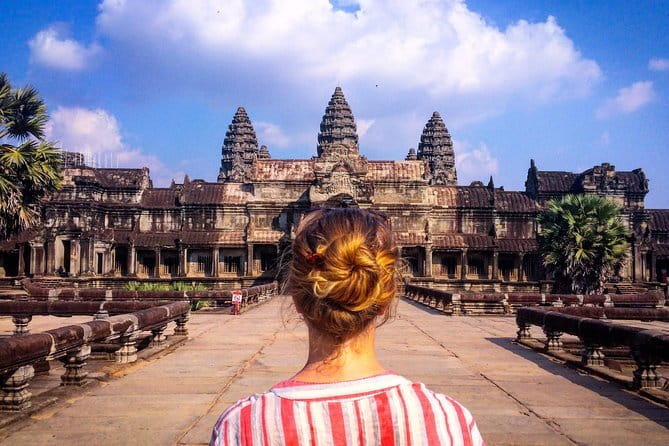
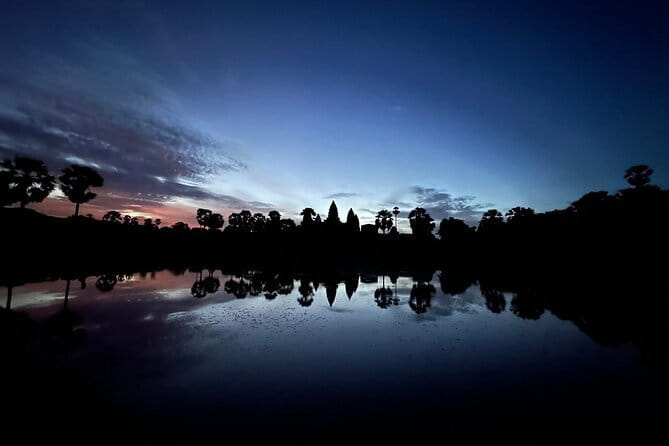
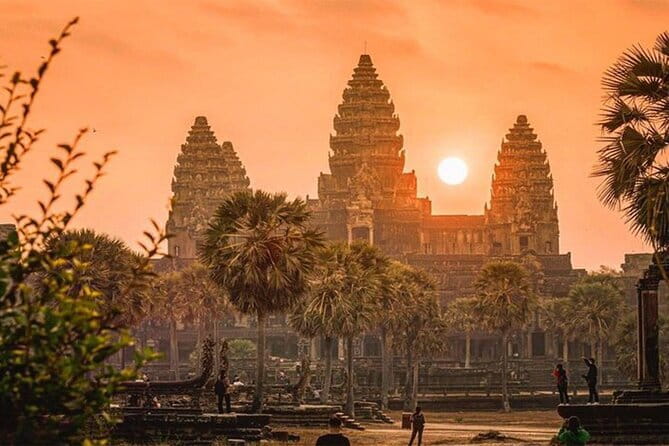
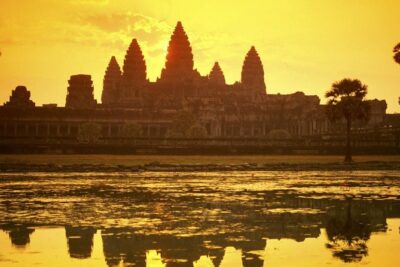
Your morning begins with Angkor Wat, usually the emotional anchor of any Angkor day. This was built in the early 12th century by King Suryavarman II as both a state temple and a kind of capital-city statement.
What I like about starting here is how it sets the visual and spiritual baseline for everything that follows. The site’s best-preserved condition also helps: Angkor Wat remained a major religious center over time, first with Hindu worship dedicated to Vishnu, and later as a Buddhist site. That shift shows in the way the temple is used and understood across centuries.
The scheduled time for this stop is about 1 hour. Note: admission isn’t included, so you’ll need your Angkor Temple Pass before you step in.
Stop 2: Angkor Thom’s Southern Gate and Bayon faces
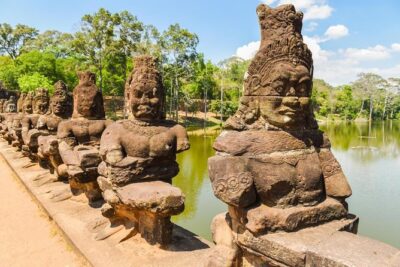
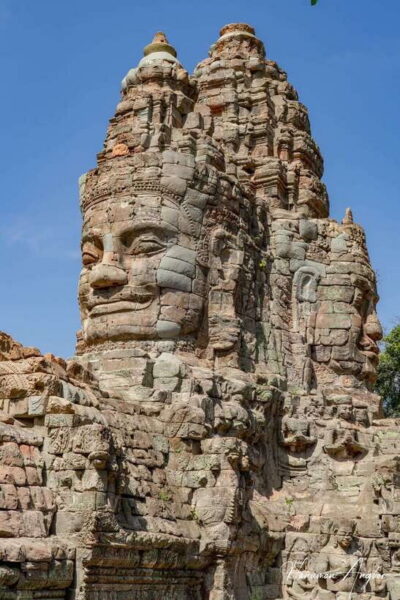
Next comes Angkor Thom, the ancient city core, with the Southern Gate and then the Bayon. The Bayon is known for 54 towers covered with more than 200 carved stone faces, which is exactly the kind of feature that changes your photos the moment you get close.
This is also where a guide earns their keep. Without a little interpretation, it can feel like you’re just staring at stone. With explanation, you start to notice how the faces repeat and how the space was meant to be experienced, not just seen.
This stop is also listed for about 1 hour, and again temple admission requires the Angkor Temple Pass.
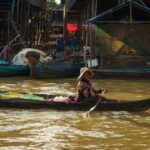
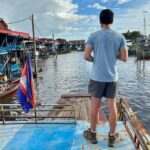
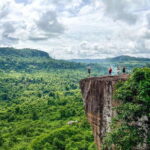
Back out on the lake, more stilted villages

Stop 3 and 4: Baphuon and the Terrace of the Elephants
After Bayon, you move to Baphuon Temple and then the Terrace of the Elephants. The Baphuon stop is a good mid-day anchor before you start working through the “terrace” viewpoints.
The Terrace of the Elephants is a memorable shift from carvings and towers to royal ceremonial space. It stretches about 350 meters long and was used as a giant viewing platform for public ceremonies, plus it served as a base for the king’s grand audience hall.
I like these terrace stops because they’re visual in a different way. You can step back and get a sense of how rulers intended crowds to see and gather—useful context when you’re trying to understand how Angkor functioned as a real city, not just a set of ruins.
The schedule allocates about 1 hour for Baphuon and about 30 minutes for the Terrace of the Elephants, with temple admission again not included.
Stop 5: Terrace of the Leper King and what to expect from a short stop
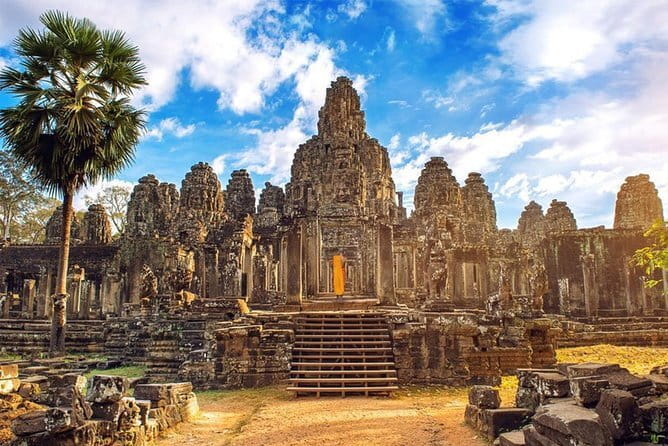
From the elephants, the route continues to the Terrace of the Leper King. This one is famous, or at least infamous, for its mysterious statue described as a nude sexless figure standing atop a 7-meter platform.
The key thing here is the time is short—about 30 minutes. That can be perfect if you’re just trying to hit the highlights and keep momentum. It can feel limiting if you love long, slow wandering and want extra time to study details or take a lot of photos from every angle.
If you want to maximize this stop, go in with a plan: pick one or two focal points, then let the rest come as you move. A guide can also help you avoid getting stuck staring at the same section.
Lunch: a practical reset before Tonle Sap
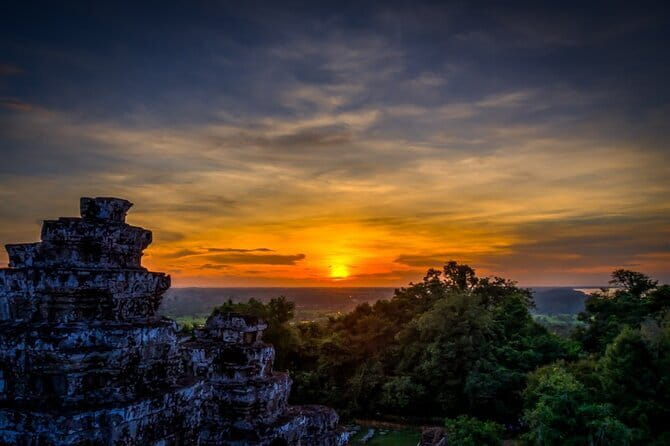
Lunch is included at a local restaurant, and I’m grateful for that on a full-day itinerary. It breaks up the temple-heavy morning and keeps you from spending extra time figuring out where to eat.
Since you’re switching gears from dry stone architecture to a lake-based ecosystem, a proper meal also helps your energy level. Try to treat lunch like a reset: refill water, use the restroom if available, and make sure your camera batteries are ready for the afternoon cruise.
Tonle Sap Lake: where the “day trip” changes into a different world
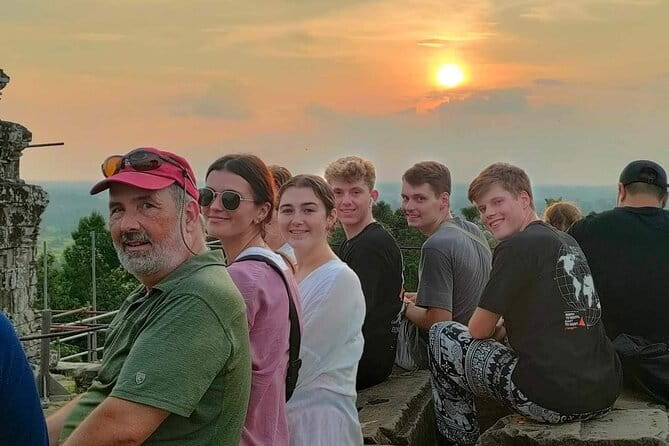
After lunch, you head toward Tonle Sap Lake. Tonle Sap is in the center of Cambodia and is described as one of the biggest geographic wonders in the region, with extraordinary biodiversity and hydrology that make it an ecological standout.
You’ll get a scheduled 1-hour stop at the lake area. Admission is listed as free for this part, which keeps your “paid entry costs” simpler after factoring in the Angkor Temple Pass.
One more note: some descriptions of this tour frame the lake portion with late-day light, like a sunset over the water. Even if timing varies, the overall idea is the same—this is your sensory shift moment, from temples and crowds to water and wildlife rhythm.
Chong Kneas floating village cruise: canal life up close
The afternoon drive is about 30 minutes to Chong Khneas village, where you depart and take a canal cruise. This is one of the most visually rewarding sections of the day because you’re not only looking at a village—you’re moving through it.
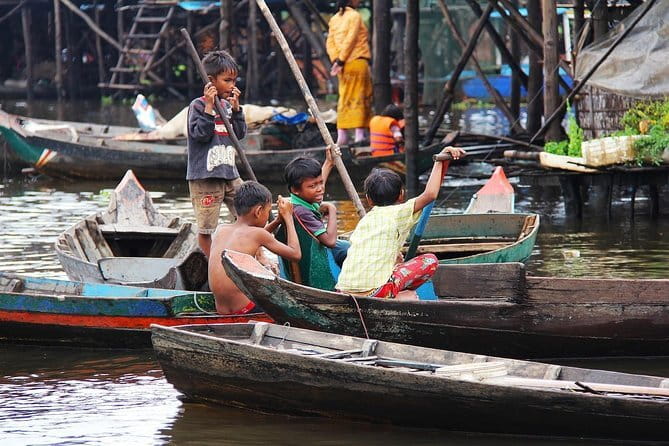
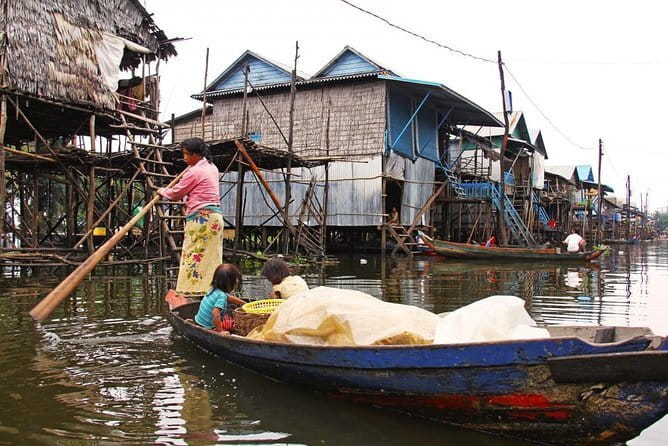
On the cruise, you’ll pass floating villages with schools, restaurants, and even a hospital. You may also see daily-life details such as fishing nets being mended, children swimming and playing, floating pigpens, and crocodile enclosures.
What makes this part valuable is the contrast to Angkor. It’s still about history and human systems, just in a living, working way. You also get a guided explanation so you can connect what you see to how communities adapt to the lake’s changing conditions.
This part is listed for about 1 hour and is described as free for admission.
What makes this itinerary work (and what can feel tight)
The strongest part of this plan is pacing variety. You get a structured run through the temple highlights, then a clear pivot to the lake and floating village lifestyle. That mix keeps the day from becoming a single-note sightseeing marathon.
The possible tight spot is the number of named sites and the relatively short time allotted to some of them. The early temple segment includes Angkor Wat, Angkor Thom/Bayon, Baphuon, and multiple terraces—so you’ll want to stay mentally ready to move.
Also, there’s a small scheduling inconsistency in the tour description: it says you’ll return to your hotel around 12 pm, but the rest of the day still includes lunch, the lake, and the canal cruise with a late-afternoon return. That doesn’t mean you’re stuck with a bad plan, but it does mean you should confirm your exact timeline on the day, especially for midday.
How to make the most of photos at Angkor and on the water
You’ll likely bring your camera because Angkor Wat and Bayon are built for dramatic shots. The faces at Bayon reward getting closer, while the Terrace of the Elephants benefits from stepping back for length and symmetry.
At Tonle Sap and Chong Kneas, your best photos often come from motion. Because you’re cruising a canal, you’ll get repeated “windows” of scenes—houses, daily work, and people along the water.
Bring practical gear: something for sun protection, and keep valuables secure during the cruise. Since you’ll be hopping between temple surfaces and boat areas, it helps to have a simple, quick-access setup for your phone or camera.
Who should book this private Angkor and Tonle Sap tour?
This is a great match if you want:
- A full-day plan that covers major Angkor sights and then shifts to the floating village experience
- A guide-led day where history and practical context are part of the value
- Private transportation so you’re not waiting around for a bigger group’s pace
It may not be your best fit if you:
- Want a super relaxed Angkor day with lots of free time at each temple
- Prefer to spend more time on fewer sites instead of hitting multiple highlights
Should you book Bravo Indochina Tours for Angkor and Tonle Sap?
I’d consider booking if your main priority is a well-structured, single-day combo: Angkor Wat plus the Angkor Thom highlights, followed by Tonle Sap and the Chong Kneas canal cruise. The $79 price looks especially reasonable once you remember lunch and private transportation are included, and you’re only separately paying for the Angkor Temple Pass.
Before you commit, do one quick check: confirm the exact hotel return time, since the written schedule hints at a possible midday mismatch. If you’re good with that and you’re ready for a full 8-hour day, this tour has the right shape for a first-time Siem Reap visit.
FAQ
What time does the tour start?
It starts at 8:00am.
How long is the tour?
The duration is listed as approximately 8 hours.
Is pickup offered?
Yes, pickup is offered.
Is lunch included?
Yes, lunch is included at a local restaurant.
What’s included in the price besides lunch?
Private transportation and an English-speaking guide are included (other languages are available upon request).
What is not included?
The Angkor Temple Pass is not included.
Is the Tonle Sap and floating village portion free to enter?
The tour info lists admission as free for the Tonle Sap lake stop and for the Chong Kneas floating village cruise portion.
Is this a private tour?
Yes. It’s private, and only your group will participate.
What’s the cancellation policy?
Free cancellation is allowed up to 24 hours in advance for a full refund.
Is the tour appropriate for most people?
The info states that most travelers can participate. Service animals are allowed.
Just Your Group: Private Days
- Full-Day Angkor Wat Sunrise Private Tour with Guide from Siem Reap
★ 5.0 · 2,920 reviews - Siem Reap: Angkor Wat Private Tuk-Tuk Tour
★ 4.9 · 2,222 reviews - Angkor Wat Private Day Tour from Siem Reap
★ 5.0 · 834 reviews - Angkor Wat Private Tuk-Tuk Tour (sunrise Option) & more
★ 5.0 · 439 reviews - Private Angkor Wat Day Tour – Best of Angkor
★ 5.0 · 269 reviews
Out on Tonle Sap
- From Siem Reap: Kampong Phluk Floating Village Tour by Boat
★ 4.9 · 6,979 reviews - Sunset tour of Kampong Phluk stilts home village on the Tonle Sap
★ 5.0 · 4,865 reviews - Kompong Phluk Floating Village Half-Day Tour ( Morning / Sunset )
★ 5.0 · 1,494 reviews - Siem Reap: Kulen Mountain, Beng Mealea and Tonle Sap Tour
★ 5.0 · 1,483 reviews - Tonle Sap Lake & Kampong Phluk Village Half-Day Tour
★ 5.0 · 1,045 reviews
More Temple Circuits Around Siem Reap
- Angkor Wat Sunrise or Sunset Tour with Guide from Siem Reap
★ 5.0 · 12,109 reviews - Siem Reap: Angkor Wat: Small-Group Sunrise or Sunset Tour
★ 5.0 · 9,444 reviews - Siem Reap: Angkor Wat 2-Day Tour with Sunrise and Sunset
★ 4.9 · 4,429 reviews - Siem Reap: Full-Day Angkor Wat Guided Tour with Sunset
★ 4.9 · 3,803 reviews - Angkor Wat Sunrise tour with Small – Group and Guide tours
★ 5.0 · 3,655 reviews
Just Added: Fresh Siem Reap Tour Reviews

Angkor Temple Tours, compared.
 ★ 5.0Angkor Wat Sunrise or Sunset Tour with Guide from Siem ReapFrom $1812,109 reviews
 ★ 5.0Angkor Wat: Small-Group Sunrise or Sunset TourFrom $159,444 reviews
 ★ 4.9Angkor Wat 2-Day Tour with Sunrise and SunsetFrom $344,429 reviews
 ★ 4.9Full-Day Angkor Wat Guided Tour with SunsetFrom $153,803 reviews
 ★ 5.0Angkor Wat Sunrise tour with Small – Group and Guide toursFrom $143,655 reviews
 ★ 5.0Angkor Wat Highlights and Sunrise Guided Tour from Siem ReapFrom $233,213 reviews
 ★ 5.0Angkor Wat Sunset Small Group Tour with Lunch IncludedFrom $203,059 reviews
 ★ 5.0Full-Day Angkor Wat Sunrise Private Tour with Guide from Siem ReapFrom $602,920 reviews
Browse the lists this tour appears in