
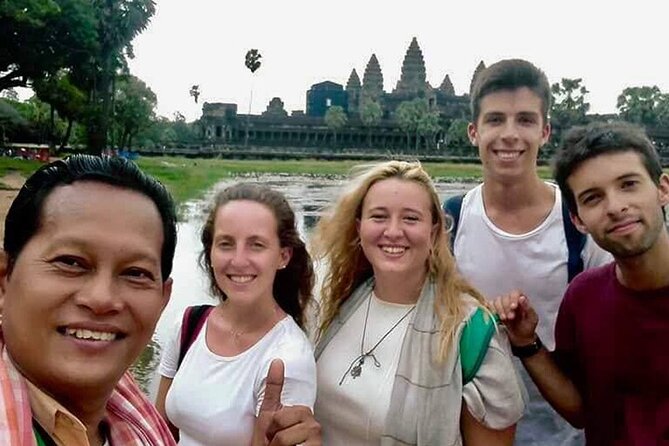
Reviewed · ANGKOR WAT TEMPLE TOURS
Private Full-Day Sunrise Tour in Angkor Wat Temple
Sunrise at Angkor Wat changes how you see stone. This full-day Angkor circuit is built around early light and expert storytelling, with an English-speaking guide to translate what you’re looking at into something you actually understand. I especially like the way guides such as Chanra are praised for deep Cambodian cultural knowledge and for helping with photos you’ll be glad you took.
The biggest downside is the early start and the heat later in the day, especially after the morning temples when the sun climbs and your walking time stacks up. You’ll want a plan for water, breaks, and clothing that won’t leave you miserable by noon.
In This Review
- Key Highlights You’ll Notice Fast
- Sunrise at Angkor Wat: why leaving early is the whole point
- Angkor Thom South Gate: the Naga legend you’ll actually see
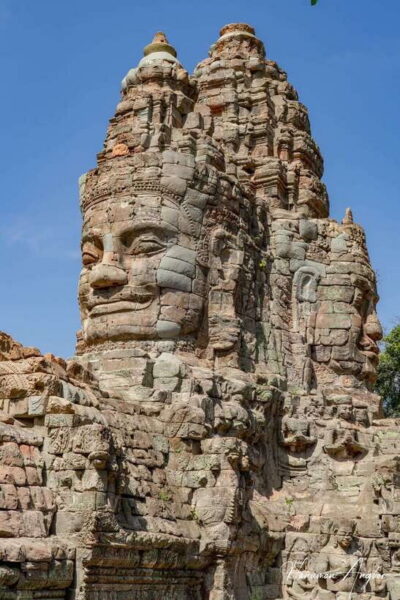
- Bayon Temple’s smiling faces: close-ups without feeling lost
- Baphuon and the royal enclosure feel like a carved maze
- Phimeanakas, the Elephants Terrace, and Ta Nei: the stops that slow the pace
- Phimeanakas
- Terrace of the Elephants
- Ta Nei
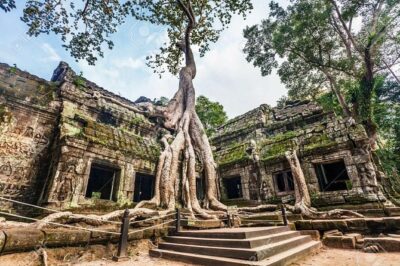
- Ta Prohm: the tree roots that made it famous
- Timing, lunch, and staying comfortable through a long day
- What you get for the price: $43 plus the Angkor Pass
- Guides make the difference: what to look for (and which names came up)
- Who should book this private sunrise tour
- Final verdict: should you book?
- FAQ
- What time does the sunrise tour start?
- How long does the full-day sunrise experience take?
- What’s included in the tour price?
- Do I need to buy an Angkor Temples Pass?
- Is this tour private?
- What if the weather is bad?
- Can I cancel for a full refund?
Key Highlights You’ll Notice Fast
- 4:30 am start for sunrise at Angkor Wat, before the busiest waves.
- South Gate to Bayon to Baphuon covers the heart of Angkor Thom in one smooth day.
- Big-face Bayon and Naga tug-of-war details give you plenty of close-up moments to study.
- Ta Prohm’s tree roots deliver the famous film look and real photo drama.
- Guide coaching for photos is a repeated strong point, including names like Chanra and Manoune.
Other ways to walk the great temple
- Angkor Wat Sunrise or Sunset Tour with Guide from Siem Reap★ 5.0 · 12,109 reviews
- Siem Reap: Angkor Wat: Small-Group Sunrise or Sunset Tour★ 5.0 · 9,444 reviews
- Siem Reap: Angkor Wat 2-Day Tour with Sunrise and Sunset★ 4.9 · 4,429 reviews
- Siem Reap: Full-Day Angkor Wat Guided Tour with Sunset★ 4.9 · 3,803 reviews
Sunrise at Angkor Wat: why leaving early is the whole point
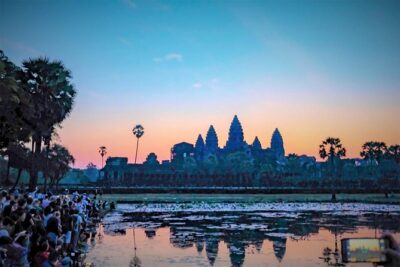
This tour is designed around one idea: see Angkor Wat in the morning light. The start time is 4:30 am, and that early push matters. At this hour, the temples feel less like a crowded checklist and more like a living place—cool air, softer shadows, and sunrise colors that make the carvings pop instead of flatten out.
Once you’re there, you don’t just stand outside. You’ll explore the temple itself, including galleries inside Angkor Wat, where a guide helps connect the scenes and symbolism to Khmer life and belief systems. Even if you’re not a “museum person,” this kind of guided explanation is what turns stone walls into a narrative you can follow.
Practical note: sunrise tours usually mean standing around while the light changes. Wear layers you can adjust, because early mornings can feel cooler than the afternoons that come later.
Angkor Thom South Gate: the Naga legend you’ll actually see
After Angkor Wat, you’ll head to the South Gate of Angkor Thom, the grand entrance to the ancient city. The first jaw-drop moment is the causeway across the moat, lined with the famous Naga balustrades. Here you’re looking at a mythic battle rendered in stone: a seven-headed Naga held by a multi-armed, multi-headed giant, with 54 stone giants on each side pulling the serpent.
The guide’s role becomes extra important at this stop. It’s not enough to know there’s a serpent and giants (lots of places have big statues). You’ll get the meaning of the tug-of-war concept—Devas versus Asuras—so the sculptures stop being random decoration and start reading like a story carved into architecture.
This is also a quick stop. Expect it to feel intense and compressed: lots of details, limited time. If you like to take your time studying, this is the place where you’ll want your guide to help you prioritize what’s most interesting.
Bayon Temple’s smiling faces: close-ups without feeling lost
Next comes Bayon Temple, built by King Jayavarman VII in the late 12th or early 13th century. The key feature is what you’ll notice from far away: towers topped with massive, smiling stone faces. Your guide will also bring context that Bayon is the only Angkor state temple dedicated to Buddha in the Mahayana tradition during that period.
What I like here is the combination of scale and intimacy. You’re not just looking at one famous angle; you can move between tiers and gaze upward, then turn and study expressions from different perspectives. Add to that the dense bas-reliefs—Khmer armies, apsaras, naval battles, fishermen, even cockfights—and you get something rare: you can feel the city moving through its carvings.
One caution: Bayon can be very busy. So while the details are incredible, you’ll want to be mentally ready for crowds. In practice, a good guide helps you get to the best viewpoints efficiently, so you spend less time stuck and more time seeing.
Baphuon and the royal enclosure feel like a carved maze
From Bayon, you’ll continue to Baphuon Temple, described as a prototype of the Baphuon style, with carving spread across nearly every surface. The temple uses the sandstone “temple-mountain” idea meant to symbolize Mount Meru from Hindu and Buddhist cosmology. You’ll see realistic and fanciful animals, hunters, devata figures, lotus motifs, and scenes tied to epic stories such as the Ramayana.
What makes this stop work in a morning-heavy itinerary is variety. Bayon gives you faces; Baphuon gives you patterns, battle scenes, and dense ornament. Your brain gets a different kind of workout.
Then you’ll pass through nearby parts of the royal zone, including the Royal Enclosure Wall and the Phimeanakas Temple area. Phimeanakas is interesting because it’s part of that royal enclosure context, and it also feels calmer thanks to the trees and ponds around it. If you’re hitting Angkor on a hot day, this type of shaded, slightly cooler break can make the rest of the afternoon more manageable.
Chasing the light? More dawn and dusk runs
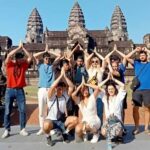
Phimeanakas, the Elephants Terrace, and Ta Nei: the stops that slow the pace
The tour continues through several middle-sized sites that are often skipped when people only chase the most famous photos.
Phimeanakas
Phimeanakas is tied to court life and royal enclosure movement, so it fits nicely between the grand, symbolic zones and the busier temple compounds. The setting matters too. With thick trees and ponds around the area, it can feel cooler than the exposed stone stretches that come next.
Terrace of the Elephants
Then you’ll visit the Terrace of the Elephants, built by King Jayavarman VII at the end of the 12th century. This terrace stretches more than 300 meters, linking the zone from Baphuon on the south to the Leper King terrace to the north.
Even if you don’t study every carving, the length alone helps you understand the scale of Jayavarman VII’s building program. It’s a reminder that Angkor isn’t just a single temple—it’s a whole urban system made of ceremonial space.
Ta Nei
Finally in the Angkor Thom outside loop, you’ll see Ta Nei Temple, a late 12th-century stone temple dedicated to the Buddha and located near the northwest corner of the East Baray reservoir. The reservoir connection adds meaning; it places the temple inside the water-and-cosmology logic that runs through Khmer temple planning.
Ta Nei is shorter on time (a quicker stop), so if you’re the type who likes to linger, you might find yourself wanting more minutes. Still, it’s a good “reset” point before the big crowd magnet later.
Ta Prohm: the tree roots that made it famous
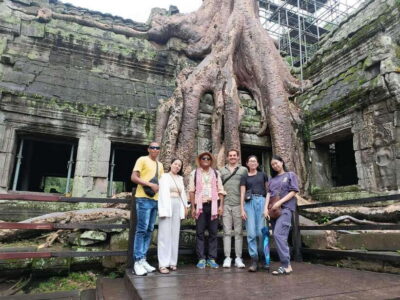
The final major temple on this schedule is Ta Prohm—often called the Monastery of the King, with the original name Rajavihara. Built in 1186 AD by King Jayavarman VII, this temple is known for the massive tree roots that grow around and through the ruins.
And yes, it’s the place tied to the look of the Tomb Raider movie. But the important part is that even if you came for the film connection, you’ll still recognize Ta Prohm’s actual atmosphere: cracked stone, standing columns, and roots that turn the site into something half-temple, half-forest.
This is also where your pacing matters most. Ta Prohm’s famous look can make you want to sprint from photo to photo. Instead, I recommend using your guide to help you find a few angles, then actually look at the structure lines—the way the roots frame doorways and how the carvings sit under the shade.
Timing, lunch, and staying comfortable through a long day
The morning is temple-heavy, and by around 12:00 pm you’ll have time for lunch at a local restaurant near Angkor Wat. That timing is smart: you’re not dragging lunch into late afternoon, and you have the break before the hottest part of the day fully settles in.
Expect long days at Angkor. Even with an air-conditioned vehicle and bottled water included, you’ll still be on your feet. The best strategy is simple:
- plan to rest your feet at lunch
- bring a light layer and something that covers shoulders if you tend to get sunburn easily
- keep your eyes on hydration, not just on photos
If you’re prone to overheating, the treeier areas like Phimeanakas can help, but the overall itinerary still includes sun exposure.
What you get for the price: $43 plus the Angkor Pass
The tour price is $43.00 per person, and you’ll likely add the Angkor Temples Pass to it. The pass is 1 Day = $37 per person and is not included in the tour cost. That puts your total at about $80 per person for the tour plus the pass.
Is that value? For me, the argument is the guide. You’re not just buying entry to a site—you’re buying early timing, transport between multiple temples, and an English-speaking guide who explains what you’re seeing. The included parking fees and roads tolls also reduce the stress of figuring out logistics.
One more practical point: this is a private tour/activity, meaning only your group participates. For families, couples, or friends who want a quieter pace (even with crowds at Bayon), that private feel can be worth real money.
Guides make the difference: what to look for (and which names came up)
From the strong feedback tied to this experience, a few guide names stood out: Chanra and Manoune, plus Bob in similar Angkor loops. The repeated themes are consistent:
- strong Khmer cultural knowledge with clear English
- friendliness and energy
- good photo guidance, including taking pictures and helping you find angles
- flexibility to adjust timing to your pace
If you can request a guide, and your preferences include more explanation and better photos, names like Chanra and Manoune are worth keeping in mind. If not, use your first temple as a test: ask one question early about symbolism or carvings. If the guide’s answers feel solid and organized, you’re in good hands.
Who should book this private sunrise tour
This tour fits best if you want:
- a 4:30 am sunrise experience without trying to manage it yourself
- a guided route through Angkor Wat + Angkor Thom + Ta Prohm
- a mix of major icons (Angkor Wat, Bayon, Ta Prohm) and meaningful supporting stops (Baphuon, Phimeanakas, Terrace of the Elephants, Ta Nei)
It’s also a good choice if you’re traveling with a small group and prefer a vehicle that doesn’t feel like a shuttle bus full of strangers.
People who dislike early mornings, long walking days, or crowds at Bayon might feel the schedule is tight. In that case, you can still enjoy Angkor—but you’d probably want a later start plan.
Final verdict: should you book?
If your goal is to see Angkor Wat in real sunrise light and then keep going through Angkor Thom’s major monuments—without sorting out transport and explanations—this is a strong booking. The included water, air-conditioned vehicle, and English guide help make the long day feel manageable, and the private format adds comfort.
Just go in knowing the trade-off: 4:30 am means early bedtime the night before, and by noon you’ll be working through heat. If you’re ready for that, you’ll get a full Angkor day that’s more than photos—it’s meaning you can actually read off the stones.
FAQ
What time does the sunrise tour start?
The tour starts at 4:30 am.
How long does the full-day sunrise experience take?
It runs about 7 hours (approx.).
What’s included in the tour price?
Included items are bottled water, an air-conditioned vehicle, pickup/drop-off at the airport, an English tour guide, and parking fees and road tolls.
Do I need to buy an Angkor Temples Pass?
Yes. A 1 Day Temples Pass is $37 per person, and it is not included.
Is this tour private?
Yes. This is a private tour/activity, and only your group participates.
What if the weather is bad?
The experience requires good weather. If it’s canceled due to poor weather, you’ll be offered a different date or a full refund.
Can I cancel for a full refund?
Yes. Free cancellation is available up to 24 hours in advance for a full refund.
More Temple Circuits Around Siem Reap
- Angkor Wat Sunrise or Sunset Tour with Guide from Siem Reap
★ 5.0 · 12,109 reviews - Siem Reap: Angkor Wat: Small-Group Sunrise or Sunset Tour
★ 5.0 · 9,444 reviews - Siem Reap: Angkor Wat 2-Day Tour with Sunrise and Sunset
★ 4.9 · 4,429 reviews - Siem Reap: Full-Day Angkor Wat Guided Tour with Sunset
★ 4.9 · 3,803 reviews - Angkor Wat Sunrise tour with Small – Group and Guide tours
★ 5.0 · 3,655 reviews
Dawn and Dusk Over Angkor
- Angkor Wat Sunrise or Sunset Tour with Guide from Siem Reap
★ 5.0 · 12,109 reviews - Siem Reap: Angkor Wat: Small-Group Sunrise or Sunset Tour
★ 5.0 · 9,444 reviews - Sunset tour of Kampong Phluk stilts home village on the Tonle Sap
★ 5.0 · 4,865 reviews - Siem Reap: Angkor Wat 2-Day Tour with Sunrise and Sunset
★ 4.9 · 4,429 reviews - Siem Reap: Full-Day Angkor Wat Guided Tour with Sunset
★ 4.9 · 3,803 reviews
Angkor Wat, a Few More Ways In
- Angkor Wat Sunrise or Sunset Tour with Guide from Siem Reap
★ 5.0 · 12,109 reviews - Siem Reap: Angkor Wat: Small-Group Sunrise or Sunset Tour
★ 5.0 · 9,444 reviews - Siem Reap: Angkor Wat 2-Day Tour with Sunrise and Sunset
★ 4.9 · 4,429 reviews - Siem Reap: Full-Day Angkor Wat Guided Tour with Sunset
★ 4.9 · 3,803 reviews - Angkor Wat Sunrise tour with Small – Group and Guide tours
★ 5.0 · 3,655 reviews
Just Added: Fresh Siem Reap Tour Reviews


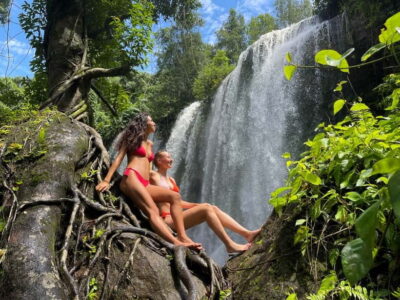
Angkor Wat Temple Tours, compared.
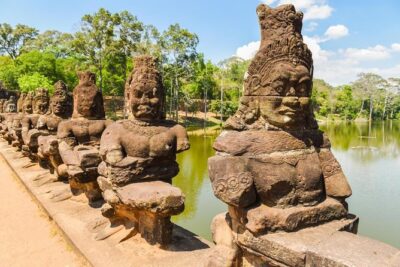 ★ 5.0Angkor Wat Sunrise or Sunset Tour with Guide from Siem ReapFrom $1812,109 reviews
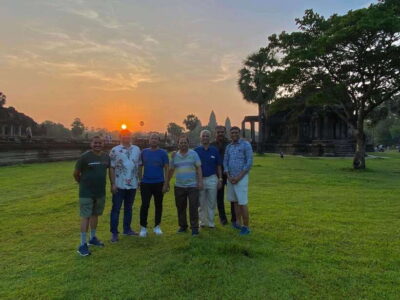 ★ 5.0Angkor Wat: Small-Group Sunrise or Sunset TourFrom $159,444 reviews
 ★ 4.9Angkor Wat 2-Day Tour with Sunrise and SunsetFrom $344,429 reviews
 ★ 4.9Full-Day Angkor Wat Guided Tour with SunsetFrom $153,803 reviews
 ★ 5.0Angkor Wat Sunrise tour with Small – Group and Guide toursFrom $143,655 reviews
 ★ 5.0Angkor Wat Highlights and Sunrise Guided Tour from Siem ReapFrom $233,213 reviews
 ★ 5.0Angkor Wat Sunset Small Group Tour with Lunch IncludedFrom $203,059 reviews
 ★ 5.0Full-Day Angkor Wat Sunrise Private Tour with Guide from Siem ReapFrom $602,920 reviews