
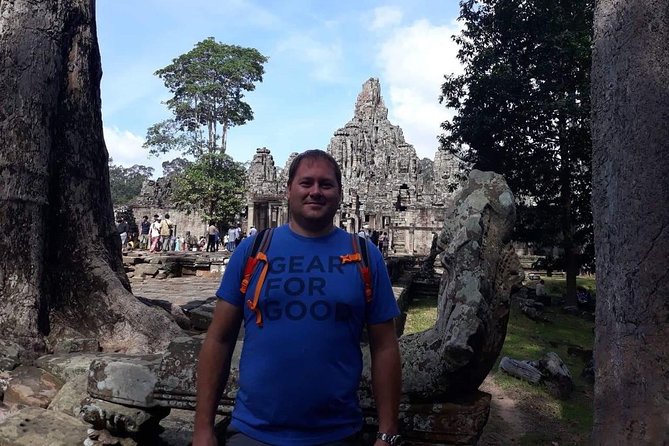
Reviewed · ANGKOR WAT TEMPLE TOURS
Private Tour: Siem Reap Full Day Tour With Angkor Wat Banteay Srei Bayon Temple and Ta Prohm
Four Angkor temples, one efficient day. This private Siem Reap tour strings together Angkor Wat and Banteay Srei, plus Bayon and Ta Prohm, in about eight hours with hotel pickup and an English-speaking local guide. I especially like the focused “see the key sites” plan and the fact that admission fees and a private air-conditioned vehicle are bundled in. The trade-off is a tight schedule: each stop is listed at around one hour, so you’ll want to know what you want to spend time on.
You’re not just shown temples—you’re encouraged to ask questions, and the guides’ attention to carved details can turn quick stops into meaningful ones. There’s also a practical bonus for solo visitors: one guide (Mr Thou) was described as helpful with photos. Just plan for lunch on your own since lunch food and drinks are not included.
In This Review
- A private Siem Reap day built for the Angkor highlights
- Key points you should know before you go
- How the day flows from 9:00 am pickup to Ta Prohm
- Angkor Wat in one hour: moat, outer wall, and bas-reliefs
- Banteay Srei: the temple that names its district
- Bayon Temple: a richly decorated Khmer temple with a political role
- Ta Prohm after lunch: the Jayavarman VII connection
- Lunch on your own: budgeting for a full Angkor day
- What the guide adds beyond tickets and transport
- Price of $178: is this a good value day?
- Who this Siem Reap private tour is best for
- Should you book this full-day Angkor route?
- FAQ
- How long is the Siem Reap full day Angkor tour?
- What temples are included in the itinerary?
- Is hotel pickup and drop-off included?
- Are entrance fees included?
- Is lunch included in the price?
- Do I get an English-speaking guide?
- Is this tour private or shared?
- Can I cancel for a full refund?
- What transportation do I use during the tour?
A private Siem Reap day built for the Angkor highlights
If you have limited time in Siem Reap, this is the kind of day trip that makes sense. Instead of picking just one temple and calling it a day, you hit the main Angkor-Wat-tier icons plus two other big-name stops, all in a single route.
What makes this tour feel practical is the structure. You’re picked up from Siem Reap City area hotels at 9:00 am, then the day runs as a sequence of clear targets. Each site gets its own block of time (about an hour), and entrance tickets are included—so you’re not constantly figuring out what’s paid, what’s not, and what you’ll do next.
This is also a private tour, so it’s only your group in the vehicle. That matters when you want the guide to move at your pace and when questions come up naturally in the middle of walking around.
Other ways to walk the great temple
- Angkor Wat Sunrise or Sunset Tour with Guide from Siem Reap★ 5.0 · 12,109 reviews
- Siem Reap: Angkor Wat: Small-Group Sunrise or Sunset Tour★ 5.0 · 9,444 reviews
- Siem Reap: Angkor Wat 2-Day Tour with Sunrise and Sunset★ 4.9 · 4,429 reviews
- Siem Reap: Full-Day Angkor Wat Guided Tour with Sunset★ 4.9 · 3,803 reviews
Key points you should know before you go
- Hotel pickup and drop-off from Siem Reap City area keeps the day stress-free.
- Four major temples in one day: Angkor Wat, Banteay Srei, Bayon, and Ta Prohm.
- English-speaking local guide who explains history and carvings, with time to ask questions.
- All entrance fees included, plus admission tickets for each stop.
- Private air-conditioned vehicle, with room noted as a plus.
- Lunch isn’t included, so you’ll need to budget time and money for food.
How the day flows from 9:00 am pickup to Ta Prohm
The tour starts at 9:00 am with pickup from a Siem Reap City area hotel. From there, you head out to Angkor Wat first, with the day laid out as a chain of stops rather than a wandering day that depends on luck.
Stop timing is one of the biggest “hidden” details here. Each temple visit is scheduled for about an hour. That’s enough time to see the temple and get oriented, but it’s not enough to treat the day like a slow museum crawl. If you love lingering at details, you’ll likely want to plan mentally for what you want most: carvings, architecture, or simply the big moments and views from key areas.
Transportation is also handled for you. You get a private, air-conditioned vehicle, and that’s a real quality-of-life factor on a full-day itinerary. One traveler specifically praised the vehicle as air conditioned and roomy, which is exactly what you want when you’re crisscrossing between major sites.
Angkor Wat in one hour: moat, outer wall, and bas-reliefs
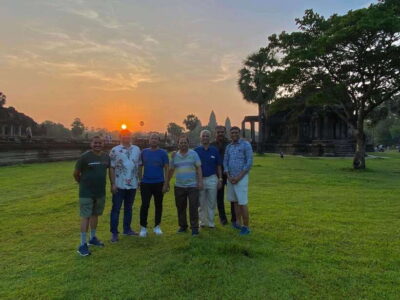
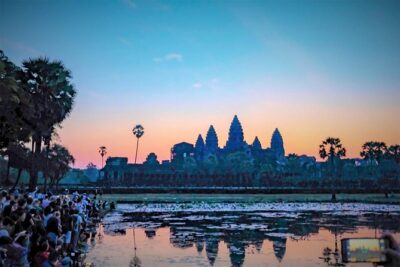
Your first temple stop is Angkor Wat, described as the biggest and most spectacular temple at Angkor. The way the visit is framed helps you get meaning fast: before you even spend time on details, your guide can connect the temple’s setting and structure to how it was designed.
There are a couple of big, concrete facts to listen for. Angkor Wat has a moat and an outer wall that stretches for 3.6 kilometers. Inside those boundaries, there’s a large area of open space with a long path leading toward the main temple. That long approach is one of the clearest ways to understand the scale—your eyes keep moving forward, and you can feel how the design guides you.
Also pay attention to the decorative work. Along the sides of the temple are detailed bas-reliefs. Even when your time is short, those carvings are where a good guide earns their keep. One of the tour descriptions highlighted that your guide will explain what you’re seeing and that you’ll be able to ask questions, which is exactly what you want at Angkor Wat, where symbolism is easy to miss if you just rush through.
Practical tip: If you know you’ll want photos, ask early about the best spots for pictures so you don’t waste your hour hunting for the perfect angle.
Banteay Srei: the temple that names its district
After Angkor Wat, the tour moves to Banteay Srei. This is the kind of stop that changes the feeling of the day. Angkor Wat is massive. Banteay Srei is often where people slow down because the beauty comes through in the fine details and the character of the carvings.
Banteay Srei is described as one of the most beautiful temples in the Angkor region. It also gives its name to the surrounding district, which is a helpful detail for context. It’s a reminder that temples weren’t just isolated monuments; they were connected to the identity and geography of the area around them.
Timing here is still about an hour, so the best way to get value is to let your guide point out what matters most. If you enjoy reading stories from stone, this is a great match. If your priority is to say you saw it and move on, you can still get the main takeaways quickly—but you’ll probably enjoy the experience more if you spend those 60 minutes asking your guide to translate the carvings and layout.
Small drawback to consider: With only about an hour, you won’t have “second pass” time. If Banteay Srei is your top priority, it’s worth going in with a few questions ready.
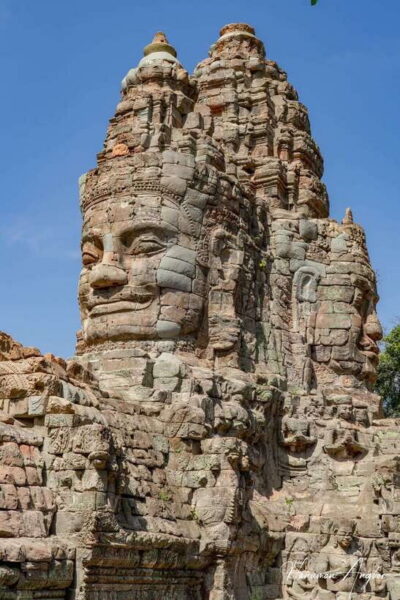
Back through the south gate to Bayon
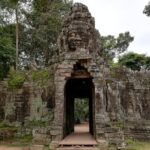


Bayon Temple: a richly decorated Khmer temple with a political role
Next up is Bayon Temple, known as a well-known and richly decorated Khmer temple at Angkor in Cambodia. What makes Bayon interesting isn’t only the look of the architecture—it’s the role it played. The tour description notes it was built in the late 12th or early 13th century as the official state temple of the Mahayana tradition.
That kind of context changes how you read the place. Instead of treating Bayon as one more stop, you can look at it as a statement of power and belief—built to serve as a centerpiece temple in its moment.
And since the tour is structured for questions, you can ask things like why this temple was positioned as an official state temple and what that implies about how rulers wanted people to understand religion and authority. If you like your travel with explanations you can follow in real time, this is one of the strongest parts of the itinerary.
Why this stop matters for first-timers: Bayon helps balance the day. You see Angkor Wat’s monumental design, then you move into another temple that’s tightly connected to the era’s political and religious priorities.
Ta Prohm after lunch: the Jayavarman VII connection
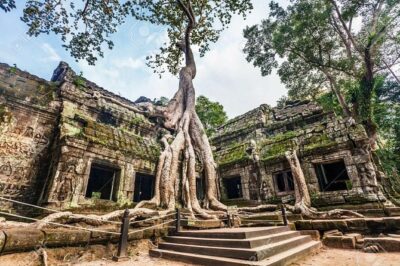
After lunch (lunch food and drinks are at your own cost), the tour heads to Ta Prohm. This is identified as a Buddhist temple built by King Jayavarman VII in 1186 and dedicated to the King’s mother.
That dedication is one of the most useful details you can carry with you while you walk. It gives the temple a personal storyline inside the larger sweep of Angkor’s history. Instead of thinking only about architecture, you can connect the temple to a specific ruler and a family purpose for its creation.
Just like the earlier stops, the visit is scheduled at about an hour, and entrance is included. That means Ta Prohm is your final “anchor” stop of the day—enough time to absorb the basic identity of the temple and hear the guide’s interpretation, without turning the day into a marathon.
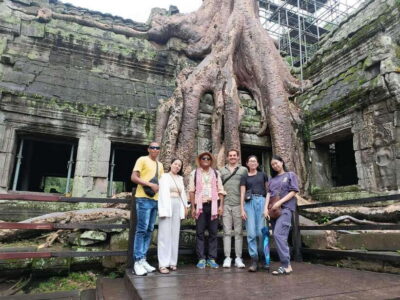
Photo and solo-traveler note: If you’re traveling by yourself, this is often where a good guide’s help makes a difference. One traveler noted Mr Thou was helpful with photos, which is exactly the kind of small service that can save you time and improve your pictures.
Lunch on your own: budgeting for a full Angkor day
Lunch is listed as at your own cost, so don’t assume it’s included in the price. The tour keeps you moving through a full itinerary, which means you’ll want to plan for lunch in a way that doesn’t drag down the rest of the day.
A practical approach is to pick something quick and filling so you can stay comfortable through the afternoon. One traveler described the lunch place as great, suggesting that the tour can lead you to a solid option—but since lunch isn’t included, you’ll still need to cover what you order.
Because the itinerary has fixed temple blocks, you shouldn’t count on a long sit-down meal. Treat lunch as a reset, not a vacation within the tour.
What the guide adds beyond tickets and transport
Entrance fees and the vehicle get you inside the gates. The guide is what helps those gates mean something.
The tour description emphasizes that you’ll learn about site history and be able to ask plenty of questions. In practice, that’s where your time improves fast. Angkor’s temples are packed with carvings and symbolic design choices, and without explanation it’s easy to miss why something is placed where it is.
Two guides are specifically mentioned in traveler write-ups: Mr Thou and Mr Sophorn. Both are described as strong with English and with the temple sites they cover. Mr Thou was also mentioned as taking time to explain carvings, while Mr Sophorn was praised for explaining Cambodian history and the temples visited. Those are the kinds of strengths that matter when you’re doing four major sites in one day.
If you want a tour that’s mostly about architecture and story—not just a checklist—this guide-led format fits.
Price of $178: is this a good value day?
At $178.00 per person, the sticker price can look steep at first glance. But this tour bundles several big costs that add up quickly on your own.
You’re paying for:
- Hotel pickup and drop-off from the Siem Reap City area
- An English-speaking local guide
- A private air-conditioned vehicle
- All entrance fees with admission tickets included at each stop
When you line that up against doing temples independently, you’re essentially buying convenience plus structured time. You also reduce decision fatigue. Instead of juggling transport, tickets, and timing across multiple temples, you follow a route built around the key sites.
The tour also notes group discounts, which can make the price feel more reasonable if you’re traveling with others and can share the overall cost.
The main value downside is that the day is packed. Since each stop is about an hour, you’re paying for breadth over slow depth. If you want a deep, unhurried approach to one temple, you might prefer a more flexible plan. If you want four core Angkor temples in a single day with explanations and included admissions, this is the kind of price that usually makes sense.
Who this Siem Reap private tour is best for
This tour makes the most sense if you:
- Have limited time in Siem Reap and want the big Angkor hits in one day
- Want a guide to explain carvings and history while you’re there
- Prefer the comfort of a private air-conditioned vehicle instead of figuring out transport between sites
- Appreciate the extra attention a guide can offer for photos, especially if you’re traveling solo
It also fits couples and small groups well because it’s private and only your group participates. And since confirmation is received at booking, you can plan with less uncertainty.
If you’re the type who needs lots of free time to wander and linger, the scheduled one-hour blocks at each temple might feel rushed. Still, you can often manage that by focusing your energy: pick what you want to “read” in each stop and let the guide fill in the context.
Should you book this full-day Angkor route?
I’d book this tour if your goal is clear: cover Angkor’s headline temples in a single day, with entrance fees and a private vehicle handled, and get historical context without having to organize everything yourself.
Skip it if your priorities are different. If you want lots of open-ended time at one temple, or you’re hoping for a more relaxed day with no tight time blocks, the about-one-hour schedule per stop may frustrate you.
If you’re deciding between doing only one or two sites versus taking on a full-day checklist, this is a strong middle path: you get the core temples plus an English-speaking guide who can explain what you’re seeing, including carvings and Cambodian cultural context.
FAQ
How long is the Siem Reap full day Angkor tour?
It runs for about 8 hours.
What temples are included in the itinerary?
Angkor Wat, Banteay Srei, Bayon Temple, and Ta Prohm are included.
Is hotel pickup and drop-off included?
Yes. Pickup and drop-off are included for hotels in the Siem Reap City area.
Are entrance fees included?
Yes. All entrance fees are included, and admission tickets are included for each temple stop.
Is lunch included in the price?
No. Lunch food and drinks are not included, so you’ll pay for lunch yourself.
Do I get an English-speaking guide?
Yes. The tour includes an English-speaking local tour guide during the sightseeing.
Is this tour private or shared?
It’s private. Only your group participates.
Can I cancel for a full refund?
Yes. You can cancel up to 24 hours in advance for a full refund. If you cancel less than 24 hours before the start time, no refund is provided.
What transportation do I use during the tour?
You travel in a private, air-conditioned vehicle. A pickup is offered and the schedule is handled as part of the tour.
Ta Prohm and the Roots
- Siem Reap Tour: Angkor Wat Sunrise, Bayon, Ta Prohm, Banteay Srei
★ 5.0 · 931 reviews - Angkor Wat Private Driver Tours to Angkor Wat Sunrise, Angkor Thom & Ta Prohm
★ 5.0 · 98 reviews - Angkor Wat, Angkor Thom Ancient Capital, Ta Promh Temple
★ 5.0 · 85 reviews - Private Temples Guided Tour (Angkor Wat, Ta Prom & Angkor Thom)
★ 5.0 · 75 reviews - One Full Day Private tour of Angkor Wat, Ta Prohm, Angkor Thom & Banteay Srie
★ 5.0 · 64 reviews
Through Angkor Thom to Bayon
- Siem Reap Tour: Angkor Wat Sunrise, Bayon, Ta Prohm, Banteay Srei
★ 5.0 · 931 reviews - Angkor Wat Private Driver Tours to Angkor Wat Sunrise, Angkor Thom & Ta Prohm
★ 5.0 · 98 reviews - Angkor Wat Sunrise and Angkor Thom Sunset Tour
★ 5.0 · 89 reviews - Angkor Wat, Angkor Thom Ancient Capital, Ta Promh Temple
★ 5.0 · 85 reviews - Private Temples Guided Tour (Angkor Wat, Ta Prom & Angkor Thom)
★ 5.0 · 75 reviews
Angkor Wat, a Few More Ways In
- Angkor Wat Sunrise or Sunset Tour with Guide from Siem Reap
★ 5.0 · 12,109 reviews - Siem Reap: Angkor Wat: Small-Group Sunrise or Sunset Tour
★ 5.0 · 9,444 reviews - Siem Reap: Angkor Wat 2-Day Tour with Sunrise and Sunset
★ 4.9 · 4,429 reviews - Siem Reap: Full-Day Angkor Wat Guided Tour with Sunset
★ 4.9 · 3,803 reviews - Angkor Wat Sunrise tour with Small – Group and Guide tours
★ 5.0 · 3,655 reviews
Just Added: Fresh Siem Reap Tour Reviews



Angkor Wat Temple Tours, compared.
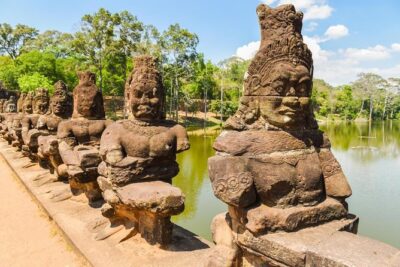 ★ 5.0Angkor Wat Sunrise or Sunset Tour with Guide from Siem ReapFrom $1812,109 reviews
 ★ 5.0Angkor Wat: Small-Group Sunrise or Sunset TourFrom $159,444 reviews
 ★ 4.9Angkor Wat 2-Day Tour with Sunrise and SunsetFrom $344,429 reviews
 ★ 4.9Full-Day Angkor Wat Guided Tour with SunsetFrom $153,803 reviews
 ★ 5.0Angkor Wat Sunrise tour with Small – Group and Guide toursFrom $143,655 reviews
 ★ 5.0Angkor Wat Highlights and Sunrise Guided Tour from Siem ReapFrom $233,213 reviews
 ★ 5.0Angkor Wat Sunset Small Group Tour with Lunch IncludedFrom $203,059 reviews
 ★ 5.0Full-Day Angkor Wat Sunrise Private Tour with Guide from Siem ReapFrom $602,920 reviews
Browse the lists this tour appears in