
Reviewed · TOURS
Sacred Siem Reap Tours
Koh Ker turns you into an explorer. This private 3-day Siem Reap tour mixes Koh Ker’s mossy jungle ruins with a very practical 8:00 am start, so you can hit the famous sites earlier and keep the day feeling manageable. You’ll also get that off-the-main-road contrast with crumbled stone, fig trees, and quiet viewpoints when the tour crowds thin out.
I really like the way this trip handles logistics: you get a guide and driver, private group time, and cold water along the way. One thing to plan for, though, is money: entrance fees and meals are not included for most stops, so your final budget will be higher than the $100 headline price.
In This Review
- Key things to know before you go
- How this private 3-day Siem Reap route actually works
- Your money: what $100 covers (and what you’ll pay after)
- Morning logistics: pickup, mobile tickets, and why the timing matters
- Day 1: Angkor Wat, Bayon, and Ta Prohm at a human pace
- Angkor Wat (about 2 hours)
- Bayon Temple (about 1 hour)
- Ta Prohm (about 1 hour)
- Day 2: Banteay Srei, Kbal Spean, and a 30-minute reality check
- Banteay Srei, the pink stone Lady Temple (about 1 hour)
- Kbal Spean: sacred path, waterfall, and Vishnu carvings (about 1 hour)
- Cambodia Landmine Museum (about 30 minutes)
- Day 3: Beng Mealea plus the smaller Angkor-area temples
- Prasat Beng Mealea (about 2 hours)
- Bakong (about 30 minutes)
- Preah Ko (about 30 minutes)
- Lolei (about 30 minutes)
- Koh Ker’s Prang pyramid and Prasat Bram: the jungle city feel you came for
- Who this suits best (and who should think twice)
- About the guide and the human touch
- What to pack for these specific stops
- Should you book Sacred Siem Reap Tours?
- FAQ
- What time does the tour start?
- Is pickup offered?
- Is this a private tour?
- How much does the tour cost?
- What’s included in the tour price?
- Are temple or site entrance fees included?
- Do I need meals or accommodation included?
- Can I cancel for free?
Key things to know before you go
- Jungle ruin energy at Koh Ker: 7-tier Prang pyramid, mossy stone, and Prasat Bram with strangled figs.
- Big Angkor hits on Day 1: Angkor Wat, Bayon, and Ta Prohm with time built in for photos and pacing.
- Banteay Srei is the one freebie: Lady Temple admission is listed as free on this itinerary.
- Kbal Spean adds a natural break: waterfall and Vishnu carvings along the sacred path.
- A sobering stop on Day 2: the Cambodia Landmine Museum gives context in just 30 minutes.
- Tree-choked Beng Mealea on Day 3: ruined temple space, overgrown by plants with no renovation focus.
Still deciding? Line this one up against a few Siem Reap favourites first.
- Angkor Wat Sunrise or Sunset Tour with Guide from Siem Reap★ 5.0 · 12,109 reviews
- Siem Reap: Angkor Wat: Small-Group Sunrise or Sunset Tour★ 5.0 · 9,444 reviews
- From Siem Reap: Kampong Phluk Floating Village Tour by Boat★ 4.9 · 6,979 reviews
- Sunset tour of Kampong Phluk stilts home village on the Tonle Sap★ 5.0 · 4,865 reviews
How this private 3-day Siem Reap route actually works
This tour is set up for an easier day than DIY. You start at 8:00 am, you’re picked up (pickup is offered), and a guide plus driver handle the driving so you can focus on temples and ruins.
It’s also private, meaning it’s only your group. That matters in Siem Reap. With a smaller group, you can slow down for the details—like weathered carvings and the way roots take over stone—without feeling rushed.
And you’ll get cold water during the day. It sounds small, but on Cambodian temple circuits where you’re walking, it helps you keep your head clear instead of counting minutes until the next stop.
Your money: what $100 covers (and what you’ll pay after)
The price is $100 per person for the tour itself (about 3 days). What you’re paying for is the guide and driver service plus the travel structure that strings the sites together without you needing to coordinate transport.
What’s not included is the big-ticket stuff. The tour does not include entrance fees, accommodations, meals, or other personal expenses. If you’re trying to keep costs tight, you’ll want to budget separately for each temple admission where it applies.
There’s one exception listed: Banteay Srei is marked as free. Everything else on the itinerary lists admission as not included, so plan for those temple tickets in your total.
Morning logistics: pickup, mobile tickets, and why the timing matters
Starting at 8:00 am is a quiet advantage. In Siem Reap, early hours can mean less crowd crush at the most popular stones, and it helps you avoid the part of the day when heat and temple steps start to feel like a full-time job.
You’ll also get a mobile ticket. That’s useful if you don’t want to hunt for a printed voucher on the road. Still, it’s smart to have your confirmation ready on your phone in case connectivity is weird at a stop.
Finally, this is listed as private, and that usually means your guide can adjust pacing a bit to your group. You should still expect walking on uneven ground and up/down changes around temple areas.
Day 1: Angkor Wat, Bayon, and Ta Prohm at a human pace
Day 1 is the classic Angkor stack: you’ll visit three famous temples with time to actually look, not just pass through.
Angkor Wat (about 2 hours)
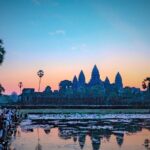
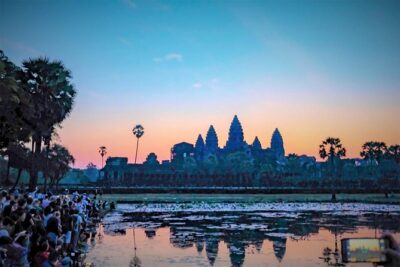
Angkor Wat is described as the biggest Hindu temple in the world, and that scale hits you fast. Two hours is a good chunk here because you can take in the main layout, then wander with enough time to notice the wear patterns in the stone and how details repeat across the complex.
Admission is not included here, so budget for your ticket. Also, if you like taking photos, Angkor Wat can eat time because there are so many angles that look different from slightly different positions.
Bayon Temple (about 1 hour)
Bayon sits in Angkor Thom city and is known for its smiling Buddha faces. One hour is enough to walk the key areas, find a couple of angles where the faces align, and take a breath in the middle of the crowds.
This is a good temple to treat like a gallery stop. Look up. Then look sideways. The faces feel different depending on your position.
Ta Prohm (about 1 hour)
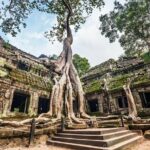
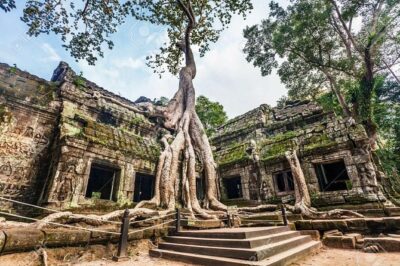
Ta Prohm is the one many people remember because it’s described as hidden in the jungle, with big trees growing over the temple rock. This is where the forest-theme becomes real: stone and roots look locked in a long argument.
An hour lets you slow down and appreciate how the ruin frames the trees, not just the other way around. Admission is not included, so add that to your day budget too.
Day 2: Banteay Srei, Kbal Spean, and a 30-minute reality check
Day 2 mixes beauty, nature, and a difficult educational stop. That blend can feel like whiplash if you’re not ready for it, but it also makes the day more grounded.
Banteay Srei, the pink stone Lady Temple (about 1 hour)
Banteay Srei is described as the pink sand stone temple. That color difference alone is a reason to put it on your route, because it reads visually distinct from many other Angkor-area temples.
The itinerary lists admission as free for this stop. That’s a welcome break when you’re budgeting temple tickets across the full circuit.
One hour works well here because Banteay Srei is all about detail—carvings, structure, and the way the temple’s smaller scale feels more intimate than Angkor Wat.
Kbal Spean: sacred path, waterfall, and Vishnu carvings (about 1 hour)
Kbal Spean adds a change of pace. You’ll see a sacred pathway and a waterfall area tied to Hindu God Vishnu.
The value here is contrast. After stone temples, you move into a nature setting connected to religious meaning. It’s not just a scenic stop; it’s a place where carvings and water tell the story together.
Admission is not included, so plan for the ticket if needed. Also, bring shoes that can handle uneven ground, since these kinds of nature-route temple sites often mean you’ll be walking more than you expect.
Cambodia Landmine Museum (about 30 minutes)
This is the shortest stop on Day 2, at just 30 minutes. But it’s an important one.
The itinerary’s description notes the region’s wartime experience and references American bombing in Cambodia, connecting the museum to the wider story of civil conflict and outside war. Even in a short visit, it gives context you won’t get from temple stone alone.
If you’re sensitive to heavy topics, give yourself a minute before you enter. Then take it slowly. The point is understanding, not speed.
Day 3: Beng Mealea plus the smaller Angkor-area temples
Day 3 is built around ruined temples and a lighter temple count than Day 1. That makes it a good day for travelers who want variety without feeling like they’re being chased by their own schedule.
Prasat Beng Mealea (about 2 hours)
Beng Mealea is built in the early 12th century and is described as an example temple to build Angkor Wat. It’s also about 75km from Siem Reap city.
Here’s the big difference: the ruins are overgrown and not renovated, because road access and attention have been limited. The result is a temple that feels wild and unfinished, with big trees and plants taking over space.
Two hours is ideal. You need time to walk through the complex and understand it as a ruin first, a photo stop second.
Bakong (about 30 minutes)
Bakong is described as one of the oldest temples in the region dedicated to Shiva. It’s a short visit, so treat it like a warm-up and then a quick check for the details that connect it to the broader tradition of temple design.
Admission is not included, so add that cost into your final temple budget.
Preah Ko (about 30 minutes)
Preah Ko is described as a 6-tower temple built to dedicate to a king ancestor. Thirty minutes works because this is about capturing the structure and understanding the layout quickly rather than spending a long time in one spot.
Short stops like this are useful on a long tour. They keep the day from draining you, while still giving you variety.
Lolei (about 30 minutes)
Lolei is described as a beautiful temple built on the island of indratataka baray. Thirty minutes gives you enough time to see why the island setting matters and to take in the temple’s relationship to water nearby.
As with the other short stops, admission is not included and pacing stays brisk.
Koh Ker’s Prang pyramid and Prasat Bram: the jungle city feel you came for
Even if you’re bouncing between major temples, you should expect one standout theme on this style of itinerary: the feeling of exploring something older and quieter than the main Angkor circuit.
Koh Ker is described as one of the oldest cities in the Khmer Empire, built between 928 AD and 944AD, with an estimated population over 10,000. That scale is hard to picture when you’re standing amid mossy ruins, but it makes the surviving stone feel heavier and more meaningful.
The centerpiece is the 7-tiered Prang pyramid, about 36 metres high, set in the jungle. You can get that moment where the view at the highest point is basically forest—stone below, trees all around. It’s the kind of scene that makes you feel like a modern day explorer.
Two more details make Koh Ker especially memorable here. First, the ruins are covered in moss, and you can see where prayer palaces were built for the kings. Second, the highlight mentioned is Prasat Bram, also called the Five Temples, with two brick towers completely overgrown with strangled figs.
That fig detail is the kind of “only in Cambodia” visual you’ll be grateful you slowed down for. Moss, creeping roots, and brick towers wrapped in living plants change the whole emotion of a ruin. It’s not just old stone; it’s nature taking over in a way that looks intentional.
At the main Koh Ker area carpark, there are small food and drink stalls too. That’s useful on a day when you might feel far from Siem Reap comforts.
Who this suits best (and who should think twice)
This tour is best for people who like structured days with a local guide, but still want freedom to look around. The itinerary includes both the big-name Angkor classics and more offbeat stops like Kbal Spean and the ruined feel of Beng Mealea.
It also says travelers should have a moderate physical fitness level. That’s fair. Expect uneven surfaces, walking time, and temple stairs. If you know you tire quickly on your feet, you might want to ask for pacing adjustments.
If you’re the type who enjoys context—not just pictures—this tour fits. The Cambodia Landmine Museum is short, but it’s there for a reason.
About the guide and the human touch
One thing I value in any Cambodian tour is communication before the first stop. In the feedback tied to this operator, a guide named Ra is praised for calling as soon as a booking is made to check whether anything can help before the start.
That kind of proactive outreach matters when you’re trying to plan your day around temple hours. It also hints at a team that wants you to feel set up, not confused at pickup time.
What to pack for these specific stops
Because this route mixes temple walking and nature sections, pack for both.
- Good walking shoes for uneven ground at ruins and paths
- A hat and sunscreen, especially for outdoor temple time and the Kbal Spean area
- A light layer, since you’ll be moving from sun to shade and temple interiors
- Your phone with the mobile ticket ready for confirmation access
And keep your plan flexible in your head. With several short stops on Day 3, it’s easy to underestimate how much time you’ll spend walking between viewpoints.
Should you book Sacred Siem Reap Tours?
Yes, I think you should book it if you want a guided, private 3-day plan that hits the major Angkor anchors and also includes stops that break the usual routine. The mix of Angkor Wat, Bayon, Ta Prohm, Kbal Spean, Beng Mealea, and the Koh Ker-style jungle ruin theme gives you both the iconic and the offbeat.
You might pause before booking if you hate temple ticket costs. Since entrance fees and meals are mostly not included, you’ll likely spend more than $100 per person once you add admissions and food.
If you’re comfortable with moderate walking and you want your days to feel organized without losing the magic of exploring, this is a strong fit.
FAQ
What time does the tour start?
The start time is 8:00 am.
Is pickup offered?
Yes, pickup is offered.
Is this a private tour?
Yes. It’s a private tour/activity, so only your group will participate.
How much does the tour cost?
The price is $100.00 per person.
What’s included in the tour price?
Included features are a guide and driver, plus cold water. A mobile ticket is also provided.
Are temple or site entrance fees included?
No. Admission is not included for most stops. Banteay Srei is listed as admission free, but other stops say admission ticket not included.
Do I need meals or accommodation included?
No. Accommodations and meals are not included, along with other personal expenses.
Can I cancel for free?
Yes. You can cancel up to 24 hours in advance for a full refund. If you cancel less than 24 hours before the start time, the amount paid won’t be refunded.
More Siem Reap Tours to Compare
- Angkor Wat Sunrise or Sunset Tour with Guide from Siem Reap
★ 5.0 · 12,109 reviews - Siem Reap: Angkor Wat: Small-Group Sunrise or Sunset Tour
★ 5.0 · 9,444 reviews - From Siem Reap: Kampong Phluk Floating Village Tour by Boat
★ 4.9 · 6,979 reviews - Sunset tour of Kampong Phluk stilts home village on the Tonle Sap
★ 5.0 · 4,865 reviews - Siem Reap: Angkor Wat 2-Day Tour with Sunrise and Sunset
★ 4.9 · 4,429 reviews
More Tour Reviews in Siem Reap
- Angkor Wat Sunrise or Sunset Tour with Guide from Siem Reap
★ 5.0 · 12,109 reviews - Siem Reap: Angkor Wat: Small-Group Sunrise or Sunset Tour
★ 5.0 · 9,444 reviews - From Siem Reap: Kampong Phluk Floating Village Tour by Boat
★ 4.9 · 6,979 reviews - Sunset tour of Kampong Phluk stilts home village on the Tonle Sap
★ 5.0 · 4,865 reviews - Siem Reap: Angkor Wat 2-Day Tour with Sunrise and Sunset
★ 4.9 · 4,429 reviews
Just Added: Fresh Siem Reap Tour Reviews

Tours, compared.
 ★ 5.0Angkor Wat Sunrise or Sunset Tour with Guide from Siem ReapFrom $1812,109 reviews
 ★ 5.0Angkor Wat: Small-Group Sunrise or Sunset TourFrom $159,444 reviews
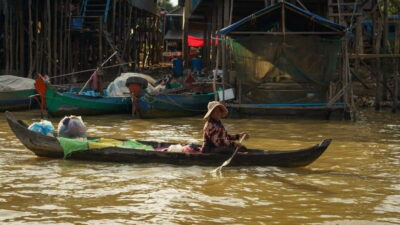 ★ 4.9From Siem Reap: Kampong Phluk Floating Village Tour by BoatFrom $206,979 reviews
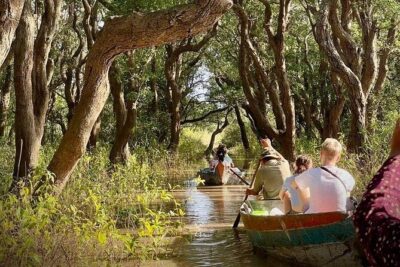 ★ 5.0Sunset tour of Kampong Phluk stilts home village on the Tonle SapFrom $214,865 reviews
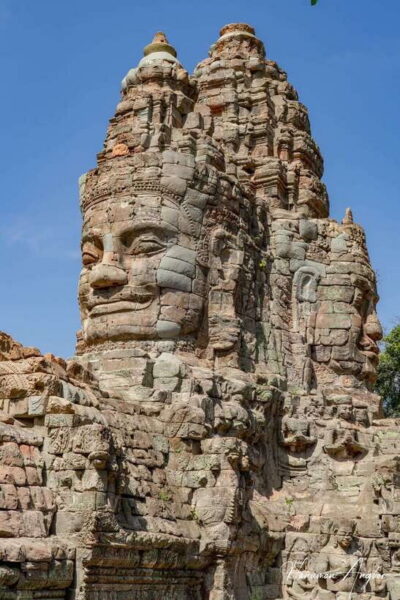 ★ 4.9Angkor Wat 2-Day Tour with Sunrise and SunsetFrom $344,429 reviews
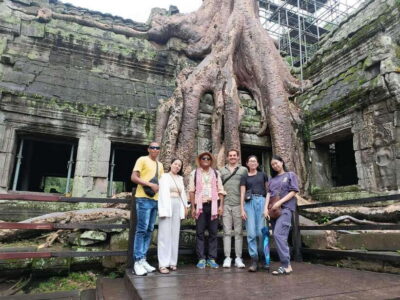 ★ 4.9Full-Day Angkor Wat Guided Tour with SunsetFrom $153,803 reviews
 ★ 5.0Angkor Wat Sunrise tour with Small – Group and Guide toursFrom $143,655 reviews
 ★ 5.0Angkor Wat Highlights and Sunrise Guided Tour from Siem ReapFrom $233,213 reviews