
Reviewed · ANGKOR TEMPLE TOURS
Shared day tour with Spanish-speaking guide at Angkor Temple.
Angkor hits you fast, then hits again. This 8-hour small-group day tour strings together the big hitters—Angkor Thom and Angkor Wat—with a live Spanish-language guide to make the carvings and stories click. I like the focus on three different “moods” of Angkor: the fortified city, the face-filled Bayon, and the jungle drama of Ta Prohm. One thing to watch: it is a packed schedule, so you’ll need comfortable walking shoes and patience with crowds.
A standout detail from the experience: the Spanish-speaking guide Sem (and the rest of the team, in the same guide spirit) explains what you’re looking at in a way that actually helps. Price-wise, $50 for a full day with a live multilingual guide and a group capped at nine people feels like good value—assuming you want a guided route rather than taking your time alone.
In This Review
- Key Things I’d Highlight Before You Go
- How the Day Starts in Siem Reap (And Why It’s Worth It)
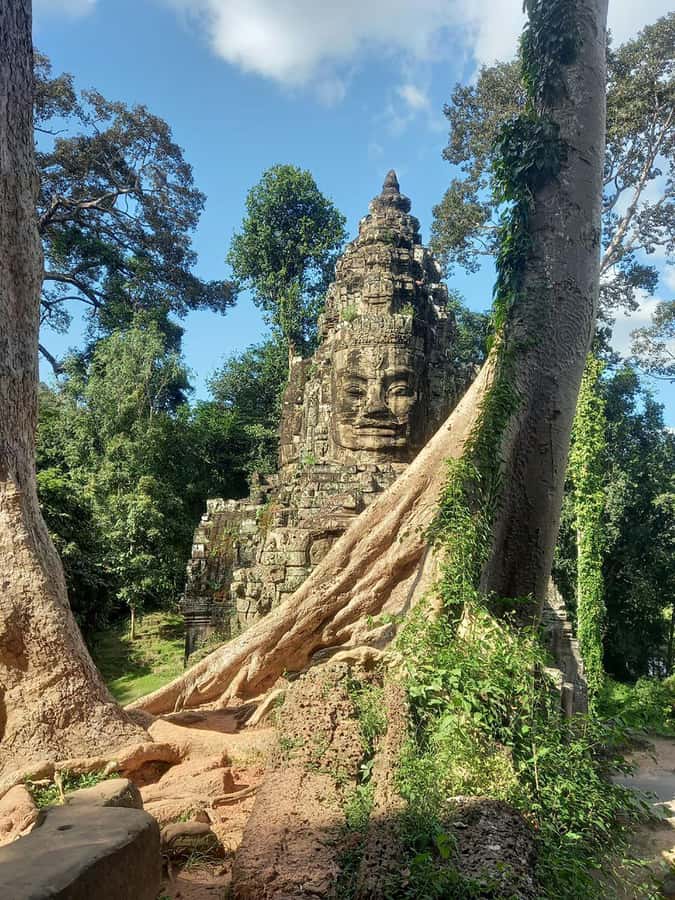
- Angkor Thom: Entering Through the South Gate Causeway
- Bayon Temple: The Faces That Make Angkor Feel Personal
- Terrace of the Elephants and Terrace of the Leper Kings
- Ta Prohm: Jungle Temple Vibes Without the Guesswork
- Angkor Wat in the Afternoon: The Big Classic, Handled With Time in Mind
- The Guide Experience: What You Actually Get From Sem and the Team
- What Makes This Tour Good Value for $50
- Packing List Reality Check (What They Ask You to Bring)
- Who This Tour Suits Best (And Who Might Want Another Option)
- Should You Book This Angkor Day Tour?
- FAQ
- What’s the duration of the tour?
- What’s the price per person?
- How big is the group?
- What languages is the live guide available in?
- Which temples are included?
- What do I need to bring?
- What’s not allowed on the tour?
- What’s the cancellation policy and payment flexibility?
Key Things I’d Highlight Before You Go
- Small group, big sites: Limited to 9 participants, so you’re not lost in a tourist blob.
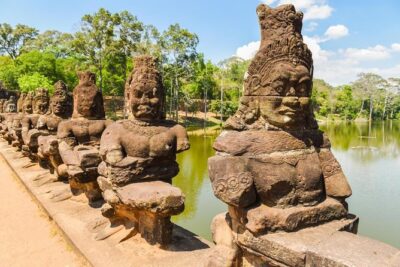
- South Gate to Bayon faces: The entry route includes the South Gate causeway with gods and demons plus a giant naga.
- Three “story stops” inside Angkor Thom: Bayon, then the Terrace of the Elephants and Terrace of the Leper Kings.
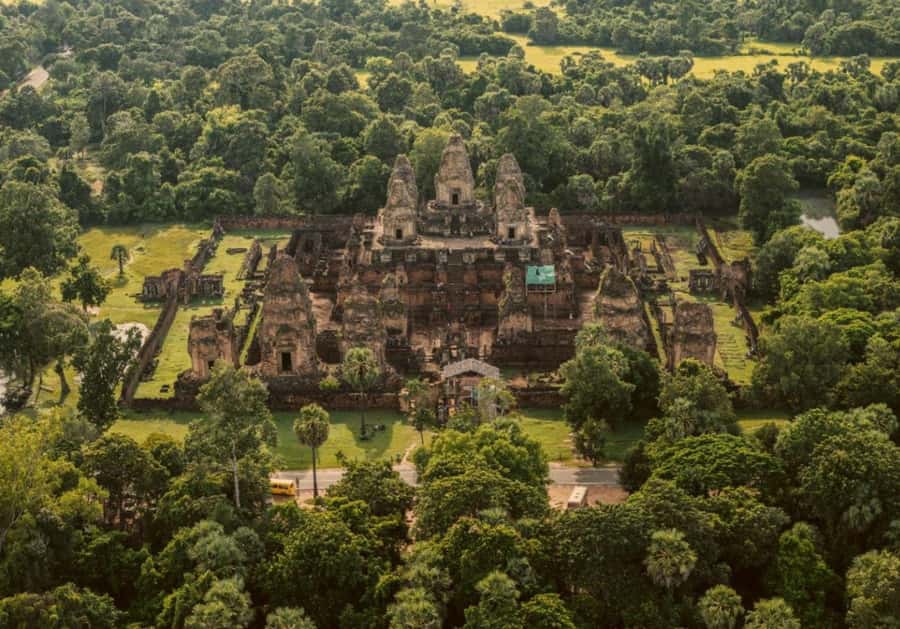
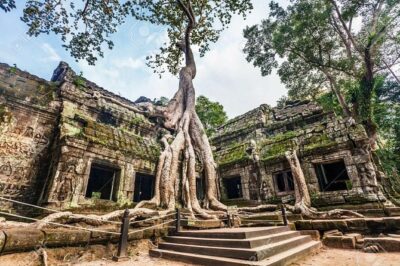
- Ta Prohm’s jungle look: You’ll see the temple that’s been left relatively untouched since it was discovered, surrounded by roots.
- Angkor Wat in the afternoon: The day ends with the most famous complex, spread across 81 hectares.
- Guide time that matters: Live guidance in Spanish, plus Portuguese and English, helps you connect carvings to meaning.
More temple circuits, set side by side
- Angkor Wat Sunrise or Sunset Tour with Guide from Siem Reap★ 5.0 · 12,109 reviews
- Siem Reap: Angkor Wat: Small-Group Sunrise or Sunset Tour★ 5.0 · 9,444 reviews
- Siem Reap: Angkor Wat 2-Day Tour with Sunrise and Sunset★ 4.9 · 4,429 reviews
- Siem Reap: Full-Day Angkor Wat Guided Tour with Sunset★ 4.9 · 3,803 reviews
How the Day Starts in Siem Reap (And Why It’s Worth It)
You get picked up at your hotel in Siem Reap in the morning, then you roll out to the Angkor area and start working through the major stops without wasting your time trying to organize logistics on the ground. For one-day Angkor plans, that is a big deal: temples are spread out, and without a route you can easily spend more time traveling than actually looking.
What I like here is the structure. You don’t jump randomly from one temple to another. You start with Angkor Thom—an entire fortified city—and you only move to the famous Angkor Wat later, after you’ve built some context for what you’re seeing.
The guide is there for the whole run, and that changes the experience. Without explanations, Angkor carvings can blur together fast. With Spanish-language commentary (plus Portuguese and English options), you’re more likely to notice details like how figures are arranged, what scenes are meant to communicate, and why certain temples feel different from others.
Angkor Thom: Entering Through the South Gate Causeway
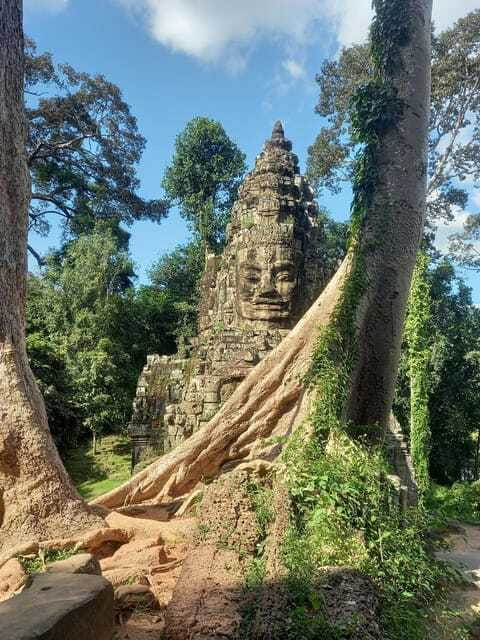
The day’s first big “wow” comes at Angkor Thom, the fortified city that covers about 10 square kilometers. You enter through the South Gate, walking along a causeway lined with statues of demons and gods, and each side features a giant naga.
That causeway matters because it sets the tone. It’s not a casual entrance. It feels ceremonial, built to overwhelm you in a good way, with mythic imagery on both sides as you approach the heart of the city. If you’re the type who likes a sense of arrival—real transition from modern Siem Reap into ancient Angkor—this part delivers.
A practical note: this is still a walking day, even if the tour handles the route. The causeway and temple grounds can be uneven, so I’d plan to move slowly, stop when something catches your eye, and not rush every photo.
Bayon Temple: The Faces That Make Angkor Feel Personal
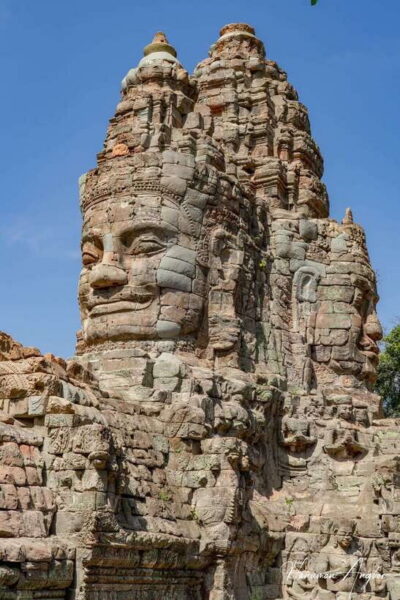
Next up is the Bayon temple, famous for the enormous carved faces staring outward from the structure. This is one of those stops where your first reaction is usually pure astonishment, and your second is wanting to understand what you’re looking at.
This is exactly where a good guide earns their keep. With a live guide speaking Spanish (and covering questions as you go), you’ll spend less time guessing and more time noticing. You can pick up on how Bayon’s composition draws the eye across the architecture, and why the temple feels like it’s watching you from multiple angles.
I also like that this is not the only “Angkor Thom” stop. The day doesn’t dump you at one landmark and move on. Bayon is treated as a centerpoint, then the route continues into smaller, more specific terraces and carving-heavy areas.
Terrace of the Elephants and Terrace of the Leper Kings
After Bayon, the tour keeps you inside Angkor Thom and heads to two terraces that are often talked about for their sculpture work.
First is the Terrace of the Elephants. Even without getting lost in terminology, it’s easy to see why it’s memorable: it’s a space designed for visual power, with elephant imagery used as part of the message. This is a great stop for slowing down because terraces reward close looking. From a distance it’s impressive; up close you can start to see how details repeat and how the carvings are positioned.
Then comes the Terrace of the Leper Kings. The name alone grabs attention, but what matters on-site is the carving and the way the terrace acts like a stage for the site’s storytelling. If you’re the kind of person who enjoys architecture with meaning—rather than just architecture as a photo backdrop—this pair of terraces is a strong use of time.
The key benefit here is pacing. By the time you reach Ta Prohm later, you’ll already have several “types” of Angkor experience under your belt.
More days made easy with a guide

Ta Prohm: Jungle Temple Vibes Without the Guesswork
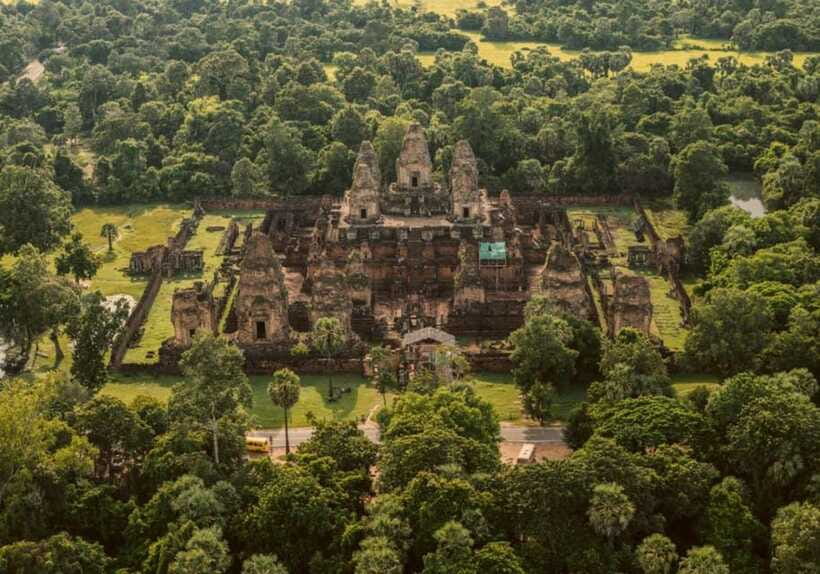
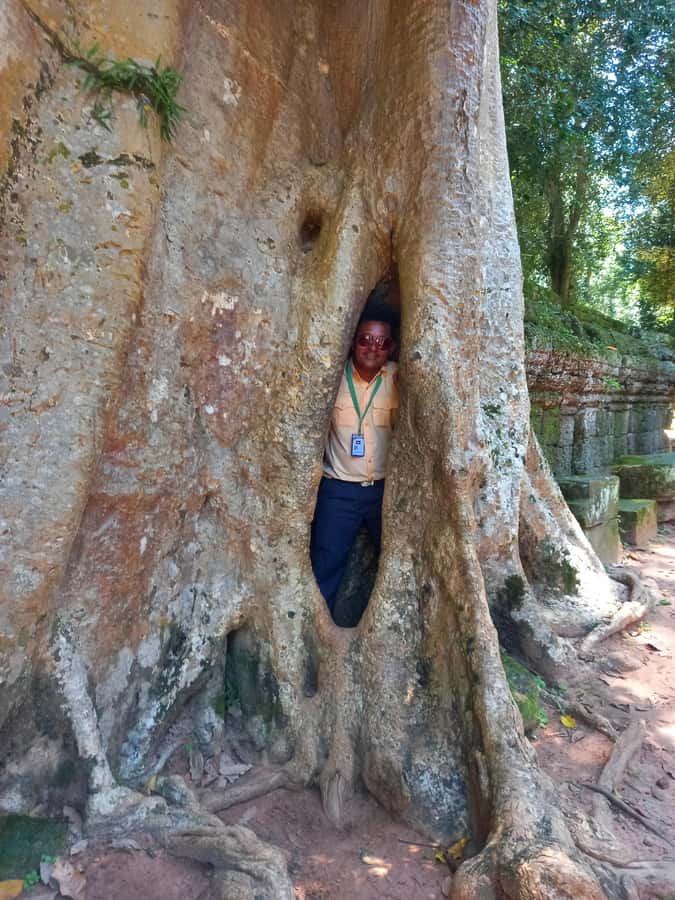
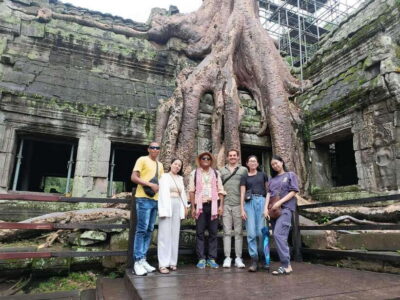
Then you head to Ta Prohm, a temple in the jungle that’s been relatively untouched since it was discovered. This is where Angkor turns cinematic. Tree roots, overgrowth, and ruined edges combine into a scene that feels natural and accidental, even though it’s very clearly part of a dramatic temple setting.
I like Ta Prohm on a guided route because it’s easy to treat it like a jungle photo set. With a guide, you’re more likely to understand what makes this temple stand out, how to orient yourself within the complex, and what parts are worth lingering over.
Also, Ta Prohm is a good mental reset. After the geometrical feel of fortified city spaces and carved terraces, you get a different texture of Angkor—one where nature and stone sit in the same frame.
Angkor Wat in the Afternoon: The Big Classic, Handled With Time in Mind
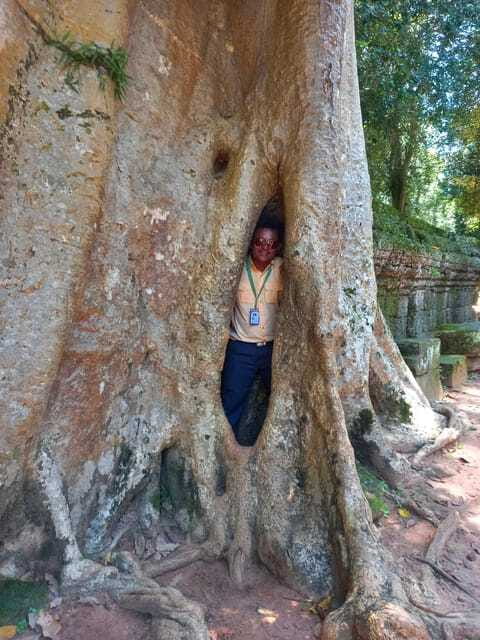
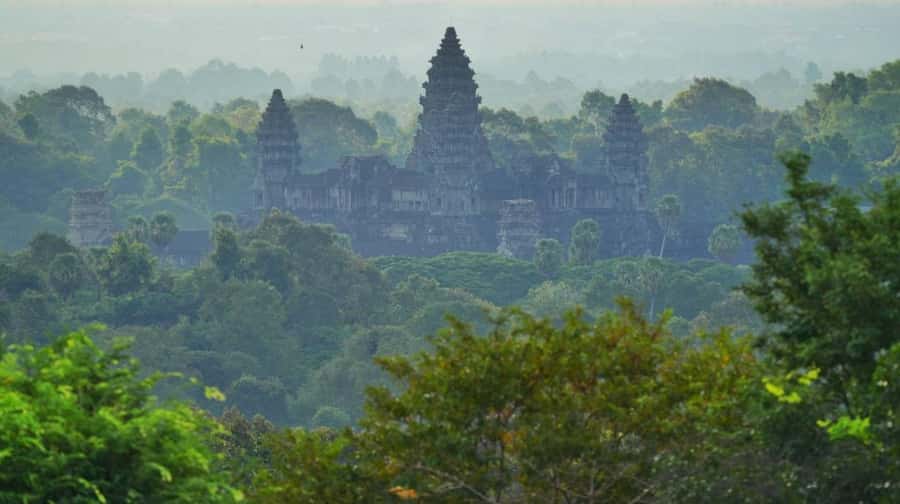
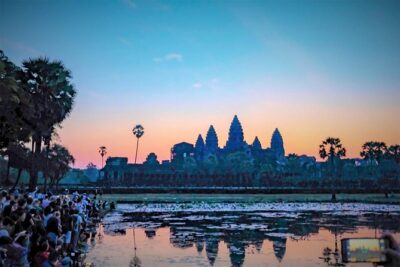
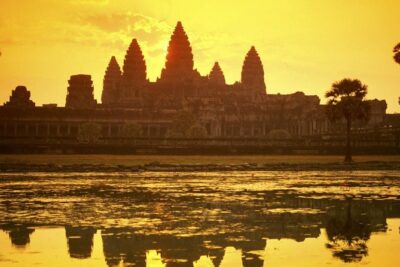
In the afternoon, the tour shifts to Angkor Wat, the most famous temple on the Angkor plain. This complex covers 81 hectares, and it’s described as comparable in size to the Imperial Palace in Beijing. That comparison is useful because it helps set expectations: Angkor Wat isn’t one building you walk through. It’s a large, carefully composed complex.
Here’s what I find compelling about Angkor Wat beyond the hype: the design is all about balance and proportion, plus careful sculptural detail. A guide helps you notice those patterns instead of just treating the place like a checklist.
If you only come for Bayon or only for Ta Prohm, you might leave feeling you understood Angkor. If you come for Angkor Wat too, you get why people call it the headline temple. It’s the “this is why it matters” stop.
Practical tip: give yourself permission to stop moving. At Angkor Wat, your best photos—and your best understanding—often come after you pause and let the layout make sense in your head.
The Guide Experience: What You Actually Get From Sem and the Team
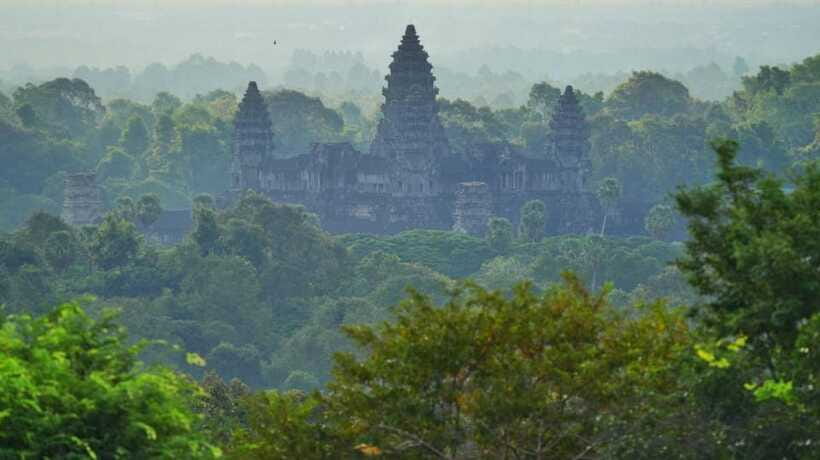
The experience is designed around a live guide, and that matters most when your Spanish (or English/Portuguese) can follow the explanation while you walk.
One review highlighted Sem by name and specifically praised how the guide explained the history of the temples in detail. That kind of feedback is important because Angkor’s details can look random if you don’t have context. Even simple explanation can help you connect what you see to the broader temple story and why certain areas were built the way they were.
With a small group capped at nine, you’re more likely to get answers. It’s not a lecture where you hear something vaguely useful and move on. You get guidance as you go, which is the whole point of a guided format.
What Makes This Tour Good Value for $50
At $50 per person for an 8-hour day with a live guide and multiple major temple stops, I see the value in three places.
First, you’re paying for time-saving structure: hotel pickup and a route that hits major sites in a logical order. Second, you’re paying for interpretation. In Angkor, explanation can multiply your enjoyment fast. Third, small-group limits help the day feel manageable instead of chaotic.
What you might not get with this style is total freedom to wander for hours without pressure. But for first-timers, or for anyone who wants the big temples without spending your energy on route planning, this price-to-value balance is strong.
Packing List Reality Check (What They Ask You to Bring)
You’ll want to show up ready for a full day outdoors. The tour lists a few helpful basics:
- Drinks
- Jacket
- Internet access
- GPS/map
- Pen
I’d treat that as a clue that the day may require some flexibility—water planning, simple back-up navigation, and one of those small items (a pen) that can suddenly become useful. Internet access also suggests you may want a phone ready for reference.
If you forget key items, you’ll feel it. Angkor isn’t a place where you can easily stop and rebuild your day from scratch.
Who This Tour Suits Best (And Who Might Want Another Option)
This tour fits best if:
- You want a guided Angkor day where explanations help you understand what you’re seeing.
- You prefer a small group capped at 9 participants.
- You’d like a well-structured route that covers Angkor Thom, Ta Prohm, and Angkor Wat within one day.
It may not suit everyone if you have very limited mobility or if walking pace is an issue. The tour also specifies it’s not suitable for people over 331 lbs / 150 kg.
If you’re the kind of traveler who loves wandering without structure, you might feel rushed. But if you want a smart “greatest hits” day with context, this is exactly the kind of tour that makes Angkor feel understandable instead of overwhelming.
Should You Book This Angkor Day Tour?
I think you should book if you want the biggest Angkor moments in one day and you value having a guide to translate the carvings into something meaningful. The combination of Angkor Thom (South Gate, Bayon, terraces), Ta Prohm’s jungle setting, and Angkor Wat’s scale in one route is a solid first-timer approach, and the small-group size helps keep the experience human.
I’d reconsider if you want maximum freedom to linger for hours in just one temple, or if you know you struggle with packed schedules. Also, if you have concerns about long walking stretches, pay attention to the tour’s size/suitability note.
If you’re planning your first Angkor day and you don’t want to guess your way through, this tour is a practical way to do it.
FAQ
What’s the duration of the tour?
The tour runs for 8 hours.
What’s the price per person?
The price is $50 per person.
How big is the group?
It’s a small group limited to 9 participants.
What languages is the live guide available in?
The live tour guide offers Spanish, Portuguese, and English.
Which temples are included?
You’ll visit Angkor Thom (including the South Gate and Bayon), the Terrace of the Elephants, the Terrace of the Leper Kings, Ta Prohm, and Angkor Wat.
What do I need to bring?
Bring drinks and a jacket. You’re also asked to bring internet access, a GPS/map, and a pen.
What’s not allowed on the tour?
Pets are not allowed.
What’s the cancellation policy and payment flexibility?
You can cancel up to 24 hours in advance for a full refund. You can also reserve now and pay later.
More Siem Reap Tours to Compare
- Angkor Wat Sunrise or Sunset Tour with Guide from Siem Reap
★ 5.0 · 12,109 reviews - Siem Reap: Angkor Wat: Small-Group Sunrise or Sunset Tour
★ 5.0 · 9,444 reviews - From Siem Reap: Kampong Phluk Floating Village Tour by Boat
★ 4.9 · 6,979 reviews - Sunset tour of Kampong Phluk stilts home village on the Tonle Sap
★ 5.0 · 4,865 reviews - Siem Reap: Angkor Wat 2-Day Tour with Sunrise and Sunset
★ 4.9 · 4,429 reviews
More Tour Reviews in Siem Reap
- Angkor Wat Sunrise or Sunset Tour with Guide from Siem Reap
★ 5.0 · 12,109 reviews - Siem Reap: Angkor Wat: Small-Group Sunrise or Sunset Tour
★ 5.0 · 9,444 reviews - From Siem Reap: Kampong Phluk Floating Village Tour by Boat
★ 4.9 · 6,979 reviews - Sunset tour of Kampong Phluk stilts home village on the Tonle Sap
★ 5.0 · 4,865 reviews - Siem Reap: Angkor Wat 2-Day Tour with Sunrise and Sunset
★ 4.9 · 4,429 reviews
More Temple Circuits Around Siem Reap
- Angkor Wat Sunrise or Sunset Tour with Guide from Siem Reap
★ 5.0 · 12,109 reviews - Siem Reap: Angkor Wat: Small-Group Sunrise or Sunset Tour
★ 5.0 · 9,444 reviews - Siem Reap: Angkor Wat 2-Day Tour with Sunrise and Sunset
★ 4.9 · 4,429 reviews - Siem Reap: Full-Day Angkor Wat Guided Tour with Sunset
★ 4.9 · 3,803 reviews - Angkor Wat Sunrise tour with Small – Group and Guide tours
★ 5.0 · 3,655 reviews
Just Added: Fresh Siem Reap Tour Reviews


Angkor Temple Tours, compared.
 ★ 5.0Angkor Wat Sunrise or Sunset Tour with Guide from Siem ReapFrom $1812,109 reviews
 ★ 5.0Angkor Wat: Small-Group Sunrise or Sunset TourFrom $159,444 reviews
 ★ 4.9Angkor Wat 2-Day Tour with Sunrise and SunsetFrom $344,429 reviews
 ★ 4.9Full-Day Angkor Wat Guided Tour with SunsetFrom $153,803 reviews
 ★ 5.0Angkor Wat Sunrise tour with Small – Group and Guide toursFrom $143,655 reviews
 ★ 5.0Angkor Wat Highlights and Sunrise Guided Tour from Siem ReapFrom $233,213 reviews
 ★ 5.0Angkor Wat Sunset Small Group Tour with Lunch IncludedFrom $203,059 reviews
 ★ 5.0Full-Day Angkor Wat Sunrise Private Tour with Guide from Siem ReapFrom $602,920 reviews