
Reviewed · ANGKOR SUNRISE & SUNSET TOURS
Siem Reap: Angkor 1-Day Private Tour with Sunset or Sunrise
Angkor hits different with your own guide. This private Siem Reap day is built around the big names at Angkor—plus a real sunset or sunrise moment—so your hours feel focused, not chaotic. You also get a guide in your language and the kind of on-the-ground temple context that makes the carvings and layouts click fast.
I especially like the pacing that mixes major icons (Bayon, Angkor Wat) with quieter, photo-friendly stops (like Victory Gate and the Ta Prohm tree-root frames). The other strong point is practical comfort: hotel pickup/drop-off, cold water, and cold towels at the sites.
One thing to budget for up front: Angkor entrance tickets and lunch are not included, so the all-in cost is higher than the tour price.
In This Review
- Key Highlights You’ll Actually Care About
- Private Angkor in Siem Reap: Why This Feels Worth It
- Sunrise vs Sunset at Angkor: Which Option Fits Your Style
- Your Full-Day Temple Sequence: From Angkor Thom to Phnom Bakheng
- Ta Prohm: Tree roots, big mood, and careful framing
- Ta Keo: The unfinished pyramid that feels dramatic
- Victory Gate: A photo stop with real symbolism
- Angkor Thom: South Gate faces and the big-city feel
- Bayon and Baphuon: Faces, stories, and the meaning in the stone
- Srah Srang: Break time that also works as a pause
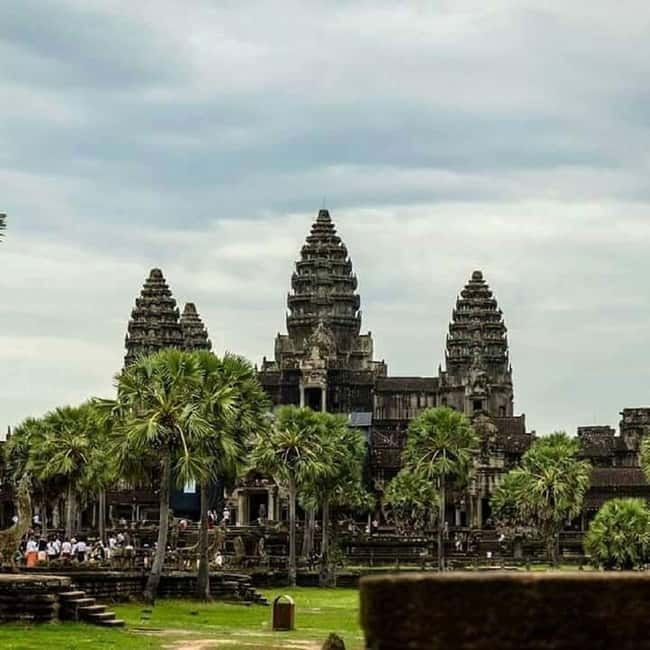
- Angkor Wat: The main event, with time to think
- Phnom Bakheng: Sunset viewpoint and the final climb
- Two-Day Advantage: Adding Banteay Srei and the Grand Circuit
- Day 2 at 05:00 AM: Sunrise at Angkor Wat
- Preah Khan, Neak Pean, and Ta Som: Atmosphere and variety
- East Mebon and Pre Rup: Views that make the circuit feel real
- Banteay Srei: The pink sandstone payoff
- Getting Around: Tuk-tuk vs A/C Car, and Why Timing Matters
- Price and Value: What You Really Pay for Angkor
- Practical Tips for a Smoother Day at Angkor
- Should You Book This Private Angkor Tour?
- FAQ
- What time is pickup for the sunrise vs sunset options?
- How long is the tour for the different options?
- Is the Angkor entrance ticket included in the price?
- Is lunch included during the tour?
- For the sunrise option, should I bring breakfast?
- What guide languages are available?
- What dress code should I follow for Angkor temples?
Key Highlights You’ll Actually Care About
- Fully private experience with a licensed local guide and hotel pickup/drop-off
- Sunrise vs sunset options with long enough viewing time at the viewpoint temple
- Smart temple order and photo timing, including stops like Victory Gate and Ta Prohm
- Comfort on the move: cold water and cold towels, plus tuk-tuk or A/C transport depending on your group
- Two-day option adds Banteay Srei and the Grand Circuit without cramming everything into one exhausting day
Chasing the light? More dawn and dusk runs
- Angkor Wat Sunrise or Sunset Tour with Guide from Siem Reap★ 5.0 · 12,109 reviews
- Siem Reap: Angkor Wat: Small-Group Sunrise or Sunset Tour★ 5.0 · 9,444 reviews
- Sunset tour of Kampong Phluk stilts home village on the Tonle Sap★ 5.0 · 4,865 reviews
- Siem Reap: Angkor Wat 2-Day Tour with Sunrise and Sunset★ 4.9 · 4,429 reviews
Private Angkor in Siem Reap: Why This Feels Worth It
This tour is designed around one simple idea: if you’re going all the way to Angkor, you should not be herded. With a private group, you can ask questions in real time, slow down when a doorway carving catches your eye, and get your guide’s attention at every stop. That sounds obvious, but it’s the difference between seeing temples and actually understanding what you’re looking at.
The “choose your guide language” part matters, too. Having a guide who speaks English, Spanish, French, Portuguese, Italian, German, or Japanese is not just about convenience. It changes the day because explanations about Khmer religion, symbolism, and how restorations work land better when you can follow every detail. In particular, guides named Buth, Phat, Visal, and Thom show up repeatedly for their clarity and energy, and you’ll feel that in how the tour flows.
The other comfort win is the small stuff. Cold water and cold towels at the sites are a big deal when you’re walking in heat and humidity under broad sun. I also appreciate that the transport matches group size: tuk-tuk for 1–2 people and A/C vehicles for larger groups.
Sunrise vs Sunset at Angkor: Which Option Fits Your Style
Both sunrise and sunset are worth doing at least once at Angkor, but they reward different travel personalities.
Sunrise option (early start)
You’ll be picked up around 05:00 AM and finish around 12:00 PM. Sunrise crowds can be intense, and it’s dark early enough that you’ll want to be ready to go without half-waking. The company specifically recommends bringing a breakfast box from your hotel if you choose sunrise, which is good advice because you’ll lose morning time to the clock, not the buffet line.
Sunset option (later start)
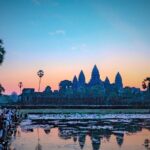
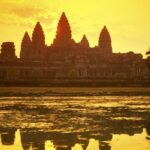
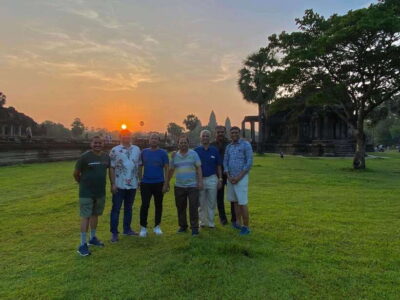
You start around 08:30 AM and your full day runs until about 06:30 PM. This gives you a steadier rhythm: more comfortable morning light, a full lineup of temples, and then a final viewing moment for sunset. The sunset temple stop includes both time for photos and actual sunset viewing, with a return to your hotel afterward.
Here’s the one practical caution: sunset depends on the sky. If the weather turns cloudy, it can reduce what you see from the viewpoint hill. If you’re visiting in rainy season or you’re staring at an overcast forecast, sunrise may still give you a dramatic start, while sunset can feel more muted.
Your Full-Day Temple Sequence: From Angkor Thom to Phnom Bakheng
For the classic 1-day plan, you’re looking at a tight loop of the most recognizable Angkor highlights, with smart pauses built in.
Ta Prohm: Tree roots, big mood, and careful framing
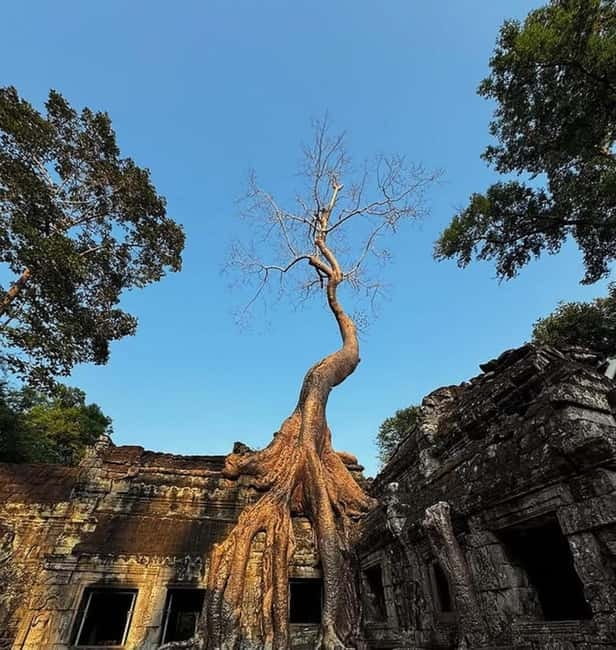
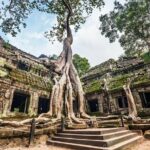
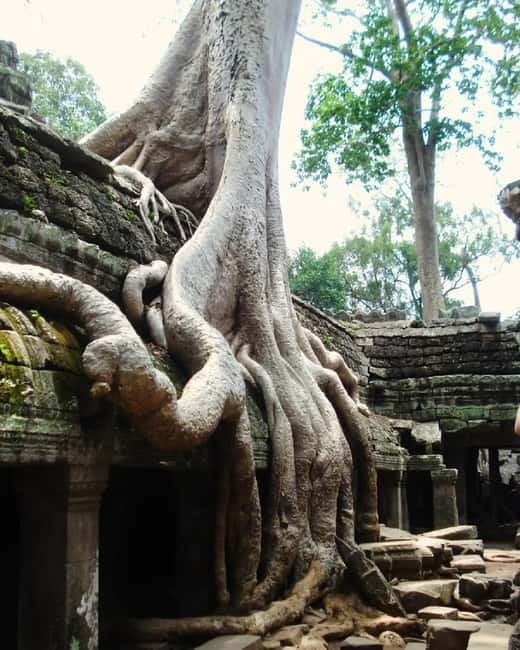
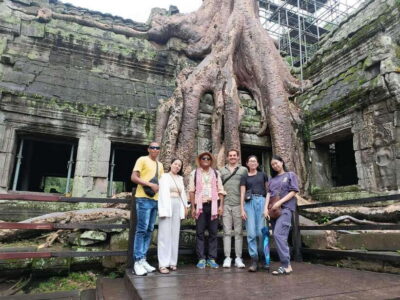
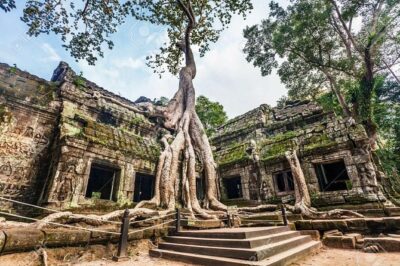
You start with Ta Prohm, where massive roots braid through temple walls. This stop is famous for a reason. It’s also one of the easiest places to feel overwhelmed, because you can look up, look around, and still miss the carved details. A good private guide helps you notice the story in the layout: what’s original, what’s restored, and why the temple feels half-ruined on purpose. Your time here is about an hour, which is enough to see the key areas without sprinting.
More temple circuits, set side by side
Ta Keo: The unfinished pyramid that feels dramatic
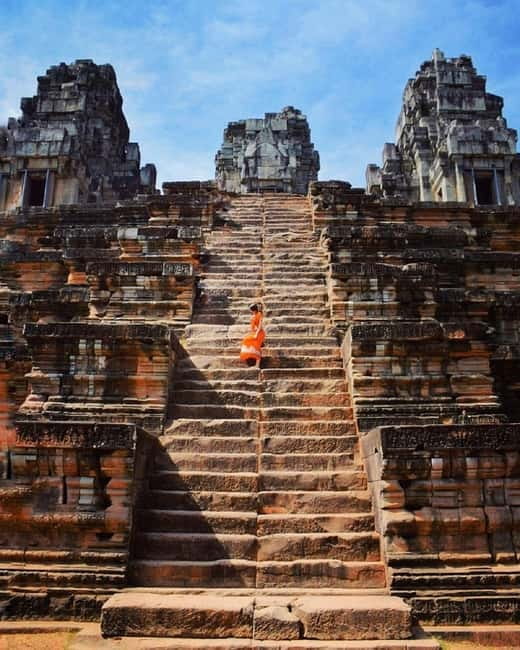
Next comes Ta Keo for about 30 minutes. This is the kind of temple that teaches you how Angkor thought about height, movement, and sacred space. It’s also a nice contrast to Ta Prohm’s tangled roots. If you like architectural shapes—steps, terraces, and symmetry—Ta Keo is one of those stops that rewards a slower look.
Victory Gate: A photo stop with real symbolism
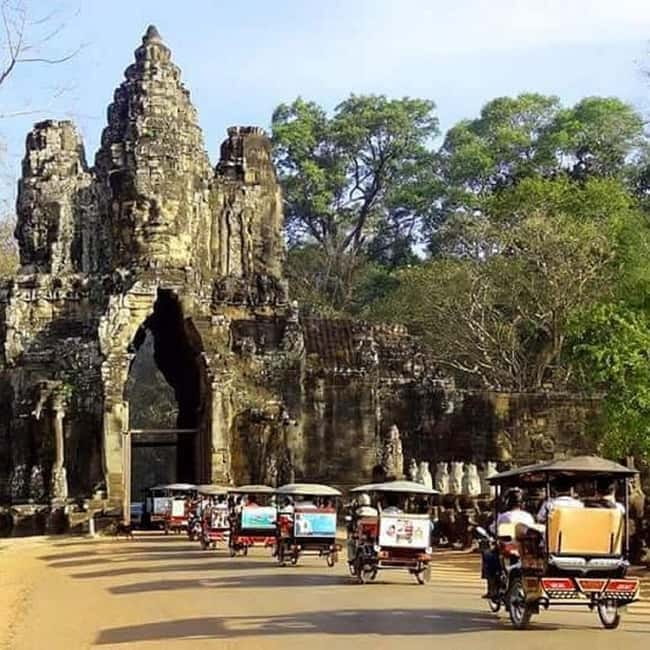
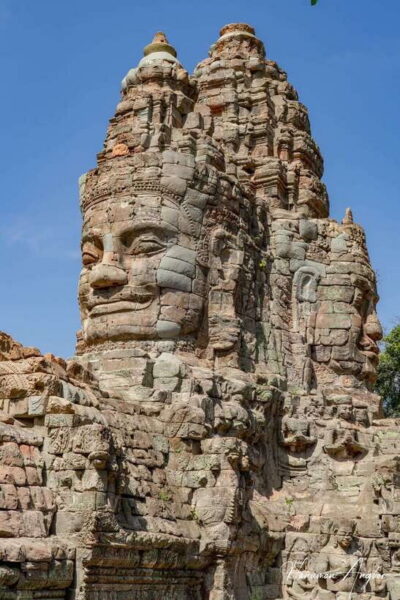
Victory Gate is a short stop (around 15 minutes), but it’s a useful one. It gives you a clear landmark for photos and a mental map for where you are in Angkor’s story. Even if you only spend a few minutes here, it helps you orient yourself before you step deeper into Angkor Thom.
Angkor Thom: South Gate faces and the big-city feel
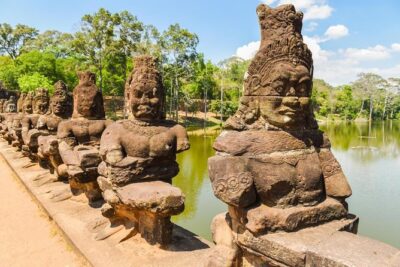
Angkor Thom is the ancient walled city, and you’ll spend about 1.5 hours exploring it with your guide. Expect to pass through the South Gate area with the giant stone faces welcoming you in, then walk through the spaces that make Angkor Thom feel less like a museum and more like a living city in stone.
Inside the city, your guide points out features such as the Terrace of the Elephants and the Terrace of the Leper King as part of your guided time. These terraces can look like decoration if you don’t know what you’re seeing. With the right explanations, they connect to how Khmer leaders presented power through public art.
Bayon and Baphuon: Faces, stories, and the meaning in the stone
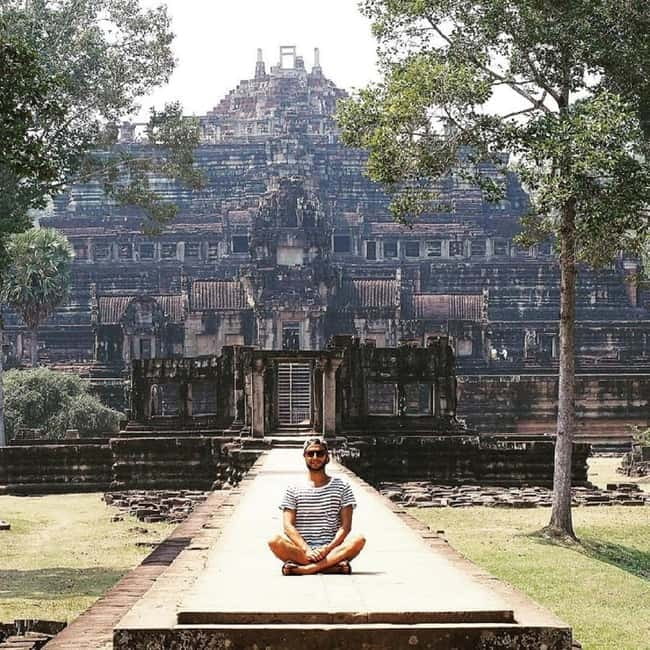
Bayon takes about an hour, and it’s the temple most people picture after hearing Angkor. The towers with serene faces can feel repetitive until your guide points out what changes and what symbolism means in context. Baphuon follows with about 45 minutes. Together, they give you two different “styles” of Angkor expression—one centered on faces and the other on architecture and layered temple experience.
Srah Srang: Break time that also works as a pause
Then you get a break at Srah Srang. This includes lunch time in your schedule (around 1 hour), but lunch itself is not included. I like that the break is built into the plan because Angkor isn’t a quick snack stop. You’ll need a real reset for your feet and your head before you move to Angkor Wat.
Angkor Wat: The main event, with time to think
Angkor Wat is where you can easily burn two hours without realizing it. Your guided visit here is about two hours, which is a good length for really seeing the art and symbolism instead of rushing through gates like you’re collecting stamps. Your guide will help you understand why Angkor Wat looks the way it does—especially the way religious meaning is built into geometry, orientation, and decoration.
Also, Angkor Wat is often easier to enjoy when you’re already warmed up by the earlier stops. By the time you reach it, you’ve seen enough Angkor “language” that the carvings start talking back.
Phnom Bakheng: Sunset viewpoint and the final climb
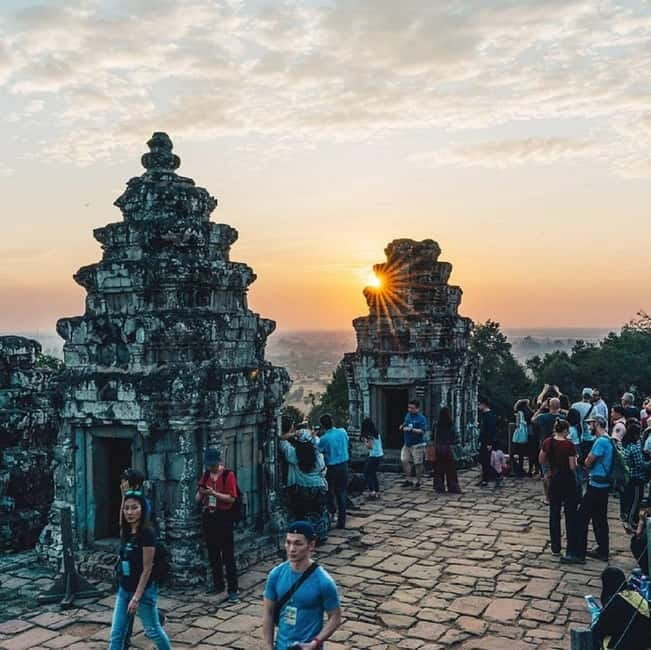
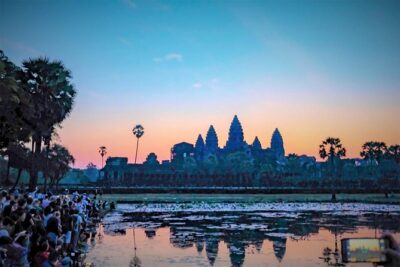
Phnom Bakheng wraps up the day with a photo stop and sunset viewing that lasts about two hours. This is a viewpoint-hill situation, so it pays to wear shoes you trust and go at a steady pace. If the sky clears, you’ll get that iconic look over temple silhouettes and jungle. If it’s cloudy, you might still enjoy the atmosphere, but it may feel less dramatic than you expected.
Two-Day Advantage: Adding Banteay Srei and the Grand Circuit
If you can handle two days, you should. Not because you’ll get more temples for a higher price, but because the second day reduces the “run to catch up” feeling. You’ll also add Banteay Srei, the pink-sandstone temple that many people consider the finest artistry in the Angkor area.
Day 2 at 05:00 AM: Sunrise at Angkor Wat
Day 2 starts early, picking you up around 05:00 AM for sunrise at Angkor Wat. After sunrise, you’ll have breakfast options (you can bring snacks or a breakfast box from your hotel). Then the day shifts into the Grand Circuit.
Preah Khan, Neak Pean, and Ta Som: Atmosphere and variety
You’ll cover:
- Preah Khan, a wide monastic complex with corridors and carvings that reward slow walking
- Neak Pean, centered on pools and a quieter feel
- Ta Som, known for its tree-covered gate, which makes good photo moments without feeling as chaotic as the most famous stops
This part of the circuit is valuable because it gives you texture. It’s not just “the biggest temple.” It’s the temple geography that shows how Angkor worked as a system of sacred sites.
East Mebon and Pre Rup: Views that make the circuit feel real
East Mebon comes next, then Pre Rup, a mountain-style temple. Pre Rup is one of those places where height makes sense. It’s easier to grasp Angkor’s scale because you can see beyond the walls and into the countryside.
Banteay Srei: The pink sandstone payoff
Finally, you end at Banteay Srei, often called the Citadel of Women. It stands out because the sandstone carvings are extremely intricate. With a private guide, you’ll get the chance to focus on the details instead of treating it like a quick photo stop.
Day 2 finishes around 01:00 PM, which is a smart timing choice. You still have time to breathe before dinner back in Siem Reap.
Getting Around: Tuk-tuk vs A/C Car, and Why Timing Matters
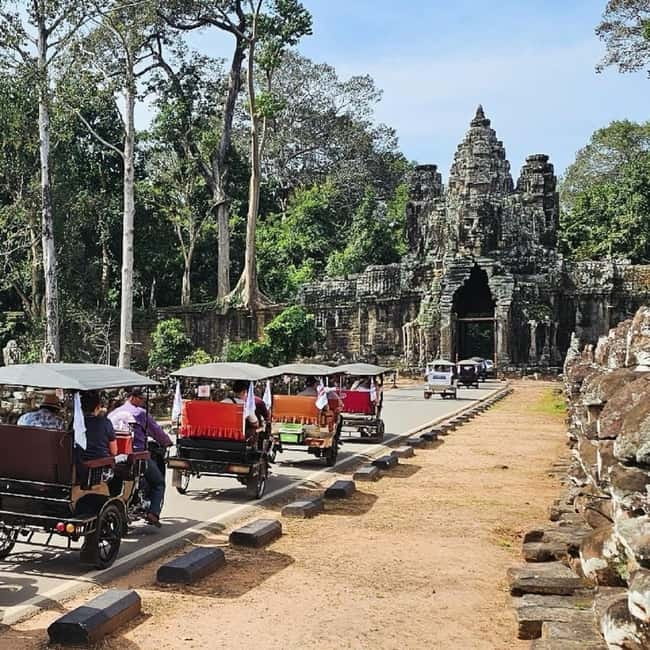
Transport is not a side note at Angkor. It affects how you feel when you step into the temples. For this tour, 1–2 people typically ride by tuk-tuk (and day 2 uses a car for the 1–2 setup), while 3+ people go by A/C van or bus.
Cold water and cold towels are included during visits, which you’ll notice most during the midday stretch. If you’re traveling in hotter months, this is the difference between enjoying the carvings and feeling drained by the time you reach Angkor Wat.
Timing also matters. A recurring praise point from real experiences with guides is pacing—moving you so you feel ahead of the biggest crowds and getting you into photo angles when the light and foot traffic are more manageable. One guide adjustment that shows up often is re-ordering or shifting timing when weather looks risky, so you’re not stuck staring at closed umbrellas and regret.
Price and Value: What You Really Pay for Angkor
The tour price is $110 per group up to 2 people. That’s for the private guide and the transport setup described above, plus the guided stops and cold water/towels.
The big “gotcha” is the entrance ticket. Angkor Archaeological Park tickets are separate:
- $37 per person for 1-day
- $62 per person for 2–3 days
Lunch is also not included. So your total cost depends on your group size and whether you pick the 1-day or 2-day option.
Still, value is strong if you care about more than checking boxes. You’re paying for:
- A licensed local guide in your language
- Hotel pickup/drop-off
- Skip-the-line access
- A private schedule that fits your pace
A private guide turns Angkor from scenery into meaning. If you’re sharing the cost with one other person (or traveling as a small duo), it tends to feel especially fair. If you’re going as a family, the tour data notes that children under 12 can join free of charge, with adults paying the standard entrance ticket.
Practical Tips for a Smoother Day at Angkor
Wear the right clothes and you’ll spend more time looking up and less time thinking about your knees.
Dress code basics
- You may use a scarf to cover knees and shoulders for most temples.
- For most temples (except Angkor Wat), you must wear pants and skirts that cover the knees, plus shirts that cover shoulders.
- Short skirts, shorts, and sleeveless tops are not permitted.
What to bring
- Comfortable shoes
- Sun hat, sunglasses, sunscreen
- Insect repellent
- Water is supplied, but the heat is real—so you’ll still feel better with your own small comfort items
- For sunrise options: bring a breakfast box from your hotel if you can
One more note: the tour is private, and it’s not set up for wheelchair users.
Should You Book This Private Angkor Tour?
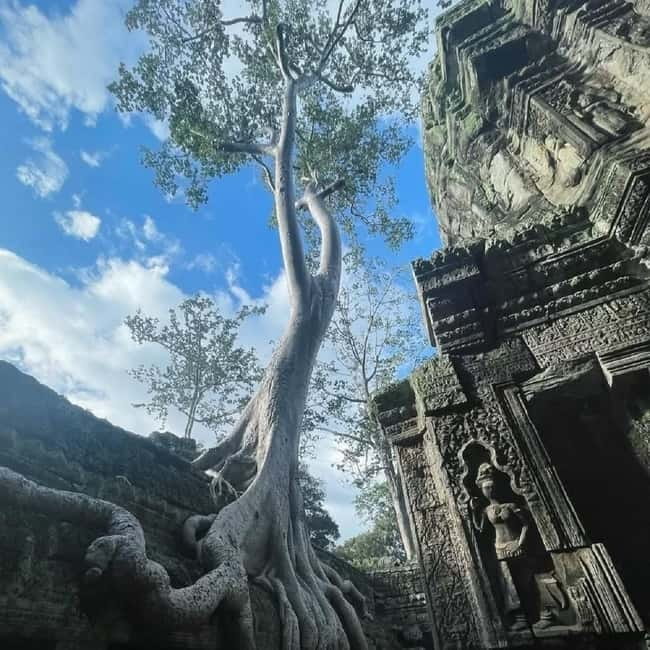
I’d book it if you want your Angkor day to feel guided, not rushed, with a schedule built around the real temple highlights: Bayon, Ta Prohm, and Angkor Wat, plus the sunset or sunrise viewing moment at the end of the day.
Choose the 2-day option if you can. The extra time makes a huge difference, and Banteay Srei plus the Grand Circuit temples (Preah Khan, Neak Pean, Ta Som, East Mebon, Pre Rup) give you a more complete Angkor picture without feeling like you’re sprinting from one doorway to the next.
Skip this only if you want a completely self-paced day with zero guide involvement, or if separate entrance tickets feel like a deal-breaker. Otherwise, this is a practical way to see Angkor with context, comfort, and time for photos that don’t feel like you’re stealing moments between crowds.
FAQ
What time is pickup for the sunrise vs sunset options?
The sunset option starts with pickup around 08:30 AM and runs until about 06:30 PM. The sunrise option has pickup around 05:00 AM and ends around 12:00 PM.
How long is the tour for the different options?
The 1-day tours are set for a full day (about 8 hours for the sunset option) or a morning half day for sunrise (ending around noon). The 2-day extended tour includes sunset plus Small Circuit on day 1, then sunrise plus Grand Circuit and Banteay Srei on day 2, with day 2 finishing around 01:00 PM.
Is the Angkor entrance ticket included in the price?
No. The Angkor Archaeological Park entrance ticket is not included and must be purchased separately: $37 per person for a 1-day ticket and $62 per person for a 2–3 day ticket.
Is lunch included during the tour?
Lunch is not included. There is a scheduled lunch break on the itinerary, but you’ll need to cover the meal yourself.
For the sunrise option, should I bring breakfast?
Yes. The tour recommends bringing a breakfast box from your hotel for sunrise departures.
What guide languages are available?
Licensed guides are available in English, Spanish, French, Portuguese, Italian, German, and Japanese.
What dress code should I follow for Angkor temples?
You can use a scarf to cover your knees and shoulders for most temples. Except for Angkor Wat, you must wear pants or skirts that cover the knees and shirts that cover shoulders; shorts and short skirts are not allowed.
Just Your Group: Private Days
- Full-Day Angkor Wat Sunrise Private Tour with Guide from Siem Reap
★ 5.0 · 2,920 reviews - Siem Reap: Angkor Wat Private Tuk-Tuk Tour
★ 4.9 · 2,222 reviews - Angkor Wat Private Day Tour from Siem Reap
★ 5.0 · 834 reviews - Angkor Wat Private Tuk-Tuk Tour (sunrise Option) & more
★ 5.0 · 439 reviews - Private Angkor Wat Day Tour – Best of Angkor
★ 5.0 · 269 reviews
More Temple Circuits Around Siem Reap
- Angkor Wat Sunrise or Sunset Tour with Guide from Siem Reap
★ 5.0 · 12,109 reviews - Siem Reap: Angkor Wat: Small-Group Sunrise or Sunset Tour
★ 5.0 · 9,444 reviews - Siem Reap: Angkor Wat 2-Day Tour with Sunrise and Sunset
★ 4.9 · 4,429 reviews - Siem Reap: Full-Day Angkor Wat Guided Tour with Sunset
★ 4.9 · 3,803 reviews - Angkor Wat Sunrise tour with Small – Group and Guide tours
★ 5.0 · 3,655 reviews
Dawn and Dusk Over Angkor
- Angkor Wat Sunrise or Sunset Tour with Guide from Siem Reap
★ 5.0 · 12,109 reviews - Siem Reap: Angkor Wat: Small-Group Sunrise or Sunset Tour
★ 5.0 · 9,444 reviews - Sunset tour of Kampong Phluk stilts home village on the Tonle Sap
★ 5.0 · 4,865 reviews - Siem Reap: Angkor Wat 2-Day Tour with Sunrise and Sunset
★ 4.9 · 4,429 reviews - Siem Reap: Full-Day Angkor Wat Guided Tour with Sunset
★ 4.9 · 3,803 reviews
Just Added: Fresh Siem Reap Tour Reviews

Angkor Sunrise & Sunset Tours, compared.
 ★ 5.0Angkor Wat Sunrise or Sunset Tour with Guide from Siem ReapFrom $1812,109 reviews
 ★ 5.0Angkor Wat: Small-Group Sunrise or Sunset TourFrom $159,444 reviews
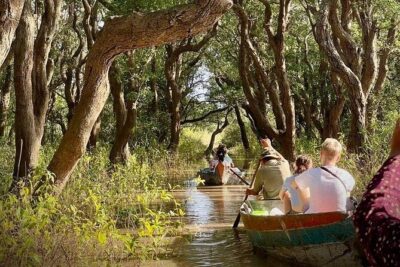 ★ 5.0Sunset tour of Kampong Phluk stilts home village on the Tonle SapFrom $214,865 reviews
 ★ 4.9Angkor Wat 2-Day Tour with Sunrise and SunsetFrom $344,429 reviews
 ★ 4.9Full-Day Angkor Wat Guided Tour with SunsetFrom $153,803 reviews
 ★ 5.0Angkor Wat Sunrise tour with Small – Group and Guide toursFrom $143,655 reviews
 ★ 5.0Angkor Wat Highlights and Sunrise Guided Tour from Siem ReapFrom $233,213 reviews
 ★ 5.0Angkor Wat Sunset Small Group Tour with Lunch IncludedFrom $203,059 reviews
Browse the lists this tour appears in